
Reviewed · KILIMANJARO TREKS
Kilimanjaro Climbing Rongai Route
The mountain saves its biggest test for midnight. Habari Adventure’s seven-day Rongai Route gives you a gradual start near the Kenyan border, strong guide support, and a carefully paced summit push. I like the route’s changing scenery, from rainforest to moorland to the stark saddle below Kibo. I also like the small maximum group of 15, which should make safety checks and personal attention easier.
The main caution is the demanding schedule on summit day. You may hike for about 15 hours, beginning around midnight, reaching Gilman’s Point at 5,685 meters, Uhuru Peak at 5,895 meters, then descending to Horombo Hut. That is a serious physical test, even with good guides and a slow pace.
In This Review
- Key points to know before booking
- Why the Rongai Route is worth considering
- Day 1: Nalemoru Gate and the rainforest
- Day 2: Moorland views from Second Cave Camp
- Day 3: Across moorland toward Mawenzi
- Day 4: Mawenzi Tarn Hut at 4,330 meters
- Day 5: The lunar saddle to Kibo Hut
- Day 6: Gilman’s Point, Uhuru Peak, and Horombo Hut
- Day 7: Mandara Hut and the final descent
- Guide quality and group size
- Is $2,840.39 good value?
- Who should book this climb?
- Should you book the Rongai Route with Habari Adventure?
- FAQ
- Where does the Kilimanjaro Rongai Route climb begin?
- How long does the experience last?
- What time does the experience start?
- What level of fitness is required?
- How high is Uhuru Peak?
- How many people can join the group?
- Are guides included?
- What is the cancellation policy?
Key points to know before booking
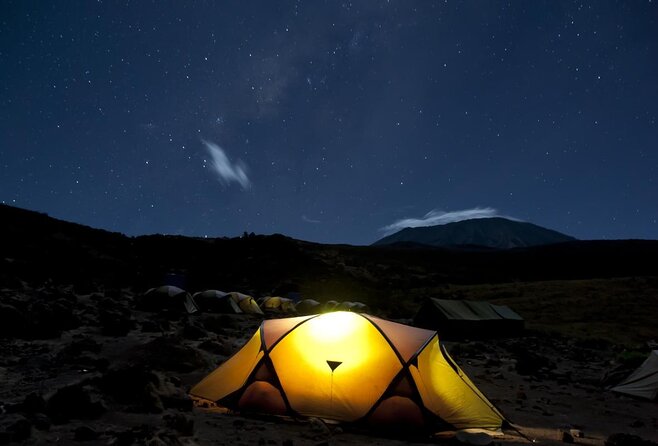
- A seven-day route with a gradual opening: You begin at Nalemoru Gate and walk through rainforest before gaining height steadily.
- A distinctive northern approach: The Rongai Route starts near the Kenyan border and offers views toward Kibo and Mawenzi.
- A long summit day: Expect a midnight start, a steep climb to Gilman’s Point, Uhuru Peak, and a long descent.
- Local guides with safety training: Habari Adventure uses Tanzanian guides trained in first aid, with knowledge of the mountain and local nature.
- A maximum group size of 15: This is small enough to keep the group manageable without guaranteeing a private climb.
- A price of $2,840.39 per person: The value depends on what is included in your booking, so confirm transport, meals, equipment, park fees, and staffing before paying.
Why the Rongai Route is worth considering
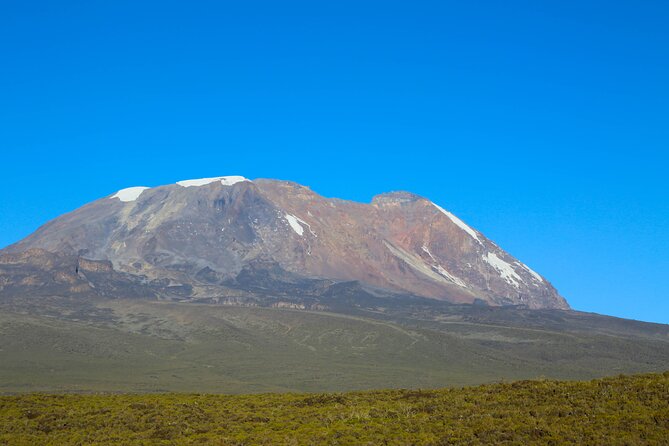
Kilimanjaro is not a technical climbing trip in the usual mountaineering sense, but altitude makes it demanding. The Rongai Route gives you seven days to gain height before the summit, with several camps that help break the journey into manageable sections.
I like the way the route changes character as you climb. The first day feels like a forest walk. By the second day, you are in moorland with Kibo in view. Later, you cross the bare saddle between Kibo and Mawenzi, then face the cold, dark summit climb.
The route also gives you time near Mawenzi, Kilimanjaro’s jagged second peak. The camp beneath its spires at 4,330 meters should be one of the most memorable overnight stops, even if the thinner air makes rest less comfortable.
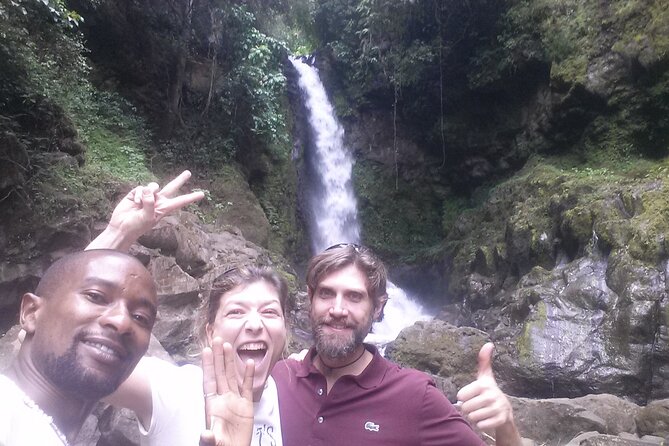
Habari Adventure’s strongest feature is its guiding team. The company uses local Tanzanian guides, including guides named Leon, Emmanuel, and Innocent in past climbing groups. The available feedback repeatedly praises the guides for being patient, friendly, supportive, and reassuring, especially with people who had little hiking experience.
That matters on Kilimanjaro. A guide does more than point toward the next camp. You need someone who watches your pace, helps you manage the altitude, explains the route, and keeps spirits steady when the trail becomes steep and tiring.
More Kilimanjaro routes and climbs:
- Kilimanjaro climb by Lemosho Route (7-day)
★ 5.0 · 651 reviews - Kilimanjaro climb, Machame Route (7-day)
★ 5.0 · 262 reviews - Kilimanjaro Climbing Lemosho Route 8 Days.
★ 5.0 · 186 reviews
Day 1: Nalemoru Gate and the rainforest
Your morning begins after breakfast at your Moshi hotel, with a drive to Nalemoru Gate near the Kenyan border. The stated meeting time is 8:00 a.m., and pickup is offered, but confirm the exact pickup location when you book because the information also lists Kilimanjaro Airport and Kilimanjaro National Park as the start point.
At the gate, the trek begins with a gradual climb through rainforest. The listed walking time is about three hours, making this a fairly gentle introduction compared with the days ahead.
This forest section is valuable for more than scenery. It lets you start moving without an immediate steep climb, and it gives the guides time to learn your walking rhythm. Habari’s description also notes the possibility of seeing zebras, elephants, buffalo, and monkeys. Wildlife sightings are never guaranteed, so treat them as a bonus rather than a promise.
The first day ends with a short walking stage, but you are already gaining altitude. Keep your pace easy from the beginning. Saving energy here is more useful than trying to prove your fitness on day one.
Day 2: Moorland views from Second Cave Camp
The second day takes you out of the rainforest and into the moorland zone. You continue upward toward Second Cave Camp, also called 2nd Cave Camp, at about 3,450 meters.
The walking time is listed at roughly four hours. From here, you should have a clear view of Kibo and the eastern ice fields along the crater rim. Kibo is the highest of Kilimanjaro’s three volcanic peaks and the summit target for the trip.
This is where the climb begins to feel less like a normal hiking holiday. The air is thinner, the vegetation changes, and the mountain becomes more open around you. You may find the views rewarding, but you should also expect the altitude to affect your breathing and energy.
The camp name can cause a little confusion because the route description calls it Second Cave Camp while the stage is also described as a second camp. Check the camp plan with Habari Adventure before departure so you know the intended overnight locations.
Day 3: Across moorland toward Mawenzi
Day three takes about five hours and continues across the moorland on a smaller path. Kibo remains in view, with its eastern ice fields visible along the crater rim.
The route then turns toward Mawenzi, the jagged peak that rises to about 5,140 meters. You stop at Kikelelwa for lunch and overnight. This shift toward Mawenzi adds variety to the climb. Instead of walking directly toward the summit all day, you get a closer sense of Kilimanjaro’s two major peaks.
The smaller path may feel more remote than the broad opening stages. That can be part of the appeal, but it also means you should stay close to the group and follow your guide’s instructions.
At this point, the slow-and-steady approach becomes important. Do not judge the whole climb by how you feel on the first two days. Altitude effects can change quickly, and the guides’ experience is one of the more important parts of the package.
A few more trips of this kind worth comparing:
- Safari Serengeti And Ngorongoro
★ 5.0 · 288 reviews - Climbing Kilimanjaro – Machame Route
★ 5.0 · 170 reviews - Climbing Kilimanjaro through 7 days Machame Route
★ 5.0 · 151 reviews - Kilimanjaro climb, Lemosho Route (8-day)
★ 5.0 · 148 reviews
Day 4: Mawenzi Tarn Hut at 4,330 meters
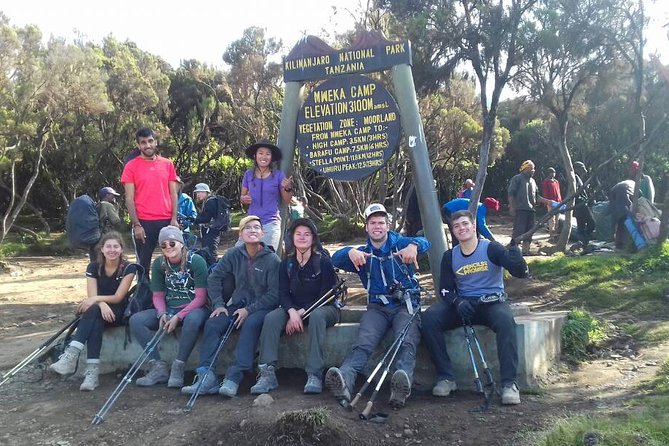
Day four is shorter in distance but steeper in effort. The walk takes about four hours and climbs grassy slopes toward Mawenzi Tarn Hut, positioned beneath the spires of Mawenzi at approximately 4,330 meters.
This is one of the most appealing camps on the route. The setting offers broad views and a strong sense of open wilderness. You also have free time in the afternoon, which can be used to rest or explore nearby areas as part of your acclimatization.
I like this built-in pause. You need a day that is not simply a long march, especially before the summit attempt. Still, do not turn free time into an ambitious side hike. Rest, eat, drink, and let your body adjust.
Sleeping at 4,330 meters can be difficult. The itinerary presents the afternoon as useful acclimatization time, but it does not make the altitude easy. If you have concerns about how you are feeling, tell your guide early rather than waiting until summit night.
Day 5: The lunar saddle to Kibo Hut
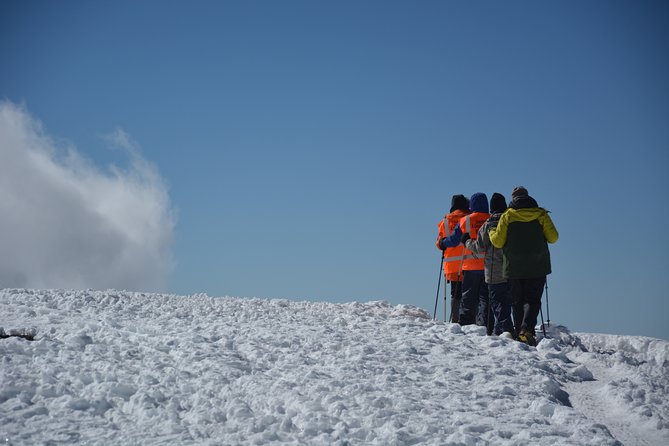
The fifth day crosses the saddle between Kibo and Mawenzi. The route is described as a lunar desert, which is a good way to picture the barren, open ground between the two peaks.
You walk about five hours to Kibo Hut. The day is not the longest in distance, but the high altitude and bare surroundings can make it feel serious. Once at Kibo, you have lunch and rest while waiting for the final ascent.
This afternoon is not spare time in the usual holiday sense. It is preparation for the hardest part of the climb. Your summit attempt begins around midnight, so your best use of the afternoon is quiet rest and following the guide’s plan.
The staging is practical. You reach the high camp, pause, and then begin the summit climb while the air is cold and the mountain is dark. The timing allows you to reach the crater rim around sunrise, with views toward Mawenzi.
Day 6: Gilman’s Point, Uhuru Peak, and Horombo Hut
Summit day is the heart of the trip and the part you need to take most seriously. The start is around midnight, followed by the steepest and most demanding climb of the route.
Your guide sets a deliberately slow pace. That is not a sign of weakness. At this altitude, slow walking helps you conserve energy and gives the guide a better chance to notice how you are coping.
The climb to Gilman’s Point takes about five hours and reaches 5,685 meters. At the rim, you have a short rest and a cup of tea while watching sunrise over Mawenzi. This should be a powerful moment, but do not linger too long if the guide says it is time to continue.
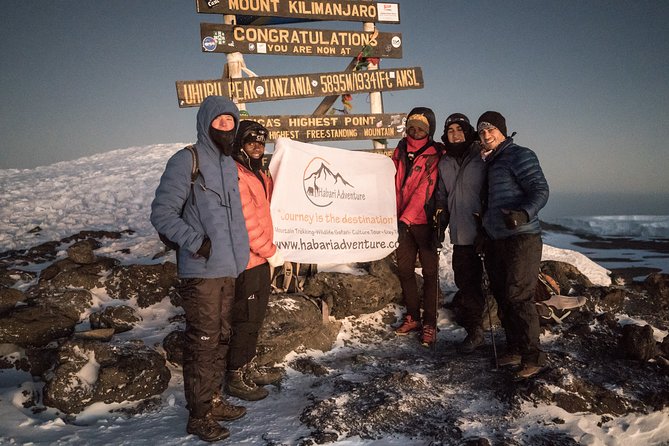
From Gilman’s Point, the route takes nearly another hour to Uhuru Peak at 5,895 meters. You pass close to glaciers and ice formations in the summit area, then have time for photographs at the top of Africa.
The peak is only half the day. You descend to Kibo Hut for a short rest and hot lunch, then continue to Horombo Hut at 3,700 meters. The total day is listed at about 15 hours, making it the clear drawback of this itinerary.
You should expect tired legs, a long descent, and little interest in anything except food and sleep by the end. The guide team’s patience and pacing are especially important here. The available feedback praises Emmanuel and Innocent for being patient and encouraging, while Leon is singled out for making a solo climber feel safe and at home.
Day 7: Mandara Hut and the final descent
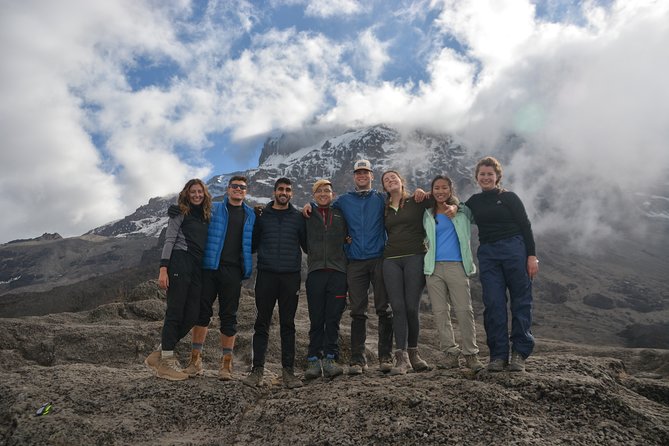
The final day takes you from Horombo Hut through heath and moorland to Mandara Hut at about 2,700 meters. The listed walking time to the park gate is around seven hours, including a hot lunch at Mandara.
After lunch, the trail continues through tropical rainforest to the Kilimanjaro National Park Gate. You then complete park formalities, collect your certificates, and return by car to your Moshi hotel.
The final descent can be harder than expected. Your body has already completed the summit and a long downhill walk, and the changing conditions can make the return feel slow. The reward is simple: a warm shower and a proper celebration in Moshi.
Guide quality and group size
Habari Adventure puts its guides at the center of the trip. The guides are local to Kilimanjaro and other parts of Tanzania, and their training includes safety and first aid. Their subject knowledge also covers plants, wildlife, geography, archaeology, anthropology, and astronomy.
That range can add meaning to the walk. You are not only counting hours to camp. You can ask about the mountain’s natural features, the night sky, or the vegetation zones as the route changes.
The maximum group size is 15 people. That is a reasonable middle ground. You may get the social energy of a group without joining a huge expedition, though the actual group could be much smaller. One past solo climber found herself as the only person in the climbing group during the off-season, so group size can vary.
The feedback also highlights friendly staff, good organization, strong emotional support, and good food. Those details matter after several days at altitude. Still, ask exactly what meals, transfers, porters, and equipment are covered because the supplied price information does not spell out every inclusion.
Is $2,840.39 good value?
The listed price is $2,840.39 per person for approximately seven days. That is a major purchase, so the right question is not simply if it is cheap. You need to know what the price pays for and how much support you receive on the mountain.
The value looks strongest if your booking includes the practical services needed for a guided Kilimanjaro climb, such as park access, mountain transport, camp arrangements, meals, and the full guide and support crew. Those inclusions are not fully detailed here, so confirm them in writing before you pay.
A maximum group of 15 can also help keep the price below a private climb, while the local guiding team gives you direct support. The company has been praised for being affordable and accommodating, which may appeal if you want a guided climb without choosing the most expensive option.
Ask about the exact number of guides, the support crew, the sleeping arrangements, and what happens if you cannot continue. Good planning is part of value on a mountain where the hardest cost is not always financial.
The cancellation terms are straightforward: cancel at least 24 hours before the start time for a full refund. A cancellation made within 24 hours is not refundable, and poor weather may lead to a different date or a full refund.
Who should book this climb?
This route suits you if you have moderate physical fitness, can tolerate long walking days, and want a structured seven-day climb with local guides. It can also suit a solo participant, since the company has experience supporting someone who ended up alone in the group during the off-season.
You do not need to be an expert hiker based on the available information. One climbing group included people who were not experienced hikers, and the guides helped them reach the summit. That does not remove the need for preparation, though.
You should think twice if a 15-hour summit day sounds beyond your limits, or if you want a short, relaxed mountain holiday. The route is carefully staged, but Kilimanjaro remains a high-altitude climb with an intense final day.
Should you book the Rongai Route with Habari Adventure?
I would consider this tour if you value personal guide support, a local Tanzanian team, and a route that spreads the climb across seven days. The best reasons to choose it are the gradual opening, the time around Mawenzi, the manageable maximum group size, and the repeated praise for guides such as Leon, Emmanuel, and Innocent.
Before booking, get a complete list of inclusions and confirm the pickup point. Then decide honestly if you can handle the midnight start and 15-hour summit day.
Book it if you want a serious but supported Kilimanjaro attempt and are willing to pace yourself. Skip it if you prefer a shorter itinerary or know that long high-altitude days are not a good fit.
FAQ
Where does the Kilimanjaro Rongai Route climb begin?
The climb begins at Nalemoru Gate near the Kenyan border, after departure from your hotel in Moshi.
How long does the experience last?
The climb lasts approximately seven days.
What time does the experience start?
The listed start time is 8:00 a.m. The meeting information also references Kilimanjaro Airport and Kilimanjaro National Park, so confirm the exact pickup point with Habari Adventure.
What level of fitness is required?
You should have a moderate level of physical fitness. The final summit day is especially demanding and is listed at about 15 hours.
How high is Uhuru Peak?
Uhuru Peak is at approximately 5,895 meters.
How many people can join the group?
The maximum group size is 15 people. The actual group may be smaller.
Are guides included?
Habari Adventure provides local Tanzanian guides trained in safety and first aid. Guides named in past climbing groups include Leon, Emmanuel, and Innocent.
What is the cancellation policy?
You can cancel at least 24 hours before the start time for a full refund. Cancellations within 24 hours are not refunded. If poor weather cancels the experience, you are offered another date or a full refund.
Just added around Moshi
- Moshi: Lake Chala Tour: Hiking &/or Kayaking★ 4.5 · 3 reviews
- 3 Days Tanga Exclusive Beach Holiday★ 5.0 · 3 reviews
- Serengeti Wildebeest Migration.★ 5.0 · 3 reviews
- Chemka Hotpsrings E-Bike Day Trip★ 5.0 · 3 reviews
- Explore 1 day Ngorongoro Crater Budget Group Safari from Arusha★ 5.0 · 3 reviews
- Explore the 360° of Kilimanjaro★ 5.0 · 3 reviews
- Affordable Short Tanzania Safari (2 Days Camping Safari)★ 5.0 · 3 reviews
- Rongai Route 7 Days★ 5.0 · 3 reviews
Kilimanjaro Treks, compared.



8-Day Small-group Lemosho Kilimanjaro Summit Trekking
Read our review →


Climbing Kilimanjaro through 7 days Machame Route
Read our review →

Browse the lists this tour appears in