
Reviewed · KILIMANJARO TREKS
Kilimanjaro Lemosho Route 8 Days
The roof of Africa demands patience. This Kilimanjaro climb pairs slow altitude gain with changing mountain scenery, from forest and giant heather to volcanic desert, glaciers, and the final snowy ridge. I especially like the trek high, sleep low plan, which gives your body more time to adjust, and the private group format, which keeps the pace and daily routine focused on your party.
I also like the strong safety setup: emergency oxygen, a Gamow bag, a pulse oximeter, vital sign checks, and guides trained in wilderness first response. The main drawback is worth noting before you pay: the experience is called an eight-day climb, but the supplied schedule lists seven hiking days and seven breakfasts, lunches, and dinners. Confirm the exact number of nights and summit dates with Jaribu Africa Adventures.
In This Review
- Key points to know before you book
- Why the Lemosho Route earns its reputation
- Day 1: Londrossi Gate to the first forest camp
- Day 2: Giant heather and the open Shira Plateau
- Day 3: Shark’s Tooth and the alpine desert
- Day 4: Lava Tower, then the drop into Barranco
- Day 5: Climbing the Great Barranco Wall
- Day 6: Stella Point, Uhuru Peak, and the long return
- Day 7: Mweka forest and the return to town
- Camp comfort and daily support
- Guides, group style, and who should choose it
- Is the $3,000 price fair?
- Should you book the Lemosho Route?
- FAQ
- How long is the Kilimanjaro Lemosho Route experience?
- What is the price per person?
- Is this a private tour?
- What fitness level is required?
- Are meals included?
- Is personal trekking equipment included?
- Does the tour include airport and mountain transfers?
Key points to know before you book
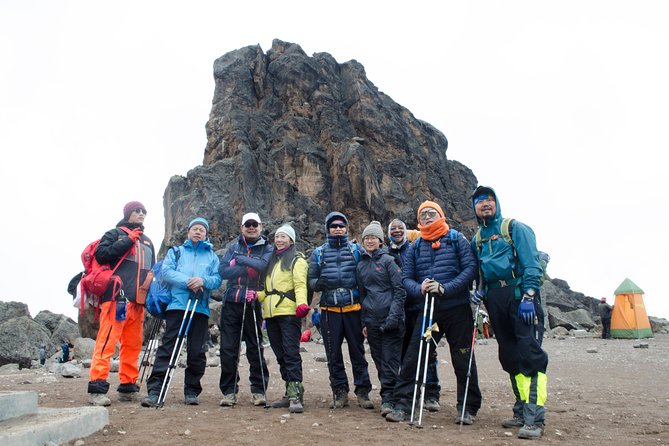
- Lemosho scenery changes fast: You move from montane forest to moorland, the open Shira Plateau, alpine desert, and glacial summit terrain.
- Acclimatization is built into the route: The Lava Tower day takes you high before dropping you into Barranco Valley to sleep lower.
- The summit day is a serious test: You leave around midnight, hike roughly six hours to Stella Point, then continue toward Uhuru Peak.
- Barranco Wall adds a hands-on challenge: The climb is a non-technical rock scramble, but it still demands balance and steady legs.
- The support package is unusually substantial: Tents, a private flush toilet tent, washing water, hot towels, medical equipment, meals, porters, and park fees are included.
- The guide team receives strong praise: Guides named in the feedback include Manase, Ayumwe, Joseph, and Stephen, with particular praise for mountain care and quick communication.
Why the Lemosho Route earns its reputation
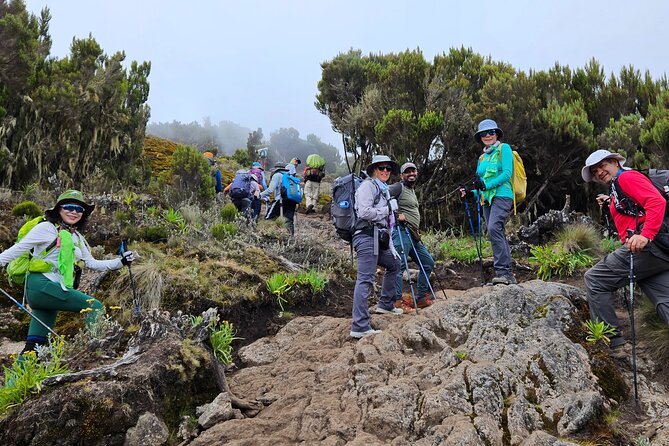
Kilimanjaro is not a technical climb in the usual mountaineering sense, but it is a high-altitude trek. You need stamina, patience, and the ability to keep walking when the air becomes thin. The Lemosho plan helps by spreading the climb across several days and using the useful high-and-low rhythm.
The route begins at Londrossi Gate, then reaches the mountain through the Lemosho Glades. The supplied description also refers to the Machame forest and an approach above the village of Machame, so you should ask the operator to confirm the precise starting trailhead for your departure. The broader appeal is clear either way: you get a quieter western approach before joining the southern circuit near Shira.
At $3,000 per person, this is not a budget trek. Yet the price covers much more than a guide and a tent. Park entrance, camping and rescue fees, airport transfers, mountain transport, porters, cooks, guides, purified water, meals, tents, medical support, and two nights of bed-and-breakfast accommodation are included.
The value depends on how much you want handled for you. If you already own a full trekking kit and are comparing bare-bones operators, the price may look high. If you want a private expedition with a serious safety package and a well-supported camp, the amount becomes easier to understand. Staff gratuities, personal gear, visas, international flights, laundry, and extra evacuation costs remain outside the price.
More Kilimanjaro routes and climbs:
- Kilimanjaro climb by Lemosho Route (7-day)
★ 5.0 · 651 reviews - Kilimanjaro climb, Machame Route (7-day)
★ 5.0 · 262 reviews - Kilimanjaro Climbing Lemosho Route 8 Days.
★ 5.0 · 186 reviews
Day 1: Londrossi Gate to the first forest camp
After breakfast, you travel by four-wheel-drive vehicle to Londrossi Gate. The crew completes the national park registration, and each duffle bag is weighed. That check matters because porter loads must remain within the mandatory 20-kilogram limit.
From the gate, the vehicle continues about 11 kilometers along narrow dirt roads through pine plantations toward the Lemosho Glades. Depending on weather and the day’s schedule, lunch may be served at the gate. You then walk about 7 kilometers in four to five hours, gaining roughly 800 meters from 1,981 to 2,780 meters.
This is a gentle opening by Kilimanjaro standards. The forest gives you shade and a softer introduction to the trail, though wet conditions can make dirt roads and paths slower. Your first camp is less about dramatic views and more about settling into the expedition routine: tents, washing water, meals, and an early night.
Day 2: Giant heather and the open Shira Plateau
Day two is longer, covering about 12 kilometers in roughly seven hours. You climb from 2,780 to 3,511 meters, moving from montane forest into moorland.
The scenery begins to feel distinctly Kilimanjaro. Giant heather and erica appear along the trail, followed by unusual giant lobelia and giant groundsel, also called senecio kilimanjari. These plants look almost out of place at high altitude, which makes the transition feel special without requiring any extra sightseeing stop.
The practical rule is pole pole, Swahili for slowly slowly. You should not treat this as a race to camp. A measured pace helps your body handle the altitude and gives you time to notice the ridges and broad views opening around you.
The Shira Plateau is one of the major rewards of this route. It is broad, exposed, and much more open than the forest below. The seven-hour walking time may sound modest on paper, but the combination of uneven tracks, thin air, and steady climbing can make this your first genuinely tiring day.
Day 3: Shark’s Tooth and the alpine desert
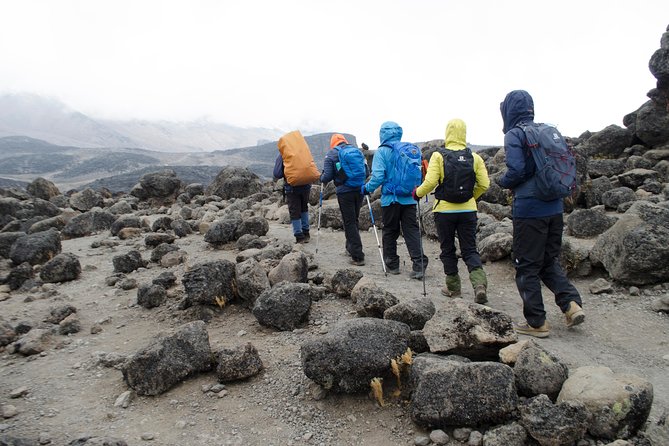
On day three, the trail heads north across roughly 9 kilometers in five to six hours. You climb from 3,511 to 4,175 meters, leaving the moorland behind for the alpine desert.
The route passes toward a natural feature known as Shark’s Tooth, then follows a ridge into a valley and up toward camp. The plant life thins out. Hardy everlastings and small senecios survive here, while the Lent Group, a collection of large volcanic dykes, rises nearby.
This is an important acclimatization day because you gain height gradually rather than rushing straight toward the summit. The camp sits below a broad circular bowl shaped by glacial activity, a fitting setting for a night in the high desert.
You should expect colder temperatures, stronger exposure, and less visual comfort than in the forest. The trail is not described as technical, but rocky ground and the altitude make balance and hydration important. Arriving around lunch gives you useful time to rest rather than stumbling into camp after dark.
A few more trips of this kind worth comparing:
- Safari Serengeti And Ngorongoro
★ 5.0 · 288 reviews - Climbing Kilimanjaro – Machame Route
★ 5.0 · 170 reviews - Climbing Kilimanjaro through 7 days Machame Route
★ 5.0 · 151 reviews - Kilimanjaro climb, Lemosho Route (8-day)
★ 5.0 · 148 reviews
Day 4: Lava Tower, then the drop into Barranco
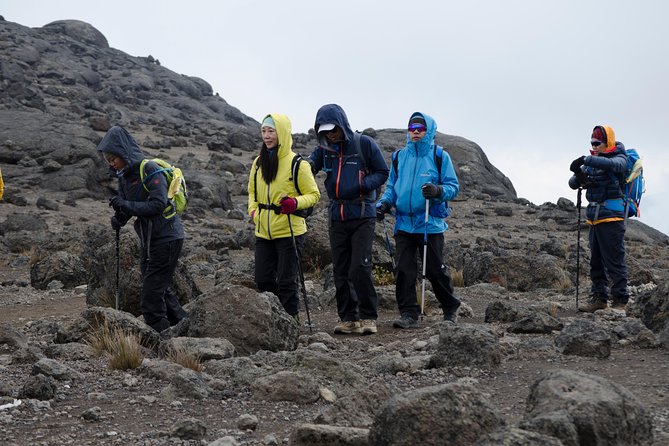
Day four is one of the smartest parts of the route. You start near 4,175 meters, climb to Lava Tower at about 4,530 meters for lunch, and then descend more than 600 meters into Great Barranco Valley. The listed camp altitude reaches about 4,642 meters, though the daily figures appear inconsistent, so ask for the confirmed camp elevations.
Lava Tower is a natural volcanic landmark and a fine place for wide views toward the Karanga Valley, Shira Plateau, and Western Breach. You may also attempt an optional, non-technical rock scramble to its top. Do not feel pressured to take it. At this height, lunch and recovery may be a better use of your energy.
The descent into Barranco is steep and takes about two hours. This is where the high-and-low approach proves its worth. You briefly climb high, then sleep lower, giving your body a better chance to adjust.
Barranco Valley is visually dramatic, but the descent can be hard on knees and tired feet. Trekking poles would be useful, though personal trekking equipment is not included. Clouds may also hide some of the glacier views, so keep your expectations flexible.
Day 5: Climbing the Great Barranco Wall
The Great Barranco Wall is the day’s main event. From camp, you climb the eastern face on a steady trail, passing below the Heim Glacier if weather and cloud allow. The route is a rock scramble rather than a technical climbing pitch, but you will use your hands in places and need to follow the guides’ instructions.
The wall looks more intimidating than it feels for many people, but it is still a demanding morning. Do not carry more than you need, and keep your pace controlled. The point is not to conquer the wall quickly. It is to move safely and save strength for the remaining climb.
After the wall, the trail drops into the Karanga Valley and then rises again through alpine desert. The day covers about 9 kilometers in six to seven hours, finishing near 4,600 meters. That repeated climbing and descending is tiring, yet it also gives you some of the route’s best close views of Kilimanjaro’s volcanic slopes and high glaciers.
Day 6: Stella Point, Uhuru Peak, and the long return
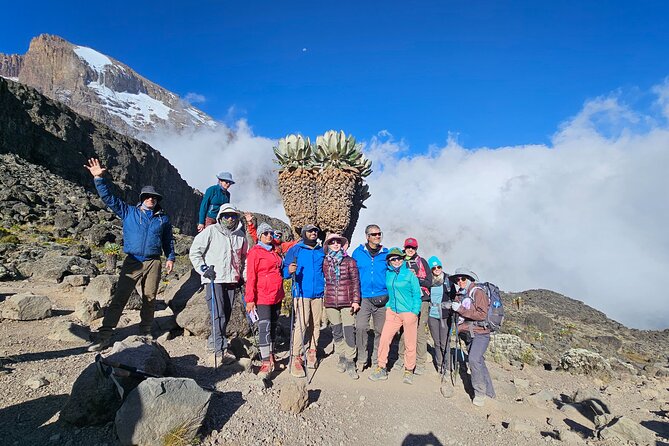
Summit day begins around midnight. After a warm drink and a light snack, you start the slow climb in darkness. This schedule is hard on sleep, but it aims to bring you to the summit in the morning, when the air and views may be clearer.
The climb to Stella Point takes about six hours and reaches 5,685 meters. The route is slow and strenuous, often over loose ground. At Stella Point, you stop to rest, eat, and look over the clouds.
From there, you continue along a normally snow-covered trail for about two hours toward Uhuru Peak. The route passes near the Rebmann and Tarzel glaciers before reaching the summit at 5,895 meters. The final stretch is short in distance but demanding because every step comes at high altitude.
The schedule lists about 12 hours for the full day. After the summit, you descend toward camp, with the exact overnight arrangement needing confirmation because the supplied daily altitude figures do not line up perfectly. A glass of wine and champagne is included for the summit celebration, a small luxury after a very large effort.
Emergency oxygen, a Gamow bag, radio communication, a mobile phone, medical monitoring, and a wilderness first responder trained guide provide useful safeguards. None of these tools removes the risk of altitude illness. You still need to report symptoms promptly and accept a guide’s decision if continuing is unsafe.
Day 7: Mweka forest and the return to town
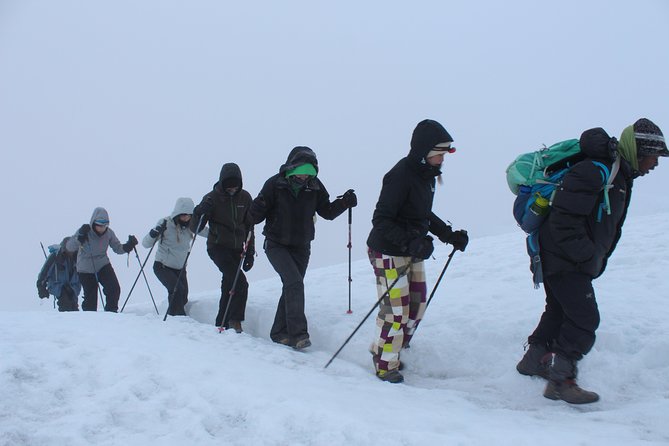
The final hiking day descends sharply from the upper mountain through lush montane rain forest. The route covers about 13.5 kilometers in five to six hours, dropping to around 1,652 meters.
The trail can be slippery when wet, especially after the exposed upper zones. Your knees and toes may complain more on this day than on the climb up. Trekking poles and careful foot placement matter.
The route follows a broad ridge between two river valleys and eventually meets a road for the last 40 minutes to Mweka Park Gate. There, successful climbers receive certificates from the Kilimanjaro National Park Authority: gold for Uhuru Peak and green for Stella Point.
After a picnic lunch and the certificate ceremony, a private bus or Jeep takes you to your hotel in Arusha. This is another point to clarify before booking. The experience is based in Moshi, yet the included transfers and final hotel details refer to Arusha, including a return transfer to an Arusha hotel.
Camp comfort and daily support
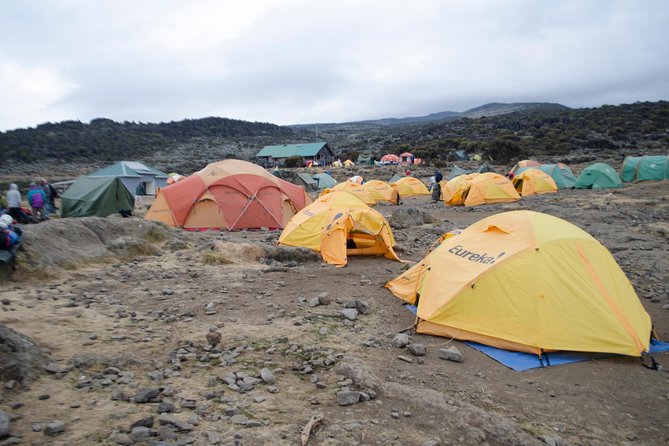
This is a supported expedition rather than a stripped-down trek. Two clients share a three-person expedition tent, giving you more room than a tight two-person shelter. A mattress, mess tent, aluminum table, luxury chair with back rest, and shower or washing tent are included.
A private tented flush toilet is a useful comfort at altitude. You also receive a bowl of hot washing water morning and evening, plus a hot steamy towel at camp. These details sound minor before the climb, but they matter after a long day in dust, cold, and damp clothes.
Meals are described as large, fresh, healthy, and nutritious, with breakfast, lunch, and dinner included each day. Purified mountain water is also supplied. Communication and safety equipment includes a two-way radio, mobile phone, medical kit, emergency oxygen, Gamow bag, pulse oximeter, and vital sign monitoring.
The operator also states that porters receive fair and ethical treatment. That is an important part of the price. Ask for the company’s current porter policy and tipping guidance, since gratuities are not included.
Guides, group style, and who should choose it
This is a private activity, so only your group participates. That gives you more control over pace and rest stops than a large mixed party, though the group still needs to move within safe limits set by the mountain crew.
The named guides associated with the experience include Manase, Ayumwe, Stephen, and Joseph. The strongest praise centers on their friendliness, mountain ability, help reaching the summit, and quick answers during planning. If guide choice matters to you, ask which team is assigned to your dates rather than assuming a particular guide will lead.
You should have a moderate fitness level. The biggest challenge is not one steep section alone. It is the repeated walking, altitude, early start, cold, uneven ground, and long descent. You do not need technical climbing experience for the described route, but you do need to train for sustained uphill and downhill walking.
The route suits you best if you want varied scenery, a private party, careful acclimatization, substantial camp support, and a guided summit attempt. It is less suited to anyone seeking a short, low-cost mountain outing or a relaxed holiday with plenty of sleep.
Is the $3,000 price fair?
I find the price defensible if the included services are delivered as stated. Park charges, rescue fees, transport, staff wages, food, water, accommodation, medical equipment, tents, and airport transfers quickly add up on Kilimanjaro. The private format and high level of camp equipment also add real value.
Still, compare the details rather than only the headline price. Ask exactly where the two hotel nights are located, how many nights are on the mountain, which airport transfers are included, and how the itinerary reaches seven or eight days. Confirm the planned summit camp and the final Arusha or Moshi transfer.
You must budget separately for international airfare, visas, personal trekking gear, staff gratuities, excess baggage, laundry, souvenirs, communication charges, and possible medical or extra evacuation costs. Cancellation is free up to 24 hours before the start time. Poor weather can lead to a new date or full refund, while late cancellations and changes are not accepted.
Should you book the Lemosho Route?
Book this climb if you want a well-supported private ascent with strong attention to acclimatization and safety. The Shira Plateau, Lava Tower, Barranco Wall, glacier views, and long summit day give you a varied route rather than a single repetitive uphill march.
Before paying, get the seven-day versus eight-day schedule in writing. Also confirm the start point, hotel city, camp elevations, and exact transport plan. If those details match the $3,000 package, Jaribu Africa Adventures offers a serious Kilimanjaro experience with a good balance of comfort, challenge, and mountain time.
FAQ
How long is the Kilimanjaro Lemosho Route experience?
The experience is marketed as an eight-day climb, but the supplied hiking schedule lists seven days. Confirm the exact duration and number of nights before booking.
What is the price per person?
The listed price is $3,000 per person.
Is this a private tour?
Yes. Only your group participates in the activity.
What fitness level is required?
A moderate physical fitness level is required. The trek includes long walking days, steep ascents and descents, a midnight summit start, and high altitude.
Are meals included?
Yes. Breakfast, lunch, and dinner are included, with seven of each listed in the package.
Is personal trekking equipment included?
No. Personal trekking equipment is not included, so you must arrange your own gear.
Does the tour include airport and mountain transfers?
Yes. Airport transfers and return transport between an Arusha hotel and the park gate are included. Since the experience is based in Moshi but the final hotel details refer to Arusha, confirm the exact transfer plan before departure.
Just added around Moshi
- Moshi: Lake Chala Tour: Hiking &/or Kayaking★ 4.5 · 3 reviews
- 3 Days Tanga Exclusive Beach Holiday★ 5.0 · 3 reviews
- Serengeti Wildebeest Migration.★ 5.0 · 3 reviews
- Chemka Hotpsrings E-Bike Day Trip★ 5.0 · 3 reviews
- Explore 1 day Ngorongoro Crater Budget Group Safari from Arusha★ 5.0 · 3 reviews
- Explore the 360° of Kilimanjaro★ 5.0 · 3 reviews
- Affordable Short Tanzania Safari (2 Days Camping Safari)★ 5.0 · 3 reviews
- Rongai Route 7 Days★ 5.0 · 3 reviews
Kilimanjaro Treks, compared.



8-Day Small-group Lemosho Kilimanjaro Summit Trekking
Read our review →


Climbing Kilimanjaro through 7 days Machame Route
Read our review →

Browse the lists this tour appears in