
Reviewed · KILIMANJARO TREKS
Kilimanjaro Lemosho Route 8 Days
Kilimanjaro rewards patience, not haste. This 8-day Lemosho Route gives you a scenic approach across the Shira Plateau, views toward Mount Meru and the Great Rift Valley, and a summit plan built around daylight and sunrise. I like the gradual altitude gain and the extra time for acclimatization. I also like the serious safety kit, including oxygen, a Gamow Bag, radios, and pulse oximeters.
The drawback is that summit day is still brutally long. You climb to Uhuru Peak, descend to Barafu for a short rest, then continue to Mweka Camp. The listed hiking times also do not always match the daily totals, so you should confirm the exact schedule, hotel nights, and summit departure time before paying.
In This Review
- Key points to know before you book
- Why the Lemosho Route is worth eight days
- Day 1: Londorossi Gate to Mti Mkubwa Camp
- Day 2: Mti Mkubwa to Shira Camp 1
- Day 3: Shira Camp 1 to Shira Camp 2
- Day 4: Shira Camp 2 to Barranco Camp
- Day 5: Barranco to Karanga Valley
- Day 6: Karanga Valley to Barafu Camp
- Day 7: Uhuru Peak, Barafu, and Mweka Camp
- Day 8: Mweka Gate and the certificate ceremony
- Food, tents, safety, and porter care
- What the $2,833.34 price really covers
- Who should choose this climb
- Should you book the 8-day Lemosho Route?
- FAQ
- How long is the Kilimanjaro Lemosho Route experience?
- What is the highest point reached?
- Is this a private tour?
- What level of fitness is required?
- Are meals included?
- Is drinking water provided?
- What safety equipment is included?
- Are airport transfers and hotels included?
Key points to know before you book
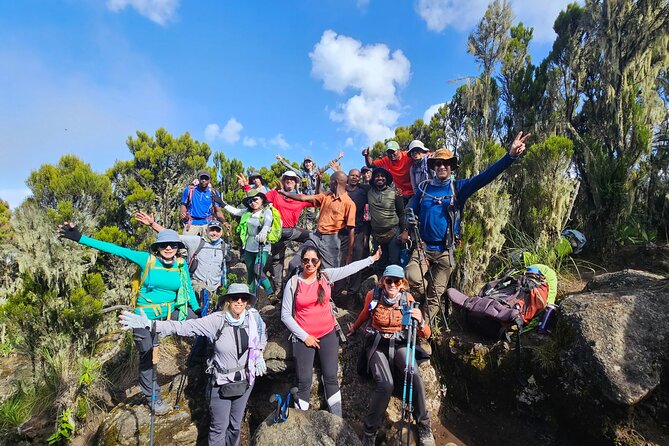
- The Lemosho route is the scenic choice: You cross the Shira Plateau and may see views toward Mount Meru, Longido, the Great Rift Valley, and some wildlife.
- The summit day is demanding: The climb to Uhuru Peak is followed by a descent through Barafu and a further walk to Mweka Camp.
- Altitude support is unusually well covered: Emergency oxygen, a Gamow Bag, pulse oximeters, rescue fees, and mountain radios are included.
- Porter support is built into the price: A porter carries your day pack during the summit attempt, while a larger porter team handles mountain equipment.
- The company earns strong praise for its staff: Guides including Abel, Eli, Richard, Justin, Abdul, and Priscus are repeatedly praised for encouragement, calm judgment, and altitude advice.
- The $2,833.34 price covers a lot: Park fees, meals, tents, transfers, hotels before and after the trek, guides, porters, and rescue costs are included, but tips and visas are extra.
Why the Lemosho Route is worth eight days
Kilimanjaro is not a technical mountain climb in the usual sense. You do not need ropes or climbing experience for this route, but you do need to walk uphill for many hours at high altitude. The real test is how your body handles thinner air.
That is why eight days matters. The route gives you several nights to gain height more slowly than on shorter itineraries. Day 1 begins at 2,385 meters, while the summit reaches 5,895 meters. That is a major change in altitude, and the extra days give your body a better chance to adjust.
Lemosho is also chosen for scenery. Instead of starting in the thicker forest on the eastern side of the mountain, you approach from the west. The route crosses the broad Shira Plateau before joining the southern circuit near Barranco. You get more varied scenery, though you should not expect easy walking simply because the route is scenic.
This is a private tour, so your group travels together rather than joining a large public departure. That matters on a mountain. The guides can adjust the pace to the group, and one past solo participant completed the route in seven days after the plan was changed to suit their pace. You should not count on finishing early, but the example shows some flexibility is possible.
More Kilimanjaro routes and climbs:
- Kilimanjaro climb by Lemosho Route (7-day)
★ 5.0 · 651 reviews - Kilimanjaro climb, Machame Route (7-day)
★ 5.0 · 262 reviews - Kilimanjaro Climbing Lemosho Route 8 Days.
★ 5.0 · 186 reviews
Day 1: Londorossi Gate to Mti Mkubwa Camp
Your mountain program begins with a drive to Londorossi Park Gate at 2,385 meters, or 7,825 feet. After park entry formalities, you hike to Mti Mkubwa Camp at 2,700 meters.
The first walk takes about three to four hours over eight kilometers. This is a useful opening day because it gets you moving without throwing you straight into a huge climb. The forest setting can feel cool and damp, and the short distance gives you time to settle into the pace, your boots, and the daily camp routine.
Some wildlife may be seen on the route, although the information provided does not promise a particular animal or a dedicated wildlife activity. Keep your eyes open, but treat any sighting as a bonus rather than the purpose of the day.
At camp, warm water for washing is provided every day. That sounds modest until you have spent several hours hiking and are facing a cold mountain evening. The tents include sleeping mats, and toilet tents and a portable personal flash toilet are part of the setup.
Day 2: Mti Mkubwa to Shira Camp 1
The second day covers about six kilometers and takes roughly five to six hours. You climb from 2,700 meters to Shira Camp 1 at 3,500 meters.
This is a shorter distance than Day 1 but a bigger altitude gain. Walk slowly. On Kilimanjaro, a steady pace is not a sign of weakness. It is one of the most useful tools you have.
Shira Camp 1 marks your arrival on the plateau, where the scenery opens up. You may begin to see the wider views that make Lemosho attractive, including distant views toward Mount Meru and Longido. The route feels more exposed here, so warm layers and protection from wind become more important.
The meal plan is full board, with breakfast, lunch, and dinner included throughout the mountain portion. The company promises large portions of fresh, nutritious food. That is valuable on a long trek, but you should still bring any favorite snacks or drinks you personally rely on, since personal beverages and extras are not included.
Day 3: Shira Camp 1 to Shira Camp 2
Day 3 is about eight kilometers and three to four hours, taking you to Shira Camp 2 at 3,840 meters. The short hiking time gives you a relatively gentle day at a useful altitude.
I like this part of the plan because it avoids treating every day as a race toward the next camp. You gain height, but you also have time to rest, eat, and let the guides check how you are responding.
The Shira Plateau is one of the route’s signature features. Its open scenery contrasts with the forest of the first day. Views of the Great Rift Valley, Mount Meru, and Longido are part of the appeal, although cloud and weather can affect what you see.
The plateau can also feel stark and exposed. At 3,840 meters, you may notice headaches, poor sleep, or unusual tiredness. Tell the guide early if you feel unwell. The included pulse oximeter can help the team monitor oxygen levels, but it is not a substitute for honest communication or a medical decision.
A few more trips of this kind worth comparing:
- Safari Serengeti And Ngorongoro
★ 5.0 · 288 reviews - Climbing Kilimanjaro – Machame Route
★ 5.0 · 170 reviews - Climbing Kilimanjaro through 7 days Machame Route
★ 5.0 · 151 reviews - Kilimanjaro climb, Lemosho Route (8-day)
★ 5.0 · 148 reviews
Day 4: Shira Camp 2 to Barranco Camp
The fourth day covers eight kilometers and takes six to seven hours. You climb only slightly, from 3,840 meters to Barranco Camp at 3,950 meters, but the route itself is longer and more tiring.
This is a classic acclimatization idea: spend much of the day walking at altitude without ending dramatically higher. The difference between Shira and Barranco camps is only about 110 meters, yet the day still asks a lot of your legs.
Barranco is an important point on the southern circuit. The scenery becomes more rugged, and the camp sits below the Barranco Wall. The wall is not described as a technical climbing section, but the next morning will involve hands-on scrambling and steep walking. You should be comfortable using your hands for balance and moving carefully over uneven ground.
The distance figures provided contain a small inconsistency on Day 2, where six kilometers and six miles are both shown. Do not plan your energy around perfect numerical precision. Ask the company for its current route notes and expected walking times.
Day 5: Barranco to Karanga Valley
The route from Barranco Camp to Karanga Valley Camp covers five kilometers and takes four to five hours. The camp sits at 3,995 meters, just below 4,000 meters.
Short does not mean easy here. The day begins with the Barranco Wall, then continues through high-altitude terrain toward Karanga. You gain only a little height, which again helps your body adjust before the push to Barafu.
This is a good day to check your equipment. Tight boots, damp socks, or a poorly fitted backpack will become a much bigger problem on summit night. You have a porter to carry your day pack during the summit attempt, but you still need to carry personal essentials during most of the trek.
The team provides waterproof tents, sleeping mats, solar LED lights, dining tables, and chairs with backs and armrests. Those chairs may sound like a small luxury, but a proper place to sit after a long day is welcome. The camping setup is practical rather than glamorous.
Day 6: Karanga Valley to Barafu Camp
Day 6 covers just four kilometers and takes four to five hours. The climb is from 3,995 meters to Barafu Camp at 4,550 meters, or 14,928 feet.
Barafu is the launch point for the summit attempt. The short distance gives you a chance to reach camp, eat, organize your clothing, and rest before the hardest section. Your summit schedule should be confirmed in advance because the description refers to reaching the summit in daylight and with sunrise, but it does not state the precise departure hour.
The night at Barafu can be cold and uncomfortable. You may get little sleep because of the altitude and the early start. Keep your summit clothing organized before lying down. Your headlamp, gloves, water, snacks, camera, and extra layers should be easy to reach.
The company carries emergency oxygen, a Gamow Bag, rescue equipment, and VHF radios. These are important safeguards, but no equipment removes the risk of high altitude. The guides must be willing to turn someone around if necessary, and you should agree before the climb that safety comes before the summit certificate.
Day 7: Uhuru Peak, Barafu, and Mweka Camp
This is the day that defines the trip. The stated summit section involves climbing to Uhuru Peak at 5,895 meters, with about seven to eight hours of hiking over five kilometers. After reaching the top, you descend through Barafu for a short rest, then continue to Mweka Camp at 3,060 meters.
The second descent is listed at four to six hours and 12 kilometers. That makes Day 7 a very long day, even for a fit person. The climb is slow and steep, while the descent can punish your knees and feet. You will want strong socks, reliable footwear, and enough water and snacks.
The summit plan is one of the distinctive features of this itinerary. It aims for summit views in daylight and around sunrise, rather than treating the top as a dark, hurried stop. Exact conditions depend on weather, pace, and the guide’s judgment. Clouds can hide the view, and the summit can be extremely cold.
At the top, you reach Uhuru Peak, Africa’s highest point. The itinerary also refers to passing by Kibo Crater Rim and trekking toward the inner Reusch Crater. These features add interest beyond simply standing at the summit sign, but the exact access and timing should be confirmed before departure.
After the summit, reaching Mweka Camp is a relief. You lose a large amount of altitude, and the air becomes easier to handle. Do not mistake that for an easy finish. Your legs will already be tired, and the final descent can feel endless.
Day 8: Mweka Gate and the certificate ceremony
The final walk takes you from Mweka Camp to Mweka Gate. The listed distance is four kilometers and the hiking time is three to four hours, with a stated gate elevation of 4,600 meters. That elevation figure appears inconsistent with the rest of the itinerary and with the usual direction of descent, so confirm the final-day details with the provider.
After reaching the gate, you transfer to Park View Inn for a certificate and summit party ceremony. It is a pleasant way to close the mountain portion. You have time to shift from muddy boots and camp routines back toward ordinary hotel life.
Transfers are included on arrival, departure, and within the destination location. That reduces the need to arrange separate transport in Moshi, though you should make sure the company has your flight details and hotel information well ahead of time.
Food, tents, safety, and porter care
This package is strongest in the practical details. You receive purified drinking water, warm water for washing, full-board meals, waterproof tents, mats, lighting, dining furniture, and toilet tents. The equipment list suggests a more organized camp experience than a bare-bones trek.
Safety provisions are also extensive. Emergency oxygen, a Gamow Bag, pulse oximeters, radios, and mountain rescue fees are included. Ask how the guides use these tools and how evacuation decisions are made. A good safety plan is not just a list of gear.
The company also states that porters receive fair and ethical treatment. That matters in Tanzania, where porter welfare is a major concern. The guide team has included former porters, and the company’s director, George Mtaki, is described as having worked as a porter before establishing the business. That background may explain the repeated emphasis on respectful treatment.
Past trips have featured guides such as Abel, Eli, Richard, Justin, Abdul, and Priscus. The strongest praise focuses on encouragement, calm handling of difficult moments, good altitude advice, and the ability to adjust the pace. The cooks receive praise too, with William named on one trip.
What the $2,833.34 price really covers
At $2,833.34 per person, this is not a bargain-basement climb. It can still be good value because the fee includes major costs that quickly add up on Kilimanjaro:
- Government taxes and park entrance fees
- Arrival and departure transfers
- Transport within the destination
- Two nights of classic standard hotel accommodation and two nights of comfort hotel accommodation as described
- Bed and breakfast at the hotels
- Full-board mountain meals
- Guides and porters
- Sleeping mats, tents, lighting, and toilet facilities
- Purified drinking water and warm washing water
- Rescue fees
- Safety equipment
- A porter for your day pack during the summit attempt
The hotel wording needs clarification. The package lists two nights of classic standard accommodation and two nights of comfort accommodation, one before and after the trek, but it is not completely clear how those nights are divided. Ask for the exact hotel names and number of nights before booking.
Tips, the Tanzania visa, laundry, telephone use, beverages, and optional tours are extra. A short safari after the climb is not included, though the company can arrange optional tours. Many people pair Kilimanjaro with a safari, but budget for it separately.
Who should choose this climb
I would choose this route if you want scenery, a private group, and more time for altitude adjustment. It suits people with a moderate fitness level who can walk uphill for several hours, tolerate basic camping, and accept that summit success is never guaranteed.
It is also a good fit if safety communication matters to you. Radios, oxygen, a Gamow Bag, pulse checks, rescue fees, and experienced English-speaking guides provide useful support.
I would hesitate if you want a short or comfortable holiday. This is still a serious physical challenge, and summit day combines a seven to eight-hour ascent with a long descent to Mweka Camp. You should also avoid booking until the company confirms the schedule details that appear unclear, especially the Day 7 timing, the Day 8 elevation, and the hotel arrangement.
The experience has a 4.9 rating from 14 ratings, with 100 percent recommending it. That matches the strongest pattern in the feedback: excellent organization, friendly guides and porters, strong food, and helpful altitude advice. The company’s flexibility also appears useful for private groups and solo climbers.
Should you book the 8-day Lemosho Route?
Yes, if you want one of Kilimanjaro’s more scenic routes and value careful support over the lowest price. The Shira Plateau, views toward Mount Meru and the Great Rift Valley, the crater-rim sections, and the sunrise summit plan give this climb more variety than a simple uphill march.
Book it only after confirming the few unclear details in writing. Ask for the precise summit departure time, the actual walking times, the hotel nights, the Mweka Gate elevation, and the tipping guidance. If those answers are clear, the included equipment, local staff, meals, transport, and rescue provisions make the price reasonable for an eight-day private climb.
Free cancellation is available if you cancel at least 24 hours before the local start time. Poor weather may lead to a new date or a full refund, while changes made inside 24 hours are not accepted.
FAQ
How long is the Kilimanjaro Lemosho Route experience?
The climb lasts approximately eight days, from the drive to Londorossi Park Gate through the descent to Mweka Gate and the certificate ceremony.
What is the highest point reached?
The route reaches Uhuru Peak at 5,895 meters, or 19,341 feet.
Is this a private tour?
Yes. Only your group participates in the activity.
What level of fitness is required?
A moderate level of physical fitness is required. The route includes several days of walking for three to seven hours, followed by a very long summit and descent day.
Are meals included?
Yes. Breakfast, lunch, and dinner are included throughout the eight-day program. Mountain accommodation is full board.
Is drinking water provided?
Yes. Clean, purified drinking water is included.
What safety equipment is included?
The package includes emergency oxygen tanks, VHF radios, a Gamow Bag, a pulse oximeter, and mountain rescue fees.
Are airport transfers and hotels included?
Arrival and departure transfers are included. Hotel accommodation is also included before and after the trek, with the package describing classic standard and comfort hotel nights. Ask the company to confirm the exact hotel schedule.
Just added around Moshi
- Moshi: Lake Chala Tour: Hiking &/or Kayaking★ 4.5 · 3 reviews
- 3 Days Tanga Exclusive Beach Holiday★ 5.0 · 3 reviews
- Serengeti Wildebeest Migration.★ 5.0 · 3 reviews
- Chemka Hotpsrings E-Bike Day Trip★ 5.0 · 3 reviews
- Explore 1 day Ngorongoro Crater Budget Group Safari from Arusha★ 5.0 · 3 reviews
- Explore the 360° of Kilimanjaro★ 5.0 · 3 reviews
- Affordable Short Tanzania Safari (2 Days Camping Safari)★ 5.0 · 3 reviews
- Rongai Route 7 Days★ 5.0 · 3 reviews
Kilimanjaro Treks, compared.



8-Day Small-group Lemosho Kilimanjaro Summit Trekking
Read our review →


Climbing Kilimanjaro through 7 days Machame Route
Read our review →

Browse the lists this tour appears in