
Reviewed · KILIMANJARO TREKS
Lemosho Route 7 Days Trekking at Mount Kilimanjaro
The mountain reveals itself one zone at a time. Suricata Safaris’ seven-day Lemosho trek gives you a quieter approach to Kilimanjaro, beginning in Arusha and moving from rainforest to volcanic rock, high desert, and the icy summit of Uhuru Peak. I like the gradual route, the small advertised group size of up to eight, and the careful altitude plan that takes you to Lava Tower before Barranco Camp. I also like that meals and a certified guide are included, which removes some of the usual mountain logistics.
The main caution is simple: summit day is extremely demanding. You sleep only briefly at Barafu Camp, begin around midnight, climb to 5,895 meters, return to Barafu, then continue to Mweka Camp. You should also clarify the final group size before booking, since the advertised maximum is eight, while one account describes a much larger overall support team.
In This Review
- Five things to know before choosing Lemosho
- Why the Lemosho Route is worth seven days
- From Arusha to Big Tree Camp on day one
- Shira One and the first serious altitude gain
- Lava Tower and Barranco Camp on day three
- The Barranco Wall and a short day to Karanga
- Barafu Camp prepares you for the hardest night
- Uhuru Peak and the long descent on day six
- Mweka Gate and the return to Arusha
- What the $2,800 price means in practice
- The guiding team and the human side of the climb
- Who should book this trek?
- Should you book the seven-day Lemosho Route?
- FAQ
- Where does the seven-day Kilimanjaro trek begin and end?
- How high is Uhuru Peak?
- How difficult is summit day?
- What meals are included?
- Is a guide included?
- Can I cancel for a full refund?
Five things to know before choosing Lemosho
- The route begins at 2,100 meters and reaches 5,895 meters, giving you several days to adjust before summit night.
- Lava Tower at 4,600 meters is used for acclimatization, even though you sleep lower at Barranco Camp.
- The summit day is not a normal hiking day, with a midnight start, summit climb, return to Barafu, and descent to Mweka.
- Freddy, Mike, Modest, and Teacher are names associated with the guiding team, with special praise for their calm support and mountain experience.
- The $2,800 price includes six breakfasts, seven lunches, six dinners, and a certified guide, but not international flights, taxes, or insurance.
- Free cancellation applies up to 24 hours before the start time, while changes or cancellations inside that window receive no refund.
Why the Lemosho Route is worth seven days
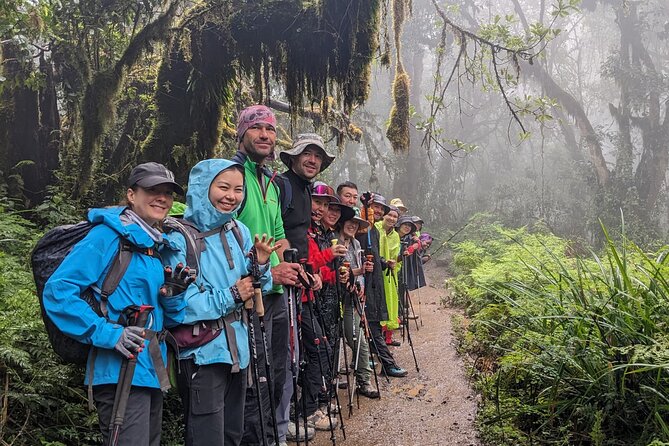
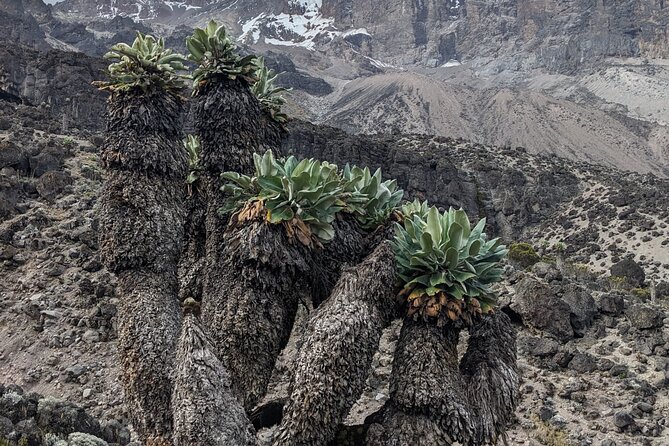
Kilimanjaro has several routes, and Lemosho earns its appeal through scenery and pacing. You do not rush straight toward the summit. Instead, you cross several ecological zones, beginning in thick rainforest and ending on bare volcanic slopes above the clouds.
That gradual change gives the trek a strong sense of progress. On the first day, you are walking beneath trees. By the middle of the trip, the vegetation has thinned into heath and moorland. Near Barafu, the surroundings are dry and stark. At the top, the feeling is more lunar than tropical.
The seven-day schedule also gives your body more time than a very short Kilimanjaro program. That matters because altitude, not leg strength alone, is the main challenge. The route still climbs quickly, but the plan includes an important high-point excursion to Lava Tower followed by a lower overnight stop at Barranco.
I would not call this an easy trek. The daily distances before summit night are manageable for someone with moderate fitness, but high altitude changes the rules. A strong hiker can still struggle at 5,000 meters. Slow walking, careful pacing, and listening to your guide matter more than proving how fast you can go.
More Kilimanjaro routes and climbs:
- 8-Day Small-group Lemosho Kilimanjaro Summit Trekking
★ 5.0 · 186 reviews - 7-Day Machame Kilimanjaro Summit Tour from Arusha
★ 5.0 · 125 reviews - Mountain Kilimanjaro Day Hike
★ 5.0 · 102 reviews
From Arusha to Big Tree Camp on day one
Your journey begins with pickup in Arusha and a drive in a 4×4 Land Cruiser or Land Rover toward Londorossi Gate. The drive takes about an hour, followed by registration and permit arrangements. This is practical rather than scenic, but it is an important start because the park entry process must be handled before you reach the trail.
From the gate, the vehicle continues to the Lemosho starting point at about 2,100 meters. The first hike covers roughly six kilometers and takes about three hours, finishing at Mti Mkubwa Camp, also called Big Tree Camp, at 2,750 meters.
This first section passes through rainforest. The 650-meter gain is enough to make you aware of the climb, but the day is short compared with what follows. I like this opening because it lets you settle into the walking rhythm without spending your first day exhausted.
Dinner and camping follow at Mti Mkubwa. The details of the camping setup are not specified, so ask what equipment, sleeping arrangements, and porter services are included before you commit. The price clearly includes meals and a certified guide, but the published inclusions do not spell out every camping service.
Shira One and the first serious altitude gain
Day two leaves the rainforest and enters the heath and moorland zone. You climb to Shira One Camp at approximately 3,500 meters, covering 13 kilometers and gaining about 1,100 meters.
This is one of the harder regular trekking days because the distance and altitude gain arrive together. The practical advice is to walk slowly from the start. The route description itself warns you to control your pace, and that is good mountain sense. Arriving tired at camp is less useful than arriving with energy for the next day.
Shira One gives you your first real feeling of being high on Kilimanjaro. Trees no longer dominate the route, and the open surroundings make the mountain feel larger. You will likely notice the thinner air here, even if your legs still feel fresh.
The six-hour estimate is only an approximation. Trail conditions, group pace, breaks, and altitude can all change the schedule. Keep your day flexible and avoid planning anything in Arusha for the evening.
Lava Tower and Barranco Camp on day three
Day three is the key acclimatization day. After breakfast, you climb toward Lava Tower at 4,600 meters, then continue down to Barranco Camp at 3,940 meters. The total distance is about 10.75 kilometers, and the walking time is listed at six to seven hours.
The important point is not just reaching a high point. You spend part of the day walking high, then sleep lower. That pattern helps your body adjust better than simply climbing higher and staying there.
A picnic lunch is provided, so you do not return to a dining tent or vehicle during the day. Carry water and personal snacks where you can reach them easily. The climb to Lava Tower adds around 750 meters from Shira One, and the route then loses height before Barranco.
Barranco Camp is a memorable place to pause because it sits below the famous Barranco Wall. You will see the next morning’s challenge before dinner. That can be motivating, though it may also make the wall look more intimidating than it feels once you are moving.
A few more trips of this kind worth comparing:
- Private Full Day Hiking Experience to Marangu Route
★ 5.0 · 61 reviews - 4 Days Mount Meru Trekking
★ 5.0 · 55 reviews - 4 days Best experience Kilimanjaro Hike, Serengeti &Ngorongoro
★ 5.0 · 54 reviews - From Arusha/Moshi: Kilimanjaro Hike Marangu Route Day Trip
★ 4.5 · 54 reviews
The Barranco Wall and a short day to Karanga
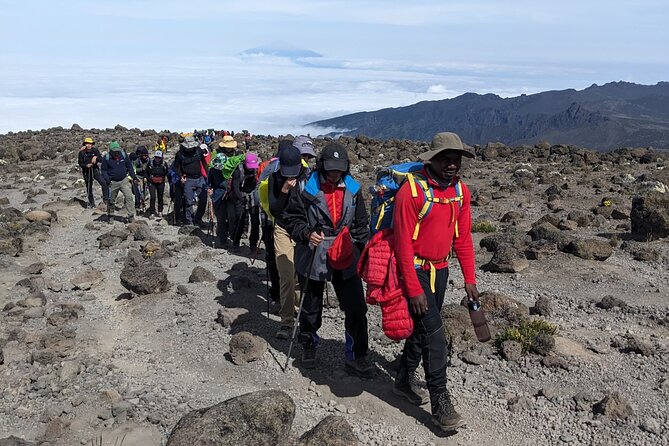
Day four covers only about 4.25 kilometers and takes roughly three to four hours. You climb the Barranco Wall, reaching about 4,250 meters, then continue to Karanga Camp at 4,000 meters.
This is the shortest walking day, and that is valuable. After Lava Tower and before the summit push, time to rest is not wasted time. A hot lunch at Karanga is followed by rest and an acclimatization walk.
The Barranco Wall is the day’s defining feature. The route requires a steady climb rather than a long march, and your guide’s support is especially useful here. Keep your hands free, follow instructions, and do not let the short distance trick you into rushing.
The schedule leaves room to recover. I would use it for eating, drinking, checking clothing, and sleeping if possible. Small problems with boots, socks, or layers become bigger problems on summit night.
Barafu Camp prepares you for the hardest night
The route to Barafu Camp on day five is another short section, about 4.25 kilometers with a 600-meter gain. It takes approximately three to four hours and reaches 4,600 meters.
You move through heath and moorland toward a dry, high camp. A hot lunch is served on arrival, followed by rest and an early dinner. Then you sleep for a few hours before the midnight wake-up.
This is where the trip changes character. Until now, the days have followed a fairly normal hiking pattern. At Barafu, you are preparing for a night climb in cold, darkness, and thin air.
Pack only what you need for the summit in an accessible place. The description says you will have hot drinks and snacks before setting out. Use the afternoon to organize those essentials, rather than searching through your bag at midnight.
Uhuru Peak and the long descent on day six
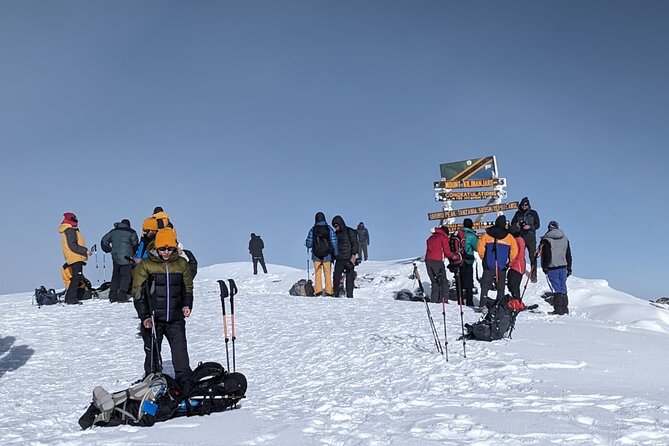
Summit day begins around midnight. You climb from Barafu to Uhuru Peak, Africa’s highest point, at 5,895 meters. The ascent covers about 4.86 kilometers, gains 1,295 meters, and takes six to seven hours.
Those figures can sound manageable on paper. They are not. The combination of steep climbing, cold, darkness, and altitude makes this the hardest part of the trek by far. One account describes the summit as very challenging even for someone in excellent shape, and that is the right expectation.
The reward is reaching Uhuru Peak. If you make the summit, you receive a certificate at Mweka Gate on the final day. Keep your expectations sensible, though. Your guide’s job is to help you climb safely, not to force you onward if altitude symptoms become serious.
After the summit, you descend to Barafu for breakfast, a journey of about three hours. The day is not over. After several hours of rest and a hot lunch, you continue downward through alpine desert, heath, and moorland to Mweka Camp at 3,100 meters.
The total distance from Uhuru Peak through Barafu to Mweka is about 11.5 kilometers, with a drop of roughly 2,795 meters. The listed seven-hour hiking estimate refers to the mountain movement, but in practical terms this is an all-day effort. Your feet and knees may feel the descent more than the climb.
This is the moment when the quality of the guiding team matters most. Freddy and Mike receive special praise, while Modest and Teacher are also named as experienced and supportive members of the team. Accounts also describe cooks and porters working through repeated rain and difficult conditions. Those details matter because summit success depends on more than a trail guide at the front.
Mweka Gate and the return to Arusha
The final morning begins with breakfast and a three to four-hour descent through rainforest to Mweka Gate. The route covers about 9.1 kilometers and loses approximately 1,400 meters, ending at 1,800 meters.
After the high, dry slopes, the rainforest feels like a different world. It is also a welcome sign that the technical challenge is behind you. At the gate, successful climbers receive their certificates, meet the vehicle, and transfer to Jevas Hotel in Arusha.
The listed day-seven duration is about six hours, which includes the descent and transfer. Do not schedule a tight onward connection immediately after the trek. The mountain schedule can shift, and you will probably want time to eat, shower, and recover.
The journey begins and ends in Arusha, making this a useful format if you are arranging other Tanzanian plans around it. Pickup is offered, and the experience uses a mobile ticket, so confirm the exact meeting details before departure.
What the $2,800 price means in practice
At $2,800 per person, this is a major purchase. The value depends on what you expect from a guided Kilimanjaro climb and what you arrange separately.
The stated package includes:
- A certified guide
- Six breakfasts
- Seven lunches
- Six dinners
The meals cover the full mountain schedule, including the picnic lunch on day three and hot meals at key camps. That is useful because food logistics become difficult at altitude. It also means you do not need to plan seven separate trail lunches yourself.
The price does not include international flights, departure taxes, or medical, travel, and luggage insurance. Insurance is not a minor extra on a high-altitude trip. You should arrange suitable cover before setting out and check that it applies to the activity you are booking.
The support team requires clarification. Several accounts describe cooks and porters, including one group with nine porters, but the stated inclusions do not list them clearly. One account also describes a total team of 25 people, while the tour information gives a maximum of eight participants. That may refer to a small climbing group supported by a larger mountain crew, but you should ask Suricata for the exact arrangement, porter policy, tipping expectations, and participant count.
The guiding team and the human side of the climb
The most strongly praised part of this experience is the staff. Freddy and Mike are singled out for their guidance and care. Modest and Teacher are also named, and the comments describe the team as experienced, kind, and steady during hard conditions.
That praise is particularly meaningful on Kilimanjaro. A guide does more than point out the path. The guide sets the pace, watches how you are coping, helps manage the summit schedule, and keeps the group moving through rain, fatigue, and altitude.
Weather can also change the character of the trip. One account describes nearly six days of continuous rain, while another mentions rain almost every day. You should pack for wet conditions, even though the exact gear list is not provided. A dry change of clothes and reliable rain protection can make a major difference to your comfort.
The overall rating is listed as five out of five from seven reviews, but the small number of ratings means I would treat that as encouraging rather than conclusive. The repeated praise for the guides is more useful than the number itself.
Who should book this trek?
This trip suits you if you want a quieter Kilimanjaro route, can manage long days at altitude, and prefer a guided package rather than arranging mountain logistics yourself. The seven-day length offers a sensible progression through several zones and includes a proper acclimatization feature at Lava Tower.
It is a good fit for people with moderate physical fitness who are willing to train for sustained uphill and downhill walking. You do not need to be an elite athlete, but you should be honest about the midnight summit effort and the second descent to Mweka after reaching the peak.
It is less suitable if you want a relaxed holiday, dislike camping, or need a fixed schedule with guaranteed daily times. The summit day is long, and weather may affect the pace. You should also ask detailed questions about the crew, camping equipment, group size, and insurance before paying.
Free cancellation is available if you cancel at least 24 hours before the experience start time. Inside that period, the amount paid is not refunded, and changes are not accepted.
Should you book the seven-day Lemosho Route?
I would book this trek if the route, price, and support arrangements match your expectations. The strongest reasons are the scenic approach, the gradual change in altitude, the Lava Tower acclimatization day, and the repeated praise for guides such as Freddy, Mike, Modest, and Teacher.
Before booking, get clear answers about porters, camping gear, tipping, the actual group size, and the insurance requirements. If those details are satisfactory, the seven-day Lemosho plan offers a well-paced way to attempt Kilimanjaro, with enough scenery and variety to make the climb about more than simply reaching the summit.
FAQ
Where does the seven-day Kilimanjaro trek begin and end?
The experience begins in Arusha, with pickup and transport to Kilimanjaro National Park. After the descent to Mweka Gate, you are transferred to Jevas Hotel in Arusha.
How high is Uhuru Peak?
Uhuru Peak is at 5,895 meters and is the highest point reached during the trek.
How difficult is summit day?
Summit day is the most difficult part of the experience. You wake around midnight, climb for about six to seven hours to Uhuru Peak, descend to Barafu for breakfast, rest, eat lunch, and then continue to Mweka Camp.
What meals are included?
The package includes six breakfasts, seven lunches, and six dinners. Lunch on day three is provided as a picnic, and hot meals are scheduled at several camps.
Is a guide included?
Yes. A certified guide is included. The guiding team associated with this experience includes Freddy, Mike, Modest, and Teacher.
Can I cancel for a full refund?
Yes, if you cancel at least 24 hours before the experience start time. Cancellations or changes made less than 24 hours before the start time are not refunded or accepted.
More 7-Day Experiences
- Tanzania Classic – 7 Days
★ 5.0 · 1,151 reviews - 7-Day Premium Luxury Tanzania Safari All-Inclusive
★ 5.0 · 426 reviews - Group Safari 7 Days in Tanzania’s Main Parks
★ 5.0 · 240 reviews - 7 Days Tanganyika Wilderness Safari
★ 5.0 · 159 reviews
Just added around Arusha
- 5 Days Safari Tarangire, Serengeti, and Ngorongoro Crater★ 5.0 · 3 reviews
- Love lives in Africa★ 5.0 · 3 reviews
- 5 Days of Safari, Culture & Hot Springs – Tour from Arusha★ 5.0 · 3 reviews
- Arusha National Park Safari by Jeep★ 4.5 · 3 reviews
- 5Days Family _Group Tour Lodging Mid-Range in the Jungle★ 5.0 · 3 reviews
- 2 Days Tarangire and Ngorongoro Crater Tour★ 5.0 · 3 reviews
- Serengeti & Ngorongoro 3 Days Budget Safari★ 5.0 · 3 reviews
- 7 Days PRIVATE Best of Tanzania Safari *Departing everyday*★ 5.0 · 3 reviews
Kilimanjaro Treks, compared.



8-Day Small-group Lemosho Kilimanjaro Summit Trekking
Read our review →


Climbing Kilimanjaro through 7 days Machame Route
Read our review →

Browse the lists this tour appears in