
Reviewed · KILIMANJARO TREKS
Lemosho Route 8 Days 7 Nights/Kilimanjaro Climb
The long way up is often the wiser way. This 8-day Lemosho climb gives you more time to adjust to altitude than shorter Kilimanjaro routes, with a quieter opening through rainforest and the Shira Plateau. I like the split between Karanga and Barafu, which creates a shorter day before the summit push. I also like the small maximum group size of two, though the midnight summit start and 13-hour summit day demand serious fitness, patience, and mental grit.
At $2,600 per person, the package covers the major costs that can quietly add up on Kilimanjaro: park fees, rescue fees, camping equipment, meals, drinking water, transport, and the wages and park charges for the mountain crew. The main caution is that personal equipment, insurance, visas, and international flights are extra, and tipping the crew is expected.
In This Review
- Key points before you commit
- Why the eight-day Lemosho schedule makes sense
- Day 1: Moshi to the rainforest gate
- Day 2: Leaving the trees for Shira Plateau
- Day 3: Shira Plateau and the Lent Hills
- Day 4: Lava Tower, then down to Barranco
- Day 5: Climbing the Barranco Wall to Karanga
- Day 6: Karanga to Barafu Camp
- Day 7: Stella Point, Uhuru Peak, and the long descent
- Day 8: Mweka descent and back to Moshi
- Crew support and the human side of the climb
- What $2,600 includes, and where costs remain
- Who should choose this route
- Should you book the 8-day Lemosho climb?
- FAQ
- How long is the Lemosho Route climb?
- What time does the experience start?
- How many people can join the climb?
- What meals are included?
- Are airport transfers included?
- What costs are not included?
- What fitness level is required?
Key points before you commit
- The best acclimatization feature is the Karanga stop: Breaking the climb from Barranco to Barafu into two days gives you a shorter day before summit night.
- The route begins in Kilimanjaro’s rainforest: Expect muddy, slippery paths early on, especially after leaving the park gate.
- Shira Plateau adds scenery and altitude practice: Day three includes a long walk toward Moir Hut and the Lent Hills, with several possible acclimatization walks.
- Summit night is a full endurance test: You may begin between midnight and 2 a.m., reach Uhuru Peak at 5,895 meters, then descend to 3,090 meters on the same day.
- The crew is a major part of the experience: Guides named in past trips include Zacariah, Epa, Eric, and Nicholas, with repeated praise for patience, encouragement, and care.
- The package is built for a tiny group: The stated maximum is two people, although one solo climber joined a group of three other climbers on a past departure, so confirm your exact group arrangement.
Why the eight-day Lemosho schedule makes sense
Kilimanjaro is not a technical climb in the usual mountaineering sense, but altitude makes it far harder than the trail distances suggest. Your body has to adjust while you keep walking, eating, sleeping, and managing changing temperatures.
That is why I prefer this eight-day pattern to a rushed route. You spend time at higher elevations without racing straight toward the summit. The route also uses the mountain’s southern circuit, giving you changing views of Kibo, the summit cone, before you reach Barafu.
The key design choice comes near the end. Day five takes you from Barranco to Karanga, and day six continues to Barafu. That leaves day six as a relatively short walking day before the summit attempt. You reach camp, eat early, and try to sleep before beginning again around midnight.
This does not make summit night easy. It simply gives you a better chance of starting it rested rather than arriving at Barafu after a long, exhausting march.
More Kilimanjaro routes and climbs:
- Kilimanjaro climb by Lemosho Route (7-day)
★ 5.0 · 651 reviews - Kilimanjaro climb, Machame Route (7-day)
★ 5.0 · 262 reviews - Kilimanjaro Climbing Lemosho Route 8 Days.
★ 5.0 · 186 reviews
Day 1: Moshi to the rainforest gate
The mountain portion begins with a drive of about 45 minutes from Moshi to Kilimanjaro National Park. The road passes through mountain villages before you reach the park gate, where permits are prepared and the crew organizes supplies.
The waiting can take time. That is normal on a major mountain route, and it gives you a first look at the practical side of the climb: porters moving equipment, guides checking arrangements, and different groups preparing to enter the forest.
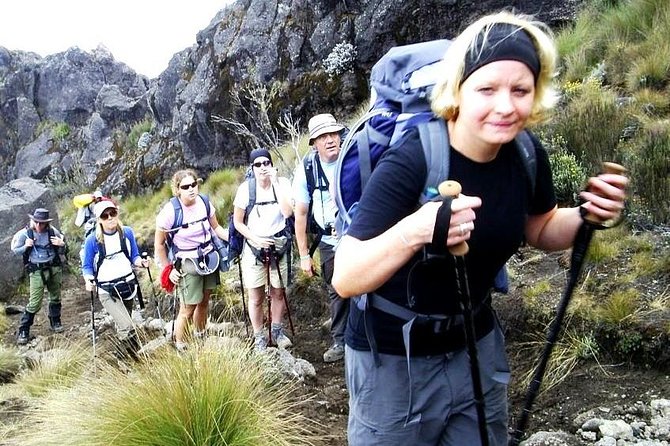
From the gate, you walk through rainforest to an elevation of about 2,895 meters, or 9,500 feet. The listed walking time is about four hours. This is a gentle start in terms of distance, but the trail may be muddy and slippery. Gaiters and trekking poles are especially useful here, not glamorous gear, but good gear rarely needs to be glamorous.
Your guide introduces the local plants, wildlife, and forest conditions as you climb. The rainforest is one of the route’s best early features because it gives the first day a strong sense of place rather than feeling like a simple approach march.
You should arrive ready for damp conditions. Keep rain protection accessible, not buried at the bottom of your pack.
Day 2: Leaving the trees for Shira Plateau
After breakfast, you continue upward from about 2,895 meters to 3,505 meters, or 11,500 feet. The walk takes roughly six hours, and the character of the mountain changes as the forest falls behind.
The path climbs steadily toward the rim of the Shira Plateau. Views open out, the air gets cooler, and the vegetation becomes more exposed. This is an important mental shift. You are no longer walking under a closed forest canopy, and the summit feels more present.
The day is long enough to test your pace, but it is not designed as a race. Walk slowly, drink regularly, and let your guide set a sensible rhythm. On Kilimanjaro, conserving energy early is not laziness. It is good planning.
You may notice the temperature dropping quickly once the sun weakens. Have warm layers ready for camp and evening meals.
Day 3: Shira Plateau and the Lent Hills
Day three is one of the route’s most useful acclimatization days. You begin around 3,505 meters and climb toward approximately 4,200 meters, or 13,800 feet. Walking time is about seven hours.
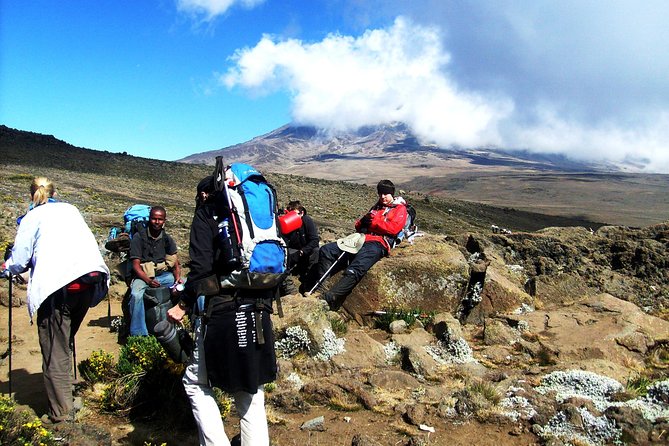
The route crosses the Shira Plateau toward Kibo’s glaciered summit. The walk is described as gentle in parts, passing across moorland meadows and continuing toward Shira 2 Camp near a stream. From there, the route reaches Moir Hut, a less-used camp at the base of the Lent Hills.
The exact appeal here is not a single famous viewpoint. It is the chance to spend a full day at altitude without immediately tackling the summit. Walks on the Lent Hills provide options for additional acclimatization, depending on the group’s condition and the guide’s judgment.
Shira is one of the highest plateaus on Earth, and that fact becomes real in the spare, open feel of the setting. You should also understand the tradeoff: altitude can affect sleep, appetite, and energy even when the walking feels manageable. Tell your guide early if you develop a headache, nausea, unusual tiredness, or other symptoms.
A few more trips of this kind worth comparing:
- Safari Serengeti And Ngorongoro
★ 5.0 · 288 reviews - Climbing Kilimanjaro – Machame Route
★ 5.0 · 170 reviews - Climbing Kilimanjaro through 7 days Machame Route
★ 5.0 · 151 reviews - Kilimanjaro climb, Lemosho Route (8-day)
★ 5.0 · 148 reviews
Day 4: Lava Tower, then down to Barranco
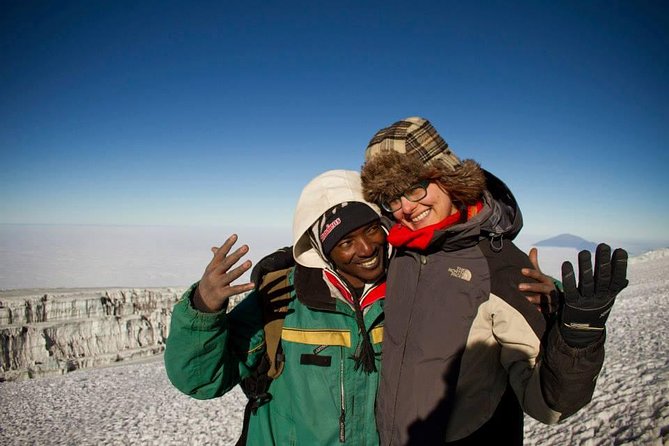
This is a classic climb high, sleep lower day. You start around 4,200 meters and reach the Lava Tower area at about 4,650 meters, or 15,250 feet, before descending to Barranco Camp at roughly 4,000 meters.
The total walking time is listed at about five hours. The route follows a ridge east from Shira, passes a junction toward Kibo, and then turns southeast toward Lava Tower, also called the Shark’s Tooth.
The altitude gain is the point. You spend time high enough to challenge your body, then descend for the night. It may feel strange to lose altitude after working hard to gain it, but this pattern is valuable preparation for summit night.
After Lava Tower, the trail passes a junction leading toward the Arrow Glacier before descending to Barranco. This is a day when your guide’s pace and judgment matter. The landscape is more exposed than the rainforest, and the height can make a moderate walk feel surprisingly demanding.
Barranco Camp is also a memorable arrival point. The great Barranco Wall rises nearby, giving you a clear preview of the next morning’s work.
Day 5: Climbing the Barranco Wall to Karanga
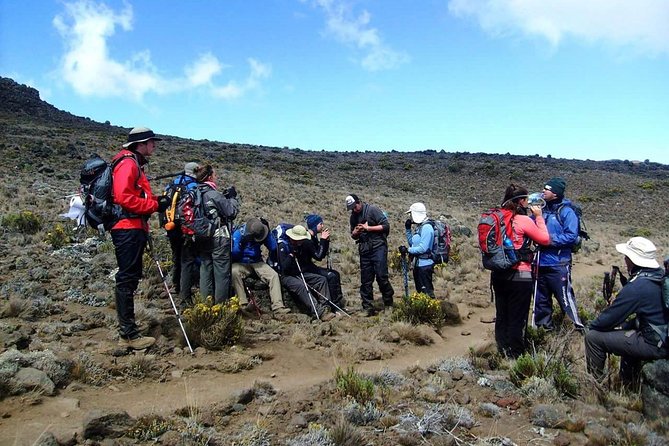
After breakfast, you tackle the Barranco Wall and continue to Karanga Valley. The elevation changes only slightly, from about 4,000 meters to 4,050 meters, but this is not an effortless day.
The wall is steep and hands-on in places. You do not need to treat it like a rock-climbing route, but you do need to place your feet carefully and follow your guide’s instructions. The crew’s ability to move efficiently over this section is one of the memorable sights of the climb.
The walk continues into the Karanga Valley, reaching the junction with the Mweka Trail. Overnighting at Karanga Camp is the practical advantage here. Instead of combining Barranco Wall and the full route to Barafu in one tiring push, you stop and recover.
The supplied schedule gives this day an unusually short duration, but the written route description makes clear that it is a proper walking day. Confirm the expected timing with the operator before departure, especially if you are planning meals, rest, or photography around camp arrival.
Day 6: Karanga to Barafu Camp
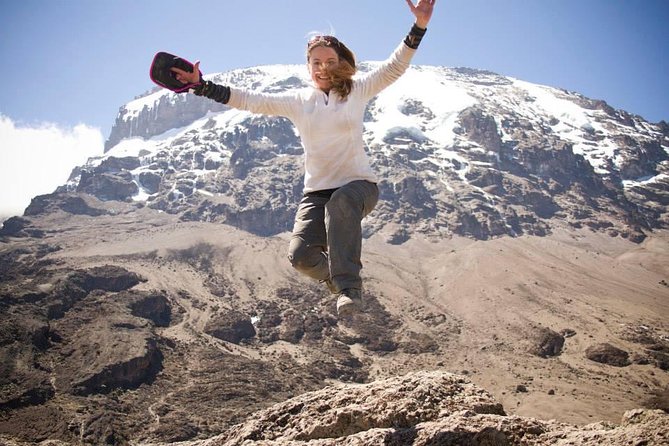
The trail rises from about 4,050 meters to Barafu Camp at approximately 4,700 meters, or 15,350 feet. The walk takes around five hours.
By reaching Barafu, you complete the southern circuit. That means you have seen Kibo from several angles rather than approaching the summit by one repetitive path. The views are broad and dramatic, but your attention will also turn to the practical problem ahead: getting enough food, warmth, and sleep before summit night.
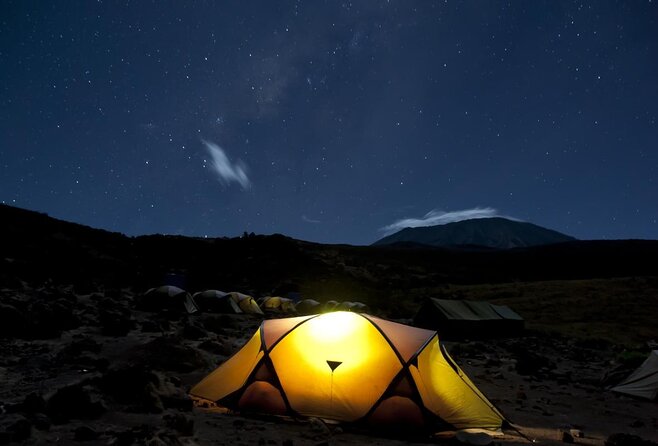
Dinner is served early, followed by rest. You may not sleep much. The summit start comes between midnight and 2 a.m., so organize your clothing, headlamp, water, snacks, and trekking poles before lying down.
This is a good place to be honest with yourself. If you are feeling unwell, tell the guide. Quietly hiding symptoms at Barafu is not courage. It can create a serious problem higher up.
Day 7: Stella Point, Uhuru Peak, and the long descent
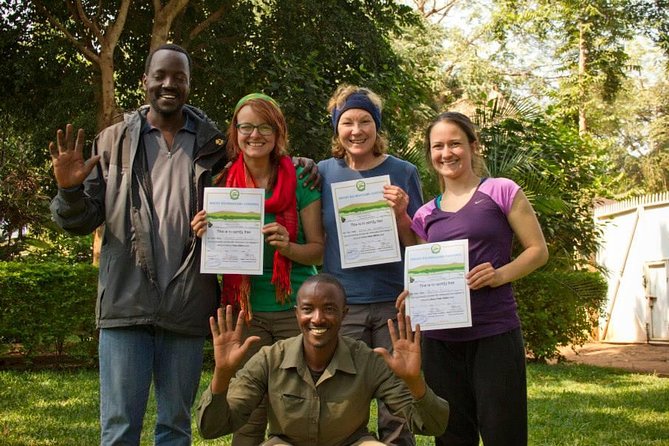
Summit day is the hardest part of the climb. You leave between midnight and 2 a.m., climb through the darkness, and work upward between the Rebmann and Ratzel glaciers toward the crater rim.
The ascent uses switchbacks over heavy scree. Progress can feel slow, especially in the cold and thin air. Your guide will set a careful pace, and you should focus on the next section rather than the entire mountain above you.
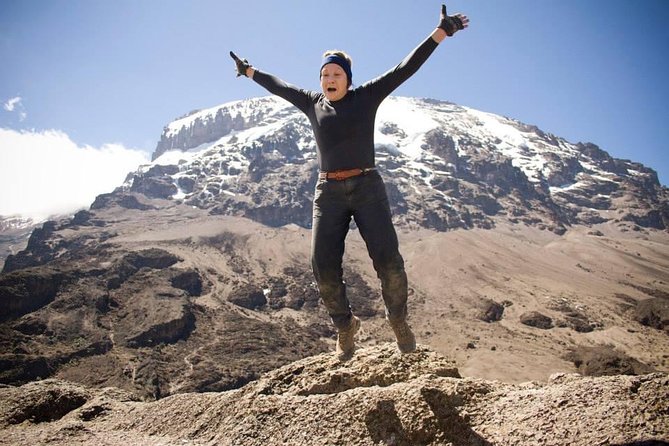
Stella Point sits on the crater rim. From there, the sunrise can be magnificent, although faster climbers may see it before reaching Stella Point. The route then continues around the crater rim toward Uhuru Peak, at 5,895 meters, or 19,340 feet.
The summit success is only half of day seven. You descend to about 3,090 meters, reaching the lower camp after a total day of roughly 13 hours. This is where tired legs and loose scree can make the descent feel almost as hard as the climb.
Pack snacks you can eat when appetite disappears. Keep warm layers available for the early hours, then adjust clothing as the temperature rises. The summit day is long enough that small comfort choices matter.
Day 8: Mweka descent and back to Moshi
After breakfast, the crew holds an appreciation and team-bonding ceremony before you leave the mountain. You then descend from about 3,090 meters to the Mweka Park Gate at roughly 1,680 meters, or 5,500 feet.
The listed walking time is about four hours. The lower trail is warmer, wetter, muddier, and steep in places. Gaiters and trekking poles are useful again, proving that the same humble equipment can earn its place twice.
At the gate, you receive your summit certificate. A vehicle then meets you at Mweka village for the approximately 30-minute drive back to your hotel in Moshi.
The hot shower, proper meal, and bed are not minor luxuries at this point. They are the correct ending to a long week.
Crew support and the human side of the climb
The operator places strong emphasis on its guides and support crew. Past departures have included guides called Zacariah, Epa, Eric, and Nicholas. The most repeated praise is directed at patient encouragement, careful support, and strong organization.
That matters because the guide is not simply a person walking in front. Your guide helps manage pace, altitude concerns, camp timing, and the decision to continue or stop. The cook and porters also shape daily life, since food, tents, water, and equipment must reach camp each day.
The stated group maximum is two people, which could suit you if you want close attention and a quieter walking rhythm. One past solo climber joined a larger small group, so ask how your departure will actually be staffed and grouped.
Tips are not included. The suggested amounts are $15 to $20 per guide per day, $10 to $15 per day for the cook, and $8 to $10 per porter per day, shared among the group. Budget this from the start, and carry small bills if practical.
What $2,600 includes, and where costs remain
The $2,600 price includes:
- Park fees and crew park fees
- Camping equipment
- Rescue fees
- Water
- Guide, cook, and porter salaries
- Transport for you and the mountain crew
- Certificates of achievement
- Two complimentary airport transfers
- Eight lunches, seven breakfasts, and eight dinners
That is a solid package for a guided eight-day climb because park access, crew wages, food, transport, and rescue charges are not small extras. The value is strongest if you need a complete arrangement rather than trying to assemble separate mountain services.
You still pay for international flights, visas, travel insurance, and extra personal equipment. That last category can be significant if you need warm layers, rain gear, a sleeping bag, trekking poles, gaiters, or other mountain clothing.
The package includes camping equipment, but you should ask exactly what that means for your departure. Included does not always mean every personal item you want for comfort.
Who should choose this route
I would point this climb toward a fit person who wants a gradual approach and accepts long days, simple camp life, cold nights, and a difficult summit attempt. It suits you if the journey matters as much as the certificate, since the rainforest, Shira Plateau, Lent Hills, Lava Tower, Barranco Wall, and southern circuit each bring a different setting.
It may also suit a pair of climbers who value a small group and close contact with the guide. The eight-day schedule offers better pacing than a compressed climb, but it is not a gentle holiday. Moderate physical fitness is required, and summit day is particularly demanding.
If you dislike camping, early starts, mud, or uncertain sleep, think carefully before booking. Kilimanjaro rewards steady effort, not comfort-seeking.
Booking confirmation is provided at the time of purchase. Airport pickup and drop-off are included, and pickup is offered for the experience. Cancellation is free if you cancel at least 24 hours before the local start time. Cancellations or changes inside that window are not accepted for a refund.
Should you book the 8-day Lemosho climb?
I would choose this route over a shorter Lemosho option if your schedule allows it. The extra day is not filler. The Karanga stop gives you a shorter pre-summit day, and the full Shira day gives your body more time to adjust before Barafu.
The strongest reasons to book are the thoughtful pacing, broad route variety, included mountain logistics, and reported care from guides such as Epa, Zacariah, Eric, and Nicholas. The main reasons to pause are the high total cost once flights, insurance, equipment, and tips are added, plus the very long summit day.
Book it if you are ready to train, pack for wet and cold conditions, and accept that the summit is never guaranteed. Ask for a clear equipment list and your exact group size before paying. If you want the best balance of time, acclimatization, and scenery on this route, this eight-day plan makes a strong case.
FAQ
How long is the Lemosho Route climb?
The experience lasts eight days and seven nights.
What time does the experience start?
The stated start time is 9:00 a.m.
How many people can join the climb?
The stated maximum is two people, although the exact group arrangement should be confirmed for your departure.
What meals are included?
The package includes eight lunches, seven breakfasts, and eight dinners.
Are airport transfers included?
Yes. Two complimentary airport transfers are included.
What costs are not included?
International flights, visas, travel insurance, and additional personal equipment are not included.
What fitness level is required?
You should have a moderate level of physical fitness. Summit day lasts about 13 hours and includes the ascent to 5,895 meters followed by a long descent.
Just added around Moshi
- Moshi: Lake Chala Tour: Hiking &/or Kayaking★ 4.5 · 3 reviews
- 3 Days Tanga Exclusive Beach Holiday★ 5.0 · 3 reviews
- Serengeti Wildebeest Migration.★ 5.0 · 3 reviews
- Chemka Hotpsrings E-Bike Day Trip★ 5.0 · 3 reviews
- Explore 1 day Ngorongoro Crater Budget Group Safari from Arusha★ 5.0 · 3 reviews
- Explore the 360° of Kilimanjaro★ 5.0 · 3 reviews
- Affordable Short Tanzania Safari (2 Days Camping Safari)★ 5.0 · 3 reviews
- Rongai Route 7 Days★ 5.0 · 3 reviews
Kilimanjaro Treks, compared.



8-Day Small-group Lemosho Kilimanjaro Summit Trekking
Read our review →


Climbing Kilimanjaro through 7 days Machame Route
Read our review →

Browse the lists this tour appears in