
Reviewed · KILIMANJARO TREKS
Lemosho Route 8 Days Kilimanjaro Climbing Tour
Africa’s highest point rewards patience. This 8-day Lemosho Route climb gives you varied scenery, from rainforest to alpine desert, while the gradual ascent allows more time to adjust to altitude. I like the private format and the strong support team, including guides, porters, and a cook.
I also like that the $2,600 price covers major park and camping costs, transfers, meals, tents, water, rescue fees, and airport pickup. The main caution is that this remains a serious physical challenge, and the schedule contains one confusing timing detail: Day 5 is listed as four minutes, although its trek description says four to six hours.
In This Review
- Key points to know before you book
- Why eight days on Lemosho makes sense
- Day 1: Lemosho Gate to Mti Mkubwa Camp
- Day 2: Shira Ridge and the open Shira Plateau
- Day 3: Shira II and the Lent Hills
- Day 4: Alpine desert, Lava Tower views, and Barranco Camp
- Day 5: Barranco Wall and Karanga Camp
- Day 6: Karanga to Barafu Camp
- Day 7: Stella Point, Uhuru Peak, and Mweka Camp
- Day 8: Mweka Gate and the return to Moshi
- What the $2,600 price really covers
- Guides, porters, food, and camp comfort
- Who should choose this climb
- Booking details worth checking
- Should you book the 8-day Lemosho climb?
- FAQ
- How long is the Lemosho Route Kilimanjaro tour?
- What height is Uhuru Peak?
- Is airport pickup included?
- Are meals included?
- Is personal trekking equipment included?
- What is the cancellation policy?
Key points to know before you book
- Eight days on the Lemosho Route: You cross rainforest, heath, moorland, alpine desert, and high mountain camps before reaching Uhuru Peak at 5,895 meters.
- A gradual route to altitude: The itinerary spreads the climb across several days, with nights at Mti Mkubwa, Shira I, Shira II, Barranco, Karanga, and Barafu.
- A demanding summit night: You begin around midnight, climb to Stella Point and Uhuru Peak, then descend to Mweka Camp.
- A full support package: Guides, porters, a cook, tents, mattresses, purified water, meals, transfers, park fees, rescue fees, and oxygen are included.
- Private group travel: Only your group takes part, which can make pacing and day-to-day communication easier.
- Strong satisfaction record: The available ratings show 100 percent recommendation and a five-star score from 19 reviews, with repeated praise for guides, porters, organization, and food.
Why eight days on Lemosho makes sense
Kilimanjaro is not a technical climbing trip in the usual mountaineering sense, but it is a demanding high-altitude trek. Your legs work hard, and your body must handle increasingly thin air as you move toward the summit.
The Lemosho schedule gives you eight days to reach Uhuru Peak and return through Mweka. That matters because the itinerary does not rush you from the trailhead to the summit in just a handful of days. You spend several nights moving through different altitude zones, with time to walk, eat, rest, and prepare for the next stage.
I like the way this route builds its scenery slowly. You start in forest, move into heath and moorland, cross the Shira Plateau, pass through alpine desert, and finish in a high volcanic world of rock and bare ground. The changing plants and colors give each day its own character.
You should still keep your expectations realistic. A longer itinerary can help with acclimatization, but it cannot remove the effects of altitude or guarantee that you will reach the summit. Your guide team will be important, and your own fitness, preparation, and response to altitude will matter just as much.
More Kilimanjaro routes and climbs:
- Kilimanjaro climb by Lemosho Route (7-day)
★ 5.0 · 651 reviews - Kilimanjaro climb, Machame Route (7-day)
★ 5.0 · 262 reviews - Kilimanjaro Climbing Lemosho Route 8 Days.
★ 5.0 · 186 reviews
Day 1: Lemosho Gate to Mti Mkubwa Camp
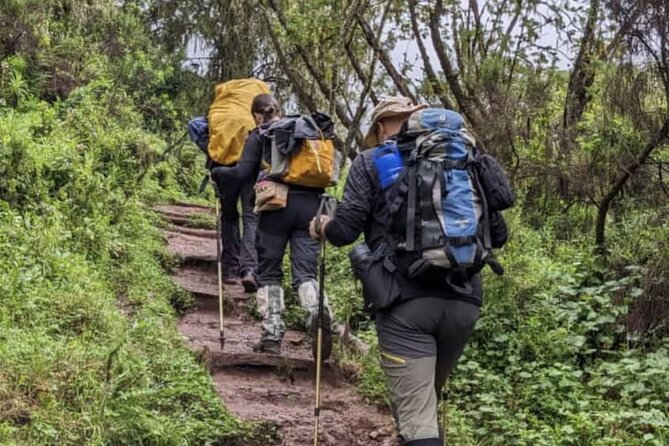
The trek begins at Lemosho Gate, where your guides and porters help organize the start of the climb. From there, you walk through rainforest toward Mti Mkubwa Camp.
The listed walking time is about four hours. That makes this a useful first day rather than an immediate test of endurance. You get your first feel for the trail, the pace, and the camping routine while still surrounded by thick forest.
This section is also your introduction to the support system. Your guide leads the walk, porters carry the group equipment, and the cook prepares meals at camp. The package includes a quality waterproof four-season tent, a sleeping mattress, and a mess tent with tables and chairs.
For you, the key point is to start slowly. The first day is not the time to prove how fast you can walk. A steady pace leaves more energy for the higher camps.
Day 2: Shira Ridge and the open Shira Plateau
On Day 2, you leave more of the rainforest behind as the trail moves into heath and moorland. The route continues toward Shira I Camp, with about six hours of walking listed for the day.
The shift in scenery is one of the pleasures of this route. Trees give way to more open ground, and the views become broader as you cross Shira Ridge and reach the Shira Plateau. You can expect a more exposed feeling here, with fewer signs of the forest and more room to look across the mountain.
Shira I is an important stop because it gives you your first night at a higher camp. You will notice that the climb is not just a walk through attractive scenery. Every camp brings a new altitude challenge, so eating well, drinking the supplied purified water, and resting are practical parts of the day.
The tour includes breakfast, lunch, and dinner on the relevant trekking days. That is a real convenience. You do not need to plan every trail meal yourself, although you should budget for personal drinks and snacks if you want anything beyond the supplied food.
Day 3: Shira II and the Lent Hills
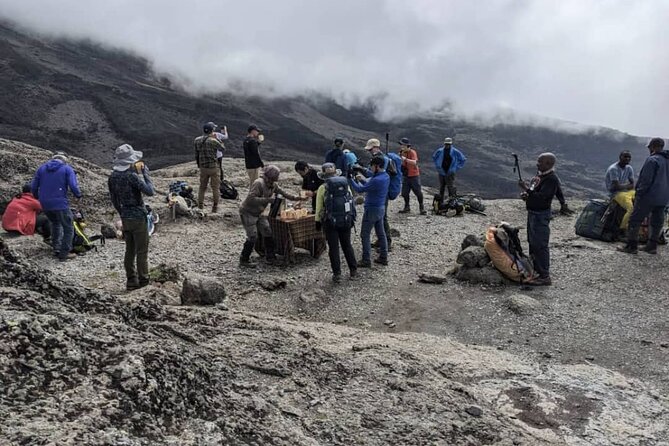
Day 3 continues through the moorland zone toward Shira II Camp. The walk is listed at about five hours, with the route becoming rougher and more barren as you approach the Lent Hills.
The trail becomes steeper in places, and the views across the Shira Plateau give you a sense of the scale of Kilimanjaro. This is not a day to waste energy racing ahead. You are still building toward the harder high-altitude sections.
I like this part of the itinerary because it gives you another night to settle into the rhythm of the climb before the route reaches the alpine desert. The surroundings become less sheltered, so your clothing and rain protection start to matter more.
The tour operator supplies waterproof mountain tents, but personal equipment is your responsibility. Hiking boots, clothing, and a sleeping bag are not included, though equipment is available for rent. You should confirm rental costs and availability before arrival rather than treating that option as an afterthought.
A few more trips of this kind worth comparing:
- Safari Serengeti And Ngorongoro
★ 5.0 · 288 reviews - Climbing Kilimanjaro – Machame Route
★ 5.0 · 170 reviews - Climbing Kilimanjaro through 7 days Machame Route
★ 5.0 · 151 reviews - Kilimanjaro climb, Lemosho Route (8-day)
★ 5.0 · 148 reviews
Day 4: Alpine desert, Lava Tower views, and Barranco Camp
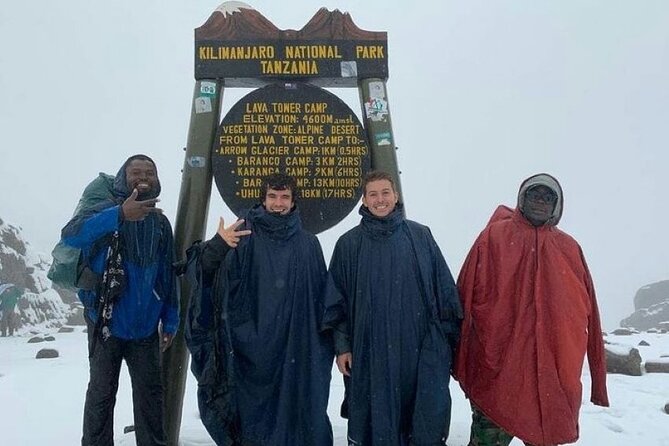
Day 4 is one of the longest and most varied sections. The schedule lists roughly seven hours of walking through alpine desert, with little vegetation and striking rock formations.
You pass views of the Western Breach and Lava Tower before reaching Barranco Camp. The scenery here feels stark compared with the forest below. The open volcanic ground and high rock formations make this part of Kilimanjaro feel like a different world.
Barranco is also a psychological turning point. You arrive knowing that the Barranco Wall is next. The camp gives you time to rest before that steep section, but the day itself may be tiring because of the long hours and increasing altitude.
The itinerary describes the route rather than promising an easy passage. You should expect uneven ground, a slower pace, and a need to pay close attention to your guide. The company includes emergency oxygen and rescue fees as part of the package, which provides useful safety support, but those provisions do not replace travel insurance.
Day 5: Barranco Wall and Karanga Camp
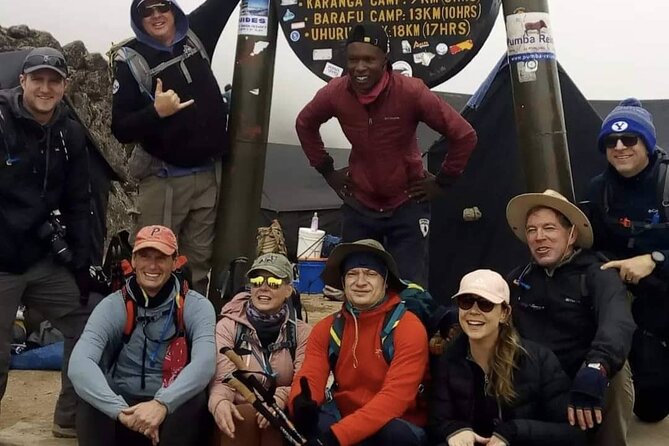
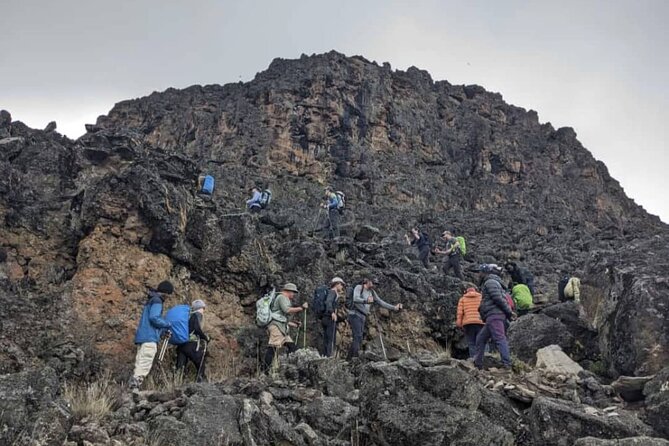
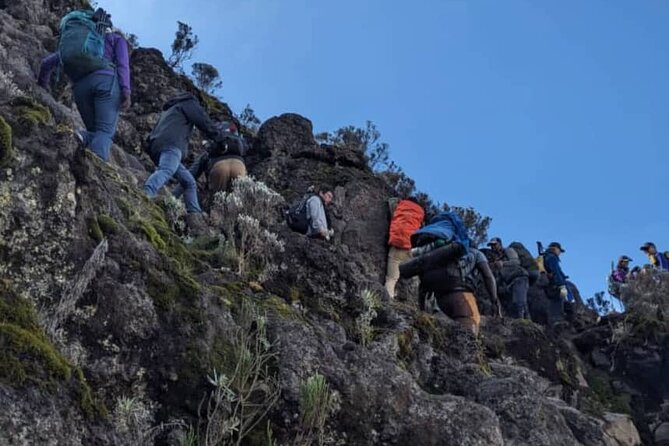
The day begins with the Barranco Wall, described as a steep scramble. That phrase is worth taking seriously. This is not simply a flat trail with a big view. You will use your hands at points and need to move carefully as the route climbs.
The reward is a broad view over the surrounding valleys and ridges. After the wall, you continue toward Karanga Camp, which sits above a scenic valley. The walking description gives four to six hours, a reasonable contrast with the longer day before it.
One important correction is needed when planning: the schedule displays Day 5 as four minutes, but the actual description says four to six hours. Treat the four-minute figure as a clear error and confirm the final timing with Macpace Tours and Safaris.
This day often becomes a favorite because it combines a memorable physical feature with a shorter walking period. You get a genuine challenge, then time to recover before the final approach to Barafu.
Day 6: Karanga to Barafu Camp
Day 6 takes you to Barafu Camp, the launch point for the summit attempt. The listed walking time is about three hours, and the route continues through alpine desert with a steeper feel as you climb.
Barafu is not the place to expect a relaxed evening. You rest, organize your summit clothing, and prepare for a night start. Since you will leave around midnight, the hours at camp are important. Keep your equipment simple and easy to reach.
The tour provides tents, mattresses, a mess tent, and meals, so much of the camp setup is handled for you. That can save energy. You still need to manage personal items such as boots, warm clothes, headwear, and any sleeping bag you bring or rent.
This is a good point to ask your guide about the summit schedule, food, water, and clothing plan. The supplied information gives the broad outline, but the exact departure time and expected return can vary.
Day 7: Stella Point, Uhuru Peak, and Mweka Camp
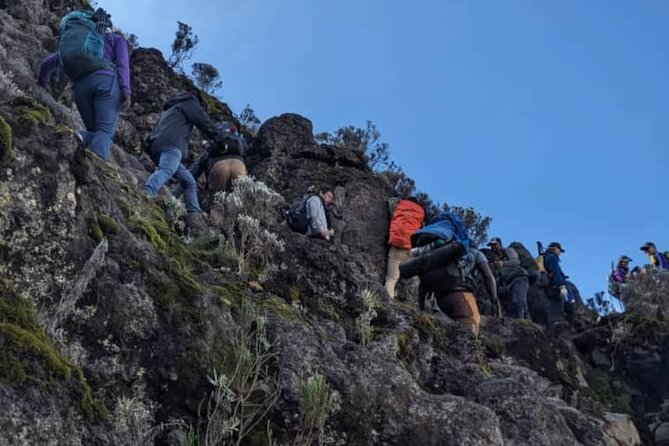
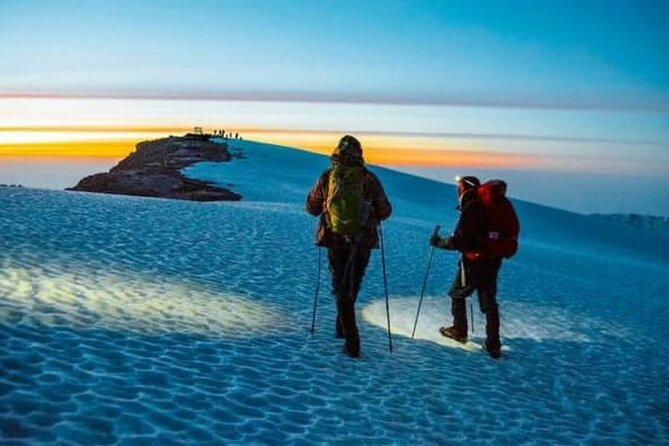
Day 7 is the hardest and most important day. You begin in the middle of the night, climb toward Stella Point, and then continue to Uhuru Peak at 5,895 meters, the highest point in Africa.
The sense of achievement comes from the effort required to get there. The route is long, cold, and tiring by this stage, and altitude makes every step feel more expensive. A positive attitude helps, but patience helps more. You walk at the guide’s pace and focus on one small section at a time.
After reaching Uhuru Peak, you descend to Mweka Camp for the night. That descent is not a minor detail. Your legs have already worked hard, and the return to camp can still take real effort.
The itinerary lists four hours for this day, but the description includes a midnight ascent, the climb to Stella Point and Uhuru Peak, and the descent to Mweka. You should ask the operator to clarify how that four-hour figure is being used. The summit day should be planned as a full, demanding day, not as a short walk.
Day 8: Mweka Gate and the return to Moshi
The final day leads down through rainforest to Mweka Gate. The listed walking time is about four hours, and the route takes you through several vegetation zones as you descend.
This change from high, bare ground back to lush forest gives the final morning a satisfying sense of completion. You can reflect on the summit while returning to a warmer, greener setting.
At Mweka Gate, you receive a summit certificate and say goodbye to the mountain team. The package includes transfers back to your Moshi hotel, along with airport pickup and drop-off. That makes the end of the trek easier, particularly if you are tired and carrying dusty equipment.
The tour also lists hotel accommodation as included, though it does not specify the exact number of hotel nights or the property. Confirm those details before paying.
What the $2,600 price really covers
At $2,600 per person, this is not a bare trail permit with a guide attached. The price includes a wide set of costs that can otherwise add up quickly.
Included services cover airport transfers, transport to and from the mountain, professional guides, porters, a cook, salaries, conservation and camping fees, rescue fees, government VAT, tents, mattresses, water, meals, hotels, a mess tent, emergency oxygen, and the summit certificate.
For an eight-day private climb, that package offers meaningful value because the largest operational costs are already grouped together. You are paying for a full support team and camp setup, not just a route plan.
You must still budget for a Tanzania visa, international or domestic flights, personal insurance, equipment, tips, laundry, telephone use, alcoholic drinks, and bottled beverages. Tips are not included, and you should clarify the company’s recommended tipping practice before the climb so you can plan fairly for the mountain crew.
The price is best judged against what you need. If you already own suitable trekking gear, the total cost may feel more manageable. If you need to rent boots, clothing, and a sleeping bag, your final budget will be higher than the headline figure.
Guides, porters, food, and camp comfort
The strongest praise centers on the people supporting the climb. Specific guides named in the feedback include Victor, Edwin, and Joseph. Their qualities were described as caring, organized, and supportive, with particular appreciation for safety and encouragement during the ascent.
That human support matters on Kilimanjaro. A guide does more than point toward the next camp. You need clear advice when you are tired, reassurance during the summit attempt, and careful attention to how you are coping with the altitude.
Porters and the cook also receive repeated praise. The food, tents, and even a private toilet were singled out as positive features in one account. The supplied details confirm a mess tent with tables and chairs, but you should ask directly about the private toilet arrangement because it is not listed as a standard inclusion.
The review record gives the company a five-star rating from 19 reviews and a 100 percent recommendation figure. That is encouraging, especially because the praise repeats across several areas: guides, porters, planning, food, transportation, and the overall handling of the climb.
Still, online ratings cannot tell you everything about current staff, equipment condition, or communication before departure. Ask for a written packing list, the exact hotel details, and clarification of the Day 5 and Day 7 timings.
Who should choose this climb
This tour suits you if you want a serious mountain challenge with a full support team and a private group. You should have at least a moderate level of physical fitness, as stated in the tour details, and you should be ready for long walking days, steep sections, camping, and a midnight summit attempt.
It also suits you if scenery matters as much as the summit. The route passes through several distinct vegetation zones and includes the Shira Plateau, Lent Hills, Barranco Wall, Lava Tower views, and alpine desert.
I would be more cautious if you want a short, easy holiday or dislike camping. The route includes basic mountain accommodation rather than ordinary hotel nights throughout the climb. Personal equipment, insurance, tips, and flights also require extra planning.
The private format can work well for couples, families, or friends who want to share the climb only with their own group. It may also help if you prefer to discuss pacing and concerns directly with your guide.
Booking details worth checking
Confirmation is provided at booking. The stated operating hours are Monday through Sunday, 8:00 AM to 3:00 PM, for the period shown from August 1, 2024, through June 17, 2026.
Pickup is offered, and the tour includes airport pickup and drop-off plus transport to the mountain and back to your Moshi hotel. Ask the operator to confirm your exact pickup point and hotel arrangement before arrival.
The cancellation terms are simple: cancel at least 24 hours before the experience starts for a full refund. Cancellations within 24 hours are not refunded, and changes within that period are not accepted. The local time at the experience location controls the deadline.
Should you book the 8-day Lemosho climb?
I would consider this a strong option if you want the Lemosho Route, prefer a private climb, and value a full crew with meals, camping equipment, park costs, transfers, and rescue fees already included.
The main reasons to choose it are the eight-day schedule, the range of scenery, and the repeated praise for Macpace Tours and Safaris guides, porters, cook, organization, and care. The main reasons to pause are the physical demands, extra costs for personal gear and insurance, and the unclear timing shown for Days 5 and 7.
Before booking, ask three direct questions: What exactly does the hotel inclusion cover? Why does Day 5 show four minutes? How long should you expect the summit day to take? If the answers are clear and you are prepared for a demanding high-altitude trek, the $2,600 package offers a well-supported route to Africa’s highest point.
FAQ
How long is the Lemosho Route Kilimanjaro tour?
The tour lasts approximately eight days, beginning at Lemosho Gate and ending at Mweka Gate after the summit attempt.
What height is Uhuru Peak?
Uhuru Peak is listed at 5,895 meters, making it the highest point in Africa.
Is airport pickup included?
Yes. Airport pickup and drop-off are included, along with transfers to the mountain and back to your Moshi hotel.
Are meals included?
Yes. The package includes eight lunches, seven breakfasts, and seven dinners.
Is personal trekking equipment included?
No. Personal items such as sleeping bags, hiking boots, and clothing are not included. Equipment is available for rent.
What is the cancellation policy?
You can receive a full refund by cancelling at least 24 hours before the experience starts. Cancellations or changes made within 24 hours are not accepted for a refund.
Just added around Moshi
- Moshi: Lake Chala Tour: Hiking &/or Kayaking★ 4.5 · 3 reviews
- 3 Days Tanga Exclusive Beach Holiday★ 5.0 · 3 reviews
- Serengeti Wildebeest Migration.★ 5.0 · 3 reviews
- Chemka Hotpsrings E-Bike Day Trip★ 5.0 · 3 reviews
- Explore 1 day Ngorongoro Crater Budget Group Safari from Arusha★ 5.0 · 3 reviews
- Explore the 360° of Kilimanjaro★ 5.0 · 3 reviews
- Affordable Short Tanzania Safari (2 Days Camping Safari)★ 5.0 · 3 reviews
- Rongai Route 7 Days★ 5.0 · 3 reviews
Kilimanjaro Treks, compared.



8-Day Small-group Lemosho Kilimanjaro Summit Trekking
Read our review →


Climbing Kilimanjaro through 7 days Machame Route
Read our review →

Browse the lists this tour appears in