
Reviewed · KILIMANJARO TREKS
Mount Kilimanjaro 6 days – Machame route
The mountain saves its hardest test for sunrise. This six-day Machame Route climb gives you rainforest, rocky ridges, high volcanic ground, glacier views, and the chance to reach Uhuru Peak at 5,895 meters. I like the careful acclimatization day at Lava Tower and Barranco, and I like that the price includes airport transfers, Moshi hotels, meals, camping gear, guides, porters, and a cook. The main caution is simple: this is a serious high-altitude trek, not a casual walk, and summit day can last about 14 hours.
I also like that this is a private activity for your own group, rather than a mixed public excursion. The mountain crew includes a qualified guide, assistant guides, porters, and a cook, with emergency oxygen and a basic first-aid kit available for emergencies. Still, you must bring personal trekking gear, snacks, medicine, and water-purifying tablets, and a portable toilet costs extra.
In This Review
- Key points to know before booking
- Why the Machame Route is a good choice
- What the $2,220 price really covers
- Day 1: Machame Gate to Machame Camp
- Day 2: Machame Camp to Shira Camp
- Day 3: Shira Plateau, Lava Tower, and Barranco Camp
- Day 4: Barranco Camp to Barafu Camp
- Day 5: Barafu Camp to Uhuru Peak and down to 3,090 meters
- Day 6: Mweka Trail and return to Moshi
- Guides, porters, food, and camp life
- Who should book this climb?
- Should you book the six-day Machame Route?
- FAQ
- How long is the Machame Route climb?
- What fitness level is required?
- Where does the climb begin?
- Where does the climb finish?
- Is airport transportation included?
- Are hotel nights included?
- Are meals included during the climb?
- Is camping equipment provided?
- Is emergency oxygen included?
- What personal items are not included?
Key points to know before booking
- Machame Gate to Mweka Gate: The route covers about 62 kilometers, or 37 miles, from gate to gate, with a long descent through the Mweka Trail.
- A serious acclimatization plan: Day three climbs to the Lava Tower area at about 4,650 meters before dropping to Barranco Camp.
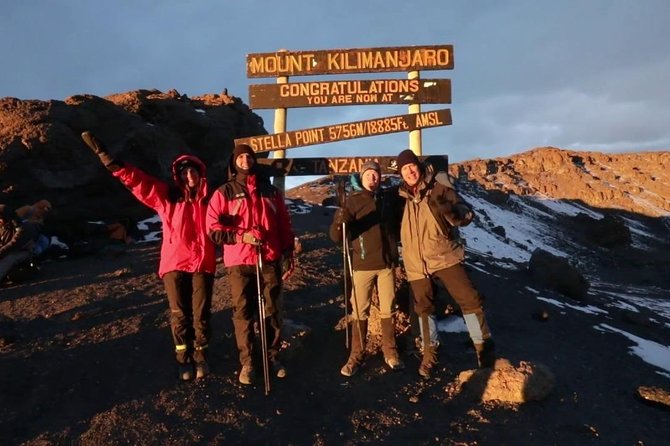
- The summit starts around midnight: You may hike from midnight to 2 a.m., reach Stella Point for sunrise, then continue toward Uhuru Peak.
- A full mountain support team: Guides, assistant guides, porters, and a cook are included, along with tents, camp furniture, sleeping mattresses, and wash water.
- A useful hotel package: One night before and one night after the climb in Moshi includes dinner and breakfast, plus airport transfers.
- A strong but mixed record: The overall rating is 4.2 from five ratings, with especially warm praise for organization, food, camping, and the mountain crew.
Why the Machame Route is a good choice
The Machame Route is often called the Whisky Route, a nickname that hints at its tougher character compared with easier approaches. The route is about 62 kilometers from gate to gate and is intended for people with moderate fitness and some hiking experience.
That does not rule out first-time climbers. You can manage this route without previous Kilimanjaro experience if you are fit, prepared, and willing to move at the group’s pace. The challenge comes from the altitude, steep ground, cold conditions, long hours, and the need to keep going when the summit night gets difficult.
I like the route’s shape. You do not simply climb straight uphill for six days. Day three takes you high to the Lava Tower area, then down to Barranco Camp. That high-point-and-lower-camp pattern gives your body useful time at altitude before the final push.
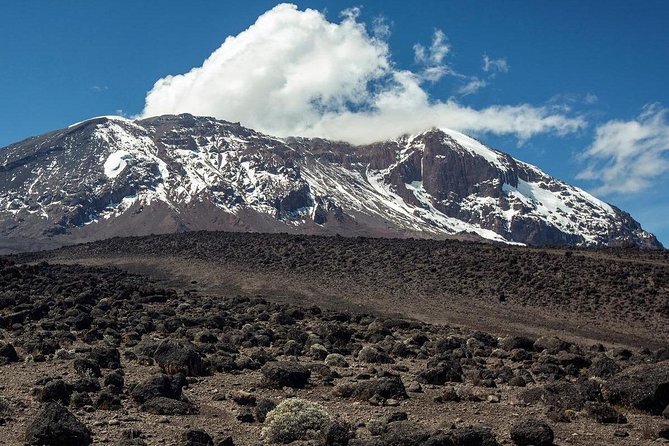
The route also gives you changing scenery. The first day begins in the rain forest. Later, trees give way to open high country, rocky ridges, volcanic formations, and the stark upper slopes near the summit. The route’s South Circuit provides views of Kibo, the mountain’s main summit cone, from several angles.
More Kilimanjaro routes and climbs:
- 7 Days Kilimanjaro via Machame route affordable price
★ 5.0 · 110 reviews - Kilimanjaro Airport taxi to/from Moshi town/Arusha town
★ 5.0 · 60 reviews - 6 Days Climbing Mount Kilimanjaro Machame Route
★ 5.0 · 40 reviews
What the $2,220 price really covers
At $2,220 per person, this is not a budget hike. But the price includes many costly and important pieces of a Kilimanjaro climb.
You get return transfers between Kilimanjaro Airport and Moshi, plus a hotel night before and after the climb. Dinner and breakfast are included on those hotel nights. On the mountain, the package includes five breakfasts, six lunches, and five dinners, as well as camping equipment and daily water for washing.
The support staff matters most. A qualified mountain guide leads the climb, with assistant guides, porters, and a cook. Crew salaries are included according to Kilimanjaro National Park guidelines. That is a better sign than a low headline price that leaves staff payments unclear.
Tents, camp chairs, tables, and sleeping mattresses are supplied. Emergency oxygen and a basic first-aid kit are also included, but only for emergencies. Oxygen is not provided as a way to help you reach the summit if you are struggling with altitude.
You still need to budget for visas, flights, health and travel insurance, personal items, alcoholic and nonalcoholic drinks, snacks, personal medicine, water-purifying tablets, and your own trekking gear. A portable toilet is optional but highly recommended, and it costs extra.
The value is strongest if you need a full-service climb with transport, meals, mountain staff, and equipment already arranged. The value is less attractive if you already have your own support system or want to keep the trip as cheap as possible.
Day 1: Machame Gate to Machame Camp
The first transfer from Moshi to Mount Kilimanjaro National Park Gate takes about 45 minutes. The road passes through Machame village on the lower slopes before the trek begins.
From an elevation of 1,830 meters, you climb to Machame Camp at about 3,050 meters. The distance is 11 kilometers, or seven miles, and the walking time is about five to six hours.
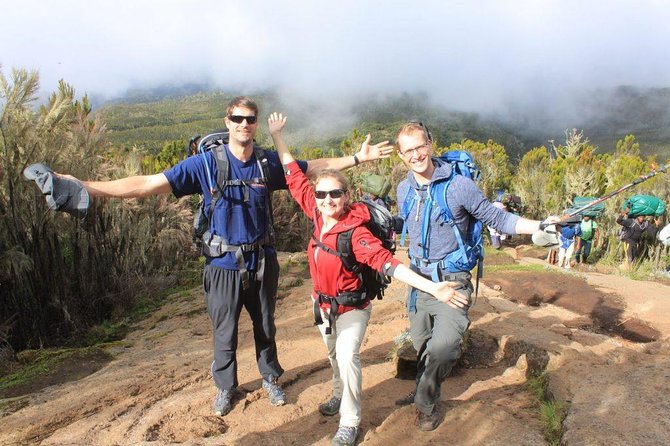
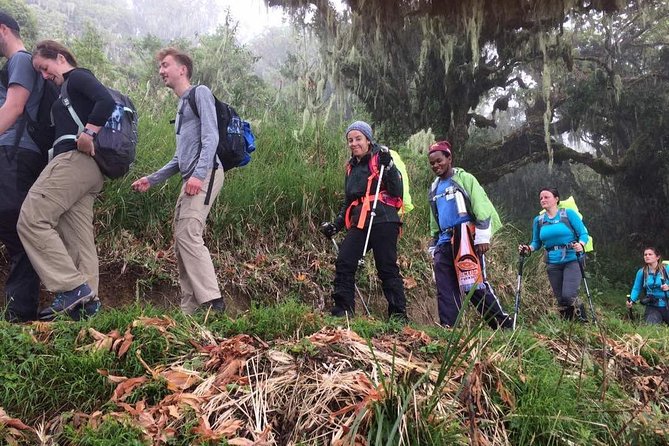
This is a classic first day on Kilimanjaro. You walk through rain forest on a winding trail that follows a ridge. The lower sections can be muddy and slippery, so gaiters and trekking poles are practical rather than decorative. Bring them even if the morning looks dry.
The day is long enough to feel like a real mountain start, but the elevation gain is still manageable for a fit person. Take it steadily. You are not trying to prove anything on day one.
Machame Camp is your first overnight camp. The included camping setup means you do not need to arrange tents or carry a full camping kitchen yourself.
Day 2: Machame Camp to Shira Camp
After breakfast, you leave the rain forest behind and continue upward. The trail crosses a valley along a steep, rocky ridge before turning west toward a river gorge.
This section is shorter than day one, at about five kilometers, or three miles. Walking time is listed at four to five hours, with elevation rising from 3,050 to 3,850 meters.
The shorter distance does not make it an easy day. The rocky ridge and continued ascent ask more of your legs, while the increased altitude may affect your breathing. Move slowly and drink regularly.
Shira Camp sits on the Shira Plateau. This is the point where the climb begins to feel more open and exposed. The change from forest to high mountain terrain is one of the pleasures of this route, but it also means less shelter from wind and weather.
Your support team prepares meals and camp while you walk. Food is not a minor detail on this trek. One particularly positive account praised the meals as better than expected in such difficult conditions.
A few more trips of this kind worth comparing:
- 6 Days Tanzania Classic Safari
★ 5.0 · 52 reviews - 6 Days Big Five Tanzania Safari
★ 5.0 · 15 reviews - 6 Days Machame Route Kilimanjaro Trekking
★ 5.0 · 13 reviews - 6 Days 5 Nights lodge safari Tarangire, Manyara, Serengeti & Ngorongoro Crater
★ 4.5 · 10 reviews
Day 3: Shira Plateau, Lava Tower, and Barranco Camp
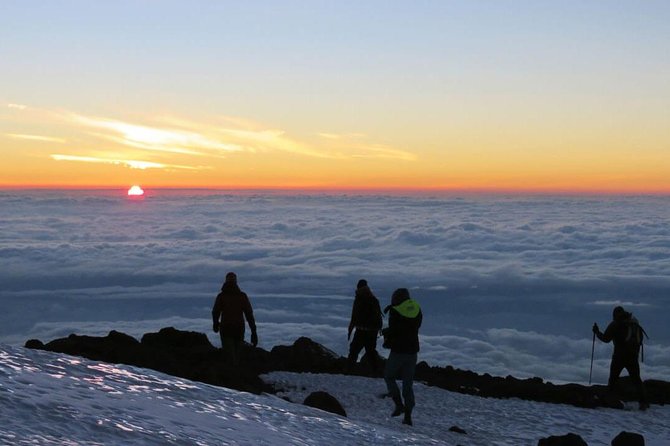
Day three is one of the most important days of the climb. You travel about 10 kilometers, or six miles, over five to six hours, beginning at about 3,850 meters and finishing at Barranco Camp near 4,000 meters.
The trail heads east along a ridge, passes a junction toward Kibo, and then turns southeast toward Lava Tower. The Lava Tower formation, also called Shark’s Tooth, reaches about 4,650 meters.
You may feel the altitude here. That is part of the point. After Lava Tower, the trail drops to Barranco Camp, so you finish the day around the same elevation where you began. The route lets your body experience a higher level before you sleep lower.
This climb-high, sleep-lower pattern is a valuable feature of the six-day schedule. It does not guarantee that you will avoid altitude problems, but it gives you a better chance to adapt than a route that rises at the same rate every day.
The trail also passes junctions toward Arrow Glacier and Kibo. You should follow your guide carefully at these points. This is not the place for an improvised shortcut.
Day 4: Barranco Camp to Barafu Camp
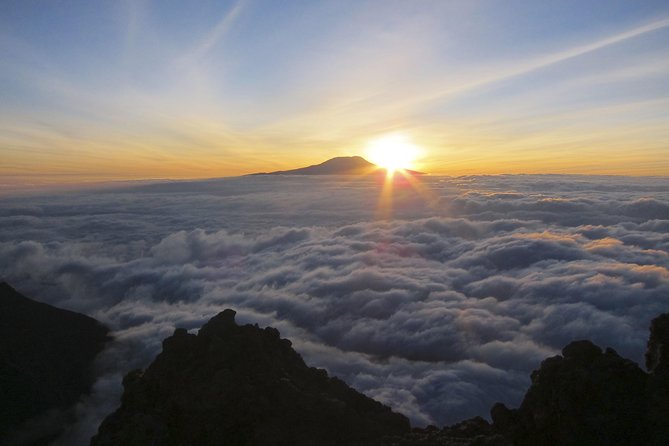
Day four takes you from about 4,050 meters to Barafu Camp at roughly 4,700 meters. The distance is nine kilometers, or five miles, and the walking time is around seven hours.
This is another demanding day because the climb is steady and the air is thin. You complete the South Circuit, which gives you views toward the summit from several angles. The high camp is rougher and more exposed than the lower camps, and the cold can become more noticeable.
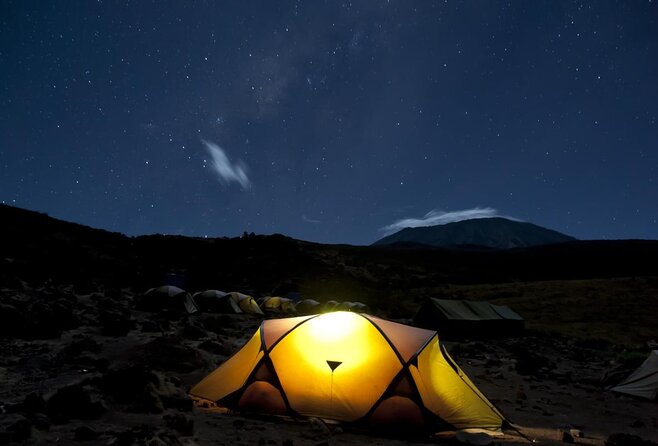
Barafu is the launch point for the summit attempt. After arriving, you eat dinner, rest, and prepare for the hardest part of the trip. Do not treat the afternoon as spare sightseeing time. Use it to organize clothing, headlamp, water, snacks, and anything else you will need overnight.
The schedule can feel strange. You arrive at camp, eat, and then try to sleep before starting again around midnight. Even a short rest helps, so keep camp activity quiet and practical.
Day 5: Barafu Camp to Uhuru Peak and down to 3,090 meters
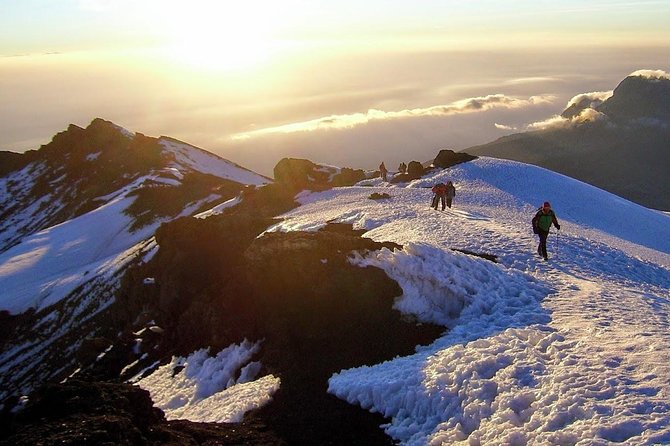
Summit day is the great test. You begin between midnight and 2 a.m., climbing from about 4,700 meters toward Uhuru Peak at 5,895 meters.
The ascent goes northwest between the Rebmann and Ratzel glaciers, then continues over heavy scree toward Stella Point on the crater rim. This is described as the most physically and mentally difficult section, and that is exactly how you should plan for it.
The distance is about five kilometers, or three miles, up. It may not sound far, but steep scree, darkness, cold, thin air, and the long hours make this a major undertaking.
At Stella Point, you have a short rest and may see sunrise over the mountain. Faster walkers may reach the summit in time for sunrise, while others see it from Stella Point. Do not measure your success by the clock. Getting safely to the summit matters more than arriving at a particular minute.
Snow may appear during the final hour from Stella Point to Uhuru Peak. The summit reaches 5,895 meters, the highest point on Mount Kilimanjaro. After the summit, the descent continues for about 13 kilometers, or eight miles, down to the camp near 3,090 meters.
That is an exceptionally long day, listed at about 14 hours. Your knees and feet may suffer more on the descent than on the climb. Keep your trekking poles ready, and do not pack away warm clothing too early. Summit conditions can change quickly.
The greatest practical question is stamina. You need enough physical reserve to descend after reaching the top. A successful summit is not the end of day five. You still have a long way down.
Day 6: Mweka Trail and return to Moshi
The final day descends from about 3,090 meters to 1,680 meters through the Mweka Trail. The walking distance is 10 kilometers, or six miles, and the descent takes roughly three to four hours.
Lower sections can be wet and muddy. Gaiters and trekking poles are useful again, just as they were on day one. Shorts and a T-shirt may be comfortable lower down, but keep rain gear and warmer clothing accessible.
At Mweka Park Gate, you receive summit certificates. The route then continues for about another hour to Mweka village, where a vehicle takes you back to your Moshi hotel in about 30 minutes.
This final transfer is a welcome touch. After six days on the mountain, you do not want to arrange a complicated ride from the trailhead. The hotel night after the climb gives you a proper place to clean up and recover.
Guides, porters, food, and camp life
The mountain crew is one of the strongest parts of this experience. Names connected with the operation include Wence, Emmanuel, Isaya, Jumanne, Ngwasuma, and Yahya, along with the cook and porters.
The praise is especially strong for the organization, the motivation of the crew, the camping facilities, and the food. One account called the service exceptional and singled out the guide and support staff. Another described the camping setup as top notch and the meals as surprisingly good for such a demanding setting.
That does not remove the need to ask questions before departure. Confirm what personal gear is supplied, how much luggage the porters carry, and what portable toilet arrangements are available. The package clearly includes basic sleeping and camp equipment, but individual trekking gear remains your responsibility.
The private format means only your group participates. That can make the pace and communication easier, though the size of your own group is not specified. One past booking involved a group of 13, but you should not assume every departure has that number.
There is also one warning in the available feedback. A solo climber raised concerns about communication and joining a group, while the company explained that a larger party later changed from Machame to Rongai at extra cost. Before paying, get the route, group arrangement, inclusions, and any possible changes in writing.
Who should book this climb?
I would recommend it to a fit person who wants the classic Machame scenery and is ready for long, demanding days. First-time Kilimanjaro climbers can use it, but you should already be comfortable with sustained hiking and uneven ground.
It suits you if you want:
- A full mountain crew and cooked meals
- A route with a serious acclimatization day
- A private group arrangement
- Airport transfers and Moshi hotel nights
- A route with varied scenery from rain forest to summit terrain
I would hesitate if you want a gentle holiday, dislike camping, or have not prepared for a 14-hour summit day. The listing gives a moderate fitness recommendation, but the summit schedule is much harder than that phrase may suggest.
You should also plan for personal costs. Insurance, flights, visas, drinks, snacks, medicine, water treatment, and trekking clothing are not covered. Cancellation is free if you cancel at least 24 hours before the local start time, but late cancellations and late changes are not refundable.
Should you book the six-day Machame Route?
Book this climb if you want a well-supported, classic Kilimanjaro route and understand that the summit is a demanding endurance effort. The combination of the South Circuit, Lava Tower acclimatization day, full meals, mountain staff, airport transfers, and two Moshi hotel nights gives the $2,220 price solid value.
Before booking, ask for clear confirmation of your group size, guide assignment, personal gear list, portable toilet cost, and route plan. If you prepare well and accept the tough summit night, this is a strong choice for reaching Uhuru Peak without arranging every part of the climb yourself.
FAQ
How long is the Machame Route climb?
The climb lasts approximately six days and covers about 62 kilometers, or 37 miles, from gate to gate.
What fitness level is required?
A moderate physical fitness level is required. The route is designed for physically fit people with some hiking experience, although first-time Kilimanjaro climbers can also use it.
Where does the climb begin?
The climb begins at Machame Gate in Mount Kilimanjaro National Park, Tanzania.
Where does the climb finish?
The descent finishes at Mweka Park Gate, followed by a walk to Mweka village and a vehicle transfer back to Moshi.
Is airport transportation included?
Yes. Return transfers between Kilimanjaro Airport and Moshi are included.
Are hotel nights included?
Yes. One hotel night before and one night after the climb are included, with dinner and breakfast.
Are meals included during the climb?
Yes. The package includes five breakfasts, six lunches, and five dinners.
Is camping equipment provided?
Yes. Tents, camp chairs, tables, sleeping mattresses, and daily water for washing are included.
Is emergency oxygen included?
Yes. Emergency oxygen is included for emergencies only. It is not intended as summit assistance.
What personal items are not included?
Visas, flights, health and travel insurance, personal trekking gear, drinks, snacks, personal medicine, and water-purifying tablets are not included. A portable toilet is optional and highly recommended.
Just added around Kilimanjaro
- 5 days Serengeti Wildebeest Migration Safari★ 5.0 · 3 reviews
- Tanzania Safari and Kilimanjaro Climb Multi-Day Experience★ 5.0 · 3 reviews
- 9 Days – Best of Tanzania Safari★ 5.0 · 4 reviews
- 7 Days Mountain Kilimanjaro climb Machame Route★ 5.0 · 4 reviews
- 8-Day Tanzania Migration Footsteps – Midrange★ 5.0 · 4 reviews
- 4 Days Lake Manyara National Park, Ngorongoro Crater , Serengeti National Park.★ 4.0 · 4 reviews
- 6 Days Mara River Crossing – The Great Migration★ 5.0 · 5 reviews
- 6- Day Adventure Lodge safari to see Migration★ 4.5 · 5 reviews
Kilimanjaro Treks, compared.



8-Day Small-group Lemosho Kilimanjaro Summit Trekking
Read our review →


Climbing Kilimanjaro through 7 days Machame Route
Read our review →

Browse the lists this tour appears in