
Reviewed · KILIMANJARO TREKS
Mount Kilimanjaro – Lemosho Route
Africa’s highest summit demands more than strong legs. Moana Tanzania’s seven-day Lemosho route gives you a gradual approach through rainforest, heath, moorland, and alpine desert before the final push to Uhuru Peak at 5,895 meters. I like the route’s strong acclimatization pattern and the small maximum group size of 15. I also like the clear support system, with guides, a cook, porters, drinking water, first-aid equipment, oxygen, and an oximeter included.
The main caution is simple: this is a serious high-altitude climb, not a long sightseeing walk. The summit day can mean 10 to 14 hours of hiking, and the package does not include your Moshi accommodation, insurance, personal gear, flights, or tips. At $2,900 per person, the price is substantial, but it covers the main mountain costs and a full support crew.
In This Review
- Key points to know before you book
- Why the Lemosho Route Makes Sense
- Day 1: Londorossi Gate to Mti Mkubwa
- Day 2: Heath and Moorland to Shira 2
- Day 3: Lava Tower, Arrow Glacier, and Barranco
- Day 4: Climbing Barranco Wall to Karanga
- Day 5: Karanga to Barafu Hut
- Day 6: Stella Point, Uhuru Peak, and Mweka Hut
- Day 7: Mweka Hut to Mweka Gate
- What the $2,900 Price Covers
- The Human Side of the Mountain Crew
- Who Should Book This Trek
- Booking, Timing, and Cancellation Details
- Final Verdict: Is Moana’s Lemosho Trek Worth It?
- FAQ
- Where does the Kilimanjaro trek start and end?
- How long is the Lemosho route experience?
- What is the maximum group size?
- Do I need strong physical fitness?
- What meals are included?
- Are guides, porters, and a cook included?
- Is drinking water provided?
- Is mountain-climbing gear included?
- What happens if bad weather cancels the trek?
Key points to know before you book
- Seven days from rainforest to 5,895 meters: You pass through several climate zones on the way to Uhuru Peak.
- Lemosho allows steady acclimatization: The route gains height gradually before reaching the summit zone.
- Barranco Wall is a hands-on day: You will need a good head for steep, rocky walking.
- Summit day is the real test: Expect an early start, a long climb to Stella Point and Uhuru Peak, then a major descent.
- A full mountain crew is included: Guides, porters, a cook, water, meals, oxygen, and first-aid supplies are part of the package.
- The trip suits fit hikers: You need strong physical fitness, patience, and comfort with several long days at altitude.
Why the Lemosho Route Makes Sense
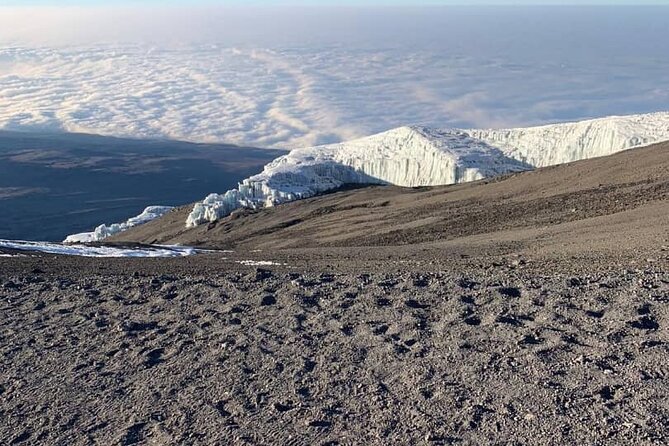
Kilimanjaro is 5,895 meters high and is the world’s highest free-standing mountain. That number matters. You are not simply walking uphill for a week. Your body must adjust to thinner air while you keep moving, eating, sleeping, and making sensible decisions.
The Lemosho route is a good choice because it gives you time to climb gradually. The first days are not just filler before the summit. They help you move from lower forest conditions into the colder, drier upper zones without rushing straight to extreme altitude.
You begin at the Londorossi Gate, around 2,400 meters, and finish at Mweka Gate at about 1,650 meters. Along the way, you spend nights at Mti Mkubwa, Shira 2, Barranco, Karanga, Barafu, and Mweka Hut. Each camp marks a clear change in climate and effort.
The route also approaches Kibo, the volcanic cone holding Uhuru Peak, from the west and south. By Day 5, you have completed what the schedule calls the south circuit and are positioned at Barafu for the summit attempt. That layout makes good practical sense: you reach the high camp, rest as much as possible, and begin the final climb from close to the summit zone.
More Kilimanjaro routes and climbs:
- Kilimanjaro climb by Lemosho Route (7-day)
★ 5.0 · 651 reviews - Kilimanjaro climb, Machame Route (7-day)
★ 5.0 · 262 reviews - Kilimanjaro Climbing Lemosho Route 8 Days.
★ 5.0 · 186 reviews
Day 1: Londorossi Gate to Mti Mkubwa
Your first walking day covers about 6 kilometers, rising from 2,400 to 2,800 meters. The scheduled hiking time is three to four hours, and the habitat is rainforest.
This is a gentle introduction compared with the days ahead. The forest gives you shade, damp air, and a chance to settle into the group’s pace. Keep your eyes open for wildlife, as the route passes through a natural forest area before climbing into drier country.
Mti Mkubwa means big tree, and the camp provides your first night on the mountain. Do not treat this short day as a reason to hurry. You have six more days ahead, and a slow, steady rhythm is more useful than proving your fitness on Day 1.
The practical challenge is often the transition from road travel to mountain routine. You will need to organize your sleeping items, clothing, water, and personal gear while still fresh. A good guide team should help set the pace and keep the day orderly.
Day 2: Heath and Moorland to Shira 2
Day 2 is longer, with about 14 kilometers and seven to eight hours of walking. You climb from 2,800 to 3,750 meters and leave the rainforest for heath and moorland.
This is where Kilimanjaro begins to feel wide open and exposed. The trees thin out, the air becomes cooler, and the route reaches the Shira Ridge before continuing to Shira 2 Camp. The change in plant life gives you a useful visual marker: you are moving into a higher world.
This day deserves respect because the distance is more than twice Day 1’s distance. You may feel strong in the morning, but conserve energy for the final hours. Small snacks and regular water breaks can make a long day much easier.
Shira 2 is also important for acclimatization. You sleep considerably higher than the previous night, so pay attention to how you feel. Headache, nausea, unusual tiredness, or poor coordination should be reported to your guide. The included oximeter and portable oxygen tank provide extra safety tools, but they do not replace honest communication or a guide’s judgment.
Day 3: Lava Tower, Arrow Glacier, and Barranco
The third day covers about 10 kilometers in six to eight hours, moving from roughly 3,750 to 3,950 meters in the published schedule. The route enters alpine desert and heads toward Kibo, with Lava Tower, also called Sharkstooth, as a major point along the way.
This is one of the most useful days for acclimatization because the route takes you into a much higher zone before continuing toward Barranco Camp. The schedule describes passage by Lava Tower and Arrow Glacier before the descent or continuation to Barranco. The exact elevation figures provided for this day are simplified, so your guide’s instructions on pace and altitude should take priority.
The terrain becomes rockier and more barren. You will notice the mountain’s colder, tougher character here. The day is not the longest by distance, but altitude can make every kilometer feel expensive.
Barranco Camp is a memorable stopping point because it places you below the Barranco Wall, which you will tackle the next morning. Try to eat even if your appetite has dropped. The included cook prepares breakfast, lunch, and dinner, and past guests have singled out the food as fresh, plentiful, and adaptable to needs such as vegetarian meals.
A few more trips of this kind worth comparing:
- Safari Serengeti And Ngorongoro
★ 5.0 · 288 reviews - Climbing Kilimanjaro – Machame Route
★ 5.0 · 170 reviews - Climbing Kilimanjaro through 7 days Machame Route
★ 5.0 · 151 reviews - Kilimanjaro climb, Lemosho Route (8-day)
★ 5.0 · 148 reviews
Day 4: Climbing Barranco Wall to Karanga
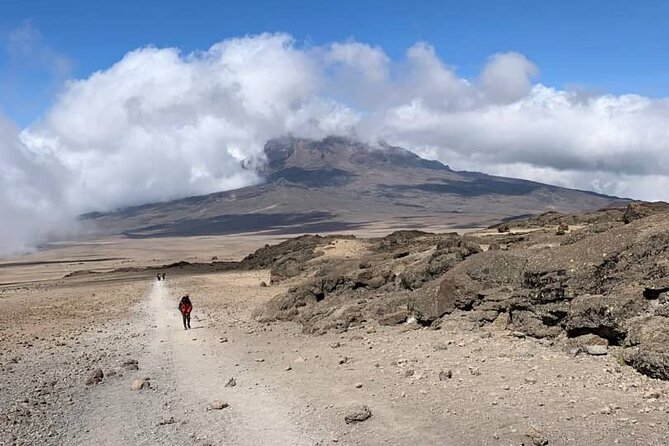
Day 4 is about 5 kilometers and four to five hours of walking. You climb from 3,950 to 4,040 meters through alpine desert, passing over the Barranco Wall before reaching Karanga Valley and Karanga Camp.
The distance looks short, but the Barranco Wall makes this a more physical day. You will use your hands at points and pay close attention to where you place your feet. It is not a technical rock-climbing route, but it is steeper and more awkward than a normal trail.
This is a good place to slow down and let the guide set the order of movement. Porters may pass with loads, and the trail can feel tight in places. Patience helps everyone.
The reward is a dramatic change in position. After the wall, you move through the Karanga Valley and reach camp at around 4,040 meters. You have completed another important acclimatization step without a giant mileage day. That balance is one of the route’s strongest features.
Day 5: Karanga to Barafu Hut
From Karanga, you walk about 4 kilometers for four to five hours, rising from 4,040 to 4,700 meters. The habitat remains alpine desert.
The route reaches the junction connecting with the Mweka Trail and continues upward to Barafu Hut. Barafu means ice, and the camp is the launch point for your summit attempt. By now, vegetation has largely disappeared, and the surroundings feel stark and high.
This day may look easy on paper, but the altitude changes the equation. Four kilometers at 4,000 meters is not the same as four kilometers at sea level. You should walk slowly, drink regularly, and keep your evening routine simple.
At Barafu, you rest and prepare for the summit. That means organizing warm layers, headlamp or other personal equipment if you bring it, water, and anything you need during the night. Personal mountain-climbing gear is not included, so check your equipment before arriving at this camp.
The support crew matters here. A guide who watches your condition, a cook who keeps meals going, and porters who handle camp tasks allow you to save energy for the hardest part of the climb. That broad team support is one of Moana’s most praised features.
Day 6: Stella Point, Uhuru Peak, and Mweka Hut
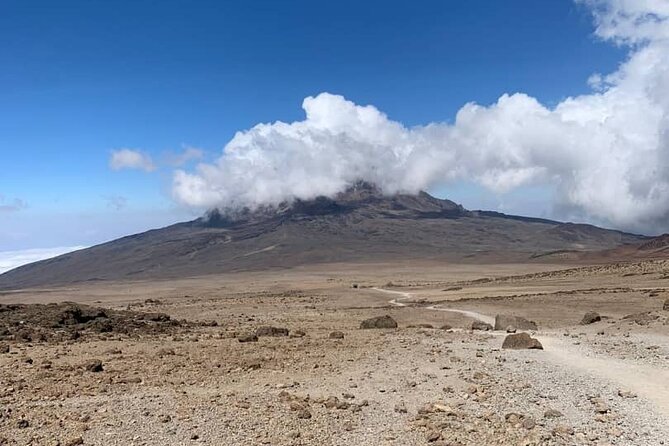
Summit day begins at about 4,700 meters and reaches 5,895 meters before descending to around 3,100 meters. The schedule allows five to seven hours up and another five to seven hours down, making this a very long day.
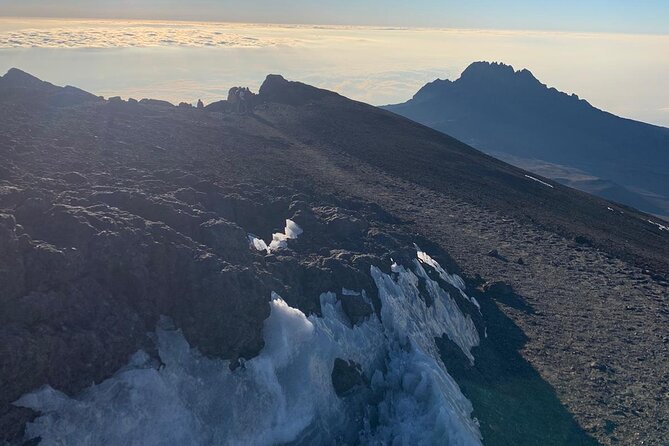
You climb between the Rebmann and Ratzel glaciers toward Stella Point. From there, you continue to Uhuru Peak, the highest point in Africa. The final section can feel slow, cold, and demanding. The goal is not speed. The goal is to keep moving safely under the guide’s direction.
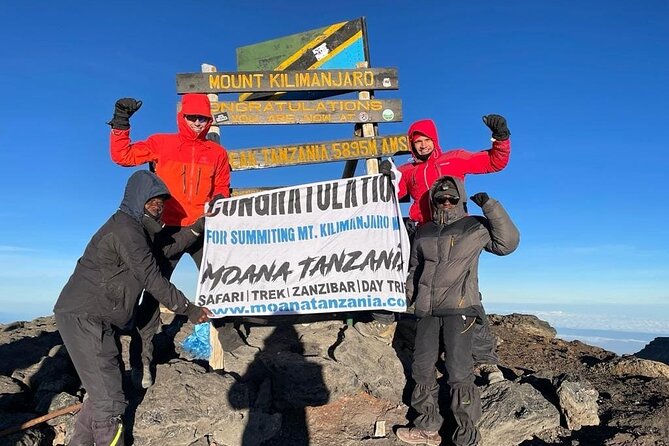
At the summit, you have time for photographs and a celebration before beginning the descent. Do not underestimate the way down. Your legs may be tired, and the loose upper trail can make descending physically punishing.
The route continues to Mweka Hut for the night. Reaching the hut is a major relief, but it is not the end of the day’s effort. Eat, drink, and rest as soon as you can. The descent to Mweka Hut is also valuable because sleeping lower gives your body a break from the highest altitude.
Day 7: Mweka Hut to Mweka Gate
The final day takes three to four hours, descending from about 3,100 to 1,650 meters through forest.
After the stark upper mountain, the return of trees feels like a real change. The air is warmer, the trail is greener, and the pressure of summit preparation is gone. You continue directly to Mweka Gate, where the mountain portion ends and transportation returns you to the meeting point in Moshi.
This short final walk can still be tiring. Your knees and feet have already worked hard, so use care on the descent. The day is a fitting close to the route: a steady return from high alpine conditions to the forest.
What the $2,900 Price Covers
The $2,900 price is not a bare guiding fee. It includes private transportation, all listed fees and taxes, guides, porters, a cook, drinking water, hot water for washing, meals, a portable oxygen tank, an oximeter, and a portable first-aid kit.
You receive six breakfasts, seven lunches, and six dinners. The meal count fits the seven-day schedule, with food provided throughout the mountain portion. The cook is an important part of the package, especially when you are using large amounts of energy each day. Past feedback gives the kitchen high marks, with David named as the chef and vegetarian food noted as an available option.
The package does not include Moshi accommodation before or after the climb. You also pay separately for flights, travel insurance, laundry, toiletries, personal items, personal mountain gear, and gratuities for the guides, cook, and porters.
That list affects the real budget. Add airport transfers or extra nights only if they are not already arranged elsewhere, plus suitable clothing and equipment. Tips are not included, so plan for them rather than treating them as an unexpected expense at the end.
For a seven-day climb with a full crew and safety supplies, the price can be fair value. It is still a large payment, so ask for a clear packing list and confirm exactly what private transportation covers before you pay.
The Human Side of the Mountain Crew
The strongest praise for Moana centers on its staff. The team is described as friendly, encouraging, flexible, professional, and serious about safety. Those qualities matter more than polished paperwork when you are tired at 4,700 meters.
Gea is associated with running the company, while David is identified as the chef. Other team names connected with the operation include Gasper, Robson, Salim, Herbert, and Gewa. Staff can change, so treat these names as useful points of reference rather than a guarantee of your exact crew.
The practical benefit of a supportive team is clear. Guides help maintain a manageable pace, monitor your condition, and encourage you through the summit attempt. Porters carry shared camp equipment, and the cook keeps meals coming while you focus on walking and resting.
You should still take responsibility for your own health. Tell the guide if you feel unwell, do not hide symptoms to protect a summit goal, and follow instructions about pace and rest. Oxygen and first-aid equipment are valuable backups, not permission to ignore altitude problems.
Who Should Book This Trek
This trek suits you if you have strong physical fitness, can handle seven consecutive days of walking, and are prepared for long hours at altitude. You should also be comfortable with basic mountain camping and bringing your own personal gear.
The route is a good match for someone who wants a gradual approach rather than the shortest possible path. You get several days to adjust before the summit and a varied climb through rainforest, moorland, and alpine desert.
It is less suitable if you want a relaxed holiday with guaranteed comfort or short walking days. The Barranco Wall requires steady footing, and summit day is long enough to test even fit hikers. Weather can also affect the departure, and poor conditions may lead to a new date or a full refund.
The maximum group size is 15. That is large enough for a social climb but small enough to remain manageable, especially if the group is divided into sensible walking paces.
Booking, Timing, and Cancellation Details
Pickup is offered, and the activity starts and ends at the meeting point in Moshi. The stated operating hours are Monday through Sunday from 7:00 AM to 11:00 AM, for dates listed through June 18, 2026.
Confirmation is normally issued when you book. If you book within one day of departure, confirmation arrives as soon as possible and depends on availability.
Cancellation terms are strict near departure. Cancel at least six full days before the start time for a full refund. Cancellation two to six full days before departure receives a 50 percent refund, while cancellation less than two full days before departure is not refunded. Changes follow the same cutoffs. If bad weather cancels the climb, you are offered another date or a full refund.
Final Verdict: Is Moana’s Lemosho Trek Worth It?
I would recommend this trek to a fit hiker who wants a supported Kilimanjaro climb and values a gradual route. The strongest reasons to book are the Lemosho approach, the seven-day pacing, the included cook and porters, the safety equipment, and the consistently praised care from the mountain team.
I would pause before booking if your budget does not allow for gear, insurance, Moshi lodging, and tips on top of the $2,900 fee. You should also be honest about your fitness and your ability to handle a very long summit day.
For the right person, this is a serious but well-supported way to reach Uhuru Peak. Go slowly, pack carefully, listen to the guides, and save enough energy for the walk back down.
FAQ
Where does the Kilimanjaro trek start and end?
The trek starts in Moshi, Tanzania, with pickup offered. The activity ends back at the meeting point after you reach Mweka Gate.
How long is the Lemosho route experience?
The trek lasts approximately seven days.
What is the maximum group size?
The maximum group size is 15 travelers.
Do I need strong physical fitness?
Yes. The experience states that participants should have a strong physical fitness level.
What meals are included?
The package includes seven lunches, six breakfasts, and six dinners.
Are guides, porters, and a cook included?
Yes. Guides, a cook, and porters are included in the price.
Is drinking water provided?
Yes. Drinking water and hot water for washing are included.
Is mountain-climbing gear included?
No. Personal mountain-climbing gear, toiletries, and personal items are not included.
What happens if bad weather cancels the trek?
If poor weather causes cancellation, you are offered a different date or a full refund.
Just added around Moshi
- Moshi: Lake Chala Tour: Hiking &/or Kayaking★ 4.5 · 3 reviews
- 3 Days Tanga Exclusive Beach Holiday★ 5.0 · 3 reviews
- Serengeti Wildebeest Migration.★ 5.0 · 3 reviews
- Chemka Hotpsrings E-Bike Day Trip★ 5.0 · 3 reviews
- Explore 1 day Ngorongoro Crater Budget Group Safari from Arusha★ 5.0 · 3 reviews
- Explore the 360° of Kilimanjaro★ 5.0 · 3 reviews
- Affordable Short Tanzania Safari (2 Days Camping Safari)★ 5.0 · 3 reviews
- Rongai Route 7 Days★ 5.0 · 3 reviews
Kilimanjaro Treks, compared.



8-Day Small-group Lemosho Kilimanjaro Summit Trekking
Read our review →


Climbing Kilimanjaro through 7 days Machame Route
Read our review →

Browse the lists this tour appears in