
Reviewed · KILIMANJARO TREKS
Mount Kilimanjaro – Machame route
Seven days can change your sense of scale. At 5,895 meters, Mount Kilimanjaro is Africa’s highest mountain and the world’s highest free-standing mountain, and the Machame Route gives you a varied way to reach Uhuru Peak. I like the route’s changing plant zones, from rainforest to icy summit, and I like that the $2,700 price includes guides, porters, a cook, meals, rescue fees, oxygen, and transport.
The main concern is the physical demand. You need a strong fitness level, and summit day involves a long climb from Barafu Camp followed by a major descent. You also need to bring your own personal mountain gear, toiletries, travel insurance, flights, and Moshi lodging before and after the climb.
In This Review
- Five details that shape this Kilimanjaro climb
- Why the Machame Route is a strong seven-day choice
- Day 1: Machame Gate to Machame Camp
- Day 2: The rainforest gives way to Shira
- Day 3: Lava Tower, Arrow Glacier, and Barranco Camp
- Day 4: The Barranco Wall and Karanga Valley
- Day 5: Karanga Camp to Barafu Camp
- Day 6: Uhuru Peak and the long return to Mweka Hut
- Day 7: Mweka Hut to Mweka Gate
- What the $2,700 price covers
- The guide and porter support
- Who should book this climb
- Booking, timing, and cancellation details
- Should you book the Machame Route with Moana Tanzania?
- FAQ
- How high is Mount Kilimanjaro?
- How long is the Machame Route experience?
- What route does this experience use?
- How much does the climb cost?
- Are meals included?
- Is mountain accommodation included?
- Are guides, porters, and a cook provided?
- What level of fitness is required?
- What is the maximum group size?
Five details that shape this Kilimanjaro climb
- The Machame Route crosses five distinct zones: rainforest, moorland, semi-desert, alpine desert, and an icy summit environment.
- The summit day is the hardest test: You climb from 4,700 meters to 5,895 meters, then descend to about 3,100 meters.
- The package includes practical mountain support: Guides, porters, a cook, drinking water, hot washing water, rescue fees, oxygen, and a first-aid kit are included.
- The small group limit matters: Moana Tanzania accepts a maximum of 15 people, which should make camp movement and guide communication easier than on a large group trip.
- The crew receives especially strong praise: Guides named in the feedback include Onesmo and Isack, with the team’s friendly attitude and summit support mentioned repeatedly.
- You spend six nights on the mountain: The plan includes six breakfasts, six dinners, and seven lunches, but not accommodation in Moshi.
Why the Machame Route is a strong seven-day choice
The Machame Route is a good fit if you want more than a simple uphill walk. The scenery changes quickly, and each day has its own character. You begin in thick rainforest, cross moorland and rocky ridges, pass the Lava Tower, climb the Barranco Wall, and finish among volcanic rock and ice.
That variety helps keep the trek interesting. The route is not only a test of endurance. It also gives you a clear sense of how Kilimanjaro changes with altitude.
The seven-day plan is useful because it breaks the climb into several stages rather than racing upward. You still face serious altitude and long walking days, but the schedule gives you time to move through Machame, Shira, Barranco, Karanga, and Barafu camps before the summit attempt.
You should not mistake the word seven-day for easy. The summit day alone includes five to seven hours of climbing and another five to seven hours of descent. That is a long day at high altitude, followed by a night at Mweka Hut before the final walk out.
More Kilimanjaro routes and climbs:
- Kilimanjaro climb by Lemosho Route (7-day)
★ 5.0 · 651 reviews - Kilimanjaro climb, Machame Route (7-day)
★ 5.0 · 262 reviews - Kilimanjaro Climbing Lemosho Route 8 Days.
★ 5.0 · 186 reviews
Day 1: Machame Gate to Machame Camp
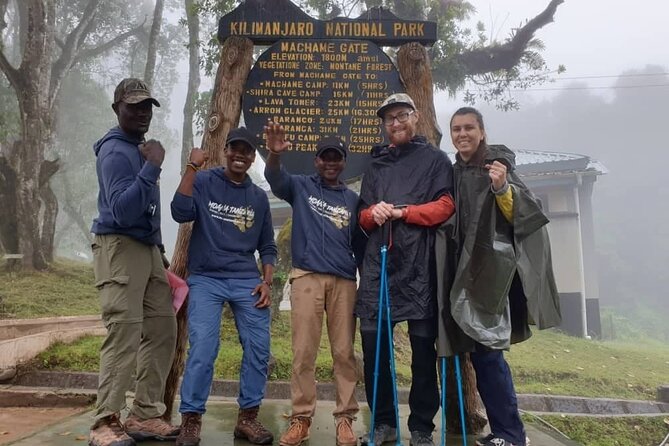
Your climb begins near Machame village and Machame Gate. The first day covers about 11 kilometers, rising from approximately 1,800 meters to 3,000 meters. The stated walking time is five to seven hours.
The setting is rainforest, which makes for a dramatic opening. The trail begins in a greener, more enclosed environment before the upper mountain becomes more open and exposed. Machame Camp is your first overnight stop.
This day is long enough to test your pace, but it is also a useful introduction to the rhythm of the trek. You will spend much of the day walking uphill, so steady movement matters more than speed. The best approach is to let the guide set the pace and avoid burning energy early.
The package includes drinking water and hot water for washing, small comforts that matter after a full day on foot. Accommodation fees are included as well, so you are not arranging mountain lodging one camp at a time.
Day 2: The rainforest gives way to Shira
Day two climbs from 3,000 meters to about 3,850 meters. You cover roughly 9 kilometers in four to six hours, leaving the rainforest behind and entering moorland.
The route follows an ascending path across a valley and up a steep, rocky ridge. From there, it continues toward a river gorge and Shira Camp. The terrain becomes more open, and the rocky character of the mountain becomes easier to see.
This is a shorter day than the first, but the extra altitude changes the effort. You may find the walk more demanding than the distance suggests. The guide’s job is especially important here, since a controlled pace gives you a better chance of handling the days ahead.
Shira is also the point where the trek begins to feel less like a forest hike and more like a high mountain crossing. There are base camps and public toilets along the Machame Route, which adds a practical advantage to a route that can otherwise feel quite remote.
Day 3: Lava Tower, Arrow Glacier, and Barranco Camp
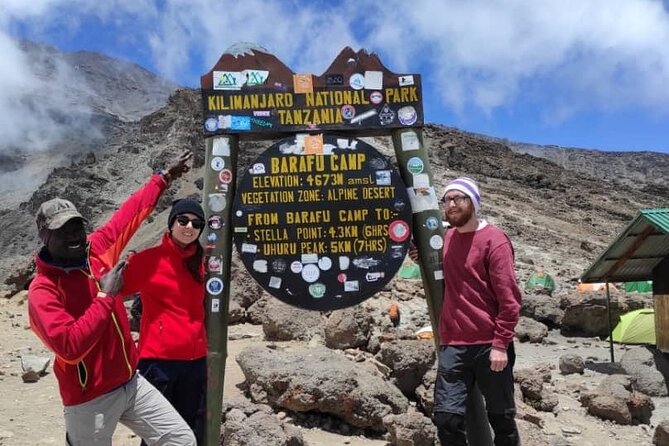
Day three covers about 10 kilometers and takes six to eight hours. You start near 3,850 meters and finish at Barranco Camp, listed at about 3,950 meters. The small net gain hides the real work of the day.
From the Shira Plateau, you head toward Kibo Peak and pass the Lava Tower, also called the Sharks Tooth. The route then continues toward the Arrow Glacier before taking you down to Barranco Camp. The surroundings become semi-desert, with less plant cover and more volcanic ground.
This is one of the most useful days for understanding the route’s design. You climb considerably higher during the day before sleeping lower at Barranco. That pattern gives the itinerary more than a straight upward push and helps you experience a wider range of altitude.
Do not focus only on the final elevation at camp. The climb to Lava Tower and the approach toward the glacier are demanding sections, and six to eight hours on rocky ground requires patience. Keep your daypack light and make sure your personal gear is suited to changing conditions.
A few more trips of this kind worth comparing:
- Safari Serengeti And Ngorongoro
★ 5.0 · 288 reviews - Climbing Kilimanjaro – Machame Route
★ 5.0 · 170 reviews - Climbing Kilimanjaro through 7 days Machame Route
★ 5.0 · 151 reviews - Kilimanjaro climb, Lemosho Route (8-day)
★ 5.0 · 148 reviews
Day 4: The Barranco Wall and Karanga Valley
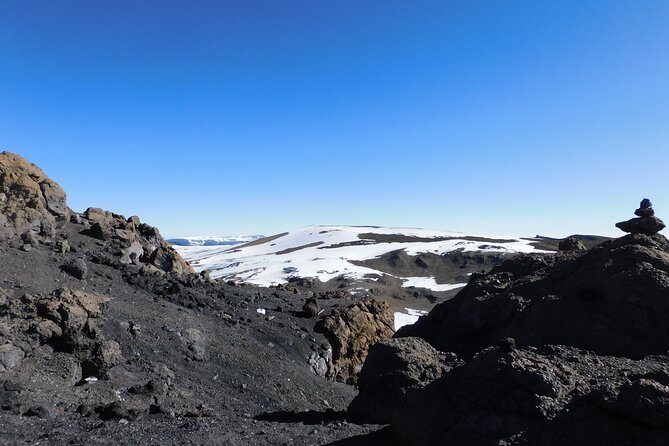
Day four is shorter, at about 5 kilometers and four to five hours. You climb from roughly 3,950 meters to 4,040 meters, passing the Barranco Wall before continuing into Karanga Valley.
The Barranco Wall is the day’s main feature. It adds a steeper, more hands-on section to the trek, though the supplied route description does not give a technical climbing grade. You should expect a more demanding passage than an ordinary walking trail and follow the guide’s instructions closely.
After the wall, the route continues toward Karanga Camp. The habitat is alpine desert, with a stark, open feel and little vegetation. The short distance does not make this a throwaway day. At this altitude, even modest climbs can feel slow.
Karanga Camp is a useful staging point before the final push to Barafu. You have time to rest, eat, and prepare your clothing and equipment for the summit attempt. The cook and support crew become especially valuable here, since warm meals and a proper rest period help you conserve energy.
Day 5: Karanga Camp to Barafu Camp
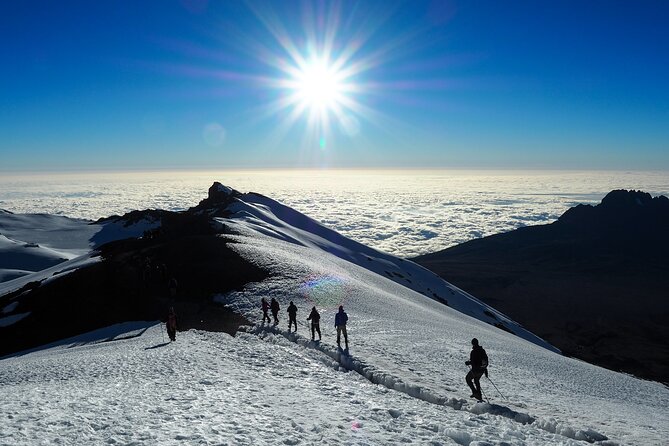
On day five, you walk about 4 kilometers from 4,040 meters to Barafu Hut at approximately 4,700 meters. The stated walking time is four to five hours, and the terrain remains alpine desert.
The trail reaches the junction connecting with the Mweka Trail, then continues upward to Barafu Camp. At this point, you have completed the southern circuit described in the route plan.
Barafu is not just another overnight stop. It is your launch point for Uhuru Peak, so the afternoon and evening have a practical purpose. You rest and prepare rather than treating the camp as a sightseeing stop.
This is where organization matters. You will want your warm layers, head protection, personal mountain equipment, and other essentials ready before the summit start. Since personal mountain gear is not included, you must arrive with the equipment you need. The price covers the guides, porters, cook, oxygen, oximeter, and first-aid kit, but those items do not replace your own clothing and climbing kit.
Day 6: Uhuru Peak and the long return to Mweka Hut
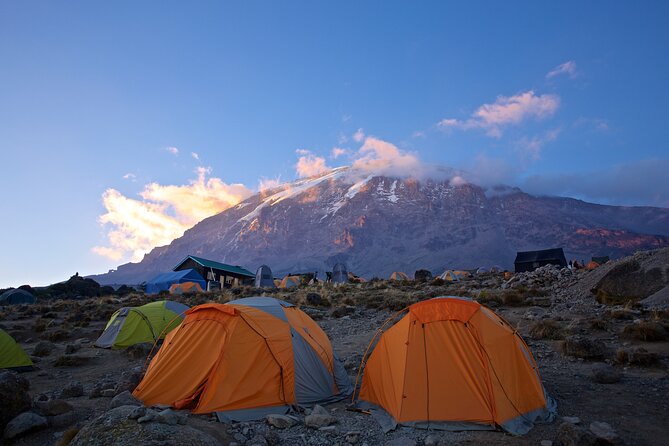
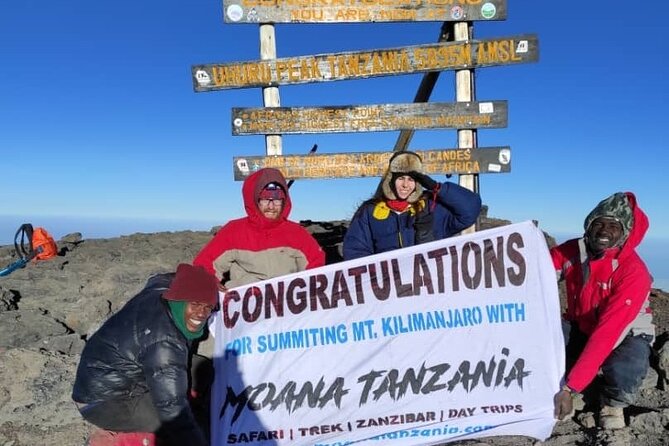
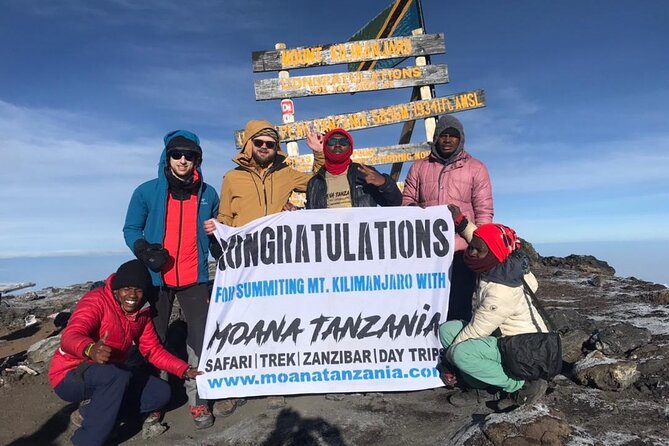
Summit day begins at about 4,700 meters. The route rises between the Rebmann and Ratzel glaciers toward Stella Point, then continues to Uhuru Peak at 5,895 meters.
The climb to the summit is listed as five to seven hours. After reaching Uhuru Peak, you have time for celebration and photographs before descending. The return to Mweka Hut takes another five to seven hours, with the day’s elevation ending near 3,100 meters.
This is the day to take the itinerary seriously. The total effort is not simply a five to seven-hour hike. You must climb to the highest point in Africa and then make a major descent while tired. The altitude, cold summit conditions, and length of the day make this the clear physical high point of the trip.
Portable oxygen tanks and an oxygen meter are included, along with rescue fees and a portable first-aid kit. Those provisions offer useful safety support, but they are not a guarantee that every person will reach the top. Your fitness, preparation, pacing, and response to altitude all matter.
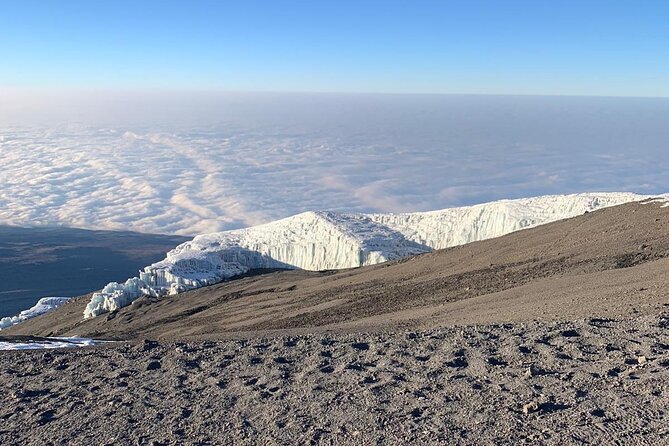
The summit atmosphere is one of the strongest parts of this experience. You reach Uhuru Peak after moving through rainforest, moorland, semi-desert, and alpine desert. The final setting is icy and severe, a sharp contrast to the first day near Machame Gate.
Day 7: Mweka Hut to Mweka Gate
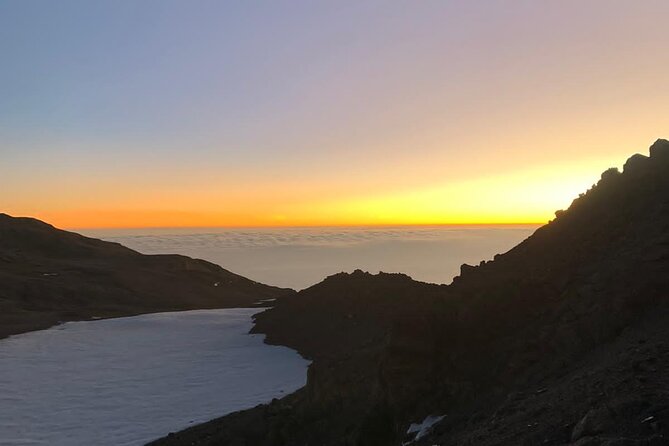
The last day is a descent from about 3,100 meters to approximately 1,650 meters. You walk for three to four hours through forest before reaching Mweka Gate.
Compared with summit day, this is a gentle finish, though tired legs can make any descent feel longer. The forest brings you back into a lower, greener environment and gives the trip a clear change of mood.
Mweka Gate marks the end of the mountain trek. Private transportation is included, though the supplied details do not specify the exact transfer arrangement or final destination. If you are staying in Moshi afterward, arrange that accommodation separately because it is not part of the mountain package.
What the $2,700 price covers
The price is $2,700 per person. Its value depends on how much support you want and how much of the logistics you would otherwise need to arrange yourself.
Included items cover the main working parts of a supported climb:
- Private transportation
- Accommodation fees on the mountain
- Guides, cook, and porters
- Drinking water throughout the trek
- Hot water for washing
- Rescue fees
- Portable oxygen tanks and an oxygen meter
- A portable first-aid kit
- Parking fees and GST
- Six breakfasts
- Six dinners
- Seven lunches
That is a substantial package for a seven-day mountain trip. Meals are covered every day of the stated itinerary, and the support team handles camp food and porter services. Rescue fees are also included, which is important for a high-altitude climb.
You still need to budget for flights, Moshi accommodation before and after the trek, travel insurance, laundry, toiletries, personal items, and personal mountain-climbing gear. Those exclusions can add a meaningful amount to your total cost, so calculate the full trip budget rather than treating $2,700 as the final figure.
The guide and porter support
The strongest praise for this experience centers on the crew. Onesmo is named as a guide, and Isack is also thanked alongside the wider Moana team. The feedback describes a friendly atmosphere, attentive support, and a well-organized push to the summit.
You should value that kind of support on Kilimanjaro. The route includes steep rocky sections, long days, and a summit attempt at high altitude. A guide who keeps the group together and helps you manage the pace can make the difference between a controlled climb and an exhausting one.
The group limit is 15 people. That is not a private two-person trip, but it is still a manageable maximum for a mountain expedition. If you want the closest possible attention, ask Moana Tanzania how many people are in your departure group before booking.
Who should book this climb
I would consider this route for a fit hiker who wants a full seven-day Kilimanjaro program and enjoys changing scenery. It suits you if you are comfortable with long walking days, basic mountain accommodation, and a demanding summit morning.
The Machame Route also works well if you want a route with more visual variety and several distinct terrain types. The Barranco Wall, Lava Tower, Shira Plateau, and glacier area give the trip more memorable landmarks than a simple climb through one type of terrain.
I would hesitate if you want a relaxed holiday, dislike early or lengthy mountain days, or have not prepared for high-altitude exertion. The required fitness level is clearly stated, and the summit day is not a casual add-on.
You should also be ready to bring personal gear and arrange Moshi lodging independently. The package is well supported on the mountain, but it is not an all-inclusive Tanzania vacation.
Booking, timing, and cancellation details
Pickup is offered, and the experience uses a mobile ticket. The stated operating hours are Monday through Sunday from 7:00 AM to 11:00 AM, with dates shown from July 10, 2021 through June 18, 2026. Confirm the current departure date and meeting details when booking, since the published date range may change.
Booking confirmation is normally provided at once unless you book within one day of departure. In that case, confirmation is sent as soon as possible and depends on availability.
You can receive a full refund if you cancel at least six full days before the start time. Cancellation two to six full days ahead allows a 50 percent refund, while cancellation less than two full days ahead is nonrefundable. Poor weather can also cancel the climb, in which case you are offered another date or a full refund.
Should you book the Machame Route with Moana Tanzania?
I would book this experience if you want a supported, seven-day route with strong crew involvement and a clear progression from forest to summit. The included meals, porters, guides, rescue fees, oxygen, water, and mountain accommodation give the $2,700 price real substance.
Before paying, confirm the group size, pickup details, current operating dates, and exactly what personal gear you must bring. If you prepare properly and accept that summit day will be hard, this Machame program offers a well-structured path to Uhuru Peak with the human support that makes a major climb feel possible.
FAQ
How high is Mount Kilimanjaro?
Mount Kilimanjaro reaches 5,895 meters at Uhuru Peak. It is the highest mountain in Africa and the highest free-standing mountain in the world.
How long is the Machame Route experience?
The trek lasts approximately seven days. The route begins near Machame Gate and ends at Mweka Gate.
What route does this experience use?
It uses the Machame Route. The itinerary passes through Machame Camp, Shira Camp, Barranco Camp, Karanga Camp, Barafu Camp, and Mweka Hut before reaching Mweka Gate.
How much does the climb cost?
The listed price is $2,700 per person.
Are meals included?
Yes. The package includes six breakfasts, six dinners, and seven lunches.
Is mountain accommodation included?
Yes. Accommodation fees on the mountain are included. Accommodation in Moshi before and after the trek is not included.
Are guides, porters, and a cook provided?
Yes. The package includes guides, a cook, and porters.
What level of fitness is required?
You should have a strong physical fitness level. The summit day includes five to seven hours of climbing and another five to seven hours of descent.
What is the maximum group size?
The maximum group size is 15 people.
Just added around Moshi
- Moshi: Lake Chala Tour: Hiking &/or Kayaking★ 4.5 · 3 reviews
- 3 Days Tanga Exclusive Beach Holiday★ 5.0 · 3 reviews
- Serengeti Wildebeest Migration.★ 5.0 · 3 reviews
- Chemka Hotpsrings E-Bike Day Trip★ 5.0 · 3 reviews
- Explore 1 day Ngorongoro Crater Budget Group Safari from Arusha★ 5.0 · 3 reviews
- Explore the 360° of Kilimanjaro★ 5.0 · 3 reviews
- Affordable Short Tanzania Safari (2 Days Camping Safari)★ 5.0 · 3 reviews
- Rongai Route 7 Days★ 5.0 · 3 reviews
Kilimanjaro Treks, compared.



8-Day Small-group Lemosho Kilimanjaro Summit Trekking
Read our review →


Climbing Kilimanjaro through 7 days Machame Route
Read our review →

Browse the lists this tour appears in