
Reviewed · KILIMANJARO TREKS
Mount Kilimanjaro Rongai Route
Kilimanjaro saves its hardest test for midnight. This seven-day Rongai Route climb approaches Africa’s highest mountain from the quieter northern side, then crosses the high Saddle before the final push to Uhuru Peak. I like the gradual altitude gain and the extra acclimatization day at Mawenzi Tarn. I also like the strong support system, with attentive guides, porters, cooks, and camp staff helping keep the climb organized.
The main drawback is the summit schedule. You leave Kibo Hut around midnight, climb for roughly six hours to Gillman’s Point, continue to Uhuru Peak, then descend to Horombo Hut. That makes Day 6 a very long 12 to 15-hour effort. You need a moderate level of fitness, patience, and a willingness to walk slowly for several days.
The route is private for your group, with space for up to 15 people, and pickup is offered. Zara Tanzania Adventures has more than 30 years of experience in Tanzania, and the strongest praise goes to its mountain teams. Guides named in past trips include Mndeme, Stanley, Izadini, Teodori, Selemani, Kabilla, and Amani. That personal attention matters most when the air gets thin and the climb stops feeling easy.
In This Review
- Five things to know before choosing the Rongai Route
- Why the Rongai Route is worth considering
- Day 1: Farmland, pine forest, and Simba Camp
- Day 2: Second Cave to Kikelewa Camp
- Day 3: The short, steep climb to Mawenzi Tarn
- Day 4: The acclimatization day at 4,330 meters
- Day 5: Across the Saddle to Kibo Hut
- Day 6: Gillman’s Point, Uhuru Peak, and Horombo Hut
- Day 7: Moorland, rainforest, and a hot shower
- Guides, porters, and the value of the support team
- Is $2,700 good value?
- Who should book this climb?
- FAQ
- How long is the Rongai Route climb?
- What is the highest point reached?
- Where does the climb start?
- Is this a private tour?
- What fitness level is required?
- Can I cancel for a full refund?
- Should you book it?
Five things to know before choosing the Rongai Route
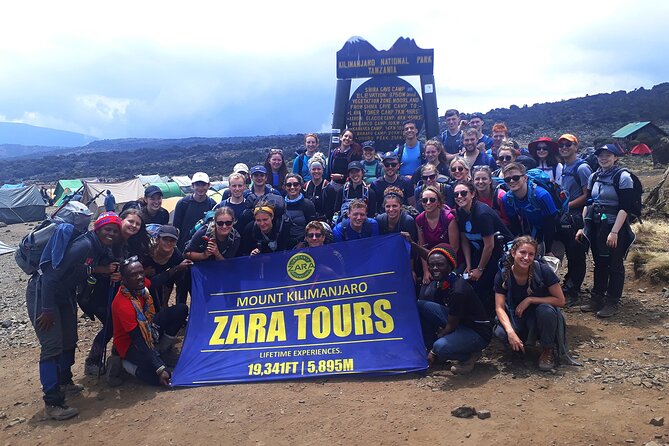
- The climb begins among farms and pine forest, giving you a softer start than the stark upper mountain.
- Mawenzi Tarn gets an extra acclimatization day, a useful feature before the summit attempt.
- The summit day lasts 12 to 15 hours, with a midnight start and a long descent afterward.
- The price is $2,700 per private group of up to 15, so the per-person value improves sharply with a larger group.
- Guides and support staff receive the highest praise, especially for monitoring fatigue and possible altitude problems.
- You finish at Marangu Gate, then return to Springlands Hotel in Moshi for food, a shower, and a bed.
Why the Rongai Route is worth considering
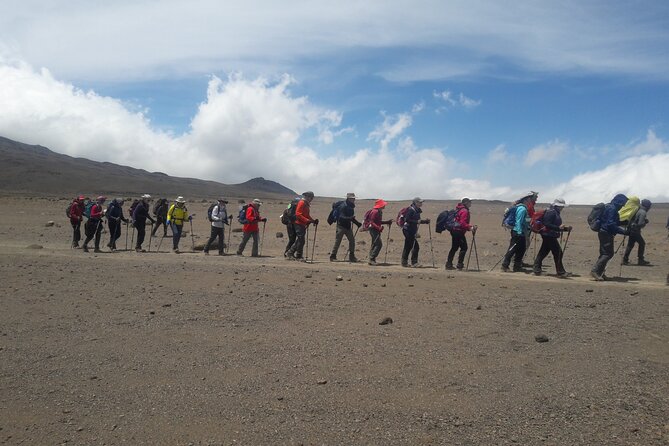
Kilimanjaro has several routes, but Rongai offers a particular kind of appeal. You approach from the northeastern side near the Kenyan border, beginning in farmland and pine forest rather than heading straight into a busy trail corridor. The first days feel quiet and spacious.
The route also gives you time to adjust. You climb from 1,950 meters to 4,720 meters before summit night, with a full acclimatization day at Mawenzi Tarn. That does not remove the risks of high altitude, but it gives your body more time to respond.
I also like the shape of the route. The lower sections are gentle enough to let you find your rhythm. The middle days bring moorland, giant Senecios, and views of Mawenzi Peak. The upper mountain turns bare and lunar before the summit. On the way down, you pass through rainforest and return to Marangu Gate.
This is not a casual mountain walk. The total hiking distances are substantial, particularly the 22 kilometers on summit day and the 20 kilometers on the final descent. Still, the itinerary breaks the ascent into sensible stages, and the guides appear to take a careful, hands-on approach.
More Kilimanjaro routes and climbs:
- Kilimanjaro climb by Lemosho Route (7-day)
★ 5.0 · 651 reviews - Kilimanjaro climb, Machame Route (7-day)
★ 5.0 · 262 reviews - Kilimanjaro Climbing Lemosho Route 8 Days.
★ 5.0 · 186 reviews
Day 1: Farmland, pine forest, and Simba Camp
After breakfast at your hotel, you drive for two to three hours toward Rongai Gate. The route passes rural villages and cultivated farmland, giving you a glimpse of daily life around Kilimanjaro before the trail turns toward the national park.
At the gate, you complete registration and begin walking at about 1,950 meters. The first day covers roughly eight kilometers and takes three to four hours. The ascent is gentle, which is exactly what you want on Day 1. Your job is not to prove anything. It is to start slowly, drink regularly, and save energy.
The trail moves through farmland and pine forest. You might spot colobus monkeys, adding a welcome wildlife note to what is mainly a walking day. The trees also provide shade and make this section feel more like a forest trek than a high-altitude expedition.
Simba Camp sits at about 2,600 meters. You can expect a hot meal before settling in for the night. The short distance and modest height gain make this a friendly opening, though the drive to the gate means the morning is not entirely relaxed.
A small practical point deserves attention: the meeting information gives Kilimanjaro Airport as the starting point at 7:00 am, while the daily plan begins with breakfast at the hotel. Confirm your pickup point and first-morning timing before you arrive. It is a simple detail, but airport, hotel, and gate transfers are easier when everyone is working from the same plan.
Day 2: Second Cave to Kikelewa Camp
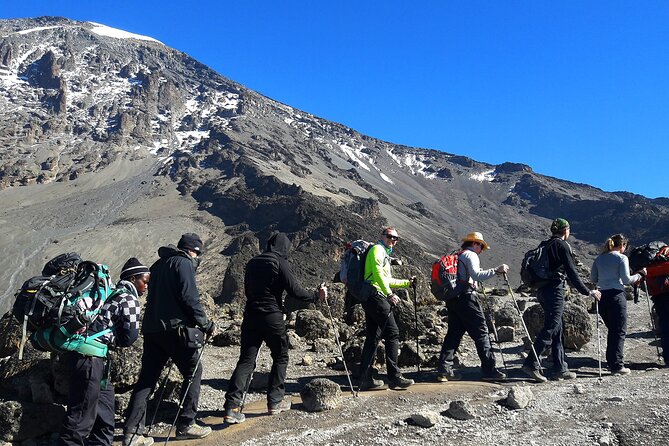
Day 2 raises the difficulty. You climb from 2,600 meters to 3,600 meters, covering about 10 kilometers in five to six hours. The trail ascends steadily to Second Cave, where you stop for lunch.
After lunch, the character of the route changes. You leave the larger path and cross moorland toward Mawenzi’s jagged peaks. The smaller trail gives this section a remote feel, with fewer signs of everyday activity and more open views.
Kikelewa Camp sits in a sheltered valley near Kikelewa Cave. Giant Senecios add an unusual shape to the high-altitude vegetation, and Mawenzi’s rough cliffs provide a dramatic backdrop. This is one of the most memorable camps on the route because the setting feels wild without yet being completely barren.
The 1,000-meter height gain is the main challenge. You might feel fine at the start and notice the altitude only later. Keep your pace easy. The guide team’s role here is important, and previous climbers have praised Zara’s guides for watching closely for tiredness and possible altitude sickness.
Day 3: The short, steep climb to Mawenzi Tarn
Day 3 is shorter at about six kilometers, with three to four hours of walking. Do not mistake the shorter distance for an easy day. The trail is steeper, climbing from 3,600 meters to roughly 4,315 meters across grassy slopes.
The reward is Mawenzi Tarn, a striking camp below Mawenzi Peak. The cliffs rise sharply around the area, and the views give you a strong sense of how far above the ordinary world you have come.
After arriving, you receive a hot lunch and have time to rest. The schedule also allows for a short acclimatization hike. This is a good day to move a little after lunch, but only if your guide thinks you are responding well to the altitude. The goal is adaptation, not extra mileage.
In the evening, your guide briefs you about the next day and the climb toward Kibo Hut. Pay attention. This is when you should ask about pace, water, clothing, and how the summit attempt will unfold. Guides such as Mndeme and Stanley, also known as Baba Massive, have been praised for clear organization and calm support. Those qualities are useful long before summit night.
A few more trips of this kind worth comparing:
- Safari Serengeti And Ngorongoro
★ 5.0 · 288 reviews - Climbing Kilimanjaro – Machame Route
★ 5.0 · 170 reviews - Climbing Kilimanjaro through 7 days Machame Route
★ 5.0 · 151 reviews - Kilimanjaro climb, Lemosho Route (8-day)
★ 5.0 · 148 reviews
Day 4: The acclimatization day at 4,330 meters
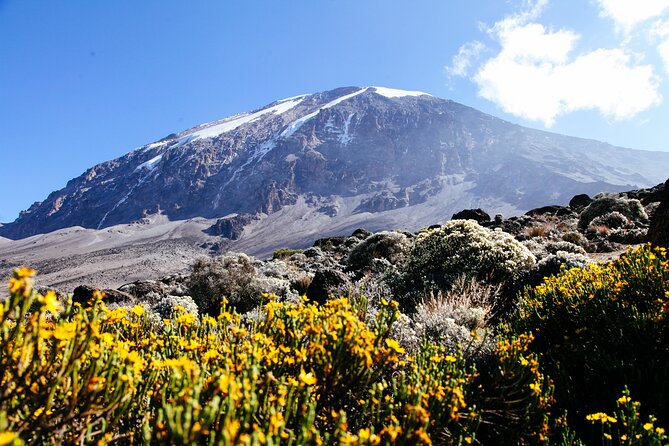
The extra day at Mawenzi Tarn is one of the itinerary’s best features. You remain around 4,330 meters and hike upward toward Mawenzi Peak before returning to camp to rest.
This day helps in two ways. First, you spend more time at altitude without also needing to reach a new camp. Second, you can test how your body responds before the route takes you higher. Headaches, unusual tiredness, nausea, and poor coordination are not challenges to ignore. Tell your guide what you feel.
The hike toward Mawenzi offers fine views, but the health benefit matters more than the scenery. You should keep it controlled, stay hydrated, and avoid treating the acclimatization walk as a race.
A rest day at this height is not a spa day. You are still sleeping in thin air, and the cold or lack of sleep may affect you. Still, this pause makes more sense than rushing directly from Kikelewa Camp to Kibo Hut. If you are comparing routes, this added time is worth considering.
Day 5: Across the Saddle to Kibo Hut
After breakfast, you cross the Saddle, the broad high zone between Mawenzi and Kibo peaks. The walk covers about eight kilometers and takes five to six hours. The incline is gentle, but the surroundings become bare and severe.
This is Kilimanjaro’s lunar section. There is little shelter, and the open ground can make the summit feel both close and distant. You can see the goal ahead, but the remaining climb still requires work.
Kibo Hut sits at about 4,720 meters. After arrival, you eat an early dinner and try to sleep before the midnight wake-up. Many people find this rest difficult because of the altitude, anticipation, or both. Pack your summit clothing and headlamp where you can reach them quickly. The less you need to organize at midnight, the better.
A detailed guide briefing takes place before the summit attempt. Use it to confirm the pace and the plan for breaks. The climb begins soon after midnight, so Day 5 is best treated as a preparation day rather than a normal hiking day.
Day 6: Gillman’s Point, Uhuru Peak, and Horombo Hut
This is the demanding core of the trip. You start around midnight and climb from about 4,700 meters to Uhuru Peak at 5,895 meters, then descend to roughly 3,720 meters. The full hiking distance is about 22 kilometers, and the walking time is listed at 12 to 15 hours.
The first target is Gillman’s Point at 5,685 meters. The climb usually takes around six hours and is steep, slow, and strenuous. You move in the dark, often taking short steps. The sensible pace is the guide’s pace, not the pace you imagine you should manage.
From Gillman’s Point, you follow the crater rim toward Uhuru Peak. If the weather is clear, sunrise over Africa can be extraordinary. The final section is not easy, even after reaching Gillman’s Point, so keep some energy in reserve.
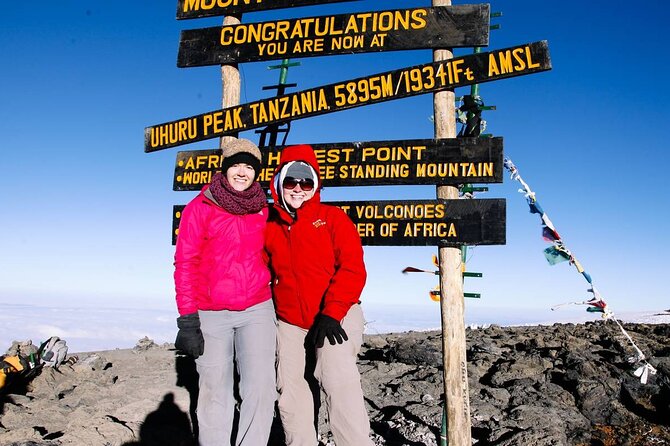
At Uhuru Peak, you have reached the highest point in Africa. Take your photographs, enjoy the moment, and listen to your guide about how long to remain there. At this altitude, the summit is a place to celebrate briefly, not linger for hours.
You then descend to Kibo Hut for a short rest before continuing to Horombo Hut. This second descent is why the day feels so long. Your legs are tired, and the altitude may still affect you. The attentive support described by past climbers is especially valuable here. Zara’s guides have been praised for noticing fatigue and staying close to the group.
The food also receives strong praise. One climber specifically appreciated a two-course dinner served at around 4,500 meters. Hot meals at high camps can make a real difference to morale, although you should still expect simple mountain conditions rather than restaurant comfort.
Day 7: Moorland, rainforest, and a hot shower
The final day covers about 20 kilometers, taking six to seven hours. You descend from Horombo Hut through moorland and then into rainforest before reaching Marangu Gate.
The change in vegetation gives the descent a pleasant rhythm. After the bare upper slopes, trees and thicker plant life feel like a return to normal life. You may be tired, but the lower altitude usually makes breathing easier.
At the gate, you receive a summit certificate. Then you drive back to Springlands Hotel in Moshi, where the plan includes a hot meal, shower, and comfortable bed. After seven days on the mountain, those ordinary comforts may feel better than any grand sightseeing stop.
You can also speak with Zara’s safari coordinator about adding a wildlife safari or a beach stay in Zanzibar. The information provided does not give prices or schedules for those add-ons, so treat them as separate plans that need their own details.
Guides, porters, and the value of the support team
The most strongly praised part of this climb is the staff. Specific guides named in past trips include Mndeme, Stanley, Izadini, Teodori, Selemani, Kabilla, and Amani. The feedback consistently points to kindness, careful organization, good English, and close attention on the mountain.
That matters because Kilimanjaro is not difficult only because of steep paths. It is difficult because the route asks you to keep making good decisions while tired, cold, and short of breath. A guide who notices a change in your condition can make the day safer and less frightening.
Porters, cooks, and other camp staff also form part of the operation. One large group was supported by a much larger crew, including mountain guides, porters, cooks, and waiters. Your exact staff numbers are not specified, so do not assume every group receives the same ratio, but the scale of support is clearly a central part of Zara’s service.
Zara also describes a commitment to supporting local communities and protecting the environment. The supplied information does not give specific conservation projects, porter payment standards, or waste procedures. Ask for those details if responsible tourism is a major part of your decision.
Is $2,700 good value?
The advertised price is $2,700 per private group of up to 15 people. At the maximum group size, that works out to $180 per person, though the price per person rises if fewer people join.
That group pricing can be excellent value for a family or group of friends. You receive a private activity rather than joining an open mixed group, and the itinerary includes seven days of guiding, camp support, meals described at several stages, national park admission, and transport back to Moshi. The exact list of what the price covers is not fully detailed, so ask about park fees, permits, porter tips, gear, hotel nights, and airport transfers before paying.
For a solo climber or a very small group, $2,700 is a much larger individual expense. The price may still feel worthwhile if you value private scheduling and a large support operation, but you should compare it with other Rongai programs that clearly list inclusions.
The free cancellation rule is useful: you can receive a full refund if you cancel at least 24 hours before the local start time. Changes or cancellations inside that window are not accepted for a refund.
Who should book this climb?
You should consider it if you want a quieter approach to Kilimanjaro, a private group, a longer seven-day schedule, and an extra acclimatization day. It suits people who prefer steady progress and strong staff support over a rushed ascent.
You also need to accept long walking days. A moderate fitness level is required, and the summit day is far harder than the early stages suggest. If you dislike midnight starts, basic camps, or uncertain weather, this may not be the right mountain experience.
The route can work well for friends, couples, and families with the required fitness. It also makes sense for people who want to combine Kilimanjaro with a safari or Zanzibar afterward, though those additions require separate planning.
FAQ
How long is the Rongai Route climb?
The experience lasts approximately seven days, including the ascent, summit attempt, descent, and return to Moshi.
What is the highest point reached?
The route reaches Uhuru Peak at 5,895 meters, or 19,341 feet, the highest point in Africa.
Where does the climb start?
The meeting information gives Kilimanjaro Airport in Tanzania as the start point, with a start time of 7:00 am. The daily plan also refers to breakfast at the hotel before the drive to Rongai Gate, so confirm the exact pickup arrangement.
Is this a private tour?
Yes. Only your group participates, with a maximum group size of 15 people.
What fitness level is required?
A moderate level of physical fitness is required. The longest day involves about 22 kilometers of hiking and descending over 12 to 15 hours.
Can I cancel for a full refund?
Yes, if you cancel at least 24 hours before the experience start time. Cancellations or changes made less than 24 hours before the start are not accepted for a refund.
Should you book it?
I would choose this Rongai Route program if your priorities are a private climb, a patient seven-day schedule, and a guide team that takes personal care seriously. The Mawenzi Tarn acclimatization day is a real advantage, and the route offers varied scenery from farms and forest to high moorland, the Saddle, and the summit crater rim.
Before booking, confirm exactly what the $2,700 includes and clarify the airport or hotel pickup. If you are fit, ready for a midnight summit attempt, and happy to walk slowly for a week, this is a well-supported way to take on Kilimanjaro. If you want a short or comfortable holiday, choose something else. The mountain gives you spectacular rewards, but it asks for steady effort in return.
Just added around Moshi
- Moshi: Lake Chala Tour: Hiking &/or Kayaking★ 4.5 · 3 reviews
- 3 Days Tanga Exclusive Beach Holiday★ 5.0 · 3 reviews
- Serengeti Wildebeest Migration.★ 5.0 · 3 reviews
- Chemka Hotpsrings E-Bike Day Trip★ 5.0 · 3 reviews
- Explore 1 day Ngorongoro Crater Budget Group Safari from Arusha★ 5.0 · 3 reviews
- Explore the 360° of Kilimanjaro★ 5.0 · 3 reviews
- Affordable Short Tanzania Safari (2 Days Camping Safari)★ 5.0 · 3 reviews
- Rongai Route 7 Days★ 5.0 · 3 reviews
Kilimanjaro Treks, compared.



8-Day Small-group Lemosho Kilimanjaro Summit Trekking
Read our review →


Climbing Kilimanjaro through 7 days Machame Route
Read our review →

Browse the lists this tour appears in