
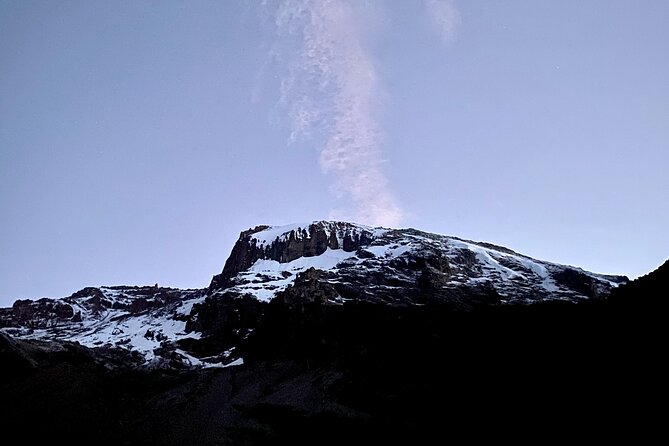
Reviewed · KILIMANJARO TREKS
Mt. Kilimanjaro Climb – 8 Day Lemosho Route
Kilimanjaro rewards patience more than speed. Roam Wild Adventure’s eight-day Lemosho route gives you time to adjust to altitude while moving through rainforest, moorland, volcanic rock, and high alpine terrain. I especially like the quieter western approach and the extra acclimatization day on the Shira Plateau. I also like that the price includes guides, porters, cooks, meals, camping equipment, airport transfers, and hotel nights before and after the climb. The main drawback is simple: this is still a demanding high-altitude climb, and you need strong physical fitness, proper personal gear, and the mental strength for a midnight summit push.
The company limits departures to 12 people, although your support crew may be much larger than the walking group. A five-person group described having a lead guide, two assistant guides, a chef, a waiter, and 17 porters. That level of support can make camp life far easier, but you should also understand that tips for the mountain team are not included in the $3,099 price.
In This Review
- Key points to know before booking
- Why Lemosho is a smart eight-day choice
- Day one: Moshi to the Lemosho trailhead
- Day two: Heather, volcanic rock, and the first Kibo view
- Day three: The Shira Plateau acclimatization day
- Day four: Lava Tower and the Senecio Forest
- Day five: Climbing the Barranco Wall
- Day six: Barafu Camp and the final rest
- Day seven: A midnight climb to Uhuru Peak
- Day eight: Mweka Gate and the return to Moshi
- What the $3,099 price covers
- The guide team and camp support
- Who should choose this climb
- Should you book the Lemosho climb?
- FAQ
- How long is the Kilimanjaro climb?
- Where does the Lemosho route begin?
- How large is the walking group?
- Is airport pickup included?
- Are meals included during the climb?
- What equipment is provided?
Key points to know before booking
- The western Lemosho approach offers quieter scenery, with wide views toward Mount Meru and Moshi before the route joins Kilimanjaro’s southern circuit.
- Day three is built for acclimatization, using walks across the Shira Plateau and near Moir Hut rather than simply pushing toward the summit.
- The Lava Tower to Barranco Camp route uses climb-high, sleep-lower planning, a useful altitude strategy even though the day ends near the starting elevation.
- The Barranco Wall looks more dramatic than it climbs, but its narrow, steep passage still requires balance, steady footing, and a calm head.
- Summit day begins around midnight, with sunrise near Stella Point and a final push to Uhuru Peak.
- The price includes a serious support operation, including certified guides, porters, cooks, a private toilet tent, meals, tents, transfers, and hotel lodging.
Why Lemosho is a smart eight-day choice
Kilimanjaro has several established routes, but Lemosho is appealing because it does not rush you toward the summit. You spend the opening days crossing distinct habitats, then gain altitude in measured stages before joining the busier southern section of the mountain.
The route is described as having an overall summit success rate of about 95 percent. Treat that number as a company estimate rather than a guarantee. Altitude affects people differently, and no itinerary can remove the risks of headache, fatigue, nausea, or serious mountain sickness.
The extra day matters. On day three, you walk across the Shira Plateau and make side trips toward Moir Hut and the Lent Hills. You gain height during the day, then return to a lower sleeping elevation. That pattern gives your body more time to adjust than a shorter route usually allows.
I also appreciate the route’s changing scenery. You begin in forest, pass through tall grass and heather, cross open volcanic ground, and later reach the huge Senecio plants around Barranco. This is not just a long uphill walk with one famous summit at the end. The surroundings keep changing, which helps break up the physical effort.
More Kilimanjaro routes and climbs:
- Kilimanjaro climb by Lemosho Route (7-day)
★ 5.0 · 651 reviews - Kilimanjaro climb, Machame Route (7-day)
★ 5.0 · 262 reviews - Kilimanjaro Climbing Lemosho Route 8 Days.
★ 5.0 · 186 reviews
Day one: Moshi to the Lemosho trailhead
Your first day begins with pickup in Moshi and a drive of roughly four hours to Londorossi Gate. You complete entry formalities there, then continue by vehicle to the Lemosho trailhead before starting on foot.
The opening walk passes through undisturbed forest toward the first campsite. This is one of the gentler and more pleasant parts of the route, with thick vegetation and the chance to spot blue monkeys moving through the trees.
Do not mistake the forest start for an easy week ahead. The first day sets the rhythm for the whole climb. Walk slowly, keep your pack manageable, and let the guide establish the pace. The route information lists each day as approximately 16 hours, but that appears to be a broad itinerary block rather than a stated walking time. Ask Roam Wild Adventure for the expected daily hiking hours and camp elevations before you leave.
Day two: Heather, volcanic rock, and the first Kibo view
On day two, the forest gives way to a more open zone of tall grasses, heather, volcanic rock, and pale lichen. The change is striking. You cross streams and climb rolling ground toward Shira Ridge, then descend gently to Shira 1 Camp.
This is where Mount Kilimanjaro’s Kibo peak first comes into view across the plateau. For many people, this is the moment the climb feels real. The mountain is no longer an idea on the horizon. It is now part of your daily view.
The open setting can also expose you to changing weather. The supplied details do not specify temperatures or weather by season, so you should prepare with layers and reliable rain protection rather than count on one forecast.
Day three: The Shira Plateau acclimatization day
Day three is one of the best reasons to choose this itinerary. Instead of making a major move toward the summit, you spend the day exploring one of the highest plateaus on Earth.
The walk heads east across moorland meadows toward Shira 2 Camp, then turns toward Moir Hut at the base of the Lent Hills. The area offers several possible walks, making it useful for gaining altitude during the day without committing to a full summit-style effort.
The benefit is practical, not merely scenic. You have more time to notice how your body responds to altitude while guides can monitor your pace and condition. If you are fit but have little experience at high altitude, this extra day is valuable.
The tradeoff is that you are still hiking on a day that some shorter programs might use to cover ground. You need to accept a slower schedule and trust that patience is part of the plan.
A few more trips of this kind worth comparing:
- Safari Serengeti And Ngorongoro
★ 5.0 · 288 reviews - Climbing Kilimanjaro – Machame Route
★ 5.0 · 170 reviews - Climbing Kilimanjaro through 7 days Machame Route
★ 5.0 · 151 reviews - Kilimanjaro climb, Lemosho Route (8-day)
★ 5.0 · 148 reviews
Day four: Lava Tower and the Senecio Forest
Day four takes you up a ridge and southeast toward Lava Tower, a volcanic rock formation about 300 feet tall. You then descend to Barranco Camp through the unusual Senecio Forest, ending the day at roughly 13,000 feet.
The important point is the altitude pattern. You climb high during the day and sleep lower than your highest point. That climb-high, sleep-low method is a central part of the route’s acclimatization plan.
This may be one of the harder days because altitude can make even modest slopes feel demanding. You should expect the pace to be slow. That is not a sign of failure. On Kilimanjaro, slow and steady is often the sensible way to preserve energy.
The Senecio plants add a memorable visual change, while Barranco Camp gives you a dramatic setting beneath the wall you will climb the next morning. You may feel tired on arrival, but this is also the point where the route begins to feel properly alpine.
Day five: Climbing the Barranco Wall
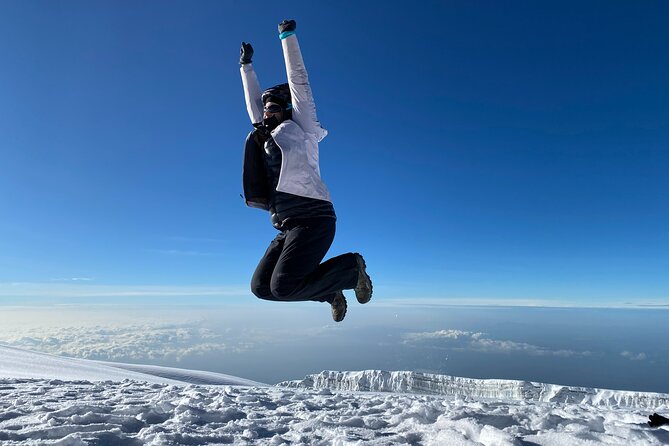
The Barranco Wall is the route’s best-known hands-on section. You first descend into a ravine, then climb the steep cliff face, which rises nearly 900 feet. It is non-technical, meaning no technical climbing equipment is described as necessary, but it is still steep and requires careful movement.
A narrow section, reported as about three feet wide, has earned the nickname Kissing Wall. You may see climbers press close to the rock while moving across it. The key advice is to follow your guide’s instructions, keep three-point contact when needed, and avoid rushing because other people are nearby.
At the top, you cross hills and valleys before descending into Karanga Valley. A final climb brings you to Karanga Camp. This shorter day is useful because it leaves you better prepared for the greater altitude ahead.
The wall may look intimidating from camp, but the route description makes clear that it is not a technical climbing pitch. Still, if you dislike narrow paths or steep exposed-feeling terrain, ask the company for a more precise description of current conditions.
Day six: Barafu Camp and the final rest
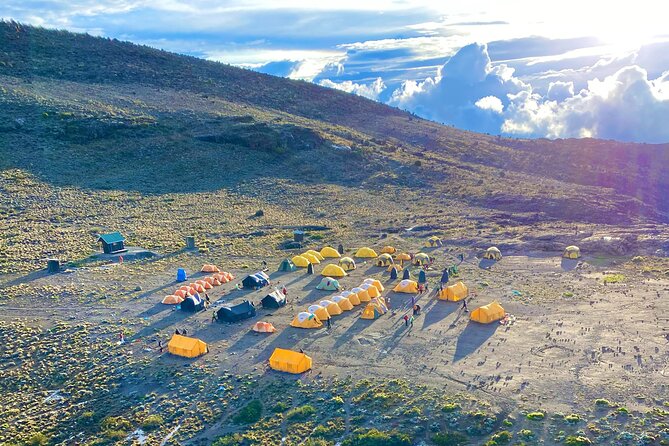
From Karanga, you reach the junction with the Mweka Trail and continue over rocky ground to Barafu Hut. At this point, you have completed the Southern Circuit and seen Kibo from several angles.
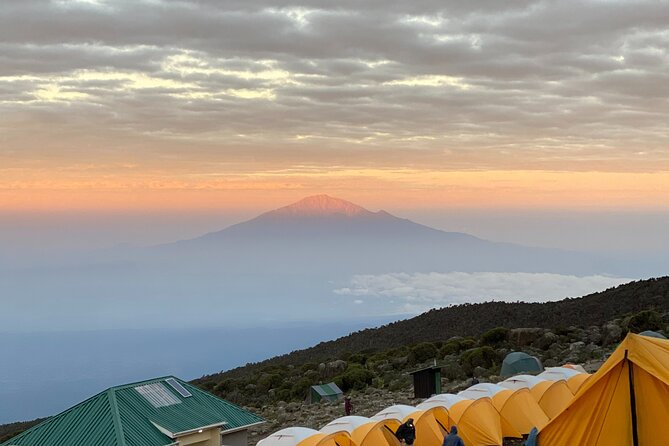
Barafu is the launch point for the summit attempt. You camp, rest, and eat an early dinner before trying to sleep. Mawenzi and Kibo are visible from here, giving you a clear reminder of what lies ahead.
This is not a day to spend energy proving anything. Organize your summit clothing, charge what you need, drink according to your guide’s advice, and rest as much as possible. The summit attempt begins around midnight, so the night is short even if you manage to sleep.
The private toilet tent and organized camp support can be especially useful here. You are not dealing with every camp chore yourself, which lets you save energy for the climb.
Day seven: A midnight climb to Uhuru Peak
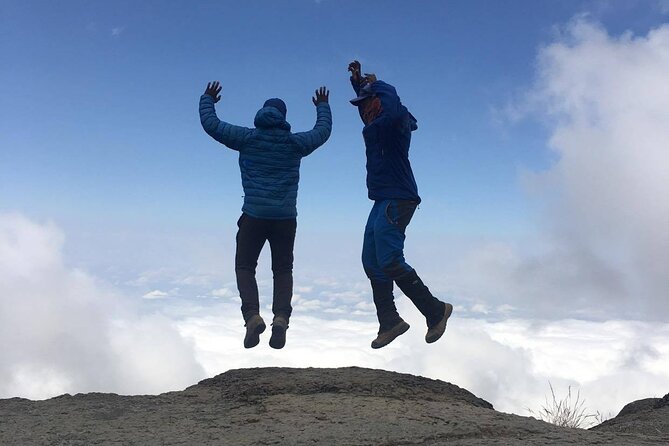
Summit day is the hardest part of the program. You begin around midnight and climb in darkness for several hours, taking frequent short breaks. The terrain and altitude make this a mental test as much as a physical one.
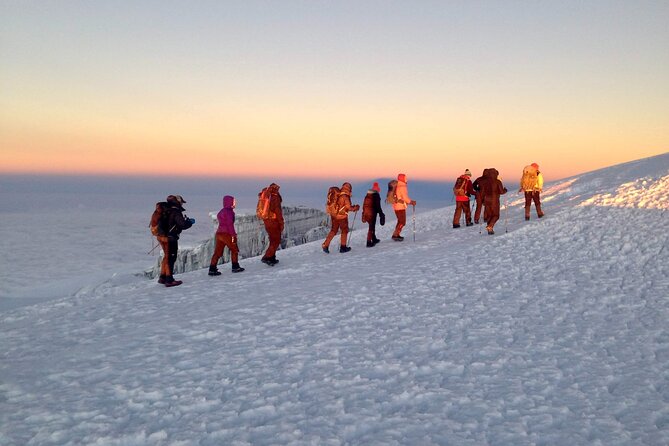
Near Stella Point, at about 18,900 feet, you may see sunrise over Mawenzi Peak. The timing is a major part of the experience. You have worked upward through the cold and darkness, then suddenly the sky begins to brighten over one of Kilimanjaro’s major peaks.
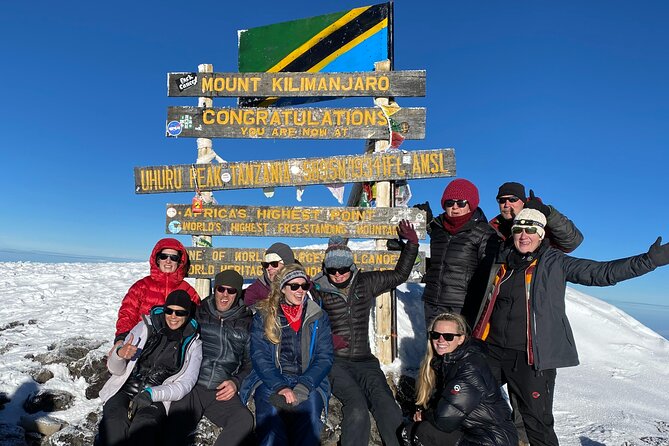
From Stella Point, you continue to Uhuru Peak, the highest point on Kilimanjaro and the highest point in Africa. You have time for photographs and a short pause, but remember that the summit is not the end of the day. You still need to descend after reaching the top.
The descent begins after the summit, and the full day is physically taxing. I would not book this climb because of the 95 percent figure alone. Book it because you are ready to walk slowly, accept discomfort, follow safety instructions, and turn back if the guides decide conditions or your health require it.
Day eight: Mweka Gate and the return to Moshi
The final day continues downhill to Mweka Gate. Lower elevations may be wet and muddy, so keep shoes and clothing suitable for a messy final stretch.
At the gate, a driver takes you onward to Mweka Village, where another vehicle transfers you back to your hotel in Moshi. The included hotel night gives you a place to wash, rest, and recover after the mountain.
The plan includes refreshments at the hotel and summit certificates. A local Kilimanjaro beer may be available as part of the relaxed celebration, but drinks and snacks are not included in the climb price.
This final night is more than a convenience. After several nights in tents, having a hotel room before your next flight or safari is a practical finish to a demanding week.
What the $3,099 price covers
At $3,099 per person, this is not a budget walk, but the package includes far more than park access. You receive:
- Airport pickup and drop-off
- Hotel lodging the night before and the night after the climb
- Mountain fees, taxes, and other listed charges
- Certified guides with at least three years of training and experience
- Porters and cooks
- A three-person mountaineering tent
- Sleeping mat
- Private toilet tent
- Six breakfasts, six lunches, and six dinners
That support structure is a major part of the value. You are not carrying the full camping operation, buying every meal on the mountain, or arranging separate transfers between the airport, Moshi, and the trail.
The food receives strong praise in the available comments, along with the camp service and equipment rentals. One account described a group of five supported by a lead guide, two assistant guides, a chef, a waiter, and 17 porters. Your exact crew may differ, but you should expect a substantial support team behind a small walking group.
You still pay separately for airfare, visa costs, personal travel insurance, sleeping bag, rental gear, drinks, snacks, hotel lunches and dinners, and tips for the support team. Budget for those extras before deciding that the advertised price is your full trip cost.
The guide team and camp support
The human side of this climb earns the strongest praise. Ezekiel is identified as a lead guide with more than 20 years of industry experience, and his judgment, pacing, safety focus, and attention to small details receive repeated approval.
That matters on a mountain where the right pace can affect your summit chances. The trip also names Michael among the support team, and the company is described as woman-owned, small, eco-minded, and active in community giving.
You should still ask who will lead your specific departure. Staff assignments can change, and the available information does not promise that Ezekiel will guide every group.
The support team also appears to make a point of explaining the mountain and its natural features. One account describes stopping at a 700-year-old tree for discussion, which suggests the walk can include more than route finding and camp logistics.
Who should choose this climb
I would point this route toward a fit adult who wants a serious challenge but prefers a patient schedule. The eight-day format suits you if you value scenery, extra acclimatization time, a smaller group, and a managed camping operation.
It is also a good match if you want to combine Kilimanjaro with a safari or other time in Tanzania. The Moshi hotel nights and airport transfers reduce the number of separate arrangements you need to make.
This is not the right choice if you want a casual holiday, dislike sleeping in tents, or are unwilling to prepare personal equipment. Strong fitness is required, and you must supply or rent a sleeping bag and other personal gear.
Before booking, ask for a packing list, current camp elevations, expected walking times, guide-to-climber ratios, rental prices, and the recommended tip structure. Those questions will help you compare the real cost of this climb with similar eight-day routes.
Should you book the Lemosho climb?
I would book this trip if your priority is a scenic, slower-paced Kilimanjaro route with strong logistical support. The extra acclimatization day, quieter opening section, small maximum group, private toilet tent, and included hotel nights make the price easier to justify.
I would hesitate only if your fitness is not yet strong or if you are counting on the stated 95 percent success rate to carry you through. The midnight summit push, steep Barranco Wall, high altitude, and long descent remain real challenges.
Roam Wild Adventure appears particularly suited to people who value attentive guides and a well-supported mountain experience. Free cancellation is available up to 24 hours before the start time, with local cut-off times applying. That gives you useful flexibility, but personal travel insurance remains your responsibility.
FAQ
How long is the Kilimanjaro climb?
The climb lasts approximately eight days, beginning and ending with transport connected to Moshi.
Where does the Lemosho route begin?
You depart Moshi for Londorossi Gate, complete entry formalities, and continue by vehicle to the Lemosho trailhead.
How large is the walking group?
The maximum group size is 12 people. The support crew can be larger and may include guides, porters, cooks, and camp staff.
Is airport pickup included?
Yes. Airport pickup and drop-off are included in the package.
Are meals included during the climb?
Six breakfasts, six lunches, and six dinners are included. Hotel lunches and dinners, drinks, and snacks are not included.
What equipment is provided?
The package includes a three-person mountaineering tent, sleeping mat, and private toilet tent. Sleeping bags and other personal gear are not included, though rental gear is available as a separate cost.
Just added around Moshi
- Moshi: Lake Chala Tour: Hiking &/or Kayaking★ 4.5 · 3 reviews
- 3 Days Tanga Exclusive Beach Holiday★ 5.0 · 3 reviews
- Serengeti Wildebeest Migration.★ 5.0 · 3 reviews
- Chemka Hotpsrings E-Bike Day Trip★ 5.0 · 3 reviews
- Explore 1 day Ngorongoro Crater Budget Group Safari from Arusha★ 5.0 · 3 reviews
- Explore the 360° of Kilimanjaro★ 5.0 · 3 reviews
- Affordable Short Tanzania Safari (2 Days Camping Safari)★ 5.0 · 3 reviews
- Rongai Route 7 Days★ 5.0 · 3 reviews
Kilimanjaro Treks, compared.



8-Day Small-group Lemosho Kilimanjaro Summit Trekking
Read our review →


Climbing Kilimanjaro through 7 days Machame Route
Read our review →

Browse the lists this tour appears in