
Reviewed · KILIMANJARO TREKS
Mt Kilimanjaro Climb – 8 days Lemosho
Africa’s highest summit rewards patience. This 8-day Lemosho climb with Nyange Adventures takes a longer, scenic route up Kilimanjaro, with gradual altitude gains, full camping support, and a serious summit attempt at Uhuru Peak. I like the extra time for acclimatization, and I like that the package includes park fees, meals, camping equipment, transport, drinking water, and an oxygen cylinder.
The route is not a casual walk. Summit day can last 10 to 14 hours, with a cold, steep climb from Barafu Camp to 5,895 meters. You also need to bring personal mountain clothing and equipment, pay tips separately, and arrange travel insurance and any hotel or airport transfers not covered by the package.
In This Review
- Key points at a glance
- Why Lemosho is worth eight days
- Day 1: Lemosho Gate to Big Tree Camp
- Day 2: Big Tree Camp to Shira Camp 1
- Day 3: Shira Camp 1 to Shira Camp 2
- Day 4: Shira Camp 2 to Barranco Camp
- Day 5: The Barranco Wall and Karanga Camp
- Day 6: Karanga Camp to Barafu Camp
- Day 7: Uhuru Peak and the long descent
- Day 8: Mweka Camp to Mweka Gate
- Food, camping, and the human side of the climb
- What the $3,500 price really covers
- Who should choose this Kilimanjaro climb?
- Should you book the 8-day Lemosho climb?
- FAQ
- How long is the Kilimanjaro Lemosho climb?
- What altitude does Uhuru Peak reach?
- Are meals included?
- Is personal mountain gear included?
- Is transport provided?
- Can I cancel for a full refund?
Key points at a glance
- Lemosho’s gradual western approach: Eight days give you more time to adjust to altitude than shorter Kilimanjaro itineraries.
- A dramatic Barranco Wall crossing: Day five brings a steep climb with views toward Kibo’s southern glacier.
- A long summit day: You climb from Barafu Camp to Uhuru Peak, then descend all the way to Mweka Camp.
- A full camping package: Tents, mattresses, a mess tent, meals, water, park fees, and rescue fees are included.
- Strong crew support: Guides named in past trips include Joy, Geopron, Davis, Kevin, Amnaay, Robert, Herick, Francis, and Ibrahim.
- A high price with useful inclusions: At $3,500 per person, much of the expensive mountain infrastructure is already covered.
Why Lemosho is worth eight days
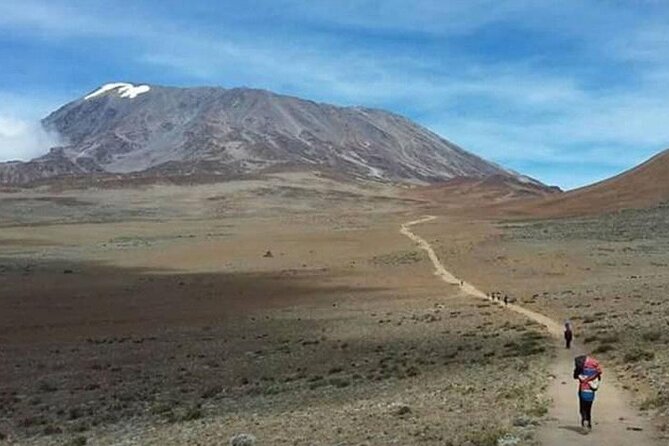
The Lemosho Route begins on Kilimanjaro’s western side at Lemosho Gate, at 2,385 meters. It then rises through forest and open high country before joining the main route near Shira. Compared with a shorter climb, this itinerary gives you more walking days before the summit push.
That matters because altitude is the great unknown on Kilimanjaro. You may be fit enough to walk for hours but still struggle as the air thins. A longer plan does not remove that risk, but it gives your body more time to respond.
I also like the shape of the route. You are not simply climbing uphill every day. Day four rises from Shira Camp 2 toward Barranco, with a descent along the way. Day five adds another up-and-down section before Karanga. This climb high, sleep lower pattern can help with adjustment, while making the route more varied.
The price is $3,500 per person. That is a substantial amount, but the package includes all park entry, camping, forest department, and rescue fees. It also includes seven nights of accommodation, three meals a day, a tent, mattresses, a mess tent, transport to and from the gate, drinking water, a professional guide, and hotel pickup and drop-off.
The company also states that the mountain team is paid fair, ethical salaries in line with KPAP guidelines. That is important. A low-cost climb can hide the human cost of carrying tents, food, and equipment up the mountain. Here, the price includes an attempt to treat porters more responsibly.
More Kilimanjaro routes and climbs:
- Kilimanjaro climb by Lemosho Route (7-day)
★ 5.0 · 651 reviews - Kilimanjaro climb, Machame Route (7-day)
★ 5.0 · 262 reviews - Kilimanjaro Climbing Lemosho Route 8 Days.
★ 5.0 · 186 reviews
Day 1: Lemosho Gate to Big Tree Camp
Your stated meeting time is 8:00 a.m., with hotel pickup offered. The trek begins at Lemosho Gate, where the route sits at 2,385 meters. You finish at Big Tree Camp, 2,780 meters, after roughly two to three hours of walking.
This is a gentle opening day by Kilimanjaro standards. You gain 395 meters, enough to begin adjusting without using up your reserves. The forest section gives the climb a proper beginning, rather than dropping you straight into barren high-altitude terrain.
Big Tree Camp is your first of seven nights in the mountain camping system. The package provides tents, mattresses, and a mess tent, so you are not expected to carry your own shelter or prepare every meal after a tiring walk.
The drawback is that the day may feel short compared with the effort and expense of reaching Tanzania. That is not wasted time, though. On a mountain, a slow first day is usually more useful than a heroic one.
Day 2: Big Tree Camp to Shira Camp 1
Day two covers about four to five hours, rising from 2,780 meters to Shira Camp 1 at 3,500 meters. The 720-meter gain is more serious than the first day, and you will begin to notice the importance of walking slowly.
Shira is one of the route’s major rewards. The forest gives way to more open ground, and the mountain begins to feel larger and less sheltered. You have not reached the harshest altitude yet, but the conditions are changing.
This is where the guide’s pace matters. Several successful climbs have praised guides for staying attentive to individual needs and offering steady support. Names associated with this operation include Davis, Kevin, Amnaay, Joy, Geopron, Robert, Herick, and Francis. Your actual guide depends on the departure, but the company’s personal support is a recurring strength.
At this camp, the 3,500-meter altitude may affect sleep or appetite. Eat what you can, drink the provided water, and do not treat a strong first impression of the mountain as proof that the rest will be easy.
Day 3: Shira Camp 1 to Shira Camp 2
Day three is shorter, taking three to four hours. You climb from 3,500 meters to Shira Camp 2 at 3,900 meters, a gain of 400 meters.
This is a useful acclimatization day. The walking time is manageable, but you spend the night higher. The mountain now feels less like a forest trek and more like a high-altitude expedition.
Shira Camp 2 also gives you space to recover before the longer crossing to Barranco. Do not use the shorter schedule as an excuse to race ahead. The best approach is a calm one: eat, drink, rest, and tell your guide about headaches, nausea, unusual tiredness, or breathing trouble.
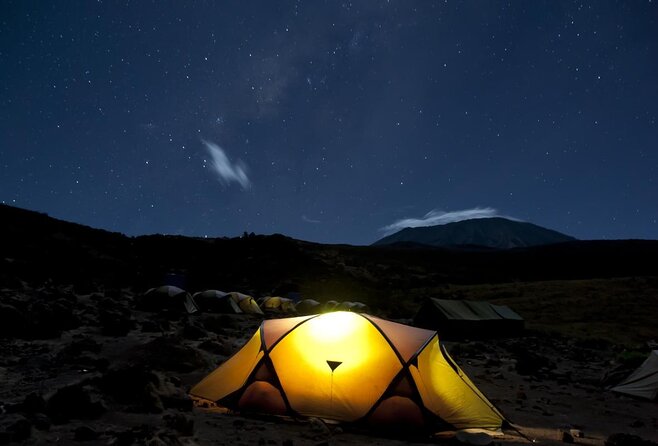
The itinerary does not promise a private room or lodge-style comfort. You are camping for seven nights. If you need good sleep to function well, bring the personal sleep system and warm clothing that suit you, since personal mountain gear is not included.
A few more trips of this kind worth comparing:
- Safari Serengeti And Ngorongoro
★ 5.0 · 288 reviews - Climbing Kilimanjaro – Machame Route
★ 5.0 · 170 reviews - Climbing Kilimanjaro through 7 days Machame Route
★ 5.0 · 151 reviews - Kilimanjaro climb, Lemosho Route (8-day)
★ 5.0 · 148 reviews
Day 4: Shira Camp 2 to Barranco Camp
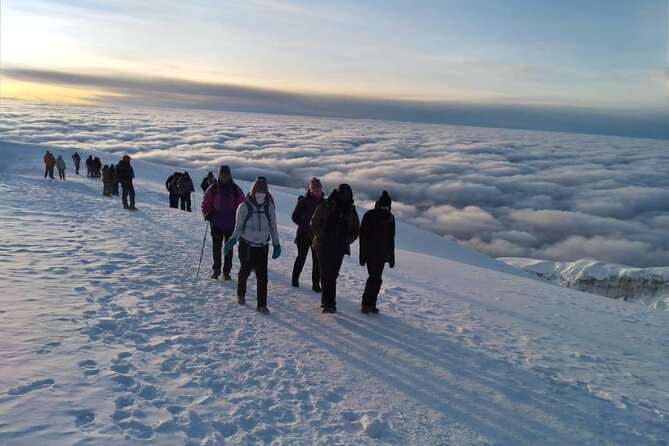
Day four is one of the most varied days on the route. You walk six to seven hours from 3,900 meters to Barranco Camp at 3,960 meters. The stated figures show 740 meters of climbing and 680 meters of descent, so the day involves much more movement than the small net gain suggests.
That up-and-down profile is useful for acclimatization and good for scenery. You climb higher during the day, then finish at a slightly lower camp. It is also a reminder that distance and effort cannot be judged by the final altitude alone.
Barranco Camp sits below the imposing Barranco Wall. You will see the obstacle waiting for the next morning, which can create a small mental hurdle. The wall looks more serious from camp than it feels once you begin, but you should still expect steep, uneven walking.
This is a full day, and the camp arrival may come late enough that your priorities are simple: food, water, warm layers, and sleep.
Day 5: The Barranco Wall and Karanga Camp
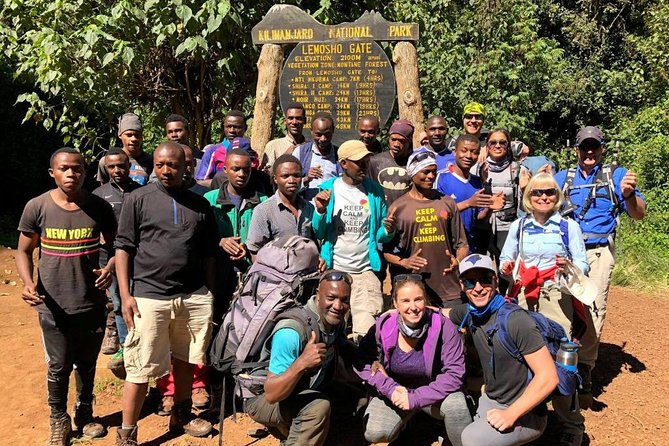
The fifth day runs from Barranco Camp at 3,960 meters to Karanga Camp at 4,035 meters. The net rise is only 100 meters, with 25 meters of descent, but the walking takes three to four hours because the route repeatedly climbs and drops.
The key feature is the steep climb over the Barranco Wall. You may need to use your hands at points, and a careful pace is more valuable than speed. The reward is a view toward Kibo’s southern glacier, one of the most striking sections of the climb.
Karanga is not a rest day in the usual sense. You have crossed the wall, but the route remains high, dry, and demanding. A modest altitude gain can still feel tough at more than 4,000 meters.
I like this day because it mixes effort with a clear sense of progress. You are no longer merely approaching Kilimanjaro. You are moving through its upper mountain zone.
Day 6: Karanga Camp to Barafu Camp
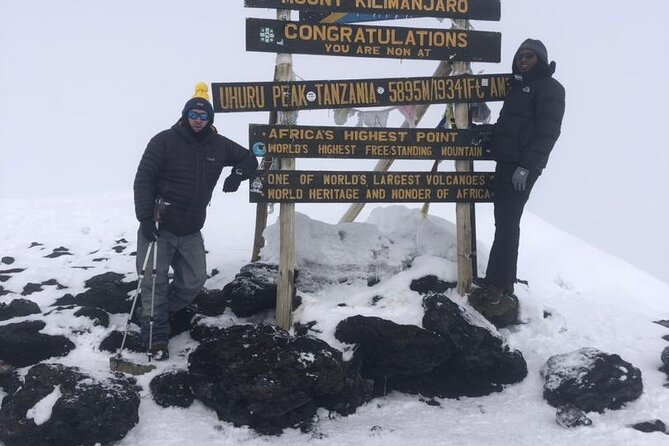
Day six climbs from 4,035 meters to Barafu Camp at 4,640 meters. The three to four-hour walk gains 615 meters and prepares you for the summit attempt.
Barafu means snow in Swahili, and the camp is the staging point for your hardest night. The itinerary does not give a specific departure time for the summit push, so confirm the schedule with your guide before you start. You need to know when you will eat, rest, leave camp, and return for your belongings.
This is a short walking day, but do not assume it is easy. At 4,640 meters, even setting up your sleeping space or eating a meal can feel like work. Keep the equipment you need for the summit close at hand and avoid unnecessary movement.
The crew’s support becomes especially valuable here. The package includes a professional guide, oxygen cylinder, and pulse oximeter. Those items support mountain monitoring, but they do not guarantee a summit or replace medical judgment. If altitude affects you badly, your guide may need to change the plan.
Day 7: Uhuru Peak and the long descent
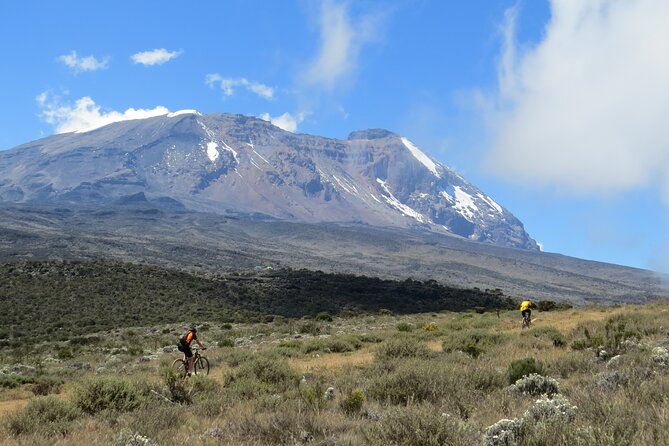
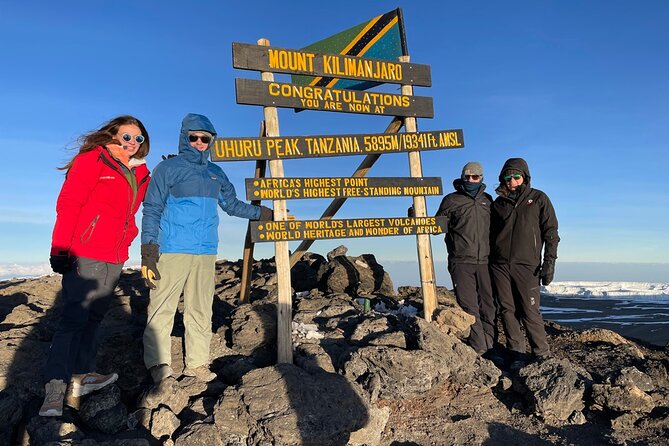
Summit day is the test. You leave Barafu Camp at 4,640 meters and climb toward Stella Point on the crater rim, then continue to Uhuru Peak at 5,895 meters. After reaching the summit, you descend to Mweka Camp at 3,080 meters.
The full day is listed at 10 to 14 hours. The climb to Stella Point is steep, long, and potentially cold. You should expect darkness or low light for part of the ascent, depending on the departure time set by the guide, though the exact schedule is not provided.
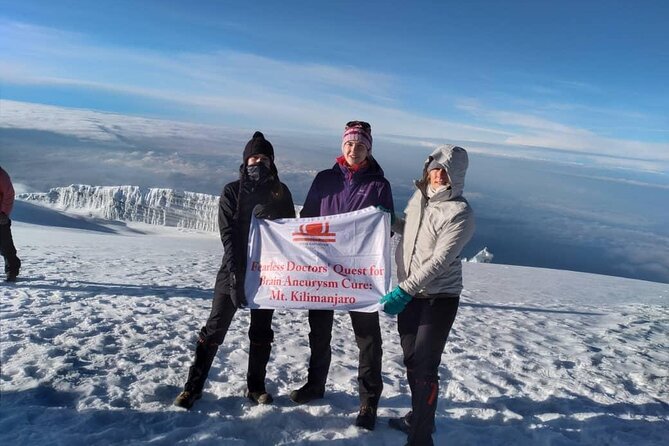
At the crater rim, the view opens dramatically. Uhuru Peak is the highest point on Kilimanjaro, and the summit panorama is the payoff for all the slow walking and uncomfortable nights. Still, the final section is not a victory lap. Altitude can affect your judgment, balance, breathing, and strength.
The descent is steep and long. Reaching the summit does not mean the day is over. You continue down to Mweka Camp, losing roughly 2,815 meters from the summit. Tired legs and loose ground can make the descent harder than expected.
I would treat summit day as a safety decision, not a willpower contest. The guides have received strong praise for supporting individual needs and helping climbers make the summit when conditions allow. Their job is also to turn you around if continuing becomes unsafe.
Day 8: Mweka Camp to Mweka Gate
The final day descends from Mweka Camp at 3,080 meters to Mweka Gate at 1,630 meters. The two to three-hour walk loses 1,450 meters.
After the strain of summit day, this is a straightforward finish, but your knees and feet may still be tired. The forest returns as you descend, offering a clear change from the stark upper mountain.
Transport from the gate is included, along with hotel drop-off. That makes the final logistics easier, especially after such a long summit day. The experience ends at the gate, not with an additional sightseeing program.
Food, camping, and the human side of the climb
Three meals a day are included, along with drinking water. Several detailed accounts praise the cooking, including specific affection for cooks and food team members such as Oscar, Nikaas, and Mohammed. One particularly memorable description called Mohammed the stomach engineer, which tells you what matters after several days at altitude: filling, dependable food.
The package includes tents, mattresses, and a mess tent. It does not include your personal climbing gear, so you remain responsible for the clothing, footwear, sleeping equipment, and other items you need to stay warm and dry.
The team is a major part of the experience. Guides, cooks, waiters, and porters all shape your days on the mountain. People have singled out guides including Amnaay, Musa, Davis, Kevin, Joy, Geopron, Robert, Herick, and Francis for kindness, patience, and close attention.
Tips are not included. Set aside money for the guide, cook, and porters, and ask the operator for current guidance on appropriate amounts. Since the company states that it follows KPAP salary guidelines, tipping is an additional thank-you, not a substitute for fair wages.
What the $3,500 price really covers
At $3,500, this is not a bargain climb. The value comes from the number of costs bundled into the price.
You receive all park and rescue fees, seven nights of camping, meals, water, gate transport, a guide, camping equipment, and hotel pickup and drop-off. The oxygen cylinder and pulse oximeter also show that the operator plans for the realities of high-altitude trekking.
You still need to budget for personal gear, tips, travel insurance, airport transfers, and accommodation before or after the climb. Pre and post-climb accommodation and airport transfers can be arranged on request, but they are not part of the listed price.
For a private activity, the cost may make sense if you value direct attention and a route with more acclimatization time. The listing says only your group participates, although solo climbers have also had the chance to join or travel with a larger climbing team in past arrangements. Confirm the exact group setup before paying.
Who should choose this Kilimanjaro climb?
This route suits you if you have moderate physical fitness, can walk for several hours on consecutive days, and are comfortable camping. You do not need to be an elite mountaineer, but you do need patience and a willingness to move slowly.
The itinerary may also suit older climbers who prepare carefully. A 73-year-old climber completed the ascent with support from the Nyange team, but that example should encourage planning, not invite comparison. Your health, training, and altitude response are your own.
I would choose this route over a shorter Kilimanjaro plan if acclimatization matters more to you than saving a day or two. I would hesitate if you dislike cold nights, basic camping, long descents, or the uncertainty of a summit attempt.
You can cancel for a full refund up to 24 hours before the experience begins. Cancellations or changes within 24 hours are not refunded or accepted, and the cut-off uses local time.
Should you book the 8-day Lemosho climb?
I would recommend this climb if you want a scenic, slower route and value strong crew support, included mountain fees, and a full camping setup. The repeated praise for the guides, porters, cooking, and personal care gives Nyange Adventures a convincing human advantage.
Book it with clear expectations. The $3,500 price does not cover every trip cost, and the summit day is genuinely hard. Bring suitable personal gear, arrange travel insurance, plan for tips, and speak openly with the guide about altitude symptoms.
For a first Kilimanjaro climb, the eight-day Lemosho schedule is a sensible choice. It gives you time, scenery, and support. The mountain still makes the final decision, but this plan gives you a fair chance to meet it well prepared.
FAQ
How long is the Kilimanjaro Lemosho climb?
The experience lasts approximately eight days, with seven nights of camping. Walking times range from two to three hours on the shorter days to 10 to 14 hours on summit day.
What altitude does Uhuru Peak reach?
Uhuru Peak reaches 5,895 meters. The climb begins at Lemosho Gate at 2,385 meters and finishes after descent at Mweka Gate, at 1,630 meters.
Are meals included?
Yes. Three meals per day are included, along with drinking water. Camping facilities include a tent, mattresses, and a mess tent.
Is personal mountain gear included?
No. You must provide all personal mountain climbing gear and equipment. Tips, travel insurance, and pre or post-climb accommodation are also not included.
Is transport provided?
Yes. Hotel pickup and drop-off are included, as is transport to and from the park gate. Airport transfers can be booked on request but are not included in the listed package.
Can I cancel for a full refund?
Yes, if you cancel at least 24 hours before the experience start time. Cancellations or changes made less than 24 hours before the start time are not accepted, and the amount paid is not refunded.
Just added around Moshi
- Moshi: Lake Chala Tour: Hiking &/or Kayaking★ 4.5 · 3 reviews
- 3 Days Tanga Exclusive Beach Holiday★ 5.0 · 3 reviews
- Serengeti Wildebeest Migration.★ 5.0 · 3 reviews
- Chemka Hotpsrings E-Bike Day Trip★ 5.0 · 3 reviews
- Explore 1 day Ngorongoro Crater Budget Group Safari from Arusha★ 5.0 · 3 reviews
- Explore the 360° of Kilimanjaro★ 5.0 · 3 reviews
- Affordable Short Tanzania Safari (2 Days Camping Safari)★ 5.0 · 3 reviews
- Rongai Route 7 Days★ 5.0 · 3 reviews
Kilimanjaro Treks, compared.



8-Day Small-group Lemosho Kilimanjaro Summit Trekking
Read our review →


Climbing Kilimanjaro through 7 days Machame Route
Read our review →

Browse the lists this tour appears in