
Reviewed · KILIMANJARO TREKS
Mt.kilimanjaro-machame Route
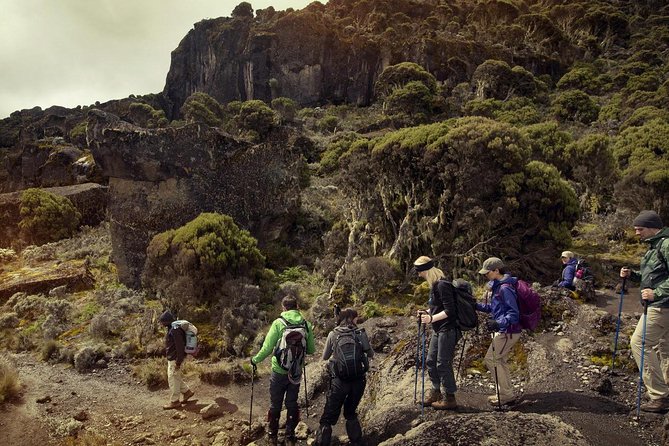
Kilimanjaro rewards patience, not bravado. This six-day private climb from Moshi follows the Machame Route through rainforest, high moorland, volcanic terrain, and the final push to Uhuru Peak, with guides and a mountain support crew handling the practical work along the way. I especially like the careful acclimatization plan and the strong focus on personal guide support during the summit climb.
I also like the route’s variety. You begin under wet tropical trees, cross the open Shira Plateau, spend time at Lava Tower to help your body adjust, and finish in the rainforest again at Mweka. The main drawback is the schedule: six days is a demanding timetable, and the long daily hiking periods leave little room for a slow, gentle ascent.
In This Review
- Key Points Before You Book
- Why the Machame Route Works So Well
- Day 1: Machame Gate to Machame Camp
- Day 2: Shira Camp and the First Acclimatization Hike
- Day 3: Lava Tower and Barranco Camp
- Day 4: Barranco Wall, Karanga, and Barafu
- Day 5: The Night Ascent to Uhuru Peak
- Day 6: Mweka Gate and the Return to Moshi
- Guide Support Is the Main Strength
- Is $1,743.59 Good Value?
- Who Should Choose This Climb?
- Booking Details and Cancellation
- Should You Book the Machame Route?
- FAQ
- Where does the Kilimanjaro climb begin?
- How long is the experience?
- What is the highest point reached?
- Is this a private tour?
- What level of fitness is required?
- Is hotel pickup offered?
- Does the climb include an acclimatization hike?
- Is Barranco Wall technically difficult?
- Is a personal guide provided for the summit attempt?
- Can I cancel for a full refund?
Key Points Before You Book
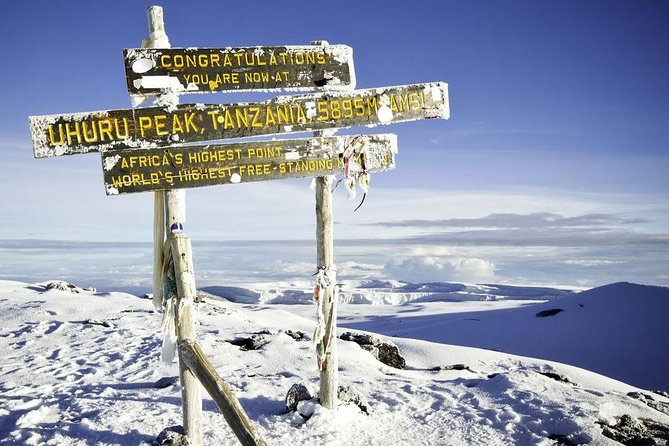
- The Machame Route reaches 5,895 meters: You climb to Uhuru Peak, the highest point on Mount Kilimanjaro.
- Personal summit support is included: Each pair of climbers receives a personal guide for the night ascent from Barafu Camp.
- Acclimatization is built into the route: You climb to Lava Tower at 4,630 meters, spend time there, then descend to Barranco Camp.
- The route changes dramatically: Expect rainforest, Shira Plateau views, volcanic slopes, steep gullies, and high camps.
- It is a private activity: Only your own group participates, with hotel pickup offered from Moshi.
- The price is $1,743.59 per person: That is a substantial sum, but it covers a tightly organized mountain expedition with guides, permits, support staff, meals, transfers, and certificates as described.
Why the Machame Route Works So Well
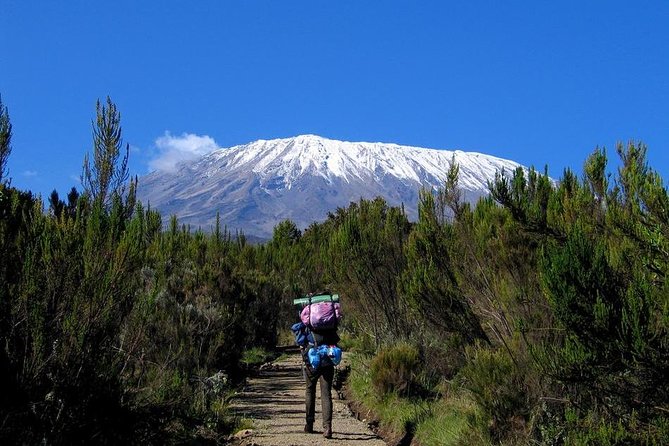
The Machame Route is appealing because it does not give you the same scenery every day. The first hours take you through rainforest, where rain is common and the trail feels enclosed by thick vegetation. By the second day, the trees fall away and the broad Shira Plateau opens up.
That change keeps the climb interesting. You are not simply walking uphill for six days. You are moving through several distinct mountain zones, each with its own weather, views, and physical demands.
The route also uses the useful climbing principle of going high and sleeping lower. On Day 2, you hike toward Lava Tower with a gain of about 300 meters, then return to Shira Camp. On Day 3, you spend one to two hours at Lava Tower before descending to Barranco Camp. That pattern does not remove altitude risk, but it gives your body a better chance to adjust than a route that only climbs higher each night.
The pace matters more than speed. Your guides are expected to set a steady rhythm for the group, and that is one of the most important services on a Kilimanjaro climb. A rushed start can hurt you later. A slow, regular pace gives you more control over your breathing and energy.
More Kilimanjaro routes and climbs:
- Kilimanjaro climb by Lemosho Route (7-day)
★ 5.0 · 651 reviews - Kilimanjaro climb, Machame Route (7-day)
★ 5.0 · 262 reviews - Kilimanjaro Climbing Lemosho Route 8 Days.
★ 5.0 · 186 reviews
Day 1: Machame Gate to Machame Camp
Your morning begins with hotel pickup in Moshi. The guide and mountain crew meet you for a short briefing before you drive to Machame Gate, at about 1,800 meters.
There are permits to obtain and a registration process connected with the park’s search and rescue service. This can feel like a slow start, but it is part of a properly controlled national park climb. Once the formalities are complete, you begin walking toward Machame Camp at about 3,010 meters.
The first day passes through rainforest. Tropical showers are highly likely, so a waterproof jacket is not optional. Pack spare clothes as well, since damp socks and shirts can make the first night much less pleasant.
The listed schedule describes each day as roughly 12 hours, but the actual hiking pace can vary by group and conditions. The important point is that Day 1 is not just a short orientation walk. You gain more than 1,000 meters from the gate to camp, so conserve energy from the beginning.
Machame Camp is your first night on the mountain. You will likely feel the excitement of finally being on Kilimanjaro, but this is also the time to establish good habits: drink regularly, eat even when your appetite is reduced, and tell your guide about headaches, nausea, dizziness, or unusual fatigue.
Day 2: Shira Camp and the First Acclimatization Hike
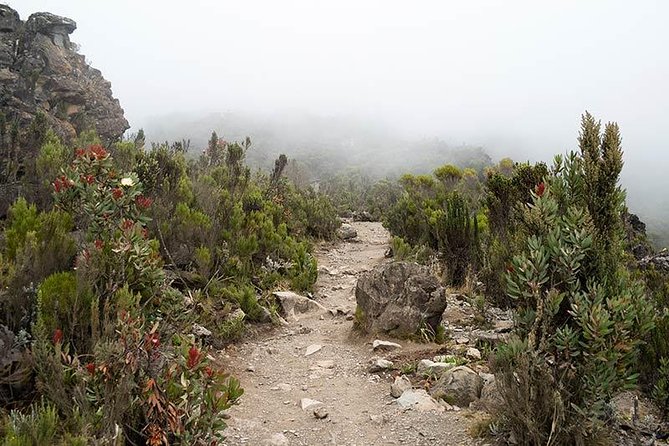
After breakfast, you climb from Machame Camp to Shira Camp at about 3,845 meters. Physically, this day is described as manageable, but the altitude begins to make itself known.
The big reward is the change in scenery. You leave the rainforest and gain views across the Shira Plateau. The open setting can feel much more exposed than the forest, and weather can change quickly at higher elevations.
After reaching camp, you have lunch and time to rest. Later, the group takes an acclimatization hike toward Lava Tower, gaining roughly 300 meters before returning to Shira Camp for dinner.
This is a smart part of the schedule, but it makes Day 2 longer than the elevation profile may suggest. You are not simply walking to camp, eating, and sleeping. You are adding a high-altitude outing to help prepare for the harder days ahead.
The return to Shira Camp is especially useful because you sleep lower than the highest point reached during the afternoon. You may feel fine at this stage, or you may notice a mild headache or a slower walking rhythm. Do not try to hide symptoms to appear tough. The guides need accurate information to decide how to manage the pace.
Day 3: Lava Tower and Barranco Camp
Day 3 brings one of the route’s key altitude tests. You leave Shira Camp at 3,845 meters and climb toward Lava Tower at 4,630 meters.
The trail includes repeated ascents and descents. This can be frustrating because you work hard to gain height, then give some of it back, but the route is designed this way for acclimatization. You reach the high point, spend one to two hours there, and eat lunch at altitude.
You may feel uncomfortable at Lava Tower. That is not unusual on a day built around altitude rather than speed. The goal is to expose your body to a higher level, not to stay there overnight.
After lunch, you descend to Barranco Camp at around 3,960 meters. The drop in elevation usually feels welcome, and the camp brings one of the route’s most memorable sights: Barranco Wall.
The wall looks intimidating from below. It is steep and massive, but the trail itself is described as straightforward rather than technical. You do not need rock-climbing skills for this section, though you will use your hands at times and should follow the guide’s instructions closely.
Day 3 is valuable because it combines a high point at Lava Tower with a lower sleeping camp. It is also tiring. The repeated climbing and descending can wear on your legs, so this is a good evening to eat well and prepare clothing and equipment for an early start.
A few more trips of this kind worth comparing:
- Safari Serengeti And Ngorongoro
★ 5.0 · 288 reviews - Climbing Kilimanjaro – Machame Route
★ 5.0 · 170 reviews - Climbing Kilimanjaro through 7 days Machame Route
★ 5.0 · 151 reviews - Kilimanjaro climb, Lemosho Route (8-day)
★ 5.0 · 148 reviews
Day 4: Barranco Wall, Karanga, and Barafu
An early breakfast gets you onto Barranco Wall before the trail becomes crowded with other groups. That early departure is practical advice worth following. A busy narrow route can slow everyone down, especially on a wall where people need to move carefully.
The climb up the gorge wall takes about an hour and is not considered technically difficult. Once you reach the top, you can rest and take photographs with Kibo volcano in the background.
The day is not finished. You continue toward Karanga Camp, with more ascents and descents along the way. This section can be harder than the Barranco Wall because it keeps asking your legs to work after the initial climb is over.
At Karanga, you receive a warm lunch before continuing to Barafu Camp, which sits at about 4,640 meters. Barafu is the launch point for the summit attempt, so the afternoon should be used for rest rather than sightseeing.
The combination of Karanga and Barafu makes Day 4 especially demanding. You cover a great deal of high ground, then need to sleep or at least lie down before the night departure. Your guides’ ability to choose a sensible pace matters here. The strongest praise associated with this company focuses on supportive, well-organized guide work, including guides named Qamrish and Ayoub.
Day 5: The Night Ascent to Uhuru Peak
Summit day begins at night from Barafu Camp. The destination is Uhuru Peak at 5,895 meters.
Technically, the climb is described as relatively simple. The real challenge is altitude, darkness, cold, fatigue, and the sheer length of the effort. Each pair of climbers receives a personal guide for the ascent, whose job includes watching your physical and mental condition.
That one-to-one support is a major advantage. You can receive a pace suited to your condition instead of being forced to match the fastest person in a large group. It also gives the guide a better chance to notice when you need to stop, adjust your rhythm, or reconsider the ascent.
The final approach is not a casual hike. Even if the trail itself is not technical, 5,895 meters is an extreme height for the human body. You should expect the summit attempt to be the hardest part of the trip by far.
After reaching Uhuru Peak, you may descend to the nearest glacier if you still have the energy and if conditions permit. This option should be treated as extra, not essential. The summit itself is the main achievement.
You then return to Barafu Camp for about two hours of rest before continuing down to Millennium Camp at 3,820 meters. That second descent is easy to underestimate. Your body may be exhausted, and downhill walking can be rough on tired knees.
Millennium Camp offers a major psychological lift because you have lost a large amount of altitude. A warm meal and rest will feel well earned.
Day 6: Mweka Gate and the Return to Moshi
The final morning begins in tropical rainforest at Millennium Camp. After the exposed, high-altitude sections, the lower elevation should bring a welcome sense of relief.
After breakfast, you descend to Mweka Gate at about 1,650 meters. The walk is still substantial, but the lower air makes a clear difference.
At the gate, the group gathers to congratulate climbers, and you can write about the climb in the guestbook. The company also presents commemorative certificates at its office before transferring you back to your hotel.
The certificates are a small touch, but they mark the journey nicely. The more useful benefit of Day 6 is the return transfer, since arranging transport while tired and carrying mountain gear is one less task to manage.
Guide Support Is the Main Strength
The company’s own view is that guides make the difference between an ordinary trek and a once-in-a-lifetime experience. That claim is supported by the strongest praise connected with this operation.
The guide team is repeatedly credited with encouragement, organization, and close support. Qamrish and Ayoub are specifically named for helping a climber reach the summit. Fred and Nancy are also praised in connection with a Kilimanjaro climb and a four-day safari, including help when plans changed at the last minute.
Food is another repeated strength. One account gives special credit to the chef and says dietary preferences were handled well. That matters on a six-day climb, when warm meals and reliable food can affect both morale and energy.
You should still ask the company to confirm exactly what meals, equipment, crew support, and accommodation are included before paying. The supplied details clearly describe guides, a support crew, meals at camps, permits, transfers, and personal summit support, but a written packing and inclusion list is wise for any mountain trip.
Is $1,743.59 Good Value?
At $1,743.59 per person, this is not a cheap holiday. It is also not priced like a simple day hike. You are paying for a private six-day expedition with park access, permits, hotel pickup, a guide team, mountain support, camp meals, a route from Machame Gate to Mweka Gate, summit assistance, and a return transfer.
The private format improves the value if you care about pace and personal attention. Only your own group participates, and the summit climb includes one guide for each pair of climbers. That is particularly useful during the hardest night.
The price is harder to justify if you are looking for the shortest or easiest way up Kilimanjaro. Six days gives you less time for acclimatization than longer itineraries, and the physical schedule is intense. You are paying for a direct, tightly planned route rather than a leisurely mountain holiday.
Before booking, confirm group size, porter arrangements, sleeping arrangements, equipment, meal details, and the exact services covered by the price. Those details can change the real value considerably.
Who Should Choose This Climb?
I would recommend this experience to a fit hiker who wants a private Kilimanjaro attempt and understands that the summit day will be very hard. You need moderate physical fitness at minimum, but fitness alone does not guarantee success at altitude.
This route also suits someone who wants strong scenery in a short period. The rainforest, Shira Plateau, Lava Tower, Barranco Wall, Kibo views, and Mweka rainforest give you a full range of environments.
I would be more cautious if you dislike early starts, wet weather, long walking days, or basic mountain conditions. You should also think carefully about the six-day schedule if you have never spent time at high altitude.
Pack rain protection and spare clothes for Day 1. Keep your pace slow from the start, take altitude symptoms seriously, and listen closely to the guides. Those simple choices can matter more than trying to prove how fast you can walk.
Booking Details and Cancellation
Pickup is offered, and the meeting time is 7:00 a.m. in Moshi. The activity is private, and confirmation is provided at booking. The meeting area is near public transportation, though your included pickup should make the start easier.
You can cancel up to 24 hours before the scheduled start for a full refund. Cancellations or changes made less than 24 hours before the start are not accepted for a refund. Since the climb requires suitable weather, a weather cancellation results in either another date or a full refund.
Should You Book the Machame Route?
Book it if you want a private, guide-led Kilimanjaro climb with strong personal support and a route packed with changing scenery. The thoughtful use of Lava Tower for altitude practice, the personal guide arrangement for the summit, and the company’s reputation for caring guide and chef service all add real value.
Think twice if you need a slower acclimatization plan or if the price is stretching your budget. Six days is a serious commitment, and the summit night is physically demanding even when the route is technically simple.
For a reasonably fit hiker who values organization and direct support, this is a strong choice. Go in prepared for rain, altitude, fatigue, and long days, and you will be giving yourself the best chance to enjoy the mountain rather than merely endure it.
FAQ
Where does the Kilimanjaro climb begin?
The experience begins with hotel pickup in Moshi at 7:00 a.m. You then travel to Machame Gate, the entrance to Kilimanjaro National Park.
How long is the experience?
The climb lasts approximately six days.
What is the highest point reached?
The summit is Uhuru Peak, which is 5,895 meters above sea level.
Is this a private tour?
Yes. Only your own group participates in the activity.
What level of fitness is required?
A moderate level of physical fitness is required. The itinerary includes long hiking days, major elevation gains, and a difficult night ascent.
Is hotel pickup offered?
Yes. Pickup is offered, with the meeting time listed as 7:00 a.m.
Does the climb include an acclimatization hike?
Yes. On Day 2, you hike toward Lava Tower with an elevation gain of about 300 meters before returning to Shira Camp.
Is Barranco Wall technically difficult?
The wall is steep and impressive, but the trail is described as simple hiking rather than a technical climb. The ascent takes about an hour.
Is a personal guide provided for the summit attempt?
Each pair of climbers receives a personal guide for the ascent from Barafu Camp to Uhuru Peak.
Can I cancel for a full refund?
Yes. You can cancel at least 24 hours before the scheduled start for a full refund. If poor weather causes the company to cancel the experience, you will be offered another date or a full refund.
Just added around Moshi
- Moshi: Lake Chala Tour: Hiking &/or Kayaking★ 4.5 · 3 reviews
- 3 Days Tanga Exclusive Beach Holiday★ 5.0 · 3 reviews
- Serengeti Wildebeest Migration.★ 5.0 · 3 reviews
- Chemka Hotpsrings E-Bike Day Trip★ 5.0 · 3 reviews
- Explore 1 day Ngorongoro Crater Budget Group Safari from Arusha★ 5.0 · 3 reviews
- Explore the 360° of Kilimanjaro★ 5.0 · 3 reviews
- Affordable Short Tanzania Safari (2 Days Camping Safari)★ 5.0 · 3 reviews
- Rongai Route 7 Days★ 5.0 · 3 reviews
Kilimanjaro Treks, compared.



8-Day Small-group Lemosho Kilimanjaro Summit Trekking
Read our review →


Climbing Kilimanjaro through 7 days Machame Route
Read our review →

Browse the lists this tour appears in