
Reviewed · SERENGETI SAFARIS
Tanzania Safari – The Great Migration in the North of the Serengeti and Lake Natron
The wildebeest are always moving. This eight-day private safari links Tanzania’s most famous wildlife parks with the less-visited shores of Lake Natron, giving you a strong chance of seeing the Great Migration in northern Serengeti between July and October. I especially like the mix of classic safari country, from Ngorongoro’s animal-packed crater to Tarangire’s giant baobabs, and the unusual walking excursion to an Engare Sero waterfall. The main drawback is the amount of time spent on rough roads, especially around northern Serengeti and Lake Natron, so this is not a soft, easy holiday.
The private 4×4 format is another major plus. You travel only with your own group, with park fees, full board, transfers, water, and AMREF insurance included. You should still ask exactly which lodges and tented camps are planned, since accommodation quality is a key part of safari value and the published details do not give a full property-by-property list.
In This Review
- Key points to know before booking
- Why this route works for a first Tanzania safari
- Day 1: Lake Manyara’s forest, lake, and birdlife
- Day 2: Ngorongoro Crater and a crowded wildlife bowl
- Days 3 and 4: Serengeti grasslands and the northern migration
- Day 5: Leaving Serengeti for the strange beauty of Lake Natron
- Day 6: A walking morning, then Tarangire elephants
- Day 7: Tarangire’s baobabs and large elephant herds
- Day 8: Return to Arusha and onward flights
- What the $4,974 price buys you
- Practical details, comfort, and booking
- Should you book this Great Migration safari?
- FAQ
- How long is the Tanzania safari?
- Which airports can be used for the final transfer?
- Is the Great Migration included in the itinerary?
- Are meals included?
- Are flights and the entry visa included?
- Is this a private tour?
Key points to know before booking
- Great Migration timing: The northern Serengeti section is planned for the July to October period, when wildebeest and zebras may gather near the Mara River for dramatic crossings.
- A strong northern circuit: Lake Manyara, Ngorongoro Crater, Serengeti, Lake Natron, and Tarangire all appear in one eight-day route.
- More than game drives: Lake Natron adds a walking excursion through the Engare Sero gorge to a waterfall where you can swim.
- Private safari vehicle: Only your group participates, with private transportation and a 4×4 safari circuit.
- Full-board pricing: The $4,974 per-person cost includes park fees, meals, transfers, water, taxes, and AMREF insurance, but not flights, visas, drinks, or personal extras.
- Strong guide praise: Guides named in the feedback include John, Naftal, Beni, and Mussa, with Naftal receiving especially warm praise for the Great Migration safari.
Why this route works for a first Tanzania safari
Tanzania’s northern parks give you a wide range of scenery and wildlife in a fairly concentrated area. In eight days, you move from the forest and lake shore at Manyara to the high crater rim of Ngorongoro, then into the wide grasslands of Serengeti. The route finishes with the volcanic country around Lake Natron and the elephant country of Tarangire.
That variety matters. A safari can become repetitive if every day means the same open plain and the same animals. Here, each park has its own character. You may see monkeys in the forest, flamingos on alkaline water, lions on open grass, elephants below baobabs, and large herds moving across the Serengeti.
The route is also built around the Great Migration. The timing is important: July through October is the period when large numbers of wildebeest and zebras are expected in the north. Wildlife never follows a calendar perfectly, so a crossing is never guaranteed, but this itinerary puts you in the right part of the ecosystem at the right broad time of year.
I would not book this trip only for the promise of a river crossing. The Serengeti is worthwhile even when the herds are not performing their famous documentary scene. The open country makes animal viewing easier, and the park supports lions, leopards, cheetahs, elephants, giraffes, crocodiles, hippos, ostriches, and more than 400 bird species.
More Migration Safaris in Moshi
- Great Migration Safari In Tanzania
★ 5.0 · 71 reviews - 6 Days Tanzania Budget Camping Safari with Migration
★ 5.0 · 31 reviews - 10-Day Wildebeest Migration Calving Safari -All Inclusive
★ 5.0 · 30 reviews
Day 1: Lake Manyara’s forest, lake, and birdlife
You leave Arusha in the morning for Lake Manyara National Park, with about seven hours planned for the stop and a photo safari included. The park is relatively small, but its habitats change quickly. Springs at the base of the Rift Valley feed dense forest, while savannah and marsh spread toward the lake.
Manyara is a good opening day because it introduces you to several sides of northern Tanzania without requiring a full day in a huge park. Baboons and vervet monkeys are common features of the park, while elephants and giraffes may appear among the trees and grass. Birdlife is a major attraction, with about 380 recorded species.
If you visit between December and March, large flocks of pink flamingos may gather here before moving toward Lake Natron. That seasonal detail gives Manyara a different feel from the July to October migration focus farther north.
The limitation is timing. After the drive from Arusha, you have a substantial day in the vehicle before reaching your accommodation. Manyara is a useful introduction, but it is not the main reason to choose this itinerary. I would treat it as a varied first chapter rather than expect it to rival the Serengeti.
Day 2: Ngorongoro Crater and a crowded wildlife bowl
Day two is devoted to a photo safari inside Ngorongoro Crater, with roughly eight hours planned. The crater formed when an ancient volcanic cone collapsed about 2.5 million years ago. Its floor covers about 16 to 20 kilometers across, enclosed by walls rising roughly 600 meters above the interior.
This is one of the most distinctive settings in Tanzania. More than 25,000 large animals live in the crater, and most of the region’s typical species are found there. Giraffes are the important exception, since the crater does not provide the food they need.
The high crater rim reaches around 2,300 meters above sea level, so the day combines open views with a noticeable change in altitude. The contrast between the rim and the animal-filled floor is part of the appeal. You are not simply watching wildlife; you are looking into a natural volcanic bowl with its own enclosed ecosystem.
Ngorongoro can feel busy, especially compared with the more spacious parts of Serengeti. That is the price of seeing many animals in a compact area. Your guide’s judgment matters here, particularly in finding a good balance between wildlife sightings and patience around crowded viewing spots.
Days 3 and 4: Serengeti grasslands and the northern migration
The itinerary gives two full days to Serengeti, beginning with about eight hours of game viewing on day three. This is the heart of the trip. The national park covers about 15,000 square kilometers, though the wider Serengeti ecosystem extends beyond its official boundary into the Ngorongoro plains and the northern migration country.
The open grasslands are excellent for spotting animals. Volcanic rock below the soil limits the growth of tall trees in many areas, leaving broad plains where you can scan for herds and predators. The figures are impressive: about 1.5 million wildebeest, 300,000 zebras, and 500,000 Thomson’s gazelles are associated with the wider ecosystem.
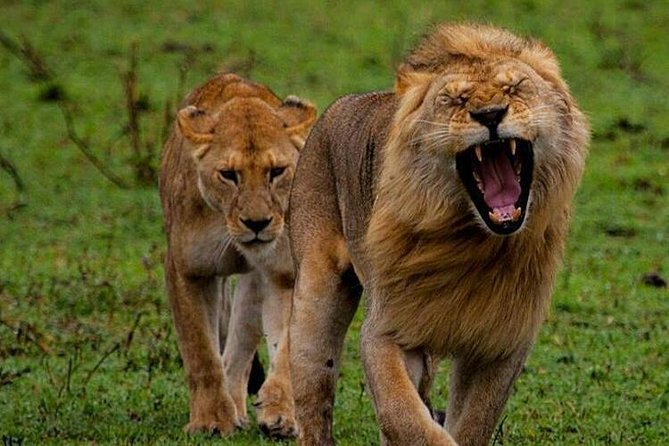
You may also encounter more than 2,700 lions, 1,000 leopards, and 500 cheetahs, along with elephants, giraffes, impala, eland, water antelope, crocodiles, and hippos. Those numbers do not make sightings automatic, of course. Serengeti is enormous, and the value of a good guide lies in reading the conditions and choosing where to spend time.
Day four moves into the Mara region, with another eight-hour safari. From July to October, this northern area is where the migrating herds may gather. The famous river crossings can be thrilling, but they are also unpredictable and sometimes crowded. You may wait in the vehicle for a long time, then see the herds change direction without crossing at all.
That uncertainty is not a flaw in nature. It is something to understand before paying for a migration-focused trip. The northern Serengeti still rewards you with huge herds, open views, and predator country, even if the river does not provide a perfect scene.
Several guides receive strong praise in the supplied feedback. John is described as superb, while Naftal is singled out for his role during a July Great Migration safari. Beni and Mussa are also named positively in connection with other northern Tanzania trips. Since the guide can shape the whole experience, ask who is assigned to your departure and how much experience that person has in the Mara area.
More Safaris in Moshi
- Safari Serengeti And Ngorongoro
★ 5.0 · 288 reviews - Big Five Safari In Tanzania
★ 5.0 · 99 reviews - Unforgettable Tanzania Safari And Zanzibar Beach
★ 5.0 · 97 reviews - 8-Day Essence of Tanzania Safari – Luxury
★ 5.0 · 72 reviews
Day 5: Leaving Serengeti for the strange beauty of Lake Natron
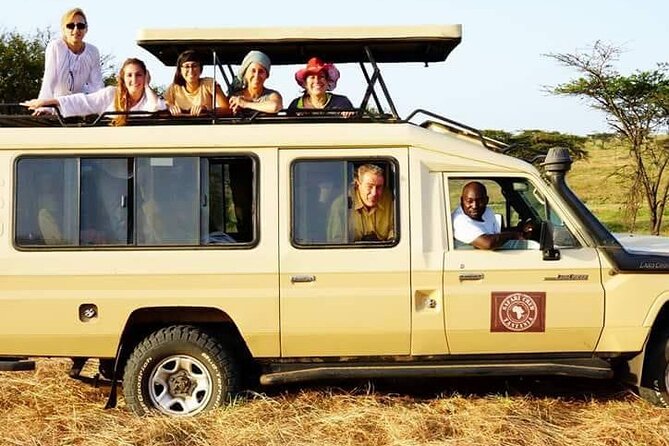
Day five begins with a final morning game drive in northeastern Serengeti. You then leave the park on an arduous track toward Lake Natron, a route chosen as much for its views as for speed. The transfer takes you into a very different part of Tanzania.
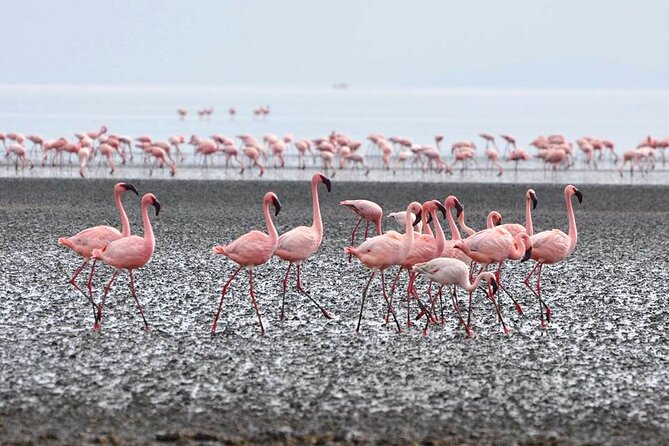
Lake Natron is about 50 kilometers long and 25 kilometers wide. It sits in a Rift Valley depression among rugged lava country, and its water is strongly alkaline. During the dry season, especially from June through October, millions of pink flamingos may crowd the shores to feed on cyanobacteria in the lake.
This is a dramatic change from the grassy Serengeti. The area is dry, harsh, and shaped by volcanic forces. Oldoinyo Lengai, a sacred volcano for the Maasai people, rises to almost 3,000 meters. It is the only volcano in the world known for natro-carbonatitic lava.
In the afternoon, you walk along the Engare Sero stream through a narrow rocky gorge to a waterfall. The walk is not described as difficult, but you may need to put your feet in water that can reach around knee height. Bring a swimsuit and shoes with good grip. The chance to swim gives this day a welcome physical change after several long stretches in a safari vehicle.
Day 6: A walking morning, then Tarangire elephants
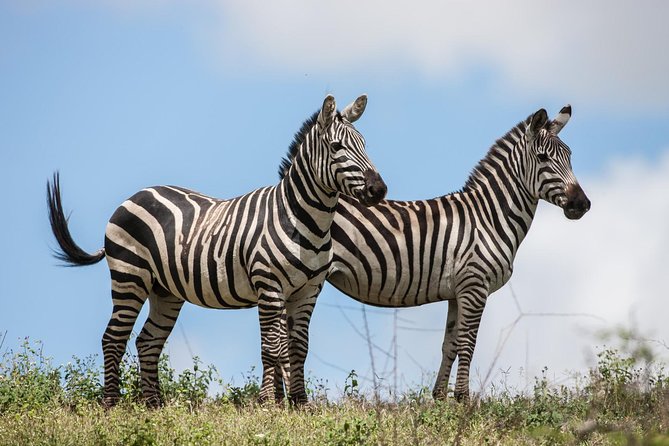
The morning excursion follows the shore of Lake Natron through rough, almost lunar volcanic country. Afterward, the route passes through Mto wa Mbu before continuing to Tarangire National Park for an afternoon game drive.
This is another long transfer day, though only about four hours are allocated to each listed activity. The rough track near Natron is part of the attraction, but it can also be tiring. You should be comfortable with bumps, dust, heat, and a schedule that changes with road conditions.
Tarangire covers about 2,600 square kilometers and has a different feel from Manyara, Ngorongoro, and Serengeti. Its signature scenery includes enormous baobabs, while its name comes from the Tarangire River. In the dry season, the river and Silale Marsh can be among the few dependable water sources, drawing animals from a wide area.
Day 7: Tarangire’s baobabs and large elephant herds
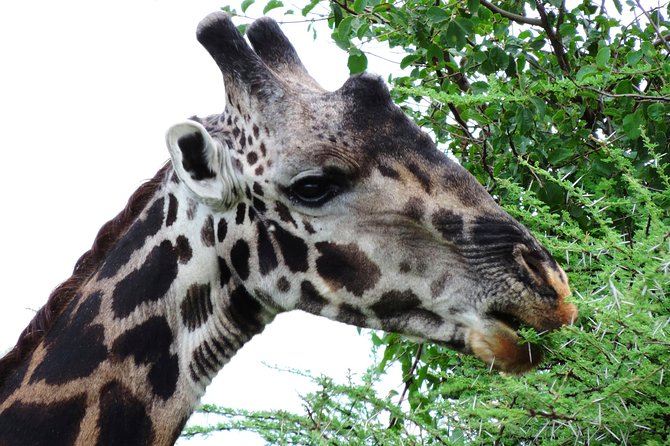
The final full safari day gives Tarangire about eight hours. This is a sensible amount of time because the park rewards slow searching around water, trees, and open plains.
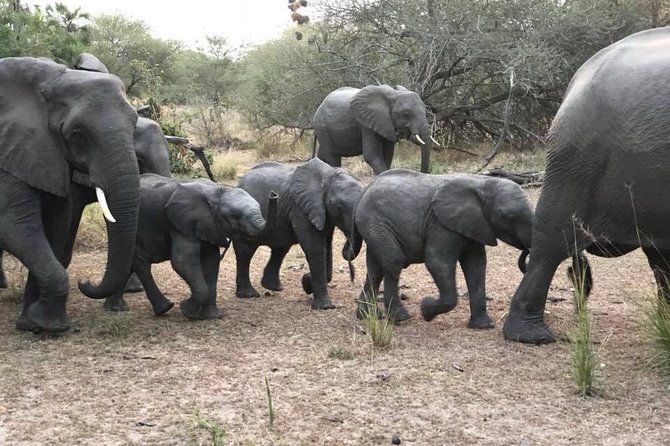
Tarangire is often called a park of giants, and the description fits. Large elephant herds are one of its main draws, while lions, leopards, buffaloes, zebras, wildebeest, antelopes, and gazelles also inhabit the park. Birdwatchers have about 500 species to look for, including resident and migratory birds.
I like the placement of Tarangire at the end. After the scale of Serengeti and the concentrated wildlife of Ngorongoro, the baobabs and river corridor provide a final change of pace. It also means the trip does not finish with a simple airport transfer after the Serengeti. You get one more proper game-viewing day.
Day 8: Return to Arusha and onward flights
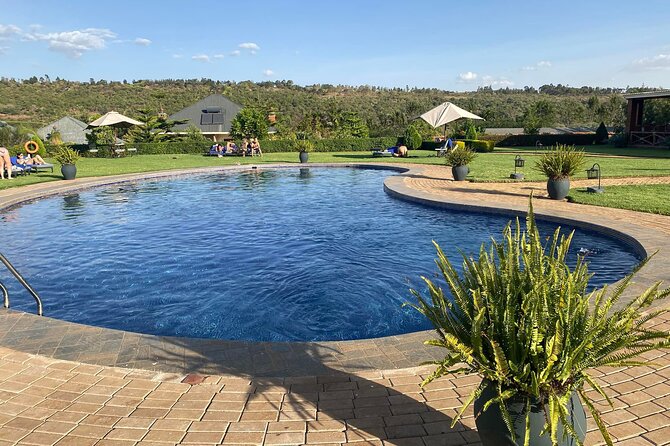
Day eight returns to Arusha for lunch, followed by a transfer to either Kilimanjaro International Airport or Arusha Airport. About seven hours are allocated to the day, so you should give the operator your arrival and departure flight details before travel.
This is where a private itinerary helps. A dedicated vehicle and prearranged transfers make it easier to match the final drive with your flight plan. Still, do not schedule a tight international connection without confirming the exact departure time from Tarangire and current road conditions.
What the $4,974 price buys you
At $4,974 per person, this is a major purchase. The value comes from the route and the number of services bundled into it, not simply from eight days on a calendar.
Included are private transportation, a 4×4 safari circuit, park fees, transfers, full board, water on board, all listed taxes and fees, and AMREF insurance. Breakfast is included for seven days, dinner for seven days, and lunch for all eight days. Park fees alone can make a noticeable difference on a route covering so many protected areas.
The package excludes international and local flights, the Tanzanian entry visa, drinks at the lodges, and personal extras. You should also clarify the accommodation category, room arrangements, and drinks policy before paying. Feedback about comfortable lodges and tented camps is encouraging, but the exact properties will affect how much comfort you receive between long drives.
This suits you best if you value a private vehicle, a carefully connected northern route, and full-board planning. It is less suitable if you want a short safari, a low-cost camping trip, or a relaxed schedule with few road transfers.
Practical details, comfort, and booking
The tour is private, so only your own group participates. Group discounts are offered, and pickup is available. Most people can participate, and the meeting area is near public transportation, although the safari itself quickly moves far beyond ordinary urban transport.
Confirmation is sent within 48 hours of booking, subject to availability. You need to provide a mobile phone number, passport information, and both arrival and departure flight details by email.
The cancellation terms are fairly clear but not especially flexible. You can receive a full refund if you cancel at least six full days before the start time. A cancellation two to six days ahead receives a 50 percent refund, while cancellation less than two full days before departure is nonrefundable. Cutoff times follow local Tanzanian time.
The strongest praise attached to this operator centers on organization, guide quality, accommodation, and responsiveness. A 4.9 rating from 25 ratings and a 100 percent recommendation figure suggest a very positive record, though the sample is not large enough to remove the need for sensible pre-trip questions.
Should you book this Great Migration safari?
I would book this tour if you want the famous Serengeti migration but also care about variety. Lake Manyara, Ngorongoro, Lake Natron, and Tarangire keep the trip from becoming one long search across the same plain. The Engare Sero walk and the volcanic setting around Oldoinyo Lengai are especially useful additions for anyone who wants more than vehicle-based wildlife viewing.
Before booking, confirm the accommodation names, guide assignment, daily driving expectations, and how the operator handles northern Serengeti conditions. If you accept rough roads and the uncertainty of wildlife, this is a powerful eight-day introduction to northern Tanzania. If your only goal is a guaranteed river crossing, save your money until you are comfortable with nature’s refusal to follow a script.
FAQ
How long is the Tanzania safari?
The safari lasts approximately eight days, beginning and ending in the Arusha area.
Which airports can be used for the final transfer?
The final transfer can go to Kilimanjaro Airport or Arusha Airport.
Is the Great Migration included in the itinerary?
Yes. The itinerary includes northern Serengeti and the Mara region, with the migration period identified as July through October.
Are meals included?
Yes. Breakfast is included for seven days, dinner for seven days, and lunch for all eight days.
Are flights and the entry visa included?
No. International and local flights, the Tanzanian entry visa, drinks at the lodges, and personal extras are not included.
Is this a private tour?
Yes. Only your own group participates, and private transportation is included.
More Migration Safaris
- 8 Days Great Wildebeest Migration – Mara River Crossing
★ 5.0 · 28 reviews - 7 Days Wildebeest Migration – Ndutu Calving Season
★ 5.0 · 18 reviews - 5 Days Tanzania Safari – Migration and Big 5 Safaris
★ 5.0 · 14 reviews - Latest Updates On The Top Best 3 day Serengeti Migration Safari
★ 5.0 · 9 reviews
More Serengeti Safaris
- Serengeti, Ngorongoro and Tarangire 4 Days Safari
★ 5.0 · 59 reviews - 5 Days Camping Tarangire, Serengeti & Ngorongoro crater & Visiting Maasai
★ 5.0 · 58 reviews - 4 Days Group Joining Camping Safari to Tarangire Serengeti Ngorongoro Crater
★ 5.0 · 50 reviews - 4 Day Private Tour Throughout Tarangire, Serengeti and Ngorongoro
★ 5.0 · 42 reviews
Just added around Moshi
- Moshi: Lake Chala Tour: Hiking &/or Kayaking★ 4.5 · 3 reviews
- 3 Days Tanga Exclusive Beach Holiday★ 5.0 · 3 reviews
- Serengeti Wildebeest Migration.★ 5.0 · 3 reviews
- Chemka Hotpsrings E-Bike Day Trip★ 5.0 · 3 reviews
- Explore 1 day Ngorongoro Crater Budget Group Safari from Arusha★ 5.0 · 3 reviews
- Explore the 360° of Kilimanjaro★ 5.0 · 3 reviews
- Affordable Short Tanzania Safari (2 Days Camping Safari)★ 5.0 · 3 reviews
- Rongai Route 7 Days★ 5.0 · 3 reviews
Serengeti Safaris, compared.

Serengeti Balloon Safari and authentic bush breakfast
Read our review →
Balloon Safari & Bush Breakfast in Serengeti – Miracle Experience
Read our review →
3 Days Serengeti & Ngorongoro Group Camping Safari
Read our review →
5-Day Highlights mid-Range Crater, Serengeti, Tarangire
Read our review →


Private 6-Day Tarangire Manyara Crater and Serengeti with Mid-Range Lodges
Read our review →
5 Days Camping Tarangire, Serengeti & Ngorongoro crater & Visiting Maasai
Read our review →Browse the lists this tour appears in