
Reviewed · WILDEBEEST MIGRATION SAFARIS
10-Day Wildebeest Migration Calving Safari -All Inclusive
Calves, predators, and wide-open plains. This 10-day Tanzania safari follows the wildebeest calving season through Ndutu and the Serengeti, while adding Tarangire, Lake Manyara, Ngorongoro Crater, and a hot-air balloon flight. I especially like the private format and the chance to spend several days in the Serengeti rather than rushing through it. The main consideration is the price: at $9,718 per person, this is a major investment, and some driving days are long.
I also like the strong guiding record, with guides such as Juma, Michael, George, Ombeni, Samir, and Zadock receiving especially warm praise for animal knowledge, patience, safe driving, and good judgment around sightings. The route offers plenty of variety, from elephants and birds to big cats and newborn wildebeest. Still, migration sightings depend on rainfall, so no itinerary can promise that the herds will be in one exact place.
In This Review
- Five things to know before booking
- Why the calving season makes Ndutu special
- Day 1: A soft landing in Arusha
- Days 2 and 3: Two different sides of Tarangire
- Day 4: Birdlife and tree-climbing lions at Manyara
- Day 5: Down into Ngorongoro Crater
- Day 6: Moving into Ndutu for the migration
- Day 7: Two full days with wildebeest and newborn calves
- Day 8: Central Serengeti and the search for big cats
- Day 9: Balloon over the Serengeti, then a sundowner
- Day 10: Final Serengeti drive and the flight home
- What the $9,718 price includes
- Who will enjoy this safari most
- Practical details before you commit
- Should you book the 10-day calving safari?
- FAQ
- Where does the safari start?
- How long is the safari?
- What season is this safari designed for?
- Is the tour private?
- Is the hot-air balloon safari included?
- Are flights included?
- Are meals included?
- Are park fees included?
- What is not included in the price?
Five things to know before booking
- Ndutu is the main event: The December to March calving season brings huge wildebeest herds, newborn calves, and predators into the southern Serengeti area.
- A balloon safari is included: Day nine begins with a hot-air balloon flight, followed by champagne, breakfast, and more game viewing.
- You get several kinds of safari: The plan includes vehicle game drives, a walking safari with an armed ranger, a night game drive, and a full day in Ngorongoro Crater.
- The trip is private: Only your own group participates, so the guide can shape the pace around your interests.
- Meals and internal flights are covered: Park fees, transport, nine breakfasts, nine lunches, nine dinners, and all flights during the tour are included.
- The route is full but not light: You will cover several parks, and some days combine long drives with extended game viewing.
Why the calving season makes Ndutu special
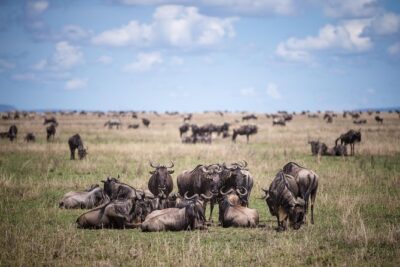
The wildebeest migration is not a single event that arrives on schedule like a train. The herds move in response to rain and fresh grass, but from December through March they commonly gather around the southern Serengeti and Ndutu area.
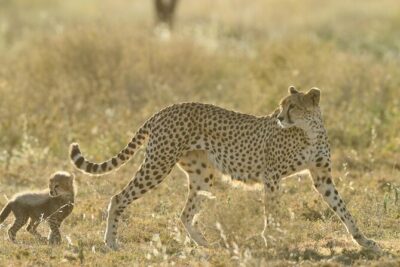
This is the season for newborn calves. The plains become a place of constant movement, with wildebeest and zebra feeding, mothers protecting young, and predators watching for an opening. Lion, cheetah, and hyena are all part of the story, and the concentration of animals can make Ndutu particularly rewarding for wildlife photography.
The practical point is that rain controls the show. If the grass is greener elsewhere, the herds may shift. Your guide’s ability to read conditions and communicate with other guides matters a great deal. The itinerary gives you two days focused on Ndutu, which is helpful because it gives you more than one chance to find the herds.
The southern Serengeti also offers more than open grassland. You may pass swamps, woodland, soda lakes, and short-grass plains. That variety supports different animals and gives the safari a changing feel instead of repeating the same view all day.
More Migration Safaris in Moshi
- Great Migration Safari In Tanzania
★ 5.0 · 71 reviews - 6 Days Tanzania Budget Camping Safari with Migration
★ 5.0 · 31 reviews - 8 Days Great Wildebeest Migration – Mara River Crossing
★ 5.0 · 28 reviews
Day 1: A soft landing in Arusha
You are met at Kilimanjaro International Airport by a local representative, with help available for visa or passport-control problems. From there, you are taken to the company office for refreshments, meet your guide, and continue to Arusha for dinner and the night.
Arusha sits near Mount Meru and serves as the usual starting point for northern Tanzania safaris. This first night is useful. After a long international flight, you get a bed, a meal, and a briefing before the serious driving begins.
The airport pickup is included, but the meal arrangement deserves a quick check before you go. The package lists nine breakfasts, nine lunches, and nine dinners, while the first day describes dinner at the hotel. Ask the operator to confirm exactly what is covered on arrival day.
Days 2 and 3: Two different sides of Tarangire
Tarangire is often treated as a quick stop, but this plan gives it two days. The park is known for elephants, birdlife, dry-country antelope, and a quieter safari feel than the busiest parts of the Serengeti.
Day two brings a full game drive, a hot picnic lunch, and an evening arrival at camp. The lunch setup is more substantial than a simple packed sandwich: soup, bread rolls, a main dish, fruit, salad, wine, tea, and coffee are listed. Eating outside near the park can be one of the pleasant rhythms of safari life, though you should expect a full day in the vehicle.
Day three adds a walking safari with an armed ranger, followed by more driving, dinner, and a night game drive at the lodge. That change of pace matters. From a vehicle, you search broad areas for animals. On foot, the focus shifts toward tracks, plants, smaller creatures, and the sounds around you.
Tarangire is also a strong place for elephant sightings. Herds can gather around dry riverbeds, and the park is one of the better places in Tanzania to look for fringe-eared oryx and gerenuk. The itinerary’s two-night approach gives you time to see more than the main road.
There is one sensible caution. One person who took a similar 10-day trip felt two days in Tarangire was more than needed during a season of high grass. If your priority is the calving action, you may prefer more time in Ndutu. If you value elephants, birds, walking, and a slower start, Tarangire earns its place.
Day 4: Birdlife and tree-climbing lions at Manyara
Lake Manyara National Park provides a compact change from Tarangire. More than 400 bird species have been recorded here, so it can be a fine stop for anyone who enjoys birding as much as large mammals.
The day is planned as a full game drive with a shaded picnic lunch before an afternoon return to the lodge. Manyara’s narrow band of acacia woodland is associated with tree-climbing lions, and elephants are another major draw.
This day may feel less dramatic than Ngorongoro or the Serengeti, especially if your main goal is the migration. Its value is variety. You move from dry-country animals and elephants to a park where forest, floodplain, and birdlife shape the viewing.
More Safaris in Moshi
- Safari Serengeti And Ngorongoro
★ 5.0 · 288 reviews - Big Five Safari In Tanzania
★ 5.0 · 99 reviews - Unforgettable Tanzania Safari And Zanzibar Beach
★ 5.0 · 97 reviews - 8-Day Essence of Tanzania Safari – Luxury
★ 5.0 · 72 reviews
Day 5: Down into Ngorongoro Crater
Ngorongoro Crater is one of Tanzania’s great wildlife settings. The volcanic caldera is about 20 kilometers across, roughly 600 meters deep, and covers around 300 square kilometers. Its enclosed form supports a high concentration of animals, making a game drive here a strong chance to see a wide range of wildlife in a single day.
The itinerary includes a crater game drive, a picnic lunch, and a visit to Lake Magadi, a shallow alkaline lake in the southern part of the crater. The lake can attract birds and adds a distinctive visual stop to the day.
Expect an early start and a long day. The crater road, wildlife stops, and picnic break make this more than a short photo stop. It is also one of the places where vehicle numbers and timing can affect the feel of the day. Your guide’s patience and positioning matter, especially around popular sightings.
Day 6: Moving into Ndutu for the migration
Day six shifts the focus south toward the Ndutu area. The plan allows a full day of game viewing around the migration zone before returning to camp near the Ngorongoro area for dinner and the night.
This is the point where the safari becomes most tied to the season. You will search grassy plains and woodland for wildebeest and zebra, while keeping an eye out for predators. The route description is a little confusing because it refers to Ndutu, the southern Serengeti, and a return to a Ngorongoro camp on the same day. Confirm the exact camp location and driving plan before departure.
That detail matters because Ndutu game drives can be long. Time spent reaching the right area is time not spent watching animals. A camp close to the action is especially valuable during calving season.
Day 7: Two full days with wildebeest and newborn calves
Day seven gives you another game drive in Ndutu. The goal is clear: follow the herds, look for newborn calves, and watch predator behavior around the migration.
This is one of the strongest parts of the program. One day can produce a memorable sighting, but two days give you a better chance of finding the herds after rain or locating a fresh concentration of animals. You may also see the setting change between open plains and wooded areas.
The itinerary again includes a picnic lunch and an evening return to camp. You should be ready for long periods of waiting. Wildlife does not perform on demand, and the best moments may come after an unhurried watch rather than a fast search for the next animal.
Day 8: Central Serengeti and the search for big cats
After another Serengeti game drive, you travel toward the central Seronera area. This part of the park is well known for big-cat viewing, and the itinerary shifts from the calving grounds toward a broader search for lion, cheetah, leopard, and other wildlife.
The move north is useful because it adds a different Serengeti setting. It also helps break up the return journey before the final flight. Still, it can be a demanding day, with game viewing and relocation combined. If you prefer long, slow wildlife sessions, ask how much time will be spent driving between regions.
Guides are a major part of the value here. Michael Sangiwa received particular praise for finding all of the Big Five and handling muddy roads after rain. Juma was repeatedly valued for patience, humor, care, and strong wildlife knowledge. George was praised for finding excellent sightings and for being courteous and well informed. You can request a preferred guide, but availability is not guaranteed.
Day 9: Balloon over the Serengeti, then a sundowner
The hot-air balloon safari is included and begins early. After landing, you celebrate with champagne and have breakfast before returning to the vehicle for more game viewing in central Serengeti.
The balloon flight changes your view of the park. From above, animal paths, water, plains, and woodland fit together in a way you cannot see from the ground. It is also the most special and expensive-feeling part of the package, since balloon flights are not normally a casual add-on.
The rest of the day continues with big-cat and Big Five searches. In the evening, your guide sets up a sundowner picnic with drinks and snacks before returning to camp for dinner.
This is a full day, and the early start may leave you tired by evening. For many people, though, the combination of balloon flight, ground safari, and sunset stop makes day nine the emotional high point of the trip.
Day 10: Final Serengeti drive and the flight home
After breakfast, you take a morning game drive while heading toward Seronera Airstrip. The flight to Arusha saves you from a long overland return and protects more time for wildlife viewing.
On arrival in Arusha, a day room and lunch are arranged at a coffee lodge before an evening transfer to Kilimanjaro International Airport. This is a considerate ending. You have a place to rest, wash, and repack rather than spending the final hours sitting at the airport.
Check your international departure time carefully. The plan includes the airport transfer, but the exact amount of time between the domestic flight and your international flight is not stated. A little extra margin is always useful when road and air schedules are involved.
What the $9,718 price includes
At $9,718 per person, this is firmly in the luxury-safari price range. The value comes from the number of moving parts covered in one arrangement:
- Park fees for non-residents
- A professional driver and guide
- Ground transportation
- Flights during the safari
- Hot-air balloon safari
- Nine breakfasts
- Nine lunches
- Nine dinners
The package is described as all inclusive, with luxury lodges and tented camps. Accommodation names are not provided, so ask for the exact properties, room style, and number of nights at each before paying.
The price makes more sense if you value privacy, internal flights, a balloon ride, park fees, and full-time guiding. It is less compelling if you mainly want a basic vehicle safari and are comfortable arranging lodging and meals separately.
Tips, insurance, visas, souvenirs, international flights, and extra nights before or after the safari are not included. The suggested tip is $10 per person per day, so budget about $100 per person for the guide and service team across ten days, subject to your own judgment.
Who will enjoy this safari most
I would recommend this route to you if newborn animals and predator behavior are high on your wish list. It also suits photographers, first-time visitors who want the major northern parks in one trip, and couples or families who prefer a private vehicle.
The schedule works well for people who enjoy full days outside. You will spend many hours driving and watching, often with picnic lunches rather than long breaks at a lodge.
Families can also do well with the right guide. Samir was praised for explaining wildlife clearly and keeping children interested, while Zadock was singled out for patience with teenagers. Still, the pace may be tiring for very young children, and the operator should confirm any age requirements before booking.
Practical details before you commit
Confirmation is provided when you book, and the activity is private to your group. Pickup begins at Kilimanjaro International Airport, and most people can participate.
The experience depends on good weather, especially the balloon flight. If poor weather cancels the activity, you are offered another date or a full refund. You can cancel for a full refund up to 24 hours before the start time. Within 24 hours, refunds and changes are not accepted.
The strongest guide feedback centers on personal care, safe driving, animal knowledge, and the ability to adapt. Ask if you can request a guide such as Juma, Michael, George, Ombeni, Samir, or Zadock. A request is not a promise, but it is worth making.
Should you book the 10-day calving safari?
Book it if you want a polished private safari with the major northern Tanzania highlights, two focused days in Ndutu, an included balloon flight, and internal air travel to reduce the long return drive. The combination of calving-season wildlife and varied parks gives you plenty to see.
Think twice if $9,718 feels stretched, if you dislike long driving days, or if your only goal is the wildebeest. In that case, a shorter safari concentrated around Ndutu may offer better value. Also ask for the precise lodge list and clarification on the Ndutu to Ngorongoro routing before you commit.
For the right budget and expectations, this is a serious, wildlife-first trip with excellent guide potential and a strong chance of memorable encounters. Just remember that the herds follow rain, not your timetable.
FAQ
Where does the safari start?
The safari starts with pickup at Kilimanjaro International Airport in Tanzania.
How long is the safari?
The safari lasts approximately 10 days.
What season is this safari designed for?
It is designed for the wildebeest calving season, generally from December through March.
Is the tour private?
Yes. Only your own group participates in the private tour or activity.
Is the hot-air balloon safari included?
Yes. The hot-air balloon safari is listed among the inclusions and takes place on day nine.
Are flights included?
Yes. All flights during the tour are included. International flights from and back to your home country are not included.
Are meals included?
Nine breakfasts, nine lunches, and nine dinners are included. Confirm the exact meal arrangement for the arrival day with the operator.
Are park fees included?
Yes. Park fees for non-residents are included.
What is not included in the price?
International flights, extra accommodation before or after the safari, tips, travel insurance, visa fees, souvenirs, and other personal items are not included.
More Safaris
- Serengeti, Ngorongoro and Tarangire 4 Days Safari
★ 5.0 · 59 reviews - 6 Days 5 Night Safari
★ 5.0 · 57 reviews - 7-Day Magical Tanzania Safari -Premium High End Package
★ 5.0 · 53 reviews - 4-day Tanzania Safari
★ 5.0 · 53 reviews
More Migration Safaris
- Tanzania Safari – The Great Migration in the North of the Serengeti and Lake Natron
★ 5.0 · 25 reviews - 7 Days Wildebeest Migration – Ndutu Calving Season
★ 5.0 · 18 reviews - 5 Days Tanzania Safari – Migration and Big 5 Safaris
★ 5.0 · 14 reviews - Latest Updates On The Top Best 3 day Serengeti Migration Safari
★ 5.0 · 9 reviews
Just added around Moshi
- Moshi: Lake Chala Tour: Hiking &/or Kayaking★ 4.5 · 3 reviews
- 3 Days Tanga Exclusive Beach Holiday★ 5.0 · 3 reviews
- Serengeti Wildebeest Migration.★ 5.0 · 3 reviews
- Chemka Hotpsrings E-Bike Day Trip★ 5.0 · 3 reviews
- Explore 1 day Ngorongoro Crater Budget Group Safari from Arusha★ 5.0 · 3 reviews
- Explore the 360° of Kilimanjaro★ 5.0 · 3 reviews
- Affordable Short Tanzania Safari (2 Days Camping Safari)★ 5.0 · 3 reviews
- Rongai Route 7 Days★ 5.0 · 3 reviews
Wildebeest Migration Safaris, compared.
8 Days Great Wildebeest Calving Migration Safari from Arusha
Read our review →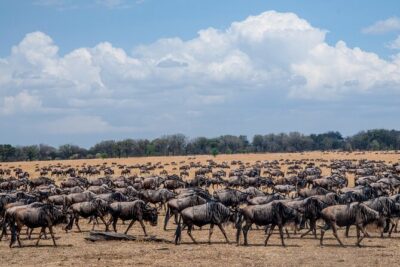
10-Day Serengeti Wildebeest Migration Safari from Arusha
Read our review →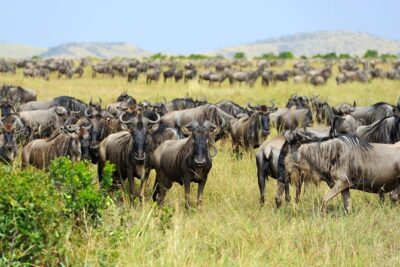
8 Day Spectacular Migration Serengeti mid -Range Tanzania Safari
Read our review →
9-Day Serengeti Migration Footsteps Tanzania Safari
Read our review →
Private 6-Day Great Migration Ndutu Serengeti Safari Tour
Read our review →
4 Day Great Migration Safari Serengeti & Ngorongoro Crater
Read our review →Browse the lists this tour appears in