
Reviewed · KILIMANJARO TREKS
The Ultimate 8-day Lemosho route Climbing Kilimanjaro
Reach Africa’s highest point the scenic way. The 8-day Lemosho route gives you more time to adjust to altitude while crossing Kilimanjaro’s changing zones, from forest to moorland and high volcanic rock. I like that meals, tents, and a sleeping mattress are supplied, and I like the private format, which lets you and your group set a sensible pace.
The guide and support crew are a major part of the experience. Names praised in past accounts include Paul, Martin, Barakael, Gabrielle, Prudence, Edwin, and Noka. The main caution is cost: the advertised $1,300 price excludes park fees, insurance, tips, hotels, flights, and personal gear, so your final budget will be higher.
This is a demanding climb, not an ordinary walking holiday. You need moderate physical fitness, patience, warm clothing, and a willingness to spend seven nights camping at altitude. Still, the route’s gradual profile and extra day make it one of the more sensible ways to attempt Kilimanjaro.
In This Review
- Key points to know before choosing Lemosho
- Why the Lemosho route is a smart eight-day choice
- Day 1: Moshi briefing and the drive to Londorossi Gate
- Day 2: From Mti Mkubwa into Shira’s moorland
- Day 3: An easier crossing to Shira 2 Camp
- Day 4: Shira 2 to Lava Tower at 3,840 meters
- Day 5: The Barranco Wall and Karanga Camp
- Day 6: Karanga to Barafu Camp
- Day 7: Uhuru Point and the long descent to Mweka
- Day 8: Mweka Camp to Mweka Gate
- What the $1,300 price really covers
- Guides, food, porters, and the human side
- Who should book this Kilimanjaro climb?
- Should you book the eight-day Lemosho route?
- FAQ
- How long is the Kilimanjaro Lemosho climb?
- Where does the experience begin?
- Is transportation included?
- Are meals included?
- Is camping equipment included?
- Are Kilimanjaro park fees included in the price?
- Is this a private climb?
- What level of fitness is required?
- What is not included besides park fees?
- What is the cancellation policy?
Key points to know before choosing Lemosho
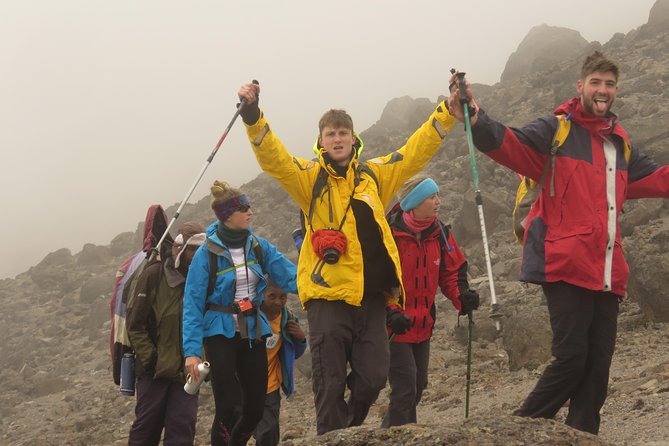
- Eight days gives your body more time to adjust: The schedule includes several nights between Shira, Lava Tower, Barranco, Karanga, and Barafu before the summit attempt.
- Lemosho begins on Kilimanjaro’s western side: You cross the Shira Plateau before joining the busier southern route near Lava Tower.
- The private setup gives your group more control: You are not tied to the pace of a large shared group, though you will still meet other climbers on the mountain.
- A full mountain support system is included: A professional guide, cooks, porters, tents, mattresses, and three daily meals are part of the trek.
- Summit day is the hardest section: You climb to Uhuru Point, then descend to Barafu and continue to Mweka Camp on the same day.
- The price is not all-inclusive: Park fees and several important personal costs are paid separately.
Why the Lemosho route is a smart eight-day choice
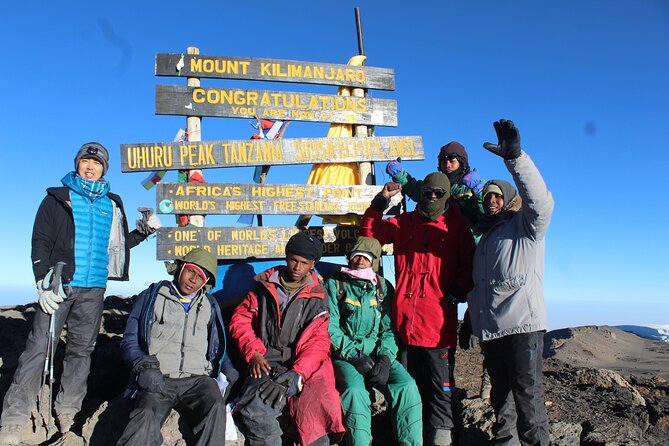
Kilimanjaro is the world’s highest free-standing mountain, and the usual goal is Uhuru Point at about 19,341 feet. The mountain is not a technical climbing challenge in the mountaineering sense, but altitude makes it serious. You can be fit and still struggle above 12,000 feet.
That is why eight days matters. This schedule spreads the approach across several camps instead of rushing upward. You gain time on the Shira Plateau and spend nights at increasing elevations before reaching Barafu Camp at about 15,239 feet. The extra time does not guarantee a summit, but it gives you a more reasonable chance to adjust.
I also like the route for its scenery. Lemosho crosses several ecological zones, beginning in the lower mountain forest and rising through moorland toward the stark volcanic upper slopes. You get a sense of Kilimanjaro as a whole mountain, not just a long staircase to the top.
The route is private, which is useful if one person in your group needs more rest or another wants to walk a little farther. You can go at your own pace with your guide rather than trying to match an unrelated group. The mountain itself is not private, of course. Other groups appear along the way, particularly after Lemosho joins the Machame route.
More Kilimanjaro routes and climbs:
- Kilimanjaro climb by Lemosho Route (7-day)
★ 5.0 · 651 reviews - Kilimanjaro climb, Machame Route (7-day)
★ 5.0 · 262 reviews - Kilimanjaro Climbing Lemosho Route 8 Days.
★ 5.0 · 186 reviews
Day 1: Moshi briefing and the drive to Londorossi Gate
Your morning begins at 7:00 a.m. at Africa Natural Tours on Mkwawa Avenue, unless hotel pickup in Moshi has been arranged. After breakfast, the chief guide gives a briefing before you drive toward Londorossi Park Gate. The journey takes about two and a half hours.
The listed gate elevation is 2,250 meters, or 7,380 feet. This transfer is more than a simple ride to the trailhead. It takes you from Moshi’s warm streets into Kilimanjaro National Park, and it is your first practical chance to confirm questions about pace, equipment, meals, and the days ahead.
The schedule identifies the first camping area as Mti Mkubwa, at about 2,750 meters, or 9,020 feet. The supplied day-by-day description does not give a detailed walking distance or exact hiking time for the first day, so ask your operator to confirm how much walking is planned after the gate and where you sleep that night.
The drive and gate formalities can make this a long first day even before the real altitude work begins. Keep your day bag accessible with water, rain protection, warm layers, and any personal medicine.
Day 2: From Mti Mkubwa into Shira’s moorland
The route becomes steeper as you leave the lower forest behind and enter the moorland zone. This change is one of Lemosho’s pleasures: the vegetation thins, the views open, and the mountain begins to feel less like a forest hike and more like a high-altitude expedition.
You cross the Shira Ridge at about 3,600 meters, or 11,810 feet, then continue toward Shira 1 Camp. Dinner and the night are at camp. That elevation is high enough for some people to notice a headache, poor sleep, or reduced appetite, even if the day itself feels manageable.
Walk slowly. The goal is not to prove how fast you can climb. Your guide’s pacing is valuable here, and the private format should make it easier to stop briefly when needed without turning every pause into a group negotiation.
Day 3: An easier crossing to Shira 2 Camp
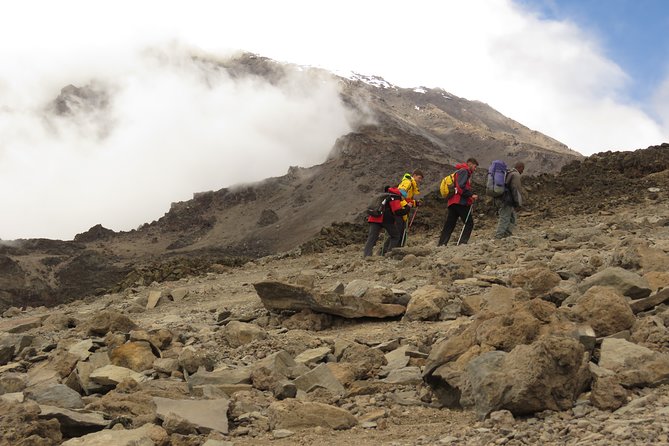
Day 3 is described as a fairly easy trek across the Shira Plateau. You finish at Shira 2 Camp, at about 3,500 meters, or 11,485 feet, on moorland meadows beside a stream.
This is a useful recovery day in the middle of a serious climb. The route is not flat in the everyday sense, but compared with the steeper sections ahead, it gives you time to walk steadily and let your body settle. The open plateau also provides a change from the enclosed forest paths of the first day.
Camp life becomes part of the rhythm now. You eat breakfast, lunch, and dinner during the trek, with camping equipment supplied. The package includes quality tents and sleeping mattresses, but you still need your own sleeping bag and personal hiking clothing because those items are not listed among the provided equipment.
The streamside setting sounds comfortable, but do not confuse a scenic camp with an easy night. At more than 11,000 feet, sleep can be light, and temperatures can drop sharply. Ask for clear information about water treatment and bring any stomach remedies you normally use. One past account describes a stomach problem after boiled water, so take food and water hygiene seriously and report symptoms quickly to your guide.
A few more trips of this kind worth comparing:
- Safari Serengeti And Ngorongoro
★ 5.0 · 288 reviews - Climbing Kilimanjaro – Machame Route
★ 5.0 · 170 reviews - Climbing Kilimanjaro through 7 days Machame Route
★ 5.0 · 151 reviews - Kilimanjaro climb, Lemosho Route (8-day)
★ 5.0 · 148 reviews
Day 4: Shira 2 to Lava Tower at 3,840 meters
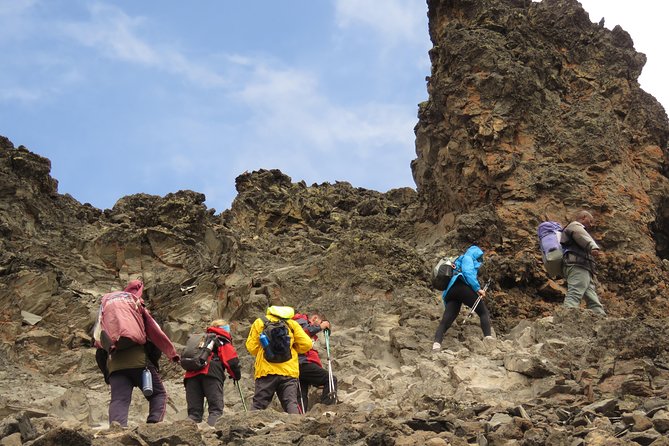
After breakfast, you head east toward the great bulk of Kilimanjaro. The path rises steeply above the vegetation and leads toward Lava Tower, at 3,840 meters, or 12,600 feet.
This day is important for acclimatization because you climb higher than your previous camp. The route can feel tougher than the modest elevation difference suggests. You are now walking in thinner air, and the slope asks for a slower, more deliberate pace.
Lava Tower is also where the character of the route changes. Lemosho crosses the Shira Plateau from west to east, then joins the Machame route near this area. You should expect more people from this point onward. The tradeoff is clear: the early Lemosho section feels more spacious, while the later trail brings you into the main southern circuit.
The supplied schedule does not clearly name the overnight camp for this day, so confirm the exact sleeping arrangement before departure. That small detail matters because the altitude plan is one of the main reasons to choose eight days.
Day 5: The Barranco Wall and Karanga Camp
The route continues from Barranco Camp, listed at about 3,900 meters, or 12,800 feet, toward Karanga Camp at 4,200 meters, or 13,780 feet. The visual highlight is the Barranco Wall, a narrow, dramatic slope that looks more intimidating than it is.
You do not need technical climbing equipment for the described route, but you should expect hands-on movement and a steep, uneven section. Your guide will show you where to place your feet and how to move at a controlled pace. This is a place where confidence helps, but rushing does not.
The short distance between the listed camps does not mean the day is effortless. At nearly 14,000 feet, each rise costs more energy. Eat even if your appetite fades, sip water often, and tell your guide about nausea, dizziness, or unusual fatigue.
Karanga is a useful staging camp before Barafu. You are getting close to the summit zone, but you are not at the top yet. The mountain’s upper slopes are exposed and severe compared with the moorland below, so your clothing system must now work properly.
Day 6: Karanga to Barafu Camp
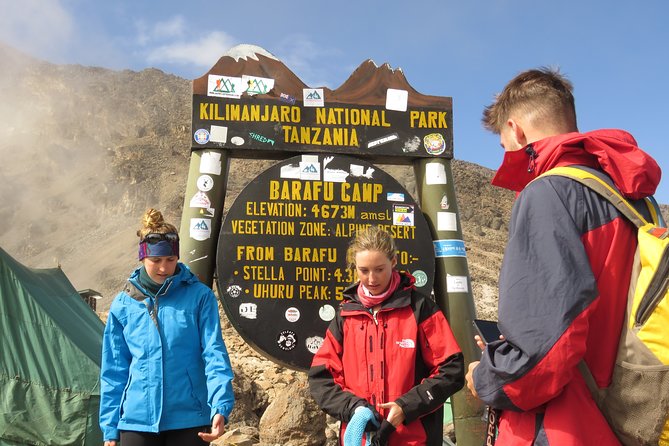
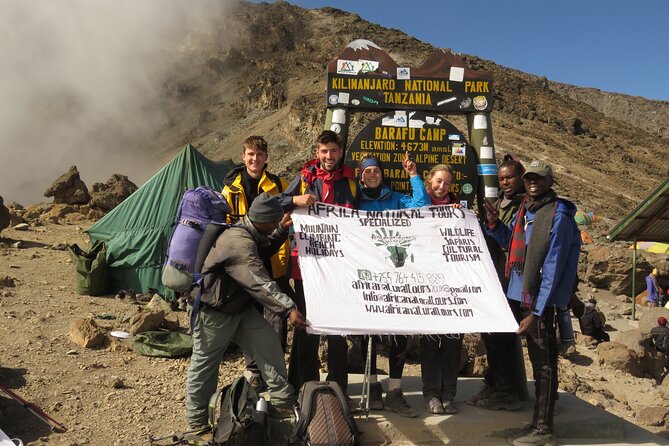
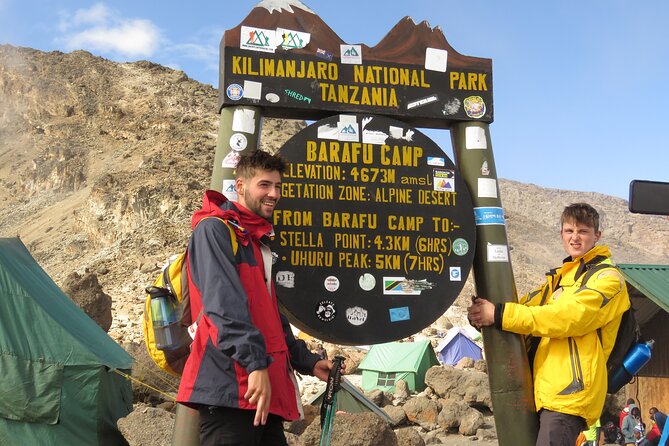
From Karanga, you climb to Barafu Camp at about 4,200 meters in the supplied schedule, or 13,780 feet. The name Barafu means ice in Swahili, and the camp marks the beginning of the summit push.
The route description gives no exact distance or walking time, which makes it worth asking for a current day plan. Your practical goal is to reach camp, eat, rest, and prepare for the summit attempt. Do not spend the afternoon treating camp as sightseeing time. Conserving energy is the job.
Your guide team becomes especially important here. The mountain crew includes the professional guide, porters, and cooks, and the strongest praise connected with this operator focuses on their care, organization, and food. Paul is repeatedly singled out for looking after climbers, while Martin is praised for his role during summit night. Those names cannot guarantee who will lead your departure, so confirm your assigned guide before the trek.
Tips for the crew are not included. Set aside cash for this customary expense and ask the company for its current tipping guidance. Porters and cooks are central to the trip, even though you see less of their work than the hiking itself.
Day 7: Uhuru Point and the long descent to Mweka
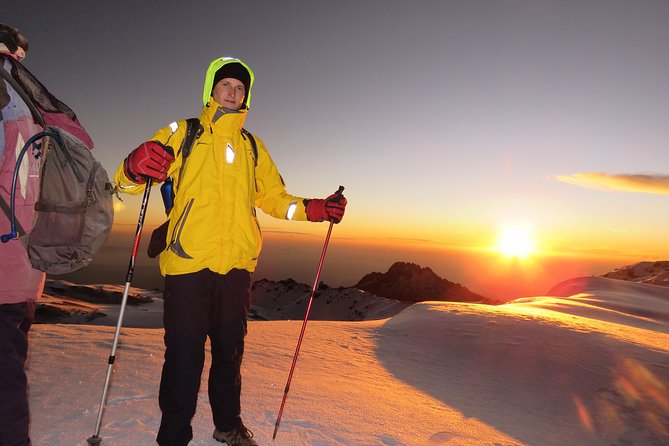
Summit day begins with the climb from Barafu toward Uhuru Point, the highest point on Kilimanjaro. The exact start time is not provided, but you should ask about it in the briefing because the summit schedule controls the entire day.
This is the toughest part of the climb. You will be walking in darkness for at least part of the ascent, in cold conditions, on steep volcanic ground, with altitude affecting every step. The private format helps here because your guide can pay close attention to your condition and adjust the pace of your group.
After reaching the summit, you descend to Barafu Camp and then continue to Mweka Camp. That double movement makes summit day especially tiring. Reaching the top is only halfway through the day, so save enough strength for the descent and follow your guide’s instructions.
The reward is the summit certificate, which is included. The certificate is a nice physical reminder, but the larger reward is the view and the fact that you handled the mountain’s hardest hours safely.
Some past climbers have praised guides for carrying a bag or offering extra help during the summit attempt. Treat that as a sign of attentive service, not a reason to bring an oversized pack. Keep your own load light and carry only what you need for the day.
Day 8: Mweka Camp to Mweka Gate
The final walk runs from Mweka Camp at 3,100 meters, or 10,170 feet, to Mweka Gate. After the stark upper mountain, the descent toward the gate brings a marked change in vegetation and air.
Your trek ends at Mweka Gate, where the operator provides transport back to your Moshi hotel. The package includes pickup from your Moshi hotel at the start and drop-off at that hotel after the trek. It does not include accommodation before or after the climb, so arrange those nights separately.
The return drive is the point when many people realize how much ground they have covered. Keep the evening simple. You may want a shower, a proper bed, and a quiet meal more than another ambitious activity.
What the $1,300 price really covers
At $1,300 per person, this trip offers useful value if you already have some of the major personal items and understand the extra costs. You receive the mountain guide, briefing, camping tents, sleeping mattresses, meals, transport between Moshi and the park, and the return transfer from Mweka Gate.
The important omission is Kilimanjaro National Park fees. Those fees may be paid directly to the park or through the tour operator, but they are not part of the stated price. You also pay for:
- Tips for the mountain crew
- Travel and medical insurance
- Hotels in Moshi before and after the trek
- International or domestic flights
- Airport transfers
- Personal hiking equipment
This can make the headline price look lower than the actual trip cost. I would ask for a written total before paying, including park charges and any hotel or transfer arrangement you want. The operator handles many logistics, but the package is not a complete door-to-door holiday.
Guides, food, porters, and the human side
The most consistently praised part of this experience is the crew. Accounts describe guides, porters, cooks, and waiters as helpful, caring, professional, and well organized. Paul receives especially warm praise for staying attentive throughout the climb, while Martin is remembered for giving extra support during summit night.
The company’s director, Godfrey Ngaiza, is also praised for quick communication and careful planning. One account credits him with arranging airport pickup, hotels, park bookings, transport, and the wider climb. Airport pickup is not included in the stated package, so confirm exactly what is included if you want that service.
Meals are provided three times daily during the trek. That is a major convenience, since carrying and cooking your own food at altitude would add real work. The menu, dietary planning, and water system are not specified, so tell the operator about dietary needs before arrival and ask how drinking water is handled.
The crew’s care is a strong reason to choose a guided climb. Still, good service does not replace your responsibility. Bring suitable personal gear, keep your day pack organized, stay honest about symptoms, and treat porters fairly.
Who should book this Kilimanjaro climb?
This route suits you if you want a scenic, slower approach and prefer a private group rather than a fixed large-party pace. It is a good fit for people with moderate fitness who can handle repeated days of walking, camping, steep slopes, and a very long summit day.
It may not suit you if you want hotel comfort, a short adventure, or a fully packaged price with park fees and flights included. It also is not a casual day hike. The 90-person maximum listed for the activity is a broad operational limit, while the package itself is described as private for you and your group. Ask how many people will actually be in your booking.
The experience has a five-star rating from 28 submitted accounts and a 100 percent recommendation figure. Those numbers point to strong satisfaction, especially with the staff, but they do not remove the normal risks of altitude, weather, fatigue, or changing trail conditions.
Should you book the eight-day Lemosho route?
I would book this climb if you value route scenery, extra acclimatization time, and a supportive crew more than a low final price. Lemosho gives you a beautiful western approach, a gradual progression across the Shira Plateau, the Barranco Wall, and a serious but carefully supported summit attempt.
Before booking, get three things in writing: the complete price including park fees, the exact overnight plan for every day, and the name and experience of your lead guide. If those details are clear and you are ready to buy your own gear, insurance, and hotel nights, this is a strong way to attempt Kilimanjaro with Africa Natural Tours.
Free cancellation is available if you cancel at least 24 hours before the local start time. Changes or cancellations made inside that window are not accepted for a refund.
FAQ
How long is the Kilimanjaro Lemosho climb?
The climb lasts approximately eight days, ending at Mweka Gate before transport returns you to your Moshi hotel.
Where does the experience begin?
The listed meeting point is Africa Natural Tours on Mkwawa Avenue in Tanzania. The listed start time is 7:00 a.m., and pickup from a hotel in Moshi is offered.
Is transportation included?
Yes. Pickup from your booked Moshi hotel to Londorossi Gate is included, as is transport from Mweka Gate back to that hotel after the trek.
Are meals included?
Yes. Breakfast, lunch, and dinner are provided during the mountain trek.
Is camping equipment included?
Yes. The package includes quality tents and sleeping mattresses. Personal hiking gear is not included.
Are Kilimanjaro park fees included in the price?
No. All Mount Kilimanjaro park fees are excluded from the stated price and may be paid directly to the park or through the tour operator.
Is this a private climb?
Yes. The package is described as private for you and your group, allowing you to go at your own pace. You will still encounter other groups on the mountain.
What level of fitness is required?
A moderate level of physical fitness is required. The climb includes steep trails, high altitude, camping, and a demanding summit day.
What is not included besides park fees?
Tips, airport pickup and drop-off, travel or medical insurance, hotels in Moshi before and after the trek, flights, and personal hiking equipment are not included.
What is the cancellation policy?
You can receive a full refund if you cancel at least 24 hours before the experience start time. Cancellations or changes made less than 24 hours before the start are not accepted for a refund.
Just added around Moshi
- Moshi: Lake Chala Tour: Hiking &/or Kayaking★ 4.5 · 3 reviews
- 3 Days Tanga Exclusive Beach Holiday★ 5.0 · 3 reviews
- Serengeti Wildebeest Migration.★ 5.0 · 3 reviews
- Chemka Hotpsrings E-Bike Day Trip★ 5.0 · 3 reviews
- Explore 1 day Ngorongoro Crater Budget Group Safari from Arusha★ 5.0 · 3 reviews
- Explore the 360° of Kilimanjaro★ 5.0 · 3 reviews
- Affordable Short Tanzania Safari (2 Days Camping Safari)★ 5.0 · 3 reviews
- Rongai Route 7 Days★ 5.0 · 3 reviews
Kilimanjaro Treks, compared.



8-Day Small-group Lemosho Kilimanjaro Summit Trekking
Read our review →


Climbing Kilimanjaro through 7 days Machame Route
Read our review →

Browse the lists this tour appears in