
Reviewed · KILIMANJARO TREKS
Trek To Mount Kilimanjaro
Kilimanjaro rewards patience more than speed. This Lemosho trek promises a quieter approach to Africa’s highest mountain, with rainforest, open wilderness, and time on the Shira Plateau before the final climb. I like the route’s scenic variety and its lower-crowd feel, and I also like that the price includes guides, porters, meals, camping, park fees, safety equipment, and hotel nights. The main concern is serious: the published duration says only two days, while the description refers to a multi-day climb and acclimatization over the first three days.
I also appreciate the attention given to the mountain crew. Sirikwa Travel includes professional guides, cooks, and porters, promises fair wages approved by KPAP, and supplies treated water, hot washing water, first-aid equipment, an oxygen tank, and an oximeter. Still, you should confirm the exact number of trekking days before paying, since a genuine Lemosho summit itinerary normally requires far more time than the two-day schedule shown here.
In This Review
- Key points before you book
- Why Lemosho is the appealing choice
- The first day: Kilimanjaro National Park and the western approach
- The second day: Mount Kilimanjaro and the summit question
- What the $2,700 price actually covers
- The mountain crew and the human side of the climb
- Food, water, tents, and daily comfort
- Fitness, timing, and who will enjoy this
- Should you book this Kilimanjaro trek?
- FAQ
- Where does the trek start?
- How long is the experience?
- What is included in the price?
- Are flights included?
- Is a Tanzanian visa included?
- Are tips included?
- How large can the group be?
- Can I cancel for a full refund?
Key points before you book
- Lemosho begins with wilderness and rainforest: The route is prized for its broad mountain views, quieter early sections, and gradual approach across the Shira Plateau.
- The published two-day timing needs clarification: The description discusses acclimatization and a summit route, but the stated itinerary lists only two eight-hour stops.
- The $2,700 price includes substantial support: Park and camping fees, hotel accommodation, meals, mountain tents, porters, guides, transfers, and safety supplies are included.
- The group limit is 10 people: That is small enough for a more personal feel, though the mountain crew may be much larger than the hiking group.
- Sirikwa’s strongest praise centers on care and organization: Accounts connected with the company repeatedly highlight airport transfers, professional guides, supportive porters, and careful attention to detail.
- This is a demanding physical trip: The operator asks for moderate fitness, and you need to be ready for long mountain days and high-altitude conditions.
Why Lemosho is the appealing choice
Kilimanjaro has several established routes, but Lemosho is valued for the way it approaches the mountain. Instead of rushing toward the summit, you begin in lush forest and then move into more open country. The early portion is described as especially quiet and scenic, giving you a stronger sense of wilderness before you meet the busier Barafu route.
I like that balance. You get the beauty of the western side of Kilimanjaro, plus time to become familiar with the altitude before the hardest section. The route is also described as having a strong summit success rate, though that phrase should never be treated as a promise. Altitude affects each person differently, and your result depends on the final schedule, your health, the guide’s decisions, and how your body responds.
The Shira Plateau is an important part of the route. Time spent crossing this high open area can help you adjust before the summit push. It also changes the feel of the climb. The rainforest gives way to wide views and a more exposed setting, so the walk becomes less about thick vegetation and more about distance, weather, and the mountain itself.
The trade-off is time. Lemosho is attractive partly because it does not force you straight uphill, but that gradual approach usually makes it a longer experience. That is why the two-day wording is so important to clarify.
More Kilimanjaro routes and climbs:
- Kilimanjaro climb by Lemosho Route (7-day)
★ 5.0 · 651 reviews - Kilimanjaro climb, Machame Route (7-day)
★ 5.0 · 262 reviews - Kilimanjaro Climbing Lemosho Route 8 Days.
★ 5.0 · 186 reviews
The first day: Kilimanjaro National Park and the western approach
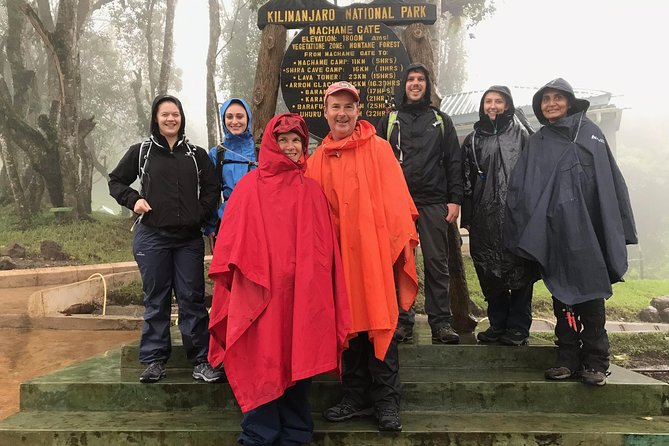
The first listed stop is Kilimanjaro National Park, with an estimated eight hours and no separate admission charge shown for that part of the itinerary. In practice, this is presented as the beginning of the Lemosho experience, where the route moves through rainforest and into the mountain’s quieter western reaches.
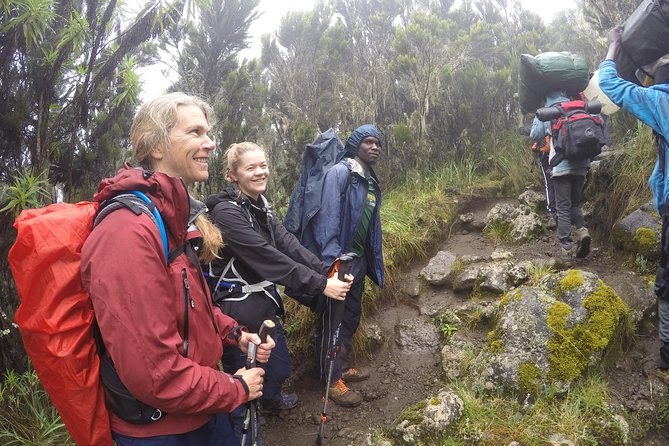
The forest section is one of Lemosho’s best features. You can expect a greener, more enclosed setting at the start, followed by changing vegetation and wider views as the trail gains height. The description emphasizes panoramic views on several sides of the mountain, so this is not simply a direct uphill walk with the summit always in front of you.
A full mountain day requires a steady pace. The included guide team matters here because you are not responsible for finding your way, organizing camp, preparing meals, or carrying the full load of supplies. Guides, cooks, and porters are included, along with four-season tents, mattresses, a mess tent with tables and chairs, and hot water for washing.
That support turns a hard trek into a more manageable one, but it does not make the route easy. The operator asks for moderate physical fitness, and an eight-hour mountain day is a useful warning. You should be comfortable walking for long periods and carrying your personal day pack.
The biggest weakness of this section is not the scenery. It is the lack of detail about the actual overnight location, elevation gain, walking distance, and camp arrangement. Ask for those specifics before booking. The description talks about the first three days on Lemosho, but the displayed itinerary gives you only one day at the national park.
The second day: Mount Kilimanjaro and the summit question
The second listed stop is Mount Kilimanjaro, again with an estimated eight-hour duration. Kilimanjaro National Park protects about 75,575 hectares and includes the world’s largest free-standing volcanic mass, as well as Africa’s highest mountain. That is the grand setting for the trip, but the schedule does not explain what you accomplish on this second day.
This matters because a normal summit attempt involves more than two eight-hour sightseeing stops. The description refers to acclimatization on the Shira Plateau and then to the Barafu route, which suggests a longer mountain program. Yet the supplied timing says two days, and the inclusions mention two nights of hotel accommodation in Moshi rather than a clearly stated number of nights camping on the mountain.
I would not book until the operator confirms the following in writing:
- The total number of days and nights on the mountain
- The starting elevation and daily camp elevations
- The location of each overnight camp
- The summit schedule and descent plan
- Whether the $2,700 price is for the full summit attempt or a shorter mountain outing
- The number of hotel nights before and after the trek
This is not a minor editing issue. It changes the physical challenge, the value of the price, what equipment you need, and the likelihood of successful acclimatization.
What the $2,700 price actually covers
At $2,700 per person, the cost is not just a guiding fee. It includes two nights of hotel accommodation in Moshi, overland transfers to Kilimanjaro International Airport, national park fees, camping fees, rescue fees, and 18 percent VAT on tour services.
On the mountain, the package includes three hot meals each day, treated and filtered drinking water, hot water for washing, a four-season tent, a sleeping mattress, and a dining tent with tables and chairs. You also receive the services of mountain guides, a cook, and porters.
The safety provisions are another important part of the value. An emergency first-aid kit, an oximeter, and an oxygen tank are included. These items do not remove altitude risk, but they show that the operator has built basic mountain support into the package rather than leaving you to arrange it separately.
Fair wages for the mountain crew, as approved by KPAP, are also included in the stated service. That is worth asking about in more detail, especially if responsible treatment of porters is important to you. A lower quote is not always a better deal if it depends on poor working conditions or hidden charges.
The price does not include flights, a Tanzanian visa, hotel meals other than breakfast, tips, alcohol, beverages, cigarettes, snacks, or other non-essential items. Tips deserve special attention. They are not included, and you should budget for them separately rather than treating the advertised price as your final expense.
The value looks reasonable if this is a full, properly scheduled Lemosho summit climb with the listed support. It looks much less attractive if the two-day duration is accurate, since the description does not provide enough time for the gradual acclimatization it promotes. Get the duration fixed before comparing this package with other operators.
A few more trips of this kind worth comparing:
- Private Kilimanjaro Hike 7 Day Lemosho Route
★ 5.0 · 60 reviews - Best Kilimanjaro hiking day trip tour with Kilinge Adventures
★ 4.5 · 54 reviews - #1. Best Kilimanjaro Day hike Tour-Machame Route-ISMANI
★ 4.2 · 47 reviews - Best Kilimanjaro Adventure 7 days Machame route Trekking
★ 5.0 · 42 reviews
The mountain crew and the human side of the climb
A Kilimanjaro climb depends heavily on the people supporting you. Sirikwa Travel includes guides, assistant guides, cooks, and porters, and the company’s strongest praise centers on how its team cares for climbers from arrival through departure.
Several accounts describe airport pickups, organized transfers, professional mountain staff, and supportive porters. Guides named Pail and Jyroi are praised in one account for helping a climber continue farther than expected. Other accounts describe Ole, Alfred, and Mary in connection with planning, airport reception, and personal attention.
Those names do not prove that the same people will lead your climb. Staff assignments can change, so ask who your lead guide will be and how many guides will accompany your group. Still, the pattern is useful: Sirikwa appears to place real emphasis on communication, personal care, and handling the practical details around the trek.
The group limit is 10 people. That is a sensible size for a mountain trip. It can keep the group from feeling anonymous while giving the company enough people to handle different walking speeds and support needs. Ask how many porters and guides are assigned to a group of your size, and ask how the company handles a climber who needs to turn back.
Food, water, tents, and daily comfort
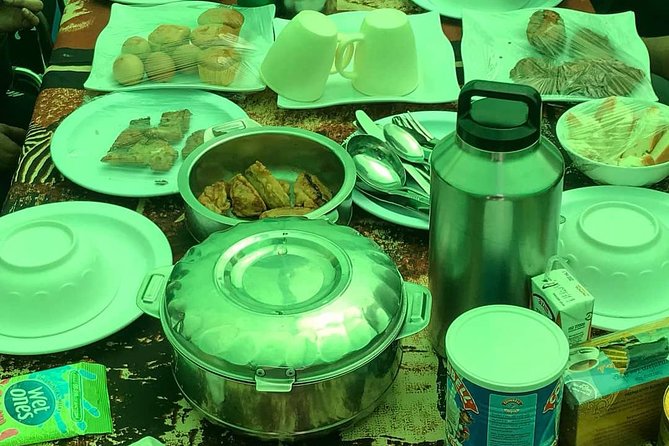
The included food arrangement is stronger than a bare-bones trek. You receive three hot meals daily while on the mountain, treated and filtered water throughout the trek, and hot water for washing. That does not mean hotel-style comfort, but it does mean the basic needs of a long day outside are covered.
The mess tent with tables and chairs is especially useful. After hours on the trail, having a sheltered place to eat and sit is more comfortable than eating inside your sleeping tent. A four-season tent and sleeping mattress are also provided, though you should ask whether you need to bring your own sleeping bag.
The equipment list does not mention clothing, trekking poles, headlamps, boots, personal medication, or sleeping bags. Do not assume those are supplied. The same applies to snacks and beverages, which are specifically excluded.
Because the route may involve changing conditions and higher elevations, packing should be handled carefully. The supplied information does not give a recommended equipment list, so request one from Sirikwa before departure.
Fitness, timing, and who will enjoy this
This is best for someone who wants a serious mountain challenge and prefers scenery and a quieter trail over the shortest possible route. The Lemosho description will appeal to you if rainforest, wilderness, broad views, and a gradual approach matter as much as reaching the summit.
You need moderate physical fitness, but that phrase is broad. It does not tell you the distance, elevation gain, steepness, or length of the summit day. Ask for the full route profile and be honest about your walking experience.
The experience is not a good match for someone seeking a quick two-day excursion to the top of Kilimanjaro. The schedule may be a data error, but until it is corrected, you cannot judge the physical demands accurately.
The cancellation policy is friendly if your plans change early. You can receive a full refund by cancelling at least 24 hours before the start time. Within 24 hours, the amount paid is not refunded, and changes made during that period are not accepted.
Should you book this Kilimanjaro trek?
I would consider Sirikwa Travel because the package includes the support that makes a Kilimanjaro climb practical: park fees, camping, meals, water, tents, transfers, safety supplies, and a staffed mountain crew. The company also has a strong record of praise for guide professionalism, porter support, airport coordination, and personal care.
But I would not pay until the schedule is corrected. A two-day Lemosho summit trek conflicts with the description of a route that uses three early days for acclimatization and then joins the Barafu route. If Sirikwa confirms that this is actually a longer climb and supplies a day-by-day elevation plan, the package could offer good value at $2,700.
Book it if you want Lemosho’s scenery, accept a demanding climb, and receive clear written answers about the real itinerary. Hold off if the operator cannot explain the two-day timing, the number of camping nights, and the summit plan.
FAQ
Where does the trek start?
The experience is based in Moshi, Tanzania, with the Lemosho route entering Kilimanjaro National Park.
How long is the experience?
The published duration is approximately two days, with an eight-hour stop listed on each day. The description also refers to a longer Lemosho climb and the first three days of acclimatization, so you should confirm the actual duration with Sirikwa Travel.
What is included in the price?
The $2,700 price includes two nights of hotel accommodation in Moshi, airport transfers, park entry fees, camping fees, rescue fees, VAT, tents, guides, cooks, porters, three hot meals daily on the mountain, treated and filtered water, hot washing water, a mess tent, a mattress, an emergency first-aid kit, an oximeter, and an oxygen tank.
Are flights included?
No. Flights are not included.
Is a Tanzanian visa included?
No. The visa is not included in the tour price.
Are tips included?
No. Tips for porters, guides, cooks, and assistant guides are excluded.
How large can the group be?
The activity allows a maximum of 10 people.
Can I cancel for a full refund?
Yes, if you cancel at least 24 hours before the experience start time. Cancellations within 24 hours are not refunded, and changes made within that period are not accepted.
Just added around Moshi
- Moshi: Lake Chala Tour: Hiking &/or Kayaking★ 4.5 · 3 reviews
- 3 Days Tanga Exclusive Beach Holiday★ 5.0 · 3 reviews
- Serengeti Wildebeest Migration.★ 5.0 · 3 reviews
- Chemka Hotpsrings E-Bike Day Trip★ 5.0 · 3 reviews
- Explore 1 day Ngorongoro Crater Budget Group Safari from Arusha★ 5.0 · 3 reviews
- Explore the 360° of Kilimanjaro★ 5.0 · 3 reviews
- Affordable Short Tanzania Safari (2 Days Camping Safari)★ 5.0 · 3 reviews
- Rongai Route 7 Days★ 5.0 · 3 reviews
Kilimanjaro Treks, compared.



8-Day Small-group Lemosho Kilimanjaro Summit Trekking
Read our review →


Climbing Kilimanjaro through 7 days Machame Route
Read our review →

Browse the lists this tour appears in