
Reviewed · KILIMANJARO TREKS
#1. Kilimanjaro 5-days hiking Marangu joining tour
The summit begins long before sunrise. This five-day Kilimanjaro hike follows the Marangu Route from Marangu Gate through rainforest, heathland, moorland, alpine desert, and finally the Arctic zone near Uhuru Peak. I like the route’s changing scenery, and I like that you sleep in huts rather than tents. Horombo Hut also gives you a useful night for acclimatization before the hardest section.
The main caution is cost. The advertised price is $675 per person, but National Park fees are not included. One booking account reported paying an additional $750 before hiking, so you should confirm the full total before committing. The summit day is also very long, with up to 15 hours of walking.
The staff support is a real strength. Guide Shedrack received special praise for his work, and the wider team, including cooks, porters, and waiters, helped with food, luggage, and high-altitude discomfort. That kind of care matters when the mountain stops feeling like a sightseeing trip and starts testing your legs, sleep, and judgment.
In This Review
- Key points before you book
- Why the Marangu Route works well in five days
- Day one: Marangu Gate to Mandara Hut
- Day two: Mandara Hut to Horombo Hut
- Day three: Horombo Hut to Kibo Hut
- Day four: Kibo Hut to Uhuru Peak and back to Horombo
- Day five: Horombo Hut to Marangu Gate
- What the $675 price really means
- Guides, porters, and the human side of the climb
- What to pack for a five-day hut trek
- Who should choose this Kilimanjaro trip?
- Should you book the Marangu Route?
- FAQ
- How long is the Kilimanjaro Marangu hiking tour?
- What elevation does the route reach?
- Where do you sleep during the hike?
- Are National Park fees included in the $675 price?
- What language does the guide speak?
- What is the longest hiking day?
- What equipment should you bring?
Key points before you book
- Five days on the Marangu Route: You pass from tropical rainforest to alpine desert and then the icy, high-altitude summit zone.
- Hut accommodation: You sleep at Mandara, Horombo, and Kibo huts instead of camping in a tent.
- Horombo is your acclimatization stop: The extra night at elevation gives you time to adjust before heading toward Kibo.
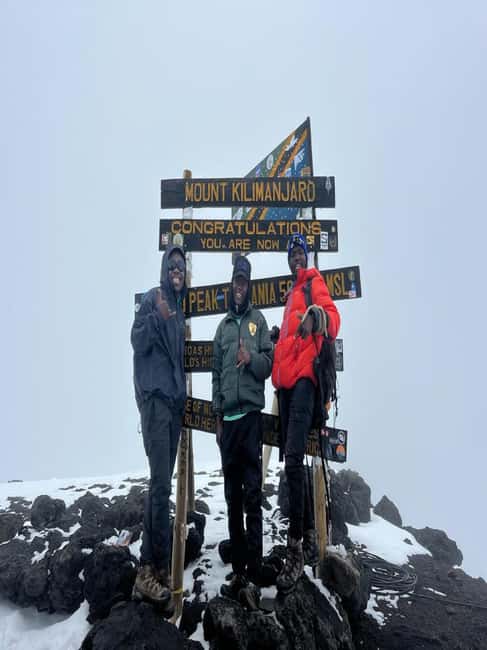
- The summit push begins around midnight: You climb to Gilman’s Point and continue to Uhuru Peak, at 5,895 meters.
- The price needs careful checking: The $675 rate excludes National Park fees, which may add a substantial amount.
- Strong staff support: Guide Shedrack and the wider crew are praised for practical help, including carrying luggage and assisting with altitude sickness.
Why the Marangu Route works well in five days
The Marangu Route is often called the hut route because accommodation is provided in mountain huts. That makes it appealing if you would rather sleep indoors than camp, though the huts do not turn the climb into a soft holiday. You still face steep ground, thin air, cold nights, and a summit day that lasts from midnight until well into the afternoon.
The route is scenic because the vegetation changes quickly. You begin in thick rainforest, move into heathland and moorland, cross a stark alpine desert, and then reach an Arctic summit zone. I like this steady change because every day feels different, and you can see the mountain’s climate zones unfold beneath your boots.
The five-day schedule is active rather than leisurely. Day three takes you to Kibo Hut, and day four combines the summit climb with a long descent to Horombo. That arrangement is efficient, but it leaves little spare time if you struggle with altitude or need extra rest.
More Kilimanjaro routes and climbs:
- 7 Days Kilimanjaro via Machame route affordable price
★ 5.0 · 110 reviews - Kilimanjaro Airport taxi to/from Moshi town/Arusha town
★ 5.0 · 60 reviews - 6 Days Climbing Mount Kilimanjaro Machame Route
★ 5.0 · 40 reviews
Day one: Marangu Gate to Mandara Hut
Your morning begins with a transfer from Moshi or Arusha to Marangu Gate. At the gate, you register before starting the hike, so do not treat the first morning as a casual late start. The route rises from about 1,870 meters to 2,720 meters.
The first 8 kilometers pass through rainforest, with roughly four to five hours of walking. This is a gentle introduction compared with the summit day, but the trail still sets the rhythm for the rest of the trip. Walk slowly, keep your daypack manageable, and avoid using up energy simply because the altitude still feels easy.
The forest is the most enclosed part of the route. You may spot monkeys and unusual plant life, and the thick greenery gives you a strong contrast with the bare upper slopes later in the week. You also pass waterfalls on the way toward Horombo, adding some welcome movement and sound to the early walking.
Mandara Hut is your first overnight stop. From here, you have the option of taking a short walk to Maundi Crater for wide views. I would consider this a good use of the afternoon if your guide says you have enough energy. If you are tired, eating, drinking, and resting may be wiser than collecting one more viewpoint.
Day two: Mandara Hut to Horombo Hut
Day two covers 12 kilometers and takes about six to seven hours. You leave the rainforest behind and enter heathland, with the route continuing through moorland toward Horombo Hut at about 3,720 meters.
This is where Kilimanjaro begins to feel like a high mountain rather than a forest hike. The vegetation becomes lower and more open, and you gain views toward Kibo and Mawenzi peaks. Those two volcanic forms give the route much of its drama, especially as the trail moves across the upper slopes.
Horombo is a lively overnight base, shared with other climbers. That can be enjoyable if you like hearing stories and comparing progress, though a busy hut may not provide the quiet some people want before the summit. Bring earplugs if you normally sleep lightly, but remember that your most important preparation is steady hydration and rest.
This night matters because it provides time at elevation before Kibo. I like that the schedule does not rush straight from the lower mountain to the summit attempt. Still, one acclimatization night cannot remove altitude risk. If you feel unwell, tell your guide early. Do not hide symptoms to protect your schedule.
Day three: Horombo Hut to Kibo Hut
The third day covers about 10 kilometers, with six to seven hours of hiking. You climb from 3,720 meters to 4,703 meters, leaving the heathland for the alpine desert.
The mood changes sharply here. Trees and most plant life fade away, and the route becomes broad, bare, and exposed. You pass the Last Water Point, an important marker because Kibo Hut is in a much drier zone. This is the point to check your water supply and make sure your clothing is ready for a cold night.
Kibo Peak dominates the views as you approach the hut. The walking is described as gradual, but the altitude makes ordinary effort feel harder. You may find that your pace drops and that conversation becomes less appealing. That is normal enough, but any serious symptoms need immediate attention from the guide.
At Kibo Hut, the goal is simple: eat, organize your summit gear, and sleep or rest as much as possible. The midnight start means you will not have a full normal night. Put your headlamp, gloves, jacket, water, and snacks where you can reach them without unpacking everything.
A few more trips of this kind worth comparing:
- 8 Days Kilimanjaro Hike via Lemosho Route
★ 5.0 · 39 reviews - 6 Days Machame Route Kilimanjaro Trekking
★ 5.0 · 13 reviews - 8-Day Small-group Lemosho Kilimanjaro Summit Trekking
★ 5.0 · 186 reviews - Mountain Kilimanjaro Day Hike
★ 5.0 · 102 reviews
Day four: Kibo Hut to Uhuru Peak and back to Horombo
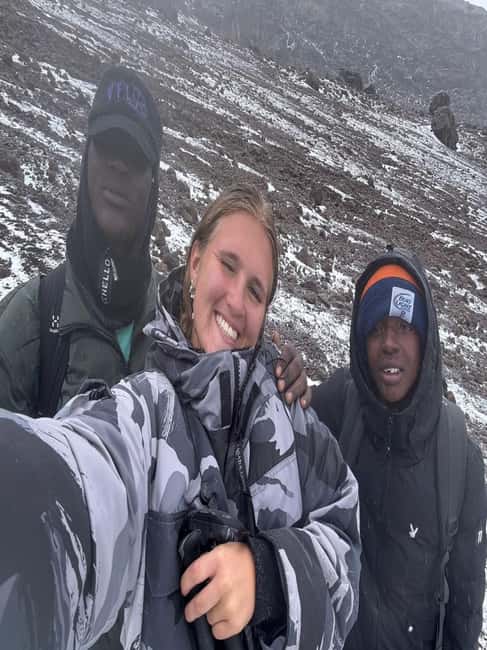
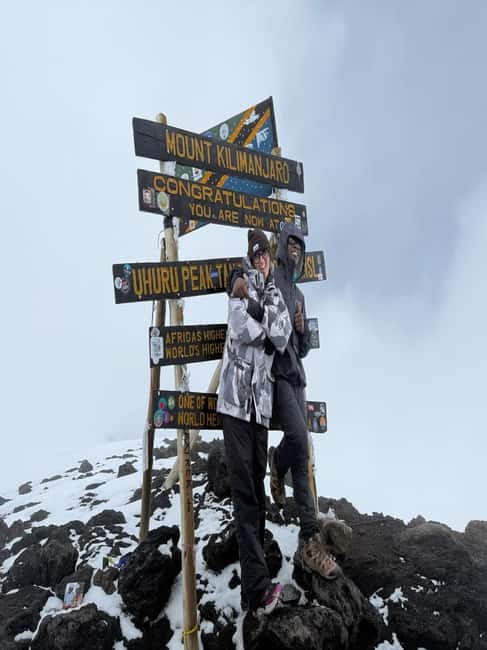
This is the day that decides the trip. You begin around midnight and walk under the stars toward the crater rim. The elevation rises from 4,703 meters to 5,895 meters, and the total distance reaches about 22 kilometers.
The first target is Gilman’s Point at 5,681 meters. Reaching it around sunrise gives you the chance to see the upper mountain in early light, but you should not mistake this point for the final summit. From Gilman’s Point, you continue along the crater rim to Uhuru Peak, the highest point in Africa.
The final stretch can feel slow. Cold, fatigue, and altitude all work against you, and the walk takes place after limited sleep. Follow your guide’s pace rather than trying to race. The practical help described from the crew is especially valuable here. If you feel sick, staff may help with your luggage, offer food, and advise you about medicine, but you must report symptoms clearly.
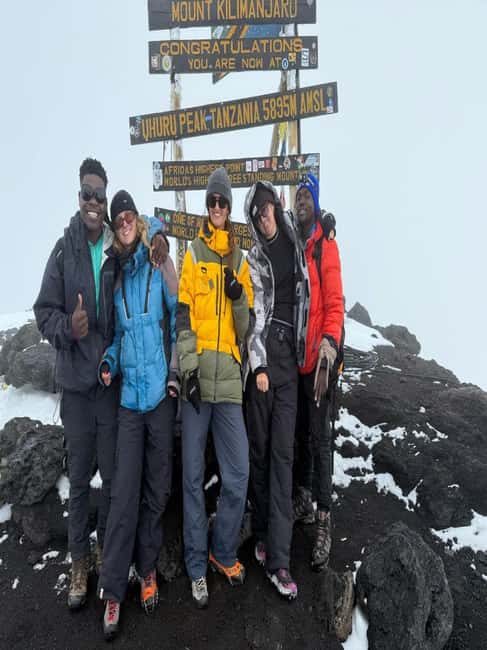
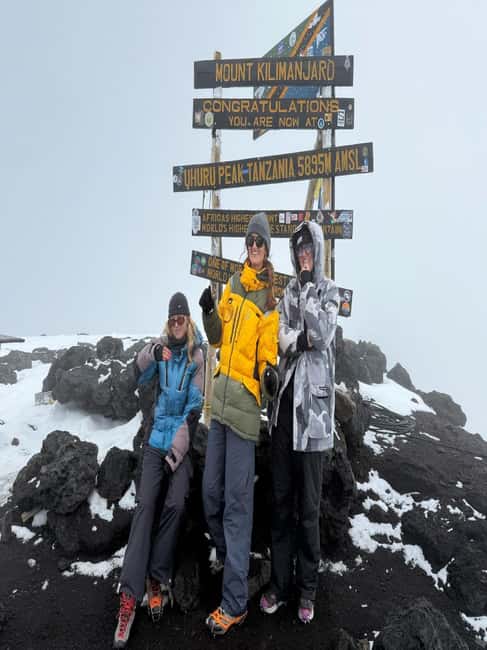
At Uhuru Peak, you can celebrate briefly and take in the achievement. Keep the pause sensible because the descent is still long. You return to Kibo Hut for lunch and a rest, then continue down to Horombo Hut. That second descent makes this a punishing day, even for a fit hiker.
The combination of summit climb, return to Kibo, and onward descent is the biggest drawback of the five-day plan. You gain a shorter overall trip, but you pay for it with a demanding summit schedule. If you have the option of adding more days for acclimatization, that may be worth considering, though this particular tour is fixed at five days.
Day five: Horombo Hut to Marangu Gate
The final day takes you from 3,720 meters back to Marangu Gate at 1,870 meters. You walk about 20 kilometers in five to seven hours, moving from heathland through rainforest.
After the strain of summit day, the descent can feel easier on your breathing, but it is still long. Tired knees and feet often become the main problem. Take care on the trail, keep drinking, and do not assume that reaching lower elevation means you can stop paying attention.
Returning through the rainforest gives the trip a satisfying visual finish. You began among dense green vegetation, crossed bare high ground, and now come back through the same lower zone with a new appreciation for the mountain’s scale.
At Marangu Gate, you receive your summit certificate before the transfer back to Moshi or Arusha. The included transportation makes this final stage straightforward, and you can finish with a well-earned celebration.
What the $675 price really means
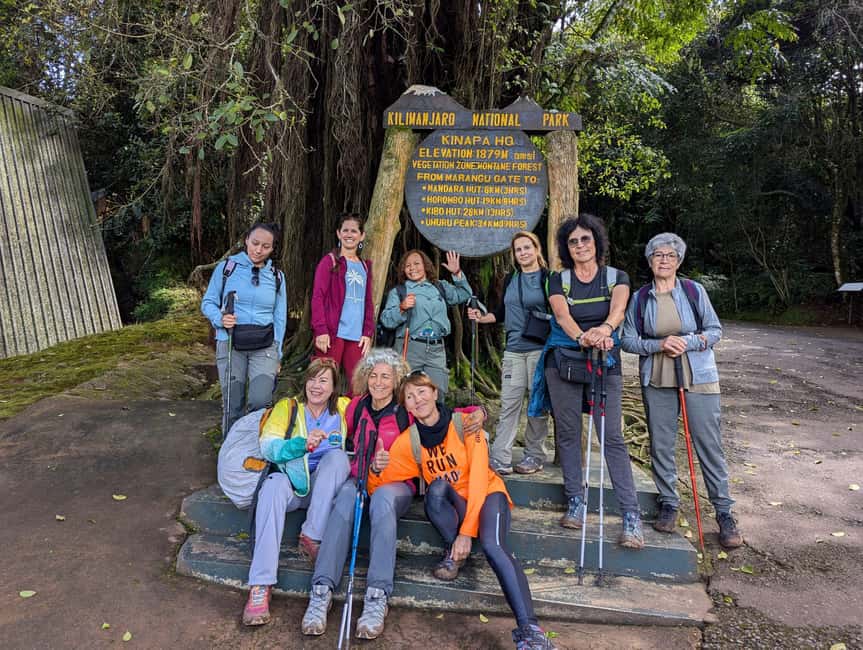
At first glance, $675 sounds competitive for a five-day Kilimanjaro climb. The package includes hut accommodation, meals listed in the schedule, drinking water, a professional English-speaking guide, transportation, a sleeping mattress, camping equipment, and a hotel-to-gate transfer from Moshi.
It also includes porters and cooking support in practical terms, since the crew is described as handling food and luggage assistance. One account specifically praised the waiter as well as the guide, which tells you that the quality of the whole mountain team matters here, not just the person leading the walk.
But the headline figure is not your full budget. National Park fees are excluded, and one recorded booking required an extra $750 before the hike began. Treat that amount as a warning to request a written total rather than assuming $675 covers the mountain portion.
Travel insurance is also excluded. You need to arrange it yourself, along with alcoholic drinks if you want them. The tour supplies drinking water, but you should still bring a power bank and personal snacks if those help you manage long hiking days.
The value is strongest if the final price is clear and the crew support is as good as described. The value is weaker if you book based only on the low starting rate and discover a large compulsory charge at the gate or before departure.
Guides, porters, and the human side of the climb
The most highly praised part of this trip is the staff. Guide Shedrack was singled out for excellent work, while the wider team was praised for being friendly, helpful, and available around the clock, including support from arrival at the Tanzanian airport.
That level of organization can make a major difference. A guide who monitors your pace and condition is useful, but practical help from cooks, porters, and waiters can matter just as much when you are cold, hungry, or struggling with altitude.
One account described staff carrying luggage, providing food, and offering advice about medicine after high-altitude sickness appeared. You should appreciate that support without treating it as a guarantee that every medical problem can be solved on the mountain. The guide needs accurate information from you, and serious symptoms should never be ignored.
The stated operating language is English. If you need detailed help with food, medication, or medical concerns, discuss that with the company before arrival.
What to pack for a five-day hut trek
The essential list is short, but each item has a job. Bring hiking shoes, a jacket, gloves, a sleeping bag, a flashlight, a daypack, trekking gear, and a power bank.
Your flashlight is particularly important because the summit attempt starts around midnight. Your gloves and jacket matter even more at Kibo and above, where the conditions are far colder than in the rainforest.
The tour includes a sleeping mattress, but a sleeping bag is not listed as included, so bring your own. The information also mentions camping equipment even though this route uses huts. Confirm exactly what equipment the company supplies, rather than assuming the phrase covers your personal sleeping kit.
Keep your daypack practical. You need access to water, warm layers, snacks, and your flashlight during the summit push. Your heavier luggage should be handled according to the company’s arrangements, but clarify what you carry personally before you start.
Who should choose this Kilimanjaro trip?
I would point this tour toward a fit hiker who wants a five-day schedule, prefers hut accommodation, and likes having a full support crew. The route offers major scenery without requiring you to carry every piece of camp equipment yourself.
It may also suit someone who values a fixed plan and included transport from Moshi or Arusha. The day-by-day structure is clear, and the changes in vegetation give you a strong sense of progress.
I would be more cautious if you are new to high-altitude hiking or want a relaxed summit schedule. Day four is long and begins after midnight, while the five-day format leaves limited room for adjustment. Ask about longer route options if acclimatization is your main concern, though they are not part of this package.
The tour’s rating is 4.8 from four submitted ratings, with three five-star scores and one four-star score. That is encouraging, but it is still a small sample. I would place more weight on confirming the total price, medical procedures, equipment, and guide arrangements before booking.
Should you book the Marangu Route?
Book it if you want the Marangu Route’s huts, a compact five-day schedule, and strong hands-on support from guides and porters. The changing zones, Maundi Crater option, views of Kibo and Mawenzi, and sunrise summit attempt offer plenty of memorable moments.
Do not book it without clarifying the National Park fee. The $675 starting price is not the complete cost, and an additional $750 was recorded before one hike. If that total still fits your budget, the organization and staff support could make this a good-value way to attempt Kilimanjaro.
My practical advice is simple: confirm the final price in writing, ask what the sleeping and camping equipment includes, and be honest with the guide about altitude symptoms. If you accept the tough summit day and prepare for cold conditions, Kilinge Adventures offers a well-supported route to Uhuru Peak.
FAQ
How long is the Kilimanjaro Marangu hiking tour?
The tour lasts five days, beginning and ending with transfers between Moshi or Arusha and Marangu Gate.
What elevation does the route reach?
The route reaches Uhuru Peak at 5,895 meters, or 19,341 feet.
Where do you sleep during the hike?
Accommodation is provided in mountain huts, including Mandara Hut, Horombo Hut, and Kibo Hut.
Are National Park fees included in the $675 price?
No. National Park fees are not included. One recorded booking required an additional $750 before the hike, so confirm the current amount before paying.
What language does the guide speak?
The listed tour language is English, and the package includes a professional English-speaking guide.
What is the longest hiking day?
Day four is the longest. It covers about 22 kilometers and takes approximately 11 to 15 hours, including the climb to Uhuru Peak and the descent to Horombo Hut.
What equipment should you bring?
Bring hiking shoes, a jacket, gloves, a sleeping bag, a flashlight, a daypack, trekking gear, and a power bank. A sleeping mattress is included, but a sleeping bag is not listed as provided.
Just added around Kilimanjaro
- 5 days Serengeti Wildebeest Migration Safari★ 5.0 · 3 reviews
- Tanzania Safari and Kilimanjaro Climb Multi-Day Experience★ 5.0 · 3 reviews
- 9 Days – Best of Tanzania Safari★ 5.0 · 4 reviews
- 7 Days Mountain Kilimanjaro climb Machame Route★ 5.0 · 4 reviews
- 8-Day Tanzania Migration Footsteps – Midrange★ 5.0 · 4 reviews
- 4 Days Lake Manyara National Park, Ngorongoro Crater , Serengeti National Park.★ 4.0 · 4 reviews
- 6 Days Mara River Crossing – The Great Migration★ 5.0 · 5 reviews
- 6- Day Adventure Lodge safari to see Migration★ 4.5 · 5 reviews
Kilimanjaro Treks, compared.



8-Day Small-group Lemosho Kilimanjaro Summit Trekking
Read our review →


Climbing Kilimanjaro through 7 days Machame Route
Read our review →

Browse the lists this tour appears in