
Reviewed · KILIMANJARO TREKS
5 Day Mount Kilimanjaro Climbing via Marangu Route
The mountain saves its hardest test for the final night. This five-day Kilimanjaro climb follows the Marangu Route, the only Kilimanjaro path with dormitory-style huts instead of tents. I like the gradual trail, the direct route, and the comfort of a bed and dining hall after long hours on foot. The catch is the short schedule, which leaves less time for your body to adjust to high altitude.
I also like that the $1,650 price includes park fees, private transport, hut accommodation, meals, equipment, and a climbing crew. Kentau Safaris earns especially warm praise for its attentive support, good food, and care for a solo woman on the mountain. Still, do not confuse the route’s gentle lower slopes with an easy summit: the midnight ascent is demanding, and the return uses the same trail.
In This Review
- Key points to know before you go
- Why the Marangu Route appeals to many hikers
- Day 1: Marangu Gate to Mandara Hut
- Day 2: Mandara to Horombo through heathland
- Day 3: Horombo to Kibo across the high saddle
- Day 4: The midnight summit push to Uhuru Peak
- Day 5: Horombo to Marangu Gate and Moshi
- What the $1,650 price includes
- Food, crew support, and group atmosphere
- Who should book this climb?
- FAQ
- How long is the Mount Kilimanjaro climb?
- Where does the climb start?
- Where does the climb end?
- What time does the experience start?
- Does the climb use tents?
- Is a sleeping bag supplied?
- Are meals included?
- Are park fees and taxes included?
- Is the crew tip included?
- How many people can join the climb?
- Should you book the five-day Marangu Route?
Key points to know before you go
- Huts replace tents: You sleep in bunk rooms at Mandara, Horombo, and Kibo Huts, with mattresses and pillows supplied.
- The route takes five days: That keeps the price and schedule reasonable, but gives you limited acclimatization time.
- Summit night starts around midnight: Expect a long, cold push from Kibo Hut to Uhuru Peak at 5,895 meters.
- Rainforest footing can be slippery: Gaiters and trekking poles are especially useful on the first and last days.
- Mawenzi adds drama: You get striking views of the jagged Mawenzi peak from the heathland and the saddle.
- The crew is a major part of the experience: Kentau Safaris supplies guides, cooks, porters, and safety equipment, with strong praise for the team’s care and meals.
Why the Marangu Route appeals to many hikers
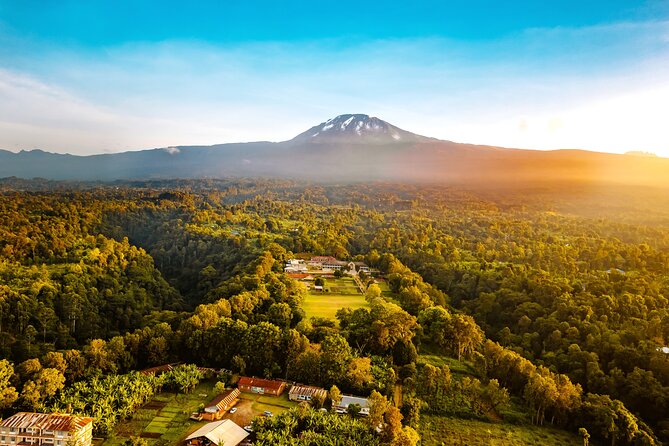
The Marangu Route approaches Kilimanjaro from the southeast and follows a clear, established path. Its nickname, the Coca-Cola Route, reflects its popularity and relatively straightforward walking compared with routes that demand more complicated camping arrangements.
The main practical advantage is simple: you sleep indoors. Mandara and Kibo Huts each have 60 bunk beds, while Horombo Hut has 120. Mattresses and pillows are supplied, but you still need a sleeping bag. Dining halls give you a place to eat and organize yourself, and the basic washrooms are more convenient at the lower huts than at Kibo.
I see this as a good choice if a tent-based climb does not appeal to you. You still need to carry personal gear and cope with cold, mud, fatigue, and thin air, but you avoid putting up camp at the end of each day.
The route also has a gradual slope and a direct trail. That helps with navigation and makes the walking feel manageable at first. The problem is the five-day timing. A gradual trail does not remove the effects of altitude, and the schedule gives your body less time to adjust than longer versions of the route.
There is another trade-off. You ascend and descend along the same path, so you do not get a new route each day on the way down. The upper mountain still delivers powerful scenery, especially around Mawenzi, Kibo, the crater rim, and sunrise, but Marangu is generally less varied in scenery than other Kilimanjaro options.
More Kilimanjaro routes and climbs:
- Kilimanjaro climb by Lemosho Route (7-day)
★ 5.0 · 651 reviews - Kilimanjaro climb, Machame Route (7-day)
★ 5.0 · 262 reviews - Kilimanjaro Climbing Lemosho Route 8 Days.
★ 5.0 · 186 reviews
Day 1: Marangu Gate to Mandara Hut
Your climb begins with a roughly one-hour drive from Moshi to the village of Marangu and the Kilimanjaro National Park Gate. The start time is listed as 12:00 a.m., but the day’s actual hiking follows the gate and permit process, so confirm the precise pickup arrangement with Kentau Safaris before setting out.
The gate can feel busy as climbing crews organize permits and supplies. This waiting period is part of the mountain routine, not wasted time. You get to see how much preparation goes into sending guides, cooks, porters, and hikers uphill.
From the gate at about 1,830 meters, the trail climbs through rainforest to Mandara Hut at about 2,740 meters. The walk takes around five hours. Expect wet ground, muddy patches, and slippery sections, especially if the weather has been damp. Gaiters and trekking poles are not decorative extras here. They help keep your trousers and boots cleaner and give you better balance.
Your guide points out local plants, wildlife, giant trees, and the changing vegetation. This first stretch is not about dramatic summit views. It is about settling into the pace, learning how the crew works, and noticing the forest gradually thin as you gain height.
Mandara has bunk beds, mattresses, pillows, a communal dining hall, and basic facilities. The hut is a real comfort after the forest walk, but it is still shared accommodation. Bring a sleeping bag, warm layers, and a small headlamp so you can manage your bunk without disturbing the room.
Day 2: Mandara to Horombo through heathland
After breakfast, you leave the rainforest behind and climb from about 2,740 meters to Horombo Hut at roughly 3,690 meters. The walking time is about seven hours, making this the longest regular ascent day before summit night.
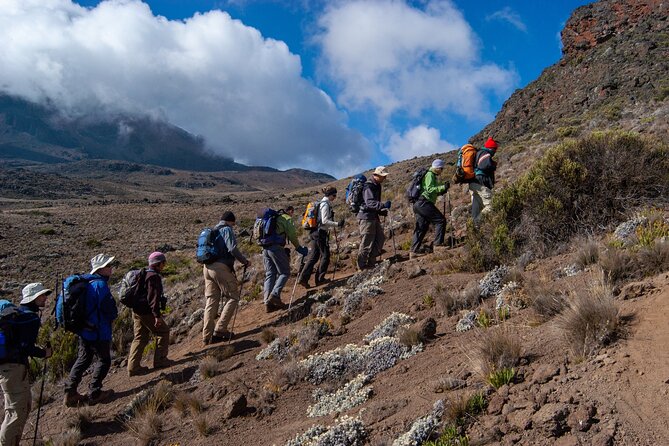
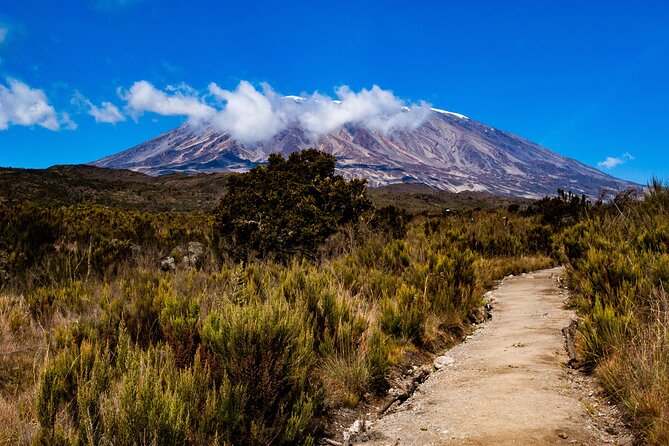
The vegetation changes quickly. Forest gives way to heathland, with giant lobelias and groundsels providing the memorable plant life. Higher up, open moorland takes over, with low shrubs and wide views. This is where the route begins to feel like a high mountain trek rather than a forest hike.
A lunch stop offers views toward Mawenzi, the sharply formed volcanic peak that gives the area much of its visual character. Take your time here. The second day is a good place to practice the slow walking rhythm you will need later. Your goal is not to win the trail. It is to arrive with enough energy to continue.
Horombo Hut sits beneath the Kibo summit area, and temperatures drop noticeably by late afternoon. The hut has 120 bunk beds, making it larger than Mandara or Kibo. The communal dining room gives you a warm place to eat, but the sleeping arrangements remain basic and shared.
I would treat this evening as a gear check. Dry your socks if possible, refill water as directed by your crew, and make sure your summit clothing is easy to reach. The next day goes higher, and the following night begins the hardest section of the climb.
Day 3: Horombo to Kibo across the high saddle
Day three covers about six hours, taking you from Horombo at 3,690 meters to Kibo Hut at approximately 4,695 meters. The trail leaves the remaining heathland and enters a broad, stark area between Mawenzi and Kibo.
The vegetation fades into what feels like a moonscape. The saddle connecting the two volcanic peaks is surprisingly broad, so the walking can seem exposed and repetitive. This is a day for patience. The summit route ahead remains visible, which is both motivating and slightly intimidating.
Lunch comes on the saddle, with time to look at the climb toward Kibo. That view is useful because it helps you understand what the night will bring. The summit push is not a short stroll from the hut. You will climb through steep switchbacks, heavy scree, and possibly snow in darkness and cold.
Kibo Hut has 60 bunk beds, mattresses, and pillows, but its facilities are more basic. Expect long-drop toilets and buckets of water rather than the better facilities found lower down. The hut’s simplicity matters because you spend only a short period here before the summit attempt.
The schedule calls for an early bedtime, though excitement and altitude can make sleep difficult. Keep your summit clothes, snacks, water, and headlamp ready. You do not want to unpack your whole bag when the wake-up call comes.
A few more trips of this kind worth comparing:
- 5 Days Camping Tarangire, Serengeti & Ngorongoro crater & Visiting Maasai
★ 5.0 · 58 reviews - 5-Day Majestic Tanzania Safari – High End All Inclusive
★ 5.0 · 44 reviews - 5 Day Mid range Tanzania Safari
★ 5.0 · 34 reviews - 5 days Tanzania Camping Safari
★ 5.0 · 29 reviews
Day 4: The midnight summit push to Uhuru Peak
This is the day that defines the climb. The start comes between midnight and 2 a.m., followed by the ascent from Kibo Hut at 4,695 meters to the summit at 5,895 meters. After reaching the top, you descend to Horombo Hut at 3,690 meters.
The first section is slow and steep. You climb in switchbacks over loose scree, trying to keep warm and maintain a steady rhythm. The supplied safety equipment and the experience of the climbing crew matter most here. Guide support is not just pleasant company. It helps you remain focused when fatigue and altitude start to narrow your attention.
The first major goal is Gillman’s Point on the crater rim. From there, a short rest can come with an extraordinary sunrise. Some faster hikers may see sunrise from Uhuru Peak, but you should not rush simply to match someone else’s timing. The summit is a personal effort, and preserving your strength matters.
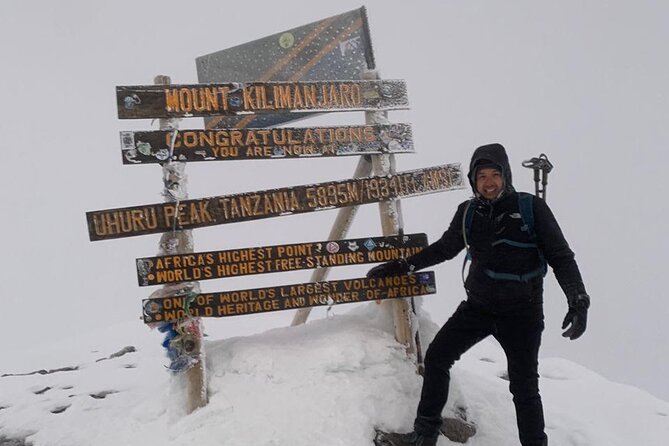
From Gillman’s Point, the route continues around the crater rim toward Uhuru Peak, the highest point at 5,895 meters. The information supplied for this climb describes the summit section as the most mentally and physically difficult part, and that is the right way to prepare for it. You may face cold, scree, possible snow, thin air, and a long descent still to come.
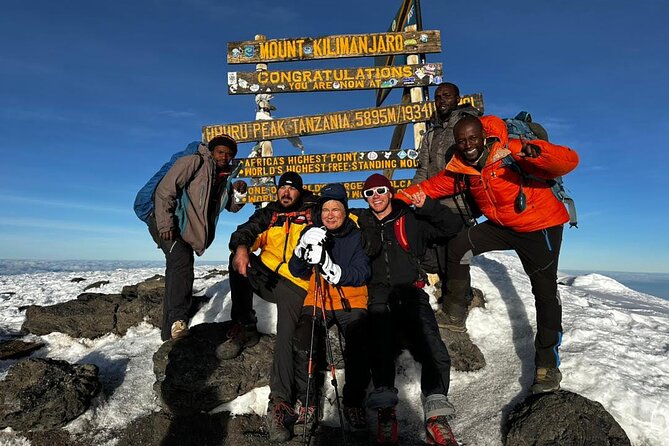
Reaching the top brings a strong sense of achievement. One solo woman specifically credited the Kentau Safaris team with helping her feel safe and comfortable while climbing with a male support crew. That does not make the mountain risk-free, but it does show why the quality and attitude of your crew are central to this trip.
After the summit, you descend to Kibo Hut and continue down to Horombo. The full day is listed at about seven hours, though summit-day timing can feel much longer because the effort begins overnight and includes a major descent. Eat, drink, and follow your guide’s instructions. The summit photograph is only one small part of this day.
Day 5: Horombo to Marangu Gate and Moshi
After breakfast and a ceremony of appreciation with the crew, you begin the descent from Horombo to the Marangu Gate. The walk takes about six hours and passes through Mandara Hut, where you stop for lunch.
This final day can surprise you. Going downhill sounds easy after the summit, but tired legs, steep sections, and wet ground create their own problems. As you drop into warmer conditions, the trail becomes wetter, muddier, and steeper. Pack gaiters and trekking poles where you can reach them. You may have thought you were finished with them after day one.
You say goodbye to the guides, cooks, and porters at the lower section, so keep cash ready for tipping. Crew tips are not included in the $1,650 price. After reaching the park gate, you receive your summit certificate and take a vehicle back to your Moshi hotel, a drive of about 45 minutes.
That return ride is a welcome change from walking, but the day is not merely a transfer. It gives you time to think back over the climb, from rainforest mud to the stark saddle and the cold summit night.
What the $1,650 price includes
At $1,650 per person, this is not a low-cost day hike, but it covers many of the expensive and necessary parts of a Kilimanjaro climb. Included are park fees and taxes, private transport, trailhead transfer, hut accommodation, hiking and safety equipment, and the climbing crew.
Meals are also included: four dinners, five lunches, and four breakfasts. The food received strong praise, and one group found the meals good enough to add real pleasure to the climb. That matters on a demanding trek. A hot, dependable meal gives you more than calories. It gives your day a clear ending.
The price does not include crew tips, visas, or internal and international flights. You should budget separately for those items. The crew tip deserves special attention because guides, cooks, and porters are part of the service that carries the trip from a basic route plan to a supported mountain climb.
Private transportation is another useful inclusion. You are not left to arrange your own ride between Moshi and the park gate, and the return to Moshi is handled after you finish. The maximum group size is 15 people, which is large enough for a social atmosphere but still limited compared with a mass departure.
Food, crew support, and group atmosphere
Kentau Safaris receives its strongest praise for organization and personal support. The team handled last-minute planning, answered requests and questions, and made the climb enjoyable for a group of friends. That flexibility is useful if your preparation time is short.
The climbing crew includes guides, cooks, and porters. The guides are described as experienced and attentive, while the food is repeatedly praised. No guide names are provided, so you should ask for the assigned guide’s details before departure if that matters to you.
A group of up to 15 people can create friendships during long walking days and shared meals. One person described reaching the top as a special achievement and making good friends along the way. If you prefer complete solitude, this is not the right setup. If you like encouragement and company, the group structure can add a lot.
The strongest practical signal is the report from a solo woman who felt safe and comfortable with the support team. You should still ask questions about crew roles, equipment, and emergency procedures before you go, but the available information points to a provider that takes team support seriously.
Who should book this climb?
I would recommend this route to a fit hiker who wants the structure of a guided climb and prefers huts to tents. It suits you if communal sleeping rooms are acceptable, you like a clear trail, and you want to keep the trip to five days.
It is also a sensible choice for a first Kilimanjaro attempt if you understand the altitude issue. The lower trail is gradual, but the short schedule makes acclimatization harder. You need a moderate level of physical fitness, and you should be ready for long days, cold temperatures, wet footing, and a midnight summit start.
I would hesitate if you want the best possible acclimatization schedule or a different descent route. The five-day format is efficient, but it is not the most forgiving. I would also hesitate if shared huts, buckets of water, and long-drop toilets sound miserable to you.
Before booking, confirm the exact equipment supplied, your pickup time in Moshi, and how the crew handles the summit schedule. The advertised package includes hiking and safety equipment, but personal clothing, footwear, gaiters, trekking poles, and a sleeping bag remain important parts of your own kit.
Cancellation is flexible up to 24 hours before the local start time, with a full refund. Inside that window, the payment is not refunded and changes are not accepted.
FAQ
How long is the Mount Kilimanjaro climb?
The experience lasts approximately five days.
Where does the climb start?
It starts in Moshi, Tanzania, with transport to the Kilimanjaro National Park Gate near the village of Marangu.
Where does the climb end?
The activity ends back at the Moshi meeting point after transport from the Marangu Park Gate.
What time does the experience start?
The listed start time is 12:00 a.m. The summit-day hiking begins between midnight and 2 a.m.
Does the climb use tents?
No. The Marangu Route uses dormitory-style mountain huts. Mandara and Kibo Huts each have 60 bunk beds, and Horombo Hut has 120.
Is a sleeping bag supplied?
No. Mattresses and pillows are supplied at the huts, but you still need a sleeping bag.
Are meals included?
Yes. The package includes four dinners, five lunches, and four breakfasts.
Are park fees and taxes included?
Yes. All fees and taxes are included in the price.
Is the crew tip included?
No. Tips for the guides, cooks, and porters are not included.
How many people can join the climb?
The maximum group size is 15 people.
Should you book the five-day Marangu Route?
Book it if hut accommodation, direct walking, organized support, and a $1,650 all-in climb package matter more to you than a longer acclimatization schedule or changing scenery on the descent.
The route gives you a gentle start, striking views of Mawenzi and Kibo, a proper summit attempt, and the practical comfort of sleeping indoors. Kentau Safaris adds value through included transport, meals, equipment, and a crew praised for care and professionalism.
Just respect the hard part. The summit night is cold, steep, tiring, and high. If you prepare for that reality, pack for mud and cold, and accept basic shared facilities, this can be a strong-value way to take on Kilimanjaro.
Just added around Moshi
- Moshi: Lake Chala Tour: Hiking &/or Kayaking★ 4.5 · 3 reviews
- 3 Days Tanga Exclusive Beach Holiday★ 5.0 · 3 reviews
- Serengeti Wildebeest Migration.★ 5.0 · 3 reviews
- Chemka Hotpsrings E-Bike Day Trip★ 5.0 · 3 reviews
- Explore 1 day Ngorongoro Crater Budget Group Safari from Arusha★ 5.0 · 3 reviews
- Explore the 360° of Kilimanjaro★ 5.0 · 3 reviews
- Affordable Short Tanzania Safari (2 Days Camping Safari)★ 5.0 · 3 reviews
- Rongai Route 7 Days★ 5.0 · 3 reviews
Kilimanjaro Treks, compared.



8-Day Small-group Lemosho Kilimanjaro Summit Trekking
Read our review →


Climbing Kilimanjaro through 7 days Machame Route
Read our review →

Browse the lists this tour appears in