
Reviewed · KILIMANJARO TREKS
5 Days Marangu route Climbing Mt. Kilimanjaro
Africa’s highest summit demands steady feet. This five-day Marangu Route climb gives you a direct, well-organized way to tackle Kilimanjaro, with hut accommodation, meals, porters, a professional mountain crew, and transport from Moshi or Kilimanjaro International Airport. I like the clear day-by-day plan and the fact that park fees, rescue fees, food, water, and mountain staff are included. I also like the support from guides such as Bakari, who is praised for patience, care, cheerful encouragement, and clear explanations.
The main concern is the schedule. Five days is a short time for reaching high altitude, and the climb from Kibo Hut to Uhuru Peak is the hardest section by far. You need strong fitness, the right clothing, and a willingness to walk slowly. The price is $2,330 per person, which is substantial, but it covers many major costs that can add up quickly on a Kilimanjaro trip.
In This Review
- Key points at a glance
- Why the Marangu Route is a practical Kilimanjaro choice
- Moshi preparation and the first forest walk
- Day two from Mandara Hut to Horombo
- Day three across the Kilimanjaro saddle
- The midnight climb to Uhuru Peak
- The long descent through forest to Marangu Gate
- The guides, porters, cook, and safety setup
- What $2,330 buys you
- Who should book this climb
- Should you book the five-day Marangu Route?
- FAQ
- Where does the climb begin?
- What time does the experience start?
- How many people can join the group?
- How many days does the climb take?
- Where do you sleep on the mountain?
- Are meals and drinking water included?
- Is travel insurance included?
Key points at a glance
- Maundi Crater on day one: A useful side trip from Mandara Hut with views toward northern Tanzania and Kenya.
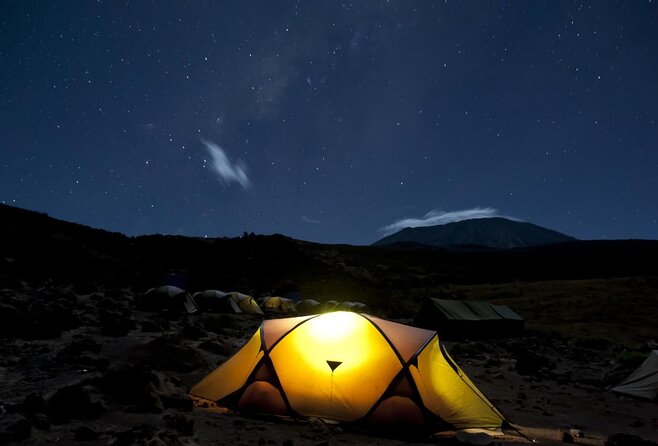
- Hut-based climbing: You sleep in mountain huts rather than tents, a practical feature of the Marangu Route.
- A sharp altitude gain: The route rises from 1,860 meters to the summit zone in only a few days.
- Professional mountain crew: Guides, a cook, and porters are included, along with emergency equipment and oxygen.
- Difficult summit night: You start between midnight and 2 am, using a headlamp in cold, steep conditions.
- Small maximum group: The group is limited to 15 people, giving the climb a more manageable feel.
Why the Marangu Route is a practical Kilimanjaro choice
The Marangu Route is often called the Coca-Cola Route, but there is nothing soft about it. It is a serious mountain climb with long days, thin air, cold temperatures, and a demanding summit night. Its appeal is that you sleep in huts and follow a well-defined path through several distinct habitats.
This five-day version begins in Moshi, Tanzania. Kilisa Tours & Safaris provides private transport to and from Kilimanjaro International Airport, two nights of accommodation in Moshi, and transport to the park gate. The stated meeting time is 8:30 am, so you have an early start for the first transfer and briefing.
I appreciate the practical inclusions here. Park entry fees, hut fees, rescue fees, government taxes, and 18 percent VAT are covered. You also receive three hot meals a day on the mountain, treated and filtered drinking water, hot water for washing, an emergency first-aid kit, portable oxygen tanks, and an oxygen meter.
That list matters. A low headline price can look attractive until you add park charges, food, staff, and rescue cover. At $2,330, this is not a budget climb, but the package includes the main operating costs and a full mountain team.
More Kilimanjaro routes and climbs:
- Kilimanjaro climb by Lemosho Route (7-day)
★ 5.0 · 651 reviews - Kilimanjaro climb, Machame Route (7-day)
★ 5.0 · 262 reviews - Kilimanjaro Climbing Lemosho Route 8 Days.
★ 5.0 · 186 reviews
Moshi preparation and the first forest walk
Your climb begins after breakfast and a briefing, followed by about an hour of driving to the Kilimanjaro National Park Gate. Registration takes place there before you start walking through montane forest toward Mandara Hut.
The first day covers about 8 kilometers and takes roughly three to four hours. You climb from 1,860 meters to 2,700 meters, which gives you a first taste of altitude without immediately throwing you into the hardest conditions.
The forest is one of the most enjoyable parts of the route. Look for tall eucalyptus trees, bird life, and colobus monkeys. The path is shaded compared with the higher sections, and the change from ordinary road travel to a steady mountain walk begins quickly.
A side trip to Maundi Crater is especially worthwhile if your energy and timing allow. It offers views toward northern Tanzania and Kenya, helping you understand the broad setting of the mountain. This is a good day to keep your pace calm. You are not trying to prove anything on day one.
Lunch and dinner are included, noted in the schedule as LD. The mountain crew prepares three hot meals each day while you are on the route, which is a welcome comfort after walking.
Day two from Mandara Hut to Horombo
Day two leaves the rainforest behind and enters open moorland. You walk from 2,700 meters to 3,700 meters, covering around 12 kilometers in five to six hours.
This is where the mountain begins to feel more exposed. Views open toward Mawenzi and Kibo, two of Kilimanjaro’s major peaks. Giant lobelias and groundsels give the moorland an unusual appearance, a sharp change from the forest below.
You may begin to notice altitude effects on this day. The best approach is simple: walk slowly, drink the treated water provided, eat even if your appetite drops, and tell your guide if you feel unwell. The guides are there to monitor your progress, not just to lead the way.
The schedule includes breakfast, lunch, and dinner. You sleep at Horombo Hut, where the higher elevation gives you a useful test of how your body is responding. The distance is not extreme by ordinary hiking standards, but the altitude makes every uphill section harder.
Day three across the Kilimanjaro saddle
Day three takes you from Horombo Hut toward the Kibo area, rising from 3,700 meters to about 4,700 meters. The walk is around 9 kilometers and lasts five to six hours.
You pass the last watering point and move onto the saddle between Mawenzi and Kibo. At first, you cross upper heathland. Then the vegetation fades into alpine desert and what the itinerary calls a moonscape. It is a spare, stark section of the climb, with fewer plants and a greater sense of exposure.
This day is less about distance and more about preparation. You need to reach the high hut, eat dinner, rest, and organize your summit clothing before the night climb. Keep your daypack sensible. You will need warm layers, water, snacks if you use them, a headlamp or flashlight, and any personal essentials.
The high camp is not the place to discover that your gloves are too thin or your headlamp has weak batteries. The supplied information specifically warns that the summit climb is very cold and starts in darkness, so pack with that section in mind.
A few more trips of this kind worth comparing:
- 5 Days Camping Tarangire, Serengeti & Ngorongoro crater & Visiting Maasai
★ 5.0 · 58 reviews - 5-Day Majestic Tanzania Safari – High End All Inclusive
★ 5.0 · 44 reviews - 5 Day Mid range Tanzania Safari
★ 5.0 · 34 reviews - 5 days Tanzania Camping Safari
★ 5.0 · 29 reviews
The midnight climb to Uhuru Peak
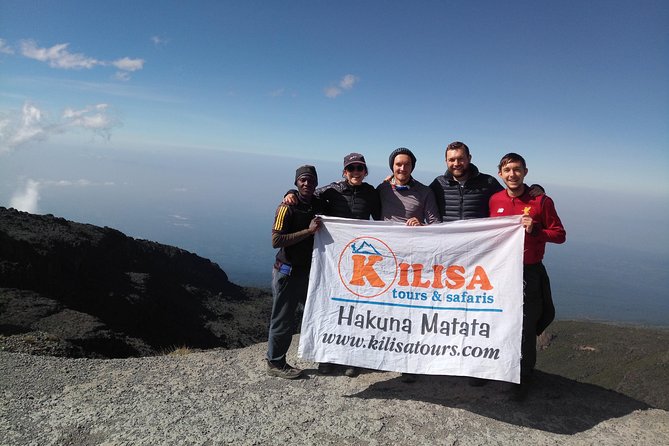
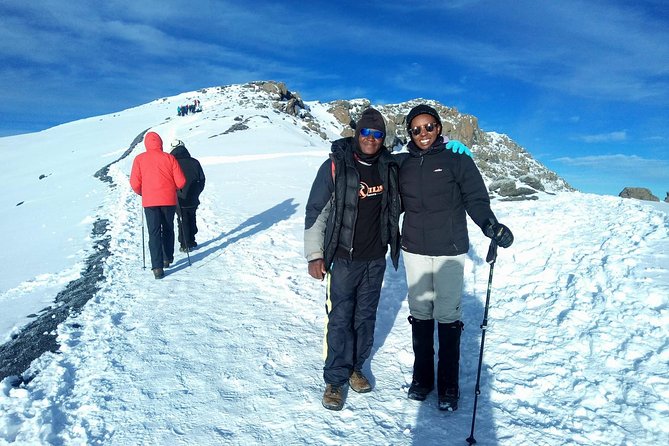
The summit attempt begins very early, between midnight and 2 am. This is the most difficult part of the trek. You climb steep switchbacks over heavy scree or snow toward Gilman’s Point on the crater rim, then continue toward Uhuru Peak, the highest point in Africa.
Your headlamp or flashlight is essential. The darkness hides the full scale of the climb, but it also means you focus on the next few steps. The cold lasts until you begin descending, so you need all your warm layers ready before leaving the hut.
The instructions emphasize pole pole, meaning slowly. That advice is not decoration. A measured pace helps you conserve energy and gives your body the best chance to cope with the altitude. The climb includes many switchbacks, and an optimistic attitude matters because the summit push can feel long.
After reaching the summit area, you descend and stop at Kibo for lunch and rest before continuing down to Horombo Hut. This makes day four an extremely long day, combining a night start, the summit, a major descent, and another section of walking afterward.
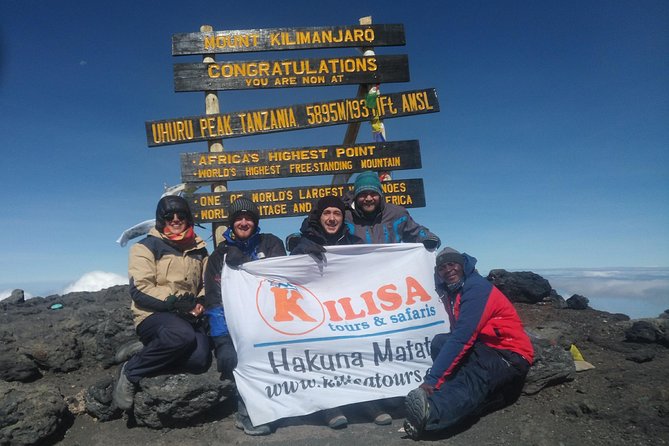
I would treat the summit photograph as a pleasant extra, not the main goal. The serious priorities are safety, steady pacing, communication with your guide, and getting back down in good condition. Kilisa includes portable oxygen tanks, an oxygen meter, and rescue fees, but these provisions do not remove the need for honest self-assessment.
The long descent through forest to Marangu Gate
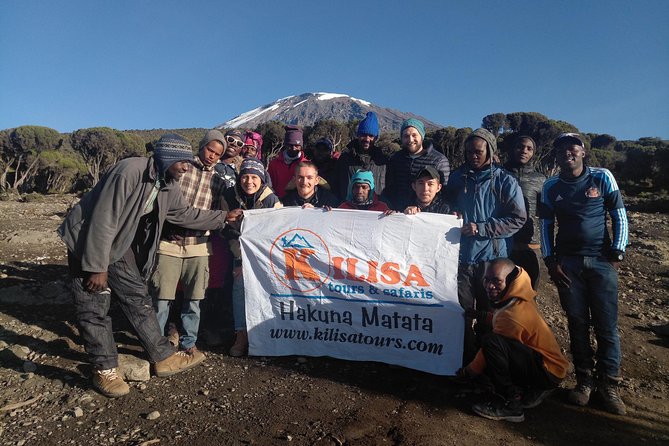
After breakfast on day five, you descend from Horombo through moorland toward Mandara Hut, then continue through the forest to the Marangu National Park Gate.
The route covers about 20 kilometers and takes four to five hours. It is a long final walk, but the lower altitude usually makes breathing easier. The forest can be wet and muddy, so gaiters and trekking poles are useful. The advice to keep rain gear and warmer clothing handy is sensible even when you expect to wear shorts and a T-shirt at lower elevations.
A vehicle waits at Marangu Gate for the roughly one-hour drive back to your Moshi hotel. Breakfast is included on this final day. With two nights of Moshi accommodation included in the overall package, the return transfer is a useful finish rather than another transport problem for you to solve.
The guides, porters, cook, and safety setup
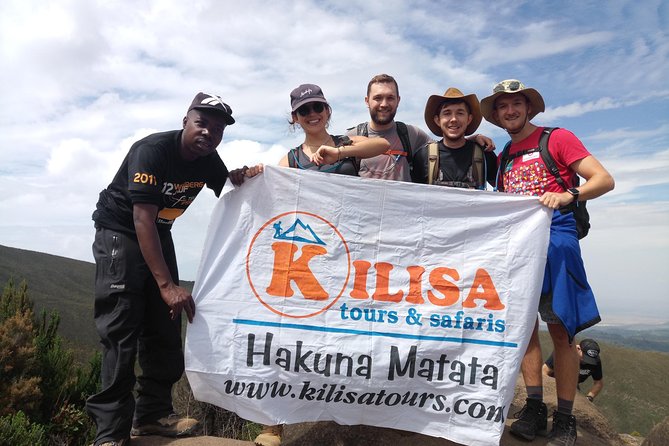
A Kilimanjaro climb depends heavily on the mountain crew. This package includes professional guides, a cook, and porters. The strongest praise is directed toward Bakari, described as professional, kind, patient, cheerful, helpful, and sensitive to the needs of the group.
That combination matters more than grand promises. A guide who explains what is happening, watches your pace, and keeps morale steady can make a hard day feel manageable. One customer also describes strong communication before arrival, including detailed information about Tanzania and quick replies to repeated questions.
Kilisa also lists private airport transport, airport-to-hotel transfers, gate transport, rescue fees, first-aid equipment, and portable oxygen. These are practical signs that the operator has thought about more than the walk itself. Still, you should buy travel insurance because it is not included.
Tips for guides, porters, and the cook are also separate. You should budget for them before arrival. The exact amount is not provided here, so ask Kilisa for current tipping guidance when you book.
What $2,330 buys you
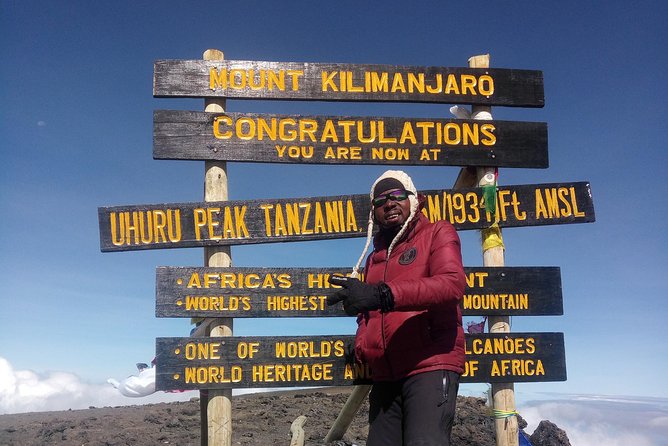
The $2,330 price includes two nights in Moshi, airport transfers, transport to and from the mountain, park and hut fees, rescue fees, taxes, staff, food, water, and washing water. That is a broad package.
The value is strongest for you if you want one company to manage the moving parts. You do not need to arrange each permit, gate transfer, meal, or porter service separately. The included safety equipment also adds practical reassurance.
The price does not include flights, insurance, or tips. Those costs can be significant, so calculate the full trip budget rather than treating $2,330 as the final amount. The maximum group size is 15, which is small enough to avoid the feel of a huge expedition, though your actual group may be smaller.
Who should book this climb
This experience suits you if you have strong physical fitness, can manage several consecutive walking days, and accept that the summit day will be cold, dark, and exhausting. You do not need to be a technical climber based on the information provided, but you do need to prepare seriously for altitude and long hours on foot.
The Marangu Route is a good fit if hut accommodation appeals to you more than camping. It also works well if you want airport pickup, Moshi accommodation, meals, and a mountain crew bundled into one price.
I would be cautious about booking the five-day version if you are not already comfortable with strenuous hiking. The schedule reaches high altitude quickly, and there is little spare time if you struggle with the ascent. The tour information requires a strong fitness level, and that should be treated as a real condition, not a polite suggestion.
The experience has a maximum of 15 people and offers mobile ticketing. Confirmation is provided at booking, and the activity is subject to weather. If poor weather causes cancellation, you are offered another date or a full refund. Normal cancellation allows a full refund when you cancel at least 24 hours before the start time. Changes or cancellations within 24 hours are not accepted for a refund.
Should you book the five-day Marangu Route?
I would book this tour if you want a structured Kilimanjaro climb with huts, meals, airport transfers, a full mountain crew, and clear safety provisions. The strongest reasons are the practical package and the reported care of guides such as Bakari.
I would not choose it casually. Five days is demanding, the summit night is severe, and insurance, flights, and tips remain outside the advertised price. If you are fit, prepare warm clothing and rain gear, listen closely to your guide, and accept a slow pace, Kilisa’s Marangu program offers a well-supported route to Africa’s highest point.
FAQ
Where does the climb begin?
The experience is based in Moshi, Tanzania. Transport is provided to the Kilimanjaro National Park Gate, where registration and the first walk begin. Pickup is also offered from Kilimanjaro International Airport.
What time does the experience start?
The stated start time is 8:30 am.
How many people can join the group?
The activity has a maximum group size of 15 people.
How many days does the climb take?
The climb lasts approximately five days. The program includes two nights of accommodation in Moshi as part of the package.
Where do you sleep on the mountain?
You stay in mountain huts, with hut fees included in the price.
Are meals and drinking water included?
Yes. Three hot meals are provided each day on the mountain, along with treated and filtered drinking water. The package lists five breakfasts, four lunches, and four dinners.
Is travel insurance included?
No. Travel insurance, flights, and tips for the guides, porters, and cook are not included.
Just added around Moshi
- Moshi: Lake Chala Tour: Hiking &/or Kayaking★ 4.5 · 3 reviews
- 3 Days Tanga Exclusive Beach Holiday★ 5.0 · 3 reviews
- Serengeti Wildebeest Migration.★ 5.0 · 3 reviews
- Chemka Hotpsrings E-Bike Day Trip★ 5.0 · 3 reviews
- Explore 1 day Ngorongoro Crater Budget Group Safari from Arusha★ 5.0 · 3 reviews
- Explore the 360° of Kilimanjaro★ 5.0 · 3 reviews
- Affordable Short Tanzania Safari (2 Days Camping Safari)★ 5.0 · 3 reviews
- Rongai Route 7 Days★ 5.0 · 3 reviews
Kilimanjaro Treks, compared.



8-Day Small-group Lemosho Kilimanjaro Summit Trekking
Read our review →


Climbing Kilimanjaro through 7 days Machame Route
Read our review →

Browse the lists this tour appears in