
Reviewed · KILIMANJARO TREKS
5 Days Marangu Route Kilimanjaro hiking
Africa’s highest summit rewards steady feet. This five-day Kilimanjaro trek follows the Marangu Route from Moshi, using mountain huts instead of tents and a direct trail toward Uhuru Peak. I like the gradual walking route and the comfort of sleeping in huts, rather than carrying camping gear or setting up tents each night.
I also like that a guide, cook, and porter crew are included, with several past groups praising the care and encouragement provided by guides such as Mudi, Martin, Michael, Daniel, and David. The main drawback is the schedule: five days is a demanding timetable for altitude adjustment, and summit night includes a long, cold climb beginning around midnight.
At $1,014 per person, this is a serious purchase, but the price covers much of the hard work behind a Kilimanjaro climb: crew wages, park access arrangements, meals, hut accommodation, and transfers. You still need to budget for park fees and tax, tips, visas, flights, and personal items.
In This Review
- Key points to know before climbing
- Why choose the Marangu Route for Kilimanjaro?
- Day 1: Rainforest to Mandara Hut
- Day 2: Open moorland and the Horombo encampment
- Day 3: Across the saddle to Kibo Hut
- Day 4: Gilman’s Point, Uhuru Peak, and the long return
- Day 5: Moorland, forest, and Marangu Gate
- What the $1,014 price covers
- Guide support and group size
- Who should book this five-day climb?
- Practical details before you reserve
- Should you book the Marangu Route?
- FAQ
- How long is the Marangu Route Kilimanjaro experience?
- Where does the hike start?
- Where do you sleep during the climb?
- Is food included?
- Does the price include a guide and porters?
- Are park fees and taxes included?
- Can you cancel for a full refund?
Key points to know before climbing
- Marangu uses huts instead of tents: You sleep at Mandara, Horombo, and Kibo huts during the ascent, which makes packing simpler and gives you shelter from mountain weather.
- The route is technically straightforward but physically hard: Most of the trail is walking, not climbing, yet altitude and the summit-night schedule are major tests.
- Summit morning begins in darkness: Expect headlamps, freezing conditions, steep scree, and a slow climb to Gilman’s Point before continuing to Uhuru Peak.
- Maundi Crater adds a worthwhile side trip: On the first day, this short detour can provide wider views toward northern Tanzania and Kenya.
- The crew is a major part of the experience: Guides and porters handle navigation, meals, supplies, and encouragement, while cooks prepare four dinners, five breakfasts, and five lunches.
- The final descent is long: Day five covers 18 kilometers, with muddy lower forest paths possible after rain.
Why choose the Marangu Route for Kilimanjaro?
The Marangu Route is often called the Coca-Cola Route because it follows a relatively direct path and is considered one of the easier Kilimanjaro routes from a technical point of view. That description can mislead you a little. You do not need technical mountaineering skills for the route described here, but reaching 5,895 meters at Uhuru Peak is still a major physical effort.
The route begins at about 1,700 meters and passes through several climate zones. You start in thick rainforest, move through open moorland, cross a high saddle between Kibo and Mawenzi, and finish among rock, scree, snow, and crater-edge terrain. The changing scenery helps the climb feel like a real journey rather than a long uphill walk.
The huts are the route’s practical advantage. You sleep indoors at Mandara Hut, Horombo Hut, and Kibo Hut, although the supplied information does not describe the exact room setup or bedding. You should still pack a suitable sleeping bag and warm night clothing unless your operator confirms what is provided.
The weakness is the limited time. A longer Kilimanjaro itinerary usually gives your body more time to adjust to thin air, but this five-day plan moves upward quickly. You need to take the walking pace seriously, drink as directed by your guide, and report symptoms early rather than trying to prove toughness.
More Kilimanjaro routes and climbs:
- Kilimanjaro climb by Lemosho Route (7-day)
★ 5.0 · 651 reviews - Kilimanjaro climb, Machame Route (7-day)
★ 5.0 · 262 reviews - Kilimanjaro Climbing Lemosho Route 8 Days.
★ 5.0 · 186 reviews
Day 1: Rainforest to Mandara Hut
The trip begins after breakfast and a briefing, followed by a drive of about 45 minutes to the Kilimanjaro National Park Gate. The start point is listed as Cable Millan on Rengua Road, and the scheduled start time is 8:30 am. At the gate, registration comes first, then the walk begins.
The first day covers about 7 kilometers and takes four to five hours. You climb from 1,700 meters to 2,740 meters, heading through rainforest toward Mandara Hut. This is a pleasant introduction to the mountain, with towering eucalyptus trees, birds, and the possibility of seeing colobus monkeys.
The forest is more than a warm-up. It gives you shade and a sense of gradual progress, but the path can feel humid and slippery. You should keep rain protection handy even if the morning begins clear. A light day pack should hold water, snacks, a rain layer, and anything you might need during the walk.
If your energy and weather allow, the side trip to Maundi Crater is worth considering. It offers views across northern Tanzania and toward Kenya, giving you your first broad look beyond the trees. Ask your guide whether the conditions and daylight make the detour sensible.
Lunch and dinner are included, and the night is at Mandara Hut. The first evening is a good time to notice how your body feels. A headache or unusual tiredness may simply reflect exertion, but you should tell your guide about it rather than ignoring it.
Day 2: Open moorland and the Horombo encampment
Day two leaves the rainforest behind and follows an ascending path across open moorland toward Horombo. The route offers views of Mawenzi and Kibo, the two major volcanic peaks associated with Kilimanjaro.
This section introduces the mountain’s giant lobelias and groundsels. These unusual plants make the moorland feel very different from the first day’s forest. The open terrain also gives you better views, though it means less shelter from wind, sun, and rain.
The stated walking time is about eight hours. No distance, altitude range, or meal schedule is given for this day, so confirm those details during your briefing. The important point is that this is a full walking day, not a short transfer between huts.
You may begin to feel the effects of altitude here. That does not automatically mean you must stop, but it does mean you should walk slowly, keep your breathing controlled, and stay close to the guide’s instructions. The phrase pole pole, meaning slowly slowly, is useful advice on Kilimanjaro even when nobody says it aloud.
Horombo is a key overnight stop because it sits high enough for altitude to become a real concern. Eat what you can, rest properly, and organize your layers and day pack before bed. The next day takes you much higher.
Day 3: Across the saddle to Kibo Hut
Day three takes you toward the last watering point and then onto the saddle between Kibo and Mawenzi. The altitude rises from about 3,700 meters to 4,700 meters, and the walk covers approximately 10 kilometers in six to eight hours.
The vegetation changes again. Upper heathland gradually gives way to a stark moonscape, with little plant life and wide open ground between the two volcanic peaks. The views of Mawenzi and Kibo help you understand the mountain’s shape, while the bare terrain makes the altitude feel more immediate.
This is not a day for racing. The route may appear simple on a map, but every step at this height costs more effort. Keep your pace measured and save energy for the summit push. The route description mentions dinner, rest, and preparation at Kibo Hut, so use the evening to arrange your headlamp, gloves, warm layers, water, and summit snacks.
Kibo is the final hut before the summit attempt. You will not have a normal night here. The summit climb begins very early, generally between midnight and 2 am, so the best use of your time is eating, checking your kit, and resting as much as possible.
The five-day schedule makes this day especially important. You have already climbed high, but there is little room for an extra acclimatization day before the summit. A supportive guide can help you decide how to respond to fatigue, headache, nausea, or other altitude concerns.
A few more trips of this kind worth comparing:
- Private Kilimanjaro Hike 7 Day Lemosho Route
★ 5.0 · 60 reviews - Best Kilimanjaro hiking day trip tour with Kilinge Adventures
★ 4.5 · 54 reviews - #1. Best Kilimanjaro Day hike Tour-Machame Route-ISMANI
★ 4.2 · 47 reviews - Best Kilimanjaro Adventure 7 days Machame route Trekking
★ 5.0 · 42 reviews
Day 4: Gilman’s Point, Uhuru Peak, and the long return
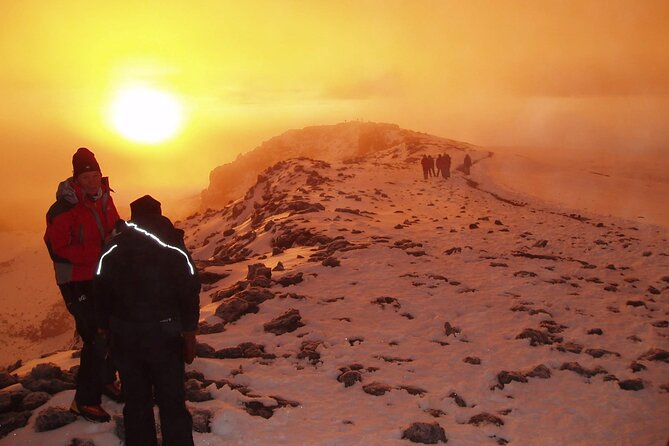
This is the hardest day by far. You start in darkness, using a headlamp or flashlight, and climb steep trails over heavy scree or snow toward Gilman’s Point on the crater rim.
The cold can be severe before sunrise. Wear your warmest layers, protect your hands, and keep rain and wind protection accessible. You may feel overdressed at Kibo, but the clothing becomes valuable during the slow night climb.
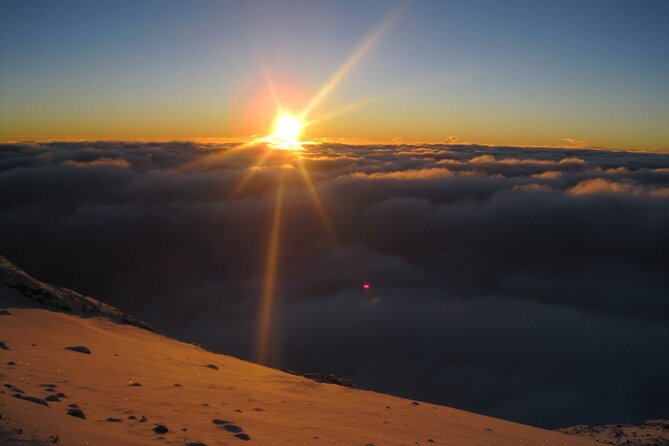
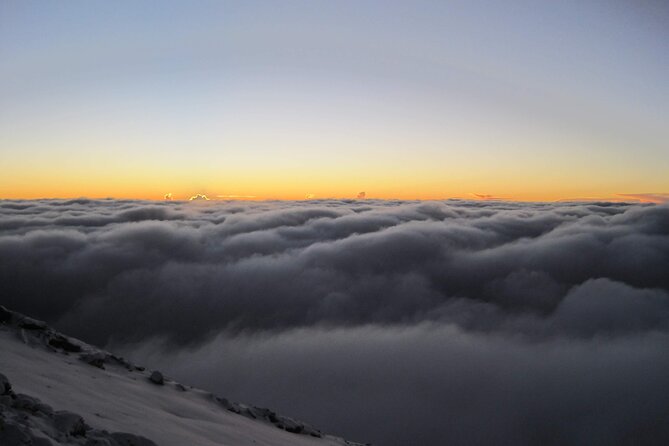
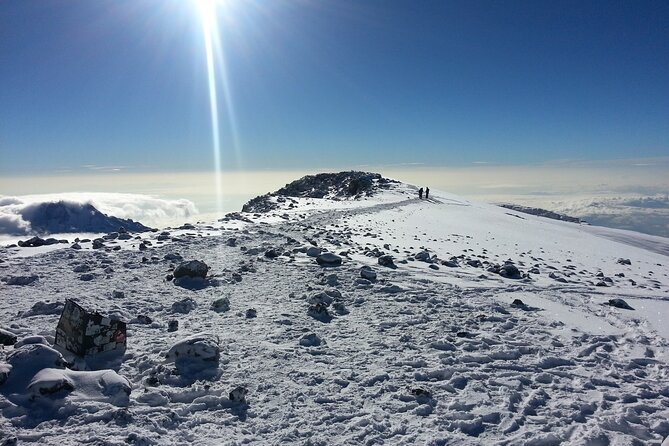
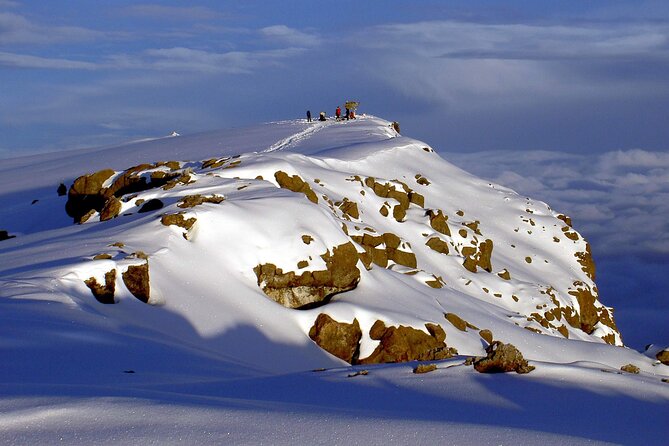
Gilman’s Point is a major milestone, but it is not Uhuru Peak. From the crater rim, you continue toward Uhuru Peak, the highest point in Africa. The supplied schedule highlights sunrise and summit photographs, and this is the moment when those rewards become real. Views change with the light, and the summit gives you a powerful sense of the scale of Kilimanjaro.
Do not underestimate the distance after reaching the summit. You descend to Kibo for lunch and a rest, then continue down to Horombo. The stated duration is about 10 hours, though the actual experience depends on pace, weather, altitude, and how long you spend at the top.
This day asks a lot from you: a midnight start, a steep ascent, cold conditions, a descent to Kibo, and another descent to Horombo. The friendly support praised in the supplied comments matters most here. Guides described as attentive and encouraging included Mudi, Martin, Daniel, and Michael, but your assigned guide may differ.
A photograph at Uhuru Peak is a fine memory, but reaching the summit safely is the real goal. You should be prepared for the possibility that your guide may advise you to turn around if your condition worsens. That is good mountain judgment, not failure.
Day 5: Moorland, forest, and Marangu Gate
After breakfast, you begin the final descent from about 3,700 meters to 1,700 meters. The first part runs through moorland toward Mandara Hut, then continues through the lush forest to the Marangu National Park Gate.
The day covers about 18 kilometers and takes five to seven hours. That distance comes after the summit effort, so your knees and feet may appreciate trekking poles. Lower sections can be wet and muddy, and gaiters are specifically useful here.
Your clothing can become much lighter as you lose altitude. Shorts and a T-shirt may be comfortable lower down, but keep rain gear and warmer layers in your pack because conditions can change before you reach the gate.
A vehicle meets you at Marangu Gate for the drive back to your hotel in Moshi or Arusha. The supplied information also says the activity ends back at the meeting point, so confirm the exact return arrangement if you are staying elsewhere.
The final descent is a fitting close to the trek. You pass back through the forest you saw on day one, but your legs will tell a different story. Once you reach the gate, allow time for celebration, crew tips, and the practical business of collecting any stored belongings.
What the $1,014 price covers
At $1,014 per person, the trip offers useful value if you want an organized climb rather than arranging every part yourself. The package includes a guide, cook, porters, crew wages described as fair and sustainable, gate transfer, hut accommodation during the climb, and meals.
The meal allowance is substantial: four dinners, five breakfasts, and five lunches are listed. Food quality matters on a climb like this, and the supplied comments repeatedly praise the meals as good, tasty, and well prepared. You should still bring personal snacks if you have strong preferences or need extra calories.
The price does not include flights, visas, tips, park fees and tax, laundry, or personal items. Park fees and tax are a particularly important point to clarify before paying, since they can make a noticeable difference to the final cost.
The crew structure is another part of the value. Porters carry supplies, the cook handles meals, and the guide leads the route and monitors the group. Past groups also described a strong sense of teamwork, with singing, dancing, conversations about Tanzanian life, and a family-like atmosphere around the climb.
That human side is meaningful, but you should also ask practical questions about porter welfare, luggage limits, sleeping arrangements, and the exact services included. Fair and sustainable wages are stated as part of the package, which is encouraging, but a clear pre-trip explanation is still worth requesting.
Guide support and group size
The experience can accept up to 100 participants, although that does not necessarily mean your hiking group will contain 100 people. Ask how the group is divided and how many guides support each section.
The strongest pattern in the supplied comments is praise for attentive staff. Names connected with positive experiences include Mudi or Muddy, Tadey, Emmanuel, Migaan, Michael, Daniel, Martin, Gaby, Mathew, and David. Emmanuel was praised for planning, while several guides were credited with motivation and careful support during the summit night.
You should not assume that a particular guide will be assigned to your departure. Instead, treat these names as useful examples of the company’s guide team and ask who will lead your group.
A guide’s role is not just pointing out the trail. You need someone who manages pace, watches for altitude problems, coordinates the crew, and makes sensible decisions in bad weather or difficult conditions. The repeated emphasis on safety and encouragement is a strong reason to consider this operator.
Who should book this five-day climb?
I would suggest this trek to a reasonably fit person who wants a direct Kilimanjaro route, prefers hut accommodation, and is comfortable with long walking days. It can suit a first high-altitude mountain experience because the route is technically simple and the crew provides substantial support.
It is less suitable if you want a relaxed holiday with plenty of spare time. The phrase leisurely applies more to the straightforward trail than to the full five-day effort. Day four is intense, and the short altitude schedule may be challenging for some people.
You should also be comfortable with basic mountain conditions. Rain, mud, cold, scree, darkness, and changing temperatures are all part of the plan. Good preparation matters more than expensive clothing: warm layers, reliable footwear, a headlamp, rain protection, gloves, trekking poles, and suitable personal items are central to your comfort.
The tour is also a good fit for people who enjoy group camaraderie. Several comments describe shared meals, conversation, singing, dancing, and a close bond between hikers and crew. If you prefer complete privacy and a silent pace, ask about private arrangements before booking.
Practical details before you reserve
Pickup is offered, and the listed start time is 8:30 am. A mobile ticket is available, and confirmation is provided at booking. Most people can participate, but the five-day plan should not be treated as an easy walk.
You can cancel for a full refund if you do so at least 24 hours before the experience start time. Changes or cancellations made within 24 hours are not accepted for a refund, and the cut-off uses local Tanzanian time.
Tips for the crew are not included. Carry enough local currency or confirm the preferred tipping arrangement before the climb so you can thank guides, cooks, and porters appropriately at the end.
The overall rating is listed as five out of five from 13 reviews, with 100 percent recommending the experience. That is a small sample, so I would read it as a positive signal about organization and crew care, not a guarantee that every person will reach Uhuru Peak.
Should you book the Marangu Route?
Book it if you want the simplest technical route, hut accommodation, organized meals, and a crew that appears to place strong attention on encouragement and safety. The combination of rainforest, moorland, the Mawenzi and Kibo views, sunrise near the summit, and a final photograph at Uhuru Peak gives you a full Kilimanjaro experience in five days.
Think twice if you need more time for altitude adjustment or dislike midnight starts and long descents. Before you commit, confirm park fees and tax, the exact pickup and return plan, the size of your hiking group, the sleeping arrangements, and who will guide your departure.
For a fit and well-prepared hiker, this is a direct and well-supported way to attempt Africa’s highest summit. Just remember that Marangu may be the easier route technically, but Kilimanjaro itself remains a serious mountain.
FAQ
How long is the Marangu Route Kilimanjaro experience?
The experience lasts approximately five days, with the climb beginning after breakfast and a briefing on day one.
Where does the hike start?
The listed meeting point is Cable Millan, 3445 Rengua Road, Tanzania. The group then drives about 45 minutes to the Kilimanjaro National Park Gate.
Where do you sleep during the climb?
You sleep in mountain huts during the climb. The itinerary names Mandara Hut, Horombo Hut, and Kibo Hut.
Is food included?
Yes. The package lists four dinners, five breakfasts, and five lunches.
Does the price include a guide and porters?
Yes. A guide, cook, porters, and crew wages are included. The wages are described as fair and sustainable.
Are park fees and taxes included?
No. Park fees and tax are listed among the items not included, so confirm the extra amount before booking.
Can you cancel for a full refund?
Yes. You can receive a full refund if you cancel at least 24 hours before the experience start time. Cancellations or changes made less than 24 hours beforehand are not accepted for a refund.
More 5-Day Experiences
- 5 Days Camping Tarangire, Serengeti & Ngorongoro crater & Visiting Maasai
★ 5.0 · 58 reviews - 5-Day Majestic Tanzania Safari – High End All Inclusive
★ 5.0 · 44 reviews - 5 Day Mid range Tanzania Safari
★ 5.0 · 34 reviews - 5 days Tanzania Camping Safari
★ 5.0 · 29 reviews
Just added around Moshi
- Moshi: Lake Chala Tour: Hiking &/or Kayaking★ 4.5 · 3 reviews
- 3 Days Tanga Exclusive Beach Holiday★ 5.0 · 3 reviews
- Serengeti Wildebeest Migration.★ 5.0 · 3 reviews
- Chemka Hotpsrings E-Bike Day Trip★ 5.0 · 3 reviews
- Explore 1 day Ngorongoro Crater Budget Group Safari from Arusha★ 5.0 · 3 reviews
- Explore the 360° of Kilimanjaro★ 5.0 · 3 reviews
- Affordable Short Tanzania Safari (2 Days Camping Safari)★ 5.0 · 3 reviews
- Rongai Route 7 Days★ 5.0 · 3 reviews
Kilimanjaro Treks, compared.



8-Day Small-group Lemosho Kilimanjaro Summit Trekking
Read our review →


Climbing Kilimanjaro through 7 days Machame Route
Read our review →

Browse the lists this tour appears in