
Reviewed · KILIMANJARO TREKS
5 days Marangu Route
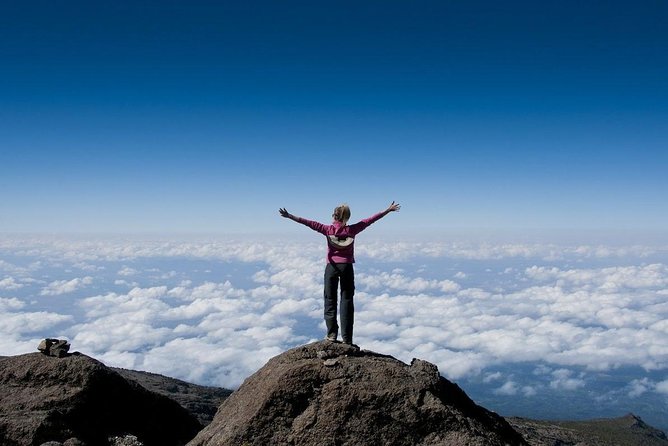
The shortest path to Kilimanjaro’s summit is not always the easiest. This five-day Marangu Route climb appeals to me for two clear reasons: you sleep in mountain huts rather than tents, and the package includes guides, porters, a cook, airport transfers, and pre-and post-climb hotel nights. I also like the human touch reported from the support team, including organiser Mr Wence and senior guides Msafiri, Rama, and Allan. The catch is important: this route ascends quickly, giving your body less time to adjust to altitude.
You will move through rainforest, moorland, and the stark Saddle before making the midnight push to Uhuru Peak. The schedule is efficient and fairly priced at $2,150 per person, but it is physically demanding, especially on the 12 to 15-hour summit day. If you want more time for acclimatization, a longer route may be the wiser choice.
In This Review
- Five things to know before you climb
- Why the Marangu Route attracts first-time climbers
- Day one: Marangu Gate to Mandara Hut and Maundi Crater
- Day two: Horombo Hut and the Mawenzi views
- Day three: crossing the Saddle to Kibo Hut
- Day four: the midnight climb to Uhuru Peak
- Day five: returning through the forest to Moshi
- What the $2,150 price covers
- The people behind the climb
- Who should book this route?
- FAQ
- How long is the Marangu Route experience?
- Where does the climb begin and end?
- Do I sleep in tents or mountain huts?
- Is airport transportation included?
- Are meals included?
- Is emergency oxygen provided?
- Can I cancel for a full refund?
- Should you book the five-day Marangu climb?
Five things to know before you climb
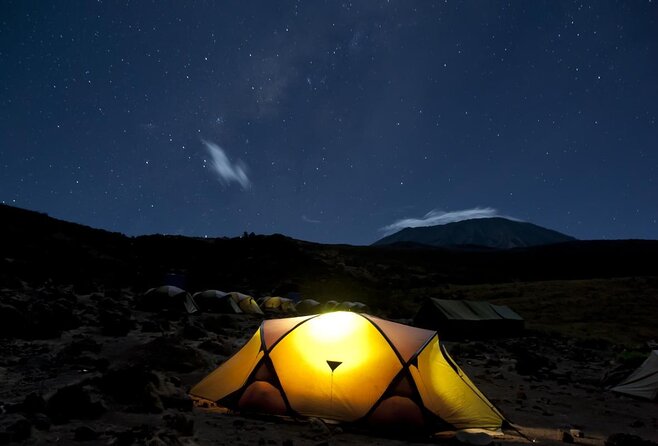
- The Marangu Route uses mountain huts, including Mandara, Horombo, and Kibo, instead of requiring you to sleep in a tent each night.
- The summit day lasts 12 to 15 hours, with a midnight start, a climb to Uhuru Peak, a return to Kibo Hut, and then a further descent to Horombo Hut.
- Maundi Crater is a fine first-day bonus, offering views toward the Kenyan interior after your rainforest walk.
- The route changes quickly, from thick forest to heath, moorland, and the vegetation-free Saddle between Mawenzi and Kibo.
- The support team is a major part of the value, with guides, assistant guides, porters, a cook, emergency oxygen, meals, water, and hotel nights included.
- Five days is fast for a high-altitude climb, so you should take the acclimatization issue seriously rather than treating the trip as a simple hike.
Why the Marangu Route attracts first-time climbers
Kilimanjaro rises to 5,895 meters, or 19,340 feet, making this a serious high-altitude climb even though the trail is well maintained. The Marangu Route is often called the Coca-Cola Route because it is popular and comparatively direct. It is also the quickest route to the summit.
That speed is the main selling point and the main concern. You spend fewer days on the mountain, which can help keep the total cost down and suits people with limited holiday time. But your body has less time to adjust as you rise from Moshi to the summit.
I like the route’s changing scenery. On day one, you walk under dense rainforest, with the possibility of seeing primates. By day two, the trees thin into heath and moorland. Day three brings the broad, almost plant-free Saddle, and day four delivers the ice-cold pre-dawn summit climb.
The huts make Marangu different from routes that rely on tents. That does not turn the climb into a hotel stay. You still face long walking days, basic mountain conditions, cold, and altitude. But returning to a hut at the end of the day can feel reassuring when your legs are tired.
More Kilimanjaro routes and climbs:
- Kilimanjaro climb by Lemosho Route (7-day)
★ 5.0 · 651 reviews - Kilimanjaro climb, Machame Route (7-day)
★ 5.0 · 262 reviews - Kilimanjaro Climbing Lemosho Route 8 Days.
★ 5.0 · 186 reviews
Day one: Marangu Gate to Mandara Hut and Maundi Crater
Your morning begins with breakfast and collection from your lodge in Moshi. The transfer takes you to Marangu Gate, where the required paperwork is completed before you enter Kilimanjaro National Park.
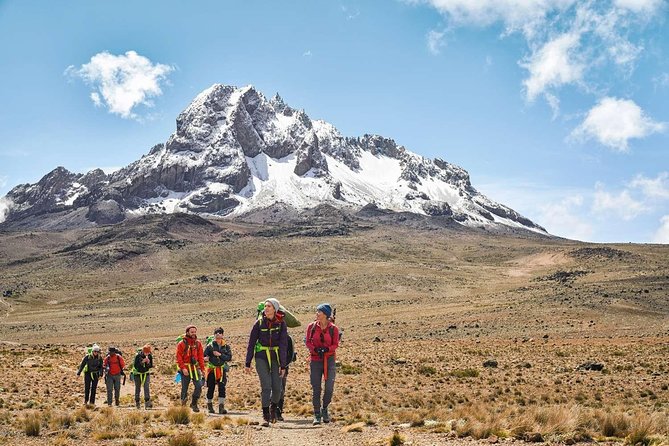
The first walking stage covers about 8.3 kilometers and takes roughly five hours. The trail runs through dense rainforest, so this is a pleasant introduction to the mountain. The vegetation is a highlight, and you might catch sight of primates among the trees.
Mandara Hut is at about 2,700 meters. After reaching the hut, you have time to rest before taking the optional walk to Maundi Crater. I would treat this short outing as more than a filler activity. It gives you a first look toward the Kenyan interior and lets you stretch your legs without the pressure of a major ascent.
The first day is moderate by Kilimanjaro standards, but do not race through it. A calm pace now is useful later. Your guide is there to manage the rhythm, and the support team begins handling the practical work around food, water, and camp life.
Day two: Horombo Hut and the Mawenzi views
After an early breakfast, you leave the rainforest behind and reach the timberline. The route enters the heath and moor zone, where the scenery opens up and the mountain feels more exposed.
The day covers about 12.5 kilometers. The schedule gives an approximate walking time of nine hours, although the itinerary also lists six hours for the stop. Either way, plan for a long day on your feet rather than a casual stroll.
Horombo Hut sits at roughly 3,700 meters. From here, you can look toward Mawenzi, Kibo, and the wide plain of the Masai steppe. The views are a strong reward after the climb, and the hut provides a useful place to eat and recover.
This is also the point where the rapid five-day schedule becomes more noticeable. You have gained substantial height in only two days. Keep drinking the supplied water, eat even if your appetite drops, and tell your guide promptly if you feel unwell. The package includes emergency oxygen for emergencies, but it is not intended as a substitute for acclimatization or as help for reaching the summit.
Day three: crossing the Saddle to Kibo Hut
The route from Horombo to Kibo Hut covers about 9.5 kilometers and takes around seven hours. The trail passes the Last Water point, after which the character of the climb changes sharply.
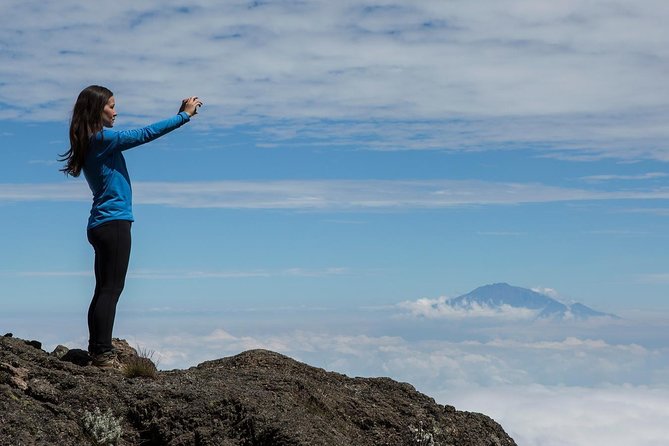
You cross the Saddle, a high-altitude, nearly vegetation-free plateau linking Mawenzi and Kibo. This is not the lush mountain people often picture when they think of Africa. It is open, stark, and quiet, with little shelter from the elements.
Kibo Hut is your destination, and you usually arrive after six to seven hours of walking. You will have an early evening meal and then try to sleep before the summit attempt. The night is short, since the final ascent begins around midnight.
This evening requires sensible preparation. Put your clothing, headlamp if you bring one, water, snacks, and personal medicine within easy reach. The tour includes meals and drinking water, but snacks and personal medicine are your responsibility. Water-purifying tablets are also listed as items to bring.
A few more trips of this kind worth comparing:
- 5 Days Camping Tarangire, Serengeti & Ngorongoro crater & Visiting Maasai
★ 5.0 · 58 reviews - 5-Day Majestic Tanzania Safari – High End All Inclusive
★ 5.0 · 44 reviews - 5 Day Mid range Tanzania Safari
★ 5.0 · 34 reviews - 5 days Tanzania Camping Safari
★ 5.0 · 29 reviews
Day four: the midnight climb to Uhuru Peak
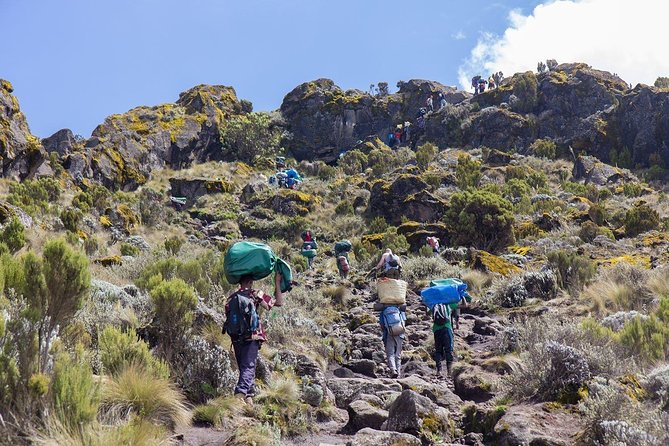
Summit day is the test of the entire trip. The planned distance is about 22 kilometers, with 12 to 15 hours of walking. You begin around midnight, climbing in darkness and cold toward the crater rim.
The path passes Hans Meyer Cave at about 5,220 meters. From there, the trail continues upward toward Gillman’s Point at 5,681 meters. Reaching the crater rim around sunrise gives you a welcome change in temperature and light, although the work is not finished.
From Gillman’s Point, you continue for another one to two hours to Uhuru Peak at 5,895 meters. This final stretch can feel slow. Your guide and assistant guides provide direction and support, while the porters and cook keep the wider operation running behind you.
After time at the summit, you descend to Kibo Hut for a warm meal and a one to two-hour rest. Then comes another descent to Horombo Hut. This is why the day is so demanding: you do not simply climb to the summit and sleep. You climb, descend, pause briefly, and continue down.
The summit achievement is the obvious prize, but the real challenge is managing your energy. Move slowly. Follow your guide’s pace. Do not spend too much effort trying to gain time early in the night. On a schedule this tight, patience is practical, not poetic.
Day five: returning through the forest to Moshi
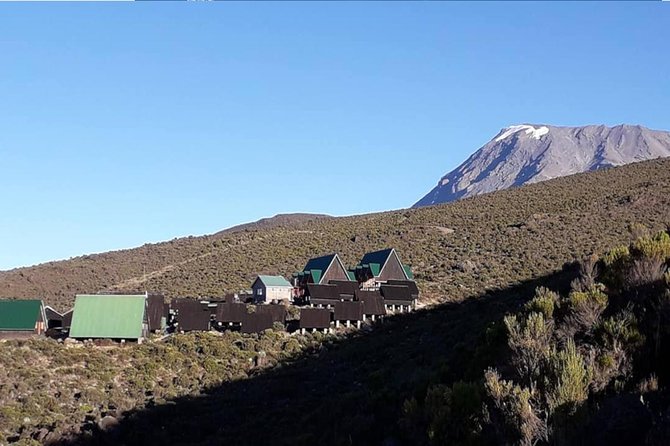
The final stage covers about 20.8 kilometers and takes around eight hours. You descend through the heath and moor zone to Mandara Hut, where a warm lunch is planned.
From Mandara, you re-enter the tropical rainforest. After several days above the trees, the return to thicker vegetation should feel striking. The full descent brings you back to Marangu Gate at about 1,860 meters, where you say goodbye to the mountain team.
A short transfer then takes you to your hotel in Moshi. A warm shower and a proper celebration will likely feel well earned. The package includes the hotel night after the climb, with dinner and breakfast, so you do not need to arrange your immediate recovery night separately.
One small point deserves attention: the listed inclusions mention camping equipment, tents, chairs, tables, and sleeping mattresses, while the route description places you in mountain huts. Ask the provider to clarify exactly which equipment is used on your departure. The huts are central to the appeal of this route, so you should know what sleeping arrangements to expect.
What the $2,150 price covers
At $2,150 per person, the cost is not just for a guide and a park entry. The package includes all fees and taxes, airport transfers between Kilimanjaro Airport and Moshi, and hotel nights before and after the climb. Dinner and breakfast are included at those hotel stays.
On the mountain, you receive a qualified guide, assistant guides, porters, and a cook, with their wages included. You also receive fresh drinking water and hot water for washing each day. Meals listed in the package include five lunches, four dinners, and four breakfasts.
That is a useful level of coverage for a five-day expedition. You are paying for a working support system, not only for access to a trail. The strong praise for the staff, especially the porters, cooks, guides, and organiser Mr Wence, gives this part of the package added weight. Senior guides Msafiri, Rama, and Allan are also named in the feedback, which is reassuring for anyone who values a clear point of contact.
Still, budget for extras. Flights, visas, travel insurance, health insurance, snacks, personal medicine, water-purifying tablets, and unspecified drinks are not included. A portable toilet is optional but highly recommended. Personal hiking and trekking equipment is also extra, although some gear can be rented from the provider’s equipment store in Tanzania.
The value looks strongest if you use the included transfers and hotel nights. Those details save you from arranging separate transport after an exhausting climb. The price also makes more sense when you consider the size of the support team required to move food, water, and equipment up the mountain.
The people behind the climb
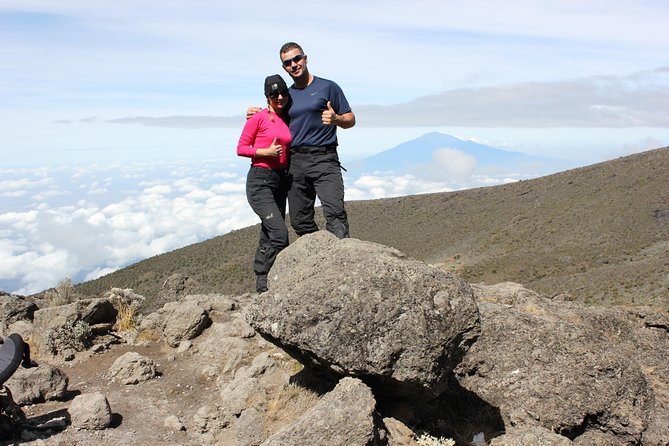
A Kilimanjaro climb depends heavily on the support crew. Your guide sets the pace, watches the route, and helps manage the day. Assistant guides add support, while porters and the cook handle much of the work that allows you to focus on walking.
The available feedback gives this team unusually clear emphasis. Mr Wence is praised for meeting climbers at Hotel Lux Palace and managing the welcome. Mr Msafiri, Rama, and Allan are identified as senior guides, while the wider team is described as friendly and attentive.
That matters because the hardest moments are not only about scenery. You may be tired, cold, hungry, or anxious before the summit. A capable team can make the routine parts of the climb feel orderly and can help you stay focused.
You should still ask how porter welfare is handled and confirm the exact daily arrangements before departure. The package says wages are included, but it does not spell out group size, porter loads, or tipping guidance. Those are sensible questions for any mountain operator.
Who should book this route?
I would recommend this climb to a fit person who wants Kilimanjaro within a compact holiday schedule and prefers huts to tents. It also suits someone who values an all-in-one package with airport transfers, hotels, meals, water, and a full support crew.
You should think carefully before booking if you have no experience with long walking days or if you strongly prefer a gradual altitude schedule. The five-day plan is the quickest route to the summit, and the summit day can last up to 15 hours.
This is a private activity for your own group, which may make the experience feel more personal. The group size is not specified, so ask before paying if that detail affects your decision. Confirmation is provided at booking, and most people can participate, but the physical demands remain substantial.
Free cancellation is available if you cancel at least 24 hours before the local start time. Changes or cancellations inside that window are not accepted for a refund.
FAQ
How long is the Marangu Route experience?
The climb lasts approximately five days, beginning with collection from your lodge in Moshi and ending with a transfer back to your Moshi hotel after the descent.
Where does the climb begin and end?
The meeting and ticket redemption point is Mount Kilimanjaro in Tanzania. After completing the route, the activity ends back at the meeting point area, followed by transport to your hotel in Moshi.
Do I sleep in tents or mountain huts?
The route description places overnight stays at Mandara Hut, Horombo Hut, and Kibo Hut. The included equipment list also mentions tents and camping equipment, so you should ask the provider to confirm the exact sleeping setup for your departure.
Is airport transportation included?
Yes. Return transfers between Kilimanjaro Airport and Moshi are included.
Are meals included?
Yes. The package includes five lunches, four dinners, and four breakfasts. Snacks, personal medicine, and meals or drinks not specified are not included.
Is emergency oxygen provided?
Yes. Emergency oxygen is included for emergencies only. It is not provided as summit assistance.
Can I cancel for a full refund?
You can receive a full refund if you cancel at least 24 hours before the experience start time, based on local time. Cancellations or changes made less than 24 hours before the start are not accepted for a refund.
Should you book the five-day Marangu climb?
Book it if you want a direct, hut-based Kilimanjaro climb with a strong package of transfers, hotels, meals, guides, porters, and practical support. The changing scenery is excellent, Maundi Crater adds a pleasant first-day outing, and the staff praise gives the operation a warm human edge.
Do not book it simply because it is the shortest option. Five days leaves less room for altitude adjustment, and the summit day is long enough to test every weakness in your preparation. If your schedule allows more time, ask about a longer itinerary before committing.
For a fit, prepared climber who accepts the pace, this is a good-value way to take on Africa’s highest peak. Just arrive with realistic expectations, confirm the hut and equipment details, and treat the altitude with respect.
Just added around Moshi
- Moshi: Lake Chala Tour: Hiking &/or Kayaking★ 4.5 · 3 reviews
- 3 Days Tanga Exclusive Beach Holiday★ 5.0 · 3 reviews
- Serengeti Wildebeest Migration.★ 5.0 · 3 reviews
- Chemka Hotpsrings E-Bike Day Trip★ 5.0 · 3 reviews
- Explore 1 day Ngorongoro Crater Budget Group Safari from Arusha★ 5.0 · 3 reviews
- Explore the 360° of Kilimanjaro★ 5.0 · 3 reviews
- Affordable Short Tanzania Safari (2 Days Camping Safari)★ 5.0 · 3 reviews
- Rongai Route 7 Days★ 5.0 · 3 reviews
Kilimanjaro Treks, compared.



8-Day Small-group Lemosho Kilimanjaro Summit Trekking
Read our review →


Climbing Kilimanjaro through 7 days Machame Route
Read our review →

Browse the lists this tour appears in