
Reviewed · KILIMANJARO TREKS
6-Day Kilimanjaro Machame Route – A Stunning Trek to Uhuru Peak
Africa’s highest summit demands respect. This 6-day Machame Route gives you a classic Kilimanjaro climb, moving from rainforest to moorland, alpine desert, and the icy high summit of Uhuru Peak. I like the route for its changing scenery and its carefully placed acclimatization day near Lava Tower. I also like that the price includes guides, porters, cook, camping equipment, meals, water, airport transfers, and emergency oxygen.
The main caution is the schedule. Summit day lasts 11 to 14 hours, and you reach Uhuru Peak after starting around midnight. Six days is enough for a well-organized climb, but it leaves less time than longer routes for your body to adjust to altitude. You need moderate fitness, the right clothing, and a willingness to walk slowly when the mountain tells you to.
In This Review
- Key things to know before booking
- Starting in Moshi and reaching the Machame Gate
- Day 1: Machame Camp and the rainforest
- Day 2: Shira Cave Camp and the open moorland
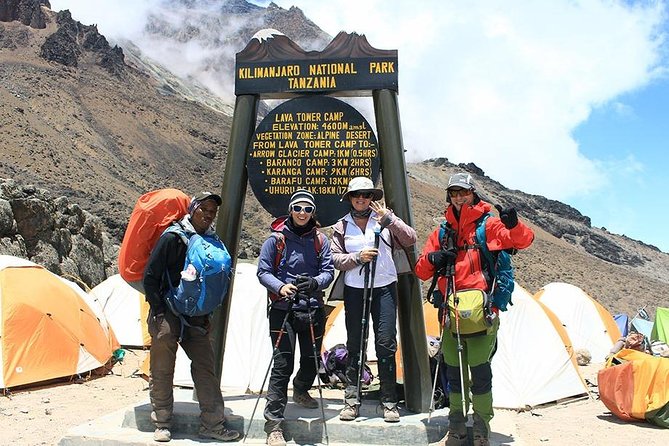
- Day 3: Lava Tower and Barranco Camp
- Day 4: Barranco Wall, Karanga, and Barafu
- Day 5: Stella Point, Uhuru Peak, and Mweka Camp
- Day 6: Mweka Trail and the return to Moshi
- What the $2,253 price includes
- Staff support and the human side of the climb
- Fitness, gear, and the six-day trade-off
- Who should choose this Machame Route?
- Should you book the 6-day Machame Route?
- FAQ
- How long is the Kilimanjaro Machame Route experience?
- Where does the experience start?
- Is pickup available?
- Does the tour end in Moshi?
- What meals are included?
- Is camping equipment included?
- Are guides, porters, and a cook included?
- Is a portable toilet included?
- What is the cancellation policy?
Key things to know before booking
- The scenery changes every day: You move from thick rainforest to moorland, the open Shira Plateau, high volcanic rock, and alpine desert.
- Day 3 helps with altitude: You climb toward Lava Tower at 4,650 meters, then descend to Barranco Camp at about 4,000 meters.
- The summit push is long: Day 5 covers about 17 kilometers and includes Uhuru Peak, Stella Point, and the descent to Mweka Camp.
- The package covers the main mountain costs: Guides, assistant guides, porters, a cook, tents, meals, drinking water, airport transfers, and basic emergency equipment are included.
- A portable toilet costs extra: It is optional, but the company describes it as highly recommended.
- Past praise centers on the staff: Justin, Frazier, and the wider Pinnacle team receive strong praise for organization, kindness, communication, and mountain support.
Starting in Moshi and reaching the Machame Gate
Your climb begins with a morning briefing and gear check, followed by transport from Moshi or Arusha to Machame Gate. Pickup is offered, and the package includes transfers between Kilimanjaro Airport and Moshi at the beginning and end of the trip.
This first check matters. Kilimanjaro is not a place for casual packing. You need warm layers, rain protection, suitable boots, and personal medical supplies. The gear check gives you a chance to discover missing items before the trail rises into colder conditions.
The activity begins and ends in Moshi Urban, Tanzania. It is a private activity, so only your group participates. That can make communication simpler than it is on a large shared departure, although the mountain itself can still be busy at popular times.
More Kilimanjaro routes and climbs:
- Kilimanjaro climb by Lemosho Route (7-day)
★ 5.0 · 651 reviews - Kilimanjaro climb, Machame Route (7-day)
★ 5.0 · 262 reviews - Kilimanjaro Climbing Lemosho Route 8 Days.
★ 5.0 · 186 reviews
Day 1: Machame Camp and the rainforest
The first walk covers about 11 kilometers, climbing from 1,640 meters to 2,835 meters. Allow five to seven hours, though the schedule lists roughly six hours for the day.
The trail starts in the rainforest. This is one of the most enjoyable parts of the climb because the surroundings feel lush and sheltered before the exposed upper zones begin. You may see native plants and wildlife, and the forest gives the opening day a sense of adventure without immediately placing you in the harshest conditions.
You finish at Machame Camp, where dinner and your first night on the mountain follow. Camping equipment is supplied, including tents, camp chairs, tables, and a sleeping mattress. Fresh drinking water and hot water for washing are also included each day.
That hot water is a practical luxury. After several hours on your feet, even a basic wash makes dinner and sleep feel much better. The first night also shows you how the camp routine works: walk, settle in, wash, eat, organize your sleeping space, and prepare for the next morning.
Day 2: Shira Cave Camp and the open moorland
Day 2 is shorter in distance but steeper in feel. You cover about 5 kilometers, climbing from 2,835 meters to 3,850 meters over four to six hours.
The trail leaves the forest and enters moorland. Several streams cross the route, and the views open toward Mount Meru and the surrounding valleys. This change in scenery is a key reason to choose Machame. You do not spend six days walking through the same type of terrain.
The night is spent at Shira Cave Camp on the Shira Plateau. At this height, the air is thinner and the camp feels far more exposed than the forest below. The schedule describes camping beneath the stars, but the mountain weather can change, so keep your rain gear and warmer clothing easy to reach.
I would treat this as a steady acclimatization day rather than a race. The distance looks modest, but altitude affects people differently. Drink the supplied water regularly, follow the guide’s pace, and avoid wasting energy on a fast start.
Day 3: Lava Tower and Barranco Camp
Day 3 is the cleverest part of the route. You climb from about 3,850 meters toward Lava Tower at 4,650 meters, known in the schedule as the Shark’s Tooth, then descend to Barranco Camp at roughly 4,000 meters.
The total distance is about 10 kilometers, with five to six hours of walking. You begin across the Shira Plateau and continue east along a ridge. The route passes the junction toward Kibo, the main volcanic cone, before turning southeast toward Lava Tower.
You also pass a higher junction leading toward Arrow Glacier. The important point is not simply reaching a high point. You spend part of the day walking high, then sleep lower at Barranco. That rise and drop gives your body a useful chance to adjust before the summit attempt.
Barranco Camp is one of the most memorable overnight stops because the surrounding volcanic scenery feels stark and powerful. You are still at nearly the same height as when you started, but your body has done important work.
This day can feel slow. That is a good thing. The mountain rewards patience, and your guide’s job is to keep the pace controlled. The company’s guides receive much of the praise connected with this climb. Justin is singled out for helping make a summit attempt successful, while Frazier is praised for organization, responsibility, and local mountain knowledge.
A few more trips of this kind worth comparing:
- Private Kilimanjaro Hike 7 Day Lemosho Route
★ 5.0 · 60 reviews - Best Kilimanjaro hiking day trip tour with Kilinge Adventures
★ 4.5 · 54 reviews - #1. Best Kilimanjaro Day hike Tour-Machame Route-ISMANI
★ 4.2 · 47 reviews - Best Kilimanjaro Adventure 7 days Machame route Trekking
★ 5.0 · 42 reviews
Day 4: Barranco Wall, Karanga, and Barafu
Day 4 moves into the alpine desert. The route leaves Barranco and climbs the steep Barranco Wall before reaching the Karanga Valley campsite. From there, you continue toward the junction with the Mweka Trail and then climb to Barafu Hut.
The listed distance is about 9 kilometers, with seven to nine hours of walking. The day is demanding because you gain a lot of height, ending around 15,000 feet according to the schedule. The description gives an overall elevation range of about 13,000 to 15,000 feet.
The Barranco Wall is the day’s defining feature. It is steep, but the exact experience depends on the pace and conditions. You should expect a focused climb rather than a relaxed stroll. After the wall, the trail continues through rough, high terrain toward Barafu.
At Barafu, you have completed the South Circuit. The route has shown you the summit from several angles, and the views include both Mawenzi and Kibo. This is also your summit preparation camp, so the day does not truly end when you arrive.
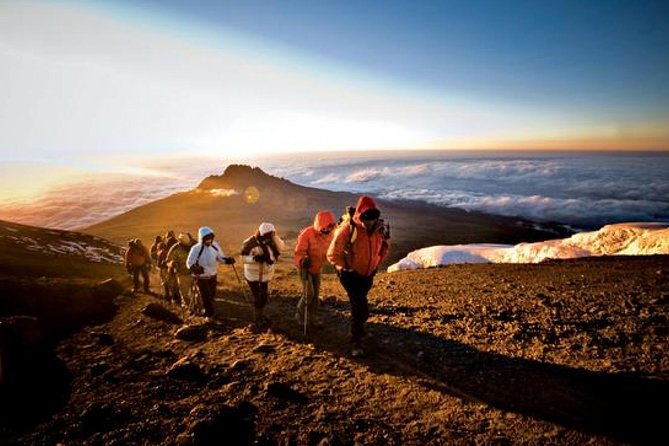
You eat dinner, organize your layers, check your headlamp if you have one, and try to rest. The summit attempt begins around midnight. A good guide team helps here by keeping instructions clear and the routine orderly. Previous praise for Pinnacle Adventures repeatedly focuses on communication, organization, and the kindness of the mountain staff.
Day 5: Stella Point, Uhuru Peak, and Mweka Camp
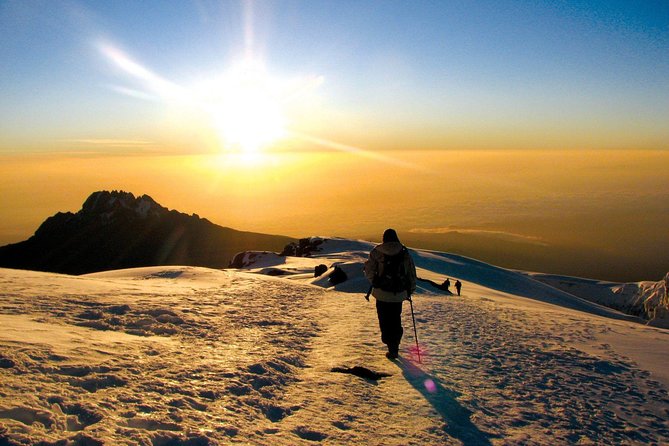
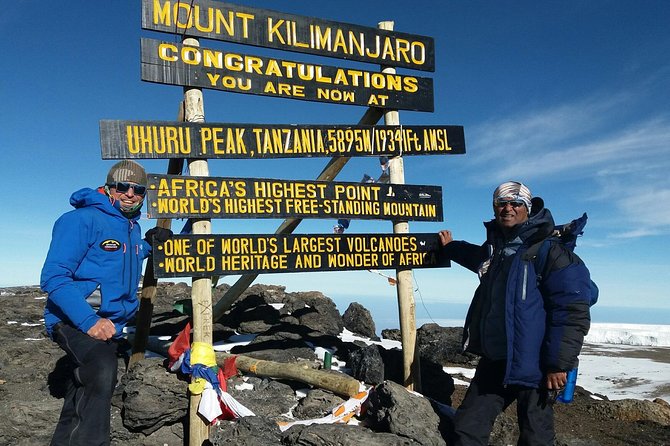
Day 5 is the hardest part of the trip. You start around midnight and climb toward Stella Point at 5,756 meters. From there, you continue to Uhuru Peak at 5,895 meters, the highest point in Africa.
The full day covers about 17 kilometers and lasts 11 to 14 hours. This figure includes the summit climb and the long descent to Mweka Camp. It is a day of cold, darkness, thin air, and repeated changes in pace.
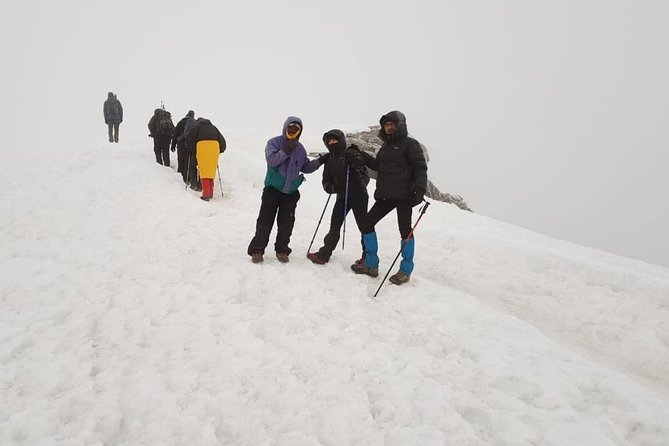
The first goal is Stella Point. Reaching it is a major achievement, but it is not the summit. You then continue along the crater rim toward Uhuru Peak. The final section can feel slow because every step costs more effort at altitude.
At Uhuru Peak, you have time to mark the achievement and take photographs before descending. The route then drops to Mweka Camp for the final mountain night. That descent is welcome, but do not underestimate it. Tired legs and loose ground can make going down uncomfortable, especially after many hours awake.
Emergency oxygen is included for emergencies only. It is not intended as assistance for reaching the summit. That distinction matters. Oxygen is a safety measure, not a way to turn an unsafe summit attempt into a safe one. Your guide team makes decisions about altitude and safety, and you need to follow those instructions.
Day 6: Mweka Trail and the return to Moshi
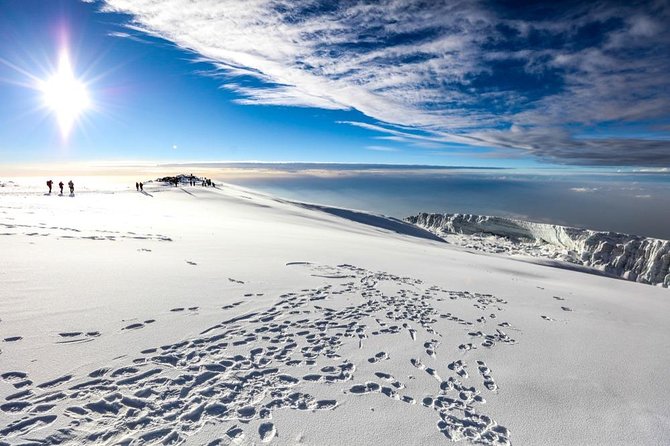
The last walk descends from about 3,090 meters to 1,680 meters. The distance is about 10 kilometers, and the walk takes three to four hours.
Lower sections of the Mweka Trail can be wet and muddy. Gaiters and trekking poles are specifically useful here. You may be comfortable in shorts and a T-shirt at the lower altitude, but keep rain gear and warmer clothing within reach because mountain weather can change before you reach the gate.
After breakfast, you continue to Mweka Park Gate to receive summit certificates. From there, the schedule calls for another hour to Mweka Village, where a vehicle meets you for the drive back to your Moshi hotel. The drive is listed as about 30 minutes from the village.
This final transfer is one reason the included transport has real value. After six days of walking, arranging a vehicle from the mountain can be a nuisance. Here, the return is part of the plan.
What the $2,253 price includes
At $2,253 per person, this is not a cheap weekend activity. It is also not simply a walking tour with a guide. The price covers the main services required for a supported Kilimanjaro climb:
- All fees and taxes
- Kilimanjaro Airport to Moshi and Moshi to Kilimanjaro Airport transfers
- A qualified mountain guide and assistant guides
- Porters and a cook, including their wages
- Tents, camp chairs, tables, and a sleeping mattress
- Fresh drinking water
- Hot water for washing each day
- Five breakfasts
- Five dinners
- Six lunches
- Emergency oxygen for emergencies
- A basic first aid kit
The food plan is substantial because lunch is included on all six days, while breakfast and dinner are included for five days. The daily hot water is another useful inclusion, particularly on the colder nights.
The value depends on what you expect. If you want a supported climb with staff, meals, camping equipment, transfers, and a private group, the package covers many large expenses in one price. You still need to budget for flights, visas, travel and health insurance, personal gear, medicines, water purification tablets, snacks, unspecified meals and drinks, and tips.
A portable toilet is not included. The company calls it optional but highly recommended. That is worth considering before you book, since personal comfort at high camps can affect how well you sleep and recover.
Staff support and the human side of the climb
The strongest praise connected with this experience concerns the staff. Justin is named for his role in helping with a successful climb. Frazier is also praised for professional organization, responsibility, and knowledge of the mountain and local area.
The wider Pinnacle team receives credit for clear communication from booking through the post-climb debrief. The staff’s kindness is mentioned alongside practical details such as meals, hot water, airport transfers, and the organization of a large mountain operation.
One point of criticism involved a problem transferring PCR results in Tanzania, with a suggestion that a company representative remain close until airport entry. It is a small part of the overall experience, but it is useful feedback. Airport procedures can be stressful, and you should keep required documents easy to access.
The staff are not a minor detail on Kilimanjaro. Porters carry equipment, the cook handles meals, assistant guides help monitor the group, and the lead guide manages the route and daily decisions. Treat the team respectfully and budget for gratuities, which are not included.
Fitness, gear, and the six-day trade-off
The activity requires a moderate level of physical fitness. That wording should not make the climb sound easy. The summit day is long, and the route includes steep sections, high altitude, darkness, cold, and a major descent.
You should be comfortable walking for several hours on uneven ground. You also need to manage your own personal gear, clothing, medicines, and snacks. Equipment rental is available from stores in Tanzania, so you do not necessarily need to bring every item from home.
A sensible packing approach includes:
- Warm clothing for the summit night
- Rain gear for the forest and lower Mweka Trail
- Gaiters for mud
- Trekking poles for steep and wet sections
- Personal medicine
- Water purification tablets
- Snacks
- Clothing that can handle both cold high camps and warmer lower elevations
The six-day format gives you a useful high-and-low day near Lava Tower, but it is still a compact schedule. If you know you struggle with altitude or want a slower rhythm, you may prefer to ask about a longer Kilimanjaro route. This particular option suits a fit person who accepts that summit success can never be guaranteed.
Who should choose this Machame Route?
I would recommend this climb to you if you want:
- A private mountain experience for your own group
- Varied scenery rather than one repeated trail environment
- A supported climb with guides, porters, cook, meals, tents, and transfers
- A demanding adventure lasting six days
- A route that includes a useful climb-high, sleep-lower section
- Strong staff support and organized logistics
I would be cautious if you dislike camping, struggle with long walking days, or want a gentle holiday. The summit push is especially demanding, and the high camps are basic. You also need to arrange your own flights, visa, insurance, personal gear, and gratuities.
The route is popular for good reason. It gives you rainforest, moorland, the Shira Plateau, Lava Tower, Barranco Wall, alpine desert, and the summit in one compact trip. The price is easiest to justify if you value having the major mountain services organized in advance.
Should you book the 6-day Machame Route?
Book it if you want a serious Kilimanjaro climb with excellent scenery and a full support team. The inclusion of airport transfers, meals, camping gear, hot washing water, porters, and emergency equipment makes the $2,253 price easier to understand.
Before paying, confirm the personal gear plan, insurance requirements, tip expectations, and portable toilet option. Be honest about your fitness and altitude concerns. I would also ask the operator to explain the summit-night routine and what happens if you become unwell.
For a fit adventurer who wants the famous Machame scenery without committing to a longer itinerary, this is a strong choice. Just remember that Uhuru Peak is earned slowly, one careful step at a time.
FAQ
How long is the Kilimanjaro Machame Route experience?
The climb lasts approximately six days.
Where does the experience start?
The activity starts in Moshi Urban, Tanzania, with transport to Machame Gate after a morning briefing and gear check.
Is pickup available?
Yes. Pickup is offered, and return transfers between Kilimanjaro Airport and Moshi are included.
Does the tour end in Moshi?
Yes. After descending to Mweka Village, a vehicle drives you back to your hotel in Moshi.
What meals are included?
The package includes five breakfasts, five dinners, and six lunches.
Is camping equipment included?
Yes. Tents, camp chairs, tables, and a sleeping mattress are included.
Are guides, porters, and a cook included?
Yes. The price includes a qualified mountain guide, assistant guides, porters, and a cook, including their wages.
Is a portable toilet included?
No. A portable toilet is optional and costs extra, but it is described as highly recommended.
What is the cancellation policy?
You can receive a full refund if you cancel at least three full days before the experience start time. Cancellations or changes made less than three full days before the start time are not accepted for a refund.
More 6-Day Experiences
- Kilimanjaro climb, Lemosho Route (6-day)
★ 5.0 · 129 reviews - Kilimanjaro climb, Marangu route (6-day)
★ 5.0 · 72 reviews - 6 Days 5 Night Safari
★ 5.0 · 57 reviews - 6 Days Tanzania Classic Safari
★ 5.0 · 52 reviews
Just added around Moshi
- Moshi: Lake Chala Tour: Hiking &/or Kayaking★ 4.5 · 3 reviews
- 3 Days Tanga Exclusive Beach Holiday★ 5.0 · 3 reviews
- Serengeti Wildebeest Migration.★ 5.0 · 3 reviews
- Chemka Hotpsrings E-Bike Day Trip★ 5.0 · 3 reviews
- Explore 1 day Ngorongoro Crater Budget Group Safari from Arusha★ 5.0 · 3 reviews
- Explore the 360° of Kilimanjaro★ 5.0 · 3 reviews
- Affordable Short Tanzania Safari (2 Days Camping Safari)★ 5.0 · 3 reviews
- Rongai Route 7 Days★ 5.0 · 3 reviews
Kilimanjaro Treks, compared.



8-Day Small-group Lemosho Kilimanjaro Summit Trekking
Read our review →


Climbing Kilimanjaro through 7 days Machame Route
Read our review →

Browse the lists this tour appears in