
Reviewed · KILIMANJARO TREKS
6-Day Kilimanjaro Umbwe Route–Steep,Adventurous, Challenging Path
Africa’s highest peak demands respect. The six-day Umbwe Route gives you a steep, direct climb toward Uhuru Peak, with rainforest, moorland, volcanic rock, glaciers, and a rare night inside Kilimanjaro’s crater. I like the route’s quiet, adventurous character and the unusual chance to sleep at Crater Camp. I also like that the price includes airport transfers, guides, porters, meals, tents, and emergency oxygen.
The catch is serious: this is one of Kilimanjaro’s hardest routes, and the schedule moves quickly into very high altitude. A strong fitness level is essential, and the short acclimatization period makes this a poor choice for a first major mountain trek. The Western Breach and Arrow Glacier sections also demand careful judgment from the guide and the climber.
Pinnacle Adventures & Safaris charges $2,310 per person for the private six-day trip, with pickup and group discounts available. The planning and support appear to be a major strength, with praise for airport coordination, food, friendly porters, careful guides, and the attention given to individual needs. Still, the price is only good value if you are genuinely prepared for a demanding climb, not simply attracted by the faster schedule.
In This Review
- Key points to know before choosing Umbwe
- Why the Umbwe Route feels different
- Day one: Umbwe Gate to Bivouac Camp
- Day two: Moorland, giant plants, and Barranco Wall
- Day three: Lava Tower and Arrow Glacier Camp
- Day four: Western Breach to Crater Camp
- Day five: Uhuru Peak, then a very long descent
- Day six: Mweka Trail and the return to Moshi
- What the $2,310 price includes
- Guide quality and practical support
- Who should choose this six-day climb?
- Should you book the Umbwe Route?
- FAQ
- How long is the Kilimanjaro Umbwe Route experience?
- What is included in the $2,310 price?
- Are flights and visas included?
- Do I need to bring my own hiking gear?
- Is this route suitable for beginners?
- What happens if I cancel?
Key points to know before choosing Umbwe
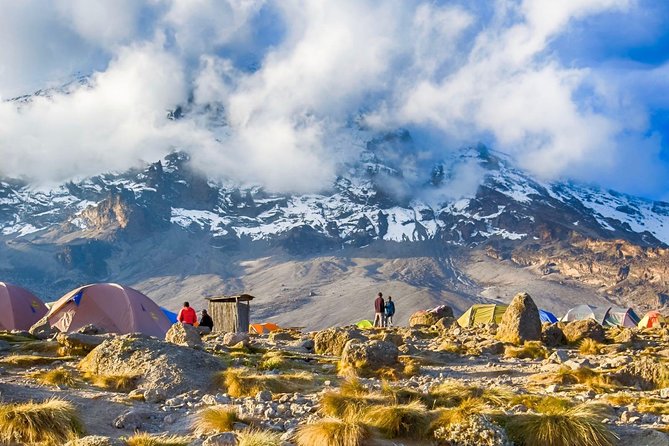
- The route reaches Barranco Camp on day two: You move from rainforest to moorland quickly, with steep walking and a dramatic view of the Barranco Wall.
- Lava Tower reaches 4,630 meters: Day three brings a major altitude test before the route continues to Arrow Glacier Camp at about 4,800 meters.
- Crater Camp is the rare highlight: You sleep at roughly 5,700 meters, beside Kilimanjaro’s ice fields and Furtwangler Glacier.
- Summit morning begins around 4:00 a.m.: You have about two hours from Crater Camp to Uhuru Peak, followed by a long descent to Mweka.
- Most costs are bundled: Park fees, transfers, staff wages, camping equipment, food, water, and emergency oxygen are included.
- The route is not for casual hikers: The operator requires strong physical fitness, and personal insurance, gear, medicine, snacks, and a portable toilet cost extra.
Why the Umbwe Route feels different
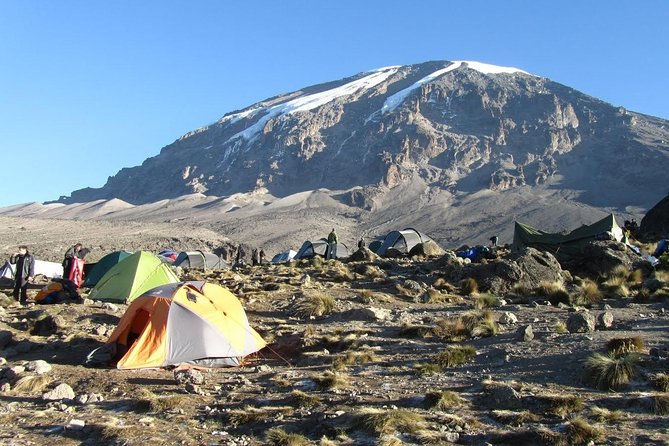
Kilimanjaro has several established routes, but Umbwe is known for going up hard and fast. You start in the forest and gain height quickly, rather than taking a longer, gentler path around the mountain. That gives the climb a raw, direct feel, but it also leaves less time for your body to adjust.
The six-day plan is private, so only your own group participates. That can make a real difference on a demanding mountain. You can communicate directly with the guide, set a sensible walking rhythm, and discuss symptoms without being tied to a large mixed group.
This is not a route I would choose simply because it is shorter. A short Kilimanjaro itinerary can mean less time to adapt to altitude. The itinerary also includes a high camp at Arrow Glacier and a night at Crater Camp, both of which require careful pacing and close attention to how you feel.
The route’s reward is its drama. You pass through several climate zones in a compact period, from damp forest to open moorland, then to bare volcanic rock and ice. The scenery changes quickly, and you get a strong sense of climbing through the mountain rather than walking toward a distant summit from a single type of terrain.
More Kilimanjaro routes and climbs:
- Kilimanjaro climb by Lemosho Route (7-day)
★ 5.0 · 651 reviews - Kilimanjaro climb, Machame Route (7-day)
★ 5.0 · 262 reviews - Kilimanjaro Climbing Lemosho Route 8 Days.
★ 5.0 · 186 reviews
Day one: Umbwe Gate to Bivouac Camp
Your morning starts with pickup in Moshi after breakfast. The drive takes you to Umbwe Gate, where you can buy mineral water, receive a packed lunch, and wait while the porters organize the equipment. You and your guide handle registration with Tanzania National Parks before setting off.
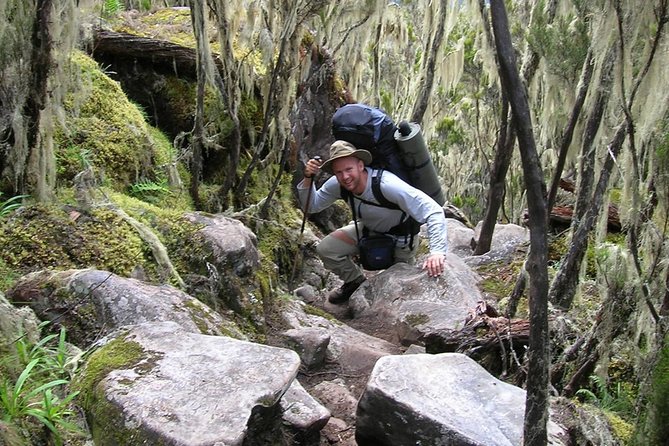
The first section enters rainforest. Expect mud, rain, and fog, especially in wet conditions. This is not a polished walk on a dry trail. The atmosphere is thick, damp, and mountain-like from the start, and Colobus monkeys may appear among the trees.
The hike takes about five hours and ends at Bivouac Camp, at approximately 2,940 meters. You stop for lunch around the middle of the route, then reach camp in the late afternoon or early evening. The support crew prepares the campsite, drinking water, and washing water while you settle in.
I like the way this first day gets you into the mountain quickly. You are not spending hours on a wide approach road or easing into the experience with a gentle stroll. The drawback is that the steep trail, wet ground, and early height gain can tire you sooner than expected.
Wear proper rain protection and protect spare clothing inside waterproof bags. The forest is the place to manage moisture before it becomes a problem. Wet socks on day one are a small issue. Wet sleeping clothes at camp are not.
Day two: Moorland, giant plants, and Barranco Wall
After breakfast, you leave the rainforest and enter heathland and moorland. The vegetation becomes more open, with unusual plants such as giant lobelia and giant groundsel. The views also begin to expand, giving you a clearer sense of Kilimanjaro’s upper slopes.
This day takes about six hours. The trail climbs, flattens in places, then drops into the Barranco Valley before reaching Barranco Camp. That up-and-down movement matters. You are gaining altitude overall, but the route does not simply point uphill every minute.
Barranco Camp sits near a stream and looks toward the Western Breach and the Great Barranco Wall. The wall is one of the route’s memorable visual markers, and the camp gives you time to appreciate the scale of the mountain before the higher sections begin.
The crew sets up the tents before you arrive and prepares hot water for drinking and washing. Meals are included, and the presence of a cook means you are not carrying food or cooking equipment yourself. Previous praise for Pinnacle repeatedly focuses on the food, organization, and porters who kept people comfortable and supplied.
You should not mistake a pleasant camp routine for an easy climb. By this point, your legs have worked hard, and the route is already higher than many ordinary mountain walks. Keep your pace slow, drink regularly, and tell the guide about headaches, nausea, unusual fatigue, or shortness of breath.
Day three: Lava Tower and Arrow Glacier Camp
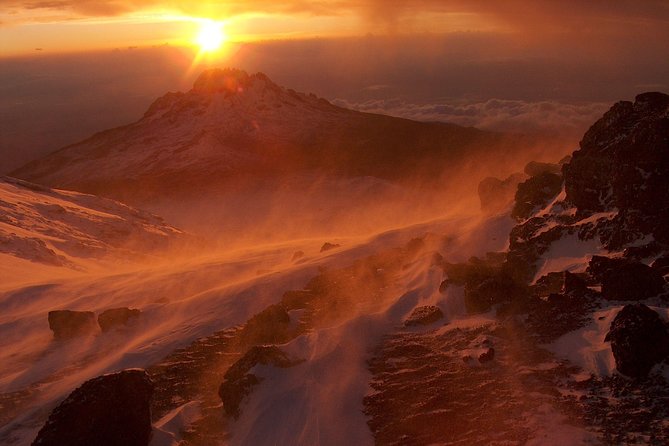
Day three moves into semi-desert conditions and rocky ground. You hike east for about five hours toward Lava Tower, which reaches 4,630 meters. This is where altitude becomes a central part of the experience, not a minor discomfort.
Headaches and shortness of breath can begin at Lava Tower. That does not automatically mean you must stop, but it does mean you need to take symptoms seriously. The guide should assess how you are doing, and you should give an honest answer rather than trying to prove toughness.
A packed lunch is served at the tower. If weather allows, you may climb Lava Tower itself, though that option adds effort at a point when conserving energy is wise. I would treat the extra climb as optional for a reason. The summit is still ahead.
After lunch, the route continues on steep Class 2 rock toward Arrow Glacier Camp, at approximately 4,800 meters. The day takes about seven hours in total. Vegetation becomes sparse, and the setting feels increasingly stark and exposed.
This is one of the most demanding days because you climb high and then sleep high. The itinerary does not give you a low-altitude recovery night after Lava Tower. For experienced trekkers who understand their limits, that direct progression may feel exciting. For anyone new to altitude, it is the point where the six-day schedule deserves serious reconsideration.
A few more trips of this kind worth comparing:
- Kilimanjaro climb, Lemosho Route (6-day)
★ 5.0 · 129 reviews - Kilimanjaro climb, Marangu route (6-day)
★ 5.0 · 72 reviews - 6 Days 5 Night Safari
★ 5.0 · 57 reviews - 6 Days Tanzania Classic Safari
★ 5.0 · 52 reviews
Day four: Western Breach to Crater Camp
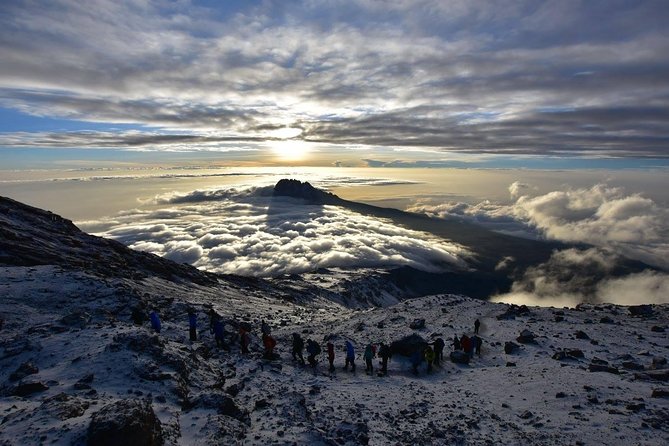
From Arrow Glacier Camp, you continue scrambling over rock on a Class 2 route. The ascent toward the Western Breach reaches the crater at about 5,700 meters and takes roughly five hours.
Conditions matter here. During the rainy season, ice axe and crampons may be required because of icy surfaces. You should confirm the current equipment plan before departure and understand what personal gear you must provide or rent in Moshi.
Reaching the crater brings one of the most unusual parts of this trip. You see the Northern Ice fields and Furtwangler Glacier directly ahead, then spend the night at Crater Camp on the snow-covered inner crater. Very few people get this kind of close, high-altitude view of Kilimanjaro’s glaciers.
You may also take a roughly 1.5-hour walk to the Ash Pit. It is about 340 meters across and 120 meters deep. The walk adds a fascinating volcanic feature, but it also adds exertion at nearly 5,700 meters. I would only consider it if your guide believes you have enough energy and your body is handling the altitude well.
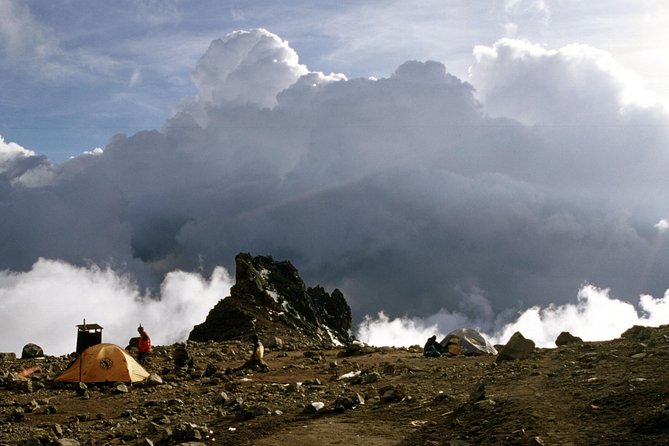
Crater Camp is a remarkable setting, but it is not a comfortable luxury camp. At this height, cold, thin air, poor sleep, and fatigue are part of the deal. The tents, mattress, camp chairs, tables, food, and hot washing water make the night more manageable, but they cannot remove the physical strain.
Day five: Uhuru Peak, then a very long descent
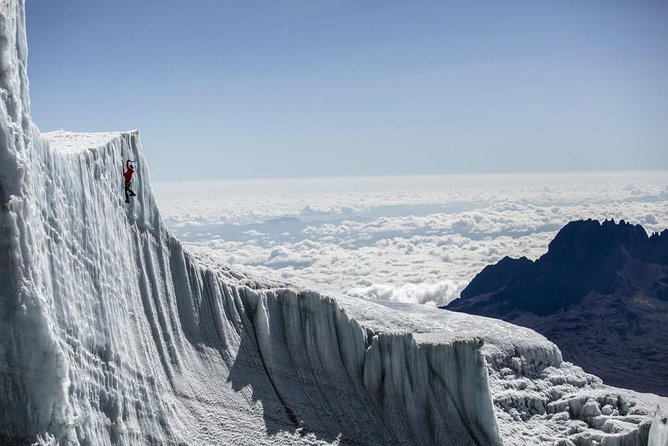
Summit morning starts at about 4:00 a.m. with tea and biscuits. From Crater Camp, you hike for roughly two hours across snow-covered ground to Uhuru Peak, at 5,895 meters.
This short distance can feel harder than a full day lower on the mountain. The cold, darkness, altitude, and mental pressure all arrive together. Keep your expectations simple: move steadily, listen to your guide, and focus on the next safe step rather than the entire climb.
At Uhuru Peak, you have time for photographs and a drink before descending. Reaching the highest point in Africa is a major achievement, but you should not linger longer than your condition allows. The summit is a place to celebrate briefly and leave safely.
The descent is the day’s real endurance test. You go from Crater Camp to Uhuru Peak, then all the way down to Mweka Camp at about 3,100 meters. The schedule gives seven to eight hours for the descent, with approximately 7 kilometers uphill and 23 kilometers downhill overall.
That is a lot of downhill after an early start. Poles can help, though they are not included in the package unless you rent or bring them. Good footwear, careful foot placement, and a controlled pace are more useful than rushing toward camp.
This day is also where strong staff support matters most. The operator supplies guides, assistant guides, porters, a cook, emergency oxygen for emergencies, and a basic first aid kit. Oxygen is not intended as summit assistance, so you should not treat it as a backup plan for poor acclimatization.
Day six: Mweka Trail and the return to Moshi
After breakfast, the mountain crew holds a celebration with dancing and singing. This is also the point when tips are presented to the guide, assistant guides, cook, and porters. Bring a clear tipping plan and enough local cash, since gratuities are not part of the listed price.
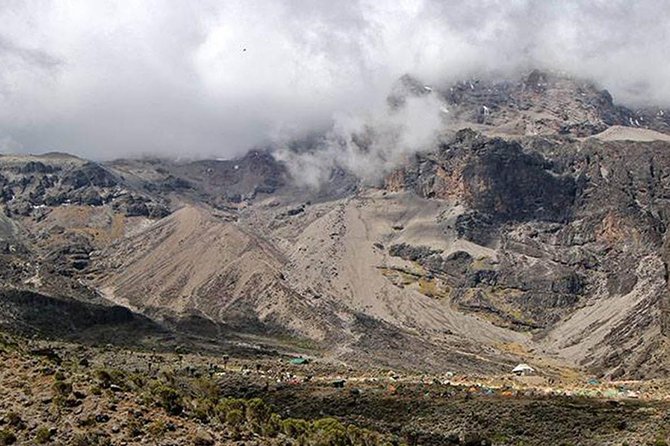
The walk to Mweka Gate takes about three hours and covers roughly 15 kilometers through forest. It is easier on the lungs than the upper mountain, but tired knees and feet can still make the descent feel long.
At the gate, you sign your name to receive a completion certificate. Uhuru Peak finishers receive gold certificates, while those who reach Stella Point at 5,685 meters receive green certificates. Afterward, the itinerary continues about an hour, or 3 kilometers, to Mweka village.
The return to Moshi marks the end of the activity. Airport transfers to and from Kilimanjaro Airport are included, which removes two major transport tasks before and after the climb. That is useful if you are arriving on a tight schedule or do not want to arrange mountain transfers separately.
What the $2,310 price includes
The price looks substantial, but a Kilimanjaro climb involves far more than a guide and a trail permit. This package includes park fees and taxes, airport transfers, mountain staff wages, tents, camp chairs, tables, sleeping mattresses, meals, drinking water, hot washing water, emergency oxygen, and a basic first aid kit.
You receive five breakfasts, six lunches, and five dinners. Food is one of the areas where the company receives especially strong praise, along with friendly porters and careful organization. Carrying less equipment yourself also makes the steep Umbwe Route more manageable.
The cost does not include flights, visas, travel insurance, health insurance, personal trekking equipment, medicine, water-purifying tablets, snacks, unspecified drinks, or personal items. A portable toilet is optional but strongly recommended, and you pay extra for it.
You can rent personal gear from equipment stores in Moshi, but do not leave every decision until arrival. At minimum, clarify what the rental shops carry, what condition the gear is in, and what is required for the Western Breach during wet or icy weather.
Group discounts may improve the value for a larger private party. Since this is a private activity, you are paying for a dedicated arrangement rather than joining an unknown group. That is worthwhile if you value flexibility and direct communication, but the route itself remains demanding regardless of the group size.
Guide quality and practical support
The strongest pattern in the feedback is not one single scenic moment. It is the staff’s care and organization. Specific praise goes to head guides such as Godfrey, while Frazier helped one client arrange airport transport, lodging, and other local logistics after a last-minute booking.
That kind of support matters in Moshi, where the climb is only one part of the trip. One client also arranged a local town tour before the trek, showing that the company can help shape the days around the mountain, though that town tour is not included in this package.
The mountain crew is responsible for carrying supplies, preparing meals, setting up tents, and providing water. You should still pack carefully and respect the porters’ work. Keep your personal bag organized, avoid unnecessary weight, and ask the operator for clear guidance on ethical tipping.
The available ratings are uniformly five out of five, with six published ratings. That is encouraging, particularly because the comments praise practical matters such as safety, food, transport, accommodation, and personal attention. It is still a small sample, so I would use it as a positive sign rather than proof that every departure will be identical.
Who should choose this six-day climb?
I would choose this route if you already have solid mountain experience, are comfortable with steep terrain, and want a quieter, more direct way to reach Kilimanjaro’s summit. It also suits someone who values a private group and is willing to accept basic camping in exchange for unusual access to the crater.
I would not choose it for a first high-altitude trek simply because the trip is six days. The route reaches 4,800 meters by day three and about 5,700 meters by day four. The itinerary requires strong fitness, and those altitude gains leave little room for a slow adjustment.
You should also think about your response to uncertainty. Weather can affect the Lava Tower option and the Western Breach, while rainy conditions may require technical equipment. A good guide must be willing to change plans when conditions or symptoms call for it.
The cancellation terms are strict close to departure. You receive a full refund if you cancel at least three full days before the start time, but cancellations or changes inside that window are not refunded or accepted. Travel and health insurance are not included, so arrange them independently.
Should you book the Umbwe Route?
Book this six-day climb if the crater night, steep route, and fast-moving adventure are exactly what you want, and if you have trained for sustained uphill and downhill walking. The included staff, meals, camping equipment, airport transfers, and strong record of personal care give the $2,310 price reasonable value.
Choose a longer Kilimanjaro route instead if your main goal is the best possible acclimatization schedule. You will give up some speed, but you may gain a more forgiving path to the summit.
The key question is not simply Can you walk for six days? It is Can you handle rapid altitude gain while staying calm, honest, and steady? If the answer is yes, Umbwe offers a fierce and memorable route to Uhuru Peak. If not, the mountain will still be there, and a slower plan is the wiser buy.
FAQ
How long is the Kilimanjaro Umbwe Route experience?
The experience lasts approximately six days, beginning and ending in Moshi. The final descent goes through Mweka Gate and continues to Mweka village before the activity ends back at the meeting point.
What is included in the $2,310 price?
The price includes park fees and taxes, airport transfers, mountain guides, assistant guides, porters, a cook, staff wages, camping equipment, sleeping mattresses, fresh drinking water, hot washing water, meals, emergency oxygen for emergencies, and a basic first aid kit.
Are flights and visas included?
No. Flights and visas are not included. Travel insurance and health insurance are also excluded.
Do I need to bring my own hiking gear?
Personal hiking and trekking gear is not included. You may bring your own equipment or rent gear from equipment stores in Moshi. An optional portable toilet is strongly recommended, and personal medicine and water-purifying tablets are also your responsibility.
Is this route suitable for beginners?
The provided requirements state that you should have a strong physical fitness level. Because the route is steep and reaches very high altitude quickly, it is best suited to experienced trekkers who understand the demands of mountain walking.
What happens if I cancel?
You can receive a full refund if you cancel at least three full days before the experience start time. Cancellations or changes made less than three full days before the start time are not refunded or accepted.
Just added around Moshi
- Moshi: Lake Chala Tour: Hiking &/or Kayaking★ 4.5 · 3 reviews
- 3 Days Tanga Exclusive Beach Holiday★ 5.0 · 3 reviews
- Serengeti Wildebeest Migration.★ 5.0 · 3 reviews
- Chemka Hotpsrings E-Bike Day Trip★ 5.0 · 3 reviews
- Explore 1 day Ngorongoro Crater Budget Group Safari from Arusha★ 5.0 · 3 reviews
- Explore the 360° of Kilimanjaro★ 5.0 · 3 reviews
- Affordable Short Tanzania Safari (2 Days Camping Safari)★ 5.0 · 3 reviews
- Rongai Route 7 Days★ 5.0 · 3 reviews
Kilimanjaro Treks, compared.



8-Day Small-group Lemosho Kilimanjaro Summit Trekking
Read our review →


Climbing Kilimanjaro through 7 days Machame Route
Read our review →

Browse the lists this tour appears in