
Reviewed · KILIMANJARO TREKS
6 Days Climb Kilimanjaro Through Marangu Route
Africa’s highest summit demands patience. This six-day Kilimanjaro climb follows the Marangu Route, with qualified guides, porters, cooks, park fees, meals, transport, and mountain equipment included. I especially like the built-in rest day at Horombo Hut and the fact that the trek begins and ends with transport from Moshi.
The route also gives you a fine range of scenery, from rainforest and colobus monkeys to giant lobelias, open moorland, and the stark alpine desert near Kibo Hut. The main concern is the pace: the summit push is hard, and six days gives you less adjustment time than longer Kilimanjaro routes.
In This Review
- Key things to know before booking
- Why the Marangu Route remains popular
- Day 1: Moshi to Mandara Hut through rainforest
- Day 2: Mandara to Horombo across the moorland
- Day 3: A rest day at Horombo Hut
- Day 4: Horombo to Kibo across the moonscape
- Day 5: Kibo to Uhuru Peak, then back to Horombo
- Day 6: Horombo to Moshi through wet forest
- What the $1,899 price really covers
- How the private format changes the experience
- Preparation tips that make a real difference
- Who should book this Kilimanjaro climb?
- Should you book it?
- FAQ
- How long is the Kilimanjaro climb?
- Which route does the climb use?
- Where does the tour start?
- Is transportation from Moshi included?
- Are meals included?
- Is accommodation included?
- Is there a rest day during the climb?
- When does the summit climb begin?
- Is the tour private?
- Are tips and climbing gear included?
Key things to know before booking
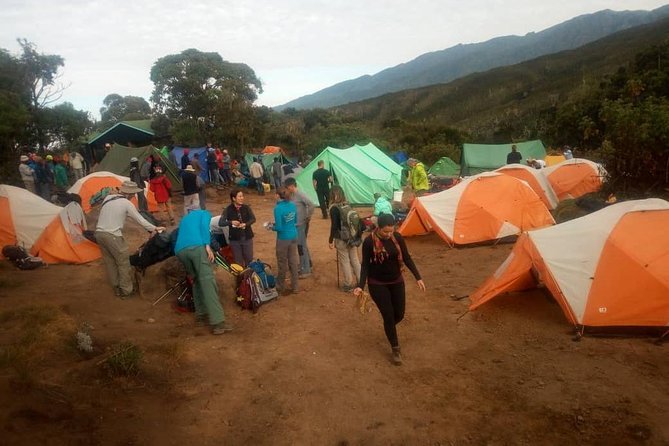
- The Marangu Route uses huts at the main stops, although the package also describes tents and sleeping mattresses, so confirm your sleeping setup before departure.
- Day 3 is a rest day at 3,700 meters, with an optional walk toward Mawenzi Peak to help you adjust to altitude.
- Summit night begins around midnight to 2 a.m., followed by a climb to Uhuru Peak and a long descent to Horombo.
- The $1,899 price includes major climbing costs, such as park fees, guides, porters, meals, rescue fees, equipment, and Moshi transfers.
- The trip is private, so only your own group participates rather than joining a large mixed departure.
- Bring rain gear, gaiters, trekking poles, eye shades, and earplugs, especially for the wet lower forest and short sleep periods.
Why the Marangu Route remains popular
Marangu is often called the Coca-Cola Route, a nickname tied to its straightforward trail and hut accommodation. You do not need to carry your full load, since porters handle much of the mountain equipment, food, and camp supplies.
The route is also appealing because you walk up and down the same general corridor, unlike routes that climb one side of the mountain and descend another. That makes the itinerary easy to understand, though the return path can feel familiar by the final day.
At $1,899 per person, this is not a cheap holiday, but Kilimanjaro climbs carry large fixed costs. Your payment covers national park entry, rescue fees, transport, guides, porters, a cook and waiter, meals, boiled water, dining equipment, first aid supplies, pulse oximeters, and sleeping gear.
That package offers solid value if all promised services are delivered. You would otherwise need to arrange transport, park access, mountain staff, food, rescue coverage, and equipment separately. Tips, personal gear, visas, unspecified drinks and meals, and emergency oxygen remain your responsibility.
The operator has a 4.7 rating from 15 posted assessments, with 93 percent recommending the experience. Many favorable accounts praise the guides and the strong sense of teamwork. Edward Lazaro, known as Teacher, is singled out for leadership, while guides named Joseph, Goodluck, Temba, Tuliza, Patrick, Juma, Sampson, and Julian receive warm praise in different accounts.
There is also a serious caution. One account describes poor communication, weak organization, an inexperienced guide, and disappointing transport and accommodation. That does not erase the many positive reports, but it gives you a good reason to confirm the guide, pickup time, sleeping arrangements, equipment, and emergency plan before you leave Moshi.
More Kilimanjaro routes and climbs:
- Kilimanjaro climb by Lemosho Route (7-day)
★ 5.0 · 651 reviews - Kilimanjaro climb, Machame Route (7-day)
★ 5.0 · 262 reviews - Kilimanjaro Climbing Lemosho Route 8 Days.
★ 5.0 · 186 reviews
Day 1: Moshi to Mandara Hut through rainforest
After breakfast, you receive a briefing and drive about one hour from Moshi to the Kilimanjaro National Park Gate. Registration takes place there before you begin walking through the montane forest.
The first climb covers 8 kilometers, rising from 1,860 meters to 2,700 meters. The stated walking time is three to four hours, with lunch and dinner provided. This is a sensible opening day, since the forest offers shade and a gentler introduction than the exposed upper slopes.
Look for tall eucalyptus trees, bird life, and black-and-white colobus monkeys. A side walk to Maundi Crater gives you broader views toward northern Tanzania and Kenya, making it a worthwhile extra if your energy and timing allow.
Mandara is your first overnight stop. The accommodation description refers both to huts and to tents with mattresses. Marangu is generally associated with huts, but you should ask the operator exactly what your group will use.
Day 2: Mandara to Horombo across the moorland
The second day leaves the forest behind and climbs into heathland and open moorland. You walk 12 kilometers from 2,700 meters to 3,700 meters, with five to six hours on the trail.
The big reward is the view. Mawenzi Peak appears in one direction, while Kibo, the main summit cone, rises ahead. Giant lobelias and groundsels give this section a strange, high-altitude character.
This is also the day when altitude may begin to affect you. Headache, tiredness, poor sleep, or nausea can appear as you gain height. Your best tool is a slow pace. The guides and past climbers repeatedly emphasize pole pole, meaning slowly, and that advice matters more than racing ahead during the first two days.
Breakfast, lunch, and dinner are included. The dining tent, tableware, mini camping chairs, cook, waiter, and boiled water are all part of the support package, according to the inclusions.
Day 3: A rest day at Horombo Hut
The rest day at Horombo is one of the strongest features of this six-day plan. You remain at about 3,700 meters instead of gaining another 1,000 meters immediately.
The itinerary gives you the option of a hike toward Mawenzi Peak. The walk can help you spend time at altitude before returning to sleep at Horombo, but the schedule does not give a distance or duration. Treat it as an optional acclimatization walk, not as another major summit effort.
You receive all three meals. Use the day to drink boiled water, organize your summit clothing, check your headlamp and gloves, and ask the guide about the next morning. The published material does not specify a full gear-rental program, though some accounts describe equipment being hired through the local team. Confirm this before arrival rather than assuming it is included.
A few more trips of this kind worth comparing:
- Kilimanjaro climb, Lemosho Route (6-day)
★ 5.0 · 129 reviews - Kilimanjaro climb, Marangu route (6-day)
★ 5.0 · 72 reviews - 6 Days 5 Night Safari
★ 5.0 · 57 reviews - 6 Days Tanzania Classic Safari
★ 5.0 · 52 reviews
Day 4: Horombo to Kibo across the moonscape
Day 4 takes you from Horombo at 3,700 meters to Kibo Hut at 4,700 meters. The distance is 9 kilometers, and the stated walking time is five to six hours.
The trail crosses the high saddle between Mawenzi and Kibo. The upper heathland gradually fades until almost no vegetation remains. The alpine desert here feels stark and exposed, with wide views and little shelter.
You pass the last watering point before reaching Kibo. Carry enough water for the day and follow the guide’s instructions closely, since the route now becomes a more demanding high-altitude walk.
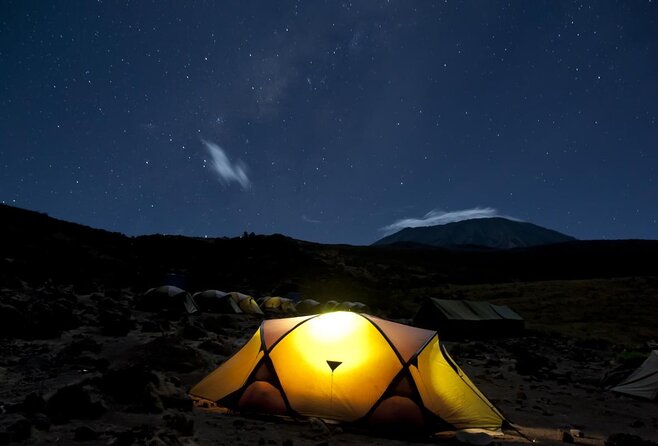
Dinner comes before an early rest. Your summit attempt begins around midnight to 2 a.m., so there is no normal night of sleep. This is a good time to prepare warm layers, snacks, trekking poles, headlamp, water, and any personal medication.
Day 5: Kibo to Uhuru Peak, then back to Horombo
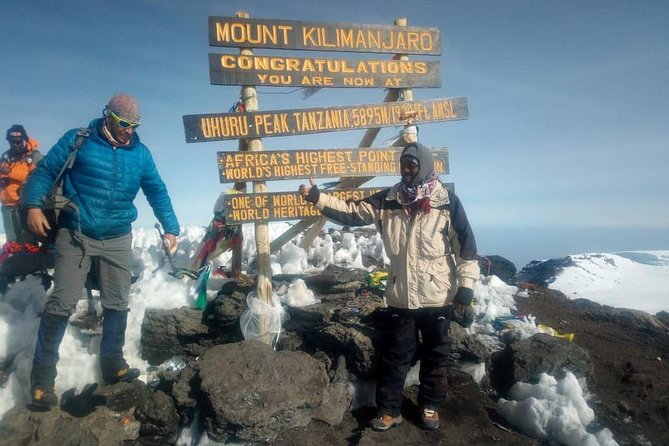
Summit day is the reason you are here, but it is also the part that deserves the clearest warning. You leave Kibo Hut in darkness and climb steep scree or snow toward Gilman’s Point on the crater rim.
The route rises from 4,700 meters to 5,895 meters. That is a gain of nearly 1,200 meters at an altitude where every step can feel slow. The plan gives six to eight hours for the ascent, though the exact time will depend on conditions, pace, and how your body handles the height.
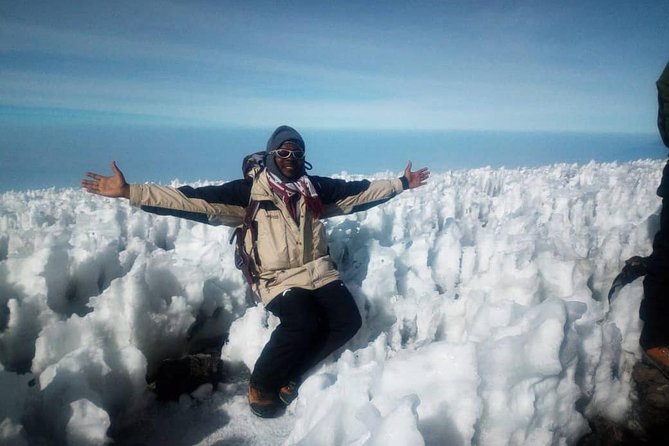
From Gilman’s Point, you continue toward Uhuru Peak, the highest point in Africa. The itinerary promises broad views and time for summit photographs. Weather can change quickly at this height, so keep warm clothing easy to reach even if you start in milder conditions.
After the summit, you descend to Kibo for lunch and a rest, then continue to Horombo Hut. The listed descent distance is 15 kilometers, and this is a very long day despite the stated total duration of eight hours. I would plan mentally for exhaustion and avoid treating the schedule as a guarantee.
This is where the crew matters most. Past accounts repeatedly praise guides and porters for encouragement, pacing, and practical help. One account credits Tuliza with carrying extra equipment when needed, while others describe Joseph and Goodluck as especially supportive during the summit effort.
Day 6: Horombo to Moshi through wet forest
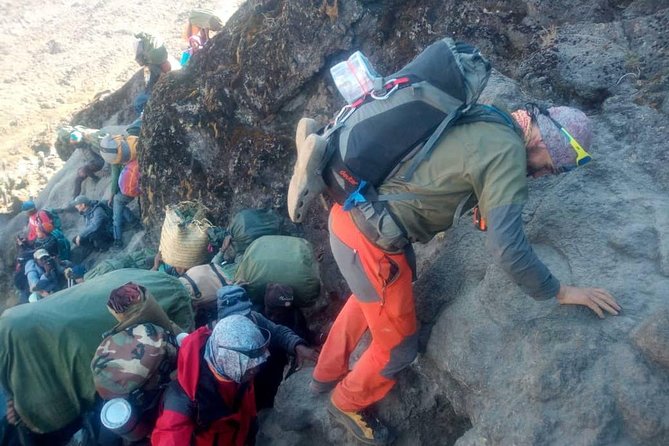
After breakfast, you begin the long descent from Horombo at 3,700 meters toward the Marangu Gate at about 1,700 meters. The stated distance is 20 kilometers, with four to five hours of walking.
The first section passes through moorland and returns to Mandara Hut. From there, the trail drops into lush forest. Lower elevations can be wet and muddy, so gaiters and trekking poles are useful rather than decorative extras.
You can probably wear shorts and a T-shirt in the warmer lower section, but keep rain gear and a warm layer within reach. Mountain weather has a habit of ignoring your packing list.
A vehicle waits at Marangu Gate for the roughly one-hour drive back to your hotel in Moshi. The activity ends at the meeting point, with return transportation included.
What the $1,899 price really covers
The price makes more sense once you look beyond the headline number. Included services cover:
- Return transport between Moshi and the mountain start and finish points
- Kilimanjaro National Park fees
- Rescue fees
- Qualified guides and mountain crew
- Porters, cook, and waiter
- Breakfast, lunch, and dinner on the mountain
- Boiled water
- Tents and sleeping mattresses
- Dining tent, mini camping chairs, cutlery, and crockery
- Pulse oximeters and a first aid kit
That is a substantial bundle. You still need to budget for tips, personal clothing and equipment, visas, drinks and meals not listed, and emergency oxygen.
Tips are not included, and you should treat them as an expected cost rather than an optional afterthought. The crew carries, cooks, serves, guides, and supports you through a demanding climb.
How the private format changes the experience
This is a private activity, meaning only your group participates. That can make communication easier and may allow the guide to adjust the pace to your needs.
The description also promises open communication and flexibility. Still, the exact level of flexibility has limits. The route, park rules, weather, altitude, and hut availability shape the day, and the summit schedule cannot be changed casually once you are on the mountain.
Group size is not specified. That matters because a private booking could mean a very small group or a larger party traveling together under one reservation. Ask how many climbers and crew members will be involved.
Several accounts describe groups of 20, including one where 15 reached the summit. That shows how group outcomes can vary. A six-day climb is fast, and not everyone who starts is guaranteed to reach Uhuru Peak.
Preparation tips that make a real difference
You should arrive ready for cold, wet, dusty, and sunny conditions. The provided information does not give a full packing list, so confirm required gear with the operator.
At minimum, pay close attention to:
- Waterproof layers for the lower forest
- Warm summit clothing
- Gaiters for mud
- Trekking poles
- Eye shades for daytime rest
- Earplugs for sleeping
- Headlamp and spare batteries
- Personal water containers and snacks
- Any required personal medication
Eye shades and earplugs are particularly useful on this itinerary. The summit attempt starts in the middle of the night, and you may need to rest during daylight hours at a busy mountain stop.
You should also ask how the operator checks altitude and handles illness. Pulse oximeters and a first aid kit are included, but the presence of medical equipment does not replace careful monitoring or a clear evacuation plan.
Who should book this Kilimanjaro climb?
I would recommend it to fit hikers who want a supported route with a rest day, hut-style accommodation, and a clear six-day schedule. It suits you if you value having transport, meals, park fees, porters, and mountain staff organized in one package.
It is less suitable if you want a relaxed acclimatization schedule. Six days is a compact plan, and the summit day is physically demanding. A person worried about altitude should ask about longer options before committing.
The route also works well for people who prefer a direct path rather than a more remote or varied route. You see forest, moorland, high desert, Mawenzi, Kibo, and the summit, but you return through much of the same corridor.
Should you book it?
Book this climb if the operator confirms your guide, crew, accommodation, equipment, pickup, and emergency procedures in writing. The package has strong practical value, and the most praised part is the human support from guides and porters.
Think twice if you need a leisurely pace or dislike uncertain sleeping arrangements. The one poor account about organization and communication is worth taking seriously, even alongside the many warm accounts praising Teacher, Joseph, Goodluck, Temba, Tuliza, and the wider crew.
For a determined hiker with six days available, this is a well-supported route to Africa’s highest point. Just remember that the price buys logistics and support, not a guaranteed summit.
FAQ
How long is the Kilimanjaro climb?
The experience lasts approximately six days, beginning and ending with transport from Moshi.
Which route does the climb use?
The climb follows the Marangu Route on Mount Kilimanjaro.
Where does the tour start?
The meeting point is Mount Kilimanjaro in Tanzania, with pickup and return transportation offered from Moshi.
Is transportation from Moshi included?
Yes. Return transportation from Moshi to the mountain starting point and from the finishing point back to Moshi is included.
Are meals included?
Breakfast, lunch, and dinner are included on the mountain, except on the final day when breakfast is provided.
Is accommodation included?
Yes. The package includes tents and sleeping mattresses, while the route description also refers to huts at the stops. Confirm the exact sleeping arrangement before booking.
Is there a rest day during the climb?
Yes. Day 3 is a rest day at Horombo Hut, with an optional hike toward Mawenzi Peak.
When does the summit climb begin?
The summit attempt starts very early, between midnight and 2 a.m., from Kibo Hut.
Is the tour private?
Yes. Only your group participates in this private activity.
Are tips and climbing gear included?
No. Tips for guides, porters, cooks, and waiters are not included. Personal climbing gear, visas, unspecified meals and drinks, and emergency oxygen are also excluded.
Just added around Moshi
- Moshi: Lake Chala Tour: Hiking &/or Kayaking★ 4.5 · 3 reviews
- 3 Days Tanga Exclusive Beach Holiday★ 5.0 · 3 reviews
- Serengeti Wildebeest Migration.★ 5.0 · 3 reviews
- Chemka Hotpsrings E-Bike Day Trip★ 5.0 · 3 reviews
- Explore 1 day Ngorongoro Crater Budget Group Safari from Arusha★ 5.0 · 3 reviews
- Explore the 360° of Kilimanjaro★ 5.0 · 3 reviews
- Affordable Short Tanzania Safari (2 Days Camping Safari)★ 5.0 · 3 reviews
- Rongai Route 7 Days★ 5.0 · 3 reviews
Kilimanjaro Treks, compared.



8-Day Small-group Lemosho Kilimanjaro Summit Trekking
Read our review →


Climbing Kilimanjaro through 7 days Machame Route
Read our review →

Browse the lists this tour appears in