
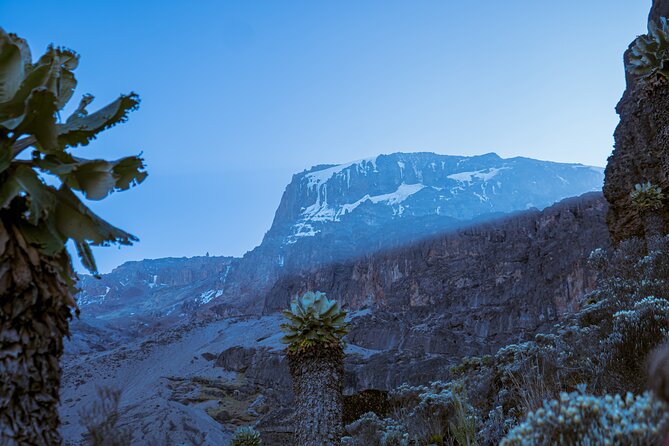
Reviewed · KILIMANJARO TREKS
6 Days Climb Private Tour in Mount Kilimanjaro
The summit is only half the story. Nafika Tours’ six-day private climb follows the Machame Route from Moshi through rainforest, moorland, alpine desert, and finally the high volcanic slopes of Mount Kilimanjaro. You climb with your own group, supported by guides, porters, cooks, camping equipment, and a plan built around reaching Uhuru Peak at 5,895 meters.
I like the strong attention to health checks and altitude safety, including rescue oxygen and first-aid training for the guides. I also like the way the route gives you the Barranco Wall, Lava Tower, and Shira Plateau instead of rushing straight upward. The main drawback is the schedule: six days is demanding, and the summit day can last 12 to 15 hours.
The price is $1,980 per person, with pickup, camping, meals, two hotel nights in Moshi, rescue fees, and private transport included. That makes this a serious package rather than a bare-bones hike, but you still need to budget for the $50 visa and prepare for cold, wet, tiring conditions.
In This Review
- Quick facts about the six-day climb
- Starting in Moshi and reaching Machame Gate
- Day 2: Shira Plateau and the first wide mountain views
- Day 3: Lava Tower gives the climb its key altitude test
- Day 4: Climbing the Barranco Wall to Barafu Camp
- Day 5: The midnight start and Uhuru Peak
- Day 6: A long descent through forest to Mweka Gate
- What the $1,980 price actually covers
- The people behind the climb
- Who should book this private climb?
- Should you book the Nafika six-day Kilimanjaro climb?
- FAQ
- How long is the Kilimanjaro tour?
- Which route does the climb use?
- What is the highest point reached?
- Is this a private tour?
- What meals are included?
- Is transportation included?
- Is camping equipment provided?
- Is emergency support included?
- What fitness level is required?
Quick facts about the six-day climb
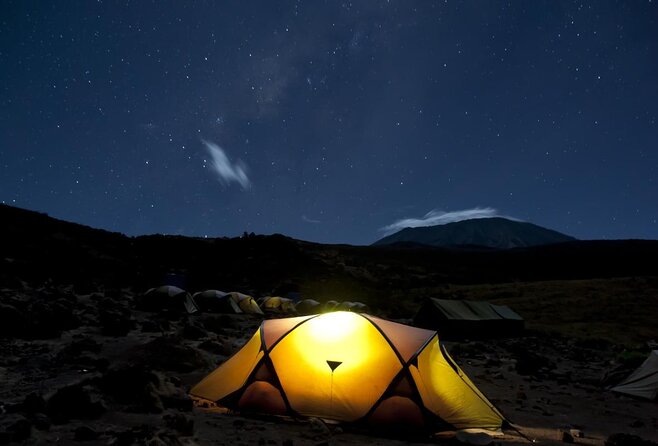
- Machame Route scenery: You move through five ecological zones, beginning among Chagga coffee and banana farms and ending in Kilimanjaro’s cold alpine world.
- Private group format: Only your own party takes part, which gives the guides more room to adjust the pace and monitor how you are coping.
- Acclimatization built into Day 3: You climb to Lava Tower at 4,600 meters, then sleep lower at Barranco Camp.
- Safety equipment included: Rescue oxygen, a first-aid kit, treated water, and rescue fees are part of the package.
- High-quality camping setup: Mountain Hardware tents, foam sleeping pads, sleeping bags, tables, and chairs are supplied.
- Strong human element: Past climbers have praised the guides, porters, cooks, and administration, with names including Meshaki, Karrimor, Mr. Dixon, Godchance, and Elias.
Starting in Moshi and reaching Machame Gate
The trip begins with hotel pickup in Moshi at about 8:00 a.m. That early start matters because the first day includes both a transfer and roughly seven hours of walking. On the drive toward Machame Gate, you pass coffee and banana plantations cultivated by the Chagga people.
This opening gives the climb some local context before you reach the national park. The farms mark the cultivation zone, the first of Kilimanjaro’s five ecological zones. It is a useful reminder that the mountain is not an isolated rock in the distance. Communities live and work around its lower slopes.
At Machame Gate, Nafika Tours handles the pre-hike formalities. Once those are complete, you enter the mountain and begin walking through tropical rainforest toward Machame Camp at 2,835 meters. The route covers about 11 kilometers and takes around seven hours.
The forest is a gentle but steady introduction. Look for blue monkeys high in the trees, and expect humid conditions, mud, and roots underfoot. This is not a sightseeing walk with a quick photo stop every few minutes. You spend most of the day gaining height at a controlled pace.
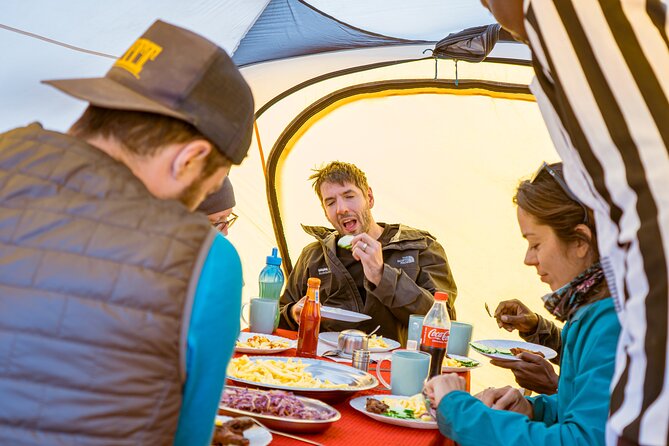
Your meals for the day are breakfast, lunch, and dinner. Since the operator provides cooks and camp equipment, you are not expected to arrange your own food in the mountains. That support becomes more valuable as the days get colder and your appetite changes with altitude.
More Private Tours in Moshi
- Private Kilimanjaro Hike 7 Day Lemosho Route
★ 5.0 · 60 reviews - Private Tour to Materuni waterfalls, coffee tour & Kikuletwa hot- springs
★ 5.0 · 49 reviews - 4 Day Private Tour Throughout Tarangire, Serengeti and Ngorongoro
★ 5.0 · 42 reviews
Day 2: Shira Plateau and the first wide mountain views
Day 2 covers about six kilometers and takes around five hours. You leave Machame Camp after breakfast, generally walking at about 8:00 a.m. The trail climbs for roughly an hour to the upper edge of the forest, then enters moorland.
The change is striking. Trees thin out, the views open, and the mountain begins to feel larger. You continue toward the Shira Plateau, a broad high area where the route crosses rocky ground rather than thick forest.
The day includes a short lunch break with snacks, followed by more walking along a rocky ridge. Shira Camp sits at about 3,750 meters. From here, you may see the Western Breach and its glacier, weather permitting.
This is a shorter day than the first, but the altitude makes it more serious. You may find your legs are still fresh while your breathing feels less familiar. The sensible approach is to walk slowly, drink the treated water supplied by the crew, and tell your guide about headaches, nausea, dizziness, or unusual fatigue.
The camp setup is designed to make evenings less punishing. Nafika Tours supplies waterproof Mountain Hardware tents, sleeping pads, sleeping bags, tables, and chairs. You should not expect hotel comfort, but a roomy, weatherproof tent and a proper place to sit can make a real difference after several hours outside.
Day 3: Lava Tower gives the climb its key altitude test
Day 3 is one of the most important days on the route. You walk about 10 kilometers for roughly six hours, first climbing into the alpine desert and reaching Lava Tower at 4,600 meters. Then you descend to Barranco Camp at 3,900 meters.
This climb high and sleep lower pattern is useful for acclimatization. It also gives you a clear sense of how your body reacts above 4,000 meters, while the descent offers some relief before the next day.
Lava Tower is not simply another camp on the way. It is the day’s high point and a meaningful test of your pace, breathing, and hydration. Your guide should be checking how you are doing, and Nafika says regular health checks are part of its approach to altitude.
From Lava Tower, the trail drops for about three hours toward Barranco Camp. The descent brings views of the Western Breach and the Barranco Wall. Barranco Camp sits in a valley below the wall, with the possibility of a memorable sunset if clouds and weather cooperate.
The drawback is that this day can feel confusing physically. You may work hard to reach a higher point, only to lose that height before sleeping. That is intentional, not wasted effort. You are trading a little short-term progress for a better chance to adapt.
Day 4: Climbing the Barranco Wall to Barafu Camp
Day 4 covers around eight kilometers and takes about eight hours. You begin at Barranco Camp, known for its giant groundsels, and climb the Barranco Wall.
The wall looks intimidating, but the route is described as non-technical. You do not need rock-climbing skills, though you do need steady feet, patience, and enough energy for a long, tiring ascent. The trail divides the valley from the southern slopes of Kibo, the volcanic cone that holds the summit.
After the wall, you continue to Karanga Camp, where you stop for lunch. The crew also collects water here because Karanga is the last water stop before the summit. That detail explains why the day feels like more than a scenic hike. Supplies and camp operations are being arranged for the hardest part of the climb.
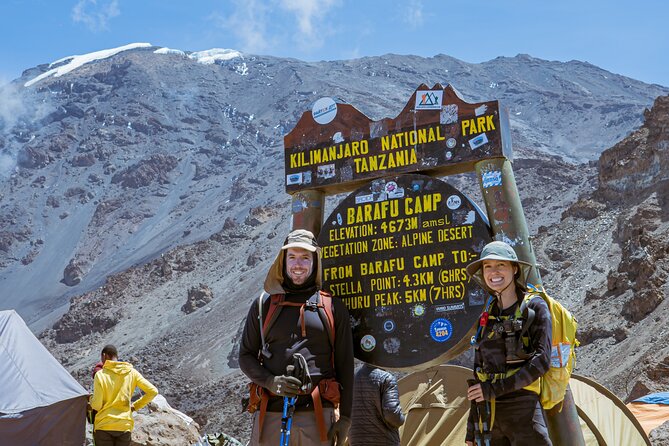
The final section leads through alpine desert to Barafu Camp at 4,640 meters. Barafu is the base camp for the summit attempt. By now, the air is thin, the surroundings are stark, and the schedule becomes less social and more practical. You eat, organize your summit clothing, check your headlamp if you have one, and try to rest.
This is a good point to be honest with yourself. The route is not technically difficult, but the combination of altitude, long walking days, and limited sleep makes it demanding. You should have a moderate level of physical fitness, and previous preparation advice from climbers has focused on strengthening the legs and getting used to sustained walking.
More Kilimanjaro routes and climbs:
- Kilimanjaro climb by Lemosho Route (7-day)
★ 5.0 · 651 reviews - Kilimanjaro climb, Machame Route (7-day)
★ 5.0 · 262 reviews - Kilimanjaro Climbing Lemosho Route 8 Days.
★ 5.0 · 186 reviews - Climbing Kilimanjaro – Machame Route
★ 5.0 · 170 reviews
Day 5: The midnight start and Uhuru Peak
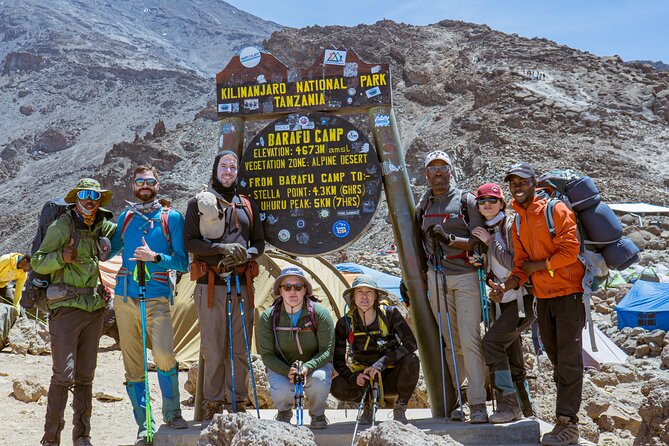
Summit day is the physical heart of the trip. The schedule calls for waking around midnight, taking light tea and breakfast, and beginning the climb after final preparations.
The listed summit-day figures vary slightly, but the practical message is clear: expect an exceptionally long day. The itinerary gives 12 to 15 hours of hiking and about 15 kilometers overall, with the summit climb followed by a descent to Millennium Camp.
The first climb to the crater rim takes about four to five hours. The pace is slow, and your guide’s job is to keep the group moving without forcing a dangerous speed. You gain a great deal of height over a short distance, so the cold, darkness, and altitude all add pressure.
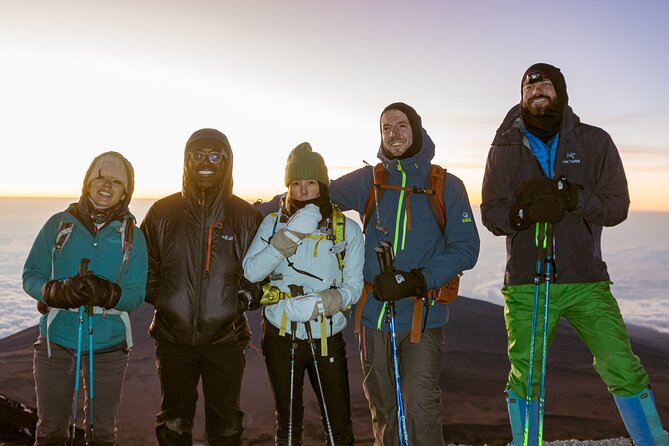
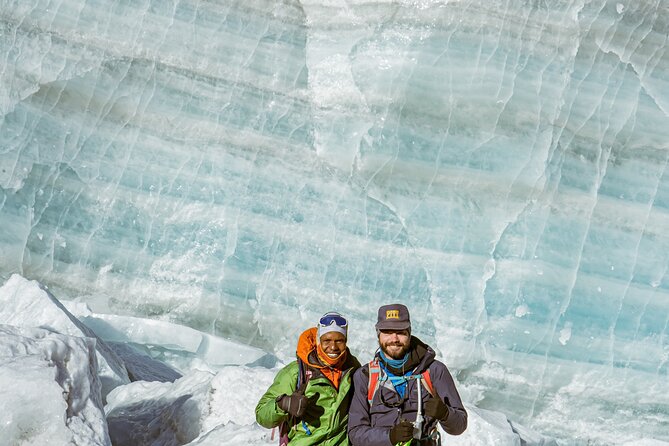
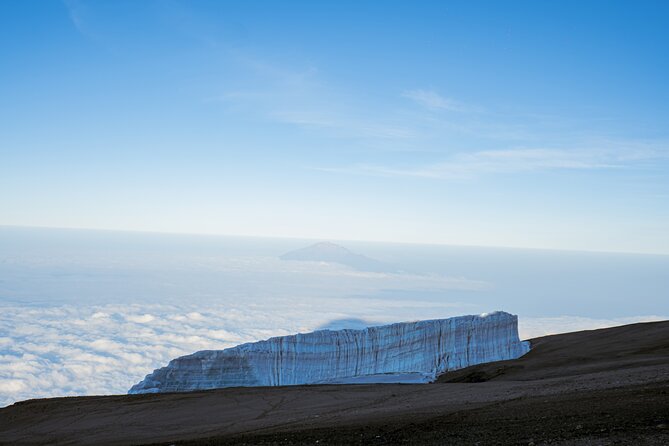
Stella Point sits at 5,756 meters on the crater rim. The plan is to arrive around sunrise, when the first light reaches the upper mountain. From Stella Point, you walk for about another hour to Uhuru Peak at 5,895 meters.
Reaching Uhuru Peak is a major achievement, but do not treat the final hour as an easy victory lap. At this altitude, every step can feel expensive. Keep your celebrations brief, take the summit photographs, and follow the guide’s instructions for the descent.
Safety is especially important here. Nafika Tours includes emergency oxygen, a first-aid kit, and rescue fees. The guides are described as trained in first aid and mountain rescue, with evacuation plans for emergencies. None of that removes the risks of altitude, but it does show that the climb is organized around more than simply getting a photograph at the top.
After Uhuru Peak, you descend to Millennium Camp at about 3,950 meters. The downhill section can be hard on knees and feet, especially after the night start. Your body may feel drained even though the route is technically easier.
Day 6: A long descent through forest to Mweka Gate
The final day begins at Millennium Camp and descends to Mweka Gate at 1,630 meters. The distance is about 14 kilometers, with roughly five hours of walking through moorland and tropical rainforest.
The lower altitude usually feels welcome, but the trail is not automatically easy. Tired legs, sore feet, and the uneven path can slow you down. You should keep your boots tied securely and use trekking poles if you bring them.
At Mweka Gate, you collect your summit certificates. The itinerary then provides a private car back to your Moshi hotel, where a hot shower and a cold drink will feel well earned.
The package includes a hotel night after the hike, along with a hotel night on arrival. That is a valuable buffer. It lets you arrive before the climb, attend to preparations, and recover afterward without having to arrange an immediate onward transfer.
What the $1,980 price actually covers
At $1,980 per person, this is not the cheapest way to climb Kilimanjaro. It is also not just a guiding fee. The cost includes private transportation, camping equipment, sleeping bags, sleeping pads, tables, chairs, treated water, meals, hotel accommodation in Moshi, rescue fees, and fair wages for porters and guides.
The private format adds value if you want your own schedule and direct attention from the guide team. It can also suit a couple, family, or group of friends who do not want to join a larger departure.
The camping equipment is another practical strength. Warm, waterproof, roomy tents and thick foam pads will not make the mountain soft, but they can improve sleep and protect you from wet weather. The listed meals include seven breakfasts, seven lunches, and seven dinners, which appears generous for the six-day schedule. I would confirm the exact meal count and hotel arrangement before paying, especially if your arrival and departure timing is unusual.
The $50 visa is not included. You should also allow for personal purchases and any customary gratuities, though the supplied information does not set a gratuity amount.
The people behind the climb
The most praised part of this experience is the crew. Several climbers have highlighted the warmth and care of the guides, porters, cooks, and administrative staff. Names connected with especially positive feedback include Meshaki, Karrimor, Mr. Dixon, Godchance, and Elias.
That human support matters on Kilimanjaro. A cook who keeps meals coming, porters who establish camp, and a guide who notices a change in your health can shape the entire trip. The strongest praise has focused not only on reaching the summit, but on feeling looked after from the first hotel contact through the final descent.
Elias has been singled out for answering detailed planning questions before departure. That is useful if this is your first major high-altitude trek. You should use that planning stage to ask about packing, expected group staffing, weather, tipping, and exactly how health checks are handled.
Who should book this private climb?
This trip suits you if you want a serious mountain challenge with a private group and a full support team. It is especially appealing if you value a scenic route, proper camping equipment, hotel nights in Moshi, and clear attention to altitude safety.
It is less suitable if you want a relaxed holiday, dislike camping, or have limited fitness for long uphill and downhill days. The summit attempt begins around midnight and can continue for most of the day. Six days also gives you less acclimatization time than longer Kilimanjaro routes.
You should prepare your legs, practice sustained walking, and take the altitude seriously. The route is non-technical, but that does not mean easy. Slow pacing, hydration, rest, and honest communication with your guide are more useful than trying to prove toughness.
Nafika Tours offers free cancellation if you cancel at least 24 hours before the experience start time. Changes or cancellations within 24 hours are not accepted for a refund.
Should you book the Nafika six-day Kilimanjaro climb?
I would consider booking this if you want the Machame Route, a private departure, and a package that puts safety and crew support near the center of the experience. The five ecological zones, Lava Tower acclimatization day, Barranco Wall, and sunrise summit attempt give you a varied and memorable route.
Before booking, confirm the exact day-five descent, meal count, hotel names, guide-to-climber ratio, porter arrangements, and what personal gear you must bring. If you are fit, prepared, and comfortable with a very long summit day, the $1,980 package offers solid value. If you can add another acclimatization day, ask if a longer version is available, since extra time can make the mountain more manageable.
FAQ
How long is the Kilimanjaro tour?
The climb lasts six days, with approximately five hiking days and hotel accommodation in Moshi on arrival and after the hike.
Which route does the climb use?
The itinerary begins at Machame Gate and follows the Machame Route, including Machame Camp, Shira Camp, Lava Tower, Barranco Camp, Barafu Camp, Millennium Camp, and Mweka Gate.
What is the highest point reached?
The summit is Uhuru Peak at 5,895 meters. The route also reaches Stella Point at 5,756 meters and Lava Tower at 4,600 meters.
Is this a private tour?
Yes. Only your own group takes part in the private activity.
What meals are included?
Breakfast, lunch, and dinner are included during the trek. The package information lists seven breakfasts, seven lunches, and seven dinners.
Is transportation included?
Yes. Private transportation is included, including pickup in Moshi and transport back to your hotel after the descent.
Is camping equipment provided?
Yes. The package includes tents, sleeping pads, sleeping bags, tables, and chairs. The tents are described as waterproof Mountain Hardware tents.
Is emergency support included?
Yes. Emergency oxygen, a first-aid kit, rescue fees, and evacuation plans are included. The guides have training in first aid and mountain rescue.
What fitness level is required?
A moderate level of physical fitness is required. The climb includes several long days, and the summit day involves a midnight start and approximately 12 to 15 hours of hiking.
More 6-Day Experiences
- Kilimanjaro climb, Lemosho Route (6-day)
★ 5.0 · 129 reviews - Kilimanjaro climb, Marangu route (6-day)
★ 5.0 · 72 reviews - 6 Days 5 Night Safari
★ 5.0 · 57 reviews - 6 Days Tanzania Classic Safari
★ 5.0 · 52 reviews
Just added around Moshi
- Moshi: Lake Chala Tour: Hiking &/or Kayaking★ 4.5 · 3 reviews
- 3 Days Tanga Exclusive Beach Holiday★ 5.0 · 3 reviews
- Serengeti Wildebeest Migration.★ 5.0 · 3 reviews
- Chemka Hotpsrings E-Bike Day Trip★ 5.0 · 3 reviews
- Explore 1 day Ngorongoro Crater Budget Group Safari from Arusha★ 5.0 · 3 reviews
- Explore the 360° of Kilimanjaro★ 5.0 · 3 reviews
- Affordable Short Tanzania Safari (2 Days Camping Safari)★ 5.0 · 3 reviews
- Rongai Route 7 Days★ 5.0 · 3 reviews
Kilimanjaro Treks, compared.



8-Day Small-group Lemosho Kilimanjaro Summit Trekking
Read our review →


Climbing Kilimanjaro through 7 days Machame Route
Read our review →

Browse the lists this tour appears in