
Reviewed · KILIMANJARO TREKS
6 Days: Hiking Kilimanjaro via Machame Route
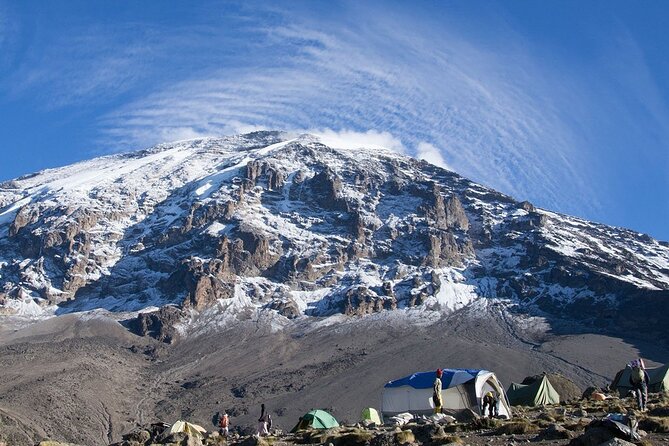
Africa’s highest summit demands respect. This six-day Machame Route climb gives you a demanding but well-supported path up Kilimanjaro, moving from rainforest and colobus monkeys to heather, alpine desert, glacier country, and the 5,895-meter Uhuru Peak. I especially like the route’s changing scenery and the strong guide support associated with Gasto and the Mountain Warriors team. The main concern is the schedule: six days is a short time for high-altitude acclimatization, and summit day is far harder than the simple six-hour label suggests.
I also like that the trip is private, so only your own group takes part. The price of $1,950 per person covers park and rescue fees, tents, guides, meals, purified water, airport transfers, and a camp dining setup. You still need to budget for tips, a Tanzania visa, and personal climbing gear.
In This Review
- Key points before you book
- Why the Machame Route is worth the effort
- Day 1: Machame Gate to Machame Camp
- Day 2: Heather, rocky ridges, and Shira Camp
- Day 3: Lava Tower and the Barranco Valley
- Day 4: Barranco Wall to Barafu Camp
- Day 5: The midnight climb to Uhuru Peak
- Day 6: Rainforest descent and Mweka Gate
- What the $1,950 price really covers
- The guides and the feel of a private climb
- Who should choose this six-day climb?
- Practical details that matter
- Should you book this Kilimanjaro trek?
- FAQ
- How long is the Kilimanjaro Machame Route experience?
- What time does the hike start?
- Is pickup available?
- Is this a private tour?
- How much does the experience cost?
- What route does the hike use?
- What fitness level is required?
- Are park fees included?
- Are meals included?
- Are climbing gear, tips, and a Tanzania visa included?
- Can I cancel for a full refund?
Key points before you book
- The Machame Route changes scenery every day, from rainforest to moorland, alpine desert, and the Kibo summit zone.
- Barranco Wall is a hands-on climb, but guides assist you through the steepest sections.
- Summit night begins around midnight, with hot tea and light snacks before the climb to Stella Point and Uhuru Peak.
- Gasto receives especially strong praise for encouragement, mountain experience, good humor, and keeping climbers focused in bitter cold.
- The private format suits a couple, family, or small group, but the route still requires moderate fitness and a serious attitude toward altitude.
- The price includes the major mountain costs, though gear, visa fees, and tips are extra.
Why the Machame Route is worth the effort
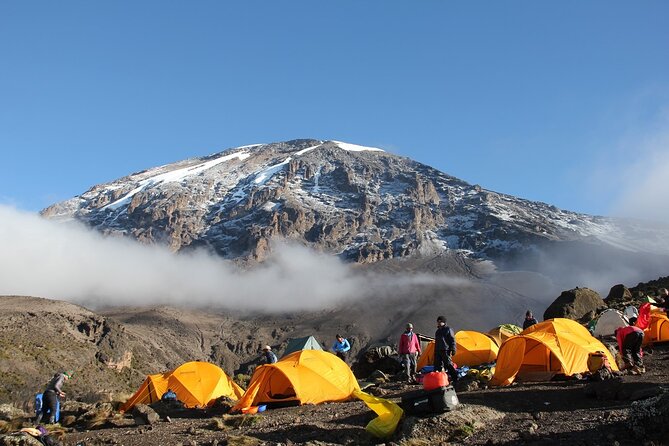
The Machame Route is often called the scenic route because it gives you a broad sample of Kilimanjaro’s ecological zones. You begin under tall forest, then pass into heather and moorland before reaching the bare alpine desert around Lava Tower and Kibo. The summit day brings snow, scree, cold, darkness, and huge views.
I like routes that let you feel a mountain changing around you. Here, the plants become smaller and stranger as you climb. Lobelia and giant senecio plants appear around Barranco Valley, while the upper slopes turn sparse and stark. You may also catch views toward Mount Meru and Shira Ridge when clouds allow.
This is not a gentle walk with a summit photo added at the end. The route includes steep passages, long uphill stretches, a rocky wall, and a summit push that tests your legs and your patience. The reward is a sense of progress you can see with every camp: forest below, high ridges beside you, and Kibo growing larger ahead.
More Kilimanjaro routes and climbs:
- 8-Day Small-group Lemosho Kilimanjaro Summit Trekking
★ 5.0 · 186 reviews - 7-Day Machame Kilimanjaro Summit Tour from Arusha
★ 5.0 · 125 reviews - Mountain Kilimanjaro Day Hike
★ 5.0 · 102 reviews
Day 1: Machame Gate to Machame Camp
Your day begins with a 7:30 a.m. start and a drive of about one hour to Kilimanjaro National Park. At the park entrance, your trek begins through rainforest toward the Machame Camp area.
The first day usually takes about five to six hours of walking. The forest is the star here. It is greener, shadier, and more enclosed than the open country above, and black and white colobus monkeys may watch from the trees as you pass.
The itinerary refers to Shira Cathedral during the first day, then places your overnight stay at Machame Camp at 3,010 meters. The practical point is simple: you are moving steadily uphill from the park gate to your first camp, with a clear change from forest walking to higher mountain terrain.
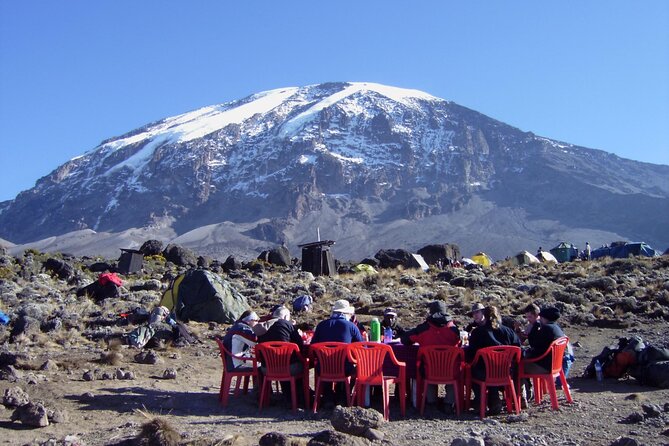
Your tent, evening meal, and overnight camp provide the first taste of mountain life. The supplied sleeping tents are described as private, waterproof, and suitable for mountain conditions. A separate mess tent with tables and chairs gives your group a place to eat and rest, which matters after a wet or tiring afternoon.
Day 2: Heather, rocky ridges, and Shira Camp
After breakfast, you leave the forest glades behind. The path climbs across a small valley and follows a steep, rocky ridge covered with heather. This is a more open day, with wider views and less shelter from sun, wind, or rain.
The walk takes roughly five to seven hours, with the route turning west toward a river gorge at about 3,658 meters. You spend the night at Shira Hut campsite, listed at 3,845 meters.
This day is important because you gain altitude quickly. You may feel fine at the start and notice the thinner air later. The right approach is to walk slowly, drink the purified water supplied by the crew, and tell your guide if you feel unwell. A guide’s job here is not just to point out the path. It is also to watch how you are handling the height.
The Shira area gives you a much bigger sense of Kilimanjaro. The trees have fallen away, and the mountain feels less like a forest trek and more like a high-altitude crossing. You may see Shira Ridge and, when conditions are clear, views toward Mount Meru.
Day 3: Lava Tower and the Barranco Valley
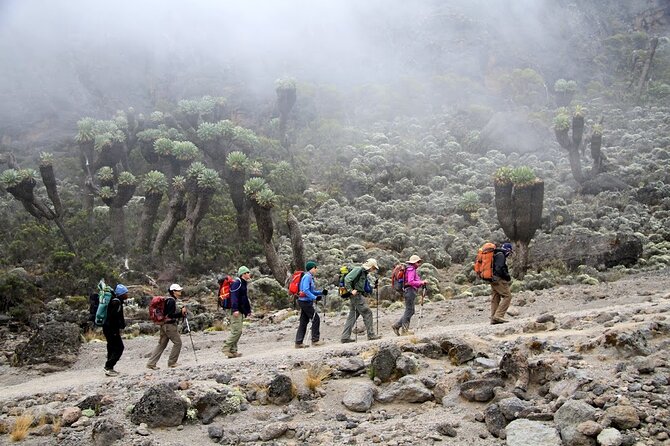
Day three brings one of the most useful altitude changes on the route. You climb above the Shira Plateau toward Lava Tower at 4,640 meters, then descend into the Barranco Valley for the night.
The walk takes about six to seven hours. Vegetation becomes scarce, and the scenery takes on the spare look of alpine desert. Lava Tower is a high point on the day, while Barranco Camp sits lower, giving you a climb-high, sleep-lower pattern that is useful for adapting to altitude.
The descent into Barranco Valley brings back some remarkable plant life. Lobelia and giant senecio plants give the valley an almost prehistoric feel. It is one of the most memorable sections of the route because the setting feels so different from the forest below.
Barranco Camp is described as the most beautiful camp on the mountain, and it is easy to see why from the itinerary. You are surrounded by steep mountain walls and high ridges, with Kibo nearby. Still, beauty does not mean ease. You are already high, and the next day begins with one of the route’s best-known obstacles.
A few more trips of this kind worth comparing:
- Private Full Day Hiking Experience to Marangu Route
★ 5.0 · 61 reviews - 4 Days Mount Meru Trekking
★ 5.0 · 55 reviews - 4 days Best experience Kilimanjaro Hike, Serengeti &Ngorongoro
★ 5.0 · 54 reviews - From Arusha/Moshi: Kilimanjaro Hike Marangu Route Day Trip
★ 4.5 · 54 reviews
Day 4: Barranco Wall to Barafu Camp
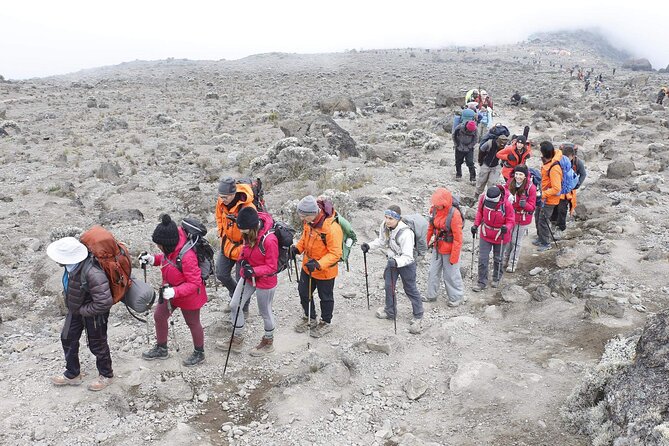
The Barranco Wall is the day’s headline. It is steep and requires careful footwork and a steady grip. You do not need technical climbing equipment according to the trip details, but you should expect to use your hands in places and move slowly.
The guides assist where needed. Past climbers give especially high praise to Gasto and his crew for encouragement, calm support, and keeping morale high during hard sections. That kind of help matters on the Barranco Wall, where a nervous climber may need patience more than speed.
After the wall, you descend through the Karanga Valley and stop for lunch. Then comes another two to three hours of climbing toward Barafu Camp at 4,640 meters.
Barafu means ice, and the camp is a high, exposed staging point for the summit attempt. There is no leisurely evening here. You eat, rest, prepare your clothing and headlamp, and try to sleep before the midnight start. The itinerary promises an early night, but altitude and anticipation may make that easier said than done.
This is the point where you should take the six-day length seriously. The program moves from Machame Camp to Uhuru Peak in only a few days, with a rapid rise in sleeping altitude. Your fitness helps, but fitness alone does not guarantee a comfortable response to altitude.
Day 5: The midnight climb to Uhuru Peak
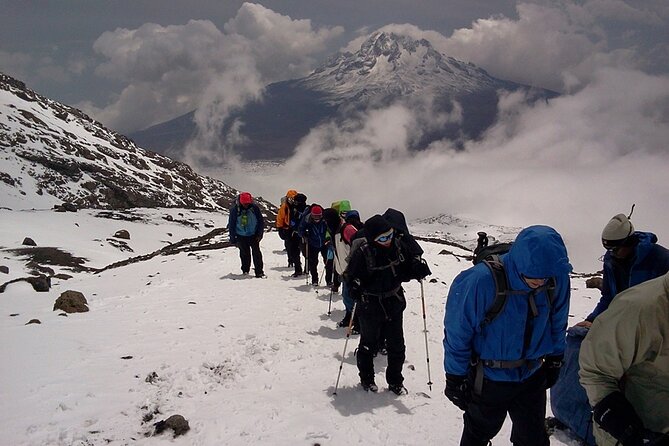
Summit day is the hardest part of the experience. Around midnight, you receive hot tea and light snacks, then begin climbing in darkness toward Stella Point.
Your headlamp lights the scree of Kibo. The ascent to Stella Point takes about five to seven hours according to the schedule. The cold, darkness, steep slope, and thin air combine to make this a slow and mental test. The guides’ encouragement is especially valuable here, and Gasto is repeatedly praised for helping climbers keep moving in severe cold.
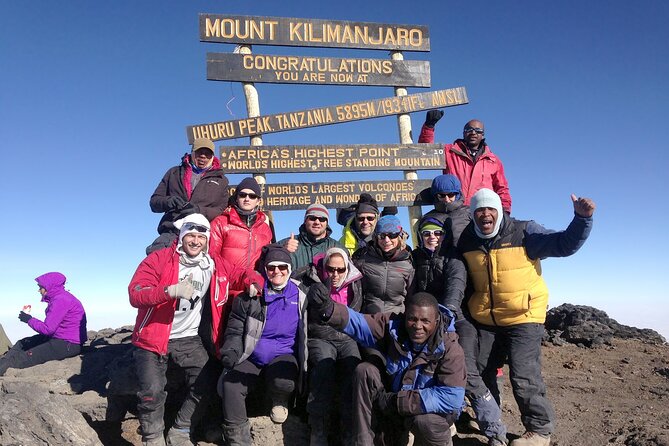
From Stella Point, you follow the crater ridge to Uhuru Peak at 5,895 meters. The reward is a 360-degree view over the surrounding country, weather permitting. Reaching the summit is not just a physical milestone. It is the payoff for every slow step, early morning, sore muscle, and uncertain moment below.
The descent follows the same route back to Barafu for a warm meal and a rest. You then continue to Mweka Hut campsite at 3,080 meters, a further journey of about five hours in the itinerary. This makes the day much longer than the listed six hours suggests.
I would treat the summit day as a full, exhausting mountain day rather than a standard hiking day. You may reach Uhuru Peak, return to Barafu, and still have to keep walking to Mweka. That schedule is a major reason to arrive rested and to avoid planning anything demanding immediately afterward.
Day 6: Rainforest descent and Mweka Gate
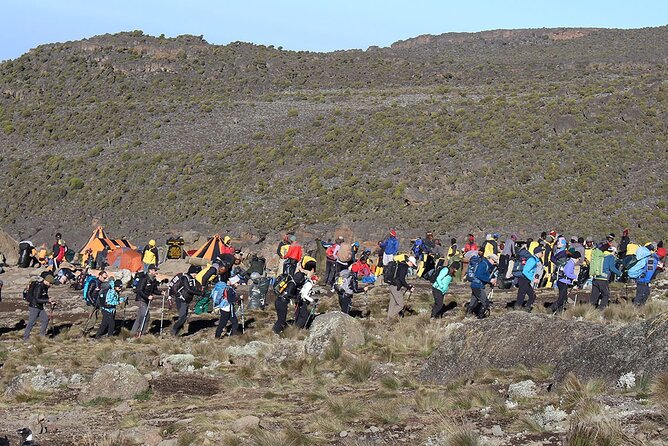
The final morning brings a gentler descent through rainforest to Mweka Gate. After the bare upper mountain, the return to trees feels almost luxurious, even if your knees disagree.
At the gate, the group gathers to congratulate one another. You receive a certificate and can write about the hike in the guest book. The driver then takes you back to your hotel.
This last transfer is included in the overall package, along with airport transfers. Pickup is offered, but you should confirm the exact pickup point and timing when booking, especially since the listed start time is 7:30 a.m.
What the $1,950 price really covers
At $1,950 per person, this is not a budget walk, but the included services cover many of the costs that quickly add up on Kilimanjaro.
The price includes:
- Private, waterproof mountain sleeping tents
- Professional mountain guides
- Park fees and rescue fees
- Breakfasts, lunches, and dinners while on the mountain
- A mess tent with tables and chairs
- Clean, purified drinking water
- Airport transfers
- Hotel pickup for the experience
The meal count is listed as six breakfasts, six lunches, and five dinners. The trip also says that all meals on the mountain are included. Since the final day may involve a gate transfer rather than a camp dinner, confirm the meal schedule if you have dietary needs or a strict food plan.
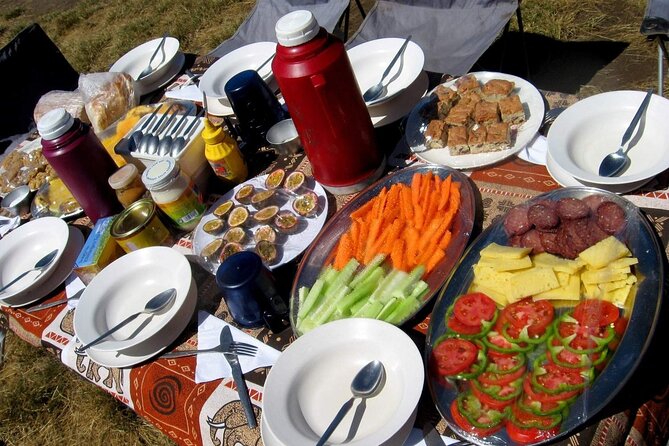
Food is an important part of a climb like this. You are walking for hours at altitude, and a warm meal at Barafu after the summit descent can feel as valuable as the view from Uhuru Peak. Feedback about this crew often praises the food and the friendly, family-like atmosphere created by the guides and support team.
You must pay separately for a Tanzania visa, tips, and your personal climbing gear. The gear category is broad, so ask for a current packing list before you leave. The supplied tents and water do not mean you can arrive without proper clothing, footwear, head protection, or a headlamp.
The guides and the feel of a private climb
Gasto is the name most closely associated with this experience. He is praised for guiding summit attempts, explaining Tanzanian and Maasai culture, supporting older climbers, and keeping the group cheerful when the climb becomes rough.
That personal approach is one of the strongest reasons to consider this operator. The company is described as relatively small, and its strength appears to be direct communication. Past climbers valued quick replies, attention to their questions, and the sense that the staff remembered individual concerns.
The private format also gives your group more control than a large mixed departure. You are not joining a bus full of strangers for every decision. Still, private does not mean easy or completely flexible. The mountain, weather, park rules, and altitude set the basic limits.
Tips are not included. Since the crew carries out the practical work that makes the climb possible, prepare a separate tip budget and ask the operator how tipping is handled.
Who should choose this six-day climb?
I would recommend this trip to an active person who wants Kilimanjaro’s scenery and summit challenge in a compact schedule. You should have moderate physical fitness and be comfortable walking for five to seven hours on several consecutive days.
The route suits you if you want:
- A private climb for your own group
- A scenic route through several ecological zones
- Support from experienced mountain guides
- Included meals, water, tents, park fees, and rescue fees
- A strong team atmosphere
- The chance to reach Uhuru Peak without adding extra route days
I would hesitate if you want a relaxed trekking holiday. The Machame Route has steep sections, fast altitude gain, and a demanding summit push. Someone who wants more time for acclimatization should ask if a longer version of the route is available before paying.
This is also not the right choice if you expect personal climbing equipment to be supplied. The trip covers the camp system, but your own gear remains your responsibility.
Practical details that matter
Confirmation is provided at booking, and the activity is offered as a private tour. Public transportation is nearby, although the main practical transport benefit is the offered pickup and included airport transfer.
The cancellation policy allows a full refund when you cancel at least 24 hours before the local start time. Cancellations or changes made within 24 hours are not refunded or accepted.
I would book with enough time to check three things directly: the exact equipment list, the day five timing, and the meal plan. The written schedule calls day five six hours even though the summit climb, return to Barafu, and walk to Mweka make it much longer in practice.
Should you book this Kilimanjaro trek?
Book it if you want a serious, scenic Kilimanjaro climb with a private group, strong guide support, and most major mountain expenses bundled into one price. The clearest strengths are the Machame scenery, the included camping operation, and the encouragement associated with Gasto and his crew.
Think twice if you underestimate altitude or prefer a slower itinerary. Six days can work, but it leaves little spare time when your body needs rest. If you train properly, bring suitable gear, walk patiently, and accept that summit day will be punishing, this offers a powerful way to reach the Roof of Africa without paying separately for every major service.
FAQ
How long is the Kilimanjaro Machame Route experience?
The experience lasts approximately six days, including the park entry, five mountain nights, summit attempt, descent, and return to your hotel.
What time does the hike start?
The listed start time is 7:30 a.m. on the first day.
Is pickup available?
Yes. Pickup is offered, and airport transfers are included.
Is this a private tour?
Yes. Only your own group participates in the private tour or activity.
How much does the experience cost?
The listed price is $1,950 per person.
What route does the hike use?
The climb uses the Machame Route on Mount Kilimanjaro.
What fitness level is required?
A moderate physical fitness level is required. The route includes steep sections, long walking days, high altitude, and a demanding summit climb.
Are park fees included?
Yes. Park fees and rescue fees are included in the price.
Are meals included?
Yes. The package includes meals on the mountain, with six breakfasts, six lunches, and five dinners listed.
Are climbing gear, tips, and a Tanzania visa included?
No. You must pay separately for your Tanzania visa, tips, and personal climbing gear.
Can I cancel for a full refund?
Yes, if you cancel at least 24 hours before the local start time. Cancellations made less than 24 hours before the start are not refunded.
More 6-Day Experiences
- Tanzania Wildlife Encounters – 6 Days
★ 5.0 · 277 reviews - Private 6-Day Tarangire Manyara Crater and Serengeti with Mid-Range Lodges
★ 5.0 · 238 reviews - 6 Days Private Budget Safari
★ 5.0 · 163 reviews - 6 Days Tanzania Budget Camping Safari
★ 5.0 · 145 reviews
Just added around Arusha
- 5 Days Safari Tarangire, Serengeti, and Ngorongoro Crater★ 5.0 · 3 reviews
- Love lives in Africa★ 5.0 · 3 reviews
- 5 Days of Safari, Culture & Hot Springs – Tour from Arusha★ 5.0 · 3 reviews
- Arusha National Park Safari by Jeep★ 4.5 · 3 reviews
- 5Days Family _Group Tour Lodging Mid-Range in the Jungle★ 5.0 · 3 reviews
- Serengeti & Ngorongoro 3 Days Budget Safari★ 5.0 · 3 reviews
- 2 Days Tarangire and Ngorongoro Crater Tour★ 5.0 · 3 reviews
- 7 Days PRIVATE Best of Tanzania Safari *Departing everyday*★ 5.0 · 3 reviews
Kilimanjaro Treks, compared.



8-Day Small-group Lemosho Kilimanjaro Summit Trekking
Read our review →


Climbing Kilimanjaro through 7 days Machame Route
Read our review →

Browse the lists this tour appears in