
Reviewed · KILIMANJARO TREKS
6 Days Kilimanjaro climbing | Hiking Tour via the Rongai Route
The mountain changes every day. This six-day Rongai Route climb gives you time to move from forest to alpine desert, then push for Uhuru Peak with a trained crew supporting you. I like the slower acclimatization schedule and the dramatic Mawenzi Tarn camp, where a small lake and Mawenzi’s rocky slopes frame the evening. I also like that airport transfers, gate transfers, crew wages, meals, and a return ride to Moshi are included.
The main caution is cost clarity. The advertised price is $930 per person, but park fees, tips, visas, flights, and hotel nights before and after the climb are extra. The summit day is also a very long effort, lasting about 14 hours, so this is not a casual mountain walk.
In This Review
- Key things to know before booking
- Why the six-day Rongai route works
- Day one: From Marangu to Cave Camp One
- Day two: Moorland, heather, and a cold Kikelelwa night
- Day three: Mawenzi Tarn and the best camp setting
- Day four: Alpine desert and the approach to Kibo Hut
- Day five: Gillman’s Point, Stella Point, and Uhuru Peak
- Day six: Mandara Hut, Marangu Gate, and Moshi
- What the $930 price really covers
- Who will get the most from this climb
- Should you book the Rongai climb?
- FAQ
- Where does the Kilimanjaro climb start?
- How long is the Kilimanjaro Rongai Route tour?
- What is the price per person?
- Is airport pickup included?
- Are meals included during the climb?
- Are Kilimanjaro park fees included?
- Are hotels in Moshi included?
- Is the activity private?
- What time does the summit climb begin?
- What certificate do you receive after the climb?
Key things to know before booking
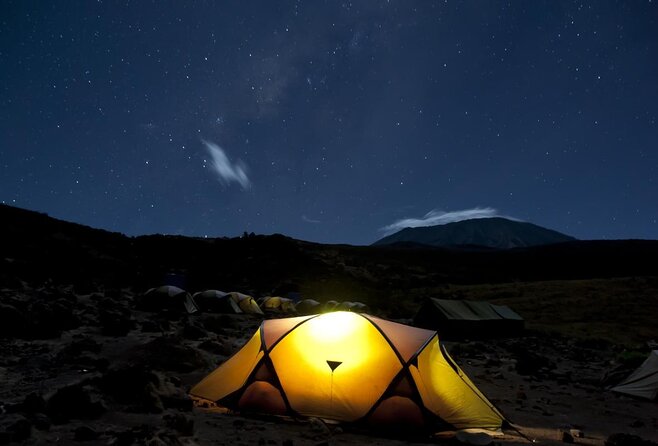
- Mawenzi Tarn at 4,330 meters: A striking high camp below Mawenzi Peak, with time to rest and walk toward nearby ridges.
- A 14-hour summit day: You wake around 11:00 or 11:30 p.m., reach Uhuru Peak, return to Kibo Hut, then continue to Horombo Hut.
- Rongai meets Marangu: The climb begins on the Rongai side, but the route joins the Marangu path before the final approach to Kibo Hut.
- Meals and camp support included: Breakfast, lunch, and dinner are provided during the mountain stay, with hot water, tea or coffee, snacks, and tents prepared by the crew.
- A private activity for your group: The booking is described as private, although one solo-climber account says the company paired that person with another solo participant.
- Good value, with important extras: The fee covers many operating costs, but park fees and gratuities can change your final budget.
Why the six-day Rongai route works
Kilimanjaro is not a technical climbing trip in the usual sense. The difficulty comes from altitude, long walking days, cold nights, uneven ground, and the need to keep going when your body would rather stop. A six-day schedule gives you more time to adjust than a rushed ascent, and that matters.
This route begins at about 1,950 meters on the Rongai trail after transport from the Marangu Park Gate area. Over the next days, you pass through cypress plantations, mountain forest, heather, moorland, alpine desert, and the snow near the summit. The scenery keeps changing, which helps break up the physical effort.
I especially like the placement of the third night at Mawenzi Tarn. You reach 4,330 meters on day three, then have time to eat, rest, and walk a little around the camp. That pause gives your body a useful chance to adjust before the route rises toward Kibo Hut.
Still, do not read six days as easy. The summit push remains severe. You spend the night waking for the climb, walk to the crater rim, continue to Uhuru Peak, descend to Kibo Hut, and then carry on to Horombo. The route is well spaced before summit day, but the final day at altitude tests your legs and your resolve.
More Kilimanjaro routes and climbs:
- Kilimanjaro climb by Lemosho Route (7-day)
★ 5.0 · 651 reviews - Kilimanjaro climb, Machame Route (7-day)
★ 5.0 · 262 reviews - Kilimanjaro Climbing Lemosho Route 8 Days.
★ 5.0 · 186 reviews
Day one: From Marangu to Cave Camp One
The meeting point is in Moshi at Burigi Chato Safaris on Mkwawa Street, with an 8:30 a.m. start time. The day includes transport toward the Rongai trail, and the drive to the gate area and trailhead usually takes about three hours. That transfer is useful, but it also means your first hiking day starts after a morning of road travel.
The trail begins at approximately 1,950 meters. If weather allows, you may carry a packed lunch to Nelemoru. From there, the path moves through cypress plantations and mountain forest, with a chance of spotting giant monkeys.
This is a gentle introduction compared with what comes later. You walk for around five hours, gradually gaining height while the trees and mountain air begin to replace the feel of Moshi. The first camp is Cave Camp One at about 2,600 meters.
One practical comfort is the camp routine. Porters and cooks often reach camp before you, allowing time to set up your tent and prepare something warm. Hot water is provided for washing, and tea, coffee, snacks, and sometimes popcorn help make the evening feel less austere.
That support is not a small detail. After several hours on your feet, a hot drink and a ready tent can make the difference between settling down calmly and feeling overwhelmed. You should still expect a basic mountain camp, cold after dark, and limited personal space.
Day two: Moorland, heather, and a cold Kikelelwa night
Day two climbs from Cave Camp One through moor-style vegetation and heather. The route reaches Cave Camp Two at about 3,450 meters for lunch, then continues to Kikelelwa Cave, also described as Cave Camp Three, at approximately 3,600 meters.
The walking time is around seven hours, making this one of the longer regular days before the summit. You gain height steadily, so you need to keep your pace slow and controlled. There is no prize for arriving early if you spend the afternoon with a headache.
At Kikelelwa, the tents are prepared while you arrive. The crew provides hot water for washing, tea or coffee, and snacks before dinner. The camp sits near a group of small caves in a valley slightly below the saddle.
Expect a very cold night. Bring warm sleeping clothes and keep essential items close inside the tent. The supplied information does not specify sleeping-bag rental or equipment hire, so ask about those costs before you arrive in Tanzania.
The six-day plan earns its keep here. Instead of forcing a much larger altitude gain in one day, the route uses an additional camp and gives you more time to adjust. That does not prevent altitude sickness, but it creates a more sensible rhythm.
Day three: Mawenzi Tarn and the best camp setting
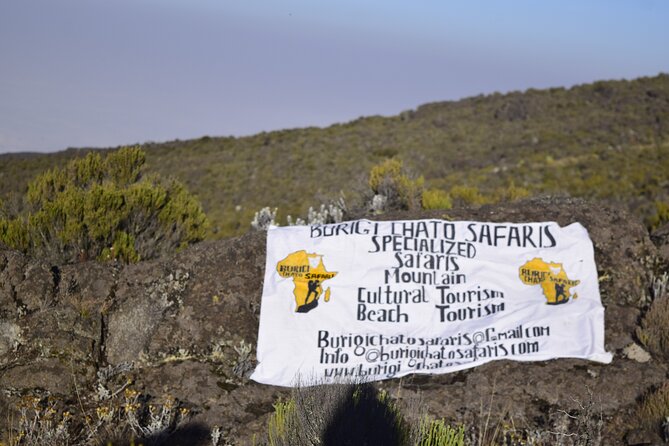
The walk from Kikelelwa Cave to Mawenzi Tarn takes about four hours. It begins on a moderate incline, then becomes steeper as you approach the camp at 4,330 meters.
Mawenzi Tarn is one of the most memorable points on this route. The camp sits in a hollow below Mawenzi Peak, close to a small lake. The setting feels stark and exposed, with rock, sky, and high mountain terrain replacing the trees and heather from earlier days.
After a hot lunch, you have several hours to rest. You can also walk toward nearby ridges and towers for views toward Kibo. Keep this outing modest. The purpose is to help with acclimatization, not to spend all your energy scrambling around camp.
The afternoon light can be special here, and the sunset may give you a strong view of Mawenzi. Dinner follows, then another cold night. This is a good place to pay attention to how you feel, because day four brings another rise in altitude and day five begins before midnight.
The guide’s role is important on this section. The available comments praise the guides for judging ability and helping people work toward the summit. That is exactly what you need on a high mountain: not someone who simply pushes the fastest pace, but someone who notices when you need to slow down, rest, or turn back.
A few more trips of this kind worth comparing:
- Private Kilimanjaro Hike 7 Day Lemosho Route
★ 5.0 · 60 reviews - Best Kilimanjaro hiking day trip tour with Kilinge Adventures
★ 4.5 · 54 reviews - #1. Best Kilimanjaro Day hike Tour-Machame Route-ISMANI
★ 4.2 · 47 reviews - Best Kilimanjaro Adventure 7 days Machame route Trekking
★ 5.0 · 42 reviews
Day four: Alpine desert and the approach to Kibo Hut
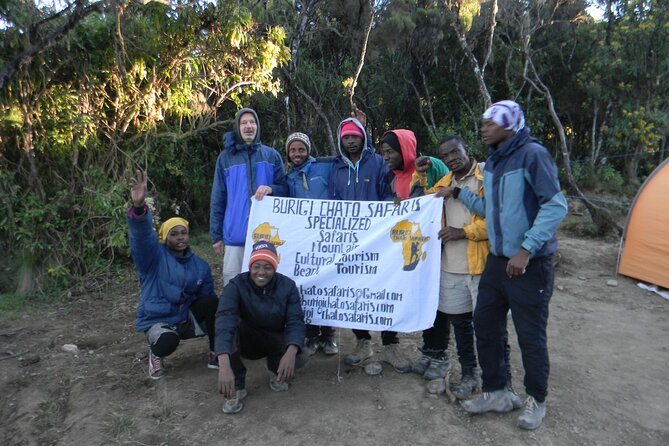
After breakfast, you climb a small ridge, then follow an easier path across the northern part of the saddle between Mawenzi and Kibo. In good weather, the views across this high area are wide and striking.
The vegetation is now alpine desert, with very little grass and occasional everlasting flowers. The sudden lack of trees makes the height feel real. You are no longer walking through a forest or heather zone. You are crossing a spare, open world where sun, wind, and cold matter more.
The Rongai path joins the Marangu route on the saddle. From this point, the final approach to Kibo Hut follows the same direction used by climbers coming from Marangu. The last part becomes steeper, and you reach Kibo Hut at about 4,700 meters around lunchtime after roughly five hours of walking.
This early arrival is useful. You eat, wash with hot water, and rest before the summit attempt. You should treat the afternoon as recovery time, not as a chance to explore. Lay out your headlamp, warm layers, water, snacks, and camera before trying to sleep.
The summit schedule is unusual because you wake around 11:00 or 11:30 p.m. Most people will not get much sleep, even with an early bedtime. Keep your expectations realistic. The goal is not comfort. The goal is to start the final climb with enough energy to reach the crater rim.
Day five: Gillman’s Point, Stella Point, and Uhuru Peak
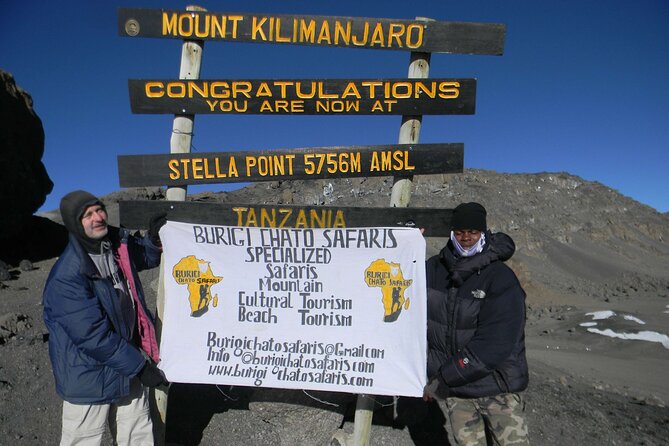
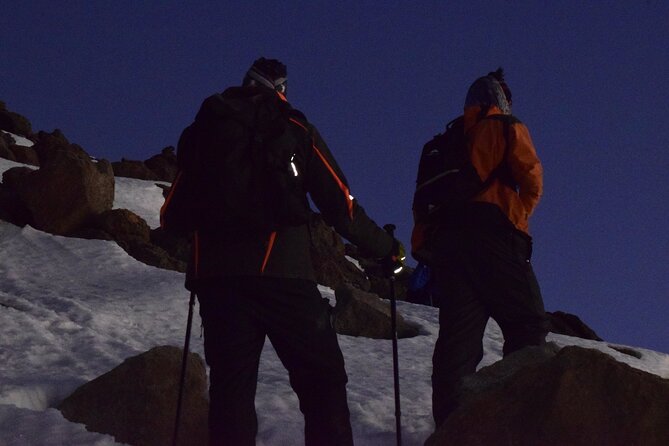
Summit day is the reason to book this climb, and it is also the hardest part by far. You leave Kibo Hut during the night, walking toward the crater rim. The supplied schedule describes a total day of about 14 hours.
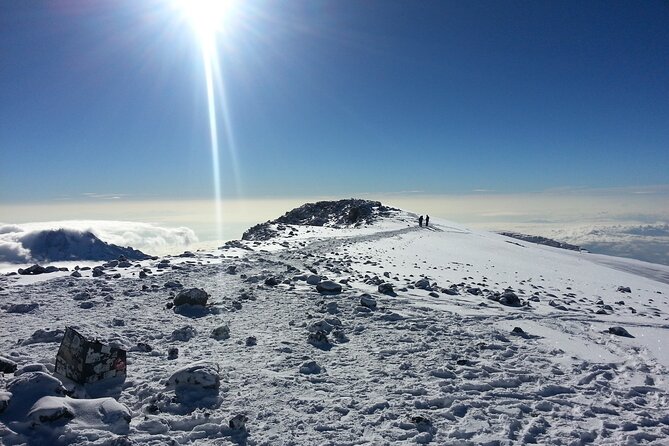
The route reaches Gillman’s Point first. From there, it takes about another hour and a half to reach the top, although the pace depends on your condition. The route near the rim is often snow-covered, and you continue around the crater edge toward Uhuru Peak.
You pass Stella Point at 5,752 meters, where other routes join the crater rim. At this height, every step can feel slow. The air is thin, the cold can be sharp, and the final distance may look deceptively short.
Uhuru Peak is at the summit of Kilimanjaro and is described here as the roof of Africa. You should plan to spend only a few minutes at the top. Take your photographs, enjoy the achievement, and begin descending before fatigue and cold become bigger problems.
The descent returns to Kibo Hut, where lunch is served. You then continue for about three hours to Horombo Hut at approximately 3,720 meters. This second descent is easy to underestimate. Reaching the summit does not finish the day, and tired knees can make the walk down surprisingly demanding.
The strongest praise connected with this climb centers on the crew. The guide, cook, and porters receive especially warm approval, with the food and summit support singled out as highlights. One account also makes a useful point for solo climbers: the company paired a solo participant with another solo person. The activity is described as private for your group, so ask how group matching works if you are booking alone.
Day six: Mandara Hut, Marangu Gate, and Moshi
Your final morning begins with breakfast at Horombo Hut. You then descend toward Mandara Hut at about 2,700 meters before continuing to Marangu Gate at approximately 1,980 meters.
The supplied timing says six minutes for this section, which is clearly not a realistic walking duration. The route description itself indicates a full descent with a lunch break, so plan for a substantial final day rather than a few minutes. The exact walking time is not provided.
At the gate, you sign the register and receive a certificate. A green certificate is described for Gillman’s Point, while a gold certificate is awarded for Uhuru Peak. Songs, dancing, farewells, and introductions to the crew may take place at Horombo or at the gate.
Your driver then returns you to your Moshi hotel. The ride and gate transfer are included, but accommodation in Moshi before and after the climb is not. A long hot shower will likely be one of the day’s great pleasures.
What the $930 price really covers
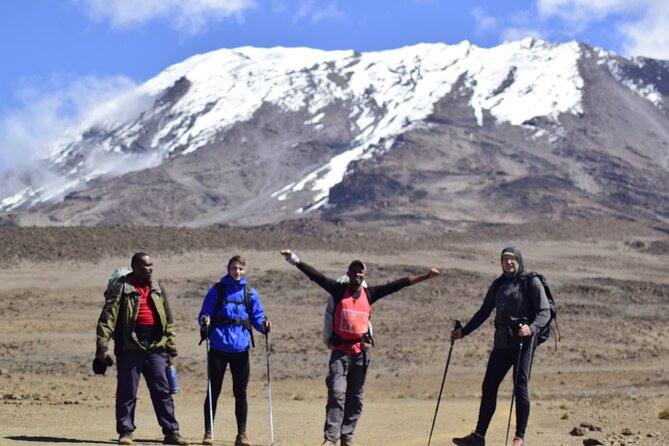
At $930 per person, this is not an all-in Kilimanjaro holiday. It is the core mountain operation, with several useful services included:
- Airport pickup and drop-off
- Gate transfers
- Crew wages
- Six lunches
- Five breakfasts
- Six dinners
- Transport back to Moshi after the climb
The meal count is worth checking because the trip description also refers to food at camp each day. Confirm exactly which meals are covered and whether packed lunches are supplied on the first day.
The major extra is the Kilimanjaro park fee. It may be paid directly to the park or through the tour operator, but it is not included in the advertised price. You also pay for flights, visas, crew tips, and hotel accommodation before and after the climb.
That makes the final cost higher than $930. Ask for a written total that separates park fees, transfers, hotel nights, equipment, and gratuities. The listed price can still offer fair value because it includes food, crew wages, airport service, and mountain transport, but you need the full figure before deciding.
Who will get the most from this climb
This route suits you if you want a structured Mount Kilimanjaro attempt with a slower acclimatization pattern and strong camp support. It is also a good match if you value changing scenery, from forest to moorland to high alpine desert, rather than a quick route to the summit.
Most people can participate according to the supplied information, but that should not be confused with easy. You need to be ready for several hours of walking, cold nights, a midnight wake-up, and the possibility that altitude will affect your plans.
It may suit a solo participant, but clarify the private-group arrangement before paying. One account describes being paired with another solo participant, while the activity details say only your group will take part. That is an important question for anyone expecting either complete solitude or a small shared team.
The guide matters greatly. The available comments stress that a good guide understands your ability and works with you toward a safe summit attempt. I would make that a priority when asking questions before departure, along with the guide-to-climber ratio and the company’s plan if someone cannot continue.
You can cancel for a full refund if you do so at least 24 hours before the start time. Cancellations within 24 hours are not refunded, and poor weather may lead to a different date or a full refund.
Should you book the Rongai climb?
I would consider booking this six-day route if you want more acclimatization time, appreciate dependable meals and camp preparation, and accept that the summit day will be punishing. The Mawenzi Tarn stop is a real strength, and the changing scenery gives the climb a clear sense of progress.
I would not book it without first confirming park fees, hotel arrangements, equipment costs, the exact meal schedule, and how private groups are formed. If those details are clear and the final price fits your budget, this looks like a well-supported way to attempt Kilimanjaro, with experienced crew support and a sensible amount of time before the summit push.
FAQ
Where does the Kilimanjaro climb start?
The meeting point is Burigi Chato Safaris on Mkwawa Street in Shanty Town, Moshi, Tanzania. The listed start time is 8:30 a.m.
How long is the Kilimanjaro Rongai Route tour?
The tour lasts approximately six days.
What is the price per person?
The listed price is $930 per person.
Is airport pickup included?
Yes. Airport pickup and drop-off are included.
Are meals included during the climb?
Yes. The included meals are listed as six lunches, five breakfasts, and six dinners.
Are Kilimanjaro park fees included?
No. Park fees are not included in the listed price. They may be paid directly to the park or through the tour operator.
Are hotels in Moshi included?
No. Hotel accommodation before and after the climb is not included.
Is the activity private?
The activity is described as private, with only your group participating. One solo-climber account describes being paired with another solo participant, so solo participants should confirm the arrangement before booking.
What time does the summit climb begin?
The wake-up time for summit day is usually around 11:00 or 11:30 p.m.
What certificate do you receive after the climb?
At Marangu Gate, you receive a summit certificate. A green certificate is described for Gillman’s Point, while a gold certificate is given for reaching Uhuru Peak.
More 6-Day Experiences
- Kilimanjaro climb, Lemosho Route (6-day)
★ 5.0 · 129 reviews - Kilimanjaro climb, Marangu route (6-day)
★ 5.0 · 72 reviews - 6 Days 5 Night Safari
★ 5.0 · 57 reviews - 6 Days Tanzania Classic Safari
★ 5.0 · 52 reviews
Just added around Moshi
- Moshi: Lake Chala Tour: Hiking &/or Kayaking★ 4.5 · 3 reviews
- 3 Days Tanga Exclusive Beach Holiday★ 5.0 · 3 reviews
- Serengeti Wildebeest Migration.★ 5.0 · 3 reviews
- Chemka Hotpsrings E-Bike Day Trip★ 5.0 · 3 reviews
- Explore 1 day Ngorongoro Crater Budget Group Safari from Arusha★ 5.0 · 3 reviews
- Explore the 360° of Kilimanjaro★ 5.0 · 3 reviews
- Affordable Short Tanzania Safari (2 Days Camping Safari)★ 5.0 · 3 reviews
- Rongai Route 7 Days★ 5.0 · 3 reviews
Kilimanjaro Treks, compared.



8-Day Small-group Lemosho Kilimanjaro Summit Trekking
Read our review →


Climbing Kilimanjaro through 7 days Machame Route
Read our review →

Browse the lists this tour appears in