
Reviewed · KILIMANJARO TREKS
6 Days Kilimanjaro Climbing Marangu Route
Kilimanjaro rewards patience, not speed. This six-day climb from Moshi follows the Marangu Route, the mountain’s oldest established path and the only Kilimanjaro route known for hut accommodation. I like the extra acclimatization day at Horombo Huts, and I like that park fees, meals, guides, porters, cooks, purified water, and airport transfers are included. The main caution is that the supplied schedule contains a few contradictions about accommodation and the descent route, so you should confirm the final plan with Furaha Adventures before paying.
The route moves from wet rainforest to open moorland, a stark high-altitude saddle, and the cold volcanic slopes below Kibo. You will sleep at Mandara, Horombo, and Kibo, then face a midnight summit start before descending toward the Marangu Gate. It is a demanding climb, but the pace gives you a better chance to adjust to the altitude than a shorter itinerary.
The price is $2,000 per person, which can be a fair package price for a private Kilimanjaro climb when the listed services are genuinely included. The final cost still depends on what you need personally, such as drinks, souvenirs, equipment, and crew tips.
In This Review
- Key points to know before you book
- Why the Marangu Route appeals to many climbers
- Day 1: Moshi to Mandara Huts through rainforest
- Day 2: Heathland, giant plants, and Horombo Huts
- Day 3: The Horombo acclimatization day
- Day 4: Across the saddle to Kibo Huts
- Day 5: The midnight climb to Uhuru Peak
- Day 6: Descent, certificates, and the return to Moshi
- What the $2,000 price includes
- Guides, crew support, and communication
- Practical packing advice for this route
- Who should choose this six-day climb?
- Booking details and cancellation
- Should you book this Kilimanjaro experience?
- FAQ
- How long does the Kilimanjaro Marangu Route experience last?
- What is the price per person?
- Where does the experience take place?
- Does the tour include airport transfers?
- Are meals included?
- Is drinking water provided?
- Are guides, porters, and cooks included?
- Is this a private tour?
- What is not included in the price?
- Can I cancel for a full refund?
Key points to know before you book
- The six-day schedule includes a full acclimatization day at Horombo Huts, with the option to rest or walk toward Mawenzi Base Camp.
- Marangu uses hut accommodation, a useful choice if you prefer beds and shared mountain shelters over sleeping in tents.
- The summit day begins around midnight to 2 a.m., reaches Uhuru Peak at 5,895 meters, and then requires a major descent.
- The scenery changes sharply, from muddy rainforest to heathland, moorland, alpine desert, and snow near the summit.
- The package includes park fees, guides, porters, cooks, meals, purified water, and airport transfers, but not drinks or tips.
- The itinerary needs clarification, since it refers both to private mountain tents and hut stays, and gives conflicting details for the post-summit descent.
Why the Marangu Route appeals to many climbers
Marangu is often called the Coca-Cola Route because it is the most established and familiar path up Kilimanjaro. That label can make it sound easy. It is not. You still climb to 5,895 meters, and altitude, cold, fatigue, and the summit night can test every part of your body.
The route’s main practical advantage is the huts. Instead of carrying or sleeping in a tent each night, you stay in mountain shelters at Mandara, Horombo, and Kibo. That can make the trip feel more manageable, especially if you do not enjoy camping. You should still expect basic conditions rather than hotel comfort.
I also like the route’s clear progression. You begin in rainforest, then pass through heath and open moorland before reaching the bare saddle between Mawenzi and Kibo. The scenery changes as the air gets thinner, so the climb feels like a real journey through several climate zones.
The tradeoff is that Marangu uses the same trail for the ascent and descent in the standard arrangement. That can feel less varied than routes that go up one side of the mountain and down another. The six-day version helps with acclimatization, but it remains physically serious.
More Kilimanjaro routes and climbs:
- Kilimanjaro climb by Lemosho Route (7-day)
★ 5.0 · 651 reviews - Kilimanjaro climb, Machame Route (7-day)
★ 5.0 · 262 reviews - Kilimanjaro Climbing Lemosho Route 8 Days.
★ 5.0 · 186 reviews
Day 1: Moshi to Mandara Huts through rainforest
The climb begins with a roughly 45-minute drive from Moshi to the Kilimanjaro National Park Gate, passing through Machame village. At the gate, your crew waits while permits are issued and preparations are completed. This delay is normal for a major mountain park, so do not expect to start walking the moment you arrive.
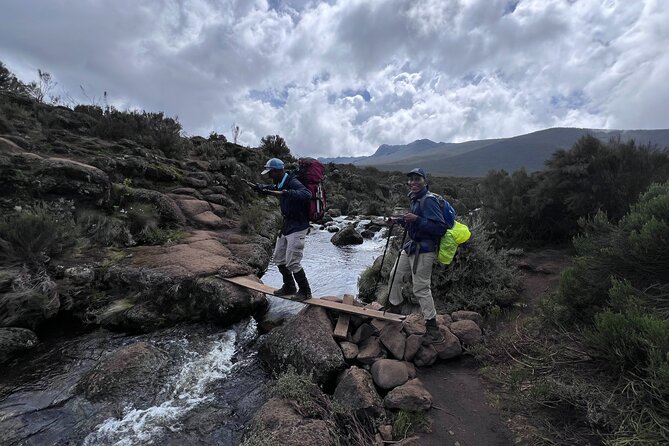
The first walking section rises from about 1,905 meters to 2,723 meters. It takes roughly five hours. The trail passes through thick rainforest, with winding paths, wet ground, and possible mud. Your guide explains local plants, animals, and the forest environment as you go.
This is a pleasant start, but it is not effortless. The lower trail can be slippery, particularly in wet conditions. I would pack gaiters and trekking poles, both of which are specifically recommended for this section and again for the final descent.
Mandara Huts are your first overnight stop. The hut setting is one of Marangu’s defining features. You get a roof and a fixed overnight base, but you should keep your expectations practical. This is a mountain stop, not a private lodge.
Day 2: Heathland, giant plants, and Horombo Huts
After breakfast, you leave the rainforest behind and climb from 2,723 meters to 3,721 meters. The walk takes about six hours. The vegetation becomes lower and more open, with heathland, small shrubs, giant lobelias, and groundsels.
The route gives you a strong sense of altitude on this day. Mawenzi comes into view during the lunch stop, and the broad mountain scenery begins to replace the enclosed forest. You finish at Horombo Huts beneath the Kibo summit area, with temperatures dropping later in the day.
Horombo is an important stop because your body starts working harder here. Eat, drink the purified water provided by the company, and follow your guide’s advice about walking slowly. A common mistake on Kilimanjaro is treating the early days like a race. The steady pace matters more than covering ground quickly.
The six-day plan includes a second night at Horombo, which I consider one of its strongest features. Many climbers value the extra time because altitude problems can appear after you reach this zone.
Day 3: The Horombo acclimatization day
Day 3 is a full day at Horombo Huts. You can rest at camp or take a walk toward Mawenzi Base Camp before returning to Horombo. The schedule lists about 12 hours for the day, with around 10 hours allocated for accommodation, but the exact walking plan depends on your guide and your condition.
This is not a wasted day. It gives you time to adjust before sleeping much higher at Kibo Huts. It also lets you see more of the area without carrying on to the next overnight stop.
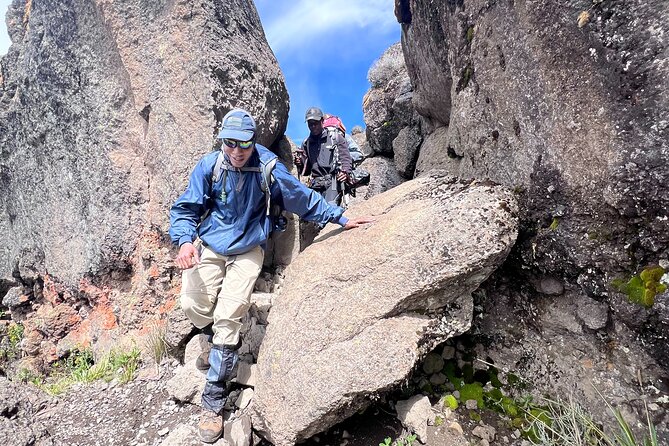
I would use this day sensibly. If you feel well, the Mawenzi walk can help your body experience higher ground before returning to sleep lower at Horombo. If you have a headache, nausea, unusual tiredness, or other altitude concerns, rest and speak with your guide instead of forcing an extra walk.
The supplied schedule describes the Mawenzi option as a stroll to the base camp, but you should ask how far the group will go and how long it will take. Do not assume this is a casual sightseeing walk. At this height, even an easy-looking path can feel demanding.
A few more trips of this kind worth comparing:
- Kilimanjaro climb, Lemosho Route (6-day)
★ 5.0 · 129 reviews - Kilimanjaro climb, Marangu route (6-day)
★ 5.0 · 72 reviews - 6 Days 5 Night Safari
★ 5.0 · 57 reviews - 6 Days Tanzania Classic Safari
★ 5.0 · 52 reviews
Day 4: Across the saddle to Kibo Huts
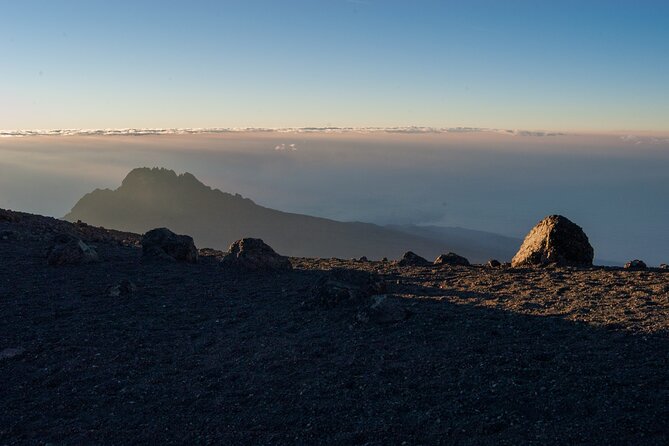
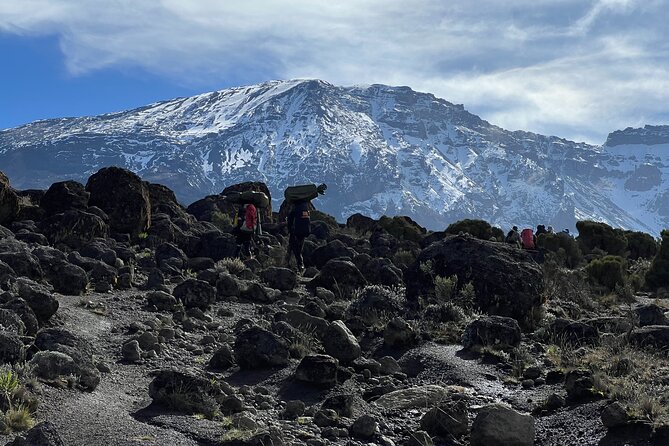
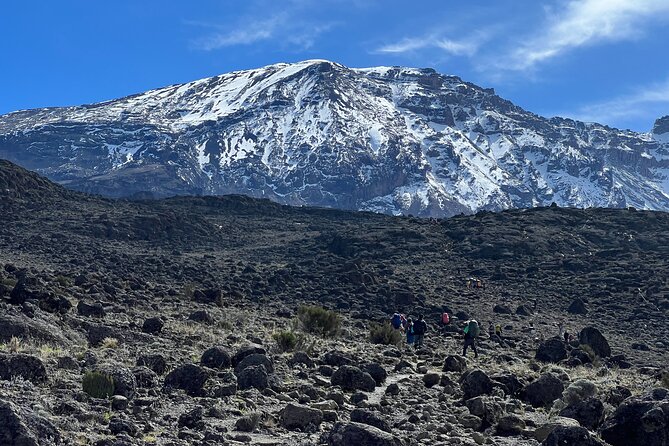
After breakfast, you climb from 3,721 meters to 4,714 meters in about six hours. The heathland thins out, and the surroundings become almost moonlike. You cross the wide saddle between Mawenzi and Kibo, two of Kilimanjaro’s major volcanic cones.
This is one of the most striking sections of the route. The open ground gives you long views and a clear look at the summit slope ahead. Lunch on the saddle is a useful pause, but it can also be exposed and cold, so keep an extra layer close by.
Kibo Huts are the final overnight stop before the summit attempt. You arrive in the afternoon, eat, rest, and prepare for a start between midnight and 2 a.m. That means Day 4 is not simply a six-hour hike followed by a normal night’s sleep. Your real summit effort begins only a few hours later.
Organize your clothing, headlamp, water, snacks, and warm layers before lying down. You will not want to search through a large bag in the dark while tired.
Day 5: The midnight climb to Uhuru Peak
The summit day is the hardest part of the trip. From Kibo Huts at about 4,714 meters, you climb to Uhuru Peak at 5,895 meters, gaining about 1,181 meters. The ascent begins in darkness, with cold temperatures and slow switchbacks.
The first major goal is Gillman’s Point. Reaching it around sunrise can be a powerful moment, but the effort is far from finished. From Gillman’s Point, Uhuru Peak is described as roughly another hour away, with possible snow on the way.
At the summit, you have reached Africa’s highest point. Take the necessary photographs, but listen to your guide and do not linger longer than is sensible. The air is thin, and the descent is still a major undertaking.
The schedule says the descent goes steeply toward Mweka Camp via Barafu, then later gives Horombo Huts as the accommodation stop and describes Day 6 as beginning at 3,721 meters. Those details do not fit together neatly with a standard Marangu itinerary. You should ask Furaha Adventures to confirm exactly where you sleep after the summit, how far you descend that day, and which route you follow on the final morning.
This is more than a minor paperwork issue. After a summit day that may last many hours, your overnight location affects recovery, food, transport, and how much walking remains.
Day 6: Descent, certificates, and the return to Moshi
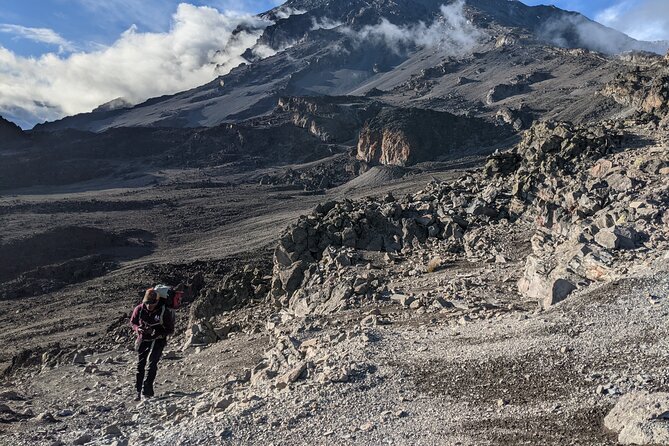
The final day is described as a descent from about 3,721 meters to the Marangu Gate at 1,905 meters, with a stop at Mandara Huts for lunch. The walk takes around six hours in the version supplied.
The lower trail can feel very different from the summit morning. As the air warms, the ground becomes wetter and muddier, and the path can be steep. Gaiters and trekking poles are recommended again. Your knees may appreciate the support after the long summit descent.
A farewell ceremony with the crew takes place before you continue down. This is also the point when you should tip your guides, cooks, and porters. Tips are not included in the $2,000 price, so plan for that separately and carry personal spending money for souvenirs or other purchases.
At the Marangu Gate, you receive summit certificates. A vehicle then takes you back to your Moshi hotel, about 45 minutes away. The promised hot shower and celebratory dinner will probably feel well earned after six days on the mountain.
What the $2,000 price includes
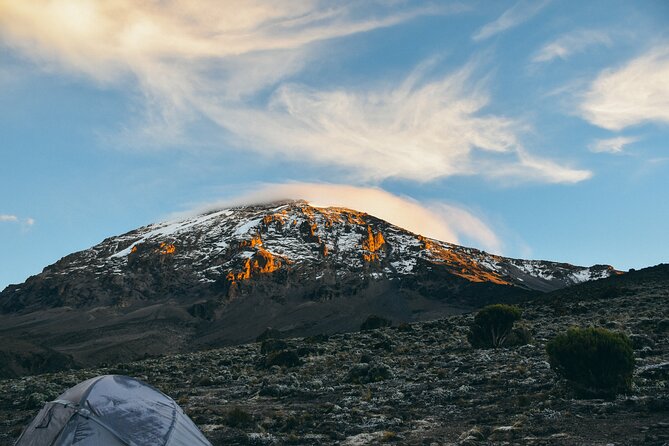
The package covers the major operating costs that can make a Kilimanjaro climb expensive:
- National park fees
- Professional mountain guides
- Porters and cooks
- Guide, porter, and cook salaries
- Breakfast, lunch, and dinner
- Clean, purified drinking water
- Airport transfers
- Mountain sleeping equipment listed as waterproof, four-season private tents
That list gives the tour solid value if all services are delivered as described. Park fees alone are a significant part of a Kilimanjaro trip, and paying staff directly through the company removes much of the work involved in arranging a climb yourself.
Still, the accommodation wording needs attention. The Marangu Route is promoted here for its huts, and every overnight stop is named as a hut. Yet the inclusions also mention private mountain sleeping tents. Ask whether tents are backup equipment, used at certain camps, or included by mistake in the general package description.
The price does not include alcoholic drinks, soft drinks, personal purchases, or tips. It also does not state that climbing gear, flights, hotel nights, or personal insurance are included. Do not assume they are.
Guides, crew support, and communication
The strongest praise connected with this experience focuses on the guides and porters. The crew is described as friendly and supportive, with particular appreciation for Godfrey, who helped one client from the booking stage through the end of the trip.
That kind of contact matters on a climb. A helpful booking contact can make preparation clearer, while a strong mountain team can affect your comfort and confidence when you are tired or struggling with altitude.
Furaha Adventures is identified as the provider, and the activity is private, meaning only your group participates. The supplied information does not give a maximum group size, so ask how many people will be in your party and how porter and guide support is organized.
The package says guides are professional and experienced. You should still discuss the daily pace, the Horombo acclimatization walk, emergency procedures, and the post-summit sleeping arrangements before departure.
Practical packing advice for this route
The information supplied gives several useful gear clues. Pack gaiters and trekking poles for the muddy rainforest and the wet final descent. You will also need warm clothing for the saddle, Kibo, and the midnight summit climb.
Keep your essential items easy to reach:
- Waterproof layers for the forest
- Warm layers for Kibo and summit night
- Trekking poles
- Gaiters
- Headlamp for the midnight start
- Water and small snacks for the summit effort
- Personal spending money
- A way to protect important items from rain
The company provides purified drinking water, but the details do not say what type of bottles or hydration system you should bring. Ask before departure so you can carry enough accessible water each day.
Who should choose this six-day climb?
I would point this trip toward someone who wants the familiar Marangu Route, prefers huts to normal tent camping, and values an extra acclimatization day. The private format may suit a couple, family, or small group that wants the schedule focused on its own needs.
You should be ready for long days, steep ground, cold conditions, muddy trails, and a summit attempt that starts in the middle of the night. Basic participation is described as suitable for most people, but that does not make the climb easy. You should consider your own fitness and health before booking.
This route may not suit you if you want a different ascent and descent path, a quiet route away from a well-established trail, or a trip with no uncertainty in its published schedule. The strongest reason to choose it is the hut system and the extra night at Horombo, not a promise of comfort.
Booking details and cancellation
Pickup is offered, mobile tickets are available, and airport transfers are included. The listed meeting point is Kilimanjaro Airport and Kilimanjaro National Park in Tanzania, with operating hours shown as Monday and Tuesday from 7 a.m. to 9 p.m. The date range provided runs from February 17, 2024, through December 31, 2029.
Confirmation is provided at booking. Free cancellation is available if you cancel at least 24 hours before the local start time. Cancellations or changes made inside that 24-hour period are not accepted for a refund.
Should you book this Kilimanjaro experience?
I would consider booking this six-day Marangu climb if you want hut accommodation, a private group, a well-known route, and a full acclimatization day at Horombo. The included park fees, meals, crew salaries, purified water, and transfers make $2,000 a reasonable package price on paper.
Before booking, get written answers about the tent and hut wording, the Day 5 overnight stop, the Mweka and Marangu references, the group size, and what personal gear you must supply. If Furaha Adventures clears up those points and you are prepared for the summit night, this can be a practical and well-supported way to attempt Kilimanjaro.
FAQ
How long does the Kilimanjaro Marangu Route experience last?
The experience lasts approximately six days.
What is the price per person?
The listed price is $2,000 per person.
Where does the experience take place?
The climb takes place on Mount Kilimanjaro in Tanzania, with Moshi used for pickup and return. The listed meeting point is Kilimanjaro Airport and Kilimanjaro National Park.
Does the tour include airport transfers?
Yes. Airport transfers are included.
Are meals included?
Yes. Breakfast, lunch, and dinner are included during the experience. The package lists six breakfasts, six lunches, and six dinners.
Is drinking water provided?
Yes. The package includes clean, purified drinking water.
Are guides, porters, and cooks included?
Yes. Guide, porter, and cook salaries are included, along with professional mountain guides.
Is this a private tour?
Yes. Only your group participates in this private activity.
What is not included in the price?
Alcoholic drinks, soft drinks, tips, and personal spending money for souvenirs are not included.
Can I cancel for a full refund?
Yes, if you cancel at least 24 hours before the experience start time. Cancellations made less than 24 hours before the start time are not refunded.
Just added around Moshi
- Moshi: Lake Chala Tour: Hiking &/or Kayaking★ 4.5 · 3 reviews
- 3 Days Tanga Exclusive Beach Holiday★ 5.0 · 3 reviews
- Serengeti Wildebeest Migration.★ 5.0 · 3 reviews
- Chemka Hotpsrings E-Bike Day Trip★ 5.0 · 3 reviews
- Explore 1 day Ngorongoro Crater Budget Group Safari from Arusha★ 5.0 · 3 reviews
- Explore the 360° of Kilimanjaro★ 5.0 · 3 reviews
- Affordable Short Tanzania Safari (2 Days Camping Safari)★ 5.0 · 3 reviews
- Rongai Route 7 Days★ 5.0 · 3 reviews
Kilimanjaro Treks, compared.



8-Day Small-group Lemosho Kilimanjaro Summit Trekking
Read our review →


Climbing Kilimanjaro through 7 days Machame Route
Read our review →

Browse the lists this tour appears in