
Reviewed · KILIMANJARO TREKS
6 Days Kilimanjaro Trekking – Machame Route
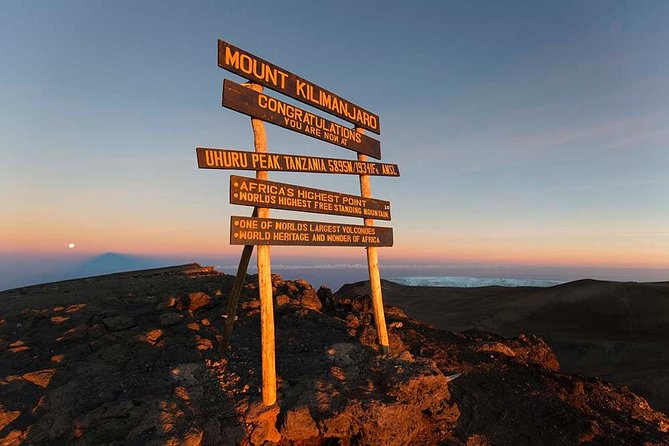
Africa’s highest summit starts in the coffee country. This six-day Machame Route trek combines varied scenery, strong guide support, and a serious attempt on Uhuru Peak at 5,895 meters. I like the route for its rainforest start, volcanic ridges, and useful acclimatization day near Lava Tower. I also like that airport or hotel transfers, porters, a professional guide, taxes, and five nights of accommodation are included in the $1,715 price.
The main caution is the schedule itself. The supplied plan contains a few unclear camp references, including Barranco, Millennium, and Mweka, while the package is described as six days. You should confirm the exact overnight camps, meals, and summit-day plan before paying. Six days is possible, but it leaves less spare time for altitude adjustment than a longer Machame itinerary.
- Machame Route scenery: Begin among coffee and banana farms, then walk through rainforest, heather, rocky ridges, high desert, and volcanic terrain.
- Lava Tower acclimatization: Climb to about 4,876 meters before descending to camp, a tiring but useful high-altitude training day.
- Midnight summit attempt: Leave Barafu between midnight and 2 a.m. for Stella Point, then continue to Uhuru Peak.
- Strong support team: The package includes a professional guide, porters, hotel transfers, and private touring for your group.
- Food and guide praise: Peter, Alex, Adam, Habibu, and Kijaji are names associated with especially positive past experiences, while chef Daniel received praise for varied meals.
- Important planning check: Confirm the route’s camp names, included dinners and breakfasts, and the exact six-day timing before departure.
In This Review
- Why the Machame Route Is Worth the Effort
- What $1,715 Includes, and What It Does Not
- Day 1: From Moshi to Machame and the Rainforest
- Day 2: Leaving the Forest for Shira
- Day 3: Lava Tower, High Altitude, and Barranco
- Day 4: Barranco Wall and the South Circuit
- Day 5: Stella Point, Uhuru Peak, and the Long Descent
- Day 6: Descending to Mweka Gate
- Guides, Porters, and Camp Support
- What to Pack for a Six-Day Climb
- Who Should Book This Trek?
- Booking Advice and Cancellation Terms
- Should You Book the 6-Day Machame Trek?
- FAQ
- How long is the Kilimanjaro Machame Route trek?
- What is the highest point reached?
- Is hotel pickup and drop-off included?
- Are meals included?
- Can vegetarian meals be provided?
- What happens if I cancel?
Why the Machame Route Is Worth the Effort
Kilimanjaro is Africa’s highest mountain and the tallest free-standing mountain in the world, rising to 5,895 meters. It has three major volcanic centers: Shira at about 4,160 meters, snow-capped Kibo at 5,895 meters, and Mawenzi.
The Machame Route is appealing because it gives you changing scenery rather than one long, repetitive climb. You start in cultivated country and rainforest, then pass into heather, open high country, volcanic rock, and the stark upper slopes near the summit.
I also like the route’s high-and-low rhythm. On the Lava Tower day, you climb high and sleep lower at Barranco. That basic pattern gives your body some time to adjust. It does not remove the risk of altitude sickness, but it is more useful than simply marching upward every day.
The six-day format demands a reasonable level of fitness. The description calls for moderate physical fitness, but that should not be mistaken for an easy holiday. You will walk uphill for several days, sleep at altitude, and face a long summit day followed by a substantial descent.
What $1,715 Includes, and What It Does Not
At $1,715 per person, this is not a cheap day trip, but Kilimanjaro requires park access, staff, transport, camping or mountain accommodation, food arrangements, and careful logistics. The package includes all fees and taxes, five nights of accommodation, lunch, a professional guide, porters, hotel pickup and drop-off, and a private tour.
The private format is useful if you want the pace adjusted to your group. A guide can respond to your walking ability rather than forcing you to match a large mixed group. It also gives you a more personal experience on a demanding mountain.
There are details I would clarify before booking. Alcoholic drinks are not included and can be purchased separately. Tipping for the driver is also excluded. The itinerary describes dinner and overnight stops, but the inclusions list specifically mentions lunch rather than all meals. Ask exactly which breakfasts, lunches, dinners, snacks, and drinks are covered.
The package offers pickup, including arrangements connected with Kilimanjaro Airport, and return transport to a hotel in Moshi or Arusha or an airport drop-off. This matters after the summit, when you may be tired, dusty, and ready for a shower rather than a complicated taxi negotiation.
More Kilimanjaro routes and climbs:
- Kilimanjaro climb by Lemosho Route (7-day)
★ 5.0 · 651 reviews - Kilimanjaro climb, Machame Route (7-day)
★ 5.0 · 262 reviews - Kilimanjaro Climbing Lemosho Route 8 Days.
★ 5.0 · 186 reviews
Day 1: From Moshi to Machame and the Rainforest
Your first day begins with transport from Moshi toward the Machame gate area. The drive passes coffee and banana plantations, giving you a quick look at the crops that support local families.
The walk then enters the lower forest. This is a pleasant opening to the trek, with cooler shade and a clear sense that you are leaving ordinary roads behind. The route is not yet the hardest part, but the first day still sets the pace for everything that follows.
The planned overnight is at Machame. The description refers to Machame Hut, although the Machame Route is commonly associated with camps rather than a conventional mountain hut system. That is another point worth confirming with Afrishare Trekking and Safaris before departure.
You are advised to sleep early. Take that seriously. A mountain start is not the time to spend the evening trying to organize every item in your bag. Keep water, warm layers, rain gear, and headlamp access simple.
Day 2: Leaving the Forest for Shira
After breakfast, the route leaves the rainforest and climbs through heather. The path crosses a small valley and follows a steep, rocky ridge before turning west toward a river gorge.
This is where the walk begins to feel more like a mountain ascent than a forest hike. The vegetation changes, the route becomes more exposed, and the grade asks more of your legs. The estimated walking time is about three to four hours, followed by rest, dinner, and an overnight at Shira campsite.
Shira is one of Kilimanjaro’s major volcanic centers, at roughly 4,160 meters. The open setting can provide broad views, but conditions can also change quickly. The package operates in all weather, so waterproof clothing is not an optional extra.
I would keep this day steady rather than fast. Your goal is not to arrive first. You want enough energy left for the higher days, and your guide should set a pace suited to your group.
Day 3: Lava Tower, High Altitude, and Barranco
The third day is a major part of the route. From Shira Plateau, you continue east along a ridge, passing the junction toward Kibo. The route then turns southeast toward Lava Tower, also called the Shark’s Tooth.
The climb continues toward a second junction leading to Arrow Glacier at about 4,876 meters. You then descend to Barranco Hut at around 3,860 meters. The key benefit is the change in elevation: you spend time high, then sleep lower.
The itinerary says this day takes you to Barranco, but it also mentions dinner and overnight at Millennium Camp. Those are different references within the same description. Do not assume the exact camp until the operator confirms it in writing.
This is likely to be one of the more tiring days, even though you finish near the elevation where you began. That is the point. Altitude adjustment takes time, and a controlled high climb followed by descent can help your body prepare for the summit push.
Pay attention to how you feel. Headache, unusual fatigue, nausea, dizziness, or breathing trouble should be reported to your guide at once. This review cannot give medical clearance, and your guide’s safety judgment matters more than a fixed schedule.
A few more trips of this kind worth comparing:
- Private Kilimanjaro Hike 7 Day Lemosho Route
★ 5.0 · 60 reviews - Best Kilimanjaro hiking day trip tour with Kilinge Adventures
★ 4.5 · 54 reviews - #1. Best Kilimanjaro Day hike Tour-Machame Route-ISMANI
★ 4.2 · 47 reviews - Best Kilimanjaro Adventure 7 days Machame route Trekking
★ 5.0 · 42 reviews
Day 4: Barranco Wall and the South Circuit
After breakfast, you leave Barranco and face a steep ridge up the Barranco Wall. This is a more hands-on section than the earlier forest paths, though the description does not provide technical climbing details. Follow your guide’s instructions and keep your hands free where possible.
The route continues through the Karanga Valley, with lunch planned at about 4,200 meters. It then joins the Mweka Trail before climbing to Barafu Hut or Barafu Camp.
You are now on the South Circuit, which gives views of the summit from several directions. Mawenzi and Kibo can be seen from the Barafu area, weather permitting. That helps explain why this day matters beyond simply reaching camp. You are positioning yourself for the final climb while getting a wider sense of Kilimanjaro’s volcanic form.
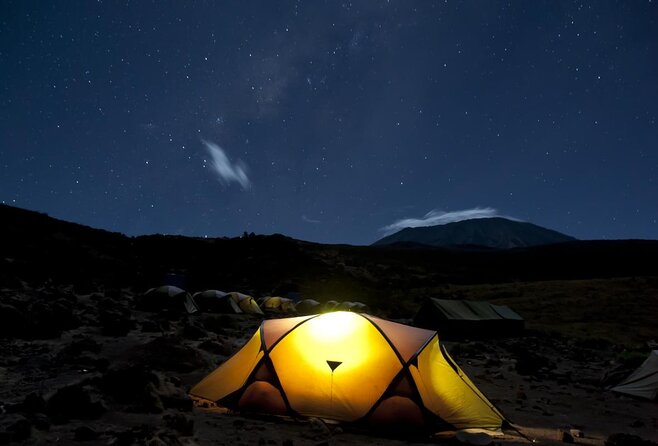
Barafu is the place to rest and prepare for the summit attempt. Your departure is scheduled for sometime between midnight and 2 a.m. Organize your clothing, water, snacks if supplied, headlamp, gloves, and camera before lying down. You may get only a short period of sleep.
Day 5: Stella Point, Uhuru Peak, and the Long Descent
Summit day begins in darkness. You climb northwest between the Rebmann and Ratzel glaciers, then move through heavy scree toward Stella Point on the crater rim.
This is described as the most physically and mentally difficult part of the trek. The surface can make every step feel slow, and the altitude can turn a normal incline into a serious effort. Your guides should adjust the pace to your ability. Previous groups have praised Peter and Alex for doing this, as well as Adam for keeping the mood positive.
At Stella Point, at about 5,685 meters, you can stop briefly. If the weather cooperates, sunrise here may be one of the great moments of the trip. From Stella Point, the route takes about another hour to Uhuru Peak, the highest point on Kilimanjaro and in Africa.
Snow may appear on the final section, although conditions vary. Do not judge success only by speed. A slow, controlled ascent gives you a better chance of managing the altitude and reaching the summit safely.
After Uhuru Peak, you descend. The itinerary text is cut off at this point, but it identifies Mweka as the descent route and refers to an overnight near Mweka. Confirm whether you sleep at Mweka Camp or continue farther on the same day. This distinction affects how much rest you get after the summit.
Day 6: Descending to Mweka Gate
After breakfast, you continue down to Mweka Park Gate to receive summit certificates. The lower trail may be wet and muddy, so gaiters and trekking poles are useful.
At this elevation, shorts and a T-shirt may be comfortable, but keep rain gear and warmer clothing close. Mountain weather can change, and your pack should not be arranged on the assumption that the day will stay dry.
From the park gate, the plan calls for another hour to Mweka Village. A vehicle then takes you back to your hotel in Moshi or Arusha, or to the airport. That transfer is a welcome practical touch after several days on foot.
The final instruction is to tip guides and porters. Tipping is not listed in the price, and driver tipping is specifically excluded. Bring a clear tipping plan so you can thank the support team without scrambling for cash at the last moment.
Guides, Porters, and Camp Support
The human support is one of the strongest parts of this experience. Past groups singled out guides Peter and Alex for punctuality, clear communication, plant knowledge, and encouragement. Adam was praised for his humor, while Habibu and Kijaji were described as highly professional.
These details matter. On Kilimanjaro, a guide is not just someone who points out the trail. Your guide manages pace, watches for altitude problems, explains the route, and helps you keep moving when the summit feels far away.
The porters are also central to the package. Their work allows you to carry a lighter personal load, although you still need a daypack with your water, clothing, rain gear, and personal items.
Food support has received particularly warm praise. Chef Daniel was credited with preparing a varied menu despite difficult mountain conditions. Vegetarian meals are available, but you must state dietary requirements when booking. Do this early and explain allergies clearly.
What to Pack for a Six-Day Climb
The information provided confirms that weather can be wet and that conditions range from rainforest warmth to snow near the upper mountain. Pack for both ends of that range.
Useful priorities include:
- Waterproof jacket and trousers
- Warm layers for Barafu and summit morning
- Gaiters for muddy lower trails
- Trekking poles for the descent
- Headlamp for the midnight start
- Gloves and a warm hat
- Comfortable broken-in hiking footwear
- A daypack for water and essential layers
- Clothing that can be adjusted as temperatures change
Do not pack only for the summit photograph. The forest can be wet, the descent can be muddy, and the upper slopes can be cold. Keep rain gear handy rather than buried inside a large bag.
The tour accepts dietary requests and vegetarian food, so include those needs during booking. The package has mobile ticketing and confirmation at booking, which makes the initial planning simple, but you still need to confirm the exact mountain arrangements.
Who Should Book This Trek?
I would recommend this trek to someone who wants a private Kilimanjaro attempt with a classic route and a clear support team. It suits you if you can handle several days of uphill walking, early starts, rough conditions, and a very long summit day.
It is also a good fit if you value scenery. The route offers farms, rainforest, heather, rocky ridges, volcanic centers, glaciers, and high summit terrain in one trip.
I would be more cautious if you want a relaxed schedule or have no experience with sustained physical exertion. The six-day timetable is compact, and the itinerary’s camp references need clarification. A longer schedule may offer more time for adjustment, but that option is not included in this package description.
This is a private tour, so only your group participates. That can be a major advantage if your group has similar fitness levels and wants a flexible pace. It can be less useful if one person is much slower or faster than the others, so discuss expectations before departure.
Booking Advice and Cancellation Terms
Confirmation is provided at booking, and children must be accompanied by an adult. A child rate applies only when sharing with two paying adults.
Pickup is offered, and the stated meeting location is Kilimanjaro Airport and Kilimanjaro National Park, with operating hours listed from midnight to 11:30 p.m. daily. Ask the operator to confirm the exact pickup point and the hotel transfer details.
Free cancellation is available if you cancel at least 24 hours before the local start time. Cancellations within 24 hours are not refunded, and changes made inside that period are not accepted.
Before booking, I would send four simple questions: Which camps are used each night? Are breakfast and dinner included? Where do you sleep after summit day? What is the exact airport or hotel pickup plan? Clear answers will remove the main uncertainty in this otherwise appealing package.
Should You Book the 6-Day Machame Trek?
Book it if you want a private, well-supported Kilimanjaro attempt with varied scenery, porter support, and a price that covers major park and transport costs. The praise for guide communication, flexible pacing, food, airport transfers, and summit support gives you good reasons to take the operator seriously.
Do not book until the itinerary wording is cleared up. The references to Machame Hut, Barranco Hut, Millennium Camp, and Mweka need to match a precise six-day schedule. Also confirm the full meal plan and tipping expectations.
If Afrishare provides those details clearly, the $1,715 price offers solid value for a private trek with five nights of accommodation, guides, porters, fees, and transfers. You will still need fitness, patience, proper clothing, and a willingness to walk slowly toward the summit. Kilimanjaro rewards that approach.
FAQ
How long is the Kilimanjaro Machame Route trek?
The experience is advertised as approximately six days, with five nights of accommodation.
What is the highest point reached?
The trek aims for Uhuru Peak, at 5,895 meters above sea level. Stella Point is at approximately 5,685 meters.
Is hotel pickup and drop-off included?
Yes. Hotel pickup and drop-off are included, with transport back to a hotel in Moshi or Arusha or an airport drop-off after the descent.
Are meals included?
Lunch is listed among the inclusions. The itinerary refers to breakfast and dinner at camp, but you should confirm exactly which meals are covered because the inclusions do not specify a complete meal package.
Can vegetarian meals be provided?
Yes. A vegetarian option is available. You should provide dietary requirements when booking.
What happens if I cancel?
You can receive a full refund if you cancel at least 24 hours before the experience start time. Cancellations or changes made within 24 hours are not accepted, and the payment is not refunded.
More 6-Day Experiences
- Kilimanjaro climb, Lemosho Route (6-day)
★ 5.0 · 129 reviews - Kilimanjaro climb, Marangu route (6-day)
★ 5.0 · 72 reviews - 6 Days 5 Night Safari
★ 5.0 · 57 reviews - 6 Days Tanzania Classic Safari
★ 5.0 · 52 reviews
Just added around Moshi
- Moshi: Lake Chala Tour: Hiking &/or Kayaking★ 4.5 · 3 reviews
- 3 Days Tanga Exclusive Beach Holiday★ 5.0 · 3 reviews
- Serengeti Wildebeest Migration.★ 5.0 · 3 reviews
- Chemka Hotpsrings E-Bike Day Trip★ 5.0 · 3 reviews
- Explore 1 day Ngorongoro Crater Budget Group Safari from Arusha★ 5.0 · 3 reviews
- Explore the 360° of Kilimanjaro★ 5.0 · 3 reviews
- Affordable Short Tanzania Safari (2 Days Camping Safari)★ 5.0 · 3 reviews
- Rongai Route 7 Days★ 5.0 · 3 reviews
Kilimanjaro Treks, compared.



8-Day Small-group Lemosho Kilimanjaro Summit Trekking
Read our review →


Climbing Kilimanjaro through 7 days Machame Route
Read our review →

Browse the lists this tour appears in