
Reviewed · KILIMANJARO TREKS
6 Days Machame Route Kilimanjaro Climbing Trekking Tour
Reach Africa’s highest point. The 6-day Machame Route trek gives you a demanding but scenic path up Kilimanjaro, moving through rainforest, moorland, alpine rock, and the high summit zone before returning through the Mweka Route. I like the route’s changing scenery and the useful climb-high, sleep-lower pattern on Day 3, which helps your body adjust to altitude. I also like that the price includes guides, porters, a cook, tents, meals, park fees, transfers, emergency oxygen, and hotels.
The main concern is the schedule. Six days is a short time for a summit attempt, and the final push begins around midnight after several days of walking. You need a moderate level of fitness, good clothing, and a willingness to move slowly when the mountain gets serious.
In This Review
- Key Points Before You Book
- What the Six-Day Machame Route Is Really Like
- Moshi to Machame Gate: Beginning at 5,381 Feet
- Machame Camp to Shira Cave at 12,598 Feet
- Lava Tower and Barranco Camp: The Best Acclimatization Day
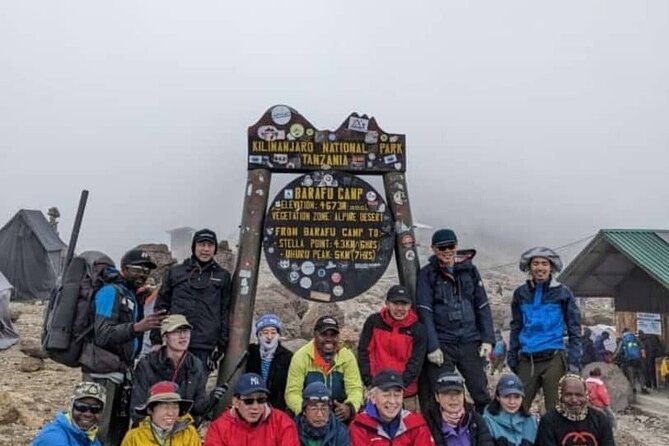
- Barranco Wall, Karanga, and Barafu at 15,354 Feet
- Midnight to Uhuru Peak at 19,341 Feet
- Millennium Camp to Mweka Gate
- Camping, Meals, and Staff Support
- What the $1,950 Price Includes
- Who Should Choose This Trek?
- Booking Advice and Cancellation Terms
- Should You Book the Six-Day Machame Route?
- FAQ
- How long is the Machame Route Kilimanjaro tour?
- What is the price per person?
- What is included in the tour price?
- What is not included?
- How difficult is the trek?
- Where does the tour start and end?
Key Points Before You Book
- The trail reaches 19,341 feet: Uhuru Peak is the highest point in Africa, and the summit day is the hardest part of the trip.
- Day 3 helps with acclimatization: You climb to 15,223 feet at Lava Tower, then sleep lower at Barranco Camp.
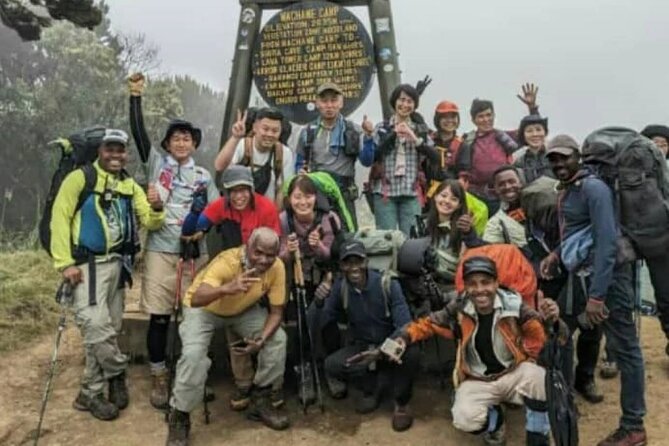
- The Barranco Wall adds hands-on challenge: The Kiss Stone Point section can feel exposed and awkward, though guides assist climbers through it.
- Camping is part of the experience: You sleep in waterproof, four-season tents on a twin-sharing basis.
- The support team is central to the trip: Guides, porters, and a cook handle the mountain work that lets you focus on walking.
- The $1,950 price covers much of the big expense: Park, rescue, conservation, food, transfers, tents, staff salaries, hotels, and tax are included, but flights, visa, gear rental, insurance, and tips are extra.
What the Six-Day Machame Route Is Really Like
The Machame Route is often chosen for its scenery. It begins in the forest on Kilimanjaro’s southern side, then climbs through open moorland and high volcanic terrain before reaching the summit. The return follows the Mweka side of the mountain, giving you different views instead of making you retrace the entire ascent.
You should think of this as a serious mountain trek, not a casual walking holiday. The daily distances are manageable on paper, but altitude makes ordinary climbs feel much harder. The toughest combination comes late in the trip: Barranco Wall, the climb to Barafu Camp, and then the midnight summit attempt.
The tour is private, so only your group participates. That can make a real difference on a mountain where pace, rest breaks, and morale matter. You are not tied to a large public group, although the exact number of people in your party is not specified.
More Kilimanjaro routes and climbs:
- Kilimanjaro climb by Lemosho Route (7-day)
★ 5.0 · 651 reviews - Kilimanjaro climb, Machame Route (7-day)
★ 5.0 · 262 reviews - Kilimanjaro Climbing Lemosho Route 8 Days.
★ 5.0 · 186 reviews
Moshi to Machame Gate: Beginning at 5,381 Feet
The trip starts with a drive from Moshi to Machame Gate, a journey of about 45 minutes. At 5,381 feet, the gate marks the official start of the climb and gives you a clear change of scene from town to mountain forest.
The first day takes roughly five to seven hours, ending at Machame Camp at 9,301 feet. The route rises steeply through the rainforest zone. Expect a full walking day, not a gentle warm-up, even though the altitude is still relatively modest.
The listed schedule allows only around eight to nine hours of sleep at Machame Camp. That sounds reasonable, but camp routines, dinner, preparation, and the early start can make the night feel short. Keep your first evening simple. Eat, organize your sleeping gear, and rest rather than treating camp as social time.
This is where the porters and cook begin to earn their keep. Your tent, sleeping mattress, mess tent, table, and chairs are provided, while fresh meals and purified drinking water are prepared for the group. The basic comforts matter after a steep opening climb.
Machame Camp to Shira Cave at 12,598 Feet
Day 2 covers about four hours, taking you from Machame Camp to Shira Cave Camp at 12,598 feet. You leave the final section of rainforest behind and enter the moorland zone, where the vegetation becomes lower and the views open up.
The route follows a rocky ridge for several hours. Compared with Day 1, this may be a shorter walking day, but the higher altitude changes the effort. You may find yourself breathing harder on slopes that would seem easy at home.
I like this stage because it gives you your first clear sense of Kilimanjaro as a high volcanic mountain rather than simply a forested peak. The change in plant life and open ground makes the climb feel more dramatic.
Take the pace seriously. A guide can help you keep a slow, steady rhythm, and the supplied drinking water makes it easier to maintain regular hydration. The trek information specifically advises good preparation, plenty of water, and suitable gear, advice worth following from the first morning.
Lava Tower and Barranco Camp: The Best Acclimatization Day
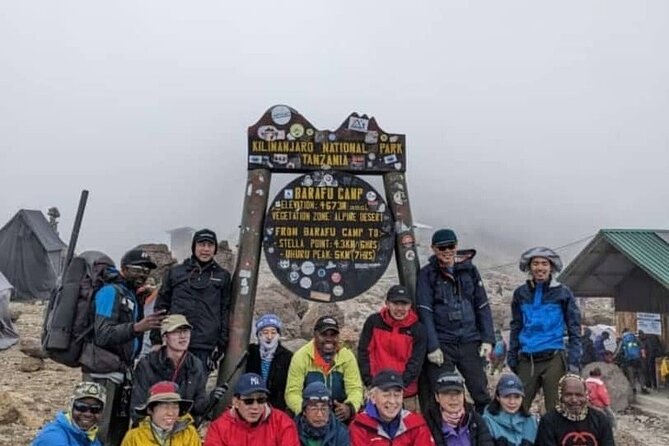
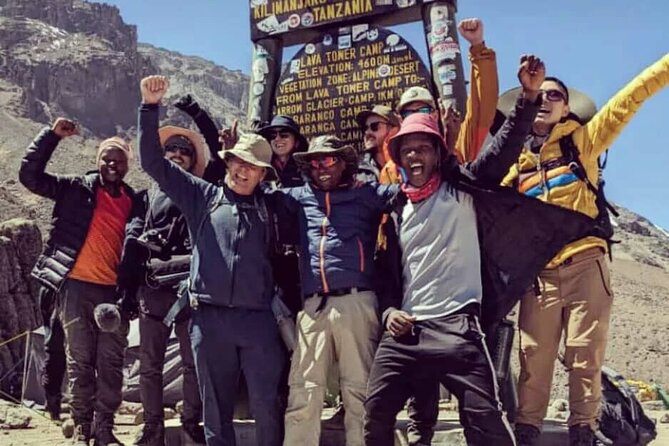
Day 3 is the clever part of the route. You climb from Shira Cave Camp at 12,598 feet to Lava Tower at 15,223 feet, then descend to Barranco Camp at 12,959 feet for the night.
This is a tough five to eight-hour day because the trail takes you high before bringing you down. The benefit is simple: you spend time at a greater altitude but sleep lower than your highest point. That pattern can help your body adjust, though it cannot remove the risks of altitude sickness.
Lava Tower is the high point of the day and a useful test. You will learn how your body responds to thin air before the summit attempt. Do not race to the top. A slow pace is not a sign of weakness here; it is the sensible way to conserve energy.
The descent to Barranco Camp brings relief, but you are not done for the day. Fatigue can arrive suddenly at this altitude. Eat the food provided, drink regularly, and tell your guide if you feel unwell. Emergency oxygen is included, but it is safety equipment, not a substitute for careful altitude management.
Barranco Camp is also one of the memorable overnight stops because the next morning begins with the Barranco Wall. The name may sound intimidating, but the guides are there to help with the difficult sections.
A few more trips of this kind worth comparing:
- Private Kilimanjaro Hike 7 Day Lemosho Route
★ 5.0 · 60 reviews - Best Kilimanjaro hiking day trip tour with Kilinge Adventures
★ 4.5 · 54 reviews - #1. Best Kilimanjaro Day hike Tour-Machame Route-ISMANI
★ 4.2 · 47 reviews - Best Kilimanjaro Adventure 7 days Machame route Trekking
★ 5.0 · 42 reviews
Barranco Wall, Karanga, and Barafu at 15,354 Feet
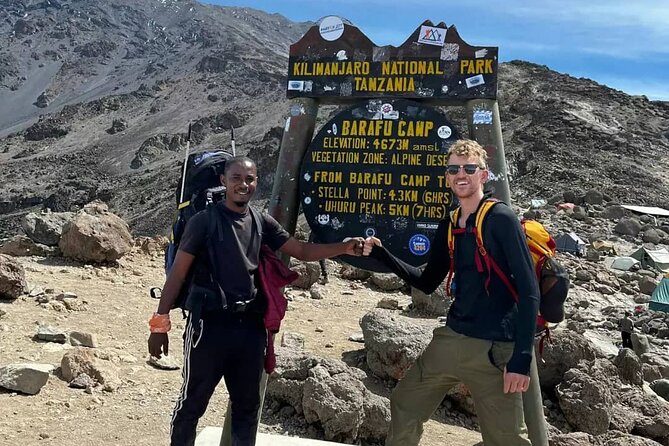
Day 4 takes you from Barranco Camp at 12,959 feet to Karanga Camp at 13,238 feet, then onward to Barafu Camp at 15,354 feet. The stated walking time is about three to four hours for the climb, though the full day is listed at roughly seven hours, including the route and camp routines.
The Barranco Wall is the day’s main physical obstacle. You cross the wall, then continue over the Karanga Valley ridges. Kiss Stone Point is singled out as a challenging section. You may need to use your hands, adjust your footing, and follow the guide’s instructions closely.
This is not technical climbing in the sense of ropes and mountaineering equipment, but it is more than a simple trail walk. The guides help climbers through the awkward spots, which is one of the most important services on this route.
From Karanga, the trail continues toward Barafu, the base camp for the summit attempt. The route joins the trail connected with the Mweka side of the mountain. At Barafu, the terrain is high and exposed, and the camp is about preparation rather than comfort.
You have an early dinner and organize your summit clothing before trying to sleep. The summit departure is scheduled for around midnight. The supplied itinerary calls this 12:00 pm in one place, but the surrounding details clearly describe a midnight start. Confirm the exact departure time with your guide before resting.
Midnight to Uhuru Peak at 19,341 Feet
The summit day starts at about midnight from Barafu Camp. You walk steadily toward Stella Point on the crater rim, climbing through heavy scree. The surface can be loose, so every step takes patience and energy.
The climb to Stella Point is the psychological heart of the trek. You are tired, it is dark, and the cold and altitude make the hours feel long. Your guide’s pacing and encouragement matter greatly here. Past departures have included guides named Victor, Baraka, Maneno, Elipokea, Aphizu, and Emmanuel, with climbers praising their calm support and attention.
At Stella Point, you take about a 15-minute break before continuing to Uhuru Peak. The final stretch leads to 19,341 feet, or 5,895 meters, the highest point in Africa. If the weather cooperates, sunrise adds a powerful reward to the effort.
Do not underestimate the final walk from Stella Point. It may look short on a map, but altitude makes it slow. The best approach is to focus on the next few steps, keep drinking as directed, and let the guide decide when a rest is sensible.
After reaching Uhuru Peak, you descend to Barafu Camp. The schedule allows about two hours there for lunch and rest before continuing to Millennium Camp for the final dinner and overnight stay. This is a long day with a summit ascent, a descent to Barafu, and more walking afterward. The itinerary lists about six hours, but the actual time can vary with pace, conditions, and time spent at the summit.
Millennium Camp to Mweka Gate
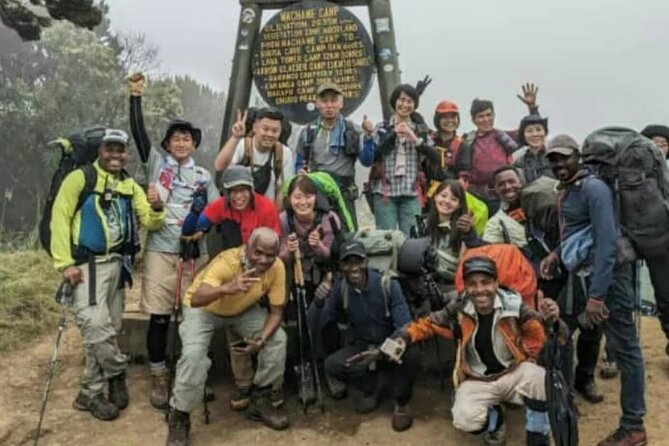
The last day begins at Millennium Camp and continues to Mweka Camp at 10,104 feet before descending through rainforest to Mweka Gate at 5,380 feet. The hike is expected to take three to four hours.
After the stark upper mountain, the return to forest feels like a major change. The lower altitude is welcome, though your knees and feet may be tired from the summit descent. Trekking poles, if you bring them, can be especially useful on the way down.
At Mweka Gate, you receive a Kilimanjaro summit certificate before being driven back to Moshi. The tour ends at the meeting point, and the package includes transfers back to your Moshi hotel. Airport pickup and drop-off are also included, which simplifies the start and finish of a trip that already has plenty of moving parts.
Camping, Meals, and Staff Support
This is a camping trek, but it is not a bare-bones camping trip. You sleep in waterproof, four-season mountain tents shared by two people. A sleeping mattress is included, along with a separate mess tent furnished with tables and chairs.
The package also covers a cook and large portions of fresh, healthy food. That matters more than it might sound. You need regular meals during a high-altitude trek, and the difference between eating well and eating poorly can affect your energy and mood.
Purified drinking water is provided. The package lists breakfast, lunch, and dinner for all six days, though the exact menu is not supplied. If you have dietary needs, ask the company before booking rather than assuming the kitchen can accommodate them.
The most consistently praised part of the operation is the human support. Guides and porters help with the route, camp setup, luggage, and encouragement. One past departure specifically praised Walter for helping with luggage, while Egbert was praised for quick replies by email and WhatsApp. These details suggest an operation that pays attention to practical service before and during the climb.
You should still pack light and bring only what you need. Personal trekking equipment is not included, though items such as sleeping bags, hiking boots, and clothing are available to rent.
What the $1,950 Price Includes
At $1,950 per person, the tour is not cheap, but the price covers many of the costly parts of a Kilimanjaro climb. Included expenses are:
- Mountain transfers and transport back to your Moshi hotel
- Airport pickup and drop-off
- Mountain guide, porter, and cook salaries
- Park conservation, camping, hut, and rescue fees
- Government VAT of 18 percent
- Tents, sleeping mattress, and mess tent
- Emergency oxygen cylinder
- Food and purified drinking water
- Hotels
- Kilimanjaro summit certificate
This is useful because park fees and staff costs can make up a large share of a guided climb. You are paying for an organized support system, not only six days of trail access.
Budget separately for a Tanzania visa, international or domestic flights, personal equipment, travel insurance, and tips. Gratuities are not included, and you should plan for them as part of the real cost of the trip. The company can rent some equipment, but check exactly what is available and what condition it is in before relying on rentals.
Who Should Choose This Trek?
I would recommend this route to someone who wants Kilimanjaro’s varied scenery and is comfortable with a demanding schedule. It suits hikers with moderate physical fitness who can manage long uphill and downhill days, cold conditions, camping, and a midnight summit start.
It may not suit you if you want a relaxed mountain holiday or if you dislike sleeping in tents. The six-day format also leaves less time for acclimatization than longer Kilimanjaro routes. That does not make success impossible, but it does make preparation, pacing, hydration, and honest communication with your guide especially important.
The private format is useful for couples, families with suitable fitness, or small groups of friends who want the climb organized around their own party. The tour has received a 5 rating from 34 published evaluations and a 100 percent recommendation figure, with the strongest praise directed toward the guides, porters, cook, meals, camp setup, and overall organization.
Booking Advice and Cancellation Terms
The meeting point is Macpace Tours and Safaris in Longuo A, Moshi, Tanzania. Confirmation is provided at booking, and the experience is listed for daily operation between February 1, 2024 and June 17, 2026.
You can cancel at least 24 hours before the scheduled start for a full refund. Cancellations or changes made within 24 hours are not accepted for a refund, and cut-off times use local Tanzanian time.
Should You Book the Six-Day Machame Route?
Book it if you want a well-supported, scenic Kilimanjaro climb and you understand that the summit day will be hard. The included park charges, staff, tents, meals, emergency oxygen, hotel stays, and transfers give the $1,950 price solid value.
Before paying, confirm your equipment plan, tipping budget, exact midnight departure, airport transfer details, and any dietary requirements. If you can prepare properly and accept the short acclimatization schedule, this is a strong choice for reaching Uhuru Peak with an organized local team around you.
FAQ
How long is the Machame Route Kilimanjaro tour?
The tour lasts approximately six days. The itinerary includes five nights on the mountain route and a return to Moshi after the Mweka Gate descent.
What is the price per person?
The listed price is $1,950 per person.
What is included in the tour price?
The price includes mountain and airport transfers, guides, porters, cook salaries, tents, sleeping mattresses, mess tent equipment, meals, purified drinking water, park-related fees, VAT, emergency oxygen, hotels, and a summit certificate.
What is not included?
Tanzania visas, international and domestic flights, personal trekking equipment, tips and gratuities, and travel insurance are not included. Some personal gear is available for rent.
How difficult is the trek?
The tour requires a moderate level of physical fitness. The most demanding parts include the climb to Lava Tower, the Barranco Wall, the ascent to Barafu Camp, and the midnight summit attempt to Uhuru Peak.
Where does the tour start and end?
It starts at Macpace Tours and Safaris in Moshi, Tanzania, and ends back at the meeting point after the return from Mweka Gate and transport to Moshi.
More 6-Day Experiences
- Kilimanjaro climb, Lemosho Route (6-day)
★ 5.0 · 129 reviews - Kilimanjaro climb, Marangu route (6-day)
★ 5.0 · 72 reviews - 6 Days 5 Night Safari
★ 5.0 · 57 reviews - 6 Days Tanzania Classic Safari
★ 5.0 · 52 reviews
Just added around Moshi
- Moshi: Lake Chala Tour: Hiking &/or Kayaking★ 4.5 · 3 reviews
- 3 Days Tanga Exclusive Beach Holiday★ 5.0 · 3 reviews
- Serengeti Wildebeest Migration.★ 5.0 · 3 reviews
- Chemka Hotpsrings E-Bike Day Trip★ 5.0 · 3 reviews
- Explore 1 day Ngorongoro Crater Budget Group Safari from Arusha★ 5.0 · 3 reviews
- Explore the 360° of Kilimanjaro★ 5.0 · 3 reviews
- Affordable Short Tanzania Safari (2 Days Camping Safari)★ 5.0 · 3 reviews
- Rongai Route 7 Days★ 5.0 · 3 reviews
Kilimanjaro Treks, compared.



8-Day Small-group Lemosho Kilimanjaro Summit Trekking
Read our review →


Climbing Kilimanjaro through 7 days Machame Route
Read our review →

Browse the lists this tour appears in