
Reviewed · KILIMANJARO TREKS
6 Days Machame Route Kilimanjaro Climbing
The mountain changes every day. This six-day Machame Route climb gives you a demanding but well-organized path from Moshi through rainforest, moorland, high desert, and glacier country to Uhuru Peak. I especially like the route’s changing scenery and the steady support built into the trip, including meals, camp organization, bottled water, park fees, and experienced guides.
I also like the small-group format, capped at 10 people, and the personal attention associated with guide Sebastian and African Trek & Travel. The main caution is simple: six days is a short schedule for Kilimanjaro, so you need a moderate level of fitness, patience, and a willingness to accept a hard summit night.
In This Review
- Key points to know before booking
- Why the Machame Route works so well
- Day 1: Machame Gate to Machame Camp
- Day 2: Moorland and Shira Cave Camp
- Day 3: Lava Tower and Barranco Camp
- Day 4: Barranco Wall to Barafu Camp
- Day 5: The midnight push to Uhuru Peak
- Day 6: The forest descent to Mweka Gate
- Meals, water, and camp support
- Price and what you receive for $2,600
- Group size, guides, and the human side of the climb
- Pickup, meeting point, and practical details
- Who should book this six-day climb?
- Should you book it?
- FAQ
- Where does the Kilimanjaro climb begin?
- How long does the experience last?
- What route does the climb use?
- How many people can join the group?
- How physically difficult is the climb?
- What is included in the price?
- Is the summit attempt made at night?
- What happens if I reach Stella Point but not Uhuru Peak?
- Are tips included?
- Can I cancel for a full refund?
Key points to know before booking
- Five mountain nights and one descent day: You sleep at Machame, Shira, Barranco, Barafu, and then complete the summit and descent sequence before leaving through Mweka Gate.
- The scenery changes fast: Expect thick rainforest on day one, open moorland on day two, high desert around Lava Tower, and rocky summit terrain above Barafu.
- Summit night begins around midnight: You climb in darkness toward Stella Point, then continue along the crater rim to Uhuru Peak at 5,895 meters.
- The six-day pace is serious: The route includes a steep Barranco Wall, a high point at Lava Tower, and a long summit day.
- Support is a major part of the value: Meals, park fees, camp arrangements, bottled water, guides, and porters are included, while tips are not.
- The price is $2,600 per group of up to one person: Confirm the final party arrangement and exact meal inclusions before paying, since the supplied details list meals in two different ways.
Why the Machame Route works so well
Machame is often called the Whiskey Route, a name that hints at its tougher character compared with easier walking routes. Here, the appeal is not only reaching Africa’s highest mountain. It is the way the climb unfolds through several distinct ecological zones.
You begin in the forest, where giant ferns and vines create a cool, shaded setting. Higher up, trees give way to moorland and open ridges. By the time you reach the Lava Tower and Barafu Camp, the surroundings feel stark and exposed. At the summit, you are dealing with cold, darkness, loose scree, and thin air.
That variety gives the climb a strong sense of progress. Each day looks and feels different. I like that the route does not simply march straight uphill. The path rises high, drops again, and then climbs toward the summit. That pattern can help your body adjust to altitude, although six days still leaves less time than a longer route.
The route is not a casual scenic walk. You should expect several hours of hiking each day, uneven ground, steep sections, and a summit push that begins at midnight. The operator describes the required fitness level as moderate, but the summit day makes this a serious physical undertaking.
More Kilimanjaro routes and climbs:
- Kilimanjaro climb by Lemosho Route (7-day)
★ 5.0 · 651 reviews - Kilimanjaro climb, Machame Route (7-day)
★ 5.0 · 262 reviews - Kilimanjaro Climbing Lemosho Route 8 Days.
★ 5.0 · 186 reviews
Day 1: Machame Gate to Machame Camp
Your climb starts at Machame Gate, where you register with park authorities before entering the mountain area. This administrative start matters because it gives the guide and park staff a chance to organize the group before you set off.
The first walk leads through lush rainforest and takes about five hours. This is the gentlest day in terms of elevation gain, but it is still a full hiking day. The forest is one of the route’s memorable features, with giant ferns, vines, and a sense of enclosure that gradually fades as you climb.
You finish at Machame Camp, your first overnight stop. After the noise and heat of Moshi, the camp marks a clear change in rhythm. You eat, rest, and prepare for a steeper second day.
The practical advice here is to start slowly. You may feel strong at the beginning, but saving energy is more important than setting a fast pace. Listen to the guide’s rhythm, keep drinking, and do not treat the first day as a test of speed.
Day 2: Moorland and Shira Cave Camp
Day two is shorter on paper, at about three hours, but the climb becomes steeper. You leave much of the forest behind and enter the moorland zone, where the views open up and the air begins to feel different.
The destination is Shira Cave Camp on the Shira Plateau. This is a valuable day because you gain a considerable amount of altitude without spending as many hours on the trail. That combination can feel deceptively easy. You may arrive early, but your body is still processing the increase in elevation.
Shira gives you a more open setting than Machame. The changing plant life and wider views make it clear that Kilimanjaro is not one continuous forested mountain. It is a series of zones stacked above one another.
Use the extra time to eat, drink, and rest. Do not spend the afternoon trying to prove that you feel fine. Altitude symptoms can appear later, and your energy reserves will matter much more on the final climb.
Day 3: Lava Tower and Barranco Camp
Day three is one of the route’s most useful and interesting sections. You cross a high desert plateau and reach Lava Tower at 4,600 meters. From there, the path descends to Barranco Camp.
This high point followed by a lower overnight stop is an important feature of the route. You get exposure to a higher elevation during the day, then sleep lower at Barranco. That pattern is physically demanding, but it adds variety and gives you a chance to see how your body reacts to altitude.
The setting changes again. The high desert feels bare and rocky, while Barranco Camp sits in a scenic valley beneath the Barranco Wall. The wall becomes tomorrow’s main challenge, so its presence at camp is a useful reminder of what is ahead.
The listed walking time is about five hours. You may find the day tiring because the route includes both ascent and descent. Keep your pace controlled, and tell your guide promptly if you develop a headache, nausea, unusual fatigue, or other altitude-related concerns. The guide’s job is not just to encourage you upward. It is also to help you make sensible decisions.
A few more trips of this kind worth comparing:
- Kilimanjaro climb, Lemosho Route (6-day)
★ 5.0 · 129 reviews - Kilimanjaro climb, Marangu route (6-day)
★ 5.0 · 72 reviews - 6 Days 5 Night Safari
★ 5.0 · 57 reviews - 6 Days Tanzania Classic Safari
★ 5.0 · 52 reviews
Day 4: Barranco Wall to Barafu Camp
Day four begins with the Barranco Wall, rising to about 4,250 meters. This is the most visually dramatic section so far, and it requires careful movement over steep, rocky ground.
The route then crosses the Karanga Valley at roughly 4,050 meters before joining the trail that connects with the Mweka route. From there, you continue upward to Barafu Camp, at around 4,600 meters. The day takes about six hours.
Barafu means ice in Swahili, and the camp’s name fits its exposed, high setting. You have completed the Southern Circuit, with views toward the summit from several angles. The summit may appear close, but do not let that fool you. The hardest section is still ahead.
This is the day to organize everything for the midnight start. Keep your warmest clothing, headlamp if you have one, water, snacks, and essential personal items ready. The supplied information confirms bottled water, meals, fees, and camp support, but you should ask exactly what personal equipment you must bring.
You will likely spend the afternoon resting rather than sightseeing. Barafu is a staging point, not a place for a relaxed evening. Eat what you can, stay hydrated, and sleep if your body allows it.
Day 5: The midnight push to Uhuru Peak
Summit day is the central test of the trip. You wake around midnight, eat a light breakfast, and begin climbing before dawn. The aim is to reach Stella Point on the crater rim between 4 and 5 AM, then continue toward Uhuru Peak near sunrise.
The trail climbs through switchbacks over steep scree, with possible snow depending on conditions. You reach Stella Point at 5,861 meters, or about 18,640 feet. From there, the crater and glaciers come into view, followed by roughly another hour along the crater rim to Uhuru Peak.
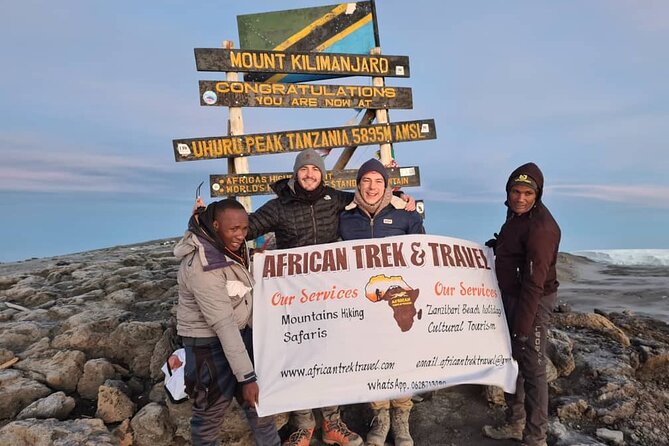
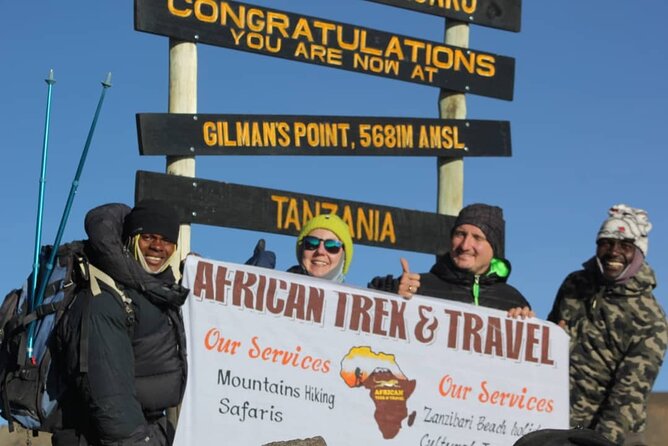
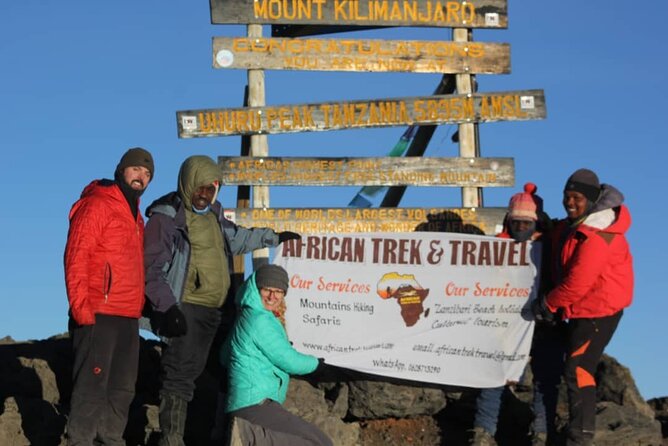
Uhuru Peak is the true summit at 5,895 meters. You can stop for photographs, but the amount of time you spend there depends on how you feel. That is the right approach. At this height, the summit photograph is important, but your health matters more.
The day is listed as about six hours for the summit section, though the total effort also includes the return toward camp. You should treat it as the most demanding day of the climb. Darkness, cold, steep ground, and altitude combine to make the pace slow.
The guides receive especially strong praise for safety, encouragement, and organization. Sebastian is described as a professional and energetic leader who helped with equipment planning, preparation, and pacing. That kind of help is useful here, when a calm voice and steady judgment can make a major difference.
Not everyone reaches Uhuru Peak. Some climbers reach Stella Point and receive the corresponding certificate, while those who reach Uhuru Peak receive the summit certificate. The schedule acknowledges both outcomes, which is sensible. Reaching a high point safely is better than pushing beyond your limits.
After summit activities, you continue down toward the camp area. The climb up may get all the attention, but descending tired legs over loose ground can be uncomfortable. Follow instructions carefully and keep your balance.
Day 6: The forest descent to Mweka Gate
The final day takes you down through the lower rainforest to Mweka Gate. The distance is about nine kilometers, or 5.5 miles, and the listed walking time is three to four hours.
After the cold, bare upper mountain, the forest feels like a different world. The descent is pleasant in terms of scenery, but tired knees and feet can make it more difficult than the short duration suggests.
At Mweka Gate, successful climbers receive official certificates. A green certificate is listed for Stella Point, and a gold certificate for Uhuru Peak. You then return to your hotel in Moshi.
Tipping the trekking crew is customary and is not included in the price. Plan for this as part of the real cost of the climb. The guides, porters, and cooks are central to the operation, and a clear tipping plan avoids awkwardness at the end.
Meals, water, and camp support
The package includes bottled water, breakfast, lunch, dinner, park fees, and taxes. The meal section is written inconsistently, listing both nine meals in one place and five or six meals in another, so I would confirm the exact number before booking.
The important point is that food support is built into the climb. That saves you from organizing meals on the mountain and allows you to focus on walking, resting, and altitude management.
Bottled water is listed at three liters per person. You should clarify whether that means a daily allocation, a total quantity, or the amount supplied at particular stages. Water needs are especially important on a summit climb.
Alcoholic beverages are not included, and the listing states that the activity is for people aged 18 and older. Restroom facilities on board are also not included, though onboard restrooms are not central to a mountain trek.
Price and what you receive for $2,600
The listed price is $2,600 per group, up to one person. That wording is unusual, so confirm whether the price applies to a private solo departure or whether a different rate applies to a larger party of up to 10 people.
As a value proposition, the price includes several costly parts of a Kilimanjaro climb: park fees, taxes, meals, bottled water, guides, porters, camp arrangements, and transport back to Moshi after the descent. You are not paying only for someone to point toward the summit. You are paying for logistics, safety planning, food, and a support team operating in difficult conditions.
I would not choose a climb on price alone. The strongest praise for this company concerns organization, guide support, safety, and the work of the full crew. Several experiences describe the service as reasonably priced compared with larger operators while still maintaining a similar standard.
Before booking, ask for a written breakdown of:
- The exact number of meals
- Equipment supplied and equipment you must bring
- The guide-to-climber arrangement
- The meaning of the one-person group price
- Transport details between Moshi and the mountain gates
- The recommended tipping amount
That short check can prevent confusion later.
Group size, guides, and the human side of the climb
The maximum group size is 10 people, which is small enough for the guide to keep track of everyone without making the climb feel completely private. Group chemistry still matters. You may walk with people who have different fitness levels, but a supportive team can make a hard day easier.
Sebastian is repeatedly associated with this experience and is described as the owner or climbing leader in several accounts. His strengths appear to be planning, clear communication, energy, and attention to safety. He also helped climbers decide what gear to take, which is valuable because overpacking can make every uphill section harder.
The porters and cooks are just as important as the lead guide. Meals, tents, camp movement, and supplies do not appear by magic. The strong praise for the wider crew points to a well-coordinated operation rather than a guide working alone.
Pickup, meeting point, and practical details
The meeting point is in Moshi, Tanzania, at the supplied location code M89C+XGR. Pickup is offered, but you should confirm the exact pickup time and hotel coverage directly with the operator.
The experience is offered with a mobile ticket, and confirmation is provided at booking. Service animals are allowed, and the meeting area is near public transportation. Those details are useful if you are arranging a wider Tanzania trip, though the climb itself remains the main logistical focus.
The vehicle description includes spacious seating, panoramic windows, climate control, audio systems, Wi-Fi, storage, safety features, and experienced drivers. These features may matter for transfers to and from the mountain, particularly after a long descent. They do not change the physical nature of the climb, but comfortable transport is welcome when your legs are tired.
Free cancellation is available if you cancel at least 24 hours before the experience begins. Changes or cancellations inside that period are not accepted for a refund, using local time as the cut-off.
Who should book this six-day climb?
I would recommend this route to you if you want a classic Kilimanjaro climb with dramatic scenery, a clear day-by-day structure, and strong guide support. It suits active adults who can manage several hours of walking, steep sections, early starts, and a demanding summit night.
It may suit younger, fit climbers especially well, but age alone is not the deciding factor. Your fitness, preparation, and response to altitude matter more. The supplied guidance calls for moderate physical fitness, but you should not confuse that with an easy holiday.
I would hesitate to recommend it if you want a relaxed schedule or maximum time for acclimatization. A longer route may be worth considering if you prefer a gentler pace, though no alternative route is included in this package.
Should you book it?
Book this six-day Machame climb if you want a serious mountain challenge, changing scenery, and a local operator with a strong record for guide support and organization. The best reasons to choose it are the route itself, the small group limit, the included mountain logistics, and the repeated praise for Sebastian and the wider crew.
Before you commit, confirm the odd group-price wording, the meal count, transport arrangements, and equipment list. If those details are clear and you accept that summit success is never guaranteed, this looks like a well-supported way to attempt Kilimanjaro in six demanding days.
FAQ
Where does the Kilimanjaro climb begin?
The meeting point is in Moshi, Tanzania, at the supplied location code M89C+XGR. Pickup is offered, but the exact arrangements should be confirmed with African Trek & Travel.
How long does the experience last?
The climb lasts approximately six days.
What route does the climb use?
The route is the Machame Route, with overnight stops at Machame Camp, Shira Cave Camp, Barranco Camp, and Barafu Camp before the summit and descent through Mweka Gate.
How many people can join the group?
The activity has a maximum of 10 participants. The listed price is shown as $2,600 per group of up to one person, so you should confirm the pricing structure for your party.
How physically difficult is the climb?
You should have a moderate level of physical fitness. The trip includes several hours of hiking, steep sections such as the Barranco Wall, high-altitude walking, and a midnight summit attempt.
What is included in the price?
The inclusions list bottled water, meals, park fees, and taxes. Breakfast, lunch, and dinner are included, but the published meal counts should be confirmed before booking.
Is the summit attempt made at night?
Yes. You wake around midnight for a light breakfast and begin the ascent before dawn, aiming to reach Stella Point between 4 and 5 AM and Uhuru Peak near sunrise.
What happens if I reach Stella Point but not Uhuru Peak?
The supplied information states that climbers reaching Stella Point receive a green certificate, while those reaching Uhuru Peak receive a gold certificate.
Are tips included?
No. Tipping the trekking crew is not included, and tipping is customary at the end of the climb.
Can I cancel for a full refund?
Yes, if you cancel at least 24 hours before the experience start time. Cancellations or changes made less than 24 hours in advance are not accepted for a refund.
Just added around Moshi
- Moshi: Lake Chala Tour: Hiking &/or Kayaking★ 4.5 · 3 reviews
- 3 Days Tanga Exclusive Beach Holiday★ 5.0 · 3 reviews
- Serengeti Wildebeest Migration.★ 5.0 · 3 reviews
- Chemka Hotpsrings E-Bike Day Trip★ 5.0 · 3 reviews
- Explore 1 day Ngorongoro Crater Budget Group Safari from Arusha★ 5.0 · 3 reviews
- Explore the 360° of Kilimanjaro★ 5.0 · 3 reviews
- Affordable Short Tanzania Safari (2 Days Camping Safari)★ 5.0 · 3 reviews
- Rongai Route 7 Days★ 5.0 · 3 reviews
Kilimanjaro Treks, compared.



8-Day Small-group Lemosho Kilimanjaro Summit Trekking
Read our review →


Climbing Kilimanjaro through 7 days Machame Route
Read our review →

Browse the lists this tour appears in