
Reviewed · KILIMANJARO TREKS
6 Days Mount Kilimanjaro Climbing via Rongai Route
Kilimanjaro rewards steady walkers. This six-day climb with Kentau Safaris uses the quieter Rongai Route, approaching Kilimanjaro from the north before joining the Marangu Route for the summit push. I like the route’s moderate slope and drier northern side, especially during the rainy season. I also like the careful pacing, with camps placed to help you adjust to altitude rather than racing uphill. The main drawback is that six days gives you less acclimatization time than longer Kilimanjaro programs, so you still need solid fitness and close attention to how your body feels.
The climb costs $2,200 per person, with hotel pickup and drop-off in Moshi, park fees, mountain accommodation, meals, and a private group included. That is a substantial price, but it covers the basic structure of a supported expedition and removes much of the planning burden. You will still need to budget for personal gear, travel insurance, an entry visa, air travel, and tips for the climbing team.
In This Review
- Key points to know before booking
- Why Rongai can be the right Kilimanjaro route
- Day 1: Moshi to Simba Camp through woodland
- Day 2: Moorland views toward Kibo
- Day 3: Semi-desert and the first serious altitude check
- Day 4: Third Cave to Kibo Huts
- Day 5: The midnight summit push
- Day 6: Descent through Mandara Huts to Moshi
- What the $2,200 price includes
- Fitness, gear, and practical planning
- Who will get the most from this climb
- Should you book Kentau Safaris?
- FAQ
- Where does the Kilimanjaro climb begin?
- What time does pickup begin?
- How long is the climb?
- Which route does the climb use?
- How much does the experience cost?
- Is this a private tour?
- What meals are included?
- What costs are not included?
- Is cancellation free?
Key points to know before booking
- Rongai approaches from the north: You get a quieter route and a drier option than the southern side during the rainy season.
- The route begins gently: Moderate slopes make Rongai appealing if you have less backpacking experience, though altitude remains the real challenge.
- The final climb starts around midnight to 2 a.m.: Expect cold, darkness, steep scree, and a demanding push toward Stella Point and Uhuru Peak.
- You join the Marangu Route near Kibo Huts: The climb is quiet at first, then follows the standard Marangu approach to the summit.
- Moshi transfers are included: Pickup begins at 7 a.m., and the return drive from Marangu Gate to Moshi takes about 45 minutes.
- The service has earned strong praise for organization: Dominic, the owner, is noted for helping with planning and staying involved through the climb.
Why Rongai can be the right Kilimanjaro route
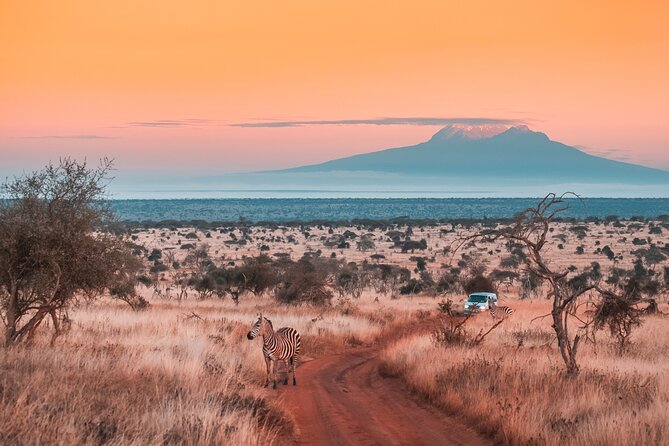
Rongai offers a different feel from the popular Marangu Route. You begin on Kilimanjaro’s northern side, close to the Tanzanian border with Kenya, and spend the early days on a quieter approach through woodland and moorland. That matters if you want fewer people around you and a less familiar route experience.
The route is described as moderately difficult, with a fairly consistent slope rather than a series of abrupt, punishing climbs. That makes it a sensible choice if you have some fitness but limited multi-day backpacking experience. Do not confuse a moderate slope with an easy mountain. The altitude still rises quickly, temperatures drop sharply, and the summit night demands real effort.
The northern side also receives less precipitation than the southern side. If you are climbing during the rainy season, that can make Rongai a practical choice. Weather is never guaranteed on Kilimanjaro, but a route with less expected rain can mean a more comfortable walk and less trouble with wet clothing and muddy camps.
I also like the changing scenery. The route moves from wooded trails to moorland, then semi-desert and alpine desert. You can watch the plants thin out as you gain height, while Kibo’s ice fields become more visible. The scenery does not arrive all at once. It changes by degrees, which gives you a clear sense of how high you are climbing.
More Kilimanjaro routes and climbs:
- Kilimanjaro climb by Lemosho Route (7-day)
★ 5.0 · 651 reviews - Kilimanjaro climb, Machame Route (7-day)
★ 5.0 · 262 reviews - Kilimanjaro Climbing Lemosho Route 8 Days.
★ 5.0 · 186 reviews
Day 1: Moshi to Simba Camp through woodland
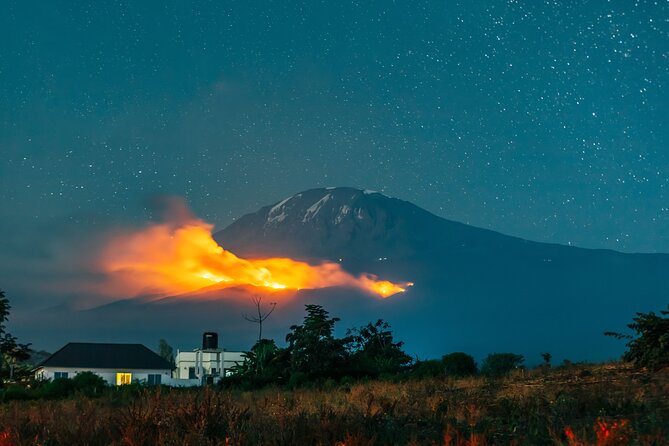
Your morning begins with pickup in Moshi at 7 a.m. The drive to the Kilimanjaro National Park Gate takes about four to five hours and passes through coffee plantations and the village of Nale Muru. This is a long transfer before your boots hit the trail, so do not treat the morning as a short prelude.
At the gate, your crew waits while permits are issued. The area can be busy with mountain crews preparing supplies and paperwork, but this pause also gives you time to watch how a Kilimanjaro expedition gets organized. Make good use of it. Check your daypack, water, rain protection, and warm layer before setting off.
The hike begins through wooded scenery on windy trails. Your guide explains local plants, animals, and wildlife you might see along the way. The trail then reaches Simba Camp, near the first cave at the edge of the moorland zone.
The camp has broad views toward the plains of Kenya, giving you an early reward for the long transfer and first day on foot. The hiking time is listed as about seven hours, though the total day also includes the drive and permit wait. That makes this a full first day, not a gentle walk followed by an early afternoon at camp.
Day 2: Moorland views toward Kibo
After breakfast, you continue across moorland on a steady uphill path. This is one of the route’s more appealing sections because the vegetation becomes lower and more open, allowing better views of Kibo, Kilimanjaro’s main volcanic cone.
You also get your first glimpse of the ice fields on the eastern crater rim. They may look distant, but their presence gives the day a clear purpose. You are no longer simply walking through mountain country. You are moving toward the summit crater.
The trail leads toward Second Cave, and the small moorland shrubs gradually become thinner. Temperatures begin to fall, so keep a warm layer easy to reach rather than buried at the bottom of your bag. The day is listed at about seven hours, and the steady ascent is exactly the kind of pace that rewards patience.
This is where the value of a moderate slope becomes clear. You can settle into a rhythm instead of using all your energy on steep bursts. Still, you should walk slowly and tell your guide how you feel. Altitude symptoms can begin before the scenery looks especially severe.
Day 3: Semi-desert and the first serious altitude check
Day three continues upward after breakfast and packing. The route enters semi-desert terrain, where the shrubs are sparser and the ground feels more exposed. The hiking day is relatively short at about six hours, which is helpful because your body is working harder as the air gets thinner.
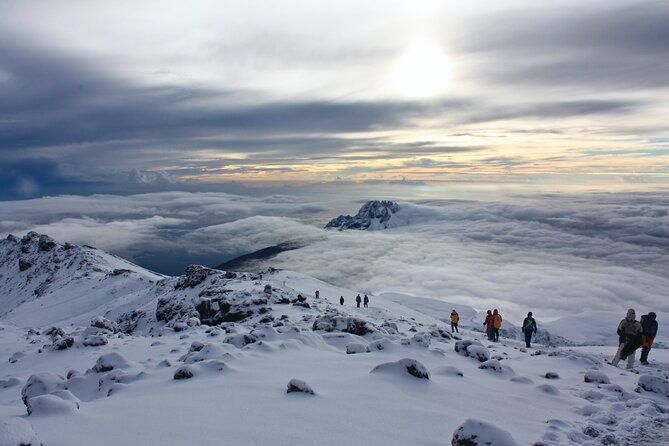
The eastern ice fields remain a visual focus. Their bright surfaces contrast with the dry, bare surroundings, and you are drawn toward them even when the trail itself feels repetitive. This is a good day to watch your breathing, appetite, energy, and balance.
The mountain team specifically asks you to report any sign of altitude sickness. Take that advice seriously. A strong climber can still react badly to altitude, while a slower walker may adjust well. Do not hide a headache, nausea, unusual fatigue, or other concerning symptoms simply because you want to keep the schedule.
The supplied plan does not give a camp name for this day, but it places you in the semi-desert zone near Third Cave before the next morning’s move to Kibo Huts. The lack of a long distance today is useful, but the altitude makes it more demanding than the clock suggests.
A few more trips of this kind worth comparing:
- Kilimanjaro climb, Lemosho Route (6-day)
★ 5.0 · 129 reviews - Kilimanjaro climb, Marangu route (6-day)
★ 5.0 · 72 reviews - 6 Days 5 Night Safari
★ 5.0 · 57 reviews - 6 Days Tanzania Classic Safari
★ 5.0 · 52 reviews
Day 4: Third Cave to Kibo Huts
You leave the semi-desert zone early and continue into alpine desert terrain. This is a stark section of the mountain, with less plant life and a greater sense of exposure. The trail takes you just below Kibo’s crater wall and onward to Kibo Huts.
At Kibo Huts, the Rongai Route joins the Marangu Route. From here, the summit approach follows the Marangu side, so the quiet northern character of the climb gives way to the mountain’s more established summit corridor.
The day is listed at about six hours, but the schedule becomes more demanding because your summit attempt begins soon after. Before bed, prepare every piece of clothing and equipment you will need. Replace batteries in your headlamp and camera, organize water and snacks, and keep your warmest layers ready.
You are expected to go to bed by 7 p.m. and try to sleep for a few hours. That early bedtime can be difficult, especially when you are excited or nervous, but preparation reduces needless stress. Do not wait until midnight to search for gloves or discover that your headlamp batteries are weak.
Day 5: The midnight summit push
The hardest part begins between midnight and 2 a.m. This is the most mentally and physically demanding section of the climb. You leave in darkness, with cold temperatures and a steep route ahead.
The ascent runs between the Rebmann and Ratzel glaciers before turning in a northwesterly direction. You climb through heavy scree using a switchback pattern toward Stella Point on the crater rim. Scree is loose, tiring ground, so your progress may feel slow. That is normal. Keep your pace controlled and follow your guide’s instructions.
Stella Point offers a major reward: a sunrise over the crater rim. Faster hikers may see sunrise from the summit, but Stella Point itself provides a memorable stopping place before the final push. From there, the remaining ascent to Uhuru Peak takes about an hour according to the plan.
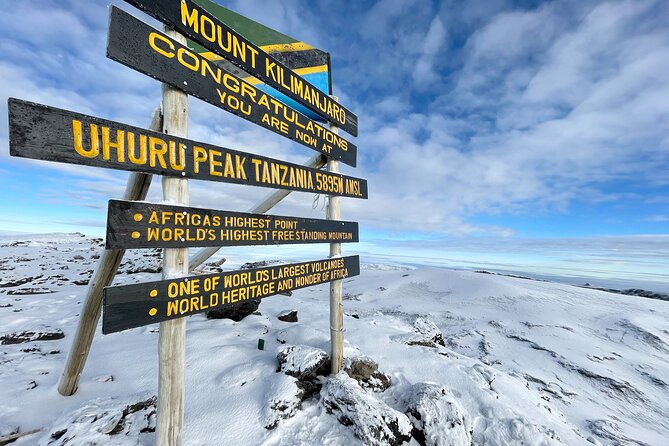
Uhuru Peak is the highest point on Kilimanjaro and the goal of the expedition. The experience is not only about reaching a sign or taking a photograph. It is also the result of four days of controlled progress, one cold morning, and a great deal of teamwork.
The day is listed as about seven hours, but you should be ready for a physically concentrated summit schedule rather than a relaxed seven-hour outing. The timing depends on your pace and the conditions. Dress for cold, protect your batteries, and keep your attention on safe movement rather than rushing for a particular minute.
Day 6: Descent through Mandara Huts to Moshi
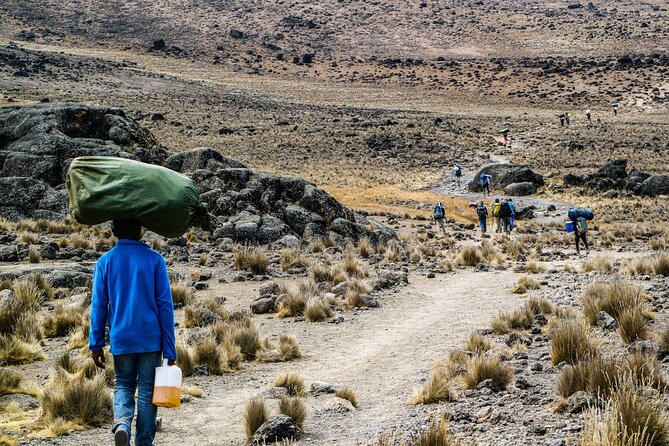
After breakfast, the crew holds a ceremony of appreciation and team bonding before you begin the descent. This is a fitting pause. The guides, cooks, and porters have supported the climb, and this is also the point when you should prepare tips for the team.
The descent stops at Mandara Huts for lunch. You then continue to the Marangu Park Gate, where you receive summit certificates. From there, a vehicle takes you back to your Moshi hotel or residence, with the drive listed at about 45 minutes.
Do not underestimate the descent. The air becomes warmer, but the trail can be wet, muddy, steep, and slippery. Gaiters and trekking poles are strongly recommended. After the strain of summit day, tired legs can make downhill walking surprisingly awkward.
The schedule gives this day about seven hours. The exact feel will depend on how you handled the summit push and how quickly you descend. Plan a quiet evening in Moshi rather than scheduling a demanding activity immediately afterward.
What the $2,200 price includes
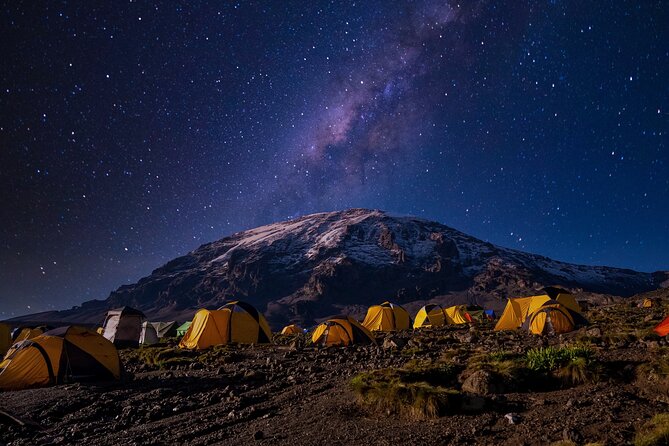
The $2,200 price includes accommodation during the mountain climb, all fees and taxes, pickup and drop-off at your hotel or residence, five lunches, six dinners, and five breakfasts. Park access and the basic support structure are therefore built into the quoted amount.
That is useful value for you because Kilimanjaro costs can become confusing when permits, mountain lodging, transfers, and meals are listed separately. A private tour also means only your group takes part, rather than joining an unknown mixed party.
The price does not include tips for the climbing team. It also excludes flights, travel insurance, personal gear, and an entry visa. These are not minor extras. Warm clothing, boots, a headlamp, trekking poles, waterproof protection, and other mountain equipment can add considerably to your total cost.
I would compare the price with the level of support you want, not simply with the cheapest advertised climb. The strongest praise for Kentau centers on organization, updates, professionalism, and safety. Dominic, the owner, is described as cooperative from the planning stage through the completion of a five-day hike. That kind of communication can be worth paying for when the mountain schedule is complex.
Fitness, gear, and practical planning
You should have a moderate level of physical fitness before booking. The route is considered suitable for people with less backpacking experience, but you still need to manage several consecutive days of walking, cold conditions, altitude, and a demanding summit morning.
Use the included pickup to simplify your first morning, and be ready at your Moshi accommodation before 7 a.m. Since the first drive takes four to five hours, carry anything you need during the transfer in an accessible day bag.
Your equipment matters most on days four through six. Prepare warm clothing, a reliable headlamp, spare batteries, sturdy footwear, rain protection, and a way to keep essential items dry. The final descent is specifically described as wet, muddy, and steep, so gaiters and trekking poles are more than optional comforts.
Travel insurance and an entry visa are your responsibility. Air tickets are also excluded. You should arrange these before the climb and check that your insurance is suitable for a high-altitude mountain activity.
Tips are not included and should be planned as part of the budget. The final morning’s ceremony is a natural time to thank the crew, but you do not need to leave the matter until the last minute. Keep the required cash ready before the descent.
Who will get the most from this climb
I would recommend this trip to you if you want a quieter northern approach, prefer a moderate and steady slope, and like the idea of crossing several vegetation zones before reaching the summit. It also suits you if you have some fitness but do not have extensive multi-day backpacking experience.
The private format is useful if you want your own group rather than a shared departure. The included Moshi transfers, meals, mountain accommodation, and park fees also make the planning easier.
I would think twice if you want a slower acclimatization schedule with more spare days. Six days is a compact program, and no route can remove the risks of altitude. I would also reconsider if you dislike early starts, cold nights, loose scree, muddy descents, or basic mountain accommodation.
The route’s strongest points are organization and support. The available feedback praises updates, professional handling, safety, and the team’s friendly approach. One climber described the experience as tough but enjoyable, which is about the right expectation: this is a serious physical challenge with moments of real pleasure.
Should you book Kentau Safaris?
Book this climb if you want a private, six-day Kilimanjaro attempt on the quieter Rongai Route and value a company that emphasizes planning, communication, and safety. The moderate slope, drier northern approach, included transfers, meals, fees, and mountain accommodation make the package practical for the price.
Before committing, be honest about your fitness and your tolerance for a short acclimatization schedule. Ask yourself if you are prepared for the midnight summit start, cold conditions, loose scree, and slippery descent. If the answer is yes, this is a well-structured way to take on Kilimanjaro, especially with careful preparation and a willingness to walk slowly.
Free cancellation is available if you cancel at least 24 hours before the 7 a.m. start time. Changes or cancellations within 24 hours are not accepted or refunded.
FAQ
Where does the Kilimanjaro climb begin?
The experience begins in Moshi, Tanzania, with pickup offered from your hotel or residence.
What time does pickup begin?
The listed start time is 7 a.m.
How long is the climb?
The experience lasts approximately six days.
Which route does the climb use?
The climb uses the Rongai Route and joins the Marangu Route near Kibo Huts for the summit approach.
How much does the experience cost?
The listed price is $2,200 per person.
Is this a private tour?
Yes. Only your group participates in the activity.
What meals are included?
The package includes five lunches, six dinners, and five breakfasts.
What costs are not included?
Tips for the climbing team, air tickets, travel insurance, personal gear, and the entry visa are not included.
Is cancellation free?
You can receive a full refund if you cancel at least 24 hours before the experience starts. Cancellations or changes made within 24 hours are not refunded or accepted.
Just added around Moshi
- Moshi: Lake Chala Tour: Hiking &/or Kayaking★ 4.5 · 3 reviews
- 3 Days Tanga Exclusive Beach Holiday★ 5.0 · 3 reviews
- Serengeti Wildebeest Migration.★ 5.0 · 3 reviews
- Chemka Hotpsrings E-Bike Day Trip★ 5.0 · 3 reviews
- Explore 1 day Ngorongoro Crater Budget Group Safari from Arusha★ 5.0 · 3 reviews
- Explore the 360° of Kilimanjaro★ 5.0 · 3 reviews
- Affordable Short Tanzania Safari (2 Days Camping Safari)★ 5.0 · 3 reviews
- Rongai Route 7 Days★ 5.0 · 3 reviews
Kilimanjaro Treks, compared.



8-Day Small-group Lemosho Kilimanjaro Summit Trekking
Read our review →


Climbing Kilimanjaro through 7 days Machame Route
Read our review →

Browse the lists this tour appears in