
Reviewed · KILIMANJARO TREKS
7-Day Guided Mount Kilimanjaro Climb by Machame Route
Kilimanjaro rewards patience. This seven-day climb follows the scenic Machame Route from Moshi through rainforest, moorland, high desert, and glacier country to Uhuru Peak. I like the extra acclimatization day and the route’s changing scenery, and the package is strong value because it includes park fees, camping, meals, airport transfers, crew, and two hotel nights.
The catch is simple: Machame is not a gentle walk. You will cross steep ridges, rocky ground, scree, and a chain of valleys, with a midnight summit start on Day 6. I would choose it over the shorter six-day version if you can manage the time, but you should arrive with a fair level of hiking fitness.
In This Review
- The route in five useful points
- Why Machame is worth the extra effort
- What the $2,180 price really covers
- Day 1: Moshi to Machame Camp through rainforest
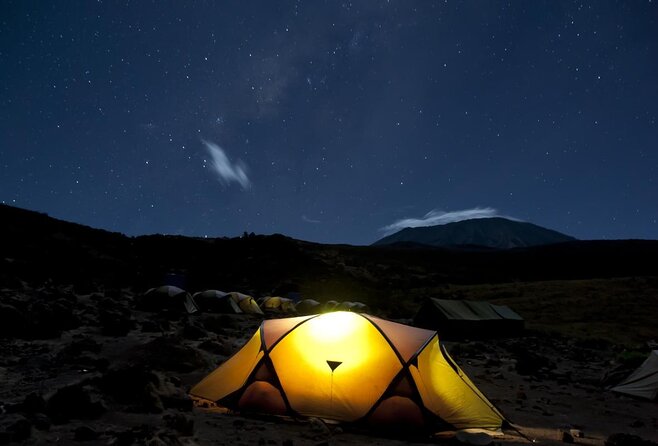
- Day 2: Heather, rock, and the Shira campsite
- Day 3: Lava Tower and the descent to Barranco
- Day 4: Barranco Wall and a short Karanga day
- Day 5: Barafu Camp and the final preparation
- Day 6: Stella Point, Uhuru Peak, and the long descent
- Day 7: Mweka Gate and the return to Moshi
- How the Kisaza team shapes the climb
- Who should book this seven-day climb?
- Practical details before you commit
- Should you book the Machame Route?
- FAQ
- How long is the Mount Kilimanjaro climb?
- Which route does this climb use?
- How high is Uhuru Peak?
- What fitness level is required?
- Are meals included?
- Are airport transfers included?
- What is included in the $2,180 price?
The route in five useful points
- Rainforest to glacier country: In seven days, you pass through five distinct habitats, from wet forest to alpine desert and the summit zone.
- The key acclimatization day: Day 3 climbs to about 16,000 feet before dropping to Barranco Camp at 13,000 feet.
- A demanding summit morning: You begin between midnight and 2:00 am, reaching Stella Point before continuing to Uhuru Peak.
- A full-service package: Park, camping, rescue, VAT, meals, porters, cooks, guides, airport transfers, and two hotel nights are included.
- A local support team: Communication before the climb is handled by Stephen, while names praised for strong support include Michael, Francis, Louis, David, Ezekiel, and Lusekelo.
- A serious but nontechnical trek: You do not need climbing skills, but you do need to cope with long days, altitude, cold, and uneven ground.
Why Machame is worth the extra effort
Machame is often called the whiskey route, a playful contrast with the gentler-sounding Marangu Route. The nickname hints at the character of the trek: this is the more rugged choice, with longer days and more changes in elevation.
The route begins on the southern side of Kilimanjaro and turns east beneath the southern ice fields before the summit. Its great advantage is variety. You are not looking at the same type of ground for a week. The first day is damp rainforest, then the trees give way to heather and moorland. By Day 3, the air is thin and the ground is mostly semi-desert.
I also like the way the seven-day schedule handles altitude. The route’s minimum summit schedule is six days, but the extra day at Karanga gives you more time to adjust before Barafu Camp and the summit push. That does not guarantee success, yet it gives your body a better chance than a rushed plan.
The tradeoff is effort. Machame has ups and downs across ridges and valleys, so the total work can feel greater than the distance suggests. You may be walking at a slow pace, but slow does not always mean easy.
More Kilimanjaro routes and climbs:
- Kilimanjaro climb by Lemosho Route (7-day)
★ 5.0 · 651 reviews - Kilimanjaro climb, Machame Route (7-day)
★ 5.0 · 262 reviews - Kilimanjaro Climbing Lemosho Route 8 Days.
★ 5.0 · 186 reviews
What the $2,180 price really covers
The cost is $2,180 per person. That is a substantial amount, but the package includes many of the expenses that can make a Kilimanjaro climb costly.
Your fee covers professional guides, cooks, and porters, along with national park fees, camping fees, rescue fees, and VAT. It also includes breakfast on six days, lunch on seven days, and dinner on six days. Airport pickup and drop-off are included, as are two nights of accommodation in Moshi or Arusha before and after the climb.
That combination makes the price easier to assess. You are not simply paying for a guide to walk beside you. The money also supports a mountain crew, camps, permits, meals, transport, and a place to sleep before and after the trek. Fair wages for the crew are specifically included, which matters on a climb that depends heavily on local staff.
You still need to budget for international flights, insurance, tips for the driver, guides, and hotel staff, plus an unclear item listed as the cost of Tanzania. Ask the operator to explain that last phrase before paying. Tips are not included, and insurance is especially important for a high-altitude trek.
Day 1: Moshi to Machame Camp through rainforest
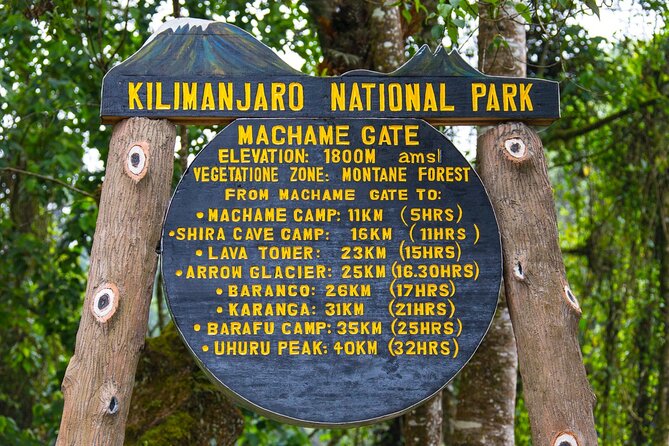
The first transfer from Moshi to the Kilimanjaro National Park Gate takes about 50 minutes. The road passes through Machame village on the mountain’s lower slopes, giving you an early sense of how quickly daily life changes as the climb begins.
From the gate, you walk into the rainforest on a winding trail that follows a ridge. The day covers about 11 kilometers and takes roughly five to seven hours. You gain from 5,400 feet to 9,400 feet, so this is a substantial opening day, even though the forest provides shade.
The lower section can be muddy and slippery. Gaiters and trekking poles are practical, not decorative extras. The trail continues until Machame Camp, where you spend the night.
This day is a good test of your pace and equipment. Keep rain gear handy, protect anything inside your day pack, and avoid treating the first morning like a race. You have six more days ahead.
Day 2: Heather, rock, and the Shira campsite

After breakfast, the route leaves the forest behind. You climb across a small valley and follow a steep, rocky ridge covered with heather. The ridge eventually ends, and the trail turns west toward a river gorge.
This is a shorter day by distance, about five kilometers, but it still involves four to six hours of uphill walking. You rise from 9,400 feet to 12,500 feet and spend the night in moorland at Shira campsite.
The change in scenery is the reward. The trees thin out, the views open, and the mountain begins to feel much bigger and more exposed. At the same time, the altitude becomes a more serious part of the trip. A short distance does not necessarily mean an easy day.
I would use this evening to check your clothing, water, and sleeping setup. The coming days are higher and more demanding, and small problems are easier to solve at camp than on summit morning.
A few more trips of this kind worth comparing:
- Climbing Kilimanjaro through 7 days Machame Route
★ 5.0 · 151 reviews - 7 Days Kilimanjaro via Machame route affordable price
★ 5.0 · 110 reviews - Private Kilimanjaro Hike 7 Day Lemosho Route
★ 5.0 · 60 reviews - 7-Day Magical Tanzania Safari -Premium High End Package
★ 5.0 · 53 reviews
Day 3: Lava Tower and the descent to Barranco
Day 3 is the route’s most important acclimatization day. From the Shira Plateau, you head east along a ridge, pass the junction toward Kibo, and continue southeast toward Lava Tower, also called the Shark’s Tooth.
The route reaches about 16,000 feet near the Arrow Glacier junction before dropping to Barranco Hut at roughly 13,000 feet. The day covers 10 kilometers and takes six to eight hours through semi-desert terrain.
On paper, ending the day close to your starting elevation may seem odd. That is precisely the point. You spend time high, then sleep lower. This helps prepare you for the summit attempt without forcing you to camp at the day’s highest point.
The descent can feel frustrating if your legs are already tired, but it is valuable. You should expect thinner air, a slower pace, and more attention to how your body is responding. If you develop symptoms that concern you, speak up early to the guide team.
Day 4: Barranco Wall and a short Karanga day
After breakfast, you leave Barranco and climb the steep ridge beside the Barranco Wall. The route then continues to Karanga Valley campsite.
This is the shortest hiking day, covering about three miles in four to five hours. You gain only about 100 feet, from 13,000 to 13,100 feet, and spend the night in alpine desert.
Do not mistake the short distance for a spare day. The Barranco section still requires steady footwork and comfort with steep ground. The benefit is that you have time to adjust to altitude without burning through your energy reserves.
Karanga is an important pause before the route gets harder. You can eat, rest, sort your summit clothing, and prepare your day pack. That practical breathing room is one of the best reasons to choose seven days rather than six.
Day 5: Barafu Camp and the final preparation
From Karanga, you reach the junction with the Mweka Trail and continue to Barafu Hut. The day covers about 2.5 miles and takes four to five hours, with elevation rising from 13,000 to 15,300 feet.
You have now completed the South Circuit, which provides views toward the summit from several angles. From Barafu, the two main peaks, Mawenzi and Kibo, are visible.
Barafu is the launch point for the summit. You eat dinner, rest, and prepare for a very early start. The short distance can be misleading because the altitude makes every uphill section harder. Your goal is not to explore every corner of camp. Your goal is to conserve energy.
This is where good packing helps. Put warm clothing, a headlamp, water, snacks, gloves, and any needed personal items where you can reach them quickly. The supplied information does not specify equipment rental or a personal packing list, so confirm those details before departure.
Day 6: Stella Point, Uhuru Peak, and the long descent
The summit day begins between midnight and 2:00 am. You climb northwest between the Rebmann and Ratzel glaciers, moving over heavy scree toward Stella Point on the crater rim.
The ascent is slow and demanding. At Stella Point, you take a short rest and, weather permitting, watch the sunrise. Snow may remain during the final hour to the summit. Faster hikers may see sunrise from Uhuru Peak itself, but the schedule and conditions vary.
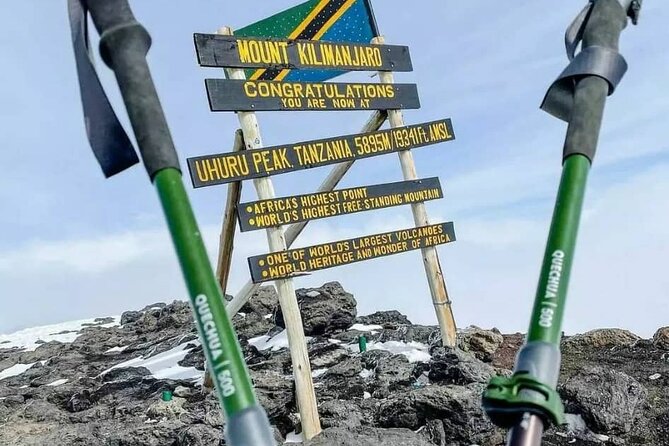
Uhuru Peak is the highest point on Mount Kilimanjaro and the highest point in Africa. Reaching it is the great prize of the route, but the work is not finished when you arrive. You then descend toward Mweka Hut, with the detailed descent timing depending on the day’s conditions and your group’s pace.
This is likely to be your hardest day by far. You face a nighttime start, high altitude, scree, cold, and then a long descent after the summit. The route is not technically difficult in the mountaineering sense, but it is physically exhausting. You need patience more than speed.
Day 7: Mweka Gate and the return to Moshi
After breakfast, you continue downhill to Mweka Park Gate. The descent takes about three to four hours and covers six miles, dropping from around 10,000 feet to 5,400 feet through rainforest.
The lower trail may be wet and muddy. Gaiters and trekking poles help again, and you may be comfortable in shorts and a T-shirt at this lower altitude. Keep rain gear and warm clothing within reach because mountain weather can change.
At the gate, you receive your summit certificates. From there, you walk about another hour to Mweka village, where a vehicle takes you back to your hotel in Moshi.
The return transfer is a welcome finish. Your legs will probably appreciate not having to manage another long road connection on foot, and the included post-climb accommodation gives you time to recover.
How the Kisaza team shapes the climb
The strongest praise attached to this trip concerns organization, communication, and care from the mountain crew. Stephen is singled out for quick replies and practical help before departure. That kind of contact is useful when you are sorting out dates, airport arrival, hotel nights, and questions about equipment or the climb.
The team names repeatedly associated with good service include Michael, Francis, Louis, David, Ezekiel, and Lusekelo. The available information does not assign each person a specific job, so I would not assume who will be your guide or porter. Still, the repeated recognition of the crew points to a company culture that values personal service.
Airport pickup is included, and the support begins before the trailhead rather than only at the park gate. That matters in Moshi, where a smooth arrival and clear pre-climb communication can make the first day less stressful.
The maximum group size is listed as 100 people. That is a high upper limit, though it does not tell you the size of your actual departure. Ask how many people will be in your group and how the guide-to-climber ratio works. A smaller group usually makes pacing and communication easier.
Who should book this seven-day climb?
I would recommend this route to someone with moderate physical fitness and at least some hiking or trekking experience. You do not need technical climbing ability, but you should be comfortable walking five to eight hours, handling steep ground, and repeating that effort for several days.
It suits people who care about scenery and want more than the quickest possible route. The rainforest, heather, moorland, semi-desert, alpine desert, and summit zone give the climb a strong sense of progression.
First-time trekkers can still consider Machame, but I would not call it an easy introduction. The route is steeper and more tiring than Marangu, and the summit morning is a serious physical test. If you are unsure about your fitness, the extra day is a sensible choice.
The public rating is 5 out of 5 from nine ratings, with praise focused on airport transfers, communication, friendly support, and well-run climbs. That is encouraging, though nine ratings are not enough to erase the need for your own preparation.
Practical details before you commit
The scheduled start time is 9:00 am, with pickup offered from Kilimanjaro International Airport. The listed start and end point is Kilimanjaro Airport Road, Tanzania, and the activity returns to the meeting point after the climb and transfer arrangements.
Confirmation is provided at booking, and the activity is near public transportation. The operator also offers free cancellation up to 24 hours before the experience start time for a full refund. Changes or cancellations inside that 24-hour window are not accepted for a refund.
Before booking, I would ask four direct questions:
- What is the actual group size for my dates?
- What equipment is supplied, and what must I bring?
- What does the listed cost of Tanzania mean?
- How are guide, porter, and driver tips handled?
These questions do not weaken the trip. They make the price and daily routine clearer before you arrive.
Should you book the Machame Route?
Book this climb if you want Kilimanjaro’s varied scenery, can handle a demanding trek, and value a package that includes the major operating costs. The seven-day schedule is the sensible version of Machame because the Karanga acclimatization day gives you a better rhythm before the summit.
Think twice if you want short walking days, a low-altitude holiday, or a simple hotel-based adventure. Machame is tiring, the summit start comes in the middle of the night, and the price does not include flights, insurance, or tips.
For a prepared hiker who wants a supported route with strong scenery and a serious shot at Uhuru Peak, this is a well-priced and thoughtfully timed option. Bring patience, good rain protection, trekking poles, and the willingness to walk slowly. Kilimanjaro is not won by rushing.
FAQ
How long is the Mount Kilimanjaro climb?
The climb lasts approximately seven days. The itinerary includes two nights of accommodation in Moshi or Arusha before and after the mountain portion.
Which route does this climb use?
It uses the Machame Route, which begins on the southern side of Kilimanjaro and travels east before the summit.
How high is Uhuru Peak?
Uhuru Peak is the highest point on Mount Kilimanjaro and the highest point in Africa. The itinerary does not provide its exact elevation.
What fitness level is required?
A moderate physical fitness level is required. The route includes hiking days of up to eight hours, steep ridges, scree, altitude, and a demanding summit morning.
Are meals included?
Yes. The package includes seven lunches, six breakfasts, and six dinners.
Are airport transfers included?
Yes. Pickup and drop-off at the airport are included, with the listed meeting point at Kilimanjaro International Airport.
What is included in the $2,180 price?
The price includes professional guides, cooks and porters, park fees, camping fees, rescue fees, VAT, fair crew wages, airport transfers, two hotel nights, and the listed meals. International flights, insurance, and tips are not included.
Just added around Moshi
- Moshi: Lake Chala Tour: Hiking &/or Kayaking★ 4.5 · 3 reviews
- 3 Days Tanga Exclusive Beach Holiday★ 5.0 · 3 reviews
- Serengeti Wildebeest Migration.★ 5.0 · 3 reviews
- Chemka Hotpsrings E-Bike Day Trip★ 5.0 · 3 reviews
- Explore 1 day Ngorongoro Crater Budget Group Safari from Arusha★ 5.0 · 3 reviews
- Explore the 360° of Kilimanjaro★ 5.0 · 3 reviews
- Affordable Short Tanzania Safari (2 Days Camping Safari)★ 5.0 · 3 reviews
- Rongai Route 7 Days★ 5.0 · 3 reviews
Kilimanjaro Treks, compared.



8-Day Small-group Lemosho Kilimanjaro Summit Trekking
Read our review →


Climbing Kilimanjaro through 7 days Machame Route
Read our review →

Browse the lists this tour appears in