
Reviewed · KILIMANJARO TREKS
7-Day Kilimanjaro Climb–Lemosho R. Scenic Adventure to the summit
The roof of Africa comes with a long night. This 7-day Lemosho climb earns its price with quiet trails, changing scenery, strong acclimatization, airport transfers, camping gear, meals, and a private group format. I especially like the gradual move from rainforest to moorland, semi-desert, and summit scree, plus the careful high point and low point pattern around Lava Tower and Barranco Camp. The main drawback is the summit day: reaching Uhuru Peak and then descending to Mweka takes about 14 hours, so you need stamina, patience, and a real tolerance for cold, fatigue, and very early mornings.
I also like that the mountain crew includes a guide, assistant guides, porters, and a cook, with drinking water and hot washing water provided each day. Past guests praised the organization, food, medical checks, and the care shown by guides Isa and Baraka. Still, the cost of $2,676.39 per person does not include flights, visas, insurance, personal gear, snacks, or the recommended portable toilet, so the final budget will be higher.
In This Review
- Key points to know before you book
- Why Lemosho is a smart seven-day route
- Day 1: Londorossi Gate to the montane forest
- Day 2: Six and a half hours across the Shira moorland
- Day 3: Lava Tower and the descent to Barranco
- Day 4: The Barranco Wall and Karanga Camp
- Day 5: A short climb to exposed Barafu Camp
- Day 6: Stella Point, Uhuru Peak, and the long descent
- Day 7: Mweka Trail, certificates, and the return to town
- What the $2,676.39 price includes
- Food, crew support, and practical comfort
- Who should choose this climb?
- Should you book the Lemosho adventure?
- FAQ
- How long does the Kilimanjaro climb take?
- What altitude is Uhuru Peak?
- What meals are included?
- Is airport transportation included?
- Is camping equipment provided?
- Is this a private tour?
Key points to know before you book
- The Lemosho route begins in rainforest: Your first three hours pass through montane forest, with a chance to spot colobus monkeys.
- Acclimatization is built into the route: Lava Tower at 4,630 meters is followed by a descent to Barranco Camp at 3,950 meters.
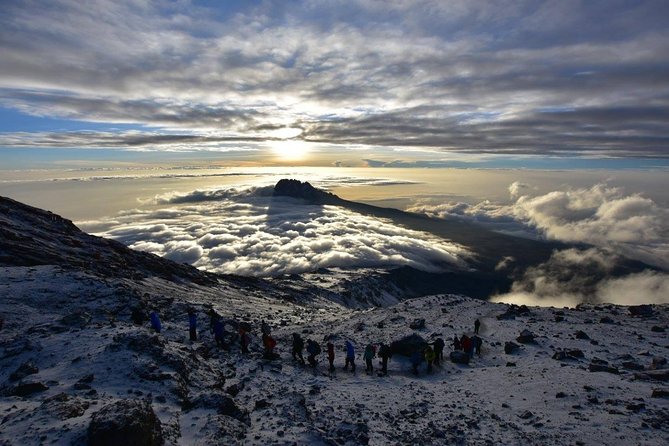
- The summit attempt starts around 11:30 p.m.: You reach Stella Point around sunrise, then continue to Uhuru Peak at 5,895 meters.
- The final day is demanding: Summit ascent and descent cover about 30 kilometers in total, followed by certificates at Mweka Gate.
- Camping support is included: Tents, mattresses, camp furniture, meals, porters, guides, a cook, drinking water, and hot washing water are provided.
- This is a private climb: Only your own group participates, which can make pacing and daily decisions more personal.
Why Lemosho is a smart seven-day route
Kilimanjaro is not a technical mountain climb in the usual sense. You do not need ropes or rock-climbing experience for this itinerary, but altitude makes the mountain serious. The Lemosho route gives you a scenic approach and a useful acclimatization pattern before the summit push.
The route begins on the western side of Kilimanjaro and crosses several vegetation zones. You start beneath tall forest, move into heather and moorland, then reach rocky semi-desert and the ice-capped summit zone. That variety is one of the best reasons to choose Lemosho. The walk feels like several different journeys stitched together.
The seven-day schedule also gives you more time than shorter routes. Day 3 takes you high to Lava Tower before sending you lower to Barranco. That climb high, sleep lower rhythm is useful for getting your body used to thinner air. The route is not easy, but it avoids making every day a race toward the next camp.
You will be part of a private group rather than a large shared departure. That matters on a mountain, where walking speed and rest needs can differ widely. A private format gives your group and guides more room to manage the day around the people actually on the trail.
More Kilimanjaro routes and climbs:
- Kilimanjaro climb by Lemosho Route (7-day)
★ 5.0 · 651 reviews - Kilimanjaro climb, Machame Route (7-day)
★ 5.0 · 262 reviews - Kilimanjaro Climbing Lemosho Route 8 Days.
★ 5.0 · 186 reviews
Day 1: Londorossi Gate to the montane forest
The first morning begins with breakfast at your hotel and a guide briefing. From Moshi or Arusha, the drive to Londorossi Park Gate takes about two hours, followed by a rough 45-minute forest track that requires a four-wheel-drive vehicle.
That bumpy final road is not a flaw so much as a reminder that Lemosho begins away from the busiest mountain entrances. Near the gate, you receive a packed lunch, and you can buy mineral water before hiking. At the entrance, the crew handles registration with the Tanzania National Parks Authority and organizes supplies.
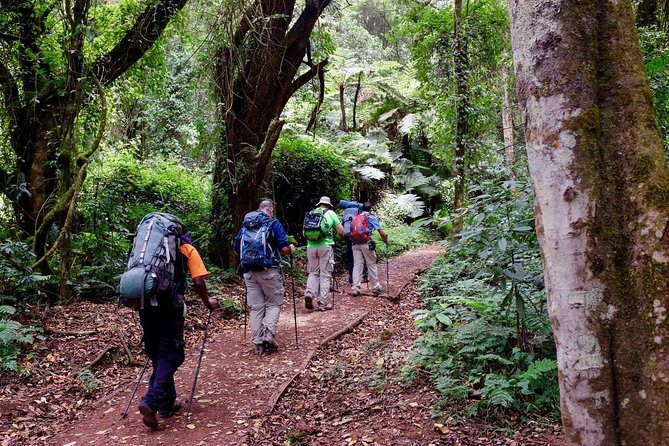
The first walk takes about three hours through montane forest. Keep your eyes open for colobus monkeys, one of the route’s special early details. The forest is a gentle introduction compared with the days ahead, but the wet setting and rising trail make it wise to start slowly.
Your porters set up the tents before you reach camp. They also prepare drinking water and hot water for washing. Those small services become increasingly valuable once the air turns cold and the days grow longer.
Day 2: Six and a half hours across the Shira moorland
Day 2 leaves the forest behind and enters heather moorland. You cross streams and walk across the Shira Plateau toward Shira Camp Two, at about 3,840 meters.
This is a longer day, listed at roughly six and a half to seven hours, and the higher camp brings a noticeable change in conditions. You will have views toward the Western Breach and its glaciers to the east. The open setting also means less shelter, and temperatures can drop below freezing at night.
The camp sits beside a stream, but do not mistake that for a warm or soft evening. You sleep in an exposed place, and warm layers, dry socks, gloves, and a good sleeping bag matter. Dinner and evening snacks are prepared by the cook, while the support crew deals with camp chores.
I consider this one of the days that gives Lemosho its character. The forest is gone, the summit is still distant, and the wide moorland makes the mountain feel bigger. The tradeoff is simple: the views improve, but comfort decreases.
Day 3: Lava Tower and the descent to Barranco
Day 3 is about seven hours and covers approximately 15 kilometers through semi-desert terrain. After breakfast, you walk east across increasingly rocky ground for about five hours until Lava Tower rises ahead at 4,630 meters.
You can eat your packed lunch at the tower, and climbing it may be possible if weather allows. The important point is not the optional climb. It is the time spent high before descending to Barranco Camp at 3,950 meters.
At Lava Tower, headaches and shortness of breath are common signs that altitude is beginning to affect you. Tell your guide how you feel. Emergency oxygen is carried for emergencies, but it is not intended to help you force a summit attempt when your body is not coping.
The descent to Barranco is a major part of the acclimatization plan. It also changes the scenery quickly, taking you from bare rock toward the dramatic Barranco area. You may be tired by the time you arrive, but sleeping lower than Lava Tower is a useful reward.
A few more trips of this kind worth comparing:
- Climbing Kilimanjaro through 7 days Machame Route
★ 5.0 · 151 reviews - 7 Days Kilimanjaro via Machame route affordable price
★ 5.0 · 110 reviews - Private Kilimanjaro Hike 7 Day Lemosho Route
★ 5.0 · 60 reviews - 7-Day Magical Tanzania Safari -Premium High End Package
★ 5.0 · 53 reviews
Day 4: The Barranco Wall and Karanga Camp
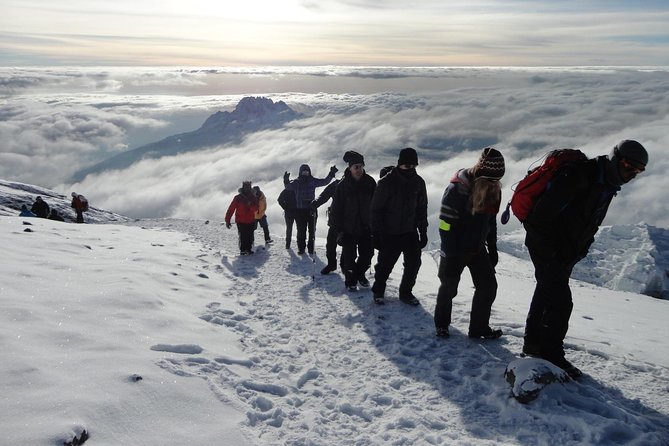
This shorter day takes about four to five hours and covers roughly five kilometers. The headline challenge is the Barranco Wall, a steep Class 2 section that can look more frightening from below than it feels once you are moving carefully with your guide.
The route requires hands in places, but the information provided describes it as much easier than its appearance suggests. You should still take your time, watch your footing, and keep your pack secure. At the top, you get views of Heim Glacier and a striking position above the clouds.
After the wall, the trail rises and falls through Karanga Valley before reaching Karanga Camp at about 3,950 meters. This is another night at roughly the same altitude as Barranco, which helps keep the schedule focused on gradual adjustment rather than a fast gain.
The short mileage does not make this a throwaway day. The wall takes concentration, and the repeated ups and downs can be tiring. Still, compared with the summit day ahead, it gives you space to rest, eat, wash, and prepare.
Day 5: A short climb to exposed Barafu Camp
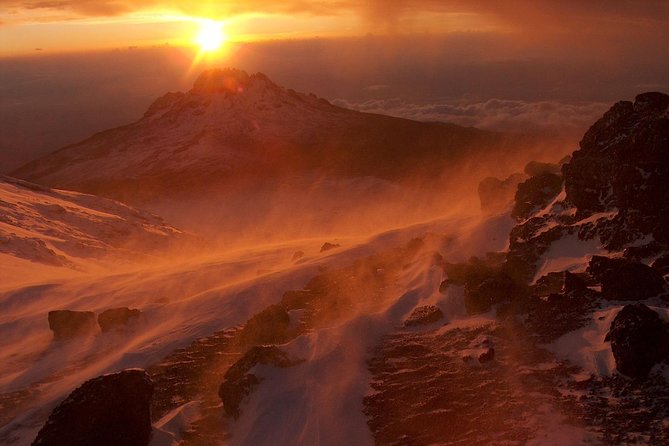
The walk to Barafu Camp takes about two to three hours and covers approximately four kilometers. The trail joins the Mweka Route, which you will use during the final descent, then continues toward Barafu Hut.
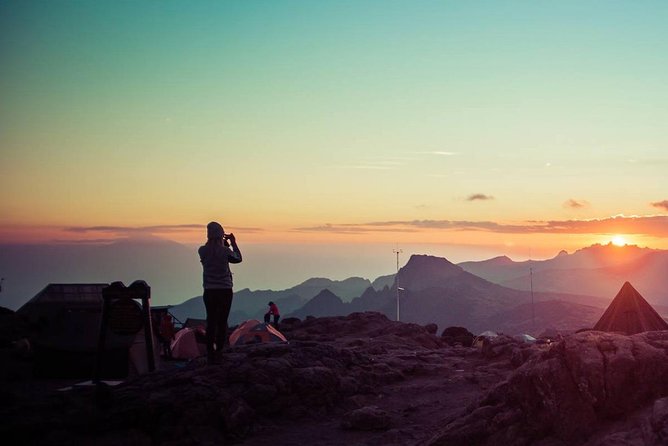
Barafu Camp sits at about 4,550 meters on a rocky, exposed ridge. The name means ice in Swahili, and the camp has no accessible water for porters beyond the last water stop at Barafu Hut. That explains why water planning and the crew’s supply work are so important here.
Your tent may be exposed to wind and rocks, so get familiar with the campsite before dark. An early dinner follows, then you need to rest as much as possible before the midnight wake-up.
This short day is valuable because it protects your energy for the summit. It is not a comfortable afternoon at a mountain lodge. Barafu is functional, cold, and exposed, with the summit attempt looming over every meal.
Day 6: Stella Point, Uhuru Peak, and the long descent
The summit day begins around 11:30 p.m. with tea and biscuits. You start in darkness and climb northwest over stone scree. The ascent to Stella Point, at 5,685 meters, takes about six hours.
This is usually the toughest mental section of the climb. The slope, cold, darkness, and thin air can make the distance feel longer than it is. Your guide sets the pace, and slow, steady movement is more useful than trying to prove anything to the mountain.
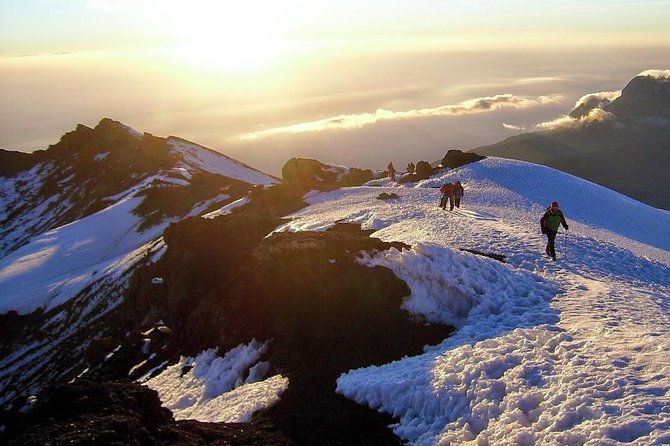
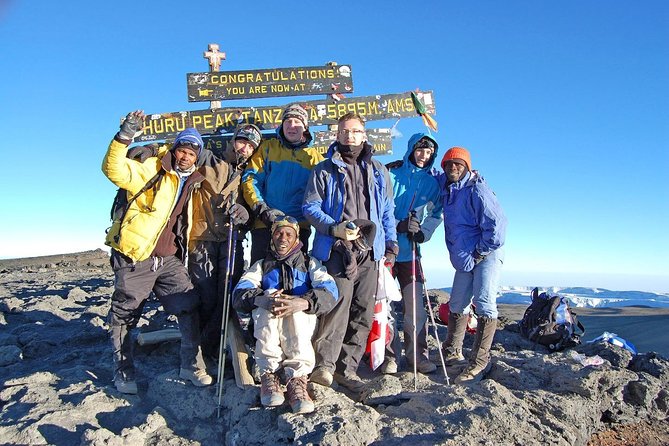
At Stella Point, sunrise provides a major lift. You are on the crater rim, with the summit still about two hours away along a snow-covered trail. Uhuru Peak reaches 5,895 meters, the highest point in Africa, and this is the moment when the long approach through forest, moorland, and rock comes together.
The return is not a simple walk back. You descend from the summit and continue toward Mweka, with about seven to eight hours of descent after the eight-hour ascent to Uhuru Peak. The total distance is listed as approximately seven kilometers upward and 23 kilometers downward.
That is a very long day. You should think of the summit as only the halfway point in effort, not the finish. The route’s emergency oxygen and first-aid kit are useful safety resources, but neither replaces honest communication with your guide or appropriate travel insurance.
Day 7: Mweka Trail, certificates, and the return to town
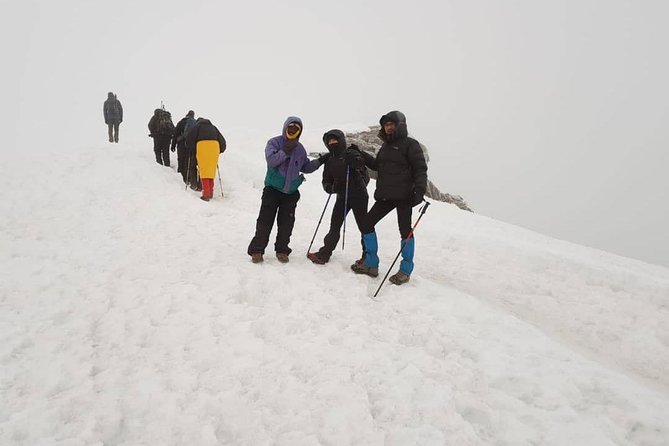
After breakfast, the mountain crew holds a celebration with dancing and singing. You present tips to the guide, assistant guides, cook, and porters at this point, so bring enough cash in a practical form and plan for this customary part of the experience.
The descent through forest to Mweka Gate takes about three hours and covers approximately 15 kilometers. At the gate, you sign your name and receive a certificate. Reaching Stella Point earns a green certificate, while reaching Uhuru Peak earns a gold certificate.
The day continues with a descent into Mweka village, listed as about one hour and three kilometers. After nearly a week on the mountain, that final stretch is a welcome return to roads, buildings, and easier breathing.
The celebration is more than a photo opportunity. It recognizes the work of the entire crew, including the porters who carried camp supplies, the cook who prepared meals, and the guides who managed the route and altitude concerns.
What the $2,676.39 price includes
At first glance, the price may seem high. On a supported Kilimanjaro climb, though, you are paying for much more than a guide walking at the front.
The package includes all fees and taxes, airport transfers between Kilimanjaro Airport and Moshi, a qualified mountain guide, assistant guides, porters, and a cook. Their wages are included, which gives you a clearer idea of the actual value and reduces the need to arrange support separately.
Camping equipment includes tents, camp chairs, tables, and sleeping mattresses. Meals include seven lunches, six breakfasts, and six dinners. Fresh drinking water and hot washing water are provided each day, while emergency oxygen and a basic first-aid kit are carried for safety support.
The price does not include flights, visas, travel or health insurance, personal hiking gear, medicine, water-purifying tablets, snacks, or drinks not listed. A portable toilet is optional but highly recommended, so include it in your budget if privacy and comfort matter to you.
Food, crew support, and practical comfort
The support system is one of the strongest parts of this climb. The cook prepares breakfast, lunch, dinner, and snacks, while porters set up camp and carry supplies. One especially useful detail is that the crew provides both drinking water and hot water for washing every day.
Past guests singled out the food, regular medical checks, and extra freshness in the mountain service. Guides Isa and Baraka received specific praise for a well-organized seven-day climb. Other accounts describe the guides as caring, good-humored, and focused on safety.
You should still pack personal medicine and water-purifying tablets, since these are not included. Bring your own hiking and trekking gear or arrange rentals from equipment stores in Moshi. The exact personal equipment list is not supplied, so confirm what you need before arrival rather than assuming the camping package covers clothing and footwear.
Who should choose this climb?
This route suits you if you want Kilimanjaro’s changing scenery and prefer a quieter approach with a gradual altitude plan. It is also a good fit if you value a private group, organized camp support, and a full-service package rather than arranging guides, food, transport, and equipment on your own.
You should be ready for long walking days, cold nights, a steep wall, exposed camps, and a summit attempt that begins before midnight. The seven-day schedule improves the rhythm of the climb, but it cannot remove altitude risk or physical strain.
The provider states that most people can participate, but that should not be read as a promise that the climb will feel easy. Medical advice, travel insurance, and realistic preparation remain important. A yellow fever vaccination is listed as compulsory for travel to Tanzania, so check the current entry requirements before you go.
Cancellation is flexible only up to three full days before the start time. Inside that window, refunds are not provided and changes are not accepted.
Should you book the Lemosho adventure?
I would choose this climb if scenery, pacing, and full mountain support matter more to you than finding the cheapest Kilimanjaro route. The strong points are clear: a private group, a varied route, useful acclimatization, included airport transfers, a complete support crew, and detailed praise for food, safety checks, and guide service.
I would hesitate if you dislike camping, struggle with cold, or want a relaxed summit day. The ascent to Uhuru Peak followed by the long descent is a serious physical test, and the added costs for gear, insurance, visas, snacks, and a portable toilet can change the final price.
For a prepared walker who wants a scenic and well-supported route to Africa’s highest summit, this seven-day Lemosho itinerary offers a sensible balance of adventure and structure.
FAQ
How long does the Kilimanjaro climb take?
The experience lasts approximately seven days, beginning near Moshi or Arusha and ending after the descent through Mweka village.
What altitude is Uhuru Peak?
Uhuru Peak is at 5,895 meters. The route also reaches Stella Point at 5,685 meters and Lava Tower at 4,630 meters.
What meals are included?
The package includes seven lunches, six breakfasts, and six dinners. Snacks and drinks not specifically listed are not included.
Is airport transportation included?
Yes. Return transfers from Kilimanjaro Airport to Moshi and from Moshi back to Kilimanjaro Airport are included.
Is camping equipment provided?
Yes. Tents, camp chairs, tables, and sleeping mattresses are provided. Personal hiking and trekking clothing and gear are not included.
Is this a private tour?
Yes. Only your own group participates in the activity.
Just added around Moshi
- Moshi: Lake Chala Tour: Hiking &/or Kayaking★ 4.5 · 3 reviews
- 3 Days Tanga Exclusive Beach Holiday★ 5.0 · 3 reviews
- Serengeti Wildebeest Migration.★ 5.0 · 3 reviews
- Chemka Hotpsrings E-Bike Day Trip★ 5.0 · 3 reviews
- Explore 1 day Ngorongoro Crater Budget Group Safari from Arusha★ 5.0 · 3 reviews
- Explore the 360° of Kilimanjaro★ 5.0 · 3 reviews
- Affordable Short Tanzania Safari (2 Days Camping Safari)★ 5.0 · 3 reviews
- Rongai Route 7 Days★ 5.0 · 3 reviews
Kilimanjaro Treks, compared.



8-Day Small-group Lemosho Kilimanjaro Summit Trekking
Read our review →


Climbing Kilimanjaro through 7 days Machame Route
Read our review →

Browse the lists this tour appears in