
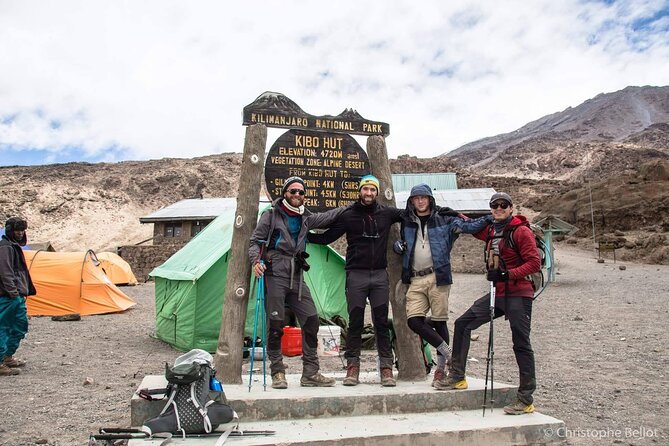
Reviewed · KILIMANJARO TREKS
7-Day Kilimanjaro Climb Machame Route
Mount Kilimanjaro asks for patience, not swagger. This seven-day climb follows the popular Machame Route, a steep tent-based trail with changing habitats, broad mountain views, and a carefully timed acclimatization day. I like the route’s variety, from wet rainforest to stark alpine desert, and I like the way the schedule builds toward the summit instead of rushing straight uphill. The main catch is simple: this is a demanding trek, not a scenic stroll, and sleeping in tents may be less comfortable than the hut-based Marangu Route.
The $2,280 price is appealing for a guided Kilimanjaro trip because it includes park fees, accommodation, meals, airport transfers, and the mountain logistics that are expensive to arrange independently. I also appreciate the strong practical feedback about the professional guides, supportive staff, food, and organization. Still, you must budget separately for international flights, a visa, personal gear rentals, and mountaineering insurance.
In This Review
- Key points to know before booking
- Why the Machame Route is so popular
- Day 1: Moshi to Machame Camp through rainforest
- Day 2: Heather and moorland on the way to Shira
- Day 3: Lava Tower and the key acclimatization day
- Day 4: Barranco Wall and Karanga Valley
- Day 5: Barafu Camp and the final preparation
- Day 6: Stella Point, Uhuru Peak, and a long summit day
- Day 7: A muddy descent to Mweka Village
- What the $2,280 price really covers
- Group size, fitness, and practical preparation
- Who should book this Kilimanjaro climb?
- Final verdict: a strong value for a serious seven-day climb
- FAQ
- Where does the Kilimanjaro climb begin?
- How long is the Machame Route experience?
- Is airport pickup included?
- What is included in the $2,280 price?
- What is not included?
- How difficult is the climb?
- How large can the group be?
- Can I cancel for a full refund?
Key points to know before booking
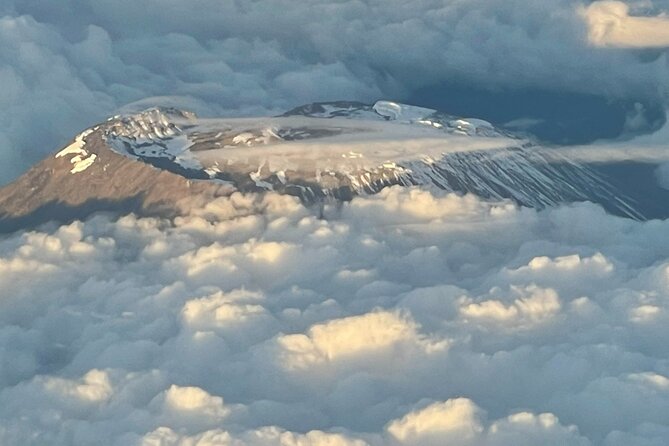
- Machame is Kilimanjaro’s popular Whiskey Route: You get impressive scenery and varied habitats, but steeper trails and tent camping.
- The seven-day schedule helps with acclimatization: Day 3 climbs toward Lava Tower before dropping to Barranco Camp, and Days 4 and 5 are shorter preparation days.
- Summit day is the real test: The early ascent to Stella Point and Uhuru Peak is physically and mentally demanding, with heavy scree and possible snow.
- The package covers major mountain costs: Park fees, accommodation, meals, and airport transfers are included in the $2,280 rate.
- The group can reach 20 people: That keeps the price competitive, but a larger group may feel less personal than a small private climb.
- The final descent is easier on paper, not always in practice: Ten kilometers through possible mud still calls for gaiters, trekking poles, and sensible clothing.
Why the Machame Route is so popular
Machame is often called the Whiskey Route, a playful contrast with Marangu’s Coca Cola nickname. The names point to the difference in style. Marangu offers a more gradual incline and hut accommodation, while Machame uses steeper paths, longer walking days, and tents.
About half of Kilimanjaro climbers choose Machame. That popularity makes sense. You move through several distinct habitats and get changing views of the mountain instead of repeating one narrow approach. The route also includes the South Circuit, giving you views of Kibo and Mawenzi from different angles before summit day.
I would choose this route if you want the classic Kilimanjaro experience and you are comfortable with a rougher trail. I would think twice if your main priority is a gentle gradient or indoor sleeping. The route is cheaper partly because access is straightforward and the schedule is shorter, but the savings do not make the physical challenge disappear.
The public rating is 4.9 from 11 ratings, with a 100 percent recommendation figure. Praise centers on organization, guide support, food, hospitality, and help during the final push. That is exactly where a mountain operator earns its money. A good guide can help you keep a steady pace, remain calm when the altitude bites, and continue safely when the summit feels far away.
More Kilimanjaro routes and climbs:
- Kilimanjaro climb by Lemosho Route (7-day)
★ 5.0 · 651 reviews - Kilimanjaro climb, Machame Route (7-day)
★ 5.0 · 262 reviews - Kilimanjaro Climbing Lemosho Route 8 Days.
★ 5.0 · 186 reviews
Day 1: Moshi to Machame Camp through rainforest
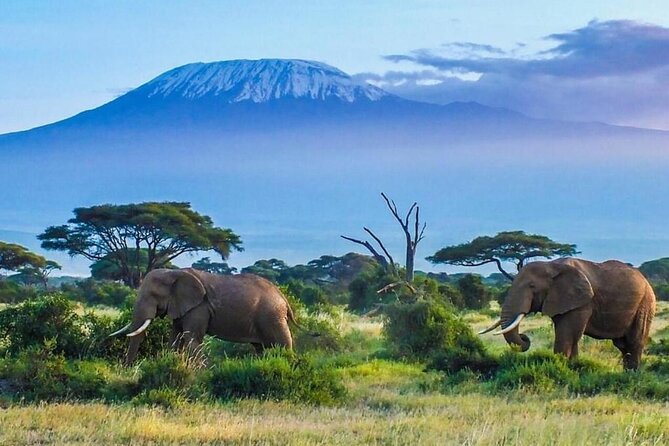
The first transfer from Moshi to the Mount Kilimanjaro National Park Gate takes about 50 minutes. You pass through Machame village on the lower slopes before beginning the climb.
From the gate, the trail enters rainforest and follows a winding path up a ridge. The day covers 11 kilometers, climbs from 5,400 feet to 9,400 feet, and takes about five to seven hours. Your sleeping place is Machame Camp.
This is a full first day, especially if you are still adjusting to the pace of a multi-day mountain walk. The forest section can be muddy and slippery lower down. I would pack gaiters and trekking poles where you can reach them, rather than burying them in your luggage.
The rainforest is one of the route’s early rewards. It gives you a strong sense of change as you leave ordinary roads and settlements behind. You are not simply walking toward a summit. You are moving through a series of climate zones, each with its own feel and demands.
Day 2: Heather and moorland on the way to Shira
After breakfast, you leave the forest glades and climb through heather-covered terrain. The path crosses a small valley, follows a steep rocky ridge, and then turns west toward a river gorge.
This is a shorter day by distance, only 5 kilometers, but the altitude gain is significant. You rise from 9,400 feet to 12,500 feet, with roughly four to six hours of hiking. The night is spent at Shira campsite in moorland.
Do not let the short distance fool you. Altitude makes ordinary effort feel heavier, and a steep ridge can be more tiring than a longer but gentler trail. I would focus on a slow, even pace and use the rest stops well. The goal is not to prove how fast you can climb. The goal is to arrive with enough energy for the days ahead.
Shira also marks a clear change in scenery. The damp forest is behind you, replaced by open, exposed ground and high-elevation vegetation. The route begins to feel more remote and mountain-like here.
Day 3: Lava Tower and the key acclimatization day
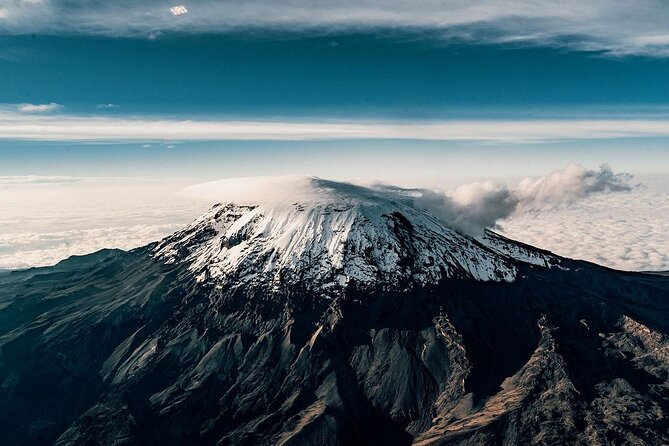
Day 3 is one of the most important parts of the schedule. From the Shira Plateau, you continue east along a ridge, passing the junction toward Kibo. The route then turns southeast toward Lava Tower, also called the Shark’s Tooth.
The day covers 10 kilometers and takes about six to eight hours. You climb from 12,500 feet to about 13,000 feet by the end of the day, but the route reaches roughly 16,000 feet near the Arrow Glacier junction before dropping to Barranco Hut at 13,000 feet.
That up-and-down pattern is the point. You spend time at a higher elevation, then sleep lower than your highest point for the day. It is a valuable preparation step for the summit push. The scenery also changes into semi-desert, with fewer signs of the lower mountain’s vegetation.
This is not a day to waste energy showing off. You might feel fine in the morning and much less fine after the higher section. Listen closely to your guide and be honest about how you feel. A schedule that includes a serious acclimatization day is one of the strongest reasons I would choose seven days over a rushed shorter version.
A few more trips of this kind worth comparing:
- Climbing Kilimanjaro through 7 days Machame Route
★ 5.0 · 151 reviews - 7 Days Kilimanjaro via Machame route affordable price
★ 5.0 · 110 reviews - Private Kilimanjaro Hike 7 Day Lemosho Route
★ 5.0 · 60 reviews - 7-Day Magical Tanzania Safari -Premium High End Package
★ 5.0 · 53 reviews
Day 4: Barranco Wall and Karanga Valley
After breakfast, you leave Barranco and tackle the steep ridge beside the Barranco Wall. The route then continues to Karanga Valley campsite.
This is a short acclimatization day, covering 5 kilometers in about four to five hours. The elevation changes only slightly, from 13,000 feet to 13,100 feet. You stay in alpine desert.
The short distance gives your body and legs a chance to recover without stopping the upward rhythm. The Barranco Wall is the day’s defining feature. The trail is steep, and you should expect to use your hands at points, although the provided information does not describe technical climbing equipment or rock climbing.
I like this kind of day in a mountain schedule. It gives you something substantial to do, but it does not pile another long mileage block onto an already demanding trek. You should still treat the day seriously. Rest, eat, drink, and prepare your clothing for the next morning.
Day 5: Barafu Camp and the final preparation
From Karanga, you reach the junction with the Mweka Trail and continue to Barafu Hut. The walk is only 4 kilometers and takes about four to five hours, but the climb rises from 13,100 feet to 15,300 feet.
You are now in alpine desert, with the summit close enough to dominate your thoughts. This point completes the South Circuit, which provides views of the summit from several angles. Mawenzi and Kibo can be seen from Barafu.
The short distance is welcome, but Barafu is not a relaxed overnight stop in the usual sense. You make camp, eat dinner, rest, and prepare for the summit day. Your equipment needs to be organized before you try to sleep. Keep the items you need close at hand, including warm layers, water, trekking poles, and anything required for an early start.
This is where the mental side of the climb becomes clear. You have already walked through rainforest, moorland, semi-desert, and alpine desert. Now you need to conserve energy for the hardest section of the trip.
Day 6: Stella Point, Uhuru Peak, and a long summit day
Day 6 is the climax and the toughest portion of the trek. You start very early and ascend toward the summit between the Rebmann and Ratzel glaciers. The route heads northwest through heavy scree toward Stella Point on the crater rim.
Stella Point sits at 18,600 feet. If the weather cooperates, you can pause there for sunrise. From Stella Point, the final ascent to Uhuru Peak takes about one hour, and snow may be present along the way. Uhuru Peak is the highest point on Kilimanjaro and the highest point in Africa.
The listed hiking time for this day is about eight hours, but you should understand that summit day feels unlike the other days. You are walking at very high altitude, often when your body wants sleep, and the heavy scree can make every step slide backward. The information provided does not give the full descent details for this day, so ask the operator how far you will descend and where you will sleep after reaching the summit.
I would judge the success of this day by safe progress, not speed. The strongest praise for this experience focuses on guide motivation and support during the summit push. That matters here. You may need steady encouragement, patient pacing, and clear decisions when the trail becomes hard.
The sunrise at Stella Point can be extraordinary, but it is weather dependent. Keep your expectations flexible. Clouds, wind, cold, and snow are part of the mountain’s reality, and reaching Uhuru Peak remains the main achievement.
Day 7: A muddy descent to Mweka Village
After breakfast, you descend to Mweka Park Gate to receive your summit certificates. The route drops from about 10,000 feet to 5,400 feet, covers 10 kilometers, and takes around three to four hours through rainforest.
The descent is shorter than most uphill days, but tired legs can make it feel long. Lower sections may be wet and muddy, so gaiters and trekking poles remain useful. Shorts and a T-shirt may be enough in warmer lower elevations, but keep rain gear and warmer clothing within reach because conditions can shift.
At Mweka Gate, you continue for about another hour to Mweka Village. A vehicle meets you there and drives you back to your hotel in Moshi. That final transfer is a welcome finish after a week of steep paths and early mornings.
The certificates are a nice formal ending, but the practical reward is getting clean, dry, and horizontal again. Plan for a quiet evening rather than a packed schedule.
What the $2,280 price really covers
At $2,280 per person, this is not a budget walk, but Kilimanjaro requires permits, park access, mountain staff, food, transport, and accommodation. The package includes transfers to and from the airport, all park fees, accommodation, six dinners, seven lunches, and six breakfasts as stated in the inclusions.
The meal count is worth confirming before you pay, since the listed numbers do not line up neatly with a seven-day schedule. I would also ask what accommodation means before the climb begins, especially for the Moshi nights and tent nights on the mountain.
The value is strongest if you want one company to coordinate the main moving parts. You are paying for access and logistics as much as for the walking itself. A well-organized operation can make a major difference when you are tired, cold, or dealing with altitude.
You still need to pay for personal gear rentals, a Tanzanian visa, international flights, and mountaineering insurance. Those extras can change the total cost substantially. Make a complete budget before booking, not just a comparison of the advertised tour price.
Group size, fitness, and practical preparation
The maximum group size is 20 people. That is a manageable number for a commercial climb, but it is not an intimate private trek. If you prefer closer individual attention, ask how groups are divided and how many guides and support staff accompany each departure.
You need a moderate level of physical fitness. That phrase should not be read as permission to arrive unprepared. The route includes steep ridges, long walking days, high altitude, heavy scree, possible snow, and a demanding summit morning.
I would prepare by walking regularly on uneven ground and practicing with the boots, poles, and daypack you plan to use. Since personal gear rental is not included, confirm what can be rented locally and what you should bring from home.
The listed meeting hours are Monday through Sunday, 8:00 a.m. to 5:30 p.m., and the activity ends back at the meeting point after returning to Moshi. Pickup is offered, and mobile ticketing is available. Confirmation is provided at booking, and the activity is near public transportation.
Free cancellation is available if you cancel at least 24 hours before the experience start time. Within 24 hours, you should expect no refund, and late changes are not accepted.
Who should book this Kilimanjaro climb?
I would recommend this climb to you if you want varied scenery, a recognized route, tent camping, and a seven-day schedule with room for acclimatization. It suits people who value strong guide support and a clear progression toward summit day.
I would be cautious if you dislike steep trails, muddy paths, early starts, or basic mountain camping. The Machame Route is popular partly because it is scenic and affordable, but it is called the Whiskey Route for a reason.
The high praise for organization, food, hospitality, and guide encouragement is encouraging. The company is Unique Planet Safaris, and the available feedback repeatedly credits the staff with helping climbers reach Uhuru Peak. That makes this a promising choice, but I would still confirm the guide-to-climber ratio, sleeping arrangements, meal details, gear options, and summit-day schedule before committing.
Final verdict: a strong value for a serious seven-day climb
I like the balance of this route. You get rainforest, moorland, semi-desert, alpine desert, the South Circuit, and a structured acclimatization pattern. The $2,280 cost also covers many major expenses, making the trip easier to organize.
The trade-off is comfort. You sleep in tents, climb steep trails, and face a hard summit day at extreme altitude. If you accept that bargain and prepare properly, this seven-day Machame climb offers a well-priced path to one of Africa’s great walking achievements. Book it if you want the mountain experience more than a soft landing, and confirm the practical details before you go.
FAQ
Where does the Kilimanjaro climb begin?
The experience is based in Moshi, Tanzania. The first mountain transfer goes from Moshi to the Mount Kilimanjaro National Park Gate and takes about 50 minutes.
How long is the Machame Route experience?
The climb lasts approximately seven days. The itinerary includes six mountain days before the final descent and return to Moshi.
Is airport pickup included?
Yes. Transfers to and from the airport are included in the package.
What is included in the $2,280 price?
The price includes all park fees, accommodation, airport transfers, six dinners, seven lunches, and six breakfasts as listed.
What is not included?
Personal gear rentals, a Tanzanian visa, international flights, and mountaineering insurance are not included.
How difficult is the climb?
The activity requires a moderate level of physical fitness. The route includes steep trails, long walking days, high altitude, heavy scree, and a demanding summit section.
How large can the group be?
The maximum group size is 20 people.
Can I cancel for a full refund?
Yes, if you cancel at least 24 hours before the experience start time. Cancellations made within 24 hours are not refundable, and late changes are not accepted.
Just added around Moshi
- Moshi: Lake Chala Tour: Hiking &/or Kayaking★ 4.5 · 3 reviews
- 3 Days Tanga Exclusive Beach Holiday★ 5.0 · 3 reviews
- Serengeti Wildebeest Migration.★ 5.0 · 3 reviews
- Chemka Hotpsrings E-Bike Day Trip★ 5.0 · 3 reviews
- Explore 1 day Ngorongoro Crater Budget Group Safari from Arusha★ 5.0 · 3 reviews
- Explore the 360° of Kilimanjaro★ 5.0 · 3 reviews
- Affordable Short Tanzania Safari (2 Days Camping Safari)★ 5.0 · 3 reviews
- Rongai Route 7 Days★ 5.0 · 3 reviews
Kilimanjaro Treks, compared.



8-Day Small-group Lemosho Kilimanjaro Summit Trekking
Read our review →


Climbing Kilimanjaro through 7 days Machame Route
Read our review →

Browse the lists this tour appears in