
Reviewed · KILIMANJARO TREKS
7 Day Kilimanjaro Climbing Via Lemosho Route
Kilimanjaro rewards patience more than speed. This seven-day climb follows the scenic Lemosho Route, moving from rainforest to the arctic zone while giving you time to adjust to altitude. I like the slow, carefully staged ascent and the strong local crew, including guides such as William, Rama, and Emanuel. The main consideration is simple: this is a serious high-altitude trek, not a sightseeing walk.
I also like the camping setup, with dining tents, catered meals, and a crew that prepares camp before you arrive. The price of $2,566 per person is substantial, but it covers seven days of meals, guiding, camping, park access arrangements, and pickup support. The summit night is cold, tiring, and long, so you need moderate fitness and a willingness to keep going when the fun wears thin.
In This Review
- Key points to know before climbing
- Why the Lemosho Route is worth seven days
- Day 1: Londorossi Gate to Forest Camp
- Day 2: Heather, volcanic rock, and the Shira Plateau
- Day 3: Lava Tower and the Garden of the Senecios
- Day 4: The Barranco Wall and Karanga Camp
- Day 5: Karanga to Barafu before the summit bid
- Day 6: Stella Point, Uhuru Peak, and the long descent
- Day 7: Forest descent and a welcome shower
- Food, camping, and the value of the price
- Who should choose this Kilimanjaro climb?
- Practical details before you book
- Should you book the Lemosho route with Spirit of Kilimanjaro?
- FAQ
- Where does the Kilimanjaro climb begin?
- How long is the experience?
- What route does the climb use?
- What altitude does Uhuru Peak reach?
- What meals are included?
- Can special diets be accommodated?
- Is pickup available?
- What fitness level is required?
- Is a visa included in the price?
Key points to know before climbing
- Lemosho gives you six ecological zones: You start in Afromontane rainforest and finish among ice, rock, and thin alpine air.
- The route uses altitude wisely: Moir Hut, Barranco, Karanga, and Barafu create a gradual approach to summit night.
- The Barranco Wall is hands-on: Expect to use your arms and legs on this short but memorable section.
- The crew receives repeated praise: William, Rama, Emanuel Hoblen, Emanuel Mkumbo, and their teams are singled out for care, pacing, safety, and good humor.
- Meals are a real part of the experience: Vegetarian, vegan, and gluten-free meals can be catered, with many compliments for the food.
- Summit day is the true test: You leave before midnight, reach Stella Point near sunrise, continue to Uhuru Peak, then descend for several hours.
Why the Lemosho Route is worth seven days
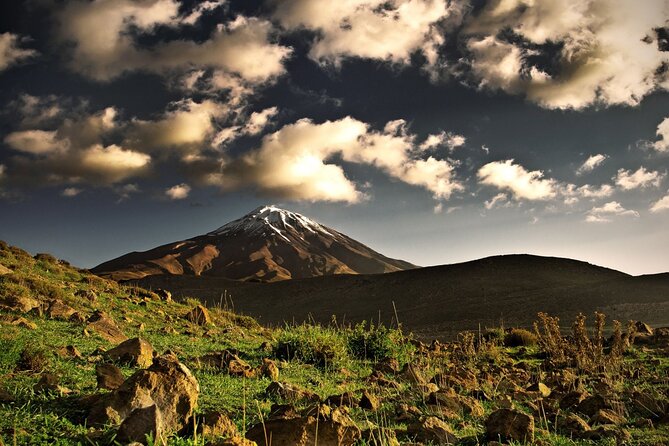
Kilimanjaro is not a technical climb in the usual mountaineering sense, but its height makes it demanding. At 19,341 feet, Uhuru Peak is high enough that your body needs time to adjust. The seven-day Lemosho schedule helps by building in several nights at altitude instead of rushing straight upward.
I like the route because it changes character every day. The first morning feels like a forest hike. By the final climb, you are walking through cold, dry, nearly empty country with a headlamp and a mountain of fatigue. That change is the heart of the trip.
The western approach also gives Lemosho a quieter opening than some of the more direct routes. You begin at Londorossi Gate after a long vehicle ride from Arusha, meet the mountain crew, and start walking at a gentle pace. Pickup is offered, though the supplied details identify Arusha as the departure point rather than giving a precise hotel transfer schedule.
The route is scenic, but scenery should not distract you from the real goal: acclimatization. Your guides set the pace, and several sections are designed to take you high before bringing you lower to sleep. That high then low pattern is useful preparation for the summit attempt.
More Kilimanjaro routes and climbs:
- Kilimanjaro climb by Lemosho Route (7-day)
★ 5.0 · 651 reviews - Kilimanjaro climb, Machame Route (7-day)
★ 5.0 · 262 reviews - Kilimanjaro Climbing Lemosho Route 8 Days.
★ 5.0 · 186 reviews
Day 1: Londorossi Gate to Forest Camp
The first walk covers about four miles, rising from 7,742 to 9,498 feet. Allow roughly three to four hours of trekking, not counting the drive from Arusha, park formalities, crew arrangements, and lunch.
The trail begins in Afromontane rainforest, a cool, leafy world that feels far removed from the dry summit country above. You may keep an eye out for wildlife as you walk, although this is not presented as a dedicated wildlife safari. The practical pleasure is the gradual start. You are not asked to prove anything on day one.
Lunch is carried onto the trail, and camp is reached in the middle of the afternoon. That early arrival gives you time to settle in, rest, and learn the rhythm of the mountain. Breakfast, lunch, and dinner are included, and the camp uses the trip’s signature camping setup.
The drawback is the long approach by vehicle before you even begin walking. Still, the gentle first day is a sensible trade for a route that begins in such a striking ecological zone.
Day 2: Heather, volcanic rock, and the Shira Plateau
Day two climbs from 9,498 to about 11,500 feet over five miles. Plan on five to six hours of walking.
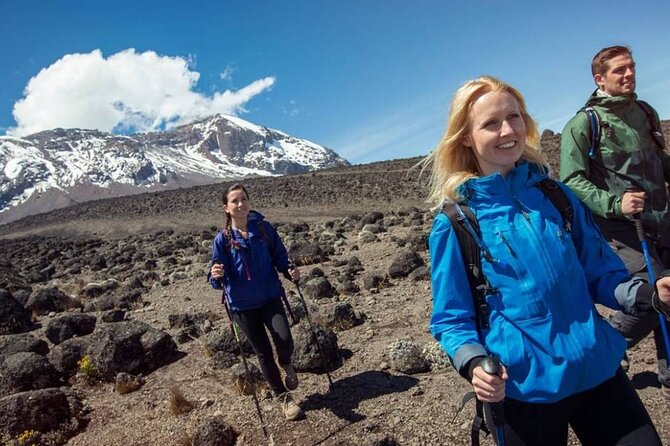
The forest gives way to podocarpus and juniper, then to heather and volcanic rock marked with lichen. The air feels thinner and the vegetation less familiar. You are now moving toward the Shira Plateau, the remains of an older volcanic peak that collapsed long ago.
Moir Hut is the night’s camp. The highlight is the view back toward Kibo, Kilimanjaro’s main summit. This is one of those days when the mountain begins to feel enormous. The path is still manageable, but you can no longer pretend that altitude is just a number.
I would use this afternoon to eat well, drink steadily, and keep your plans modest. The schedule includes another full dinner and breakfast service, which matters when your appetite and energy begin to change. This is also a good stage for asking your guide about the next day, especially the Lava Tower section.
Day 3: Lava Tower and the Garden of the Senecios
Day three is built around acclimatization. You climb from roughly 13,800 feet to 15,223 feet at Lava Tower, then descend to about 13,044 feet at Barranco Camp. The distance is listed as about seven kilometers, with four to six hours of walking.
The climb toward Lava Tower takes you into a high zone where little plant or animal life survives. Conditions can change quickly, and the volcanic rock gives the route a stark feel. If you are feeling strong, an optional climb of the 300-foot Lava Tower is available. I would treat that option with caution. You do not need to collect every extra challenge, especially if you are already feeling the altitude.
After lunch near the tower, you descend toward Barranco. The reward is the Garden of the Senecios, filled with giant groundsel and giant lobelias. Barranco Valley is described as one of the prettiest parts of the route, and it is easy to see why the day works so well: a high climb, unusual plants, a lower sleeping camp, and dramatic scenery all in one stretch.
The descent can feel frustrating after working uphill, but it is exactly the kind of pacing that helps you prepare for summit night. Your body gets time at a greater height, then a chance to sleep lower.
A few more trips of this kind worth comparing:
- Climbing Kilimanjaro through 7 days Machame Route
★ 5.0 · 151 reviews - 7 Days Kilimanjaro via Machame route affordable price
★ 5.0 · 110 reviews - Private Kilimanjaro Hike 7 Day Lemosho Route
★ 5.0 · 60 reviews - 7-Day Magical Tanzania Safari -Premium High End Package
★ 5.0 · 53 reviews
Day 4: The Barranco Wall and Karanga Camp
Day four is shorter, only about three miles, with four to five hours of trekking. You rise slightly from 13,044 to 13,123 feet, but the numbers do not tell the whole story. The main task is crossing the Barranco Wall.
The wall looks intimidating, yet this is not described as a technical rock climb. You should expect a hands-on path where you use all four limbs in places. The guides are important here, not just for route finding but for keeping the pace calm and controlled. A slow approach makes the wall feel like a scrambling challenge rather than a frightening obstacle.
From the top, the route crosses the Karanga Valley through repeated inclines and declines before reaching camp. That short distance can still feel tiring because of the uneven ground and altitude.
Karanga Camp is placed here for a reason: it gives you more time high on the mountain before Barafu and the summit attempt. Sunsets can be especially impressive, with views toward the southern glacial valleys and ice fields. You should also understand the tradeoff. This is a basic mountain camp in an exposed setting, not a comfortable lodge with shelter from every gust of wind.
Day 5: Karanga to Barafu before the summit bid
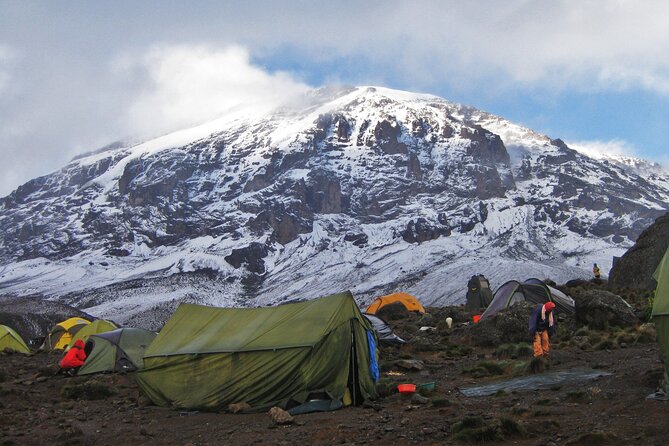
Day five takes you to Barafu Camp, around 15,288 feet. The walking time is listed at about six hours, with lunch at the high camp and an early dinner before resting.
The setting becomes alpine desert: sparse, exposed, and often windy. Mawenzi Peak can appear across the distance, giving you something dramatic to study while you wait for the final push.
This is a psychologically important day. The walking may be shorter than the summit day, but Barafu is where you must conserve energy. After lunch, your best plan is to rest, organize warm clothing, prepare your water, and follow the guide’s instructions. The timetable calls for a relatively early dinner because the final ascent begins just before midnight.
The camp’s high position is useful for the route plan, but it also means comfort is limited. You may be cold, restless, or unable to sleep much. That is normal preparation for a night climb, not a sign that the trip has gone wrong.
Day 6: Stella Point, Uhuru Peak, and the long descent
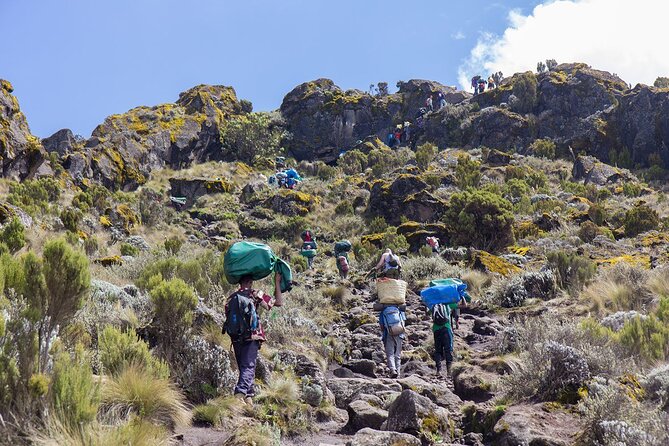
Summit day is the hardest part of the experience by a wide margin. You leave just before midnight and climb in the coldest, windiest conditions of the trip. The supplied schedule lists about three miles of ascent and seven miles of descent, with seven to eight hours going up and another four to six hours coming down.
The first target is Stella Point, at about 18,652 feet. If your pace is steady, you arrive near dawn and see the sun rise over Mawenzi Peak. This is one reason the timing matters. The early start is uncomfortable, but it places you near the rim when the morning light begins.
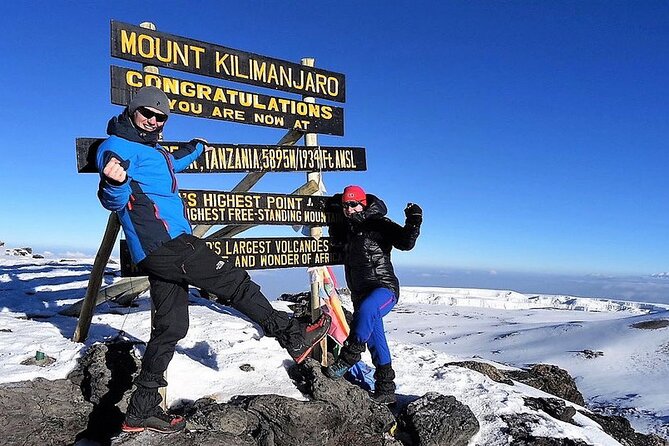
From Stella Point, the final section to Uhuru Peak is relatively short compared with the climb already behind you. You reach the Roof of Africa at 19,341 feet, take photographs, celebrate briefly, and then begin descending.
Do not underestimate the way down. After the summit, your legs are tired, your concentration may be fading, and the drop from the cold upper slopes to a lower camp or trail section is still several hours of work. The route description indicates a descent toward 5,380 feet during this stage, while the following day continues through montane forest. Because the daily schedule provided is abbreviated in places, confirm the exact night’s camp and descent sequence with Spirit of Kilimanjaro before departure.
The most useful guide qualities here are patience, attention, and good pacing. William and Rama receive especially strong praise for keeping the climb controlled and focusing on acclimatization. Emanuel Hoblen and Emanuel Mkumbo are also named for their care, mountain experience, and support.
Day 7: Forest descent and a welcome shower
After breakfast, you descend again through montane forest. The final trekking period is listed as roughly four to seven hours, and you are picked up around midday after saying farewell to the crew.
This last day may feel easier than the summit push, but it is not nothing. Descending steep or uneven paths on tired legs can be hard on your knees. The reward is practical and immediate: a transfer back to your hotel, a long shower, and a celebratory dinner.
That farewell also matters. Kilimanjaro climbs rely on a large working team, including guides, porters, cooks, and camp staff. The strongest praise for this experience is directed not only at the lead guides but at the entire crew. The camp is often ready when climbers arrive, and the dining tent gives the group a comfortable place to eat and laugh after long days outside.
Food, camping, and the value of the price
At $2,566 per person, this is not a low-cost mountain holiday. I would judge the price by what the service must provide over seven days: park trekking, guiding, porters, camping equipment, dining arrangements, and three meals a day. Breakfast, lunch, and dinner are included throughout the listed program, while visa costs are not.
The food receives some of the warmest praise. Meals are described as tasty, plentiful, and enjoyable in the dining tent. Vegetarian, vegan, and gluten-free diets can be catered, which is useful on a trip where eating enough is part of your safety and stamina.
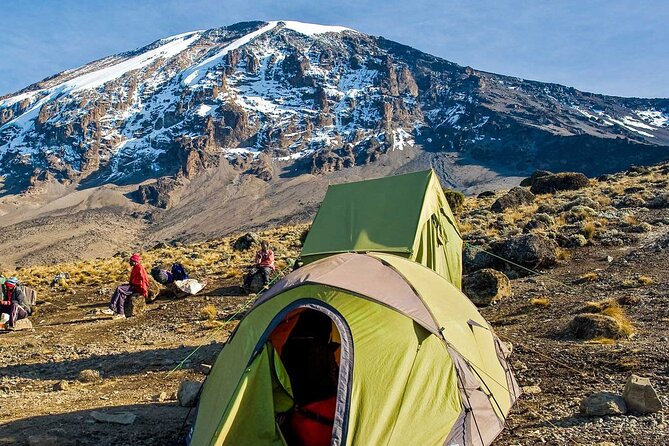
The camping format is also more organized than carrying your own minimal backpacking setup. Spacious tents, a dining tent, prepared camps, and a dedicated chef add comfort without changing the fact that you are sleeping on a high mountain. You should expect convenience, not hotel standards.
Group size deserves a close look. The activity may accept up to 100 participants, which is a large maximum. Your actual group may be smaller, but you should ask before paying if a small team is important to you. A large operation can offer more staff and logistical strength, yet some people prefer a quieter, more personal climb.
Who should choose this Kilimanjaro climb?
I would recommend this trip to someone who wants the scenic Lemosho approach, values a slow ascent, and prefers a fully supported camping experience. It suits people who can walk for several hours on consecutive days and who understand that the summit is an endurance effort at extreme altitude.
It is not a good match if you want a relaxed holiday with flexible mornings, private rooms, or an easy path to a famous viewpoint. The trip requires moderate physical fitness, patience, and comfort with cold, wind, basic camps, and a pre-midnight start.
The guide team is a major reason to consider it. William, Rama, Emanuel Hoblen, and Emanuel Mkumbo are specifically praised for safety, humor, care, and mountain skill. One group completed its planned seven-day route in six days under William and Rama, but I would not treat that as a target. The seven-day schedule gives you more time, and more time is generally useful at altitude.
Practical details before you book
The listed start time is 9:00 a.m., and pickup is offered. Confirmation is provided at booking, the meeting area is near public transportation, and a visa is not included in the price. Free cancellation is available if you cancel at least 24 hours before the local start time. Changes or cancellations inside that window are not accepted for a refund.
Pack for several different climates. The route begins in rainforest and ends in freezing, exposed high country, so your clothing system must handle both wet greenery and severe cold. The information provided does not specify a full packing list, equipment rental, or exact porter baggage limits, so ask Spirit of Kilimanjaro for those details before you arrive.
The 100 percent recommendation rate and five-star rating from 12 recorded ratings are encouraging, but the small number means I would still ask clear questions about your guide assignment, group size, camp equipment, and the precise summit-day schedule. Good preparation makes the experience better for you and fairer to the crew supporting you.
Should you book the Lemosho route with Spirit of Kilimanjaro?
Yes, if you want a scenic, carefully paced Kilimanjaro climb with strong local guiding and dependable meal support. The route’s best features are its changing ecological zones, its acclimatization pattern, and the crew’s repeated praise for care, food, and pacing.
Book with your eyes open. The price is significant, the summit night is punishing, and the maximum group size is large. Ask for final details before committing, then choose this experience if you value a well-supported mountain effort more than a soft holiday. For reaching Uhuru Peak, that is the right priority.
FAQ
Where does the Kilimanjaro climb begin?
The trip is based in Moshi, with the route starting at Londorossi Gate after transport from Arusha.
How long is the experience?
The climb lasts approximately seven days.
What route does the climb use?
It follows the Lemosho Route, approaching Kilimanjaro from the west.
What altitude does Uhuru Peak reach?
Uhuru Peak is listed at 19,341 feet.
What meals are included?
Breakfast, lunch, and dinner are included for the seven-day program.
Can special diets be accommodated?
Yes. Vegetarian, vegan, and gluten-free meals can be catered.
Is pickup available?
Yes, pickup is offered. The supplied details do not give a specific hotel pickup schedule.
What fitness level is required?
A moderate level of physical fitness is required.
Is a visa included in the price?
No. Visa costs are not included.
Just added around Moshi
- Moshi: Lake Chala Tour: Hiking &/or Kayaking★ 4.5 · 3 reviews
- 3 Days Tanga Exclusive Beach Holiday★ 5.0 · 3 reviews
- Serengeti Wildebeest Migration.★ 5.0 · 3 reviews
- Chemka Hotpsrings E-Bike Day Trip★ 5.0 · 3 reviews
- Explore 1 day Ngorongoro Crater Budget Group Safari from Arusha★ 5.0 · 3 reviews
- Explore the 360° of Kilimanjaro★ 5.0 · 3 reviews
- Affordable Short Tanzania Safari (2 Days Camping Safari)★ 5.0 · 3 reviews
- Rongai Route 7 Days★ 5.0 · 3 reviews
Kilimanjaro Treks, compared.



8-Day Small-group Lemosho Kilimanjaro Summit Trekking
Read our review →


Climbing Kilimanjaro through 7 days Machame Route
Read our review →

Browse the lists this tour appears in