
Reviewed · KILIMANJARO TREKS
7 Day Kilimanjaro Machame climb
Africa’s highest summit rewards patience, not bravado. Shah Tours’ seven-day Machame climb gives you a well-paced southern-circuit route, with high-altitude training built into the journey rather than saved for the last minute. I like the climb’s changing scenery, from wet rainforest to volcanic desert, and I like the serious attention to safety, including twice-daily health checks, oxygen, and trained guides.
The cost is $2,580 per person, a fair figure for a private climb that covers park fees, meals, tents, porters, transfers, and a full mountain crew. The catch is simple: Machame is not a gentle walk, and summit day lasts roughly 18 hours. You need strong fitness, patience, and a willingness to sleep in a tent for six nights.
A well-run Kilimanjaro climb depends heavily on the people around you. Shah Tours has received especially warm praise for its organization, communication, and guides, including Calvin Shayo, John, Musa, Isaac, Matej, Denis, Baraka, Vincent, Augustin, and Acasio. The company also participates in the Kilimanjaro Porters Assistance Project, an important point for anyone who wants a more responsible climb.
In This Review
- Key points at a glance
- Why Machame is a strong seven-day choice
- Day 1: Moshi to Machame Gate and the rainforest
- Day 2: Picnic Rock and the Shira Plateau
- Day 3: Lava Tower, altitude practice, and Barranco Valley
- Day 4: Scrambling over the Barranco Wall
- Day 5: Karanga to high camp
- Day 6: Stella Point, Uhuru Peak, and the long descent
- Day 7: Descending through rainforest to Mweka Gate
- What the $2,580 price really covers
- Food, camping, and porter standards
- Guides, safety, and the human side
- Who should book this climb?
- Should you book the seven-day Machame climb?
- FAQ
- Where does the climb start?
- How long does the climb last?
- Is the Machame route technical?
- Is this a private tour?
- Are park and rescue fees included?
- Are meals included?
- Is drinking water provided?
- What equipment must I bring or pay for separately?
Key points at a glance
- The Barranco Wall is a hands-on scramble: You use your hands and feet on a steep section, but no technical climbing equipment or prior climbing experience is required.
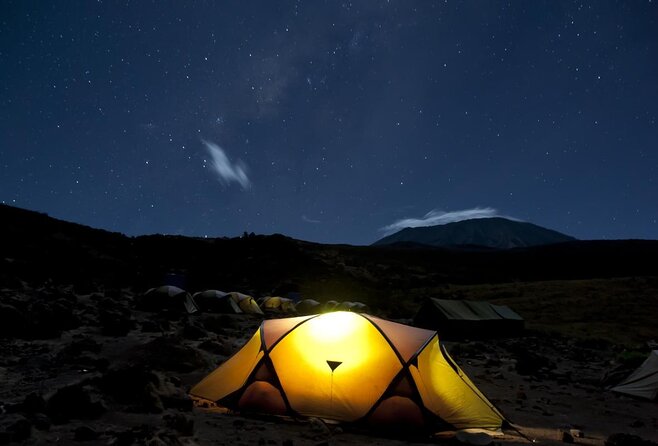
- The route climbs high, then drops low: Reaching Lava Tower at 4,630 meters before descending to Barranco helps your body adjust to altitude.
- Your summit attempt starts around midnight: Expect a cold, dark, strenuous ascent to Stella Point and Uhuru Peak.
- The price covers the major costs: Park and rescue fees, meals, camping equipment, guides, porters, transfers, and boiled water are included.
- The support crew is a major part of the experience: A cook, waiter, tent crew, porters, and trained mountain guides look after the practical work.
- This is a private activity: Only your own group participates, though group discounts may be available.
Why Machame is a strong seven-day choice
Machame is often called the whisky route, a playful contrast with the gentler Marangu route. The nickname reflects its steeper, more rugged character. You camp each night, walk through several climate zones, and follow a route that feels more like a mountain expedition than a park stroll.
The seven-day schedule is important. A shorter Kilimanjaro itinerary can save money and time, but it gives your body less opportunity to adjust to thin air. Machame’s southern circuit uses the useful pattern of climbing high and sleeping lower. Day three is the clearest example: you climb to Lava Tower at 4,630 meters, then descend to Barranco Valley.
That altitude routine cannot guarantee a summit success. Kilimanjaro remains physically demanding, and altitude affects people differently. Still, the extra day gives you more time to move slowly, rest, and learn how your body responds.
The route is non-technical, so you do not need ropes, climbing hardware, or advanced mountaineering skills. You do need to handle steep paths, loose volcanic gravel, cold temperatures, wet ground, and long hours on your feet.
More Kilimanjaro routes and climbs:
- Kilimanjaro climb by Lemosho Route (7-day)
★ 5.0 · 651 reviews - Kilimanjaro climb, Machame Route (7-day)
★ 5.0 · 262 reviews - Kilimanjaro Climbing Lemosho Route 8 Days.
★ 5.0 · 186 reviews
Day 1: Moshi to Machame Gate and the rainforest
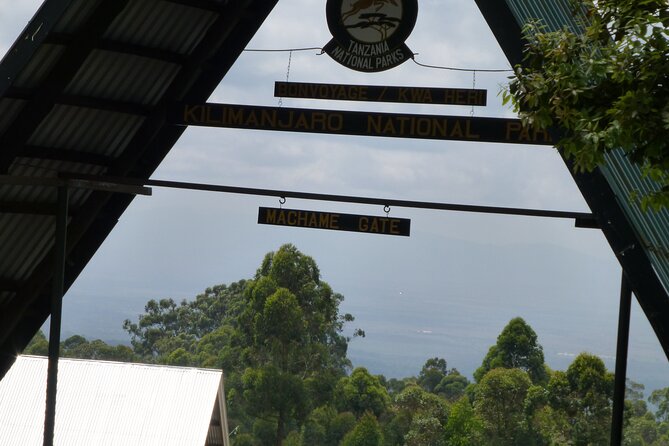
Your day begins with pickup around 9:00 a.m. from Shah Tours’ meeting point at 6 Sekou Toure Way in Moshi, or from a Moshi-based pickup location. A road transfer takes you to Machame Gate, where registration comes before the walking starts.
The first hike lasts about seven hours. You begin in Kilimanjaro’s rainforest zone, where the trail is thick with plant life and may support glimpses of forest wildlife. Rain is common here, especially in the afternoon, so the path can become slippery.
This is a steady, fairly steep introduction. Do not treat the green forest as an easy warm-up. You are gaining height from the start, and wet roots or mud can make the first day tiring. Good waterproof layers and shoes with reliable grip matter more here than stylish summit clothing.
You finish near the edge of the forest and the start of the heather zone. The change is noticeable: the dense trees begin to thin, and the mountain starts to feel more open.
Day 2: Picnic Rock and the Shira Plateau
Day two takes about seven hours and moves through the heather and moorland zone. The trail climbs a steep ridge toward Picnic Rock, a natural viewpoint with broad views on a clear day.
From here, you may see Kibo, the highest cone of Kilimanjaro and the summit area you are aiming for. You can also see the jagged forms of the Shira Plateau, shaped by old lava flows, erosion, and volcanic activity. Mount Meru, Tanzania’s second-highest mountain at 4,563 meters, may appear in the distance.
After the ridge, the route becomes gentler and flatter as you approach camp. That change helps. You have worked hard early in the day, so the easier finish gives you time to eat, drink, and settle in without rushing.
Cloud can hide the views, so do not measure the day only by what you see. The real value is the gradual move into higher country, with enough walking to keep your body active and enough time to recover.
Day 3: Lava Tower, altitude practice, and Barranco Valley
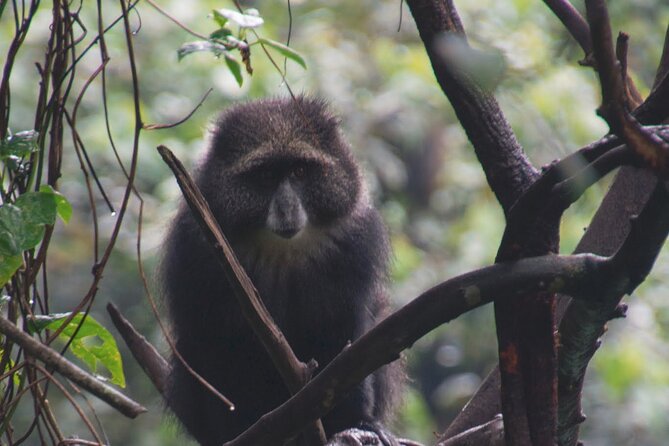
Day three is one of the most important days for acclimatization. It lasts about eight hours and takes you toward Kibo through alpine desert, with little shelter and a much more severe feel than the forest below.
You climb to Lava Tower at 4,630 meters. This is your first major high-altitude test and a useful point for seeing how your body handles the thinner air. You may feel tired, breathless, or headachy. Tell your guide how you feel rather than trying to hide symptoms.
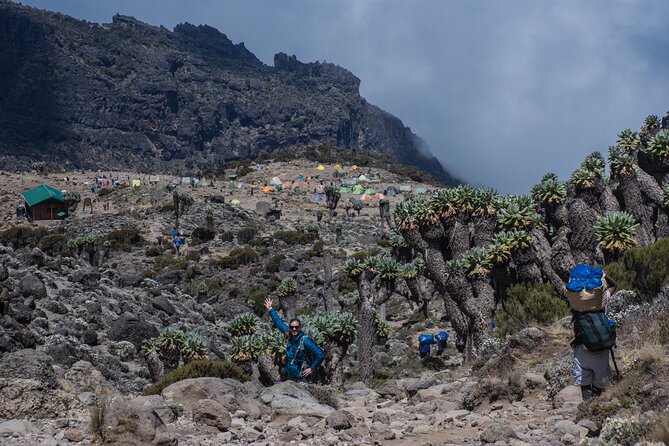
After Lava Tower, you descend in an anticlockwise direction around Kibo toward Barranco Valley. This is the climb high, sleep lower pattern that makes the itinerary worthwhile. The descent also brings you past Kilimanjaro’s distinctive giant senecios, large flowering plants found on the mountain.
The day ends at roughly the elevation where it began, near the heather and moorland. It is a long day, but its design is smart. You gain altitude for practice, then return to a lower camp to rest.
A few more trips of this kind worth comparing:
- Climbing Kilimanjaro through 7 days Machame Route
★ 5.0 · 151 reviews - 7 Days Kilimanjaro via Machame route affordable price
★ 5.0 · 110 reviews - Private Kilimanjaro Hike 7 Day Lemosho Route
★ 5.0 · 60 reviews - 7-Day Magical Tanzania Safari -Premium High End Package
★ 5.0 · 53 reviews
Day 4: Scrambling over the Barranco Wall
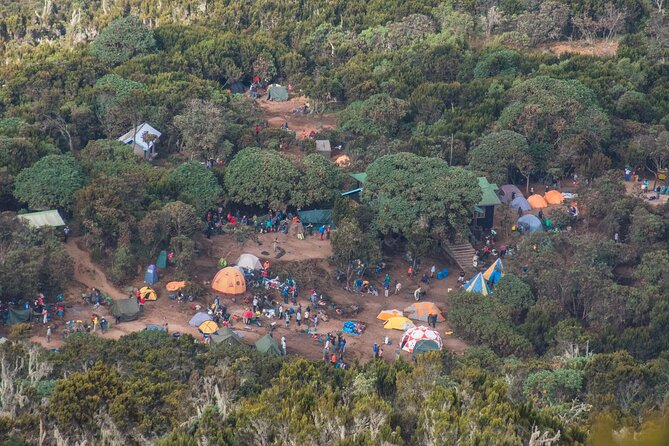
The Barranco Wall is the route’s most memorable hands-on section. It is a steep, non-technical scramble where you use your hands and feet to move upward. You do not need special equipment or previous climbing experience, but you should be comfortable with exposure and uneven rock.
Your guide will help with route choice and pacing. The point is not speed. Move carefully, keep three points of contact when useful, and let faster people pass only when the trail allows.
At the top, you get fine views back toward camp and toward the Heim Glacier on Kibo. The reward is more than scenery. This section gives the climb a genuine mountain feel without turning it into a technical ascent.
The rest of day four takes about five hours. You cross alpine desert, wind around the mountain, descend into Karanga Valley, and climb again to camp. Karanga is the last water point, so pay attention to your water supply from here onward.
Day 5: Karanga to high camp
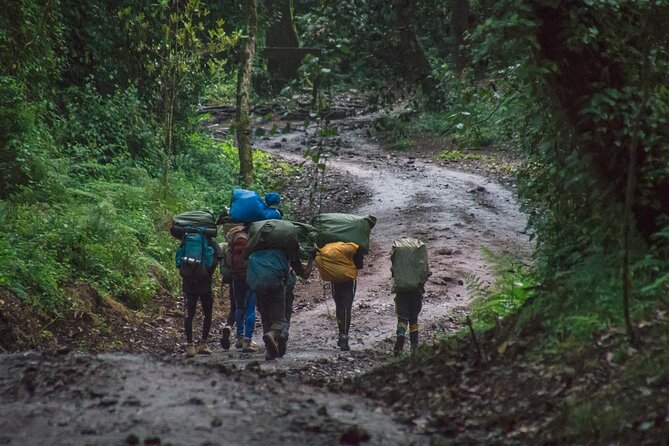
Day five is shorter, around four hours, and that is welcome. You walk through an open alpine desert toward Kibo at a slow, steady pace. The trail is not extremely steep, but the altitude makes every ordinary step more expensive.
Mawenzi Peak, Kilimanjaro’s second major peak, may come into view to the east. Kibo now feels close, and the summit attempt becomes real rather than abstract.
The short walking day leaves time at high camp to rest and prepare. Use it well. Eat the meal provided, organize your warm clothing, charge anything you need if charging is available at your own accommodation before the climb, and keep your summit gear easy to reach.
You will likely feel nervous here. That is normal. The best plan is quiet rest, not constant discussion about how difficult the night will be.
Day 6: Stella Point, Uhuru Peak, and the long descent
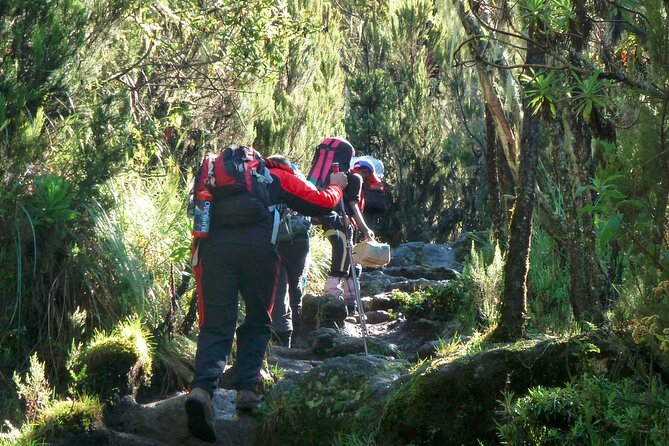
Summit day begins around midnight. You leave camp in darkness and cold, climbing through the arctic zone over loose volcanic scree. The trail rises in a zigzag pattern toward Stella Point at 5,685 meters.
This is the hardest physical part of the climb. Progress can feel slow, and the cold may make your hands and feet ache. The high altitude affects breathing and energy, so your guides set a slow pace and monitor you.
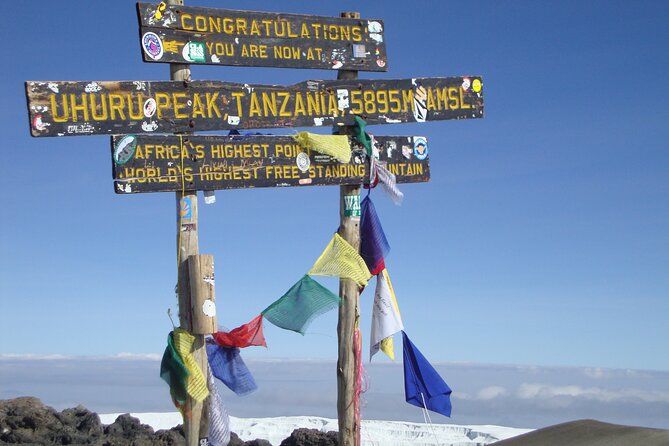
Stella Point sits on the rim of Kibo’s crater. From there, you continue toward Uhuru Peak at 5,895 meters, the highest point in Africa. The final section is shorter than the climb to Stella Point, but it can feel difficult because you have already spent hours ascending.
You normally spend only a short time at Uhuru Peak. Extreme altitude is not a place for a long celebration. Take your photographs, enjoy the achievement, and follow your guide’s instructions.
You then descend to base camp for breakfast or brunch, pack your equipment, and continue downward through the alpine desert. The full day lasts around 18 hours, making this the point where fitness and mental patience matter most.
I would not book this route without proper travel insurance that covers high-altitude trekking. Insurance is not included, and Flying Doctors emergency evacuation membership is also an optional extra.
Day 7: Descending through rainforest to Mweka Gate
The last day takes about four hours. You descend through the southern rainforest to Mweka Gate, where your vehicle waits for the return to Moshi.
After several days above the trees, the rainforest can feel warm, damp, and almost noisy. Your knees may be more tired than your lungs by this point. Trekking poles are useful on the descent, especially on slippery sections.
The mountain crew generally leaves directly from Mweka Gate, so this is when you say goodbye to the guides, porters, cook, and other staff who supported the climb. That farewell is part of the experience, not a minor detail. The crew handles much of the work that makes a high-altitude camping trip possible.
What the $2,580 price really covers
At $2,580 per person, this is not a budget walk. But the price includes many costs that can surprise first-time climbers: national park conservation and entry fees, camping fees, rescue fees, transfers, meals, tents, a sleeping mattress, boiled drinking water, and luggage handling.
You receive one porter carrying up to 15 kilograms of personal luggage. A tent crew sets up camp, while a cook and waiter handle meals and dining equipment. A four-season tent, chairs, tables, a dining tent, a hand-washing station, and a small personal wash basin are included.
The safety arrangements also add value. Guides conduct health checks twice daily using a medical oximeter. The group has an emergency oxygen cylinder for every five passengers, plus a first aid kit.
The cost does not include sleeping bags, walking poles, insurance, visas, drinks, personal items, or water on the first day. Metal and hard plastic bottles are not accepted on the mountain, and soft plastics are not permitted either, so ask for the packing guidance before arriving.
An extra single tent costs $20 per day. A portable toilet costs $45 per day for up to five people, and a foldable bed costs $20 per day. Extra guides and porters are also charged separately.
Food, camping, and porter standards
Camping for six nights requires a certain tolerance for basic conditions. Public shared toilets are provided at campsites. A private portable toilet is available as a paid comfort upgrade.
Meals, bowls, cups, cutlery, and eating utensils are included. The exact menu is not specified, but you receive breakfast, lunch, and dinner on the mountain. Boiled drinking water begins from the first camp onward, while water for day one is your responsibility.
The crew structure is one of the strongest parts of this trip. You have mountain guides, porters, tent staff, a cook, and a waiter. Several climbers specifically praised the care given at camp, the quality of the food, and the way the team kept things organized.
Shah Tours is listed as a Kilimanjaro Porters Assistance Project monitoring operator. That matters because porter welfare is a serious issue on the mountain. You should still ask how tipping is handled and budget gratuities separately, since tips are not included.
Guides, safety, and the human side
The strongest praise for this climb centers on the staff. Names repeatedly associated with successful groups include Calvin Shayo, John, Musa, Isaac, Matej, Denis, Baraka, Vincent, Augustin, and Acasio.
The practical lesson is to listen to your guides. They set the pace, check your health, explain the route, and decide when a climber needs to stop or descend. The company’s communication before and during the trek has also been praised, which is useful when you are trying to prepare equipment and understand the daily routine.
This is a private activity, meaning only your own group participates. That can make pacing and communication easier than joining a large mixed party. Group discounts may be available, so ask for the current terms if you are booking with friends or family.
Who should book this climb?
This route suits you if you want a serious but non-technical Kilimanjaro ascent, prefer camping to huts, and value a longer acclimatization schedule. It also suits people who want a private group and a full support team rather than an independent trek.
You should arrive with strong physical fitness. The tour is not recommended if you have lung problems or known altitude-related medical conditions. Speak with a medical professional before booking if you have any doubt.
Machame is not the right pick if you want short walking days, private bathrooms, or a soft adventure. The Barranco Wall is manageable, but the route remains steep. Summit night is cold, long, and tiring even for fit people.
Should you book the seven-day Machame climb?
I would recommend it if reaching Uhuru Peak is your main goal and you want a route that gives altitude adjustment a fair chance. The included park fees, crew, meals, equipment, safety checks, and transfers make the $2,580 price easier to justify.
Book it with realistic expectations. You will camp, walk for long hours, carry only a daypack but still manage your own essential gear, and face a demanding summit night. Ask Shah Tours for its current packing list, clarify gratuities and group size, and arrange insurance before you go.
For a well-supported, private Kilimanjaro climb with strong staff praise and a sensible seven-day route, this is a solid choice. It is not easy, but it is thoughtfully arranged.
FAQ
Where does the climb start?
The meeting point is Shah Tours at 6 Sekou Toure Way in Moshi, Tanzania. Pickup from a Moshi-based location is offered, with the transfer starting around 9:00 a.m.
How long does the climb last?
The experience lasts approximately seven days, including the transfer from Moshi to Machame Gate and the return from Mweka Gate.
Is the Machame route technical?
No. It is a non-technical route. The Barranco Wall includes a scrambling section where you use your hands and feet, but no special climbing equipment or prior experience is required.
Is this a private tour?
Yes. Only your own group participates in the activity.
Are park and rescue fees included?
Yes. National Park conservation, entry, camping, and applicable rescue fees are included in the price.
Are meals included?
Yes. Breakfast, lunch, and dinner are provided on the mountain, along with eating utensils, bowls, cups, and cutlery.
Is drinking water provided?
Boiled drinking water is provided from the first camp onward. Water for the first day is not included.
What equipment must I bring or pay for separately?
Personal mountain equipment such as a sleeping bag and walking poles is not included. Insurance, visas, drinks, personal items, gratuities, and optional comfort upgrades are also separate costs.
Just added around Moshi
- Moshi: Lake Chala Tour: Hiking &/or Kayaking★ 4.5 · 3 reviews
- 3 Days Tanga Exclusive Beach Holiday★ 5.0 · 3 reviews
- Serengeti Wildebeest Migration.★ 5.0 · 3 reviews
- Chemka Hotpsrings E-Bike Day Trip★ 5.0 · 3 reviews
- Explore 1 day Ngorongoro Crater Budget Group Safari from Arusha★ 5.0 · 3 reviews
- Explore the 360° of Kilimanjaro★ 5.0 · 3 reviews
- Affordable Short Tanzania Safari (2 Days Camping Safari)★ 5.0 · 3 reviews
- Rongai Route 7 Days★ 5.0 · 3 reviews
Kilimanjaro Treks, compared.



8-Day Small-group Lemosho Kilimanjaro Summit Trekking
Read our review →


Climbing Kilimanjaro through 7 days Machame Route
Read our review →

Browse the lists this tour appears in