
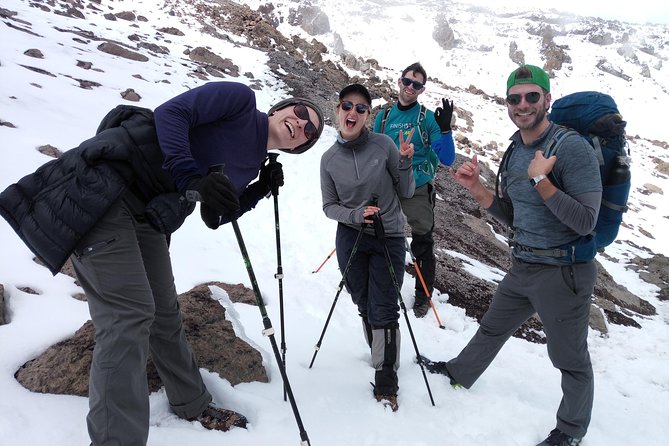
Reviewed · KILIMANJARO TREKS
7 days Lemosho route Climbing Mt.Kilimanjaro
Kilimanjaro rewards patience, not speed. This seven-day Lemosho climb gives you a scenic approach through rainforest, moorland, volcanic rock, and high alpine desert before the final push to Uhuru Peak. I like the route’s gradual climb and its strong acclimatization day at Lava Tower, and I also like that the package includes park fees, mountain staff, airport transfers, Moshi lodging, meals, water, and rescue coverage.
The main consideration is the physical demand. You need good fitness, and summit day is especially tough: you begin around 2 a.m., reach Stella Point at 18,600 feet, continue to Uhuru Peak at 19,345 feet, then descend to Mweka in the same day. At $2,850 per person, this is not a budget walk, but the cost includes the large support system needed for a serious high-altitude climb.
In This Review
- Key points to know before booking
- Why the Lemosho Route Earns Seven Days
- Day 1: Moshi to Londorossi Gate and the Rainforest
- Day 2: From Forest to Shira Ridge
- Day 3: Shira Plateau and Lent Hills
- Day 4: Lava Tower, Arrow Glacier Junction, and Barranco
- Day 5: Barranco Wall and Barafu Camp
- Day 6: Stella Point, Uhuru Peak, and Mweka
- Day 7: Mweka Gate and the Return to Moshi
- What the $2,850 Price Really Covers
- Safety, Fitness, and Group Size
- The Human Side of the Climb
- Who Should Book This Kilimanjaro Trek?
- Should You Book It?
- FAQ
- How long is the Kilimanjaro experience?
- What time does the trek begin?
- What is included in the $2,850 price?
- Are flights and travel insurance included?
- How many people can join the trek?
- What happens if bad weather cancels the experience?
Key points to know before booking
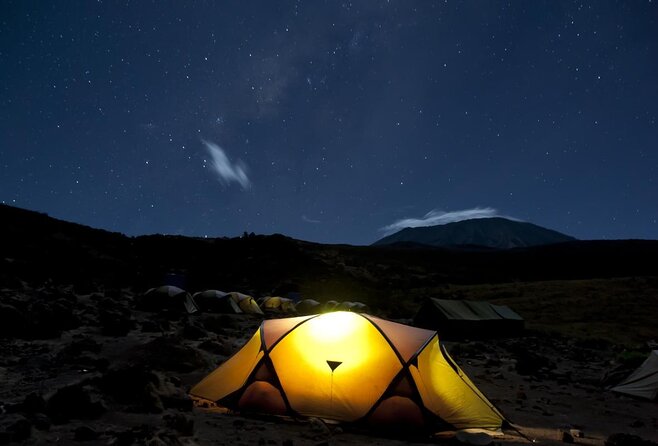
- Lemosho starts in remote rainforest: The opening trail feels quieter and more gradual than a direct approach, with the route beginning at about 7,800 feet.
- Day 4 is the acclimatization test: You climb to Lava Tower at roughly 16,000 feet, then sleep lower at Barranco Camp.
- The summit day is very long: Expect an early start, steep scree, cold conditions, a sunrise attempt, and a descent to Mweka Camp.
- A full mountain crew is included: Guides, porters, a cook, treated drinking water, an emergency first-aid kit, park fees, and rescue fees are part of the package.
- The group size is capped at 15: That is large enough for a lively team but still manageable on a marked route.
- Crew support receives the strongest praise: Guides named in past trips include Bakari, Nickson, Goodluck Mwanga, Abraham, Oscar, Joseph, Bariki, FC, Matthew, and Tammy.
Why the Lemosho Route Earns Seven Days
Lemosho is a good choice if you want more than a quick route to the summit. The trail crosses several of Kilimanjaro’s major ecological zones, beginning in humid forest and ending among rock, ice, and thin air. You get changing scenery instead of spending the whole climb on one type of terrain.
The extra time also matters for altitude. Kilimanjaro is not a technical climb in the mountaineering sense, but altitude can trouble strong hikers just as quickly as it can trouble beginners. This itinerary gives your body several days to adjust before the summit attempt, including a climb high to Lava Tower followed by a lower night at Barranco.
The route is still demanding. Day 3 covers 14 kilometers, Day 5 lasts up to 10 hours, and Day 6 combines the summit climb with a long descent. I would not choose this trip simply because you can manage a long day hike at home. You should be comfortable walking for several hours, climbing steadily, and continuing when the trail becomes steep and tiring.
More Kilimanjaro routes and climbs:
- Kilimanjaro climb by Lemosho Route (7-day)
★ 5.0 · 651 reviews - Kilimanjaro climb, Machame Route (7-day)
★ 5.0 · 262 reviews - Kilimanjaro Climbing Lemosho Route 8 Days.
★ 5.0 · 186 reviews
Day 1: Moshi to Londorossi Gate and the Rainforest
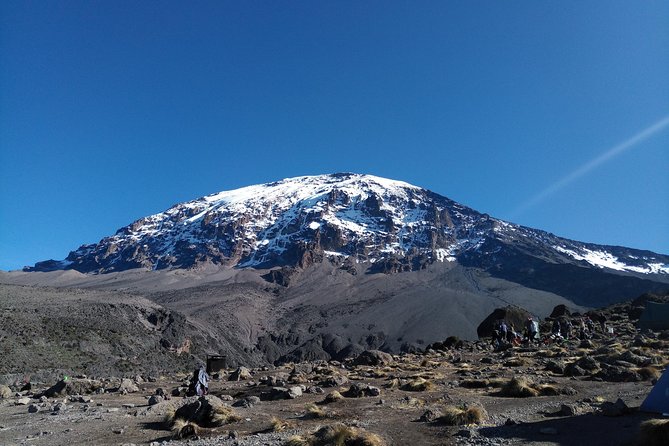
The first morning begins at 8:30 a.m. with a drive from Moshi toward Londorossi Gate. The transfer takes about four hours, followed by entry paperwork and another hour to the Lemosho trailhead. That road time is worth keeping in mind because the actual hiking begins well after you leave town.
After lunch at the trailhead, you walk through undisturbed rainforest toward the first camp. The day covers about 6 kilometers and takes three to four hours, climbing from 7,800 to 9,500 feet. It is a sensible introduction, with moderate distance but a clear gain in altitude.
The forest is the trip’s first change of mood. The air is cooler and wetter than in Moshi, and the trail winds beneath thick vegetation. Pack rain protection in your day bag rather than burying it in your luggage. The habitat is listed as rainforest, so wet and muddy conditions are possible.
Lunch and dinner are included, and the night is spent camping. Since the first day includes a long vehicle transfer, I would keep your expectations simple: eat, organize your sleeping gear, drink water, and rest.
Day 2: From Forest to Shira Ridge
Day 2 moves out of the forest and into moorland. Tall grasses, heather, volcanic rock, and lichen replace the dense vegetation, giving you broader views and a better sense of the mountain ahead.
The route climbs from 9,500 to 11,500 feet over 8 kilometers. Hiking time is about five to six hours. You cross several streams, pass over Shira Ridge, and then descend gently to Shira 1 Camp.
The view of Kibo across the Shira Plateau is one of the day’s rewards. Kibo is Kilimanjaro’s highest volcanic cone and the summit area you will approach over the next few days. Seeing it from across the plateau helps you understand the scale of the climb.
This is also when the altitude begins to feel more serious. The walking is not described as technical, but the increase from the forest to 11,500 feet can affect sleep, appetite, and energy. Follow the guides’ pace and resist the urge to race ahead simply because the trail looks easy.
Day 3: Shira Plateau and Lent Hills
Day 3 is a full acclimatization day on the Shira Plateau. You walk east toward Kibo, crossing open moorland meadows and continuing to Shira 2 Camp near a stream. The route then goes toward Moir Hut at the base of Lent Hills.
The planned distance is 14 kilometers, with five to seven hours of walking. That makes this a substantial day, even though it is described as gentle in parts. The setting is unusual: Shira is among the highest plateaus on Earth, and its open spaces give you long views toward Kibo.
The side walks on Lent Hills are useful because they let you gain height during the day without necessarily sleeping at that same height. That pattern is one of the most important features of the route. You work your body at elevation, then give it a chance to recover.
I would pay close attention to how you feel here. A headache, nausea, unusual tiredness, or poor coordination should be reported to the guide. The purpose of this day is not to prove toughness. It is to prepare safely for the higher camps ahead.
A few more trips of this kind worth comparing:
- Climbing Kilimanjaro through 7 days Machame Route
★ 5.0 · 151 reviews - 7 Days Kilimanjaro via Machame route affordable price
★ 5.0 · 110 reviews - Private Kilimanjaro Hike 7 Day Lemosho Route
★ 5.0 · 60 reviews - 7-Day Magical Tanzania Safari -Premium High End Package
★ 5.0 · 53 reviews
Day 4: Lava Tower, Arrow Glacier Junction, and Barranco
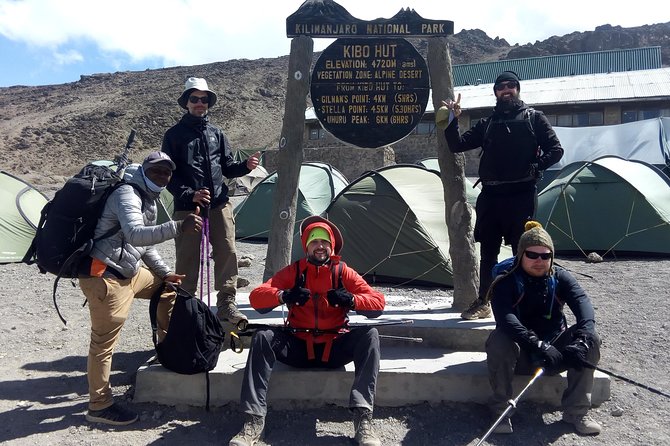
Day 4 is the clever day in the itinerary. From Shira, you continue east along a ridge, pass the junction toward Kibo, and turn southeast toward Lava Tower, also called the Shark’s Tooth. The route reaches about 16,000 feet near the Arrow Glacier junction before dropping to Barranco Camp at about 13,000 feet.
You cover only about 7 kilometers, with four to six hours of walking, but the altitude makes this day important. You climb high and sleep lower. That gives your body a useful exposure to thin air without making you spend the night at the day’s highest point.
The descent to Barranco is not an anticlimax. It is part of the plan. The mountain changes again into semi-desert, with more exposed volcanic ground and fewer signs of the forest below. Dinner and camping at Barranco give you time to rest before the more strenuous days.
This day can be hard for anyone who feels the altitude. You may find the pace slow, and that is exactly what you want. Keep drinking the treated and filtered water provided by the crew, and save energy for the next morning.
Day 5: Barranco Wall and Barafu Camp
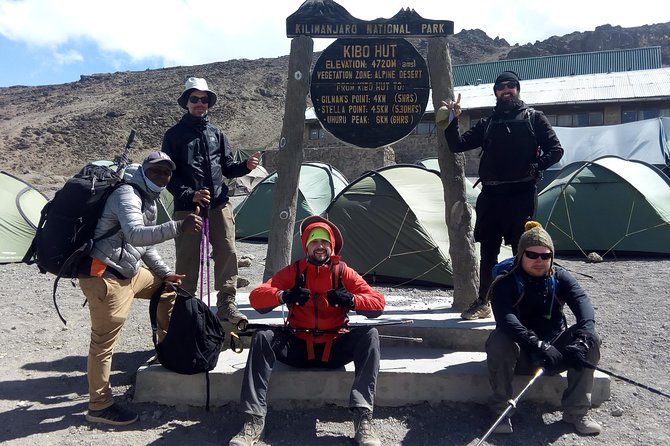
After breakfast, you leave Barranco and climb the steep ridge beside the Barranco Wall. The wall is one of the route’s memorable physical features. It is not presented as technical climbing, but you should expect hands-on movement and a steeper, more focused trail than earlier in the week.
The route continues to Karanga Valley, then joins the Mweka Trail before climbing to Barafu Hut. The distance is about 9 kilometers, but the day can last eight to 10 hours. You finish in alpine desert at around 15,000 feet.
By reaching Barafu, you have completed the South Circuit. The route has shown Kibo from several angles, and you can also see Mawenzi, Kilimanjaro’s second major peak. The setting is stark and exposed, with little shelter from wind or cold.
This is where the schedule becomes demanding. After a long day, you must eat, organize your clothing, prepare your summit bag, and try to sleep before an approximately 2 a.m. start. Keep your essentials close: warm layers, gloves, headlamp if you carry one, water, snacks, and rain protection.
Day 6: Stella Point, Uhuru Peak, and Mweka
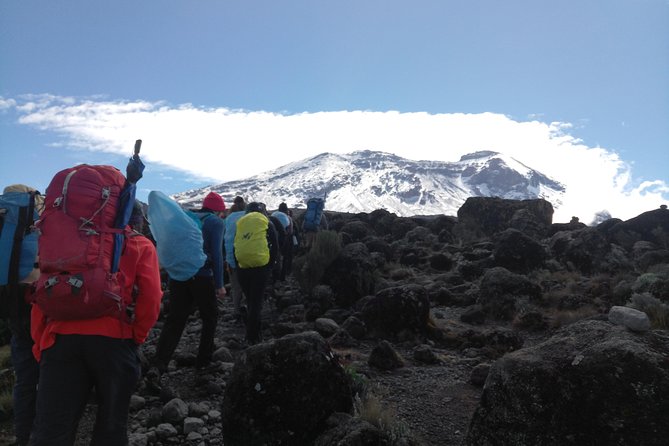
Summit day is the heart of the trip and the part you should assess most honestly before booking. You leave around 2 a.m. and climb toward Stella Point between the Rebmann and Ratzel glaciers, moving through heavy scree toward the crater rim.
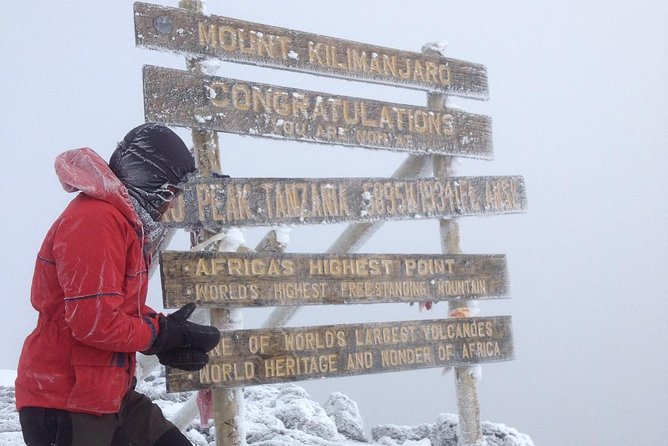
Stella Point sits at 18,600 feet. If the weather cooperates, sunrise here can be extraordinary. From Stella, the route continues for about another hour to Uhuru Peak, at 19,345 feet, the highest point in Africa. Faster hikers may reach the summit in time for sunrise, but the more important goal is a safe, steady ascent.
The final section may include snow, and the thin air can make every step feel slow. You do not need to hurry. Guides such as Goodluck Mwanga, Abraham, Oscar, Bakari, Nickson, Joseph, Bariki, FC, Matthew, and Tammy have been praised for encouragement, careful support, and attention to individual needs. That personal help matters most on this day.
After time at Uhuru Peak, you descend to Mweka Camp, stopping at Barafu for lunch. The elevation drops from about 15,300 feet to roughly 10,000 feet, but the day remains long because you combine the summit push with a major descent. Your knees and feet may be as tired as your lungs.
The crew makes a real difference here. The package includes mountain guides, porters, a cook, water, meals, and an emergency first-aid kit. Past praise also highlights plentiful food and the positive mood created by the support team. You should still bring personal snacks if you have specific preferences, since the supplied information does not list a detailed menu.
Day 7: Mweka Gate and the Return to Moshi
The final hiking day takes you from Mweka Camp through rainforest to Mweka Park Gate. The descent covers about 10 kilometers and takes three to four hours, dropping from around 10,000 feet to 5,400 feet.
The lower trail may be wet and muddy. Gaiters and trekking poles are specifically useful, and you can expect to switch back to shorts and a T-shirt at lower elevations while keeping rain gear and warmer clothing within reach.
At the park gate, you receive your summit certificates. From there, you continue for about another hour to Mweka Village, where a vehicle takes you back to your hotel in Moshi.
The schedule also allows for a following departure day. The vehicle can take you to the airport when needed, or you can continue to a safari, Zanzibar, or another destination. Two nights of accommodation in Moshi are included in the package, though the supplied schedule should be checked carefully because Day 7 also lists camping even though you return toward town.
What the $2,850 Price Really Covers
At $2,850 per person, this climb is a major purchase. Its value depends on the amount of support included, not just the number of hiking days.
The package includes private transport between Kilimanjaro International Airport and your Moshi accommodation, two nights of lodging in Moshi, national park entry fees, Kilimanjaro rescue fees, guides, porters, a cook, treated and filtered drinking water, an emergency first-aid kit, six lunches, seven breakfasts, and six dinners.
That is a substantial list. You are paying for permits, food, transport, camp support, and a full mountain operation. The price is easier to justify if you value local coordination and do not want to assemble these parts yourself.
Travel insurance, flights, and tips are not included. You should budget for all three separately. Tips are particularly important because the climb depends on the work of guides, porters, and the cook, but no recommended amount is provided here, so ask Kilisa Tours for current guidance before departure.
Safety, Fitness, and Group Size
The company puts safety and comfort at the center of its service, with local mountain experience and rescue coverage included. That is reassuring, but no operator can remove the risks of high altitude, cold, wet trails, fatigue, or poor weather.
The activity requires a strong physical fitness level. I would prepare with long walks, uphill training, stair sessions, and time carrying a daypack. Your preparation should also include practice with trekking poles if you plan to use them.
The maximum group size is 15 people. That can create a friendly atmosphere and may make the long days more enjoyable, especially since some past trips included hiking games and plenty of encouragement from the crew. The tradeoff is that a group of 15 naturally moves at different speeds, so ask how the guide team manages varied ability levels.
The experience requires good weather. If conditions force cancellation, you are offered another date or a full refund. You can cancel for a full refund if you do so at least 24 hours before the start time. Changes or cancellations later than that are not refunded.
The Human Side of the Climb
The most consistent praise goes to the staff. Past climbers have singled out guides including Goodluck, Abraham, Oscar, Bakari, Nickson, Joseph, Bariki, FC, Matthew, and Tammy. The comments point to patience, humor, encouragement, and careful attention from the first day through the summit.
That matters because Kilimanjaro is as much a team effort as a personal challenge. A reliable guide can help you keep a sensible pace, notice when you are struggling, and maintain morale during the long descent. A good cook and porter team also shape the daily experience more than many first-time climbers expect.
The company has also handled trips for solo women, families, groups of brothers, and climbers combining the mountain with safari. That suggests the package can work for different kinds of visitors, provided everyone understands the fitness requirement and the demands of summit day.
Who Should Book This Kilimanjaro Trek?
I would recommend it to a fit first-time Kilimanjaro climber who wants a scenic route with several acclimatization stages and a complete support team. It also suits families or small groups who want airport transfers, Moshi lodging, food, permits, and mountain logistics arranged together.
I would be more cautious if you dislike camping, struggle with long uphill days, or want a relaxed holiday with only occasional walking. The seven-day schedule is well planned, but it is not easy. Day 5 is long, and Day 6 is physically demanding even for strong hikers.
Before paying, ask Kilisa Tours to confirm the Moshi hotel details, tent arrangements, the exact Day 7 accommodation wording, current tipping guidance, and how the guide team handles climbers moving at different speeds. Those questions do not take away from the route. They help you know exactly what you are buying.
Should You Book It?
Yes, if you want a well-supported Lemosho climb and understand that the summit day will test your stamina. The route offers excellent variety, a useful high-and-low acclimatization pattern, and a strong list of included services for the price.
I would book this experience for the crew support, the Lemosho scenery, and the chance to approach Kibo gradually. I would not book it casually. Train first, secure proper insurance, plan for tips and flights, and confirm the practical details with the operator. With that preparation, this is a serious but rewarding way to reach Africa’s highest point.
FAQ
How long is the Kilimanjaro experience?
The climb lasts approximately seven days. The schedule also includes a departure day for continuing to a safari, flying to Zanzibar, or returning home.
What time does the trek begin?
The listed start time is 8:30 a.m. on the first day. Summit day begins much earlier, at approximately 2 a.m.
What is included in the $2,850 price?
The price includes airport transfers to and from your Moshi accommodation, two nights of Moshi lodging, park entry fees, Kilimanjaro rescue fees, guides, porters, a cook, treated and filtered drinking water, an emergency first-aid kit, six lunches, seven breakfasts, and six dinners.
Are flights and travel insurance included?
No. Flights and travel insurance are not included. Tips for guides, porters, and the cook are also separate.
How many people can join the trek?
The maximum group size is 15 people.
What happens if bad weather cancels the experience?
If poor weather causes cancellation, you will be offered a different date or a full refund. For your own cancellation, you must cancel at least 24 hours before the start time to receive a full refund.
Just added around Moshi
- Moshi: Lake Chala Tour: Hiking &/or Kayaking★ 4.5 · 3 reviews
- 3 Days Tanga Exclusive Beach Holiday★ 5.0 · 3 reviews
- Serengeti Wildebeest Migration.★ 5.0 · 3 reviews
- Chemka Hotpsrings E-Bike Day Trip★ 5.0 · 3 reviews
- Explore 1 day Ngorongoro Crater Budget Group Safari from Arusha★ 5.0 · 3 reviews
- Explore the 360° of Kilimanjaro★ 5.0 · 3 reviews
- Affordable Short Tanzania Safari (2 Days Camping Safari)★ 5.0 · 3 reviews
- Rongai Route 7 Days★ 5.0 · 3 reviews
Kilimanjaro Treks, compared.



8-Day Small-group Lemosho Kilimanjaro Summit Trekking
Read our review →


Climbing Kilimanjaro through 7 days Machame Route
Read our review →

Browse the lists this tour appears in