
Reviewed · KILIMANJARO TREKS
7 Days Lemosho Route Kilimanjaro Climbing | Solely Tours
Africa’s highest summit takes patience.
This 7-day Lemosho Route climb gives you a private guide, six nights on the mountain, park fees, camping equipment, meals, and hotel stays before and after the trek. I like the route’s gradual approach, which gives you several days to adjust to altitude, and I like that part of the fee supports the Godson Charity in Moshi. The main drawback is the summit schedule: a midnight start followed by roughly 14 hours of hiking makes the final day very demanding.
You should also budget separately for tips, flights, visas, and personal equipment. At $2,297.30 per person, this is not a bargain trek, but it includes many of the costly basics required for Kilimanjaro, including park entry, tents, a mattress, meals, transfers connected with the trek, and two hotel nights.
In This Review
- Key points before you book
- Why the Lemosho Route earns its seven days
- Day 1: Moshi to Lemosho trailhead and rainforest
- Day 2: Heather moorland and Shira 2 Camp
- Day 3: Shira 2 to Lava Tower, then Barranco
- Day 4: The Barranco Wall and Karanga Camp
- Day 5: Karanga to Barafu Camp
- Day 6: Midnight start, Stella Point, and Uhuru Peak
- Day 7: Mweka Gate and the return to Moshi
- What the price includes, and what it does not
- Food, camp support, and the human side of the climb
- Fitness, altitude, and who should choose this climb
- Cancellation and practical planning
- Should you book the Solely Tours Lemosho climb?
- FAQ
- How long is the Kilimanjaro climb?
- Which route does the climb follow?
- Is this a private tour?
- Is pickup available?
- Is camping equipment included?
- Are meals included?
- Is hotel accommodation included?
- Are tips included in the price?
- What happens if bad weather cancels the climb?
Key points before you book
- Shira Peak access: Lemosho is described as the only Kilimanjaro route that allows you to summit Shira Peak, adding a special goal before the main summit.
- Private group format: Your group participates privately with its own guide rather than joining a larger mixed party.
- Seven days on the mountain: The itinerary uses the western approach, then crosses the southern circuit before descending by Mweka.
- Long summit day: Day six begins around midnight and lasts about 14 hours, so fitness and altitude preparation matter.
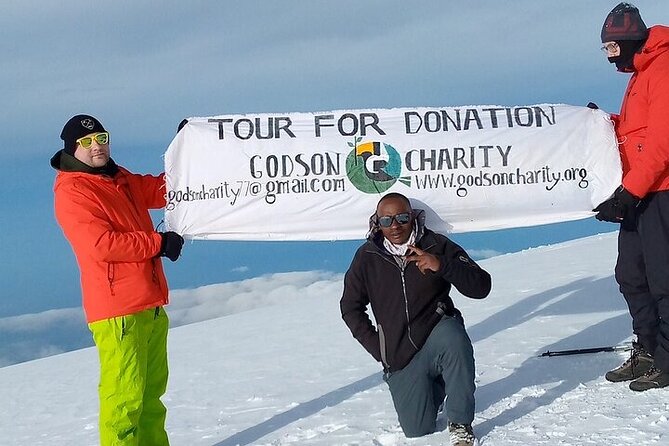
- Charity connection: A portion of the fee goes to Godson Charity, which supports children and community projects.
- Comforts included: Tents, a mattress, cooked meals, one hotel night before climbing, and one hotel night afterward are included.
Why the Lemosho Route earns its seven days
Lemosho is a good choice if you want more than a quick push toward Uhuru Peak. The route begins on the western side of Kilimanjaro, passes through rainforest and high moorland, reaches the Shira plateau, and then crosses the mountain’s southern slopes.
That route shape matters. You are not simply walking uphill for a week. You gain time at different elevations, with a climb to Lava Tower followed by a descent to Barranco. This high point followed by a lower camp is useful for acclimatization, although no route can remove the risk of altitude sickness.
The itinerary also gives you a day at Shira 2, time at Barranco, a shorter day to Karanga, and a short move to Barafu before the summit. I like that rhythm. It includes hard walking, but it avoids making every day a marathon.
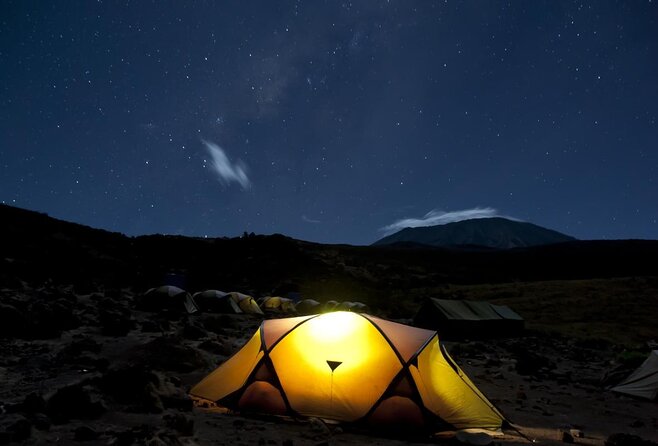
The setting changes quickly. You start in thick rainforest, move into heather and moorland, cross rocky high-altitude terrain, and finish among glaciers, scree, and snow if conditions allow. Lemosho feels like a journey across several mountain zones rather than one long trail.
More Kilimanjaro routes and climbs:
- Kilimanjaro climb by Lemosho Route (7-day)
★ 5.0 · 651 reviews - Kilimanjaro climb, Machame Route (7-day)
★ 5.0 · 262 reviews - Kilimanjaro Climbing Lemosho Route 8 Days.
★ 5.0 · 186 reviews
Day 1: Moshi to Lemosho trailhead and rainforest
The first day starts with a roughly three-hour drive from Moshi to Londorosi Gate. Park formalities take place there, followed by another hour by vehicle to the Lemosho trailhead.
That transfer is worth keeping in mind. Your first hiking day is not a gentle stroll from town. Much of the morning is spent reaching the trail, and delays at the gate can affect your start time.
After arrival, lunch is served before you begin walking. The first seven kilometers take about four hours and lead through thick rainforest to the first camp.
This is a manageable introduction, but you should not treat it as a warm-up you can ignore. You are already carrying a daypack, and the mountain schedule has begun. Keep your pace easy, drink regularly, and use the day to learn how your boots, layers, and personal equipment feel.
The rainforest is one of the best reasons to begin on Lemosho. It provides a strong contrast with the dry, rocky country higher up. You may also appreciate the sense of separation from Moshi once the trees close around the trail.
Day 2: Heather moorland and Shira 2 Camp
Day two is the first serious test. You leave camp after breakfast and climb into the heather moorland zone. The route passes streams before opening onto a plateau toward Shira 2 Camp.
The stated distance is 16.5 kilometers, with an estimated hiking time of nine to eleven hours. That is a long day, especially so early in the trip, and it deserves a slow pace.
The reward is Shira’s open high country. From camp, you can see the Western Breach and glaciers to the east. This is a day for taking in the scale of Kilimanjaro, but it is also a day for conserving energy. You still have the Barranco Wall, Karanga, Barafu, and the summit ahead.
Evening snacks and dinner are provided at camp. The quality of food matters more than many people expect on a climb. Several positive accounts of this service specifically praise hot meals, and one particularly useful detail is that hot water may be provided for washing your face and hands on arrival. That is a small comfort, but after a long, dusty day it can feel like luxury.
Day 3: Shira 2 to Lava Tower, then Barranco
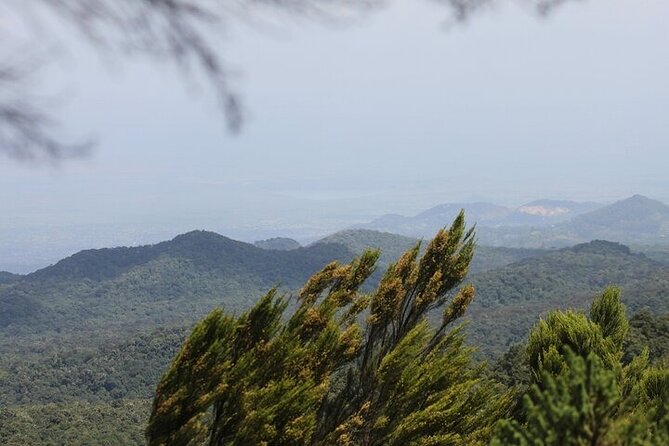
Day three crosses a rougher, more exposed zone. From Shira 2, you walk into a desert-like, rocky area and spend about five hours reaching Lava Tower.
The distance is about ten kilometers, with roughly seven hours of walking. Lunch is served at Lava Tower, which is listed at a high point on the route. After eating, you descend for about two hours to Barranco Camp.
This climb-high, sleep-lower pattern is one of the most useful features of the itinerary. You get time at Lava Tower without camping at that elevation, then lose height before night. The day can still feel difficult, since altitude affects people differently, but the route gives your body a better chance to adjust.
Barranco Camp also brings one of the trip’s memorable views: the Barranco Wall. It looks intimidating from below, though the next morning’s route is a hike rather than a technical rock climb according to the itinerary. You should still expect a steep, uneven section and follow your guide’s instructions closely.
A few more trips of this kind worth comparing:
- Climbing Kilimanjaro through 7 days Machame Route
★ 5.0 · 151 reviews - 7 Days Kilimanjaro via Machame route affordable price
★ 5.0 · 110 reviews - Private Kilimanjaro Hike 7 Day Lemosho Route
★ 5.0 · 60 reviews - 7-Day Magical Tanzania Safari -Premium High End Package
★ 5.0 · 53 reviews
Day 4: The Barranco Wall and Karanga Camp
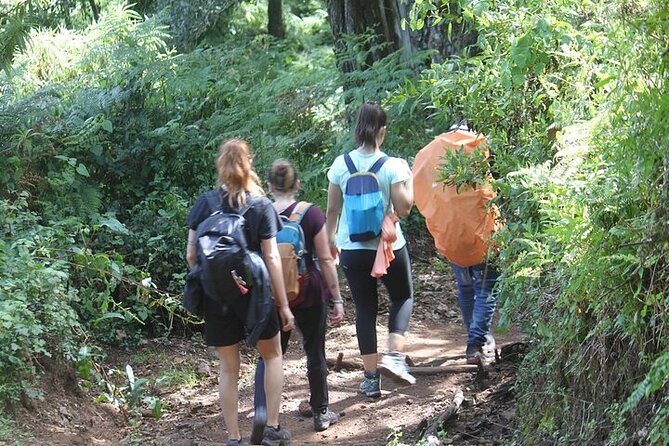
Day four is short by comparison. The listed distance is 5.5 kilometers and the expected walking time is about five hours.
The first task is getting over the Barranco Wall. This is the day when a private guide can be especially helpful. You can move at a controlled pace, use the guide’s route choices, and avoid rushing simply because a large group is waiting behind you.
After the wall, the trail follows a series of hills and valleys to Karanga Camp. The setting opens toward glacial valleys and ice fields that rise more than 3,000 feet above the camp. Sunset here is one of the itinerary’s visual highlights.
The short distance does not mean an effortless day. The wall and repeated rises and drops can tire your legs, and the thin air remains a factor. Still, the shorter schedule gives you time to rest, organize your gear, and prepare for the summit phase.
Day 5: Karanga to Barafu Camp
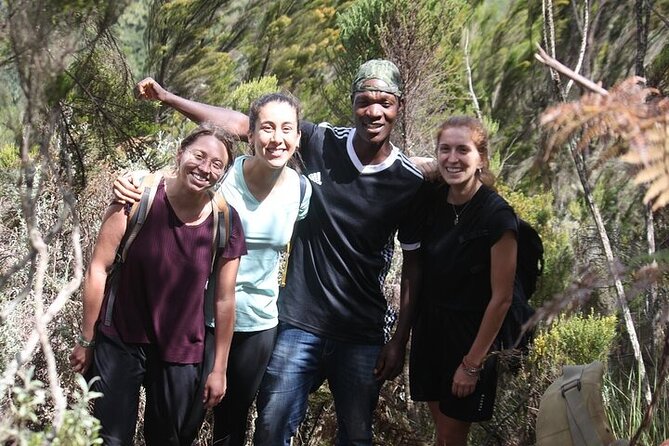
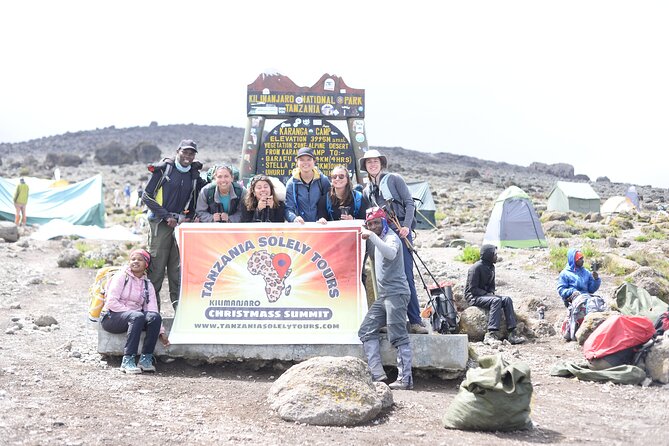
The fifth day covers only three kilometers and takes about three hours. You leave Karanga, reach the intersection with the Mweka Trail, and continue to Barafu Camp.
Barafu marks the end of the southern circuit. The route has taken you around the mountain, giving you views of the summit from different angles. At camp, the focus shifts from sightseeing to preparation.
You are expected to rest and eat dinner before the midnight summit start. This is where the included meals and tent support become important. You do not need to spend the afternoon searching for food or arranging campsite equipment, but you do need to use the time wisely.
Organize your warm layers, snacks, water, headlamp, and personal items before trying to sleep. The night at Barafu is short by design. If you cannot sleep much, do not panic. Resting quietly still helps, and the guide will set the departure pace.
Day 6: Midnight start, Stella Point, and Uhuru Peak
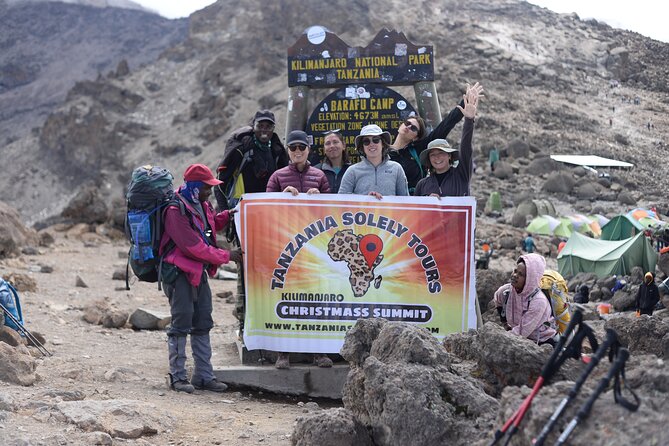
The summit day is the heart of the climb and the part you must take seriously. You wake around midnight, eat or pack snacks, and begin walking toward the summit.
The route heads between the Rebmann and Ratzel glaciers over heavy scree. The climb to Stella Point on the crater rim is slow and strenuous. The published timing is about 14 hours for the full day, so this is not simply a morning walk followed by lunch.
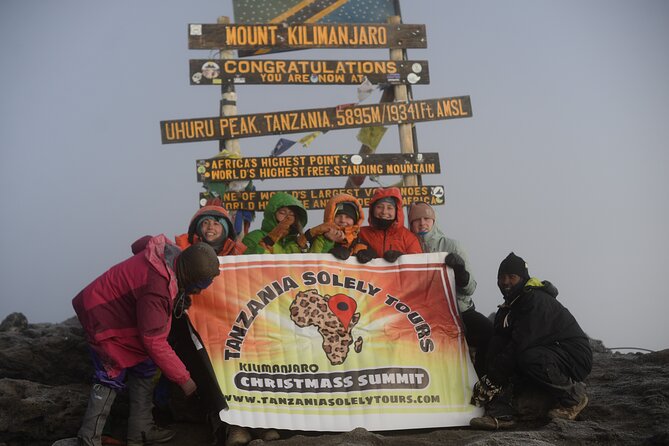
At Stella Point, you can pause and, weather permitting, watch the sunrise. From there, the route may include snow before you reach Uhuru Peak, the highest point in Africa.
The summit moment is deliberately brief. You can take photographs and enjoy the achievement, but lingering at altitude is discouraged. Afterward, you descend, though the supplied schedule does not give the precise camp arrangement or full descent details for this day. I would ask Solely Tours exactly where you sleep after reaching the summit and how the descent is divided.
This is also the day when the guides’ pacing and judgment matter most. Strong feedback about this service repeatedly points to guides who set a steady pace, did not rush the group, and helped climbers reach the top. You should still understand that a guide cannot guarantee success. Weather, altitude, exhaustion, and individual health all affect the outcome.
Day 7: Mweka Gate and the return to Moshi
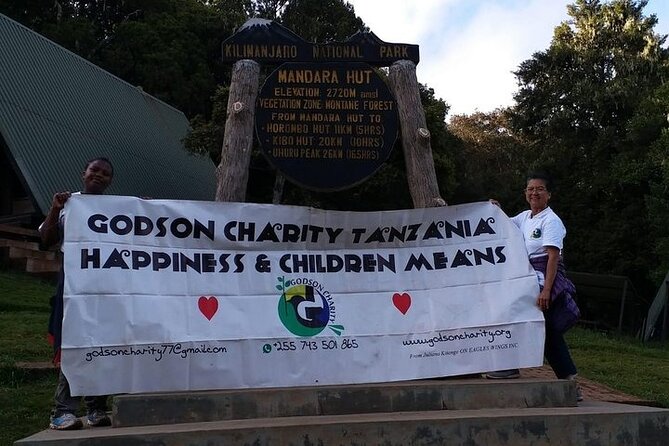
The final day begins after breakfast with a roughly three-hour trek to Mweka Gate. The stated distance is 12.1 kilometers, with about six hours allowed for the day.
At the gate, successful climbers receive a gold certificate for reaching the summit. You then continue to Mweka village, where a driver takes you back to your hotel for a well-earned rest.
The descent can be harder on your knees than expected. After the long summit day, even a downhill trail may feel demanding. Trekking poles, if part of your personal equipment, can be useful, but the tour does not list them as included.
The return hotel night is a practical part of the package. You can shower, sleep in a proper bed, and avoid having to arrange an immediate onward transfer after the mountain.
What the price includes, and what it does not
The $2,297.30 price includes a substantial set of costs:
- Park entry fees
- Tents and a mattress
- Breakfasts, lunches, and dinners listed in the package
- One hotel night before the climb
- One hotel night after the climb
- Pickup is offered
- A private guide and support team are part of the experience structure
That is meaningful value for a private Kilimanjaro trip. Park fees alone are a major part of any climb, and meals, camping equipment, porters, cooks, transport, and hotel nights can quickly add up when booked separately.
The package does not include tips for guides, cooks, and porters. It also excludes flights, visas, and personal equipment. Ask for a written breakdown of park fees and tipping expectations before you pay, since those details can otherwise surprise you.
Personal equipment is important. The supplied information does not provide a packing list, so you should request one directly. You will need to know what clothing, footwear, sleeping gear, water equipment, and summit accessories you must bring yourself.
Food, camp support, and the human side of the climb
The strongest praise for this service focuses on the people behind the trek. Guides are credited with setting a good pace and helping entire groups reach the summit. The porters are described as warm and supportive, and the cook receives repeated praise for good meals.
One especially appealing detail is the report of hot water for washing faces and hands at camp. Do not confuse that with a full shower, but it can make a major difference after a long day.
The operation also highlights female guides and porters, which may matter to you if you prefer a more inclusive team. The charity connection adds another layer: part of your payment supports Godson Charity, which works with children and community needs in the Moshi area.
You should still ask how the donation is calculated and where it goes. Charity claims deserve clear answers, and a reputable operator should be willing to explain the contribution.
Fitness, altitude, and who should choose this climb
This experience is listed for people with a moderate fitness level. That description should not be read as easy. You need to handle repeated walking days, a 16.5-kilometer day, uneven ground, a steep wall, and a 14-hour summit day.
You do not need technical climbing experience based on the information provided. You do need patience, stamina, and the ability to follow a slow pace for long periods.
I would choose this trip if you want:
- A private climb rather than a mixed group
- A western approach with changing scenery
- Time for acclimatization through Shira, Lava Tower, Barranco, and Karanga
- A charity connection
- Hotel nights before and after the mountain
- Meals and camping basics arranged in advance
I would think twice if you want a short, gentle mountain holiday or if you dislike early starts and basic camping. Seven days is a solid schedule, but the summit day remains physically severe.
Cancellation and practical planning
You can cancel at least 24 hours before the local start time for a full refund. Cancellations within 24 hours are not refunded, and late changes are not accepted.
The climb depends on suitable weather. If poor weather causes cancellation, you are offered another date or a full refund. Confirmation is provided when you book, and the meeting point is the Godson Charity Tanzania location on Rengua Road in Moshi. Listed opening hours are Monday through Thursday, 7:30 a.m. to 5 p.m., so confirm the exact meeting instructions before arrival.
Should you book the Solely Tours Lemosho climb?
I would recommend this climb to a fit first-time Kilimanjaro climber who wants a private guide, a slower western route, and a package that handles the major mountain costs. The charity support, hotel nights, included meals, and repeated praise for pacing and camp care add real value.
Before booking, get clear answers about your exact camp after summit day, the full equipment list, the tipping system, park-fee details, and the donation amount. If those points are satisfactory, this is a well-structured way to attempt Uhuru Peak without arranging every moving part yourself.
FAQ
How long is the Kilimanjaro climb?
The experience lasts approximately seven days and includes six nights on the mountain, with one hotel night before and one hotel night after the trek.
Which route does the climb follow?
The climb follows the Lemosho Route, including Shira 2, Lava Tower, Barranco, Karanga, Barafu, and the descent toward Mweka Gate.
Is this a private tour?
Yes. This is a private tour or activity, and only your group participates.
Is pickup available?
Yes. Pickup is offered as part of the experience information.
Is camping equipment included?
Yes. Tents and a mattress are included.
Are meals included?
Yes. Breakfast, lunch, and dinner are included in the package. The listed inclusions specify five breakfasts, seven lunches, and seven dinners.
Is hotel accommodation included?
Yes. One night before climbing and one night after climbing at Kilimanjaro White House Hotel are included.
Are tips included in the price?
No. Tips for the guide, cook, and porters are not included.
What happens if bad weather cancels the climb?
If poor weather causes cancellation, you are offered a different date or a full refund.
Just added around Moshi
- Moshi: Lake Chala Tour: Hiking &/or Kayaking★ 4.5 · 3 reviews
- 3 Days Tanga Exclusive Beach Holiday★ 5.0 · 3 reviews
- Serengeti Wildebeest Migration.★ 5.0 · 3 reviews
- Chemka Hotpsrings E-Bike Day Trip★ 5.0 · 3 reviews
- Explore 1 day Ngorongoro Crater Budget Group Safari from Arusha★ 5.0 · 3 reviews
- Explore the 360° of Kilimanjaro★ 5.0 · 3 reviews
- Affordable Short Tanzania Safari (2 Days Camping Safari)★ 5.0 · 3 reviews
- Rongai Route 7 Days★ 5.0 · 3 reviews
Kilimanjaro Treks, compared.



8-Day Small-group Lemosho Kilimanjaro Summit Trekking
Read our review →


Climbing Kilimanjaro through 7 days Machame Route
Read our review →

Browse the lists this tour appears in