
Reviewed · KILIMANJARO TREKS
7 Days Lemosho Route
Kilimanjaro rewards patience more than speed. This 7-day Lemosho Route trek approaches Africa’s highest mountain from the west, starting in the forest and crossing several distinct climate zones before the summit push. I like the quiet opening days, the steady climb that gives your body time to adjust, and the excellent scenery around the Shira Plateau, Barranco, and the upper mountain.
I also like that airport transfers to Moshi are included, along with meals during the climb and a maximum group size of 20. Those details make a $2,050 trip easier to manage. The main drawback is the schedule itself: summit day is a long, cold, exhausting effort, and seven days gives you less acclimatization time than an eight-day version.
Golden Summit Adventures receives a five-star overall rating from nine reviews. The company’s coordination earns repeated praise, especially from Elly, who helped with planning, packing information, vaccinations, and trip details. Guide Laraha is also singled out for being professional, thoughtful, funny, and proud of the work.
In This Review
- Key points to know before you book
- Why the Lemosho Route is worth considering
- Day 1: Three hours through forest to Mti Mkubwa
- Day 2: Shira Ridge and the open moorland
- Day 3: Lava Tower, then down to Barranco Camp
- Day 4: The Barranco Wall and a short recovery day
- Day 5: Toward Barafu Hut and the summit preparation
- Day 6: Stella Point, Uhuru Peak, and the long descent
- Day 7: Mweka Gate and the end of the trek
- Food, transfers, and what the price covers
- The support team and group size
- Fitness, altitude, and who should choose this trek
- Is the $2,050 price good value?
- Should you book the 7-day Lemosho Route?
- FAQ
- Where does the 7-day Lemosho Route trek begin?
- How long is the trek?
- What time does the experience start?
- How high does the route reach?
- What meals are included?
- Is airport transportation included?
- How large can the group be?
- Is travel insurance included?
Key points to know before you book
- The route begins quietly in western Kilimanjaro, with forest trails and lower traffic before joining the Machame Route.
- Shira Ridge reaches 3,600 meters, then the trail crosses open moorland and the Shira Plateau.
- Barranco Camp provides an important acclimatization stop, with a shorter hike after the demanding Lava Tower day.
- Summit night begins around 11:30 p.m., followed by a six-hour climb to Stella Point and a descent to Mweka Camp.
- The $2,050 price includes airport transfers, six breakfasts, six dinners, and seven lunches, but not hotel meals before or after the trek.
- You need moderate physical fitness, and the group can include up to 20 people.
Why the Lemosho Route is worth considering
The Lemosho Route is one of Kilimanjaro’s more scenic approaches. It begins on the western side of the mountain, where the trail passes through forest before reaching giant heather, moorland, high ridges, and volcanic rock.
For me, the route’s best feature is its gradual rise. You do not start by charging straight uphill toward the summit. The first two days are relatively gentle, which gives you a better chance to settle into the rhythm of walking, eating, resting, and drinking often.
The route is also quieter at the beginning. That matters on Kilimanjaro, where popular trails can feel crowded around camps and junctions. After the first two days, Lemosho joins the more heavily used Machame route, so the sense of solitude does not last throughout the trek.
Seven days is a sensible length, but it is not the most relaxed version of Lemosho. An eight-day schedule would normally give you more time at altitude. If you already have strong hiking experience and prepare properly, seven days can work well. If altitude has affected you before, the shorter schedule deserves careful thought.
More Kilimanjaro routes and climbs:
- Kilimanjaro climb by Lemosho Route (7-day)
★ 5.0 · 651 reviews - Kilimanjaro climb, Machame Route (7-day)
★ 5.0 · 262 reviews - Kilimanjaro Climbing Lemosho Route 8 Days.
★ 5.0 · 186 reviews
Day 1: Three hours through forest to Mti Mkubwa
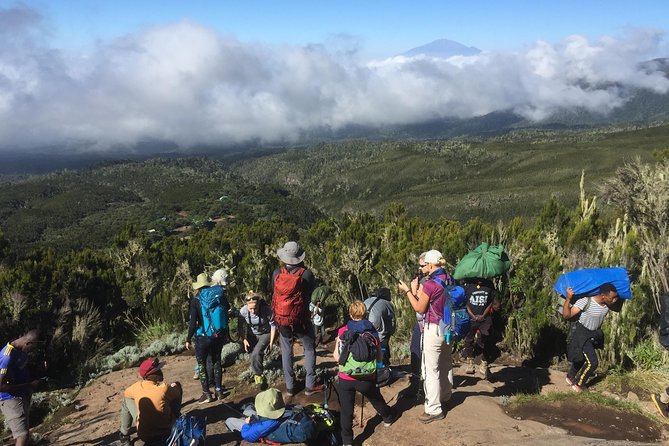
The first hiking day starts at the Glades, followed by about three hours of walking through beautiful forest trails to Mti Mkubwa, also called Big Tree Camp.
This is a gentle introduction to the mountain. The forest makes a welcome change from the streets and hotels around Moshi, and the shorter walking time lets you settle into the practical side of a multi-day trek. You will be carrying your personal day gear while porters handle the larger loads, according to the company’s operating setup described in the trip information.
Do not treat this as a throwaway day. It is the start of your altitude routine. Walk at a steady pace, drink regularly, and pay attention to how your body feels. A short first day is useful because you still have six more days ahead.
Day 2: Shira Ridge and the open moorland
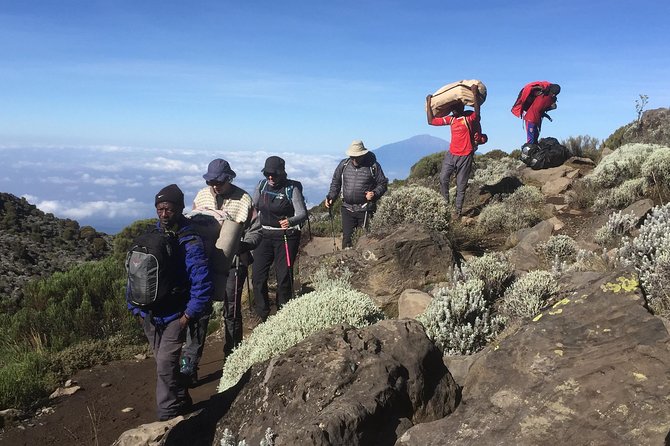
Day two takes about five hours. The trail gradually gets steeper, leaves the forest behind, and enters the giant heather moorland zone. You cross Shira Ridge at 3,600 meters, or 11,810 feet, before dropping gently toward Shira Camp 1 beside a stream on the Shira Plateau.
This is one of the most memorable changes on the route. The trees thin out, the air feels cooler, and the mountain begins to look much larger. The Shira Plateau gives you wide views and a sense that you are moving into high country rather than simply walking uphill.
The gain in altitude is the point of this day, but it is also the concern. You are sleeping much higher than on the previous night. Keep your pace slow and report any worrying symptoms to your guide. The listed schedule does not promise a medical service or extra acclimatization day, so careful self-awareness matters.
Day 3: Lava Tower, then down to Barranco Camp
Day three is about seven hours and includes one of the route’s most useful altitude strategies. After breakfast, you hike east on a steepening path above the highest vegetation toward Kilimanjaro’s upper mass.
You continue toward Lava Tower, where the trail reaches a much higher point before descending for about two hours below the lower cliffs of the Western Breach and Breach Wall. The day ends at Barranco Camp, at 3,950 meters, or 12,960 feet.
This high point followed by a lower night is valuable for acclimatization. It is a hard day, though, especially after the climb toward Lava Tower. The descent does not erase the effort. You should expect tired legs and a full evening of recovery.
Barranco Camp sits in a valley beneath the Breach and Great Barranco Walls. The surrounding rock formations give the camp a dramatic setting, particularly around sunset. That scenery comes at a price: you are now sleeping high, and the air can feel thin. Eat what you can, keep drinking, and resist the urge to spend the evening wandering far from camp.
A few more trips of this kind worth comparing:
- Climbing Kilimanjaro through 7 days Machame Route
★ 5.0 · 151 reviews - 7 Days Kilimanjaro via Machame route affordable price
★ 5.0 · 110 reviews - Private Kilimanjaro Hike 7 Day Lemosho Route
★ 5.0 · 60 reviews - 7-Day Magical Tanzania Safari -Premium High End Package
★ 5.0 · 53 reviews
Day 4: The Barranco Wall and a short recovery day
After breakfast, you climb a steep ridge toward the Great Barranco Wall. The wall looks intimidating from camp, but the route over it is described as easier than it first appears. The day takes about four hours.
This is a physically shorter day, and that is good news. You have just completed the seven-hour Lava Tower route, so the reduced walking time creates space for rest before the summit phase. From camp, you can look east toward the jagged peaks of Mawenzi.
A hot lunch is served in camp, followed by free time to rest or explore nearby. I would treat rest as the main event. You are not trying to collect extra miles here. You are preparing for the long days ahead.
The Barranco Wall may be the part of the trek that makes you pause, but the greater challenge is the cumulative effect of altitude and repeated walking. Keep your equipment organized and use the afternoon to check your warm clothing, headlamp, water, and personal items.
Day 5: Toward Barafu Hut and the summit preparation
Day five lasts about four hours. You hike east over ridges and valleys until you join the Mweka Route, which will later serve as your descent route. From there, you turn toward the mountain and climb for another hour through a sparse area to Barafu Hut.
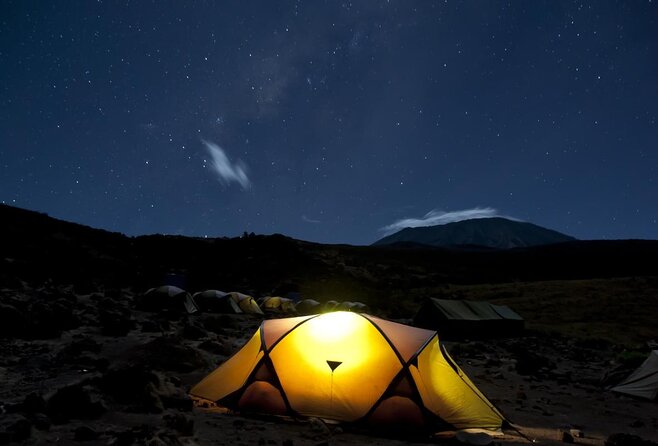
A hot lunch is served at Barafu. Your tent is pitched on a narrow, stony, wind-swept ridge, so this is not a soft, leisurely camp. Before dark, familiarize yourself with the ground around your tent. The uneven surface can be awkward, especially when you are tired or moving around at night.
This afternoon is all about preparation. Organize your summit clothing and equipment, drink plenty of fluids, eat an early dinner, and try to sleep for a few hours. You will rise around 11:30 p.m. for the summit climb.
The early bedtime can be difficult. You may be too excited, uncomfortable, or aware of the thin air to sleep well. That is normal, but it makes the advice about preparation even more important. Put everything you need within easy reach before lying down.
Day 6: Stella Point, Uhuru Peak, and the long descent
Day six is the major test. After tea and biscuits around 11:30 p.m., you start the climb in darkness. The six-hour ascent heads northwest through heavy scree between the Rebmann and Ratzel glaciers toward Stella Point on the crater rim.
This is the toughest section for many climbers. Scree shifts underfoot, the air is thin, and the night start means you are working with very little sleep. Progress can feel slow. Your guide’s pace and encouragement matter greatly here, which helps explain why the company’s guide team receives such strong praise.
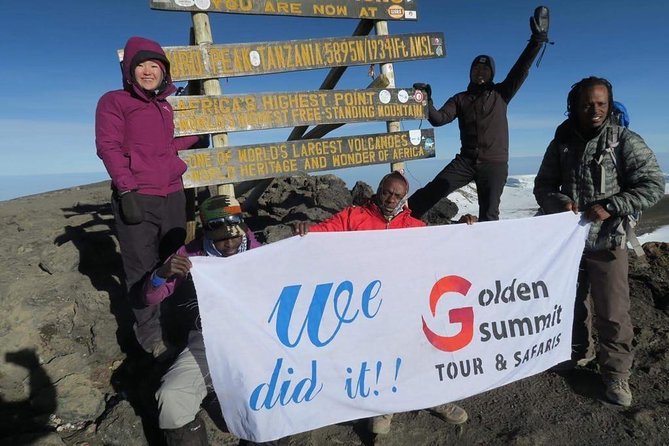
At Stella Point, 5,685 meters, or 18,650 feet, you stop briefly and may see the sunrise. Climbers who reach Stella Point receive green summit certificates. Those who continue to Uhuru Peak receive gold certificates.
The itinerary describes a three-hour descent from the summit area to Barafu Camp. You collect your gear, take a short rest, and then continue down a rock and scree path through moorland and into the forest, reaching Mweka Camp at 3,100 meters, or 10,170 feet.
This is an extremely long day, listed at about eight hours, and the real strain comes from doing the summit climb and the descent in one push. The lower elevation at Mweka Camp should feel welcome, but you will probably be ready for food and sleep rather than conversation.
Day 7: Mweka Gate and the end of the trek
After breakfast, you hike for about three hours toward the park gate. The route is scenic, but the condition of the trail can vary. If the road is too muddy for vehicles, the final three kilometers to Mweka Village may become a muddy one-hour walk.
At Mweka Gate, you can sign the register and receive your summit certificate. The gate is also the point where you and your gear should be safely reunited with your support team. The trip instructions specifically advise waiting until everyone and everything reaches the gate before handling porter tips, then remembering to tip the staff at the gate.
From Mweka Gate, you continue to Mweka Village, where food is served. The final transfer arrangements and included private airport transport make the end of the trip easier to manage, especially after the demanding descent.
Food, transfers, and what the price covers
At $2,050 per person, this is not a budget walk, but the cost covers several practical pieces that would otherwise add up. You receive private transport to and from Kilimanjaro International Airport and your accommodations in Moshi.
During the seven-day climb, the package includes:
- Six breakfasts
- Six dinners
- Seven lunches
The included meals are a real benefit on a trek where shopping and cooking for yourself are not realistic. Several direct accounts praise the food as hearty, nutritious, and delicious, with snacks and treats also receiving warm attention. You should still clarify the exact menu and arrangements if you have dietary needs, since the supplied details do not specify them.
Meals and drinks at your hotel before and after the climb are not included. Travel insurance, laundry, personal items, and toiletries are also your responsibility. Laundry is available at the hotel, but it comes at an additional cost.
The included airport pickup is especially useful if you are arriving tired or late. The meeting start time is 8:30 a.m., so confirm how that fits with your arrival and the pre-climb arrangements. The information provided does not give a separate hotel name or a detailed airport schedule.
The support team and group size
Golden Summit Adventures allows a maximum of 20 people on this experience. That is not a tiny private party, but it is still limited enough to avoid the feel of a huge commercial procession.
The strongest praise centers on coordination and the mountain crew. Elly is repeatedly described as quick to respond and helpful with planning, trip details, vaccinations, and packing information. That kind of preparation is valuable because Kilimanjaro success depends on small details: warm layers, suitable footwear, water, headwear, and knowing what to expect each day.
Guide Laraha is also named positively for professionalism, humor, thoughtfulness, and pride in the work. Other direct accounts praise the guides, porters, and cook as a whole team. One useful practical point is that the porters are described as fast and effective at carrying and packing equipment, while the food is repeatedly praised for keeping the group well fed.
You should still ask about porter welfare, tipping expectations, guide-to-climber ratios, and medical procedures before you commit. The tour information gives useful general guidance, but it does not spell out those policies in detail.
Fitness, altitude, and who should choose this trek
The official requirement is moderate physical fitness. That means you do not need to be an elite athlete, but you should be comfortable walking for several hours on uneven ground and handling a very long summit day.
The key issue is altitude, not just leg strength. The route rises from forest to 5,685 meters at Stella Point, with the summit attempt beginning before midnight. You need patience, steady pacing, and the willingness to stop or turn back if your body reacts badly.
I would recommend this trip to someone who wants strong scenery, prefers a quieter opening route, and is comfortable with basic mountain camping. It suits people who appreciate a well-organized support team and want airport transfers and meals included.
I would be more cautious about recommending seven days to anyone new to high-altitude trekking, anyone with a history of altitude problems, or anyone who strongly prefers a slower pace. The eight-day Lemosho option may be worth comparing because the extra day can make the schedule less compressed.
The activity is not described as accessible for limited mobility, and the terrain includes forest paths, scree, steep ridges, a rocky wall, and muddy sections. You should consider those conditions carefully before booking.
Is the $2,050 price good value?
The price is reasonable if you value organization and a package that handles the major logistics. Airport transfers, accommodation-related transport, food during the climb, guides, porters, and the mountain itinerary are bundled together.
The cost looks less attractive if you expect a fully inclusive holiday. Hotel meals before and after the trek, drinks, insurance, laundry, and personal supplies are extra. You should also budget for porter and guide tips, even though the exact amount is not provided here.
The best value comes from the combination of route quality and support. Lemosho offers a scenic approach and a gentler opening, while the company’s planning assistance can reduce the stress of preparing for Kilimanjaro. The weak point is that the seven-day format gives you little spare time if you need an additional rest day.
The experience is non-refundable and cannot be changed for any reason after payment. That makes travel insurance especially important, since insurance itself is not included.
Should you book the 7-day Lemosho Route?
Book it if you want one of Kilimanjaro’s most scenic routes, appreciate a gradual opening, and can handle a demanding summit night. The included airport transfers and meals improve the value, while the positive accounts about Elly, Laraha, the porters, guides, and cook suggest a strong focus on personal support.
Think twice if you want a relaxed altitude schedule or have limited hiking experience. Before paying, confirm the group setup, tipping guidance, dietary arrangements, hotel details, and what happens if you need to stop before the summit.
For a fit and well-prepared climber, this is an appealing Kilimanjaro package with a quiet start, striking scenery, and a clear route to the summit. Just remember that the mountain sets the terms. Seven days can be enough, but it leaves little room for error.
FAQ
Where does the 7-day Lemosho Route trek begin?
The experience is based in Moshi, Tanzania, and the hike begins at the Glades on Mount Kilimanjaro.
How long is the trek?
The experience lasts approximately seven days.
What time does the experience start?
The listed start time is 8:30 a.m.
How high does the route reach?
The route reaches Stella Point at 5,685 meters, or 18,650 feet. Uhuru Peak is also available to climbers who continue beyond Stella Point.
What meals are included?
The package includes six breakfasts, six dinners, and seven lunches during the trek.
Is airport transportation included?
Yes. Private transport is provided between Kilimanjaro International Airport and your accommodations in Moshi.
How large can the group be?
The maximum group size is 20 people.
Is travel insurance included?
No. Travel insurance, hotel meals and drinks before and after the climb, laundry, personal items, and toiletries are not included.
Just added around Moshi
- Moshi: Lake Chala Tour: Hiking &/or Kayaking★ 4.5 · 3 reviews
- 3 Days Tanga Exclusive Beach Holiday★ 5.0 · 3 reviews
- Serengeti Wildebeest Migration.★ 5.0 · 3 reviews
- Chemka Hotpsrings E-Bike Day Trip★ 5.0 · 3 reviews
- Explore 1 day Ngorongoro Crater Budget Group Safari from Arusha★ 5.0 · 3 reviews
- Explore the 360° of Kilimanjaro★ 5.0 · 3 reviews
- Affordable Short Tanzania Safari (2 Days Camping Safari)★ 5.0 · 3 reviews
- Rongai Route 7 Days★ 5.0 · 3 reviews
Kilimanjaro Treks, compared.



8-Day Small-group Lemosho Kilimanjaro Summit Trekking
Read our review →


Climbing Kilimanjaro through 7 days Machame Route
Read our review →

Browse the lists this tour appears in