
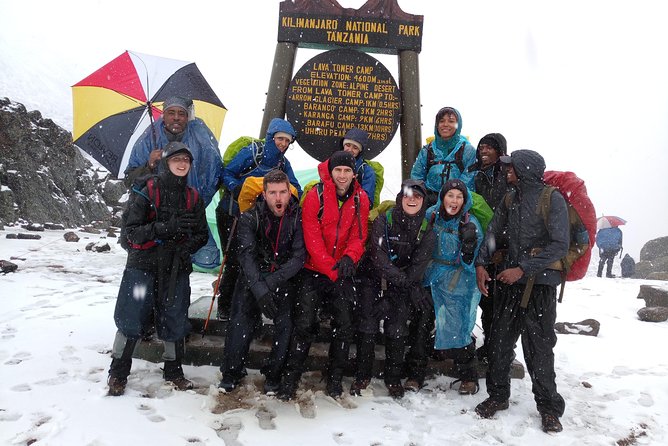
Reviewed · KILIMANJARO TREKS
7 Days Machame Route Climbing Mt. Kilimanjaro
Africa’s highest summit demands patience. Kilisa Tours & Safaris’ seven-day Machame Route climb gives you a scenic approach, a sensible acclimatization schedule, and a strong support team for the long push to Uhuru Peak. I especially like the seven-day pacing, which gives your body more time to adjust than shorter Kilimanjaro itineraries. I also like the care built into the package, including mountain guides, porters, hot meals, treated water, oxygen, and first-aid equipment.
The main drawback is simple: this is a hard climb, not a walking holiday. You need strong physical fitness, cold-weather gear, and the willingness to hike for hours each day. The price is also substantial at $2,750 per person, though it covers many major park and expedition costs.
The route moves through five distinct habitats, from wet rainforest to an almost bare alpine desert and finally an Arctic summit zone. That changing scenery is part of the appeal. So is the human side of the trip. Kilisa’s guides and porters receive repeated praise for patience, encouragement, and steady attention to safety. Guides named in past trips include Bakari, Livingston, Abraham, Alfonse, and Bryson.
In This Review
- Key points to know before choosing this climb
- Why the seven-day Machame Route works
- Day 1: Machame Gate to Machame Camp
- Day 2: Machame Camp to Shira Camp
- Day 3: Shira Camp, Lava Tower, and Barranco Camp
- Day 4: Barranco Camp to Karanga Camp
- Day 5: Karanga Camp to Barafu Camp
- Day 6: Barafu Camp to Uhuru Peak and Mweka Camp
- Day 7: Mweka Camp to Moshi
- What the $2,750 price really covers
- Food, staff, and group size
- Who should book this Kilimanjaro climb?
- Final verdict: Is Kilisa’s Machame Route worth it?
- FAQ
- How long is the Machame Route climb?
- What is the highest point reached?
- Are meals included during the trek?
- Is airport transportation included?
- What is not included in the price?
- Can I cancel for a full refund?
Key points to know before choosing this climb
- Seven days improves acclimatization: The route rises high to Lava Tower, then drops to Barranco Camp before the summit push.
- The summit day is demanding: You begin around midnight to 2 am, reach 19,345 feet, then descend all the way to Mweka Camp.
- The Machame Route is varied: Expect rainforest, moorland, semi-desert, alpine desert, and Arctic conditions.
- The package covers major essentials: Park fees, camping, mountain staff, meals, treated water, oxygen, and rescue fees are included.
- The group can reach 15 people: That is large enough for a social climb, but smaller groups may prefer to confirm the exact arrangement before booking.
- Porter and guide tips are extra: Budget for gratuities, travel insurance, flights, personal items, and optional toilet rental.
Why the seven-day Machame Route works
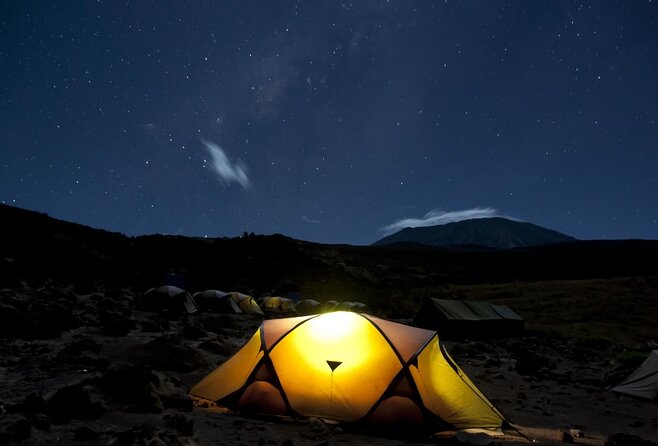
Machame is often chosen for its scenery, but the schedule matters just as much. The first two days take you from the forest to the Shira Plateau. Day three then climbs to Lava Tower at about 13,000 feet before dropping to Barranco Camp. That climb high and sleep lower pattern is useful preparation for the summit.
The route does not rush you from the gate to the top. Days four and five are shorter, giving you time to rest and adjust before summit night. You still gain altitude, but the daily distances are modest compared with the summit day.
I consider this one of the strongest features of the itinerary. A shorter Kilimanjaro route may cost less or save time, but altitude is not a problem you can solve by walking faster. The seven-day plan gives you more room to settle into the mountain’s slow rhythm.
The pace is deliberately pole pole, meaning slowly, slowly. That may feel frustrating on easy sections, but it is exactly the approach you want as the air gets thinner.
More Kilimanjaro routes and climbs:
- Kilimanjaro climb by Lemosho Route (7-day)
★ 5.0 · 651 reviews - Kilimanjaro climb, Machame Route (7-day)
★ 5.0 · 262 reviews - Kilimanjaro Climbing Lemosho Route 8 Days.
★ 5.0 · 186 reviews
Day 1: Machame Gate to Machame Camp
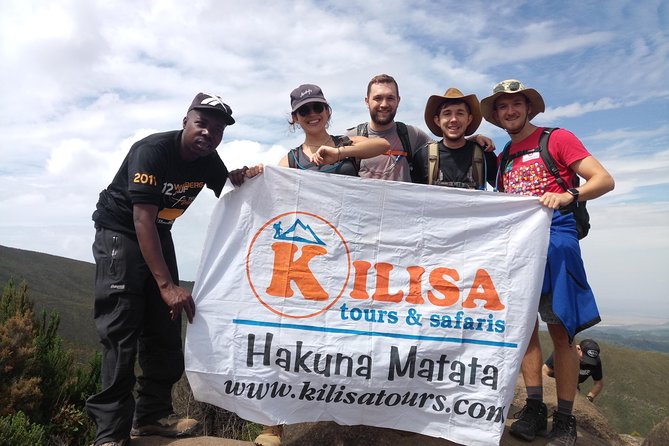
Your morning starts with the drive from Moshi to Machame Gate, which takes about 50 minutes. The road passes through Machame village on the lower slopes of Kilimanjaro before you enter the national park.
The first hike covers 11 kilometers, rises from 5,400 to 9,400 feet, and takes roughly five to seven hours. The habitat is rainforest, with a winding trail climbing along a ridge.
This is a full opening day, especially if you are carrying a daypack and still getting used to the pace. Lower sections can be muddy and slippery. Bring gaiters and trekking poles from the start rather than treating them as optional extras.
The rainforest is a good introduction to the climb because it feels very different from the dry summit zone ahead. The trail is shaded, but damp conditions can make the footing awkward. Your reward at the end is Machame Camp and a hot dinner, both included in the package.
Day 2: Machame Camp to Shira Camp
Day two is shorter at five kilometers, but it continues uphill. You climb from 9,400 to 12,500 feet over four to six hours, leaving the forest for moorland.
The path crosses a small valley and follows a steep, rocky ridge covered in heather. It then turns west toward a river gorge and Shira Camp. This is a day when steady pacing matters more than speed.
You may find the change in vegetation striking. The thick forest gives way to open ground and a more exposed feeling. At 12,500 feet, you may also notice the altitude, even though the distance is modest.
The schedule includes breakfast, lunch, and dinner. That matters here because eating well can become difficult as the climb gets harder. A cook travels with the group, and past visitors have praised the quality and generosity of the camp meals.
Day 3: Shira Camp, Lava Tower, and Barranco Camp
This is the route’s key acclimatization day. You cover 10 kilometers in six to eight hours, climbing from 12,500 feet to about 13,000 feet at Barranco Camp, but first reaching Lava Tower at approximately 13,000 feet.
The trail crosses the Shira Plateau and heads east along a ridge. Near Lava Tower, known as the Shark’s Tooth, the route reaches a junction toward the peak of Kibo. A second junction leads toward Arrow Glacier at about 16,000 feet, although the stated itinerary continues down to Barranco Camp rather than taking that higher route.
The important point is the descent. You climb high during the day and sleep lower that night. This gives your body useful altitude exposure without keeping you at the day’s highest point.
The semi-desert habitat feels stark and spare. There is less vegetation, less shelter, and more open rock. This is also one of the longer days, so you need to conserve energy. Do not mistake the descent into Barranco for an easy finish. Six to eight hours at altitude can leave you tired before dinner.
A few more trips of this kind worth comparing:
- Climbing Kilimanjaro through 7 days Machame Route
★ 5.0 · 151 reviews - 7 Days Kilimanjaro via Machame route affordable price
★ 5.0 · 110 reviews - Private Kilimanjaro Hike 7 Day Lemosho Route
★ 5.0 · 60 reviews - 7-Day Magical Tanzania Safari -Premium High End Package
★ 5.0 · 53 reviews
Day 4: Barranco Camp to Karanga Camp
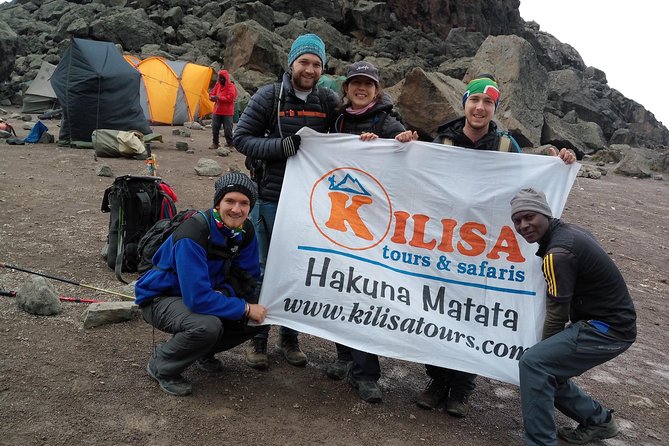
Day four covers just five kilometers and takes about four to five hours. You leave Barranco Camp at 13,000 feet and reach Karanga Camp at 13,100 feet.
The route begins with the Barranco Wall, a steep ridge section that requires careful movement. The short distance does not mean the day is effortless. The terrain and altitude make this a physical morning, but the reduced mileage gives you time to rest afterward.
This is a useful design choice. You are not trying to pile up distance every day. Instead, the itinerary allows your legs to recover while your body continues adjusting to high altitude.
Karanga Camp sits in the alpine desert zone. The surroundings are more barren than the lower route, and the air may feel noticeably colder. Keep warm layers accessible rather than buried at the bottom of your bag.
Day 5: Karanga Camp to Barafu Camp
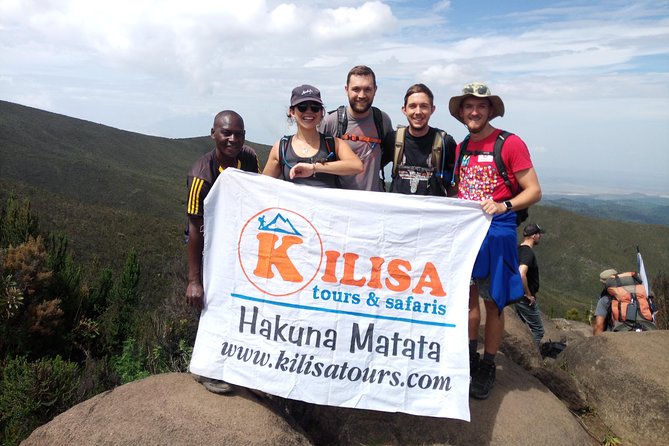
The final pre-summit hike is only four kilometers, but it climbs from 13,100 to 15,300 feet. Allow four to five hours.
You first reach the junction connecting with the Mweka Trail, then continue to Barafu Camp. At this point, you have completed the South Circuit, which gives views of the summit from several angles. Mawenzi and Kibo are visible from camp.
Barafu is the staging point for the hardest part of the trip. You eat dinner, organize your clothing and headlamp, and try to sleep before the midnight start. In practice, the rest period can feel short because of the early wake-up, so use the afternoon wisely.
This is the night to check small details. Put spare batteries, gloves, water, snacks, and warm layers where you can reach them. Ask your guide about the exact departure time, since the stated start window is between midnight and 2 am.
Day 6: Barafu Camp to Uhuru Peak and Mweka Camp
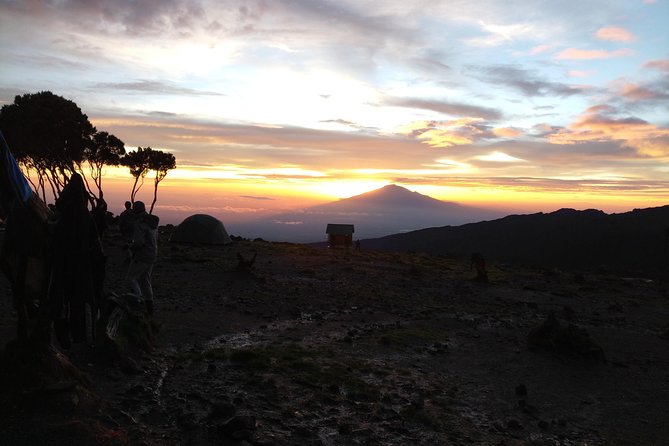
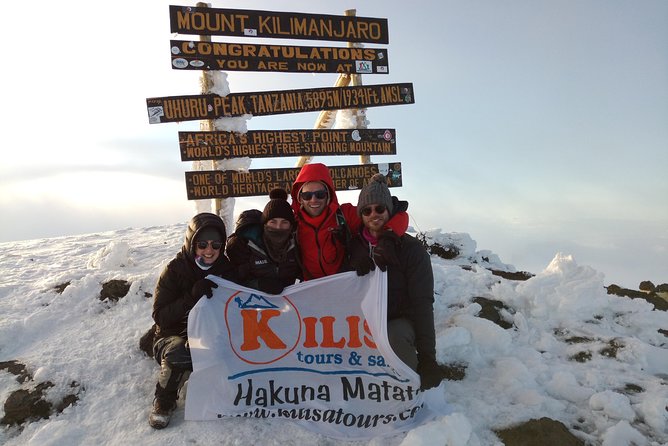
Summit day is the great test. You ascend from 15,300 feet to Uhuru Peak at 19,345 feet, then descend to Mweka Camp at about 10,000 feet.
The ascent covers five kilometers and takes roughly seven to eight hours. The descent covers another 12 kilometers and takes about four to six hours. In other words, the summit is only half of the day. You must still walk downhill for many hours after reaching the top.
The route heads between the Rebmann and Ratzel glaciers before climbing heavy scree toward Stella Point on the crater rim. This section is described as the most mentally and physically difficult part of the trek. The loose ground can make every step feel slow, especially in darkness and cold.
At Stella Point, around 18,600 feet, you have a short rest. If weather allows, sunrise provides one of the trip’s great moments. From there, the final hour to Uhuru Peak may include snow.
The guide team matters most on this day. Past accounts repeatedly praise patient pacing, encouragement, and safety checks. Bakari and Livingston are among the guides named in connection with successful Machame climbs, while Abraham, Alfonse, and Bryson have also received warm praise.
Kilisa supplies portable oxygen tanks, a pulse oximeter, and an emergency first-aid kit. Those are reassuring safeguards, but they do not make altitude sickness harmless. You still need to report symptoms promptly and follow the guide’s instructions.
After the summit, the descent to Mweka Camp is long. Your knees may feel the strain more than your lungs. Keep eating and drinking, even if you are focused only on reaching camp.
Day 7: Mweka Camp to Moshi
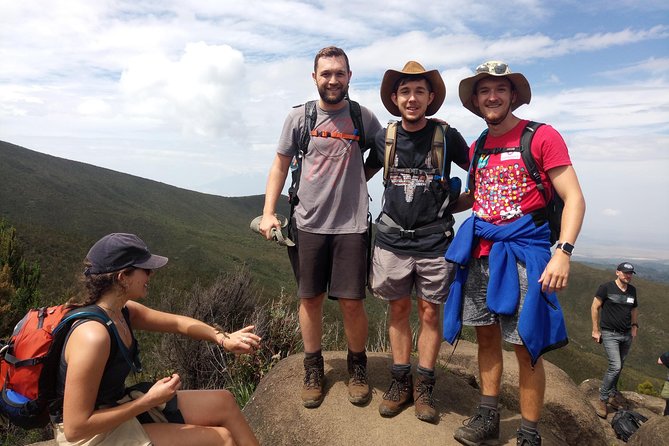
The final hike descends 10 kilometers from roughly 10,000 feet to the Mweka Park Gate. It takes about three to four hours and returns you to rainforest.
Lower sections can be wet and muddy, so keep your gaiters and trekking poles ready. Shorts and a T-shirt may be comfortable in the warmer forest, but rain gear and warmer clothing should remain within reach.
At the park gate, you receive your summit certificate. From there, the itinerary continues for about another hour to Mweka Village, where a vehicle takes you back to your Moshi hotel.
This is also when the physical effort catches up with you. The final walk is shorter than summit day, but tired legs and muddy ground can slow you down. The included Moshi accommodation gives you a proper place to recover after the mountain.
What the $2,750 price really covers
At $2,750 per person, this is not a bargain basement climb. It is also more than a basic walking trip. The package includes two nights of accommodation in Moshi, private transport to and from Kilimanjaro International Airport, park entry fees, camping fees, and Kilimanjaro rescue fees.
It also includes 18 percent VAT on tour fees and services. On the mountain, you receive a guide team, cook, porters, three hot meals each day, and enough treated and filtered drinking water throughout the trek.
The safety equipment includes portable oxygen tanks, an oxygen meter, and an emergency first-aid kit. These inclusions help explain the price, since park access, staff, food, transport, and expedition support add up quickly.
You still need to budget for flights, travel insurance, tips for guides, porters, and the cook, personal items, and toiletries. A portable flush toilet is available to rent for $100 for the full trip, shared within a group.
The best price guarantee applies only to the same or nearly identical Kilisa tours under matching conditions. Compare the full package, not just the headline price. A cheaper quote may exclude airport transfers, rescue fees, VAT, meals, or staff costs.
Food, staff, and group size
Three hot meals are provided daily on the mountain. The package lists seven breakfasts, six lunches, and six dinners, which matches the mountain schedule plus the final morning breakfast. The cook is part of the support team, and past feedback gives the food unusually strong praise.
You are not carrying all your own camping equipment. Porters support the expedition, while guides manage the route and daily pace. The strongest praise for Kilisa centers on the staff’s kindness, organization, encouragement, and attention to safety.
The maximum group size is 15 people. That can be a good middle ground. You may have company during long hours on the trail, while still receiving more personal attention than on a very large departure. If you want a private climb, confirm that arrangement before paying, since the package information gives a maximum group size but does not promise that every booking is private.
Who should book this Kilimanjaro climb?
This trip suits you if you want a full week on the mountain and prefer a route with several habitat changes. It is particularly suitable if acclimatization is a priority and you can handle long hiking days, steep sections, cold temperatures, and a midnight summit start.
It may also suit solo climbers who want a supportive crew. One solo account praised the operator’s willingness to listen and the guide’s ability to provide both practical help and company on the trail.
You should think twice if you dislike camping, struggle with long descents, or want a relaxed holiday with plenty of spare time. A seven-day climb is carefully paced, but it remains physically serious.
Book only after arranging travel insurance and checking your personal gear. Confirm what the airport transfer covers, ask about the current guide-to-climber setup, and clarify the tipping recommendation. These questions do not diminish the adventure. They help prevent surprises.
Final verdict: Is Kilisa’s Machame Route worth it?
I would choose this trip for its well-paced seven-day schedule, full meal service, and broad range of included mountain costs. The route gives you a real acclimatization day at Lava Tower, shorter stages before the summit, and the scenic variety that makes Machame so popular.
The main caution is the summit day. It is extremely long, begins in the middle of the night, and includes a major descent after you reach the top. The price also requires a careful comparison with other operators.
Still, the package offers solid value for a supported Kilimanjaro climb. If you are fit, prepared for basic camping, and want a local company with repeatedly praised guides and porters, Kilisa Tours & Safaris is a sensible choice. If the cost is beyond your budget or you cannot commit to the training and gear, admire Kilimanjaro from lower ground instead. The mountain will not be offended.
FAQ
How long is the Machame Route climb?
The climb lasts approximately seven days, including the return to Moshi on the final day.
What is the highest point reached?
The itinerary reaches Uhuru Peak at 19,345 feet.
Are meals included during the trek?
Yes. Breakfast, lunch, and dinner are provided on the mountain, with three hot meals each day.
Is airport transportation included?
Yes. Private transport to and from Kilimanjaro International Airport is included, along with two nights of accommodation in Moshi.
What is not included in the price?
Flights, travel insurance, tips for guides, porters, and the cook, personal items, toiletries, and the optional portable flush toilet are not included.
Can I cancel for a full refund?
You can receive a full refund if you cancel at least 24 hours before the experience start time. Cancellations or changes made within 24 hours are not accepted for a refund.
Just added around Moshi
- Moshi: Lake Chala Tour: Hiking &/or Kayaking★ 4.5 · 3 reviews
- 3 Days Tanga Exclusive Beach Holiday★ 5.0 · 3 reviews
- Serengeti Wildebeest Migration.★ 5.0 · 3 reviews
- Chemka Hotpsrings E-Bike Day Trip★ 5.0 · 3 reviews
- Explore 1 day Ngorongoro Crater Budget Group Safari from Arusha★ 5.0 · 3 reviews
- Explore the 360° of Kilimanjaro★ 5.0 · 3 reviews
- Affordable Short Tanzania Safari (2 Days Camping Safari)★ 5.0 · 3 reviews
- Rongai Route 7 Days★ 5.0 · 3 reviews
Kilimanjaro Treks, compared.



8-Day Small-group Lemosho Kilimanjaro Summit Trekking
Read our review →


Climbing Kilimanjaro through 7 days Machame Route
Read our review →

Browse the lists this tour appears in