
Reviewed · KILIMANJARO TREKS
7 Days Machame route – Kilimanjaro
The mountain changes every day. Habari Adventure’s seven-day Machame Route gives you rainforest, moorland, high desert, glaciers, and a sunrise summit in one demanding week. I like the careful altitude plan, especially the high climb to Lava Tower followed by a lower night at Barranco. I also like the local guiding team, with names such as Stan, Leon, Oscar, Mudy, and Michael repeatedly praised for safety, patience, and good humor. The main drawback is simple: this is a serious physical challenge, and summit day lasts about 12 hours.
You pay $2,850 per person, a substantial amount, but that price covers six breakfasts, six dinners, and seven lunches, along with the park trekking program and support arranged by the operator. I also appreciate the small maximum group of 10 and the offered pickup. Still, you should confirm every practical inclusion before paying, especially transport details, camping equipment, porter arrangements, and any park or rescue fees not itemized in the supplied information.
In This Review
- Key points at a glance
- Why Machame works well in seven days
- Day 1: Moshi to Machame Gate and the rainforest
- Day 2: Moorland and the Shira Plateau
- Day 3: Lava Tower, alpine desert, and Barranco Camp
- Day 4: The Barranco Wall and Karanga Valley
- Day 5: Barafu Camp and preparation for summit night
- Day 6: Stella Point, Uhuru Peak, and Millennium Camp
- Day 7: Mweka Gate and the return to Moshi
- Guides, safety, and the human side of the climb
- Food, group size, and what the $2,850 price means
- Who should book this Machame climb?
- Should you book Habari Adventure?
- FAQ
- How long is the Machame Route experience?
- What is the price per person?
- What is the maximum group size?
- Is hotel pickup available?
- What meals are included?
- How physically fit should I be?
- What time does the summit climb begin?
- How high is Uhuru Peak?
- What happens if poor weather cancels the climb?
Key points at a glance
- A strong seven-day acclimatization plan: The route climbs to 4,600 meters at Lava Tower, then drops to Barranco Camp before the summit push.
- A dramatic range of scenery: You move from Chagga coffee and banana farms to rainforest, moorland, alpine desert, glaciers, and rocky summit slopes.
- The Barranco Wall is less frightening than it looks: Day four involves a steep climb, but the itinerary describes it as manageable with a guide’s help.
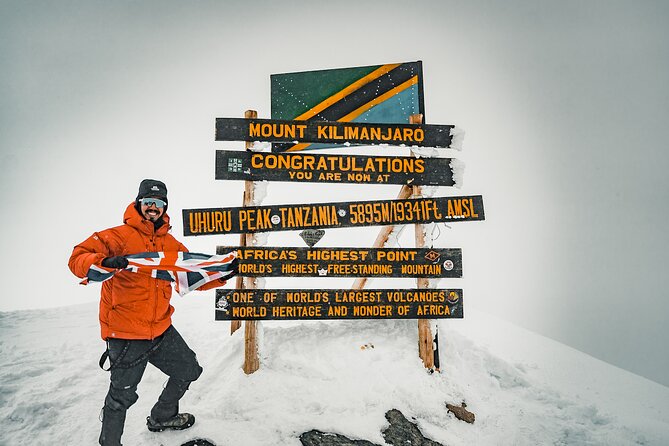
- The summit night is the real test: You wake around midnight, climb to Stella Point, continue to Uhuru Peak at 5,895 meters, then walk down to Millennium Camp.
- Local guides are a major strength: Habari’s guides are from Tanzania, speak English, and receive strong praise for safety, first aid, friendliness, and mountain support.
- A small group keeps the experience personal: The maximum is 10 people, useful when the pace, rest stops, or summit strategy need adjusting.
Why Machame works well in seven days
Machame is often called the Whiskey Route, a name that hints at its tougher walking compared with easier access routes. You sleep in camps rather than huts, and the trail includes long climbs, uneven ground, and steep sections. In exchange, the scenery changes quickly and the route gives you useful altitude practice before summit night.
Seven days is a sensible length for this itinerary because it allows several nights at different elevations. The key is not simply reaching a high camp. Your body needs time to adjust, and the schedule includes a valuable high-and-low pattern on Day 3.
You should not read the stated walking times as a promise that every day will feel easy. They are approximate. Breaks, meals, weather, trail conditions, group pace, and your response to altitude can all change the day. The trip requires strong physical fitness, not just enthusiasm and a collection of good hiking photographs.
More Kilimanjaro routes and climbs:
- Kilimanjaro climb by Lemosho Route (7-day)
★ 5.0 · 651 reviews - Kilimanjaro climb, Machame Route (7-day)
★ 5.0 · 262 reviews - Kilimanjaro Climbing Lemosho Route 8 Days.
★ 5.0 · 186 reviews
Day 1: Moshi to Machame Gate and the rainforest
Pickup is scheduled after breakfast at about 8:00 am, with a transfer from your hotel toward Machame Gate. The approach gives you an early look at daily life around Kilimanjaro, including coffee and banana plantations cultivated by the Chagga people.
At the gate, you complete park registration and other formalities before walking into the mountain forest. This opening section takes about six hours and ends at Machame Camp, at 2,835 meters.
The forest is a fitting beginning. It feels green, shaded, and alive, though the trail can be damp and the climb is steady. Your picnic lunch comes during the route, so keep a water bottle and small personal items easy to reach rather than buried in your luggage.
The first night is more about settling into the rhythm than proving anything. You will have climbed for much of the day, but the real value is getting used to walking, eating, resting, and preparing for the next morning at altitude.
Day 2: Moorland and the Shira Plateau
Day 2 begins around 8:00 am and takes about five hours. You climb for roughly an hour to the top of the forest, then continue at a gentler gradient through moorland.
This is where Kilimanjaro begins to look less like a tropical mountain and more like a high volcanic world. After a short lunch of snacks and a rest, you continue along a rocky ridge toward the Shira Plateau. The route offers views toward the Western Breach and its glacier.
The shorter walking time may sound easy after Day 1, but the altitude has risen sharply. Shira Camp sits at approximately 3,750 meters. You should walk slowly, drink regularly, and treat the afternoon as recovery time rather than an opportunity for extra exertion.
The appeal of this stage is its open scenery. The forest has fallen away, and the broad plateau lets you see the mountain’s volcanic form. It is also a useful point to notice how your body is responding. Headaches, nausea, unusual tiredness, or poor sleep should be reported to your guide promptly.
Day 3: Lava Tower, alpine desert, and Barranco Camp
This is one of the most important days in the entire program. You climb from Shira toward Lava Tower at 4,600 meters, then descend to Barranco Camp at about 3,900 meters. Walking time is around six hours.
The route crosses alpine desert, with less vegetation and a more exposed feel. Lava Tower is not the summit, but reaching that height gives your body a valuable taste of the air above 4,500 meters. Spending the night lower at Barranco is the smart part of the plan.
The descent to Barranco takes about three hours. It also creates some of the finest photo opportunities of the week, with views toward the Western Breach and Barranco Wall. The camp sits in a valley beneath the wall, and the position is well suited to sunset views if the sky is clear.
This day can feel strange because you work hard to climb high, then give back much of that altitude. That is not wasted effort. It is the trip’s best example of walking high and sleeping lower, a method designed to help with acclimatization.
A few more trips of this kind worth comparing:
- Climbing Kilimanjaro through 7 days Machame Route
★ 5.0 · 151 reviews - 7 Days Kilimanjaro via Machame route affordable price
★ 5.0 · 110 reviews - Private Kilimanjaro Hike 7 Day Lemosho Route
★ 5.0 · 60 reviews - 7-Day Magical Tanzania Safari -Premium High End Package
★ 5.0 · 53 reviews
Day 4: The Barranco Wall and Karanga Valley
After breakfast, you climb the Barranco Wall. From below, it looks like a serious obstacle. The itinerary describes it as easier than it appears, though you should still expect a steep, hands-on section where careful foot placement matters.
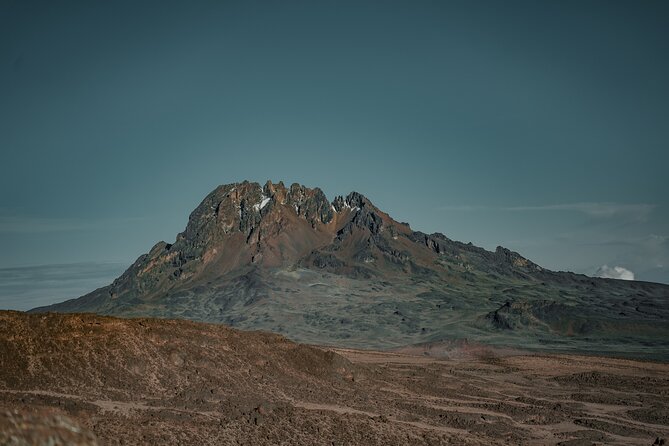
Once above the wall, you get a new view of Kilimanjaro, including the Kibo glaciers overhead. You then descend into the Karanga Valley, with Mawenzi’s jagged peaks visible to the east.
The day takes around four hours, making it one of the shortest walking days. That is good news, not a sign that the day has been squeezed. You need this time to rest before the summit push. A hot lunch is planned at camp, followed by an afternoon at leisure.
I would use that afternoon for eating, drinking, checking clothing, and sleeping if possible. Avoid turning it into a photo expedition. Barafu Camp is next, and the schedule becomes much more demanding after that.
Day 5: Barafu Camp and preparation for summit night
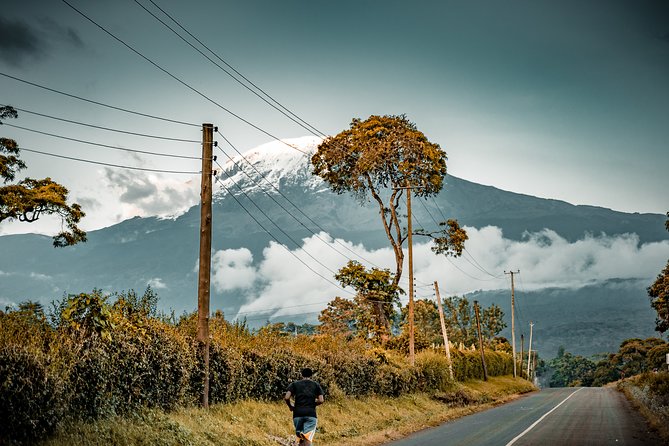
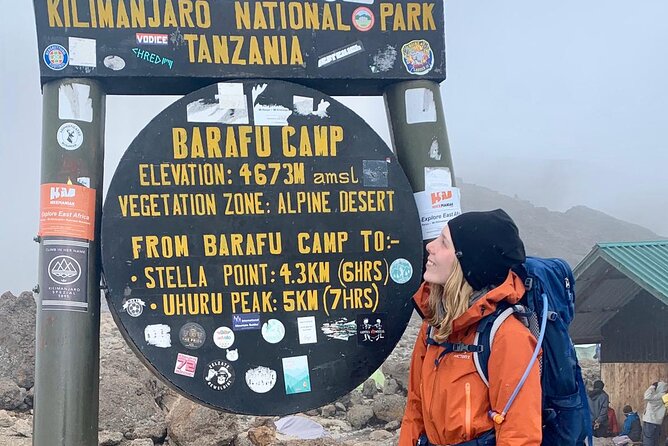
The hike to Barafu Camp takes about three hours and reaches approximately 4,640 meters. Along the way, you get views of both Kibo and Mawenzi, the two major volcanic peaks associated with Kilimanjaro.
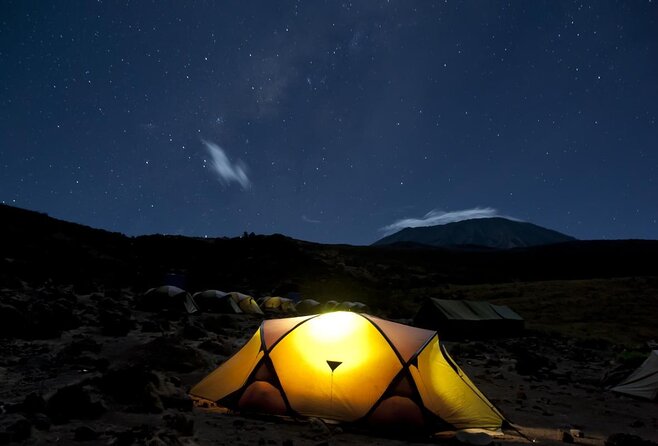
Barafu is the launch point for the summit. After lunch, the plan calls for a long rest. Dinner is early, and you try to sleep before waking at around midnight.
This day often feels psychologically harder than the short walking time suggests. You know that the summit attempt is close, and the high camp can make every small task feel slow. Organize your headlamp, warm layers, gloves, water, snacks, and camera before lying down. The supplied itinerary specifically mentions tea and cookies before the midnight start, but you should not rely on a light snack as your only summit fuel.
The camp’s elevation also means that sleep may be poor. That is normal for many people at this stage, though any serious symptoms must be reported to the guide.
Day 6: Stella Point, Uhuru Peak, and Millennium Camp
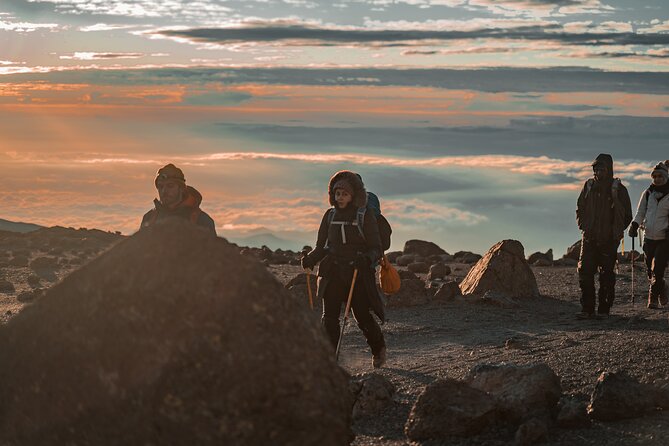
Summit day is the hardest part of the route. You wake at approximately midnight, drink light tea with cookies, and begin climbing scree in the dark.
The climb to Stella Point takes around four to five hours. You gain a great deal of height over a short distance, and the surface can make progress slow. The goal is to reach the crater rim at Stella Point, 5,756 meters, around sunrise.
That timing gives the summit attempt its emotional center. The first light reaches the mountain as you approach the rim, and the views can be spectacular. From Stella Point, you continue for about an hour to Uhuru Peak, the highest point at 5,895 meters.
At the top, the itinerary allows a few minutes for photographs before the descent. Do not underestimate the return. You go down to Barafu Camp for lunch and rest, then continue to Millennium Camp at about 3,950 meters for dinner and sleep. The whole day is listed at roughly 12 hours.
This is where patient guiding matters most. Habari’s guides are repeatedly praised for keeping morale high while focusing on safety. Guides named in past accounts include Leon, Oscar, Innocent, Michael, Mudy, Yusuph, Justo, Godi, Ray, and Omari. You cannot assume a particular guide will be assigned, so request a preferred guide in advance if that matters to you.
Day 7: Mweka Gate and the return to Moshi
The final descent from Millennium Camp to Mweka Gate takes about five hours. After leaving the high mountain, the trail gradually returns toward thicker vegetation.
At Mweka Gate, you complete the remaining park formalities and collect your summit certificates. A private car then takes you back to your hotel, where the promised warm shower will feel like a small luxury.
This final day is not merely administrative. You have just completed a long high-altitude trip, and the downhill walking can be surprisingly tiring on legs already tested by summit day. Use trekking poles if you bring them, move carefully, and save enough energy for the gate and transfer.
Guides, safety, and the human side of the climb
The strongest part of Habari Adventure’s service is its guiding culture. The company describes its guides as local Tanzanians trained in safety and first aid, with interests that include flora, fauna, geography, history, archaeology, anthropology, and astronomy. All guides speak English, and some speak additional languages.
That range matters because a good mountain guide does more than point toward the trail. You want someone who can explain the plants around Machame, identify the changing mountain zones, judge the group’s pace, and spot signs that altitude is becoming a problem.
Past accounts also praise twice-daily medical checks, clean food service, sanitation support, and porters who help make the climb manageable. Those details matter far more than jokes at camp, though several named guides, including Mudy, are praised for bringing humor and warmth when the walking becomes hard.
Ask before departure how health checks are handled, what emergency procedures are in place, and what porter support is included. The supplied information confirms guide safety and first-aid training, but it does not give a full medical or evacuation policy.
Food, group size, and what the $2,850 price means
The package lists six dinners, seven lunches, and six breakfasts. That covers the seven-day schedule, with the first breakfast and final dinner presumably outside the listed mountain meals, so confirm the exact meal plan with Habari before booking.
At $2,850 per person, this is not a budget walk. The value depends on what else is included in the final contract. A local company, experienced guides, park access, mountain logistics, meals, transport, porters, camping, and safety support can make a seven-day Kilimanjaro trip worth the price, but the supplied details do not itemize all of those costs.
The group maximum is 10 people. That is small enough for guides to monitor individuals more closely, while still giving you company on long days. Some past trips became private because of group arrangements, but you should not assume a private climb at this price unless it is confirmed.
Pickup is offered, and the day-by-day plan describes hotel pickup around 8:00 am. The meeting information also lists Kilimanjaro Airport and Kilimanjaro National Park, so clarify where your trip begins and ends. The odd reference to snorkeling equipment in the exclusions appears unrelated to a mountain climb, and I would ask the operator to correct or explain it.
Who should book this Machame climb?
I would recommend this trip to you if you want a demanding mountain experience with changing scenery, a structured altitude plan, and a local guiding team. It suits people who can manage long walking days and who understand that reaching Uhuru Peak is never guaranteed.
It is a good fit for a family group, friends, or solo climber who values support and a small maximum group. The strong praise for guides such as Leon, Michael, Mudy, and Oscar also suggests that personal encouragement is a major part of the service.
I would hesitate if you want a relaxed holiday, dislike camping, or have not prepared for high-altitude exertion. The 12-hour summit day, the midnight start, the scree, and the long descent are real demands. You should also allow time before the climb for planning and fitness preparation, since the company requires a strong physical condition.
Confirmation is provided at booking, and free cancellation is available up to 24 hours before the start time. Changes made inside that window are not accepted, and poor weather may lead to a new date or a full refund. Those terms are useful, but weather flexibility does not remove the need to plan flights and hotel nights carefully around the climb.
Should you book Habari Adventure?
I would book this seven-day Machame Route if your priority is a well-paced Kilimanjaro itinerary with strong local support. The high-and-low acclimatization day, the extra rest at Karanga, the small group limit, and the repeated praise for the guides all work in its favor.
Before committing $2,850, get a written list of every inclusion, then ask about equipment, porters, park fees, transfers, medical checks, and emergency arrangements. If those answers are clear and your fitness is ready for the summit night, Habari Adventure looks like a strong choice for a demanding but rewarding Kilimanjaro climb.
FAQ
How long is the Machame Route experience?
The climb lasts approximately seven days, from the transfer to Machame Gate through the descent to Mweka Gate and return to the hotel.
What is the price per person?
The listed price is $2,850 per person.
What is the maximum group size?
The maximum is 10 people.
Is hotel pickup available?
Yes. The itinerary describes pickup from your hotel after breakfast at around 8:00 am.
What meals are included?
The package lists six breakfasts, six dinners, and seven lunches.
How physically fit should I be?
You should have a strong physical fitness level. The longest day is summit day, listed at approximately 12 hours.
What time does the summit climb begin?
The summit attempt begins around midnight, after light tea and cookies.
How high is Uhuru Peak?
Uhuru Peak is approximately 5,895 meters above sea level.
What happens if poor weather cancels the climb?
You will be offered a different date or a full refund if the experience is canceled because of poor weather.
Just added around Moshi
- Moshi: Lake Chala Tour: Hiking &/or Kayaking★ 4.5 · 3 reviews
- 3 Days Tanga Exclusive Beach Holiday★ 5.0 · 3 reviews
- Serengeti Wildebeest Migration.★ 5.0 · 3 reviews
- Chemka Hotpsrings E-Bike Day Trip★ 5.0 · 3 reviews
- Explore 1 day Ngorongoro Crater Budget Group Safari from Arusha★ 5.0 · 3 reviews
- Explore the 360° of Kilimanjaro★ 5.0 · 3 reviews
- Affordable Short Tanzania Safari (2 Days Camping Safari)★ 5.0 · 3 reviews
- Rongai Route 7 Days★ 5.0 · 3 reviews
Kilimanjaro Treks, compared.



8-Day Small-group Lemosho Kilimanjaro Summit Trekking
Read our review →


Climbing Kilimanjaro through 7 days Machame Route
Read our review →

Browse the lists this tour appears in