
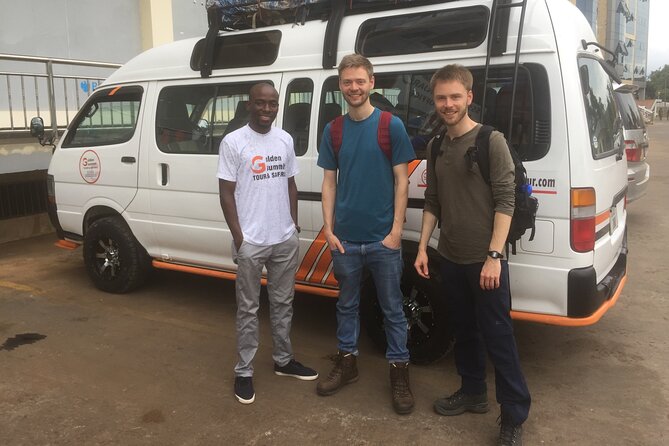
Reviewed · KILIMANJARO TREKS
7 Days Machame Route
The mountain changes every day. This 7-day Machame Route trek gives you forest, moorland, glaciers, and a long summit push on Mount Kilimanjaro, with nights in tents carried by porters. I like the extra acclimatization day and the route’s walk high, sleep low pattern. I also like the strong attention to food, gear support, and careful guiding described by past customers. The main drawback is the summit day: at about 15 hours, it is a very hard physical test.
The price is $2,000 per person, with pickup offered, mobile ticketing, and a maximum group size of 15. I like that the route reaches Uhuru Peak at 5,895 meters and includes the striking Shira Plateau, Lava Tower area, glacier views, and the forest descent to Mweka Gate. You should also note that some itinerary wording repeats the same high-altitude section for Days 3 and 4, so ask Golden Summit Adventures to confirm the exact camp sequence before departure.
In This Review
- Key points to know before booking
- Why the seven-day Machame Route works well
- Day 1: From Kilimanjaro forest to open heather
- Day 2: Climbing toward the Shira Plateau
- Day 3: High moorland and the Lava Tower area
- Day 4: A shorter recovery day at altitude
- Day 5: Moving toward Barafu Camp
- Day 6: The 15-hour push to Uhuru Peak
- Day 7: Rainforest, certificates, and Moshi
- What the $2,000 price means
- Group size, fitness, and the human side of the climb
- What to clarify before you reserve
- Should you book the seven-day Machame Route?
- FAQ
- Where does the Machame Route trek take place?
- How long is the experience?
- What is the price?
- Does the tour offer pickup?
- What time does the trek start?
- Where do you sleep during the trek?
- What level of fitness is required?
- How many people can join the group?
- How high is Uhuru Peak?
- How long is the summit day?
- What happens on the final day?
- Can you cancel for a full refund?
Key points to know before booking
- Seven days gives your body more time to adjust: The extra day compared with a six-day version helps make the climb less rushed.
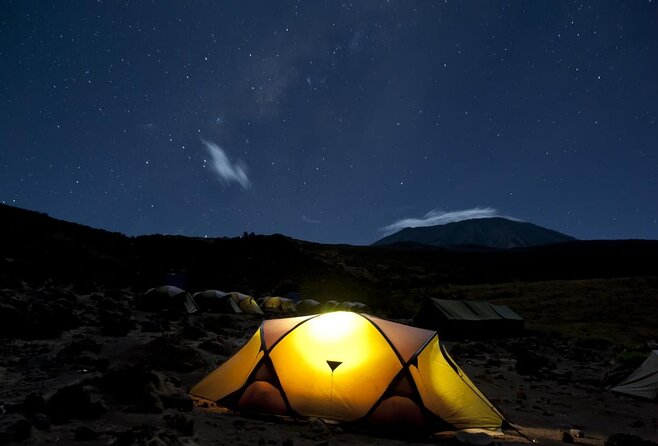
- Machame is a tented route: Porters carry the tents and supplies, so this is a mountain expedition rather than a series of lodge stays.
- The route uses walk high, sleep low: Day 3 reaches about 4,600 meters before you sleep at a lower camp.
- Summit night begins around midnight: Expect four to five hours on scree before Stella Point, then another hour to Uhuru Peak.
- The final day is short but useful: A three-hour rainforest walk leads to Mweka Gate, certificates, vehicle pickup, and a return to your Moshi hotel.
- The strongest praise centers on the crew: Organization, filling meals, porter support, experienced guides, and warm customer service are repeated strengths.
Why the seven-day Machame Route works well
Machame is popular for a clear reason: the scenery keeps changing, and the route gives you a better chance to adjust to altitude than a compressed schedule. You begin under moss-covered forest, move into tall grasses and heathers, cross open high moorland, pass below Lava Tower, and finish with glaciers, volcanic rock, and a rainforest descent.
The seven-day plan matters. A six-day climb can be done, but it gives your body less time to respond to thinner air. Here, the route includes a day spent as high as about 4,600 meters while you later sleep lower. That is the basic idea behind walk high, sleep low, and it is one of the most useful features of this route.
I would still treat the schedule as demanding. A longer itinerary improves your odds of adjusting, but it does not make Kilimanjaro easy. You need a moderate level of fitness, and you need to be ready for long hours, steep ground, cold conditions at altitude, and a summit night that runs from midnight into the following afternoon.
More Kilimanjaro routes and climbs:
- Kilimanjaro climb by Lemosho Route (7-day)
★ 5.0 · 651 reviews - Kilimanjaro climb, Machame Route (7-day)
★ 5.0 · 262 reviews - Kilimanjaro Climbing Lemosho Route 8 Days.
★ 5.0 · 186 reviews
Day 1: From Kilimanjaro forest to open heather
The first hiking day takes about six hours. You start in Kilimanjaro’s cloud forest, where moss-covered trees give the trail a cool, shaded feel. As you climb, the forest thins and gives way to heathers, tall grasses, and wildflowers.
This is a good opening day because the surroundings change without asking you to deal with the mountain’s highest altitudes yet. The forest also gives you an early sense of how quickly Kilimanjaro’s plant life changes with height.
You will likely appreciate the slower rhythm here. The walk is long enough to feel like a real start, but it does not have the extreme duration of summit day. The practical challenge is keeping a steady pace from the beginning. There is no prize for rushing on Day 1, and the entire route rewards patience.
Admission to Mount Kilimanjaro is included in the tour details. The start time is listed as 8:00 am, with pickup offered, though you should confirm the exact pickup arrangement with the company before setting out.
Day 2: Climbing toward the Shira Plateau
Day 2 takes about five hours and continues upward through the forest before reaching the steeper ascent to the Shira Plateau. The reward is a broad change in scenery and views back toward Mount Meru, which rises above the Arusha area in the distance.
The Shira Plateau gives the trek a more open, exposed feel. You are no longer walking mainly among trees. The mountain begins to look larger and more remote, while the views help you understand the scale of the region.
I like this day because the walking time is moderate, yet the visual payoff is high. It is also a useful reminder that the route is not just a race to the summit. The changing plant zones and open views are a major part of what you are paying for.
The steep section onto the plateau may feel harder than the five-hour total suggests. At this point, keep your pace gentle and drink regularly. The route is designed to help you gain height gradually, so it makes sense to follow the guides’ pace rather than setting your own faster rhythm.
Day 3: High moorland and the Lava Tower area
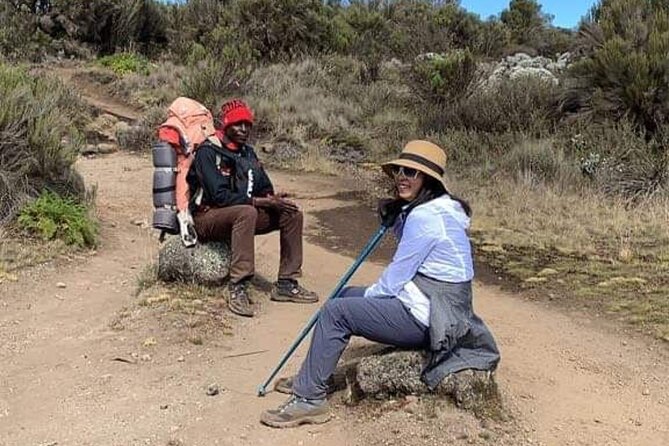
The third hiking day is listed at about eight hours. You walk across high moorland on the southwest side of Kilimanjaro, passing beneath Lava Tower and the final section of the Western Breach before reaching camp.
This is the key acclimatization day. The route reaches up to roughly 4,600 meters, but you do not simply climb to that height and remain there. You spend the day high, then sleep lower, giving your body a better chance to respond to the altitude.
The scenery also changes character. The forest is far behind you, and the open moorland can feel stark and spacious. Lava Tower gives the day a strong volcanic identity, while the Western Breach adds a reminder that Kilimanjaro is a serious mountain, not merely a scenic walk.
Eight hours at altitude can be tiring even if the trail itself is manageable. This is a day to watch for headaches, nausea, unusual fatigue, or other signs that your body is struggling. The provided information does not set out a medical procedure, so ask the operator before departure how altitude concerns are handled and how the guides decide when a climber should slow down or stop.
A few more trips of this kind worth comparing:
- Climbing Kilimanjaro through 7 days Machame Route
★ 5.0 · 151 reviews - 7 Days Kilimanjaro via Machame route affordable price
★ 5.0 · 110 reviews - Private Kilimanjaro Hike 7 Day Lemosho Route
★ 5.0 · 60 reviews - 7-Day Magical Tanzania Safari -Premium High End Package
★ 5.0 · 53 reviews
Day 4: A shorter recovery day at altitude
Day 4 is listed at about four hours and repeats the same description of the high moorland, Lava Tower, Western Breach, and the walk high, sleep low approach. Since the supplied schedule uses the same description for Days 3 and 4, you should ask Golden Summit Adventures for the precise route and camp names for these two days.
The shorter walking time suggests a useful breather after the eight-hour acclimatization day. A shorter day can help you arrive at the next stage with more energy, especially before the move toward Barafu Camp.
This is also where careful planning matters. The Machame Route has several camp changes and high points, and an itinerary that repeats a paragraph may simply be a formatting error. It is worth confirming the daily distances, sleeping camps, meal arrangements, and expected walking times in advance.
Day 5: Moving toward Barafu Camp
After breakfast, you hike toward Barafu Camp. The walk takes about four hours and brings you closer to the summit section. Along the way, you can see several of Kibo’s glaciers and pass the junction where the Mweka descent route connects with the Machame trail.
The day is short on paper, but its purpose is important. Barafu is the launch point for the midnight summit attempt, so the goal is not to fill the day with extra activity. You need to reach camp, eat, organize your gear, and rest as much as possible before the early start.
The schedule also refers to views of the Heim, Kersten, and Decken Glaciers. These glacier views add another layer to the route, though the mountain environment remains demanding and exposed at this height.
I would use this day to keep your kit simple and accessible. You do not want to sort through every bag when the summit start arrives. The company’s past customers praised its organization, including porters who looked after belongings during the summit attempt. That kind of support is valuable here, when tiredness and darkness make small tasks feel much harder.
Day 6: The 15-hour push to Uhuru Peak
Summit day begins around midnight. You climb steeply through scree for four to five hours, gaining a great deal of height over a short distance. The aim is to reach Stella Point at 5,739 meters as the first light appears.
This is the hardest part of the entire experience. Scree shifts underfoot, the air is thin, and the climb takes place in darkness for much of the ascent. The reward is the sunrise at the crater rim, with ice cliffs inside the crater and views toward jagged Mawenzi Peak and beyond.
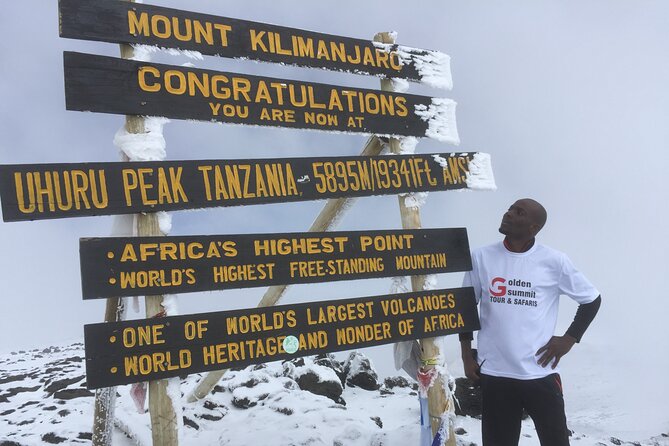
From Stella Point, the route continues for about another hour to Uhuru Peak at 5,895 meters. The final distance may sound modest, but at this altitude it can feel slow. You need to stay focused on one small section at a time.
After reaching the summit, you return to Stella Point and descend over scree and trail to Barafu Camp. There, you have breakfast before continuing down to Mweka Camp for a longer rest. The complete day is listed at about 15 hours, so you should not plan anything else around it.
The summit is not the only measure of a successful climb. If altitude symptoms become serious, turning back is the sensible choice. A strong operator should put safety before a certificate or photograph. The feedback about experienced guides whose priority was reaching the summit safely is encouraging, but you should still listen to your body and follow the guide’s instructions.
Day 7: Rainforest, certificates, and Moshi
The final day takes about three hours. You make a gentle descent through rainforest to Mweka Gate, complete park formalities, and receive certificates before meeting the vehicles for the return to your arranged hotel in Moshi.
This is a well-judged ending. After the long summit day, you do not need another major climb. The rainforest offers a softer final setting, and the gate formalities give the trip a clear finish.
Back in Moshi, you can treat yourself to a shower and cold drinks. The return to the hotel is included in the stated plan, but the specific hotel is arranged separately, so confirm where you will be staying and where the vehicle will drop you.
What the $2,000 price means
At $2,000 per person, this is not a budget walk. It is also not just seven days of trail time. The price supports a tented mountain operation, porter assistance, park admission, guiding, meals, camp movements, summit logistics, and transport back to Moshi, although the supplied details do not give a full itemized list of inclusions.
The strongest value comes from the extra day and the support system. A six-day route may cost less or take less time, but the seventh day gives you more room to adjust to altitude. That can be more useful than saving a day on paper.
Food and organization also matter at this price. Past customers specifically praised filling meals, interesting food, and small practical details such as porters looking after belongings during the summit push. They also praised communication and warm customer service from Golden Summit Adventures.
I would ask for a written breakdown before paying. Confirm what is included in the $2,000, including meals, tents, park fees, transfers, hotel arrangements, porter support, and any equipment. The available information confirms admission tickets and pickup are offered, but it does not spell out every inclusion.
Group size, fitness, and the human side of the climb
The maximum group size is 15 people. That is large enough to offer company on the trail but small enough to remain manageable if the operation is well organized. Your experience will still depend on the guide-to-climber ratio, which is not provided, so ask that question before booking.
The tour calls for moderate physical fitness. In practical terms, you should be comfortable walking for several hours, handling steep uphill sections, and recovering well enough to continue the next day. Summit day is the real test, with its midnight start, four to five hours of scree climbing, descent to Barafu, and continued walking to Mweka Camp.
The crew appears to be one of the company’s main strengths. The available feedback repeatedly points to experienced guides, careful organization, good communication, satisfying meals, and reliable help from porters. Those details matter more than glossy promises on a mountain trek.
You should also remember that the porters are part of the operation. Their work makes the tented route possible, from carrying camp equipment to helping manage belongings. Ask the company about its porter welfare practices and tipping guidance before the trek, so you know what is expected and can plan respectfully.
What to clarify before you reserve
A few points deserve direct questions:
- Ask for the exact camp names and walking plan for Days 3 and 4, since the descriptions currently repeat.
- Confirm what the $2,000 includes beyond the stated admission tickets and pickup option.
- Ask where pickup takes place and which Moshi hotel arrangements are included.
- Confirm the guide-to-climber ratio within the 15-person maximum.
- Ask how the company handles altitude symptoms and changes to the summit plan.
- Request a packing list suited to the midnight summit start and high-altitude camps.
Confirmation is provided at booking. The cancellation terms are simple: cancel at least 24 hours before the local start time for a full refund. Cancellations or changes within 24 hours are not refunded or accepted.
Should you book the seven-day Machame Route?
I would recommend this trek if you want Kilimanjaro’s major scenery, prefer a slower seven-day schedule, and accept that summit day will be long and uncomfortable. The extra acclimatization time, tented support, changing vegetation, crater-rim sunrise, and return through rainforest give the route a strong sense of progression.
I would hesitate if you want easy walking, short days, or hotel-style comfort. The summit attempt is a serious physical effort, and the itinerary needs clarification around Days 3 and 4.
For a fit person who values experienced support and a scenic route, the $2,000 price can make sense, especially if the full list of inclusions is solid. Confirm the camp sequence and costs first, then book with Golden Summit Adventures if its answers are clear and its safety plan matches your expectations.
FAQ
Where does the Machame Route trek take place?
The trek takes place on Mount Kilimanjaro, with the tour based in Moshi, Tanzania.
How long is the experience?
The experience lasts about seven days.
What is the price?
The listed price is $2,000 per person.
Does the tour offer pickup?
Yes. Pickup is offered, but the exact pickup details should be confirmed with Golden Summit Adventures.
What time does the trek start?
The listed start time is 8:00 am.
Where do you sleep during the trek?
You sleep in tents carried up the mountain by porters.
What level of fitness is required?
A moderate physical fitness level is required.
How many people can join the group?
The maximum group size is 15 people.
How high is Uhuru Peak?
Uhuru Peak is 5,895 meters above sea level.
How long is the summit day?
The summit day is listed at about 15 hours. It begins around midnight, reaches Stella Point at 5,739 meters, continues to Uhuru Peak, and then descends to Mweka Camp.
What happens on the final day?
You walk for about three hours through rainforest to Mweka Gate, complete park formalities, receive certificates, and return by vehicle to your arranged hotel in Moshi.
Can you cancel for a full refund?
Yes. You can receive a full refund if you cancel at least 24 hours before the experience start time. Cancellations or changes made within 24 hours are not accepted and are not refunded.
Just added around Moshi
- Moshi: Lake Chala Tour: Hiking &/or Kayaking★ 4.5 · 3 reviews
- 3 Days Tanga Exclusive Beach Holiday★ 5.0 · 3 reviews
- Serengeti Wildebeest Migration.★ 5.0 · 3 reviews
- Chemka Hotpsrings E-Bike Day Trip★ 5.0 · 3 reviews
- Explore 1 day Ngorongoro Crater Budget Group Safari from Arusha★ 5.0 · 3 reviews
- Explore the 360° of Kilimanjaro★ 5.0 · 3 reviews
- Affordable Short Tanzania Safari (2 Days Camping Safari)★ 5.0 · 3 reviews
- Rongai Route 7 Days★ 5.0 · 3 reviews
Kilimanjaro Treks, compared.



8-Day Small-group Lemosho Kilimanjaro Summit Trekking
Read our review →


Climbing Kilimanjaro through 7 days Machame Route
Read our review →

Browse the lists this tour appears in