
Reviewed · KILIMANJARO TREKS
8 Days Guided Private Trekking in Mount Kilimanjaro
Africa’s highest summit demands patience. This 8-day private Kilimanjaro trek gives you a slow route through rainforest, moorland, alpine desert, and high volcanic terrain, with time built in for acclimatization. I like the small-group format, which should make it easier to set a sensible walking pace, and I like the steady climb through several distinct plant zones rather than rushing straight toward the summit. The main drawback is the price, $2,310 per person, which is a serious investment before you add a visa and any personal equipment.
The trip begins and ends at Panama Garden Resort in Moshi, with pickup offered and confirmation provided at booking. I also like the private setup: your group is the only group taking part, so you are not tied to a large party’s pace. Still, summit day is physically demanding, and the itinerary’s long seventh day can be far tougher than the mileage figures alone suggest.
In This Review
- The Kilimanjaro details that matter most
- Why the private format is useful on Kilimanjaro
- Day 1: Londorossi Gate to Mti Mkubwa Camp
- Day 2: Rainforest to Shira 1 Camp
- Day 3: Shira 1 to Shira 2 and the alpine desert
- Day 4: Lava Tower and the Barranco Wall
- Day 5: Barranco to Karanga Camp
- Day 6: Karanga to Barafu Camp
- Day 7: Uhuru Peak and the long descent
- Day 8: Mweka Camp to the park gate
- What the $2,310 price includes
- Food, accommodation, and daily comfort
- Who should book this trek?
- Booking details and cancellation terms
- FAQ
- Where does the trek start?
- Where does the trek end?
- Is this a private tour?
- Are meals included?
- Is the visa included in the price?
- Can I cancel for a full refund?
- Should you book the 8-day Kilimanjaro trek?
The Kilimanjaro details that matter most
- Londorossi Gate start: The trek enters Kilimanjaro National Park through Londorossi Gate before reaching the first trailhead.
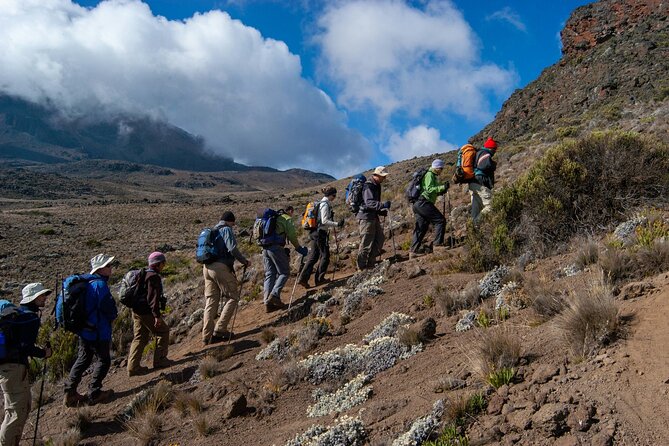
- Four altitude zones: You move from rainforest to moorland, then alpine desert and rocky high-altitude ground.
- Acclimatization built in: The route climbs to Lava Tower at about 4,600 meters, then drops to Barranco Camp.
- Private group format: Only your party participates, allowing more direct contact with the guides and a more personal pace.
- Summit from Barafu Camp: The Uhuru Peak attempt begins in the early hours, followed by a long descent to Mweka Camp.
- Meals and lodging included: Breakfast for eight days, lunch for eight days, dinner for seven days, accommodations, and a guide are included.
Why the private format is useful on Kilimanjaro
A private trek changes the feel of a mountain trip. You are not simply joining a fixed procession and hoping the pace works for you. Your group can speak directly with the guides about energy, altitude, rest, and the day’s effort.
That matters most on a route where slow walking is a practical tool, not a sign of weakness. The plan rises gradually over several days, and the high point at Lava Tower is followed by a descent to Barranco. This climb high, sleep lower pattern gives your body more time to adjust before the summit attempt.
The company’s guide team receives strong praise for care and flexibility. William is specifically associated with organizing a successful climb for a family that included a 70-year-old father. Joseph and Swahele guided a successful Machame route ascent in August 2024, while Joseph and Zac led a memorable Lemosho ascent. Those names give you useful points to confirm when booking, especially if having a particular guide team matters to you.
The private setup does not make the mountain easy. Kilimanjaro reaches 5,895 meters at Uhuru Peak, and the final ascent takes place in darkness and cold. You should view the private format as a support advantage, not a guarantee of reaching the top.
More Private Tours in Moshi
- Private Kilimanjaro Hike 7 Day Lemosho Route
★ 5.0 · 60 reviews - Private Tour to Materuni waterfalls, coffee tour & Kikuletwa hot- springs
★ 5.0 · 49 reviews - 4 Day Private Tour Throughout Tarangire, Serengeti and Ngorongoro
★ 5.0 · 42 reviews
Day 1: Londorossi Gate to Mti Mkubwa Camp
Your first day begins with park registration at Londorossi Gate. After the formalities and a short drive to the trailhead, you start walking through thick rainforest toward Mti Mkubwa, also called Big Tree Camp.
The distance is about 6 kilometers, with roughly three hours of walking. This is a friendly opening day by Kilimanjaro standards. The forest gives you shade and a softer introduction to the route, while the moderate distance lets you settle into your boots, daypack, and walking rhythm.
I like this beginning because it does not demand a heroic effort on the first morning. You can pay attention to how the group moves and how the guides organize the day. Mti Mkubwa sits at about 2,750 meters, high enough to begin the altitude process but not yet in the severe upper zones.
The practical concern is mud or uneven ground, since rainforest trails can be rough even when the walking distance is short. Good footwear and a careful pace matter more than speed.
Day 2: Rainforest to Shira 1 Camp
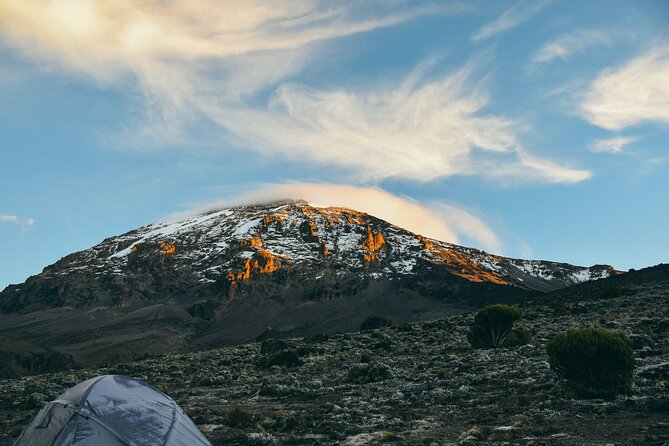
The forest continues at first, but the route gradually reaches the moorland zone. Trees give way to shorter plants and more open views, and the ground becomes rougher as you climb toward Shira 1 Camp.
This day covers about 8 kilometers and finishes at roughly 3,505 meters. The walking time is listed at around four hours. You are gaining altitude at a useful but noticeable rate, so a slow pace and regular water breaks are sensible.
The changing plant life is one of the pleasures of this route. You can feel the mountain opening up around you as the dense forest falls behind. Views toward Kilimanjaro’s volcanic formations add a strong sense of place, though cloud cover can affect what you see.
The night at Shira 1 is an important step in the overall plan. You are high enough to notice the thinner air, but the day is not yet a summit-style test. If you develop a headache, nausea, unusual tiredness, or other altitude symptoms, tell the guide early rather than trying to prove you are tough.
Day 3: Shira 1 to Shira 2 and the alpine desert
The third day is relatively short, about 7 kilometers, and leads to Shira 2 Camp at approximately 3,850 meters. The route enters alpine desert, where the vegetation becomes sparse and the setting feels much more exposed.
This is a good day to conserve energy. You are not climbing a dramatic summit ridge yet, but the air is thinner, and normal tasks can feel more tiring. A short walking day gives you time to rest and prepare for the harder altitude work ahead.
The itinerary description gives a very brief duration for this day, which does not match the stated distance. I would treat the mileage as the useful guide and confirm the expected walking time with Spirit of Kilimanjaro before departure. On a mountain route, weather, trail conditions, and the group’s pace can all change the schedule.
Shira 2 also helps you see why the extra days have value. A shorter itinerary may cost less or appear more efficient, but this gradual progression gives you more time above 3,500 meters before the summit push.
More Kilimanjaro routes and climbs:
- Kilimanjaro climb by Lemosho Route (7-day)
★ 5.0 · 651 reviews - Kilimanjaro climb, Machame Route (7-day)
★ 5.0 · 262 reviews - Kilimanjaro Climbing Lemosho Route 8 Days.
★ 5.0 · 186 reviews - Climbing Kilimanjaro – Machame Route
★ 5.0 · 170 reviews
Day 4: Lava Tower and the Barranco Wall
Day four is the route’s key acclimatization day. You climb to Lava Tower at about 4,600 meters, then descend to Barranco Camp at roughly 3,960 meters. The total distance is about 10 kilometers, with around five hours of walking listed.
The climb high, sleep lower pattern is the most useful feature of this day. You reach a high point without spending the night there, then lose altitude before sleeping. That makes the day tiring, but it serves a clear purpose.
The Barranco Wall adds a hands-on challenge. You will use your balance and steady footwork as the path climbs over rocky ground. It can look intimidating from below, but the appeal is that it feels like a real mountain obstacle rather than a simple trail walk.
This is also where the trek becomes less forgiving. The air is thin, the terrain is rocky, and the route includes more sustained climbing. Keep your daypack light and follow the guide’s instructions. The exact timing can shift, so do not plan other activities for these trekking days.
Day 5: Barranco to Karanga Camp
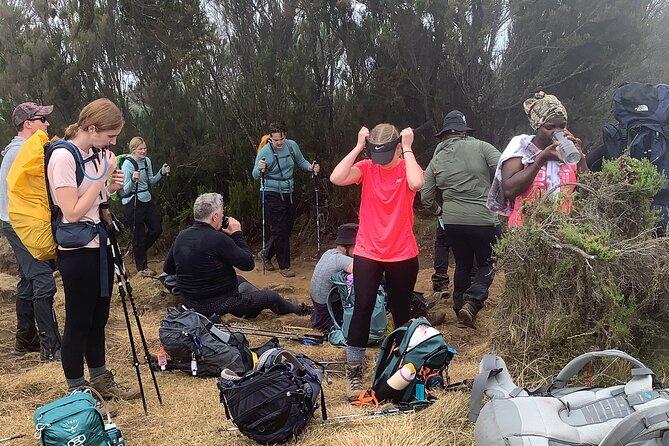
From Barranco, you continue to Karanga Camp, gaining modest altitude to about 4,035 meters. The distance is only around 4 kilometers, and the listed walking time is three hours.
Short does not mean effortless. The terrain is alpine and rocky, and repeated rises and dips can make the day feel more demanding than the mileage suggests. Still, this compact stage is useful because it gives you another high-altitude night without forcing an all-day march.
The views are one of the rewards. You are now well above the forest, with broad volcanic scenery around you. I would use this day to keep your effort controlled, eat properly, and prepare clothing and equipment for the summit attempt.
A private group can be especially helpful here. If one person needs a slower pace or an extra pause, the guides can focus on your party instead of balancing the needs of a much larger group.
Day 6: Karanga to Barafu Camp
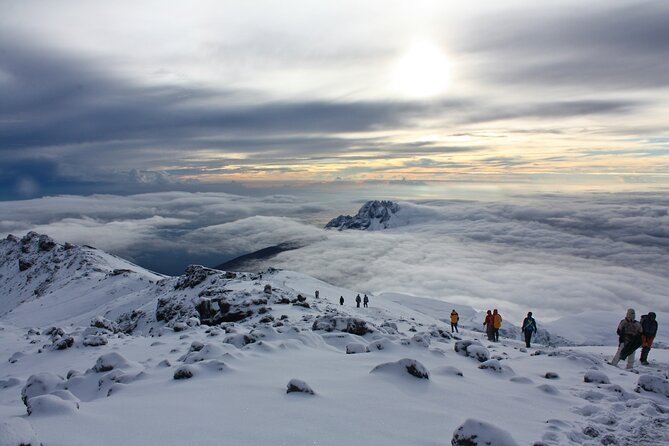
The sixth day covers about 3 kilometers to Barafu Camp, located at roughly 4,600 meters. The listed walking time is three minutes, which is clearly too brief for a mountain stage of this kind, so confirm the practical schedule before you go.
The important point is not the duration. Barafu is your launch point for Uhuru Peak, and this day is meant to help you reach camp, rest, and prepare. You should expect a stark, rocky setting with little distraction beyond the summit goal ahead.
Your guide should explain the summit departure time and the plan for the descent. Keep your gear organized before trying to rest. Put warm layers, water, snacks, headlamp if supplied, and other essentials where you can reach them easily. The supplied information does not specify every item of equipment, so ask exactly what you must bring and what the operator provides.
This is the point where excitement can work against you. Save your energy. The summit attempt is the real endurance test.
Day 7: Uhuru Peak and the long descent
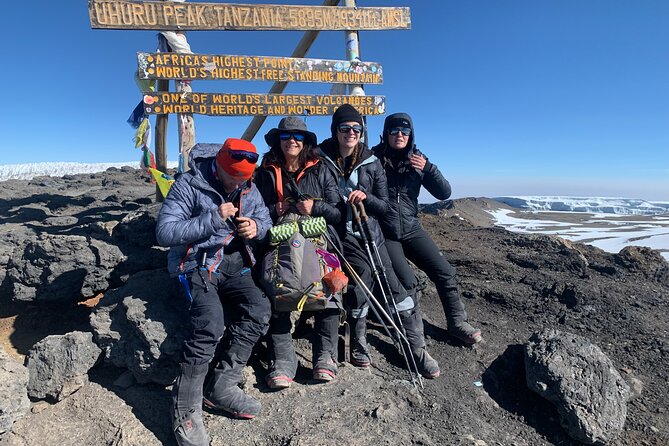
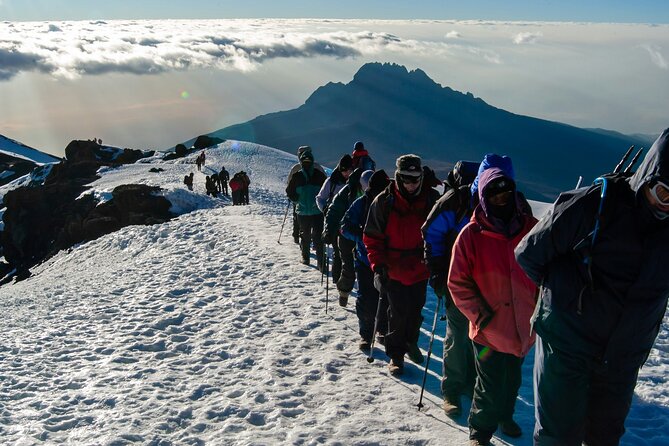
Summit day begins in the early hours, with a steep climb toward Uhuru Peak before sunrise. At 5,895 meters, Uhuru is the highest point in Africa, and reaching it is the trip’s defining moment.
The ascent is described as strenuous, and that word deserves attention. You will be walking in darkness, at high altitude, after several days on the trail. The final stage can feel slow and repetitive, which is why a calm pace and close communication with your guides matter.
After time at the summit, you descend to Mweka Camp at about 3,100 meters. The total distance is roughly 18 kilometers, making this the longest and hardest day of the trip. The descent is not an easy victory lap. Your legs will already be tired, and the change in altitude can make the body feel unsettled.
The itinerary lists around four hours, but that figure does not reflect the full difficulty suggested by the summit ascent and 18-kilometer total. Ask for a realistic time range. Your success on this day depends as much on energy management and altitude response as on fitness.
Day 8: Mweka Camp to the park gate
The final stage descends about 10 kilometers through rainforest to Mweka Gate. The walk takes roughly three hours and returns you to thicker vegetation after the open, rocky upper mountain.
This closing section should feel physically easier because you are losing altitude, but tired knees can make downhill walking uncomfortable. Take care on wet or uneven ground and keep your pace controlled until the gate.
At Mweka Gate, you receive summit certificates and say goodbye to the guides and porters. That ending gives the expedition a clear finish, rather than simply dropping you back at the hotel and sending you on your way.
The activity ends back at the meeting point, Panama Garden Resort in Moshi. Pickup is offered, and the start point is near public transportation, which is helpful if you are arranging extra nights in town.
What the $2,310 price includes
At $2,310 per person, this is not a budget mountain outing. The value depends on how much you place on private guiding, a longer acclimatization plan, meals, accommodations, and direct support from a dedicated team.
The package includes:
- A tour guide
- Accommodations
- Breakfast for eight days
- Lunch for eight days
- Dinner for seven days
Visas are not included. The information provided also does not give a detailed gear list, porter arrangement, airport transfer plan, park fee breakdown, or tipping guidance. Those are important questions to ask before paying in full.
I see the strongest value in the route length and private structure. Eight days allows a measured ascent, while a small party should receive more direct attention than a large group. The food also receives specific praise, and good meals matter when you are walking at altitude day after day.
You should compare the final price with other operators only after checking what each package includes. A lower headline price may leave out meals, transfers, equipment, or other costs. Ask Spirit of Kilimanjaro to confirm the full list in writing.
Food, accommodation, and daily comfort
Meals are supplied throughout the climb: eight breakfasts, eight lunches, and seven dinners. That removes the need to plan daily food logistics, though you may still want personal snacks if you have specific preferences.
Accommodations are included, but the supplied details do not describe the camp setup or room arrangements. Ask whether the overnight stays are in tents, huts, or another format, and ask what bedding is provided.
The company presents safety and comfort as priorities, with experienced guides, equipment support, and a planned acclimatization schedule. I would still ask precise questions about medical procedures, emergency communication, guide-to-climber ratios, and what happens if someone must descend early.
The strongest direct praise centers on the team’s care and flexibility. One family climb included a 70-year-old father, while other successful ascents singled out Joseph, Swahele, and Zac. That does not mean the route is suitable for every older person or every fitness level, but it does suggest that discussing your group’s needs in advance is worthwhile.
Who should book this trek?
I would consider this trip a good fit if you want:
- A private climb rather than a large shared group
- Eight days for a gradual ascent
- A route beginning at Londorossi Gate
- Guides who can give your party direct attention
- Meals and accommodations arranged in advance
- A major physical challenge with varied scenery
You should think carefully before booking if you want a short, comfortable holiday with little exertion. The summit day is long, the altitude is serious, and the descent after Uhuru Peak adds another demanding section.
You also need to be comfortable paying a premium for support and organization. The package is strongest for people who value personal attention and a slower mountain schedule over finding the lowest possible price.
Booking details and cancellation terms
Confirmation is provided when you book. Most people can participate, but you should discuss your own health, fitness, and altitude concerns with the operator before departure.
Free cancellation is available if you cancel at least 24 hours before the local start time. Cancellations within 24 hours are not refunded, and changes within that same period are not accepted.
FAQ
Where does the trek start?
The activity starts at Panama Garden Resort Tanzania on Shanty Town Road in Moshi. The trek itself begins after park registration at Londorossi Gate and a short drive to the trailhead.
Where does the trek end?
The final descent ends at Mweka Gate, after which the activity ends back at the meeting point in Moshi.
Is this a private tour?
Yes. Only your group participates in the activity.
Are meals included?
Yes. Breakfast is included for eight days, lunch for eight days, and dinner for seven days.
Is the visa included in the price?
No. Visas are not included.
Can I cancel for a full refund?
Yes, if you cancel at least 24 hours before the experience starts, based on local time. Cancellations made within 24 hours are not refunded.
Should you book the 8-day Kilimanjaro trek?
I would book this trek if you want a private climb with a measured eight-day schedule, direct guide attention, and a route that gives you time to adjust to altitude. The strongest reasons are the private format, the Lava Tower acclimatization day, and the repeated praise for guides including Joseph, Swahele, Zac, and William.
Before booking, get the unclear details confirmed: the exact daily timing, sleeping arrangements, gear supplied, porter support, transport, and any costs beyond the $2,310 price. If the answers are satisfactory, Spirit of Kilimanjaro offers a well-planned way to take on Africa’s highest summit without turning the mountain into a rushed seven-day race.
More Hiking & Trekking
- Best Kilimanjaro hiking day trip tour with Kilinge Adventures
★ 4.5 · 54 reviews - #1. Best Kilimanjaro Day hike Tour-Machame Route-ISMANI
★ 4.2 · 47 reviews - Best Kilimanjaro Adventure 7 days Machame route Trekking
★ 5.0 · 42 reviews - Kilimanjaro 7 Day Private Trekking Experience
★ 5.0 · 40 reviews
Just added around Moshi
- Moshi: Lake Chala Tour: Hiking &/or Kayaking★ 4.5 · 3 reviews
- 3 Days Tanga Exclusive Beach Holiday★ 5.0 · 3 reviews
- Serengeti Wildebeest Migration.★ 5.0 · 3 reviews
- Chemka Hotpsrings E-Bike Day Trip★ 5.0 · 3 reviews
- Explore 1 day Ngorongoro Crater Budget Group Safari from Arusha★ 5.0 · 3 reviews
- Explore the 360° of Kilimanjaro★ 5.0 · 3 reviews
- Affordable Short Tanzania Safari (2 Days Camping Safari)★ 5.0 · 3 reviews
- Rongai Route 7 Days★ 5.0 · 3 reviews
Kilimanjaro Treks, compared.



8-Day Small-group Lemosho Kilimanjaro Summit Trekking
Read our review →


Climbing Kilimanjaro through 7 days Machame Route
Read our review →

Browse the lists this tour appears in