
Reviewed · KILIMANJARO TREKS
Kilimanjaro 7 Day Private Trekking Experience
The mountain sets the pace. This seven-day private Kilimanjaro trek follows the Machame Route from rainforest to glacier, with a small personal crew, camping, cooked meals, and a summit attempt at Uhuru Peak. I like the careful acclimatization plan, especially the Lava Tower climb followed by a night at lower Barranco Camp. I also like that the price includes tents, food, mountain crew wages, transfers as specified, and accommodation before and after the climb. The main consideration is the cost: at $3,120 per person, you are paying for private service and a full support team, not a budget group hike.
The trip earns strong praise for friendly guides, cooks, porters, and quick trip planning from owner Oscar. Guides named in past trips include Saul, Mvungi, Jonas, and Jackie. You should still budget for crew gratuities, personal gear, insurance, laundry, and telephone costs, all of which are left out of the advertised price.
In This Review
- Key points to know before you climb
- What this Kilimanjaro trek is really like
- Day one, Machame Gate to the rainforest
- Day two, Shira Camp and the first open views
- Day three, Lava Tower before Barranco Camp
- Day four, scrambling up Barranco Wall
- Day five, across the South Circuit to Barafu
- Day six, Uhuru Peak and the long descent
- Day seven, Mweka Gate and a proper shower
- Guides, porters, and the private advantage
- Food, camping, and what the price covers
- Who should choose this trek?
- Should you book the $3,120 private climb?
- FAQ
- How long does the Kilimanjaro trek last?
- Which route does the trek use?
- Is this a private tour?
- What is the price per person?
- Are meals included?
- Are tents included?
- Are guides and porters included?
- What fitness level is required?
- What happens if bad weather cancels the climb?
Key points to know before you climb
- Machame Route in seven days: You climb through rainforest, moorland, semi-desert, stone scree, and glacial terrain before descending by the Mweka Route.
- Private group format: Only your own party takes part, which gives you more control over pace and rest stops.
- Strong acclimatization day: Day three climbs to Lava Tower at 4,600 meters before dropping to Barranco Camp.
- A demanding summit night: You leave around midnight for a six to eight hour ascent to Uhuru Peak, followed by a long descent.
- Full mountain support: Guides, porters, cooks, tents, meals, and specified transfers are included.
- Hotel comfort before and after: The program includes accommodation around the climb, with a hot shower and lunch after reaching Mweka Gate.
What this Kilimanjaro trek is really like
Climbing Kilimanjaro is not a sightseeing walk with a high summit attached. You spend seven days moving slowly uphill, sleeping in tents, eating at altitude, and testing your legs on long days. The reward is a changing mountain: thick forest at the start, open moorland above the trees, stark volcanic rock near the summit, and broad glacier views on the upper slopes.
This private trip is operated by Tanzania Escapade, a Moshi-based company with more than ten years of experience in guiding and mountain support. The setup is designed for personal service rather than a large shared group. Your guide team handles the route, while porters carry supplies and a cook prepares meals at camp.
That support matters. You will not be carrying all your food, tents, cooking equipment, and camp supplies yourself. You will still carry a daypack, but the exact weight and personal packing arrangements should be confirmed before departure.
The price is $3,120 per person. That is a serious sum, but it covers several costly parts of a Kilimanjaro climb: mountain crew wages, tents, meals, accommodation before and after the trek, and transfers as specified. A private trek can also be a better fit if members of your party have different walking speeds or want to make decisions without being tied to a large group.
The price does not cover personal climbing equipment. You can hire needed gear locally, but I would not leave every important item until the last minute. It also excludes tips for guides and porters, personal travel and baggage insurance, laundry, and telephone bills.
More Private Tours in Moshi
- Private Kilimanjaro Hike 7 Day Lemosho Route
★ 5.0 · 60 reviews - Private Tour to Materuni waterfalls, coffee tour & Kikuletwa hot- springs
★ 5.0 · 49 reviews - 4 Day Private Tour Throughout Tarangire, Serengeti and Ngorongoro
★ 5.0 · 42 reviews
Day one, Machame Gate to the rainforest
The first day begins around 9am, when the guides and porters meet you for a final equipment and supply check. Anything you do not want on the mountain can be left in a locked hotel storage area. This is useful because you will not need safari clothes, extra casual wear, or other items during the climb.
A vehicle takes you to Machame Gate, where you complete registration with the Kilimanjaro Park office. You receive a packed lunch, then start walking through the rainforest.
The route climbs from about 1,800 meters to 3,000 meters over roughly 11 kilometers. The stated walking time is six hours. This is a full opening day, but the forest gives you shade and a dramatic first taste of Kilimanjaro. Expect a steady climb rather than a quick march.
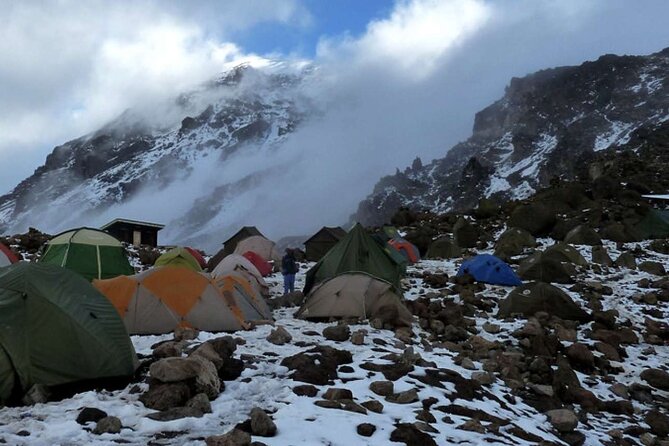
You stop around the middle of the day for your packed lunch. Later, you reach Machame Camp, usually in the late afternoon. The camp marks the end of the first day, but it is not the end of the work. Your crew will settle in, prepare food, and help organize the next morning.
The main challenge here is the combination of mud, roots, and uphill walking. Keep your rain protection easy to reach. The rainforest can feel warm and damp, and wet clothing is unpleasant when you still have six more days ahead.
Day two, Shira Camp and the first open views
After a 6:30am hot drink of coffee, tea, or hot chocolate, you have breakfast and leave the forest behind. The route enters moorland, where trees give way to smaller shrubs, open ground, and rocky ridges.
You climb from 3,000 meters to about 3,850 meters over nine kilometers. The walking time is listed as six hours. A steep rocky section leads toward a river gorge and then onward to the Shira Plateau.
This is one of the first days when Kilimanjaro feels broad and exposed. You may catch your first view of the Western Breach and its glaciers. The shift from forest to open high country is striking, and the air begins to feel thinner.
At Shira Camp, the cook provides boiled drinking water and a hot wash. That detail may sound small, but after a long day outside, warm water for cleaning your face and hands feels like luxury.
The key is not to rush. At this altitude, a pace that feels absurdly slow at home may be exactly right. Use rest stops to drink, eat, adjust layers, and notice how your body feels. The seven-day schedule gives you useful acclimatization time, but it does not remove the effects of altitude.
Day three, Lava Tower before Barranco Camp
Day three is the trek’s major acclimatization day and one of its hardest. You leave Shira Camp and spend four to five hours climbing toward Lava Tower at 4,600 meters. The route crosses semi-desert terrain, with sparse vegetation and volcanic rock.
The plan follows the basic climb high, sleep low approach. You reach a higher point for lunch and a short rest, then descend about 650 meters to Barranco Camp at roughly 3,950 meters. This gives your body time at altitude without forcing you to sleep at Lava Tower.
The total distance is about 12 kilometers, and the walking time is listed as seven hours. The gain and loss of elevation can make the day feel longer than the distance suggests. You may feel a headache, poor appetite, unusual tiredness, or shortness of breath. Tell your guide promptly if you feel unwell.
The descent toward Barranco brings some of the trek’s best photo opportunities. The terrain becomes more severe and bare, and the mountain’s upper features begin to feel close. Barranco Camp is not just a place to sleep. It is also the staging point for the next day’s famous wall.
More Kilimanjaro routes and climbs:
- Kilimanjaro climb by Lemosho Route (7-day)
★ 5.0 · 651 reviews - Kilimanjaro climb, Machame Route (7-day)
★ 5.0 · 262 reviews - Kilimanjaro Climbing Lemosho Route 8 Days.
★ 5.0 · 186 reviews - Climbing Kilimanjaro – Machame Route
★ 5.0 · 170 reviews
Day four, scrambling up Barranco Wall
After breakfast, you leave Barranco Camp for Karanga Valley. The route covers about seven kilometers with around 250 meters of elevation gain, and the stated trekking time is seven hours.
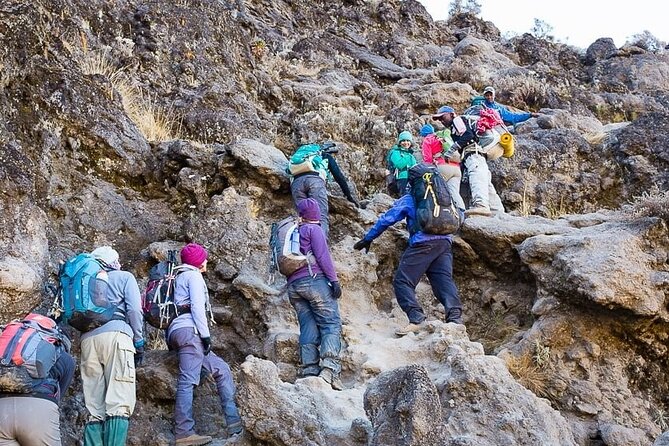
The Barranco Wall is the day’s main feature. The climb takes about an hour and a half and includes sections where you use your hands to pull yourself upward. It is a scramble rather than a technical rock climb, but you should expect uneven footing and a few moments that demand concentration.
The wall looks imposing from camp. Once you are on it, the route becomes a series of careful movements, ledges, and short climbs. Listen to your guide and avoid rushing. A private group can be especially helpful here because the pace can be adjusted to the people in your party.
Beyond the top, you descend into the greener Karanga Valley. The contrast is welcome after the dry rock around Barranco. The camp is generally placed on the ridge above the valley, which supports further acclimatization.
This is a shorter distance than day three, but do not treat it as an easy day. Scrambling uses your arms as well as your legs, and the altitude makes every effort count.
Day five, across the South Circuit to Barafu
The fifth day takes you from Karanga to Barafu Camp. The distance is about six kilometers, with 400 meters of elevation gain. The scheduled walking time is seven hours, which tells you that the route is not measured only by distance. Ridges, valleys, breaks, and altitude all slow the day.
As you walk, you can see several of Kibo’s glaciers. The route also reaches the junction where the Mweka descent connects with the Machame trail. From this point, you have completed the South Circuit and have viewed the summit from several angles.
The approach to Barafu is a mental turning point. The summit attempt is now close, and the camp sits in stark, high terrain. You can see the scale of the upper mountain more clearly, including views toward the Heim Glacier.
At Barafu, you should eat, drink, organize your summit clothing, and rest as much as possible. The next wake-up is scheduled for 11:30pm, with departure around midnight. That leaves little time for sleep, so keep your summit pack and clothing ready before dinner.
Day six, Uhuru Peak and the long descent
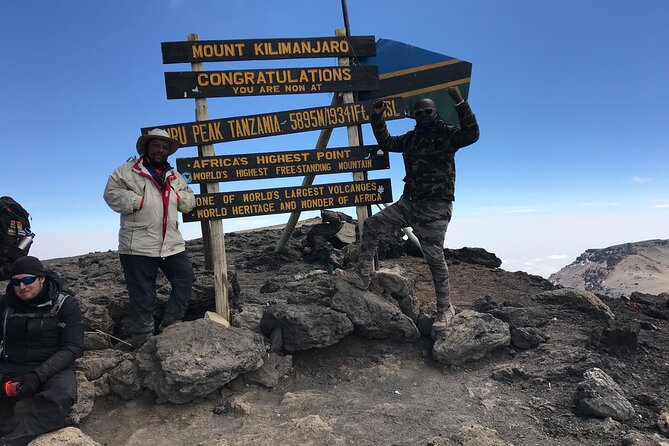
Summit day begins in darkness. You start around midnight with headlamps, following guides through stone scree and winding upper paths. The itinerary describes the route through the Ratzel and Rebmann Glacier area toward Stella Point.
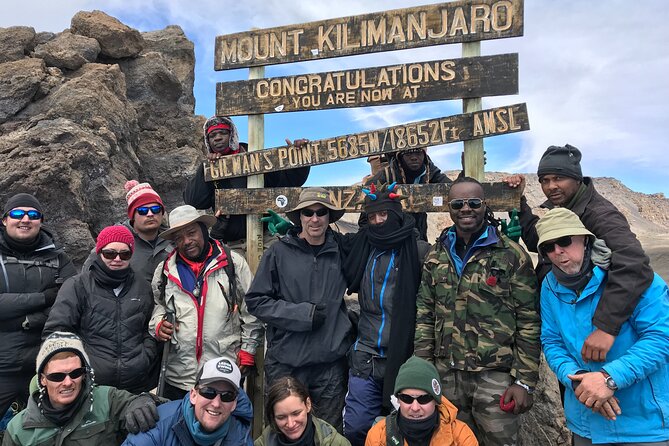
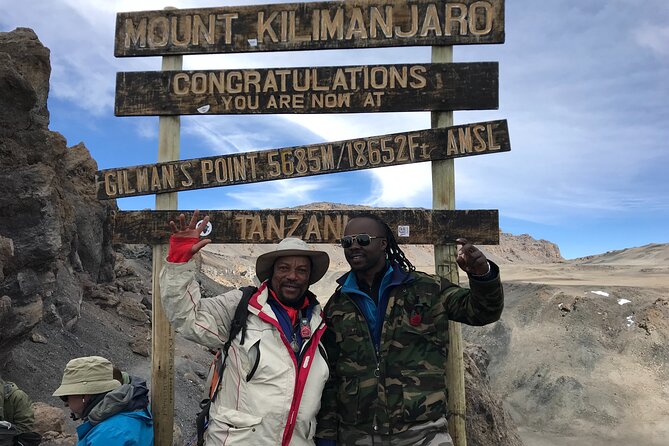
The ascent to Stella Point takes about six hours. This is usually the toughest physical section because the slope is long, the air is thin, and the surface can be loose. Move slowly, take small steps, and focus on the person directly ahead rather than the full height still above you.
The sunrise near Stella Point is one of the major rewards of the climb. From there, you continue toward Uhuru Peak, Africa’s highest point. The supplied elevation details list points from 4,600 meters through 5,732 meters and 5,895 meters, so you should confirm the exact route measurements with the operator before departure.
The listed summit ascent takes six to eight hours. After time for photographs and a short celebration, you begin the descent. The route covers about 23 kilometers downhill and takes another seven to eight hours, ending around 3,100 meters.
That makes this an exceptionally demanding day, even for a fit hiker. The descent can punish tired knees and feet. Good boots, trekking poles if you use them, and careful hydration are more useful here than bravado.
You finish at a lower camp after the summit push. Expect to feel tired, proud, hungry, and possibly a little dazed. Your crew’s work is particularly important on this day, since food, water, pacing, and encouragement all help you keep moving safely.
Day seven, Mweka Gate and a proper shower
The final morning begins with a celebratory breakfast and thanks to the mountain crew. This is also when you can give tips to the guides, porters, and cooks. Gratuities are not included, so prepare for this expense before the trek rather than treating it as an afterthought.
You then descend from about 3,100 meters to 1,800 meters at Mweka Gate. The walk covers around 10 kilometers and takes three to four hours. The route returns to rainforest, giving you one last change of scenery before the mountain is behind you.
At the gate, the program includes time for a celebratory beer or champagne while equipment is loaded into the vehicle. You then return to Kilimanjaro Wonders Hotel in Moshi for lunch and a hot shower.
Dinner and an achievement certificate complete the day. The hotel stop is more than a comfortable extra. After the summit night and long descent, a bed, a shower, and a proper meal help you recover before continuing to a safari, Zanzibar, or your flight home.
Guides, porters, and the private advantage
The most warmly praised part of the operation is the mountain crew. Past customers repeatedly singled out the friendly guides, cooks, and porters, with Saul receiving especially strong personal praise. Mvungi, Jonas, Jackie, Emmanuel, and Gaudence have also been named in connection with successful trips.
Owner Oscar is praised for quick replies and hands-on help with planning. That can be useful if you are combining the trek with a safari or a visit to the Kikuletwa Hot Springs. One account also describes an airport pickup and a helpful transfer driver before the climb.
A private trip does not mean you hike alone. You have a guide team and support staff around you, but only your own party participates. That format is best if you value direct communication, a flexible pace, and personal attention.
The porters’ role deserves respect. They carry camp equipment and supplies so the trek can function. Since their wages are separate from gratuities, ask the company for current guidance on tipping before you arrive.
Food, camping, and what the price covers
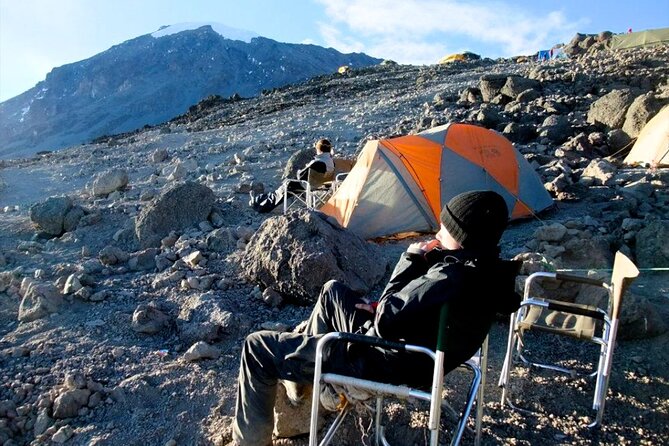
Food is included throughout the mountain program. The package lists seven lunches, six dinners, and six breakfasts, along with tents and boiled drinking water at camp. Hot drinks are served in the morning, and a hot wash is provided at least at Shira Camp.
You should not expect hotel-style dining on the mountain. The value comes from having a cook and a camp system that keeps meals moving while you concentrate on walking. Ask in advance about dietary needs because the supplied information does not list specific menu options.
Pre- and post-climb accommodation is included, with the final return to Kilimanjaro Wonders Hotel. Pickup is offered, and transfers are included as specified, but you should confirm exactly which airport, hotel, and transport services are covered in your booking.
Who should choose this trek?
This route suits you if you have strong physical fitness and want a full seven-day ascent rather than a rushed itinerary. It is also a good match for couples, families of older teenagers, and private groups who want their own guide team.
Children under 15 require special arrangements before trekking. The high altitude and summit-night schedule make this a serious undertaking, not a casual family outing.
You should also be comfortable camping for several nights and walking for up to seven hours on ordinary days. Summit day is far tougher, with up to eight hours of ascent followed by up to eight hours of descent.
The trip may not suit you if you want guaranteed comfort, a short summit approach, or a fully refundable booking. The cancellation terms are strict: the experience is non-refundable and cannot be changed for any reason. If poor weather forces cancellation, you are offered a different date or a full refund.
Should you book the $3,120 private climb?
I would consider this trek a good choice for someone who values a dedicated crew, a carefully staged route, and hotel comfort at both ends. The Lava Tower acclimatization day, private format, included meals, and post-climb shower add real value.
Before paying, confirm the exact inclusions for airport pickup, hotel nights, equipment storage, rental gear, and transfers. Also ask about the crew structure, current tipping guidance, dietary requests, and the elevation figures for summit day.
Book it if you want personal support and are ready for a demanding seven-day climb. Skip it if the price stretches your budget or if you need flexible cancellation. Kilimanjaro rewards patience and preparation, and this itinerary gives you a solid framework, provided you arrive fit and take the altitude seriously.
FAQ
How long does the Kilimanjaro trek last?
The experience lasts approximately seven days, including the approach, summit attempt, descent, and return to Moshi.
Which route does the trek use?
The climb follows the Machame Route, with descent by the Mweka Route after joining the South Circuit.
Is this a private tour?
Yes. Only your own group participates in the activity.
What is the price per person?
The listed price is $3,120 per person.
Are meals included?
Yes. The package includes food, seven lunches, six dinners, and six breakfasts.
Are tents included?
Yes. Tents are included in the experience.
Are guides and porters included?
Mountain crew salaries are included, including guides and transfers as specified. Personal gratuities for guides and porters are not included.
What fitness level is required?
You should have a strong physical fitness level. The summit day includes a six to eight hour ascent and a seven to eight hour descent.
What happens if bad weather cancels the climb?
If poor weather causes the experience to be canceled, you are offered a different date or a full refund. The experience is otherwise non-refundable and cannot be changed for any reason.
More 7-Day Experiences
- Climbing Kilimanjaro through 7 days Machame Route
★ 5.0 · 151 reviews - 7 Days Kilimanjaro via Machame route affordable price
★ 5.0 · 110 reviews - 7-Day Magical Tanzania Safari -Premium High End Package
★ 5.0 · 53 reviews - 7 Days Machame route – Kilimanjaro
★ 5.0 · 45 reviews
More Hiking & Trekking
- Best Kilimanjaro hiking day trip tour with Kilinge Adventures
★ 4.5 · 54 reviews - #1. Best Kilimanjaro Day hike Tour-Machame Route-ISMANI
★ 4.2 · 47 reviews - Best Kilimanjaro Adventure 7 days Machame route Trekking
★ 5.0 · 42 reviews - 8 Days Kilimanjaro Hike via Lemosho Route
★ 5.0 · 39 reviews
Just added around Moshi
- Moshi: Lake Chala Tour: Hiking &/or Kayaking★ 4.5 · 3 reviews
- 3 Days Tanga Exclusive Beach Holiday★ 5.0 · 3 reviews
- Serengeti Wildebeest Migration.★ 5.0 · 3 reviews
- Chemka Hotpsrings E-Bike Day Trip★ 5.0 · 3 reviews
- Explore 1 day Ngorongoro Crater Budget Group Safari from Arusha★ 5.0 · 3 reviews
- Explore the 360° of Kilimanjaro★ 5.0 · 3 reviews
- Affordable Short Tanzania Safari (2 Days Camping Safari)★ 5.0 · 3 reviews
- Rongai Route 7 Days★ 5.0 · 3 reviews
Kilimanjaro Treks, compared.



8-Day Small-group Lemosho Kilimanjaro Summit Trekking
Read our review →


Climbing Kilimanjaro through 7 days Machame Route
Read our review →

Browse the lists this tour appears in