
Reviewed · KILIMANJARO TREKS
Conquer Kilimanjaro: 5-Day Marangu Route Adventure
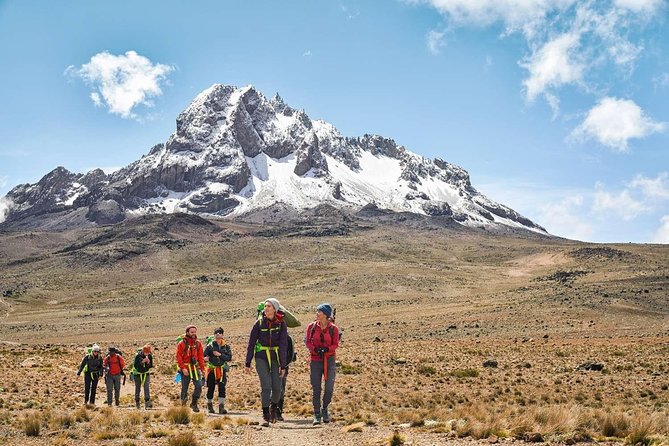
Kilimanjaro rewards steady feet and patience. This five-day climb from Moshi takes you through rainforest, moorland, alpine desert, and volcanic rock before the final push to Uhuru Peak, Africa’s highest point. I like the all-inclusive structure, which covers mountain staff, huts, meals, transfers, fees, water, emergency oxygen, and basic first aid.
I also like the private guiding arrangement. Your group has its own qualified guide rather than joining a large mixed party, and the mountain team includes assistant guides, porters, and a cook. The main concern is the tight five-day schedule. It is a serious ascent with only a short time to adjust to altitude, so this route suits fit hikers with some mountain experience better than first-time high-altitude climbers.
In This Review
- Key Points Before You Book
- What the $1,854 Price Really Covers
- Day One: Marangu Gate to Mandara Huts
- Day Two: Moorland Views on the Way to Horombo
- Day Three: Alpine Desert and Kibo Hut
- Day Four: The Long Push to Uhuru Peak
- Day Five: Back Through the Forest to Moshi
- Huts, Food, Water, and Washing
- Who This Five-Day Climb Suits Best
- Guides, Porters, and the Human Side of the Climb
- Booking, Cancellation, and Final Practical Checks
- Should You Book the Marangu Route?
- FAQ
- How long is the Kilimanjaro tour?
- What route does the tour use?
- Is airport transportation included?
- Are meals included?
- Is drinking water provided?
- Is emergency oxygen included?
- Is this a private tour?
- What is not included in the price?
Key Points Before You Book
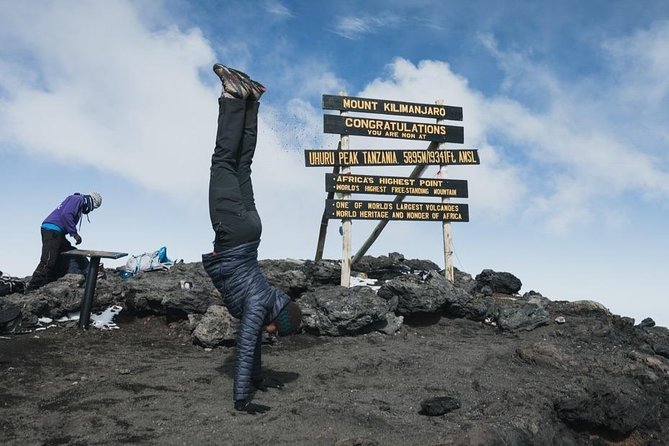
- Midnight summit start: You begin the hardest section around midnight, climb to Gilman’s Point, and continue toward Uhuru Peak for sunrise.
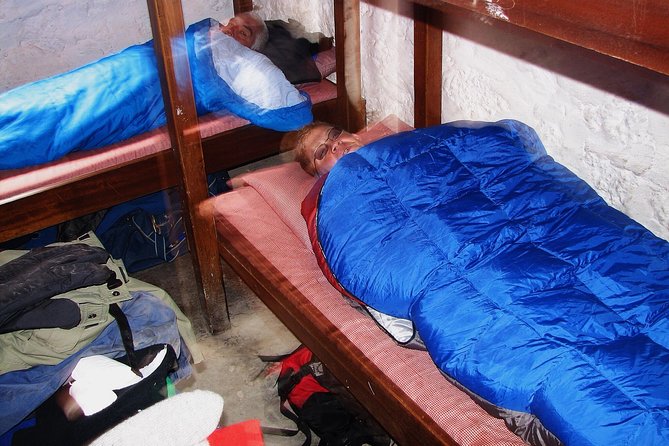
- Huts instead of tents: The Marangu Route uses overnight huts at Mandara, Horombo, and Kibo, giving you a firmer roof and bed platform on the mountain.
- A fast five-day schedule: The climb reaches 5,895 meters in a short period, leaving little spare time for altitude adjustment.
- Mountain staff included: Your price covers guides, assistant guides, porters, and a cook, including their wages.
- Moshi transfers included: Pickup and return arrangements include transfers from Kilimanjaro International Airport, as well as the return to Moshi.
- Strong praise for the team: Feedback highlights guides and staff members including Frazier, J.T., Jonas, Julius, Yassin, and Chris, along with good food and careful organization.
What the $1,854 Price Really Covers
The listed price is $1,854 per person. That is not a bargain-basement mountain trip, but it includes many costs that can quickly add up on Kilimanjaro. You receive all fees and taxes, airport transfers, mountain transport, accommodation, meals, drinking water, hot water for washing, emergency oxygen, a basic first aid kit, and the wages of your mountain crew.
The staff package matters most. Your guide is not working alone. Assistant guides, porters, and a cook support the climb, carry supplies, prepare meals, and help keep the group moving. The cost also includes five breakfasts, five lunches, and four dinners, which means your food on the mountain is covered for the full climbing period.
You still need to budget for flights, visas, insurance, personal medication, snacks, drinks not listed, water-purifying tablets, and personal trekking gear. A portable toilet is optional but highly recommended, and it costs extra. You may also rent some equipment from stores in Tanzania rather than bringing every item from home.
I see good value here if you want a private climb with the main practical costs handled in advance. The price becomes less attractive if you already own all your gear, arrange your own airport transfers, or prefer a longer route with more time for acclimatization. Group discounts are offered, so groups should ask how the price changes before paying.
More Kilimanjaro routes and climbs:
- Kilimanjaro climb by Lemosho Route (7-day)
★ 5.0 · 651 reviews - Kilimanjaro climb, Machame Route (7-day)
★ 5.0 · 262 reviews - Kilimanjaro Climbing Lemosho Route 8 Days.
★ 5.0 · 186 reviews
Day One: Marangu Gate to Mandara Huts
Your first day begins after breakfast with a drive from Moshi to Marangu Gate. Registration takes place at the gate, then you begin walking through dense rainforest toward Mandara Huts.
The elevation rises from 1,870 meters to 2,720 meters. The route covers about 8 kilometers and takes roughly three to four hours, although the supplied schedule allows about five hours for the full stop. That extra time is useful for a relaxed pace, breaks, and the formalities at the gate.
The rainforest is the most enclosed section of the climb. You might spot colobus monkeys among the trees, giving the first day more character than a simple uphill walk. The forest also provides shade, but the combination of damp air, roots, and steady climbing can make the trail feel harder than the distance suggests.
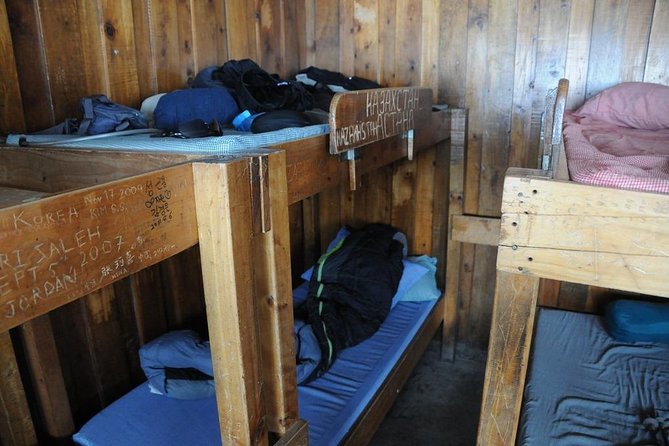
Mandara Huts are your first overnight stop. This is a useful advantage of the Marangu Route. You sleep in a hut rather than a tent, which gives the route a more settled feel at the end of each day. Do not mistake that comfort for an easy climb, though. You are already gaining altitude, and the next two days are longer and higher.
I would use day one to learn your guide’s pacing system, organize your personal gear, and drink regularly. Your guide and support crew are there to help, so tell them early if you feel unwell rather than trying to hide a problem.
Day Two: Moorland Views on the Way to Horombo
The second day takes you from Mandara Huts to Horombo Huts. You climb from 2,720 meters to 3,720 meters, cover about 12 kilometers, and walk for six to seven hours.
You pass through the final stretch of rainforest before entering rolling moorland. The change is noticeable. Trees thin out, views open, and the mountain feels larger around you. Horombo is a particularly scenic overnight stop, with views toward Kibo and Mawenzi peaks.
This day is longer than the first, but the walking time is spread across a route that gradually changes in character. I like this section because it gives you a clear sense of progress. You leave the enclosed forest and begin seeing the volcanic peaks that define the climb.
The drawback is altitude. Horombo is high enough for many climbers to notice reduced energy, headaches, or poor sleep. The five-day plan does not include an extra acclimatization day, so you need to take the slow pace seriously. A fast hiker may feel tempted to push ahead here, but saving energy is more useful than arriving early.
The mountain crew receives particularly strong praise for the care provided on these nights. Guides such as Julius, Yassin, and Chris are singled out in the supplied feedback for patience, encouragement, organization, and professional handling of the climb. The cook also receives repeated praise, with good meals described as an important part of the experience.
Day Three: Alpine Desert and Kibo Hut
On day three, you leave Horombo and climb toward Kibo Hut. The route rises from 3,720 meters to 4,703 meters, covers around 10 kilometers, and takes five to six hours.
The setting changes again as moorland gives way to alpine desert. Vegetation becomes sparse, the ground becomes more rugged, and the surroundings feel more exposed. This is the day to conserve energy, because the summit attempt begins soon after you reach Kibo.
The schedule identifies Kibo as the final stop before the summit. You should expect a functional overnight stay rather than a leisurely evening. Eat, organize your summit clothing and equipment, and rest as much as possible. The supplied timing places the summit departure around midnight, so your night will be short.
This is also the clearest point at which the five-day format shows its limits. You have moved from 1,870 meters at the gate to more than 4,700 meters in only three days. I would consider that a demanding progression even for a strong hiker. The route is described as suitable for intermediate-plus climbers with limited time, not as a gentle introduction to high-altitude trekking.
Emergency oxygen is included, but it is for emergencies only and is not intended to help you reach the summit. That distinction is important. Oxygen equipment does not replace acclimatization, sensible pacing, or the guide’s decision-making.
A few more trips of this kind worth comparing:
- 5 Days Camping Tarangire, Serengeti & Ngorongoro crater & Visiting Maasai
★ 5.0 · 58 reviews - 5-Day Majestic Tanzania Safari – High End All Inclusive
★ 5.0 · 44 reviews - 5 Day Mid range Tanzania Safari
★ 5.0 · 34 reviews - Safari in Tanzania 5 days: Manyara, Ngorongoro, Serengeti
★ 5.0 · 29 reviews
Day Four: The Long Push to Uhuru Peak
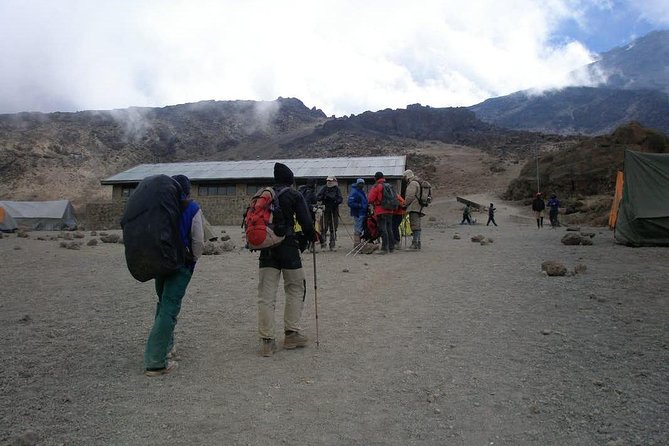
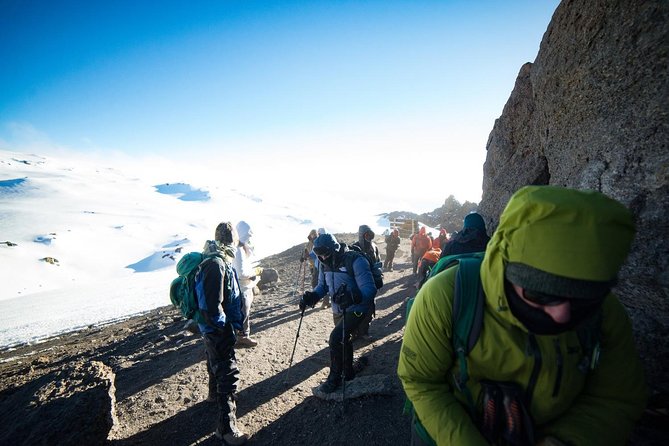
Summit day is the heart of the trip and the part that demands the most from you. You start around midnight from Kibo, climbing steeply over scree and volcanic rock toward Gilman’s Point at 5,685 meters.
From Gilman’s Point, you continue to Uhuru Peak at 5,895 meters. The total day covers about 16 kilometers and takes 10 to 14 hours. The schedule allows roughly 12 hours, including the descent to Kibo Hut and the continued walk to Horombo Huts.
The midnight start has a practical purpose. It gives you a chance to reach the summit around sunrise, when the Roof of Africa can glow above the surrounding peaks. It also means you tackle the steepest section before the day becomes warmer. Still, night walking, altitude, cold, and loose volcanic ground combine to make this a hard physical test.
Your guide’s role matters greatly here. The supplied feedback repeatedly praises the mountain teams for motivation, patience, reassurance, and careful support. Frazier, J.T., Jonas, Julius, Yassin, and Chris are among the staff members named positively, while the porters are praised for efficiency and helpfulness. That kind of personal support can make a real difference when each step becomes slow.
After Uhuru Peak, you descend to Kibo Hut for a short rest, then continue down to Horombo. This is a very long day, and the descent is not an afterthought. Knees and feet take a beating on the way down, especially after the summit climb. Keep some energy for the second half of the day and avoid treating the summit as the end of the effort.
Reaching the summit is not guaranteed. The guide has to make decisions based on conditions and your health, and you should accept that safety comes before the certificate. The route description promises an attempt at Uhuru Peak, not a guaranteed summit.
Day Five: Back Through the Forest to Moshi
The final day begins at Horombo and descends through the moorland and rainforest, passing Mandara Huts before reaching Marangu Gate. The listed distance is about 20 kilometers, with six to seven hours of walking.
After the effort of summit day, this long descent can feel surprisingly tiring. The direction is easier on your breathing, but your legs may still be sore. The familiar huts and changing vegetation give the walk a satisfying sense of closure as you return to the forest.
At Marangu Gate, you receive summit certificates before being driven back to Moshi for a celebratory evening. The activity ends at the Moshi meeting point. Airport transfers are included, but you should confirm the timing of any flight separately, since the final descent and drive take most of the day.
Huts, Food, Water, and Washing
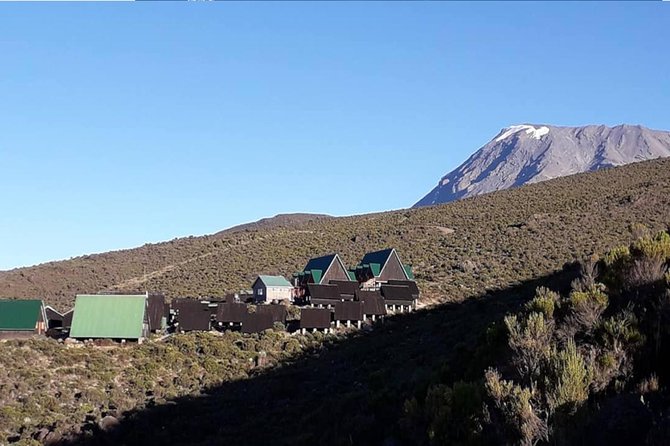
The Marangu Route is often chosen by people who prefer huts to camping. That does not mean a hotel-style stay. The huts provide a basic mountain shelter, while the experience remains physically demanding and outdoors-focused.
The operator supplies breakfast, lunch, and dinner during the climb. The cook is praised for preparing delicious meals on the mountain, which is valuable when your appetite and energy are under pressure. You should still bring personal snacks and drinks if you want them, since those are not included unless specifically stated.
Fresh drinking water is included, along with hot water for a daily wash. That small comfort can matter after several hours of walking. Water-purifying tablets remain your responsibility, as do personal medicines and any special dietary items not covered by the stated meal plan.
A portable toilet is optional but strongly recommended. Since the standard package does not include one, you should decide before departure if that added privacy is worth the extra cost.
Who This Five-Day Climb Suits Best
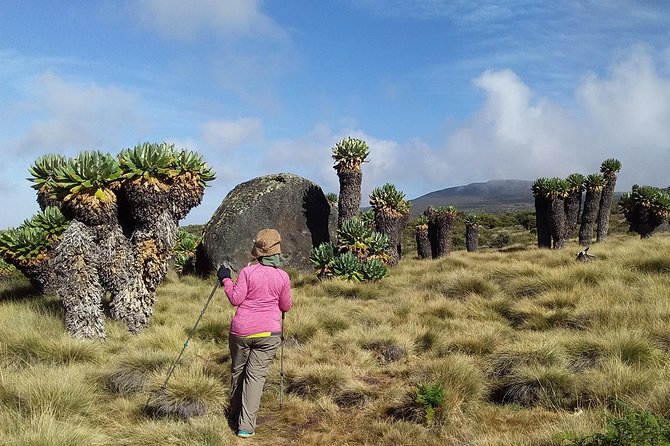
I would recommend this trip to a fit hiker who has some mountain experience, has limited time, and wants a private group with a full support crew. It is also a good match if hut accommodation appeals to you more than sleeping in tents.
The route may suit you if:
- You want to reach Kilimanjaro’s summit in five days.
- You prefer a private activity for your own group.
- You value a guide, assistant guides, porters, and cook included in the price.
- You want meals, water, washing water, mountain fees, and transfers arranged.
- You are comfortable with a midnight start and a 10 to 14-hour summit day.
I would be cautious if you have no hiking background, are unused to long uphill days, or want plenty of time to adjust to altitude. The schedule is compact, and the jump from Horombo to Kibo is demanding. Ask the operator about adding time if your dates and budget allow it, although the supplied program itself is fixed at five days.
Most people can participate according to the stated information, but that should not replace your own medical advice. Travel and health insurance are not included. A yellow fever vaccination is compulsory if you are traveling to Tanzania and Kenya, so check your wider trip requirements before departure.
Guides, Porters, and the Human Side of the Climb
The strongest part of this experience is the mountain team. Personal attention from the guides is built into the private format, and the feedback places clear emphasis on organization, encouragement, efficient porters, and good cooking.
Several staff members are named with warmth, including Frazier, J.T., Jonas, Julius, Yassin, and Chris. You should not assume that one particular guide will lead your climb, but these names show the level of individual recognition the company has received from past customers.
The porters carry supplies and help keep the mountain camp functioning. Their work is essential to the comfort promised by the trip, and their wages are included. I would still ask for clear information about porter welfare, luggage limits, tipping expectations, and the size of your support crew before departure. Those details are not specified here, and it is better to understand them in advance.
Booking, Cancellation, and Final Practical Checks
Pickup is offered, and the start and end point is Moshi Urban. Airport transfers from Kilimanjaro International Airport are included. Confirmation is provided at booking, and the activity operates every day according to the stated opening hours.
Free cancellation is available if you cancel at least 24 hours before the start time. Cancellations or changes made inside that window are not accepted for a refund, and all cut-off times use local Tanzanian time.
Before paying, I would confirm the exact meeting time, gear rental options, group discount, porter arrangements, dietary needs, and the plan for summit-day rest. None of those questions undermines the trip. They simply help you match a demanding climb with the right preparation.
Should You Book the Marangu Route?
I would book this five-day Marangu climb if I wanted a private, well-supported Kilimanjaro attempt and had limited time. The huts, included meals, airport transfers, mountain staff, emergency equipment, and hot washing water give the price real substance. The repeated praise for the guides, cook, porters, and organization is also encouraging.
I would not choose it solely because five days sounds convenient. The route gains altitude quickly, and summit day can last up to 14 hours. If you are fit, prepared, and honest about your limits, Pinnacle Adventures and Safaris offers a practical way to attempt Uhuru Peak with a capable support structure. If you need more time to acclimatize, ask about a longer itinerary before committing.
FAQ
How long is the Kilimanjaro tour?
The climb lasts approximately five days, beginning and ending in the Moshi area.
What route does the tour use?
The tour uses the Marangu Route, with overnight stops at Mandara Huts, Horombo Huts, and Kibo Hut.
Is airport transportation included?
Yes. Transfers to and from Kilimanjaro International Airport are included.
Are meals included?
Yes. The package includes five breakfasts, five lunches, and four dinners.
Is drinking water provided?
Yes. Fresh water for drinking and hot water for a daily wash are included.
Is emergency oxygen included?
Yes. Emergency oxygen and a basic first aid kit are included. The oxygen is for emergencies only and is not provided as summit assistance.
Is this a private tour?
Yes. Only your group participates in the activity.
What is not included in the price?
Flights, visas, health and travel insurance, personal trekking gear, personal medicine, water-purifying tablets, and meals, snacks, or drinks not specifically included are excluded. A portable toilet is optional but highly recommended.
Just added around Moshi
- Moshi: Lake Chala Tour: Hiking &/or Kayaking★ 4.5 · 3 reviews
- 3 Days Tanga Exclusive Beach Holiday★ 5.0 · 3 reviews
- Serengeti Wildebeest Migration.★ 5.0 · 3 reviews
- Chemka Hotpsrings E-Bike Day Trip★ 5.0 · 3 reviews
- Explore 1 day Ngorongoro Crater Budget Group Safari from Arusha★ 5.0 · 3 reviews
- Explore the 360° of Kilimanjaro★ 5.0 · 3 reviews
- Affordable Short Tanzania Safari (2 Days Camping Safari)★ 5.0 · 3 reviews
- Rongai Route 7 Days★ 5.0 · 3 reviews
Kilimanjaro Treks, compared.



8-Day Small-group Lemosho Kilimanjaro Summit Trekking
Read our review →


Climbing Kilimanjaro through 7 days Machame Route
Read our review →

Browse the lists this tour appears in