
Reviewed · KILIMANJARO TREKS
Kilimanjaro Climb – 6 Days Marangu Route
Kilimanjaro rewards steady effort. This six-day Marangu Route climb appeals because you sleep in permanent mountain huts instead of tents, and the plan includes a full acclimatization day at Horombo. I also like the practical support: airport transfers, park fees, three hot meals a day, guides, porters, a cook, oxygen, and basic emergency equipment are bundled into the price. The main concern is the route’s short schedule, which gives you less time to adjust to altitude and can make summit night especially demanding.
I like the fact that this is a private trip for your group, rather than a large mixed departure. I also appreciate the straightforward start in Moshi, with a briefing, gear check, and a chance to hire needed equipment before heading uphill. Still, Marangu is not the easiest route simply because it has huts. Its summit push is steep, the ascent and descent share the same trail, and the published plan itself warns of a lower summit success rate than longer routes.
In This Review
- Key points to know before you book
- Starting in Moshi with a useful gear check
- Day 1: Marangu Gate to Mandara Huts through rainforest
- Day 2: Mandara to Horombo across the moorland
- Day 3: A full acclimatization day at Horombo Hut
- Day 4: Horombo to Kibo Hut across the high desert
- Day 5: The steep summit night to Uhuru Peak
- Day 6: Horombo Hut back to Marangu Gate
- What the $2,200 price really covers
- The people who make the climb work
- Who should choose the six-day Marangu Route
- Booking, cancellation, and practical details
- Should you book this Kilimanjaro climb?
- FAQ
- How long does the Kilimanjaro Marangu Route climb take?
- Where does the experience begin?
- Is airport transportation included?
- How much does the climb cost?
- Are meals included during the climb?
- Is accommodation included?
- What fitness level is required?
- Is the climb private?
- What equipment and safety support are included?
- Can I cancel for a full refund?
Key points to know before you book
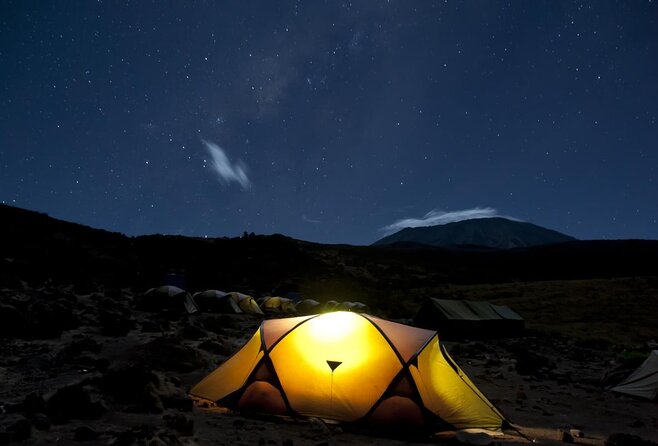
- Permanent huts at every overnight camp: You sleep in mountain huts rather than carrying or using tents, a major comfort on a high-altitude climb.
- A full acclimatization day at Horombo: This rest and short-hike day is one of the most valuable parts of the six-day plan.
- A steep summit night from 4,700 meters: The route passes Gilman’s Point before reaching Uhuru Peak, Africa’s highest point.
- The same trail goes up and down: Marangu is easier to follow, but it can feel busier and offers less variety in scenery.
- A substantial support team is included: Guides, porters, a cook, meals, oxygen, an oximeter, and first-aid supplies are part of the package.
- The price is $2,200 per person: That is a serious outlay, but it covers many of the expensive operating costs of a guided Kilimanjaro climb.
Starting in Moshi with a useful gear check
Your climb begins with pickup at Kilimanjaro International Airport in Tanzania. Private transport takes you to your hotel in Moshi, or to Arusha according to the arrangements, where you spend the first night before the trek.
The pre-climb briefing matters more than it may sound. Your head guide goes over Mount Kilimanjaro and the Marangu Route, checks your gear, and helps arrange equipment hire if something is missing. That gives you a chance to solve practical problems before you are walking uphill, rather than discovering on the first morning that your clothing or footwear is not suitable.
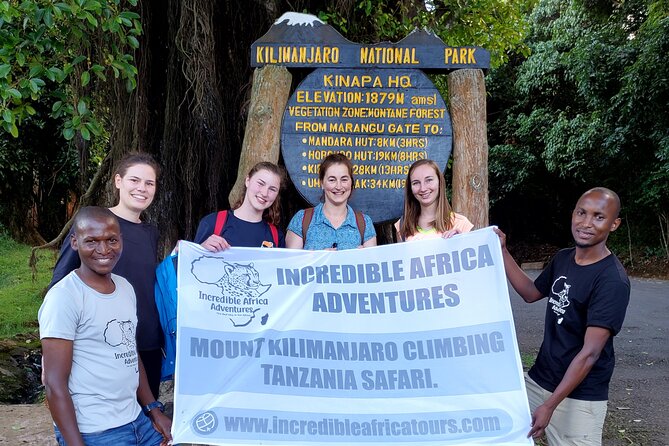
The provider is Incredible Africa Adventures. The strongest praise in the available feedback centers on Octavian, who handled planning and adapted the adventure to individual needs. The trekking guides named are Alex, Rafael, and Manme, all praised for attentive care and professional conduct. King, the chef, also received special credit for keeping the climbing team well fed.
That staff support is important here. A Kilimanjaro climb is not just a walk with a view. You need careful pacing, regular meals, camp organization, and people who notice when you are struggling. The package includes a professional guide team, cook, and porters, so much of that burden is taken from your shoulders.
More Kilimanjaro routes and climbs:
- Kilimanjaro climb by Lemosho Route (7-day)
★ 5.0 · 651 reviews - Kilimanjaro climb, Machame Route (7-day)
★ 5.0 · 262 reviews - Kilimanjaro Climbing Lemosho Route 8 Days.
★ 5.0 · 186 reviews
Day 1: Marangu Gate to Mandara Huts through rainforest
The first walking day covers about 7 kilometers and takes roughly four to five hours. You gain around 950 meters before reaching Mandara Hut at 2,750 meters.
The route begins at Marangu Gate inside Kilimanjaro National Park. Park registration and entry procedures take time, so do not expect to step out of the vehicle and begin walking at once. Once underway, the rainforest gives you a gentle visual introduction to the mountain. The air is greener and more enclosed at this stage, and the trail feels more like a highland forest walk than a summit expedition.
This is a manageable opening day, but the altitude gain is still meaningful. The best approach is slow and calm. You do not need to prove anything on day one. Let the guide set the pace, drink regularly, and keep your effort controlled.
Mandara Huts provide the first night indoors. That is one of Marangu’s clearest advantages. You avoid sleeping in a tent, and the hut system can feel reassuring if you are new to high-altitude trekking. The drawback is that hut accommodation is shared, so you should not expect a private room or hotel-style quiet.
Day 2: Mandara to Horombo across the moorland
Day two is longer, with about 11 kilometers of walking over five to six hours. The route climbs another 1,030 meters, bringing you to Horombo Hut at 3,780 meters.
The rainforest gradually gives way to open moorland. The change in scenery is part of the appeal of Kilimanjaro: the enclosed forest falls behind, and the surroundings become more exposed and spacious. You will feel the climb more clearly here because the altitude is rising quickly.
Horombo is a key camp on this route. It is both an overnight stop and the base for the next day’s acclimatization work. The hut sits high enough that altitude symptoms may begin to appear, even if your legs still feel strong. Headache, poor sleep, low appetite, or unusual tiredness should not be brushed aside. Tell your guide what you are feeling.
The day’s distance is not extreme on paper, but the altitude gain makes it tougher than a similar walk at home. I would treat this as a day for discipline rather than speed. Your goal is to arrive with enough energy for the next stage, not to reach camp first.
Day 3: A full acclimatization day at Horombo Hut
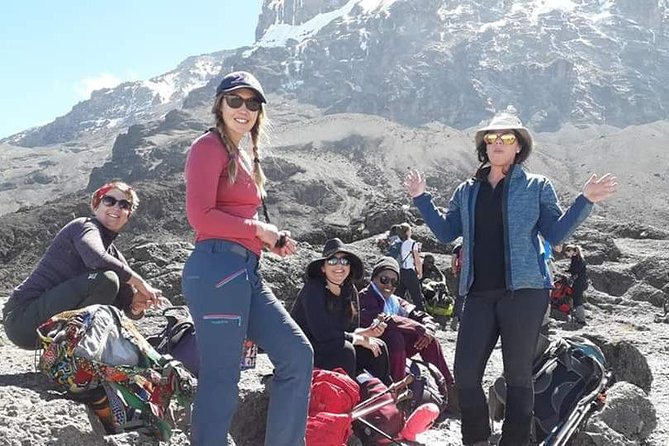
The third day is a major reason to consider this six-day schedule. You stay at Horombo Hut and rest, with short guided hikes in the surrounding area to help your body adjust.
This is not a wasted day. It breaks up the rapid climb from the gate to Kibo Hut and gives your guide a better chance to monitor how you respond to altitude. The short hikes also keep you moving without adding a full camp-to-camp transfer.
You should use the rest periods well. Eat even if your appetite is weak, drink the hot meals and fluids provided, and avoid turning the day into a hard workout. The purpose is to arrive at the summit attempt in the best condition possible.
There is still a limitation. One extra day is helpful, but six days remains a short Kilimanjaro itinerary. The Marangu Route is often selected by people with limited time because it can be completed faster, yet that speed comes at a cost. You have fewer days to acclimatize than on longer routes, and the summit success rate tends to be lower.
A few more trips of this kind worth comparing:
- Kilimanjaro climb, Lemosho Route (6-day)
★ 5.0 · 129 reviews - Kilimanjaro climb, Marangu route (6-day)
★ 5.0 · 72 reviews - 6 Days 5 Night Safari
★ 5.0 · 57 reviews - 6 Days Tanzania Classic Safari
★ 5.0 · 52 reviews
Day 4: Horombo to Kibo Hut across the high desert
The fourth day covers about 12 kilometers in five to six hours. You gain approximately 920 meters and sleep at Kibo Hut, at 4,700 meters.
The setting becomes much harsher and more open as you leave the moorland behind. The description of this section as desert is useful: there is less shelter, the air is thinner, and the surroundings feel more severe. This is the stage where the climb changes from a steady uphill trek into preparation for a serious night ascent.
Kibo Hut is the final sleeping point before the summit. At 4,700 meters, simply resting can feel difficult. Your body may not respond normally, and you may sleep poorly before the climb begins. That is common enough to plan for, but not something to dismiss if you feel seriously unwell.
The guide team, cook, and porters are especially valuable here. You are not responsible for organizing camp food or carrying the full load, and the included three hot meals each day give you a better chance of keeping your energy up. Portable oxygen, an oximeter, and an emergency first-aid kit are also included. These supplies do not remove the risks of altitude, but they show that the operator has planned for basic mountain emergencies.
Day 5: The steep summit night to Uhuru Peak
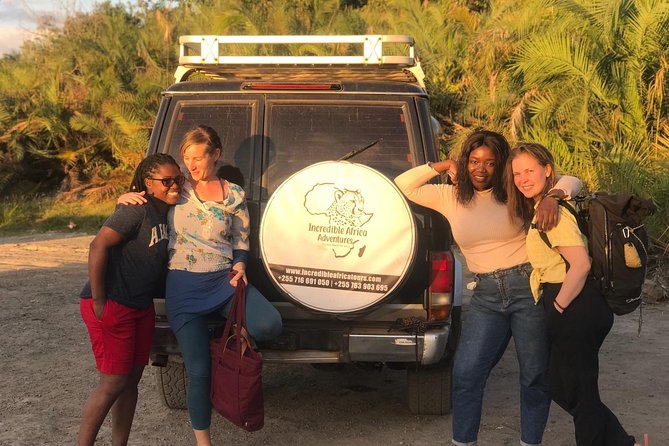
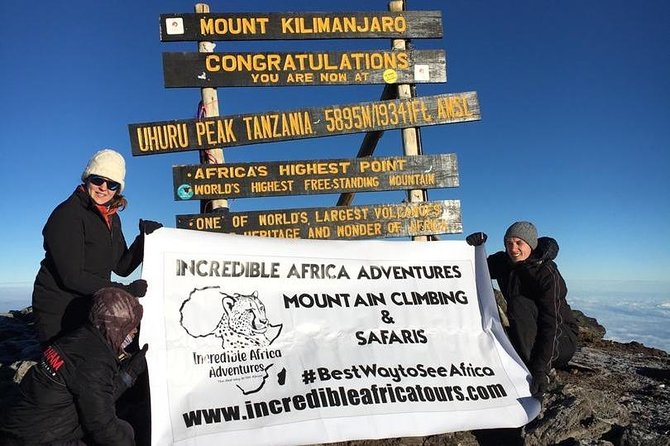
Summit day begins from Kibo Hut and is the hardest part of the climb. The ascent covers about 7 kilometers and takes six to eight hours, with roughly 1,145 meters of altitude gain.
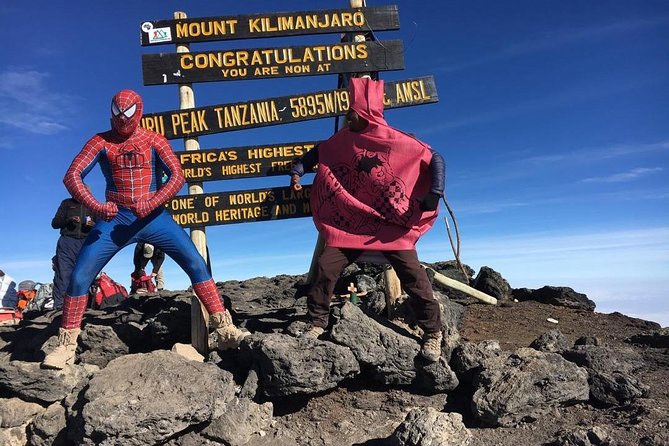
The route is steep, slow, and physically demanding. It passes Gilman’s Point before continuing to Uhuru Peak. You will spend only a short time at the summit before beginning the descent, so the goal is to reach the top safely, take in the achievement, and turn around before fatigue becomes a larger problem.
This is where Marangu’s short format is most demanding. You have reached 4,700 meters after only a few days, and the final climb begins when most people would normally be asleep. The permanent huts make the nights more comfortable than tent camping, but they do not make the summit altitude easier.
After reaching the summit area, you descend for another five to six hours over about 12 kilometers, losing approximately 2,175 meters. That is a long day in both directions. Your knees and feet may take more punishment on the downhill than on the ascent, so poles and well-tested footwear are practical choices.
The summit experience is not guaranteed. Physical fitness helps, but acclimatization, health, pacing, and weather all matter. A good guide should help you make sensible decisions rather than pushing you beyond a safe limit. The supplied feedback repeatedly praises the staff for encouragement and care, including the way the guides helped first-time high-altitude climbers keep confidence during a difficult ascent.
Day 6: Horombo Hut back to Marangu Gate
After the summit day, you return from Horombo Hut to Marangu Gate. This final trek is listed at about 18 kilometers and five to seven hours, with an altitude loss of around 1,878 meters.
It is a long walk when your body is already tired, but the direction is finally downhill. The scenery also changes again as you move from the higher zones toward the forest. You may find the return less exciting than the summit approach, yet it gives you time to process what you have done without rushing directly into a vehicle.
At Marangu Gate, you receive your Kilimanjaro summit certificate. You are then transferred back to your hotel in Moshi or Arusha. Note that the package does not include lunches, dinners, or drinks at your hotel before and after the climb, so budget separately for those costs.
What the $2,200 price really covers
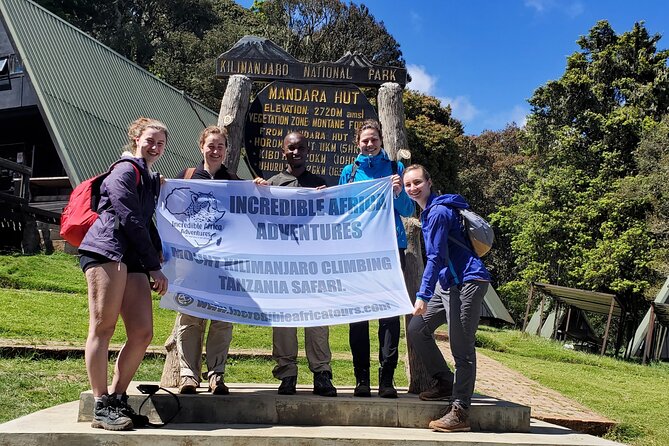
At $2,200 per person, this is not a cheap holiday, but the price includes several major costs. You receive private transport to and from Kilimanjaro Airport, accommodation, park fees, taxes, three hot meals each day on the mountain, guides, porters, a cook, portable oxygen, an oximeter, and an emergency first-aid kit.
Park fees alone make guided Kilimanjaro climbs expensive. Add food, mountain staff, transport, huts, permits, and logistics, and the package becomes easier to judge as a full-service climb rather than a simple six-day walk.
You still need to budget for travel insurance, personal items, toiletries, hotel meals and drinks, and tips for the guides, porters, and cook. Tips are not a minor detail on a supported mountain climb. Ask the company before departure how tipping is handled and whether the team shares gratuities through a recommended system.
The private format adds value if you care about flexibility and direct attention. Your group participates alone, so the pace and daily support are not tied to a large public departure. If you are trying to keep costs as low as possible, though, the price may feel high compared with a basic group arrangement.
The people who make the climb work
The most positive details concern the human side of the operation. Octavian is praised for anticipating needs and adjusting the adventure to suit the group. Alex, Rafael, and Manme are named as guides who were caring, professional, and alert to what the climbers needed.
King and the kitchen team also earned special praise. That matters because food becomes part of your climbing strategy at altitude. Three hot meals a day give you regular chances to replace energy, and a dependable cook can make camp life far more manageable.
Another account describes cheerful guides who made a first high-altitude climb feel less intimidating. That is useful if this is your first mountain above 4,000 meters. Good morale does not replace acclimatization, but it can help you keep moving through the long hours.
The available feedback also includes positive comments about a four-day Mount Meru climb and a six-day safari with the same company. Those trips are different products, so they cannot prove how your Kilimanjaro climb will unfold. They do suggest that the company handles several types of northern Tanzania adventure and puts real emphasis on staff service.
Who should choose the six-day Marangu Route
I would consider this route if you have limited time and want the simplest sleeping arrangement on Kilimanjaro. The huts are a clear advantage if carrying or sleeping in a tent does not appeal to you.
It also suits a private group that values direct support from guides and wants airport transfers included. The full day at Horombo gives the schedule more breathing room than an itinerary that climbs every day without a rest period.
You should think twice if your top priority is the highest possible summit chance. The route is shorter, steeper, and offers less time for acclimatization than longer options. The fact that you use the same trail for ascent and descent may also reduce the sense of changing scenery.
A strong fitness level is required. You should be comfortable with repeated uphill walking, long days on your feet, and a particularly demanding summit day followed by a major descent. Fitness cannot guarantee the summit, but poor preparation will make the schedule much harder.
Booking, cancellation, and practical details
Confirmation is provided at the time of booking. The experience is booked, on average, about 18 days ahead, but I would not leave a mountain trip to the last minute if you need flights, insurance, equipment, or extra hotel nights.
You can cancel up to 24 hours before the local start time for a full refund. Changes made inside that 24-hour window are not accepted, and late cancellations are not refunded. Poor weather or failure to reach the required minimum number of participants can also lead to a date change, another experience, or a full refund.
The meeting point is Kilimanjaro International Airport and Kilimanjaro National Park in Tanzania. The experience is near public transportation, but private airport transport is included. The supplied details do not specify the exact hotels, hut room arrangements, group size beyond the private format, or the equipment available for hire, so ask those questions before paying.
Should you book this Kilimanjaro climb?
Book it if you want a six-day private climb with hut accommodation, organized transfers, hot mountain meals, and a staff team that receives strong praise for care and encouragement. It is a practical choice for a climber with limited time who accepts that Marangu trades acclimatization time for a shorter schedule.
I would not choose it simply because it is called the Coca Cola route or because huts sound easy. The summit night is steep, the altitude is serious, and the schedule gives your body less time to adjust. If you are fit, prepared, properly insured, and comfortable with that tradeoff, the $2,200 package offers solid value for a fully supported Kilimanjaro attempt.
FAQ
How long does the Kilimanjaro Marangu Route climb take?
The climb lasts approximately six days. It includes five walking stages, with a full acclimatization day at Horombo Hut.
Where does the experience begin?
The meeting point is Kilimanjaro International Airport in Tanzania, with Kilimanjaro National Park also listed as a meeting location.
Is airport transportation included?
Yes. Private transport to and from Kilimanjaro International Airport is included.
How much does the climb cost?
The listed price is $2,200 per person.
Are meals included during the climb?
Yes. Three hot meals daily while you are on the mountain are included. Hotel lunches, dinners, and drinks before and after the climb are not included.
Is accommodation included?
Yes. Accommodation is included, along with overnight stays at the mountain huts listed in the itinerary.
What fitness level is required?
You should have a strong physical fitness level. The summit night includes six to eight hours of ascent, followed by five to six hours of descent.
Is the climb private?
Yes. This is a private activity, and only your group participates.
What equipment and safety support are included?
Portable oxygen tanks, an oximeter, and an emergency first-aid kit are included. A pre-climb gear check is also provided, and you can arrange to hire equipment you need.
Can I cancel for a full refund?
Yes, if you cancel at least 24 hours before the experience start time. Cancellations made later are not refunded, and changes inside that period are not accepted.
Just added around Moshi
- Moshi: Lake Chala Tour: Hiking &/or Kayaking★ 4.5 · 3 reviews
- 3 Days Tanga Exclusive Beach Holiday★ 5.0 · 3 reviews
- Serengeti Wildebeest Migration.★ 5.0 · 3 reviews
- Chemka Hotpsrings E-Bike Day Trip★ 5.0 · 3 reviews
- Explore 1 day Ngorongoro Crater Budget Group Safari from Arusha★ 5.0 · 3 reviews
- Explore the 360° of Kilimanjaro★ 5.0 · 3 reviews
- Affordable Short Tanzania Safari (2 Days Camping Safari)★ 5.0 · 3 reviews
- Rongai Route 7 Days★ 5.0 · 3 reviews
Kilimanjaro Treks, compared.



8-Day Small-group Lemosho Kilimanjaro Summit Trekking
Read our review →


Climbing Kilimanjaro through 7 days Machame Route
Read our review →

Browse the lists this tour appears in