
Reviewed · KILIMANJARO TREKS
Kilimanjaro Climb by Rongai Route 6 days
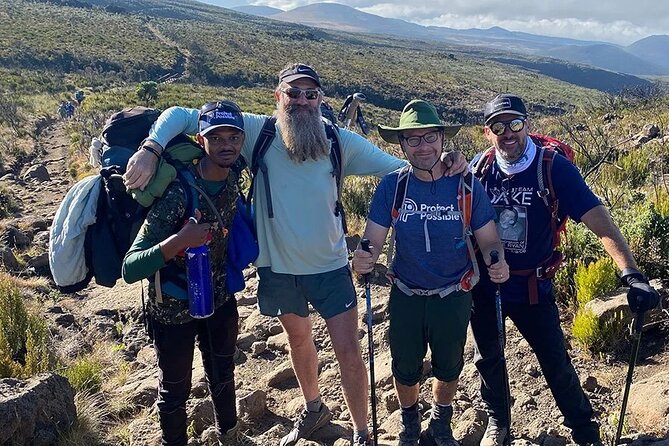
The quiet side of Kilimanjaro makes a big difference. This North-side route gives you a more remote start, less rain than the southern routes, and a gradual approach through several of the mountain’s plant zones. I like the Rongai Route’s wilderness feel and the practical support from Hilbas Tours, including airport transfers, hotel nights, meals, porters, and experienced mountain guides.
I also like the extra acclimatization time at Mawenzi Tarn, where you spend an afternoon resting at about 4,300 meters. The main drawback is the summit day: 15 hours, 21 kilometers, and a midnight start demand serious stamina. The title says six days, but the full schedule takes eight days once you include the arrival and departure hotel nights.
In This Review
- Key points to know before booking
- Why Rongai feels different from the southern routes
- Arrival in Moshi and the first hotel night
- Day 2: from Nalemuru village to the pine forest
- Day 3: moorland and the Mawenzi valley
- Day 4: a short climb to Mawenzi Tarn
- Day 5: across the Saddle to Kibo Hut
- Day 6: a 15-hour summit push
- Day 7: descending through Mandara to Marangu Gate
- Day 8: airport transfer and departure
- What the $2,282 price covers
- The people behind the climb
- Group size, fitness, and who should choose this route
- Small but important booking details
- Should you book the Rongai Route?
- FAQ
- How long does the full experience take?
- How many days are spent climbing?
- Where does the Rongai Route begin?
- Is airport pickup included?
- Are hotel nights included?
- What meals are included?
- Is personal hiking equipment included?
- What is the cancellation policy?
Key points to know before booking
- Rongai approaches Kilimanjaro from the North: It is the mountain’s only route from this side and sits close to the Kenyan border.
- A good rainy-season choice: The northern slopes receive less rain than the southern routes, making this a sensible option during wetter months.
- Mawenzi Tarn helps with acclimatization: An afternoon at 4,300 meters gives you useful time to rest before moving toward Kibo Hut.
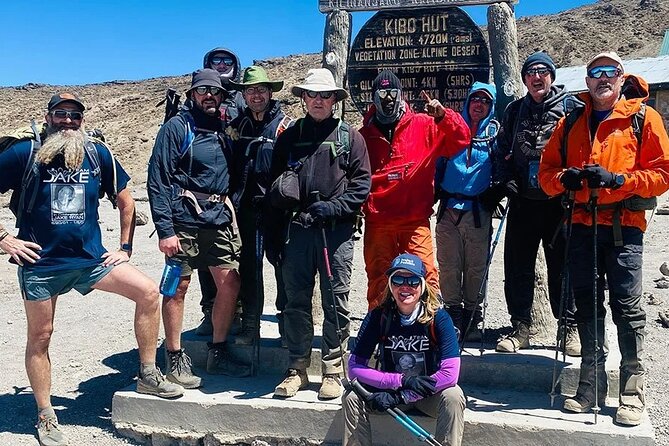
- Summit day is long and demanding: You climb from 4,720 meters to Uhuru Peak at 5,895 meters, then descend to 3,720 meters.
- The support package is broad: Park fees, rescue fees, tents, meals, airport transfers, porters, oxygen, medical kits, and hotel stays are included.
- Hilbas keeps the group fairly small: The maximum is 15 people, with English-speaking guides and a support crew.
Why Rongai feels different from the southern routes
Rongai, also called the Nalemuru route, begins on Kilimanjaro’s North side near the Kenyan border. That location shapes the whole experience. Instead of starting on the busier southern approach, you walk through farmland and pine forest before reaching the higher mountain zones.
The early section is described as a true wilderness experience. You pass maize, beans, and potato fields near Nalemuru village, then enter forest where black-and-white colobus monkeys may be seen. The route climbs gently at first, which helps you settle into the slow pace needed on Kilimanjaro.
This route is especially useful during the rainy season because the North side receives less precipitation. That does not mean dry conditions are guaranteed, but it gives you a practical reason to choose Rongai when southern routes may be wetter.
There is also a quieter feel compared with Marangu. You still descend through the Marangu side at the end, but the opening days take place on a more remote route. If you want a straightforward mountain path with huts every night, this is not that experience. You camp in tents and carry less of your own equipment because porters handle the mountain gear.
More Kilimanjaro routes and climbs:
- Kilimanjaro climb by Lemosho Route (7-day)
★ 5.0 · 651 reviews - Kilimanjaro climb, Machame Route (7-day)
★ 5.0 · 262 reviews - Kilimanjaro Climbing Lemosho Route 8 Days.
★ 5.0 · 186 reviews
Arrival in Moshi and the first hotel night
Your trip begins with pickup at Kilimanjaro International Airport. A Hilbas representative meets you there and transfers you to the hotel in Moshi, where you have a hot shower, a bed, a briefing, and a gear check.
That first night is more useful than it may sound. Kilimanjaro climbs work best when you start rested and organized. The gear check gives you a chance to identify missing clothing or equipment before you are on the mountain. Personal items such as hiking clothes, footwear, and sleeping bags are not included, but rental equipment can be arranged.
The package includes two hotel nights, one before and one after the climb. Rooms are normally shared by two people, except on solo climbs. The exact hotel details are not provided, so ask about the property and room arrangements before paying if those points matter to you.
Day 2: from Nalemuru village to the pine forest
The second day involves more driving than the mileage suggests. The driver collects you from the hotel and takes you to Marangu Gate for registration while the guides and porters prepare the equipment. You then continue by vehicle to Rongai Gate, also called Nalemuru, a transfer that takes about three hours.
Lunch is served on the way or at the gate before walking begins. The hike covers 8 kilometers in about six hours, rising from 1,900 meters to 2,626 meters. You move through the rainforest zone, beginning on a winding path through village farmland before reaching pine forest.
The gradual climb is a strength. You are not thrown straight into a steep ascent, and the forest gives you shade and changing scenery. The possibility of seeing black-and-white colobus monkeys adds a wildlife element that is not the main purpose of the climb but can make the opening day feel less like a simple march uphill.
The long transfer to the trailhead is the main inconvenience. Your walking time is manageable, but the day includes registration, loading, and several hours on the road. Keep your day bag organized so water, rainwear, snacks, and any medication are easy to reach.
Day 3: moorland and the Mawenzi valley
After breakfast, you continue through moorland toward the second cave. The day covers 12 kilometers in about seven hours. Your elevation rises to 3,600 meters before dropping slightly to a campsite at 3,450 meters.
Lunch is taken at the second cave, followed by a slow southeastward walk across rolling moorland toward Mawenzi Peak. The route includes small ups and downs, so this is not a simple steady climb. The campsite sits in a sheltered valley, which should make the evening feel more protected than an exposed camp.
This day matters because your body is beginning to adjust to altitude. The schedule is deliberately slow. You should resist the urge to walk quickly when the trail feels easy, since saving energy now is more useful than arriving early.
A few more trips of this kind worth comparing:
- Kilimanjaro climb, Lemosho Route (6-day)
★ 5.0 · 129 reviews - Kilimanjaro climb, Marangu route (6-day)
★ 5.0 · 72 reviews - 6 Days 5 Night Safari
★ 5.0 · 57 reviews - 6 Days Tanzania Classic Safari
★ 5.0 · 52 reviews
Day 4: a short climb to Mawenzi Tarn
Day 4 covers only 5 kilometers but takes about six hours. You climb steep grassy slopes from 3,600 meters to 4,300 meters, entering the alpine desert zone.
The short distance can fool you. At altitude, a few kilometers can take most of a day, especially on steep ground. Your reward is Mawenzi Tarn Hut, where you arrive in time for lunch and have the afternoon to explore nearby and rest.
This is one of the better features of the schedule. You gain height, then spend several hours at altitude without pushing onward to another camp. The views toward Mawenzi Peak are a major reason for this stop, and the afternoon gives your body time to adjust before the saddle and summit stages.
You should treat the afternoon as acclimatization time, not as a chance for a hard side hike. The plan says you can explore the surrounding area, but your energy reserve is more valuable than extra steps.
Day 5: across the Saddle to Kibo Hut
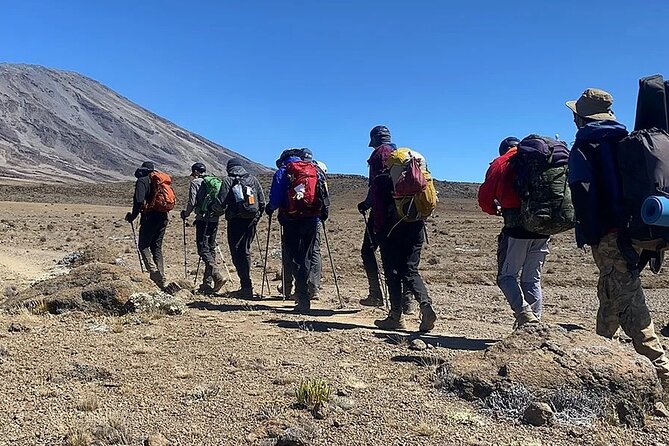
From Mawenzi Tarn, the route crosses the Saddle, the broad high desert between Mawenzi and Kibo. You climb from 4,300 meters to 4,720 meters, covering 10 kilometers in roughly six hours.
The area is dry and open, with large mountain views but little shelter. You may carry a packed lunch and stop along the way, or receive a hot lunch at Kibo Hut, depending on your pace. That flexibility is helpful because people rarely move at exactly the same speed at this altitude.
Kibo Hut is the final camp before the summit attempt. You receive an early dinner and go to bed soon afterward. The midnight start means this sleep period is short, so prepare your summit clothing and day pack before lying down. You do not want to search for gloves or headwear when the guide wakes you at about 11 p.m.
Day 6: a 15-hour summit push
Summit day begins with tea and biscuits around 11 p.m., followed by a midnight departure. From Kibo Hut, you climb through volcanic scree toward William Point at about 5,000 meters, then Hans Meyer Cave at about 5,200 meters.
Hans Meyer Cave is described as the best place for a short drink break. From there, the trail continues to Gillman’s Point at 5,681 meters on the crater rim. This section is steep and covered with loose stone. It asks as much from your concentration as from your legs, so the guides’ slow pace and encouragement are important.
From Gillman’s Point, you continue around the crater rim toward Uhuru Peak, the summit at 5,895 meters. The route then descends to Kibo Hut before continuing to a camp at 3,720 meters. The full distance is 21 kilometers, and the stated hiking time is 15 hours.
That is a very long day. You should view the summit as one part of a larger effort, not the only goal. The descent is still demanding, and the drop from arctic conditions near the summit to moorland camp makes for a dramatic change in one day.
Hilbas provides oxygen cylinders, oximeters, and medical kits, and its guides hold Wilderness First Aid certifications. Those supplies are useful safeguards, but they do not remove the need for travel insurance or proper altitude preparation. Travel insurance is not included.
Day 7: descending through Mandara to Marangu Gate
After an early breakfast, you descend from 3,720 meters to 2,720 meters. The day covers 19 kilometers and takes about eight hours, moving from moorland back into rainforest.
You pass Mandara Hut before reaching Marangu Gate. The forest brings taller trees, flowers, and birdlife after the bare upper slopes. At the gate, every climber signs out and receives a completion certificate.
A Hilbas driver then returns you to the hotel. Along the way, you pass coffee and banana farms around Marangu villages. That final road journey adds a small glimpse of local rural life after several days focused on rock, forest, and altitude.
Do not underestimate this descent. Knees often complain more on the way down, and 19 kilometers is a substantial final walking day. Comfortable footwear and trekking poles, if you use them, can matter here.
Day 8: airport transfer and departure
After breakfast, you transfer to Kilimanjaro International Airport for your flight home. The package includes airport pickup and drop-off, so you do not need to arrange a separate ride at either end.
The schedule lists the experience as about eight days, even though the mountain route itself is six climbing days from the initial Rongai walk through the descent. That distinction is important when planning flights, hotel nights, and time away from work.
What the $2,282 price covers
At $2,282 per person, the price includes much more than trail access. Park entry, camping, vehicle, and rescue fees are covered, along with guides, porters, cooks, waiters, campsite staff, and their mountain accommodation and salaries.
You receive three standard meals a day on the mountain, plus drinks such as coffee, tea, Milo tea, and water. Vegetarian, vegan, lactose-free, gluten-free, halal, and other meal plans are available. This is a useful level of food flexibility for a multi-day climb where eating well supports your energy.
The price also includes two hotel nights, shared mountain tents, airport transfers, transport to and from the park, group camping equipment, oxygen cylinders, oximeters, and medical kits. A dining tent with tables, chairs, crockery, and related equipment gives the camp a more organized setup than carrying only a personal tent.
You still need to budget for flights, a Tanzanian visa, travel insurance, personal gear, laundry, telephone use, extra beverages, souvenirs, and crew tips. Single hotel rooms and single tent arrangements cost extra.
The value is strongest if you need airport transfers, equipment support, meals, and a full crew package. The price is less all-inclusive than it first appears if you need to rent several personal items or want private accommodation.
The people behind the climb
The human side of a Kilimanjaro climb can shape your experience as much as the route. Hilbas uses English-speaking mountain guides licensed by Kilimanjaro National Park, backed by assistant guides, camp masters, porters, and cooks.
The strongest praise centers on the crew’s care, calm encouragement, and response when someone needs help. Hilary, also called Hils, receives special praise for steady support and extensive experience on the mountain. Bariki and his team are also named for excellent service, including helping a climber who needed additional care and getting that person to safety.
Other named crew members include Elinariki, Emmanuel, and Felix. The cooking receives repeated praise, which matters on a climb where appetite can fade and hot, familiar food becomes a welcome part of the day.
Tips for the crew are not included. Ask Hilbas for current tipping guidance before departure, since the guides, porters, cooks, and camp staff all contribute to your climb.
Group size, fitness, and who should choose this route
The maximum group size is 15 people. That is small enough to allow direct contact with the guides, though walking speeds and summit ability can still vary within the group.
The required fitness level is listed as moderate, but the summit day is tougher than that phrase may suggest. You need to manage six hours on Day 2, seven on Day 3, six on Day 4, six on Day 5, then a 15-hour summit and descent day followed by another eight-hour descent.
I would choose this route if you value a quieter start, want less exposure to rain than the southern routes, and prefer camping with a full support team. It also suits climbers who appreciate an acclimatization afternoon at Mawenzi Tarn.
I would think twice if you want short walking days, private accommodation, or a route with less steep scree on summit night. You should also be comfortable sharing a tent and hotel room unless you pay for single arrangements.
The four available ratings are all five-star ratings, with repeated praise for the guides, porters, cooking, kindness, and safety support. That is a small sample, so I would treat it as encouraging rather than a guarantee. Still, the consistency of the praise for Hilary, Bariki, and the wider crew is a meaningful point in the company’s favor.
Small but important booking details
Your start time is listed as 9 a.m., and confirmation is provided at booking. Pickup is offered, and the experience uses mobile tickets.
Cancellation terms are strict near departure. Cancel at least six full days before the start for a full refund, cancel two to six days before for a 50 percent refund, and expect no refund within two days. Changes are not accepted inside those same short windows, based on local time.
Ask questions before booking about the exact hotel, rental gear, room arrangements, tipping expectations, and the transfer timing between Marangu Gate and Rongai Gate. The route details are clear, but these practical points can affect your comfort and budget.
Should you book the Rongai Route?
I would recommend this climb to a fit, well-prepared person who wants Kilimanjaro with a quieter opening, a useful acclimatization stop, and strong logistical support. The combination of North-side scenery, lower rain exposure, included park fees, meals, airport transfers, porters, and experienced guides gives the $2,282 price solid value.
Book it only if you respect the mountain’s demands. The 15-hour summit day is the real test, and the added hotel and departure days make this an eight-day commitment. If Hilbas confirms your gear plan, room setup, transfer schedule, and tipping guidance, this is a practical Rongai package with a supportive crew at its center.
FAQ
How long does the full experience take?
The complete schedule takes about eight days, including arrival, two hotel nights, six mountain days, and departure.
How many days are spent climbing?
The mountain itinerary runs from Day 2 through Day 7, making six climbing days.
Where does the Rongai Route begin?
The route begins near Nalemuru village and Rongai Gate on Kilimanjaro’s North side, close to the Kenyan border.
Is airport pickup included?
Yes. Transportation from Kilimanjaro International Airport is included for both pickup and drop-off.
Are hotel nights included?
Yes. Two hotel nights are included, one before and one after the climb. Rooms are shared by two people unless you are on a solo climb or pay for single accommodation.
What meals are included?
Breakfast, lunch, and dinner are provided on the mountain. The package also includes drinks such as coffee, tea, Milo tea, and water.
Is personal hiking equipment included?
No. Personal clothing, footwear, sleeping bags, and similar gear are not included, but equipment rental is available.
What is the cancellation policy?
Cancel at least six full days before the start for a full refund. Cancellation two to six days before receives a 50 percent refund, while cancellation within two days is not refunded.
Just added around Moshi
- Moshi: Lake Chala Tour: Hiking &/or Kayaking★ 4.5 · 3 reviews
- 3 Days Tanga Exclusive Beach Holiday★ 5.0 · 3 reviews
- Serengeti Wildebeest Migration.★ 5.0 · 3 reviews
- Chemka Hotpsrings E-Bike Day Trip★ 5.0 · 3 reviews
- Explore 1 day Ngorongoro Crater Budget Group Safari from Arusha★ 5.0 · 3 reviews
- Explore the 360° of Kilimanjaro★ 5.0 · 3 reviews
- Affordable Short Tanzania Safari (2 Days Camping Safari)★ 5.0 · 3 reviews
- Rongai Route 7 Days★ 5.0 · 3 reviews
Kilimanjaro Treks, compared.



8-Day Small-group Lemosho Kilimanjaro Summit Trekking
Read our review →


Climbing Kilimanjaro through 7 days Machame Route
Read our review →

Browse the lists this tour appears in