
Reviewed · KILIMANJARO TREKS
Kilimanjaro Climb Marangu Route 6 days
The summit starts long before sunrise. This six-day Marangu Route climb gives you a clear progression from Moshi through rainforest, moorland, high desert, and finally the icy upper slopes of Kilimanjaro. I especially like the extra acclimatization day at Horombo Hut and the fact that the price includes park fees, meals, filtered water, private transport, hot wash water, and fair wages for the mountain crew. The private format also lets your group travel with the same guide team throughout.
The main caution is altitude. The walking is not technical, but summit day is long, cold, dark, and physically demanding. You should have moderate fitness and be comfortable with long mountain walks. Six days is workable, but the extra day at Horombo is not a luxury. It is one of the most useful parts of the plan.
In This Review
- Key points to know before booking
- What the $2,290 price really covers
- Day 1: Marangu Gate and the rainforest to Mandara Hut
- Day 2: Heath country and the first view of Kibo
- Day 3: Mawenzi Ridge and the extra acclimatization time
- Day 4: Crossing the Saddle to Kibo Hut
- Day 5: The midnight climb to Uhuru Peak
- Day 6: The long descent through rainforest
- The guide team and the human side of the climb
- Who should book this Marangu Route climb?
- Practical details before you commit
- Should you book it?
- FAQ
- Where does the Kilimanjaro climb begin?
- Where does the experience end?
- How long is the climb?
- What is the highest point reached?
- Is the tour private?
- Is pickup available?
- Are meals included?
- Is drinking water provided?
- Is personal trekking equipment included?
- What happens if I cancel?
Key points to know before booking
- Marangu Gate to Uhuru Peak: You climb from 6,046 feet to 19,341 feet over several days, with the summit push beginning around midnight.
- The Horombo acclimatization day matters: A walk toward Mawenzi Ridge gives you time at altitude before the crossing to Kibo Hut.
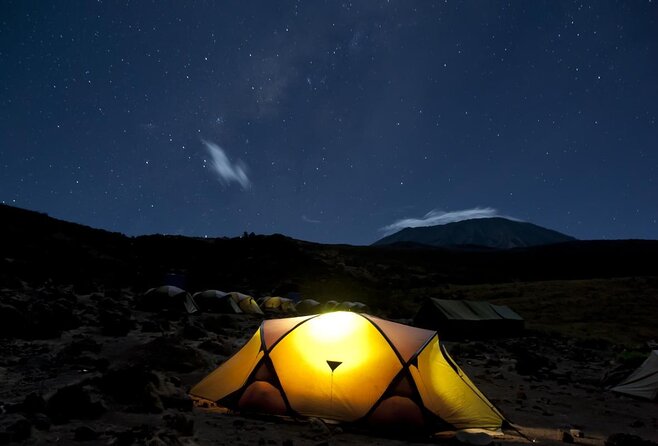
- Huts replace tents: Mandara, Horombo, and Kibo are the overnight stopping points, making this route appealing if you prefer hut accommodation.
- The scenery changes dramatically: Expect tropical rainforest, heath, moorland, the bare Saddle, and Arctic summit conditions.
- The price covers many major trip costs: Meals, water, fees, transport, hot wash water, and approved crew wages are included in the $2,290 price.
- Shungu receives special praise: His warm leadership and respectful treatment of the crew are important details for anyone choosing a private mountain team.
What the $2,290 price really covers
At $2,290 per person, this climb is not a cheap mountain outing, but the package includes several expenses that can otherwise add up quickly. Park fees and taxes are covered, as are private transfers, six lunches, five breakfasts, and six dinners. Filtered water is supplied throughout the trek, and hot water is available for washing.
The inclusion of fair wages for the mountain crew, based on Kilimanjaro National Park Authority standards, is especially important. A climb depends on guides and support staff, and responsible pay is part of the real cost of climbing Kilimanjaro properly.
The private format also affects the value. Only your group takes part, so you are not joining a large mixed party at the gate or summit. The supplied information does not state the maximum group size, so you should ask how many people will be in your private group before paying.
You still need to budget for your visa, flights, insurance, personal trekking equipment, personal expenses, and alcoholic or nonalcoholic drinks. Those omissions are normal for a mountain package, but they matter. The cost of warm summit clothing and suitable walking gear can be substantial if you do not already own it.
Pickup is offered from Moshi Urban, and transport returns you to the same meeting point after the descent. That simple arrangement is useful after a tiring final day.
More Kilimanjaro routes and climbs:
- Kilimanjaro climb by Lemosho Route (7-day)
★ 5.0 · 651 reviews - Kilimanjaro climb, Machame Route (7-day)
★ 5.0 · 262 reviews - Kilimanjaro Climbing Lemosho Route 8 Days.
★ 5.0 · 186 reviews
Day 1: Marangu Gate and the rainforest to Mandara Hut
The climb begins with transport from Moshi to Marangu Gate. There, your group completes the required park formalities before starting along the trail.
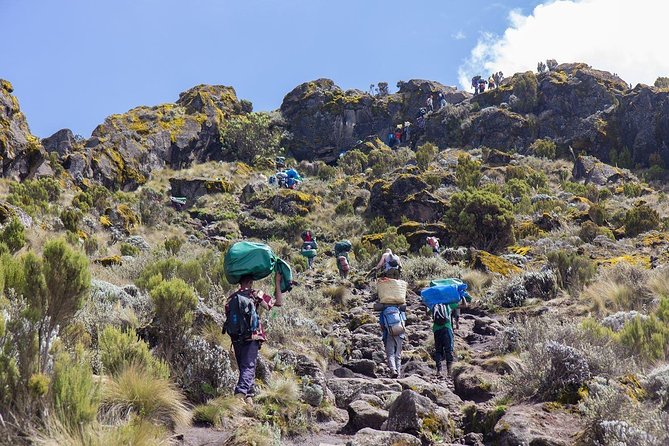
The first day covers about 8 kilometers, or 5 miles, from 6,046 feet to 8,858 feet. The stated walking time is four to five hours, and the setting is tropical rainforest. This is a pleasant introduction to Kilimanjaro because the path climbs through thick forest rather than beginning in an exposed, barren zone.
You might see blue monkeys near the upper edge of the forest. The trail then widens, offering views across the hillsides as you approach Mandara Hut.
Mandara is a sensible first overnight stop. The relatively short distance gives you time to settle into the rhythm of slow, steady walking. Do not treat this day as a race. Your goal is to reach camp feeling fresh, since the altitude becomes more noticeable from here.
The first night also gives you a practical test of your personal gear. You will learn how well your clothing, sleeping arrangement, and washing routine work before the summit section.
Day 2: Heath country and the first view of Kibo
Day two is longer, covering 12 kilometers, or 7 miles, from Mandara Hut to Horombo Hut. The elevation rises from 8,858 feet to 12,205 feet, with six to eight hours of walking.
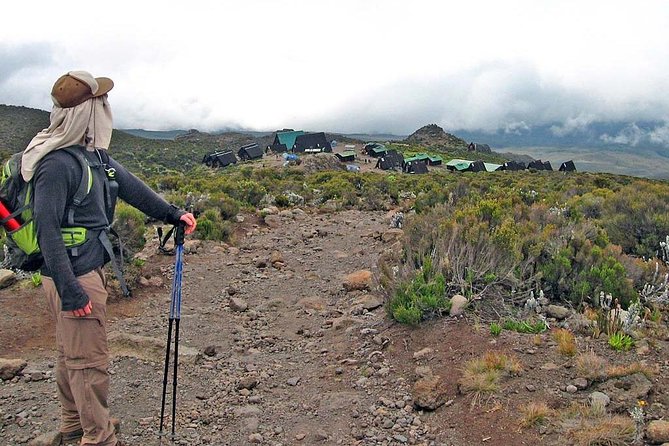
The route first continues through forest, then opens into high heath and moorland. This change is one of the pleasures of the Marangu Route. In a single day, you move from humid greenery into a much more open world, where the sky feels larger and the summit peaks begin to appear.
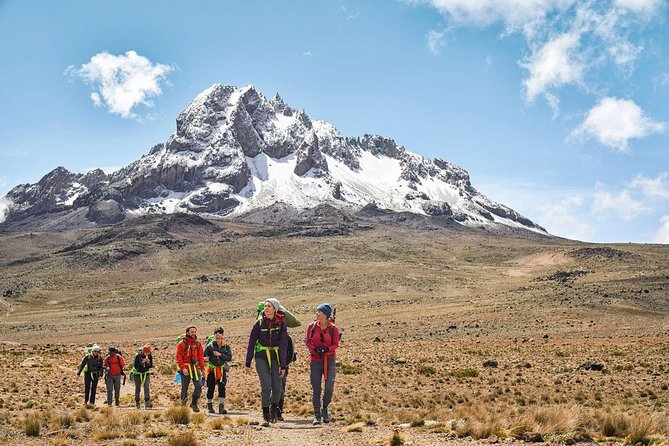
You may get your first views of Kibo and Mawenzi. Kibo is the main summit cone, rising to 5,895 meters, or about 19,341 feet. Mawenzi is the sharp, craggy volcanic peak reaching 5,149 meters. Seeing both helps you understand the mountain’s unusual form: Kibo is the high summit, while Mawenzi has a more jagged appearance.
Horombo Hut is important because it is both an overnight stop and the base for the acclimatization day. The elevation gain on day two is considerable, so the long walk should be taken slowly. The supplied schedule allows up to eight hours, and that longer estimate is useful for setting expectations.
Day 3: Mawenzi Ridge and the extra acclimatization time
Day three is the reason this six-day schedule is more sensible than a rushed ascent. From Horombo Hut, you walk about 5 kilometers, or 3 miles, toward Mawenzi Ridge, gaining roughly 2,195 feet to reach 14,400 feet. The walk takes two to three hours, followed by a one to two-hour return to Horombo.
This is not a summit attempt. It is a high-altitude day walk designed to help you spend more time above 12,000 feet before moving toward Kibo Hut.
The Mawenzi Ridge area offers unusual views toward both Kibo and Mawenzi. The surroundings become more open and spare, with the volcanic peaks providing much of the visual drama. After spending time in the area, you return to Horombo for another night.
I like this part of the plan because it gives your body and mind more time to adjust without forcing you to carry on to the summit camp. It also breaks up what would otherwise be a demanding climb from Horombo to Kibo with little recovery time.
The schedule labels this as a two-hour stop, but the detailed walking times add up to several hours. You should treat the detailed times as the more useful guide. Ask the operator how much time is planned for the ridge walk and whether the route varies according to conditions.
A few more trips of this kind worth comparing:
- Kilimanjaro climb, Lemosho Route (6-day)
★ 5.0 · 129 reviews - Kilimanjaro climb, Marangu route (6-day)
★ 5.0 · 72 reviews - 6 Days 5 Night Safari
★ 5.0 · 57 reviews - 6 Days Tanzania Classic Safari
★ 5.0 · 52 reviews
Day 4: Crossing the Saddle to Kibo Hut
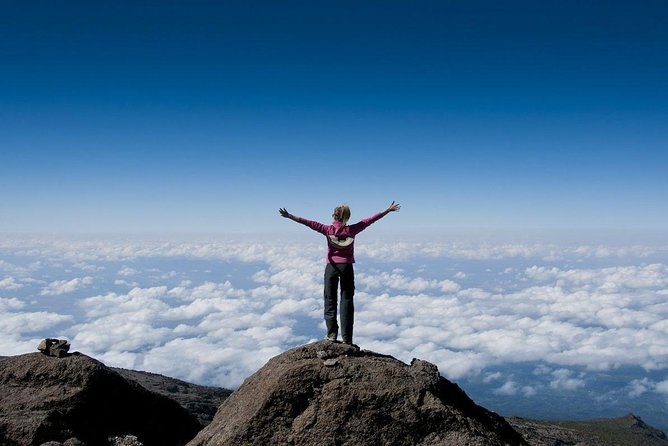
Day four takes you from 12,205 feet to 15,430 feet over 10 kilometers, or 6 miles. The walking time is six to eight hours, and the habitat changes to alpine desert.
The route climbs gradually before crossing the Saddle, the broad high-altitude desert between Mawenzi and Kibo. This is one of the most memorable sections of the climb because vegetation becomes scarce and the two great volcanic peaks frame the route.
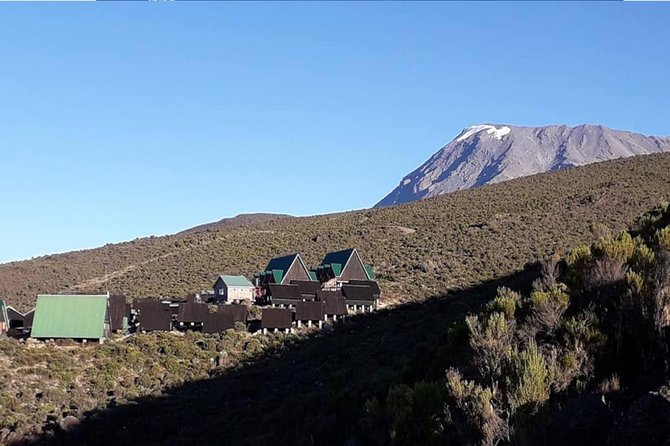
Kibo Hut sits at the bottom of the Kibo crater wall. It is a strategic camp rather than a place for sightseeing. Once you arrive, the plan is to rest and eat an early dinner before the summit attempt.
This is where pacing becomes critical. You may feel tired even though the trail has not been especially steep. The altitude, dry air, and long hours add up. A quiet afternoon and an early meal are more useful than trying to explore too far around camp.
The summit attempt begins around midnight, so day four is really preparation for day five. Keep your clothing, water, headlamp, and other personal gear ready before lying down. The experience provider supplies filtered water and meals, but personal trekking equipment is your responsibility.
Day 5: The midnight climb to Uhuru Peak
Day five is the hardest part of the entire trip. You leave Kibo Hut around midnight and climb from 15,430 feet to Uhuru Peak at 19,341 feet. The ascent covers about 6 kilometers, or 4 miles, and is listed as taking six to eight hours.
You climb in darkness for several hours, with frequent but short breaks. The upper route consists of steep scree, a loose volcanic surface that is easier to walk on when frozen. The cold and wind can be severe at this hour, so the summit experience is far more serious than the earlier trail sections.
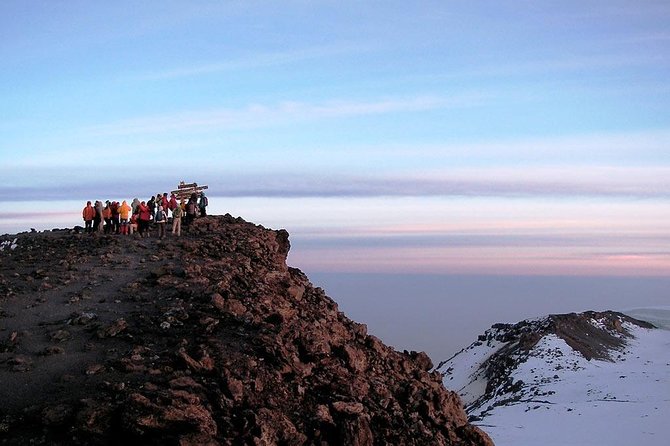
Gilman’s Point, at about 18,600 feet, is a major milestone. Reaching the crater rim around dawn can bring spectacular views as the sun rises. From there, Uhuru Peak lies just above, so the final section is still demanding, but the goal is close.
The descent from Uhuru Peak returns to Horombo Hut. The listed distance is 16 kilometers, or 10 miles, and the descent takes another four to five hours. In total, this is an 11-hour day, and the number may feel even larger because much of it happens without a normal night’s sleep.
You should approach summit day with realistic expectations. The stated description calls it suitable for a fit person used to walking in mountain areas, but it also makes clear that this is a tough walking trip. Reaching Gilman’s Point and continuing to Uhuru depends on how you respond to altitude, cold, and fatigue.
The reward is not only the summit marker. The sunrise from the crater rim, the views across the upper mountain, and the sense of moving through Arctic conditions after starting in rainforest make this the defining day of the experience.
Day 6: The long descent through rainforest
The final day begins at Horombo Hut and ends at Marangu Gate. You descend about 20 kilometers, or 12 miles, from roughly 12,205 feet to 6,046 feet. The listed walking time is five to seven hours, mostly downhill through rainforest.
Downhill walking can sound easy after the summit, but a long descent can be hard on tired legs. The distance is substantial, so good pacing remains important. The return to forest also brings a striking change in temperature and scenery after the bare slopes above.
At Marangu Gate, you collect your summit certificates. A vehicle then takes you back to your hotel in Moshi.
This final transfer is a small but valuable detail. After an 11-hour summit day followed by a long descent, you will likely appreciate not having to arrange your own transport from the park headquarters.
The guide team and the human side of the climb
The strongest personal detail connected with this experience is the praise for Shungu, who appears to lead or organize the mountain team. His approach is described as warm, dependable, and respectful toward the crew.
The team is said to include people who have been friends since childhood. That does not guarantee a particular result on the mountain, but it suggests a working relationship built on trust. For a private climb, that can shape the mood of every day.
I also like the emphasis on hospitality and cooperation. One account describes the group feeling more like welcomed visitors than ordinary tourists. Another points to the way the company handled both a Kilimanjaro climb and a three-day safari at a good price, though the safari is not part of this six-day package.
There are four published five-star ratings connected with the experience. That is a small sample, so I would not treat it as proof that every climb will be perfect. Still, the consistent praise for kindness, teamwork, and professionalism is useful when comparing operators.
Who should book this Marangu Route climb?
This route suits you if you want a private Kilimanjaro climb with a clear schedule and hut-based overnight stops. It is also a good match if you prefer a route that begins gently in forest before moving into more exposed high-altitude country.
You should be comfortable with:
- Four to eight hours of walking on most days
- A 20-kilometer descent on the final day
- A midnight start for the summit
- Cold, windy conditions near the top
- A maximum elevation of 19,341 feet
- Carrying and using your own personal trekking equipment
The tour is not described as technical climbing. The real challenge is endurance and altitude. A moderate fitness level is required, and the company specifically recommends an extra acclimatization day at Horombo. This itinerary includes that day, which improves its practical value.
I would be cautious about booking if you want short walking days, guaranteed summit success, or a relaxed holiday with only a little exercise. The word climb is doing real work here, even though no ropes or technical climbing skills are described.
Practical details before you commit
Confirmation is provided when you book, and the activity is private for your group. Pickup and return transport are offered in Moshi Urban.
The cancellation terms are friendly if your plans change early. You can receive a full refund by canceling at least 24 hours before the start time. Cancellations or changes made within 24 hours are not accepted for a refund.
Personal trekking gear is not included. Since the summit push happens at night and reaches Arctic conditions, you should take the equipment requirement seriously and confirm exactly what you need before departure.
You should also ask the operator to clarify the detailed summit-day schedule, the group size, and the exact hut arrangements. Those points are not fully specified, and they affect comfort on a six-day climb.
Should you book it?
I would book this experience if you want a private, well-structured Kilimanjaro ascent and value a built-in acclimatization day. The route offers a strong variety of scenery, from rainforest to volcanic desert, while the included meals, water, transport, park costs, hot wash water, and crew wages make the $2,290 price easier to justify.
I would not choose it simply because it is the Marangu Route or because the summit looks straightforward on paper. The midnight push, high altitude, steep scree, and long descent are serious demands. Go in with suitable fitness, proper personal gear, and realistic expectations, and this can be a rewarding way to reach Uhuru Peak with a small private team and the guidance of people such as Shungu.
FAQ
Where does the Kilimanjaro climb begin?
The climb begins in Moshi Urban, Tanzania. Transport takes you to Marangu Gate, where the required park formalities are completed.
Where does the experience end?
The activity ends back at the meeting point in Moshi after transport from Marangu Gate.
How long is the climb?
The experience lasts approximately six days.
What is the highest point reached?
The route reaches Uhuru Peak at 19,341 feet, or 5,895 meters.
Is the tour private?
Yes. Only your group participates in this private activity.
Is pickup available?
Yes. Pickup is offered, with the meeting point listed in Moshi Urban.
Are meals included?
Yes. The package includes six lunches, five breakfasts, and six dinners.
Is drinking water provided?
Filtered water is provided throughout the trek.
Is personal trekking equipment included?
No. Personal trekking gear is not included, so you must arrange your own equipment.
What happens if I cancel?
You can receive a full refund if you cancel at least 24 hours before the experience begins. Cancellations or changes made within 24 hours are not accepted for a refund.
Just added around Moshi
- Moshi: Lake Chala Tour: Hiking &/or Kayaking★ 4.5 · 3 reviews
- 3 Days Tanga Exclusive Beach Holiday★ 5.0 · 3 reviews
- Serengeti Wildebeest Migration.★ 5.0 · 3 reviews
- Chemka Hotpsrings E-Bike Day Trip★ 5.0 · 3 reviews
- Explore 1 day Ngorongoro Crater Budget Group Safari from Arusha★ 5.0 · 3 reviews
- Explore the 360° of Kilimanjaro★ 5.0 · 3 reviews
- Affordable Short Tanzania Safari (2 Days Camping Safari)★ 5.0 · 3 reviews
- Rongai Route 7 Days★ 5.0 · 3 reviews
Kilimanjaro Treks, compared.



8-Day Small-group Lemosho Kilimanjaro Summit Trekking
Read our review →


Climbing Kilimanjaro through 7 days Machame Route
Read our review →

Browse the lists this tour appears in